
The Short Version
If you only read one paragraph: the best places to visit in Romania fall into a handful of very different worlds. There’s Bucharest, the loud, contradictory capital. There’s Dobrogea in the southeast, where the Danube spills into the sea past old fishing villages and Greek ruins. There are the Carpathian Mountains down the spine of the country, fairy-tale Transylvania with its castles and Saxon villages, and the painted monasteries of Bucovina. Then come Maramures, Oradea, the Apuseni Mountains, the Danube at Orsova, Oltenia, and the Banat.
Romania is one of the last corners of Europe that still feels uncrowded, and you can pack an absurd amount of variety into a single trip. You can read my two ideas of itineraries for two different personality types in my Romania 7-day itinerary article, and some places in Romania are even mentioned in my 15 underrated places to visit in Europe list.
A few quick facts to set expectations:
- Why go: wild nature on a scale Western Europe lost long ago, fortified Saxon villages, low prices, and room to breathe.
- When to go: May and June or September for mild weather, July and August for the mountains and the coast, December through March for skiing.
- How long: seven days for a first taste, ten to fourteen if you want to do it properly.
- How to get around: rent a car. Romania is built for road trips.
This route rewards some temperaments more than others. Take the free quiz, which takes about 3 minutes, and find out whether it fits the way you actually travel, before you copy a single day of it.
The Best Things to Do in Romania at a Glance
If you want the highlights before you dig into the regions, here they are. The unmissable things to do in Romania run from driving the hairpins of the Transfagarasan and watching wild brown bears from a forest hide, to gliding by boat through the Danube Delta and standing in front of the 500-year-old frescoes of the painted monasteries in Bucovina.
Tour the fairy-tale Peles Castle, descend into the surreal underground world of Salina Turda, wander the pastel citadel of Sighisoara, and ride the Vaser Valley steam train deep into the Maramures mountains. Add a boat trip through the Iron Gates past the giant Decebalus carving, a night in a restored nobleman’s manor in the Szekely Land, and a ski run above Poiana Brasov in winter, and you’ve got the shape of a trip. Each of these sits inside one of the regions below, so use this as your map and jump to whatever pulls at you.
A couple of notes if you want to tighten it: I kept every item to something the article actually covers in depth, so the internal links will all have a real destination. If you’d rather it read as a scannable bulleted list (which tends to win the “things to do” featured snippet more often than prose), say the word and I’ll convert it, keeping each line linked to its region section.
Table of Contents
Why Visit Romania?
Plenty of travelers have done Paris, Rome, and Barcelona twice over and want somewhere that still surprises them. That’s where Romania comes in. It packs the variety of a small continent into one country, and it does it without the crowds or the prices you’d expect.
In a single trip you can go from a fine-dining city to a shepherd’s village where not much has changed in a hundred years. You can drive a mountain pass in the morning and watch wild bears at dusk. Here’s what actually sets the country apart, the stuff you won’t easily find anywhere else on the map:
- Wild nature, and a lot of it. Romania has one of the largest brown bear populations in Europe and some of the continent’s last old-growth forest. Wolves and lynx still live in the Carpathians, and you can join responsible bear-watching trips from proper hides.
- The Danube Delta, one of Europe’s biggest and best-kept river deltas, a UNESCO biosphere reserve, and a serious destination for birdwatchers.
- Fortified Saxon churches and walled citadels, several of them UNESCO-listed, dotted quietly across Transylvania.
- The painted monasteries of Bucovina, their outside walls still covered in 500-year-old frescoes. There’s nothing else quite like them.
- Folk culture that isn’t staged for tourists. In Maramures and the Szekely Land, the old way of life is simply the way people still live.
- Prices that feel like a flashback. Food, beds, transport, and tickets all cost a fraction of Western Europe.
So the honest answer to why to visit Romania is this: range, value, and space, all in one place.
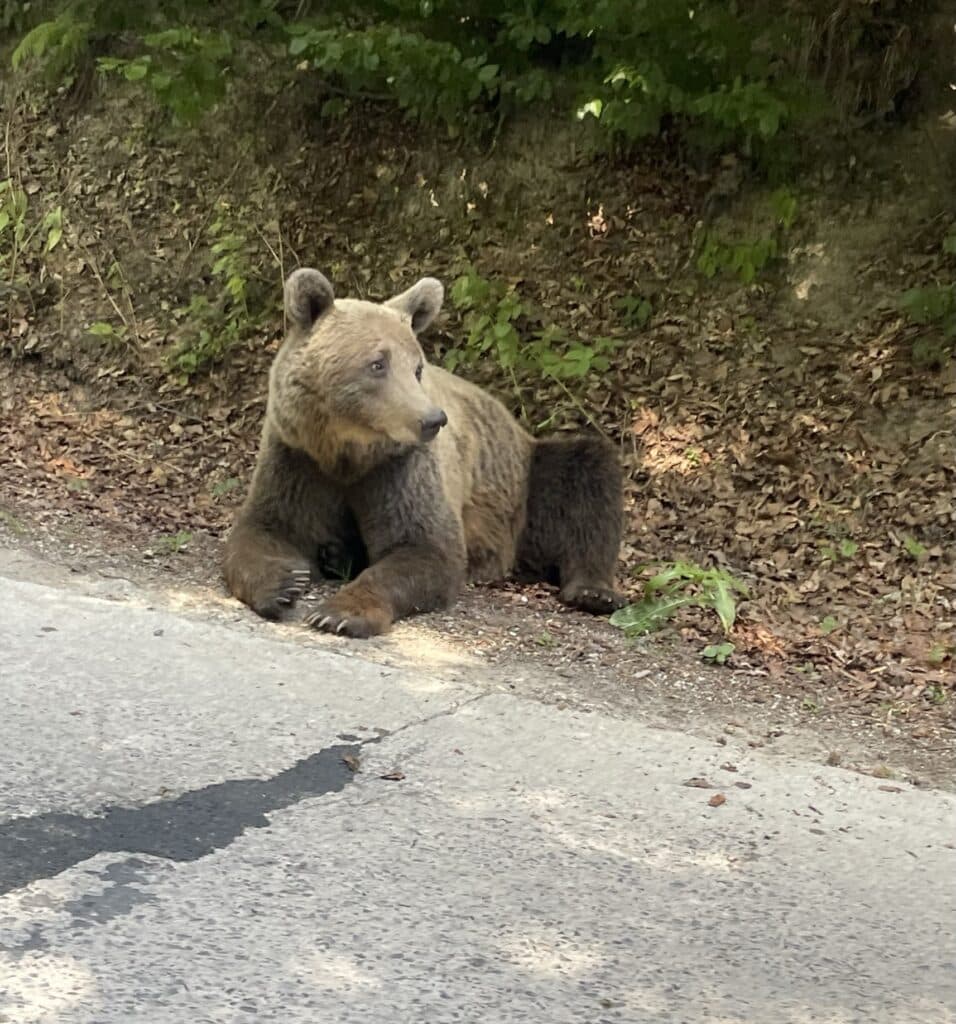
This is what people mean when they talk about bears in the Carpathians. You round a bend on a mountain road and there one is, sitting on the verge like it owns the place. It’s a thrill, and it’s also the reason for the warning above. Most roadside bears are there because tourists have fed them from car windows, which slowly turns a wild animal into a dangerous one. Admire it, take your photo from inside the car if you must, and drive on.
Before You Go: A Few Things Worth Knowing
When to visit. Late spring (May into June) and early autumn (September) give you the best of it: mild days, green hills, and far fewer people. Summer is peak season for the mountains and the Black Sea, and it’s the only stretch when the high alpine roads are fully open. Winter, roughly December to March, is for skiing in the Prahova Valley and Poiana Brasov, and for the Christmas markets in Sibiu, Brasov, and Cluj. One thing to plan around: the two famous mountain roads, the Transfagarasan and the Transalpina, usually only open in full from about July to October, depending on the snow.
How many days. A focused first trip works in a week: Bucharest, a few days in Transylvania, and a slice of the Carpathians. Give it ten to fourteen days and you can fold in the Danube Delta, Bucovina, or Maramures without rushing. Two weeks is the sweet spot for a country this varied.
Getting around. Rent a car. Distances look tiny on the map, but mountain roads are slow and gorgeous, and most of the best places to visit in Romania are villages, viewpoints, and monasteries that buses never reach. Trains do link the major cities, and the run from Bucharest to Brasov through the mountains is lovely, but for the countryside a car turns the whole country into one long road trip.
Money and language. The currency is the leu (RON). Cards work everywhere in cities and tourist spots, less so in remote villages, so carry some cash. Younger Romanians and anyone working in tourism tend to speak good English. Out in the deep countryside it’s patchier, and a few words of Romanian (or German in Saxon areas, Hungarian in the Szekely Land) buys a lot of goodwill.
Is it safe? Yes. Romania is one of the safer countries in Europe for travelers, with low violent crime. The one real outdoor risk is bears in the Carpathians, and we’ll get to that. Drive carefully on mountain roads and you’ll be fine.
💡 A note from us. Romania treats different travelers very differently. The trip that lights one person up will bore another, and that isn’t a problem to solve, it’s the whole reason we do what we do. Throughout this guide we point out which regions suit which kind of person, because at The Verse Voyager we build itineraries around your actual personality across five core dimensions rather than a generic top-ten list. More on that, and a free quiz, at the end.
Bucharest: Things to Do in Romania’s Capital
Most trips start here, and most travelers use Bucharest as a gateway rather than a destination. That’s fair enough. It’s a sprawling, contradictory place, all grand boulevards, Communist-era concrete, faded Belle Epoque mansions, and shiny new towers, and it won’t seduce you the way Prague or Vienna do. Give it a day or two anyway. There are more things to do in Romania, Bucharest included, than its reputation lets on.
The Palace of the Parliament and the Communist city
The one sight you shouldn’t skip is the Palace of the Parliament, one of the largest and heaviest buildings on the planet. Ceausescu had whole neighborhoods flattened to build it, and walking its endless marble halls on a guided tour is the most memorable thing you’ll do in the capital. While you’re at it, stroll the giant boulevard it sits on, deliberately built to outdo the Champs-Elysees.
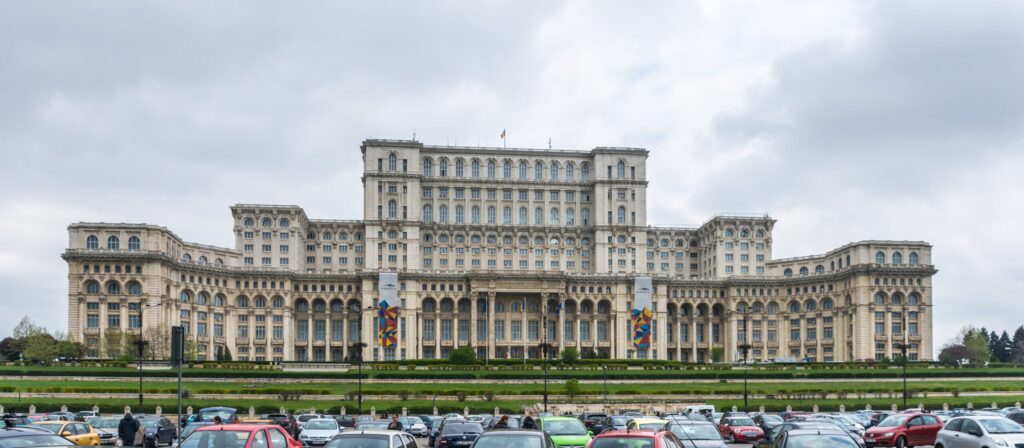
The Palace Of Parliament – Bucharest
Old Town, parks, and culture
The restored Old Town, Lipscani, is where the city comes alive at night: cobbled lanes packed with cafes and bars, old churches like Stavropoleos, the ruins of the Old Princely Court founded by Vlad the Impaler himself, and the much-photographed Carturesti Carusel bookshop. For something grander, the neoclassical Romanian Athenaeum concert hall and Revolution Square carry the weight of modern Romanian history. The city is also greener than people expect. Herastrau wraps around a lake in the north, Cismigiu offers shade in the center, and the open-air Village Museum gathers traditional houses from all over the country into one park.
Nightlife and food
Bucharest’s nightlife is one of its genuine strengths: terraces, cocktail bars, and clubs that run late and stay cheap, mostly around the Old Town and Calea Victoriei. For food, old beer halls like Caru’ cu Bere serve hearty Romanian classics under stained glass, and the modern bistro scene is better than you’d guess.
Best for city travelers, first-timers easing into the country, and night owls. If you came for nature, give Bucharest a day and move on.
Dobrogea: The Danube Delta, the Coast, and Ancient Ruins
Down in the southeast, where the Danube finally reaches the Black Sea, Dobrogea is the country’s most underrated region. It’s flat, sun-baked, and full of water, reeds, vineyards, and antiquity, and it feels nothing like the mountainous interior. Some of the most distinctive things to see in Romania are here. Check out the official tourism website in Dobrogea. If you ask for my honest opinion, Dobrogea is one of the most diverse and interesting region’s not only in Romania, if not in Europe.
The Danube Delta
The headline act is the Danube Delta, one of Europe’s largest and best-preserved river deltas and a UNESCO biosphere reserve. It’s a maze of channels, lakes, floating reed islands, and forest, home to more than 300 bird species, including big colonies of pelicans and herons.
That makes it one of the great birdwatching spots anywhere. You explore it slowly, by boat, setting out from the gateway town of Tulcea and from villages like Sfantu Gheorghe, Crisan, and Mila 23, where fishing communities still live a life shaped entirely by water. Stay a night out there and slow travel stops being a slogan. Don’t miss the wild beaches where the Delta meets the sea, or the ancient Letea Forest with its sand dunes and wild horses.
You can craft an entire itinerary around Romania, based on the Danube Delta, and, if you are a nature enthusiast, it would be a good idea.
Lakes, villages, and Lipovan heritage
Inland, Lake Razelm, the largest lake in the country, and the village of Sarichioi offer quiet lagoon scenery, birdlife, and a glimpse of the area’s Lipovan heritage. The Lipovans are Russian Old Believers, and their onion-domed churches and fishing traditions still mark the landscape.
Ancient cities and ruins
This is also Romania’s deep-history corner, the old Scythia Minor. You can walk the ruins of Histria, founded by Greek colonists in the 7th century BC and reckoned to be the oldest documented town on Romanian soil, along with Roman and Byzantine sites scattered across the region. Most visitors to Romania never realize this layer of antiquity is even here.
The wild horses from Danube Delta
Vama Veche and the coast
Just south, near the Bulgarian border, Vama Veche is Romania’s bohemian beach village. It’s famous for free-spirited summer partying, live music, and camping right on the sand, and it’s a rite of passage for young Romanians. The opposite of the polished resorts up the coast. Head north and you reach Constanta, the ancient port of Tomis, with its restored seafront Casino, a statue of the poet Ovid (Rome exiled him here), and the long beach strip at neighboring Mamaia.
Best for nature lovers and birdwatchers in the Delta, free spirits in Vama Veche, and history buffs at the ancient cities.
The Carpathian Mountains: Romania’s Wild Heart
The Carpathians curve through the middle of the country, and for a lot of travelers they’re the best single reason to come. This is real mountain country, and it doubles as a playground for everything from castle-hopping and salt-mine tours to skiing, hiking, and proper adventure travel. You can plan a 7 day itinerary in Romania mostly based on the mountains.
Prahova Valley: Sinaia, Peles Castle, and Busteni
The Prahova Valley, about an hour from Bucharest, is many people’s first taste of the mountains. The resort town of Sinaia is home to Peles Castle, the neo-Renaissance summer residence built for King Carol I and probably the most beautiful castle in the country, with its turrets, carved wood, and painted rooms. Just up the road, Busteni sits below the Bucegi peaks, where the strange Sphinx and Babele rock formations stand on the plateau above. Busteni also has the romantic Cantacuzino Castle, which a lot of people now recognize as a filming location for the Netflix series Wednesday. Peles castle should be on most itineraries through Romania.
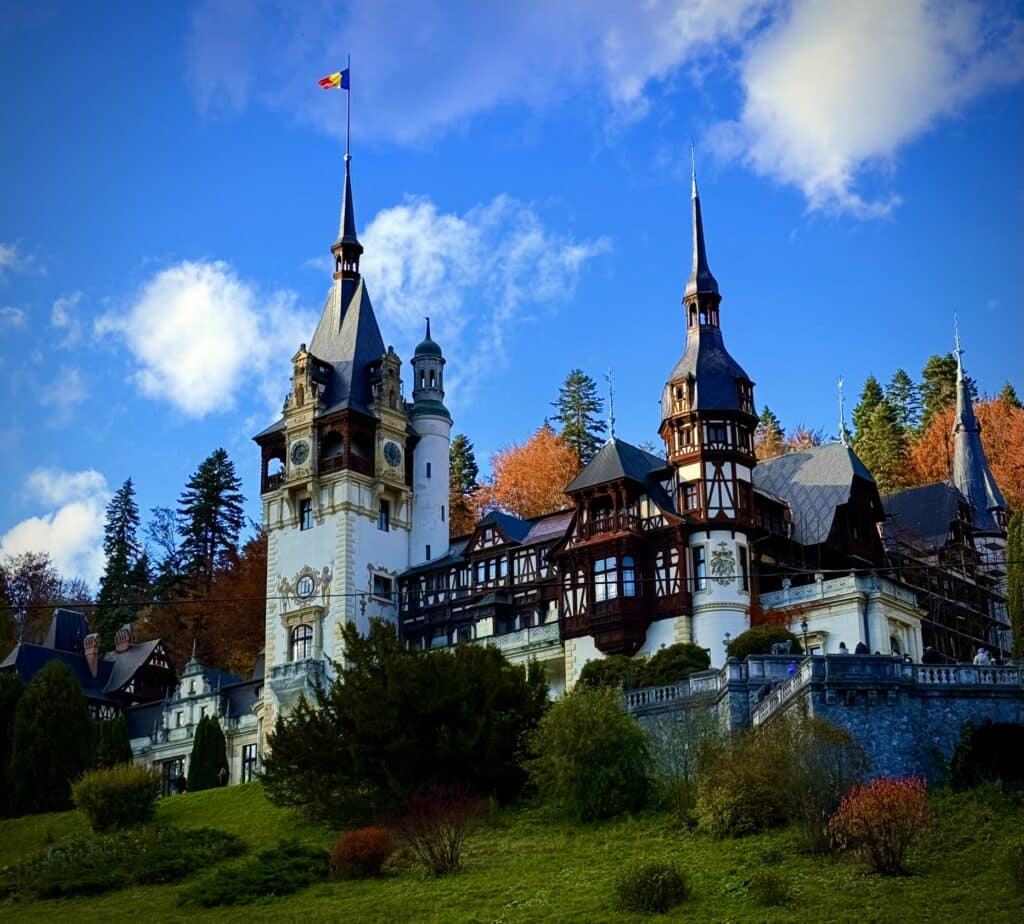
Peles Castle – Romania
Salt mines
Some of Romania’s oddest attractions are underground. The salt mines you can walk straight into are cavernous and faintly surreal. Slanic Prahova and Praid are huge, echoing chambers, while the famous Salina Turda, deeper into Transylvania, has been turned into a kind of subterranean theme park, complete with a Ferris wheel, a boating lake, and an amphitheatre carved into the salt.
Wild gorges and lakes: Bicaz, Siriu, and Lake Colibita
Go deeper and the Carpathians turn wild. The limestone walls of the Bicaz Gorges drop away beside a narrow, twisting road near the Red Lake (Lacu Rosu), and it’s one of the most dramatic drives in the country. Further east, around Siriu and Intorsura Buzaului, adventure tourism is taking off, with hiking, biking, and trips around the Siriu reservoir. Up north, Lake Colibita, nicknamed the Transylvanian Sea, is a calm, mountain-ringed reservoir made for kayaking, swimming, and quiet stays by the water.
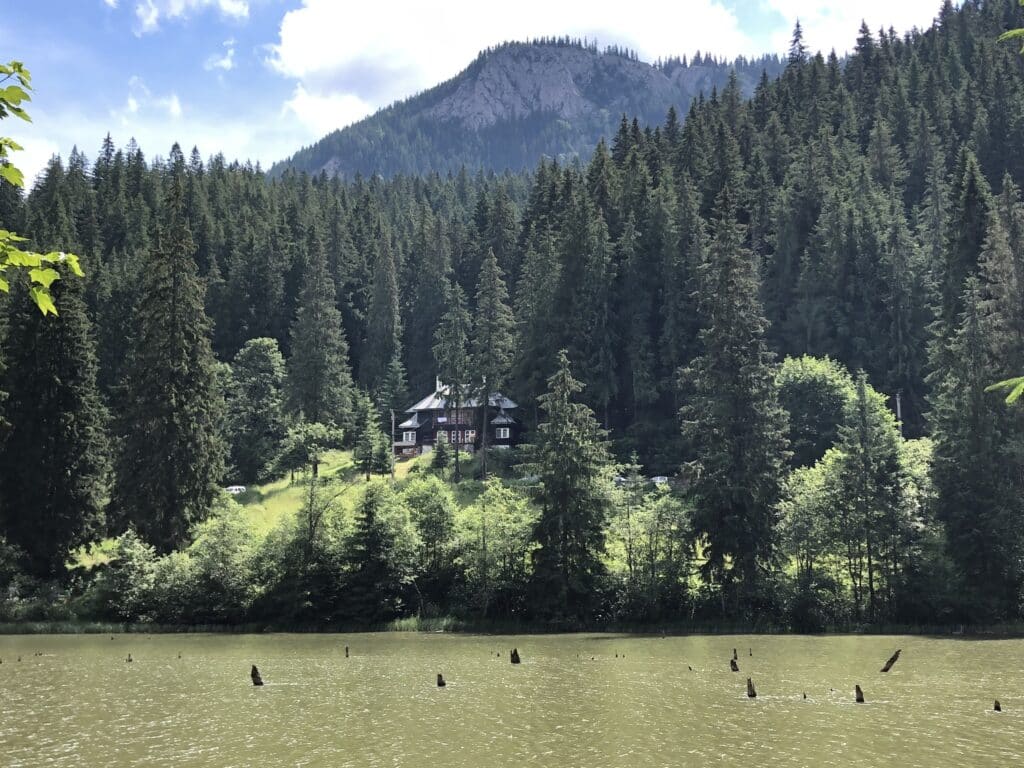
The Red Lake – eastern Romania
The legendary roads: Transfagarasan and Transalpina
Then there are the roads that put Romania on every driver’s wish list. The Transfagarasan climbs past 2,000 metres in a frenzy of hairpins, past Balea Lake and its waterfall, with Vlad the Impaler’s real fortress, Poenari Citadel, perched nearby. The Transalpina, the highest road in the country, crosses the Parang Mountains over wide-open alpine pasture. Both are summer-only, and both stay with you long after the trip.
Skiing and winter
Come winter, the same mountains turn into ski country. Poiana Brasov is the flagship resort, while the Prahova Valley (Sinaia, Predeal, Azuga) keeps slopes within easy reach of Bucharest.
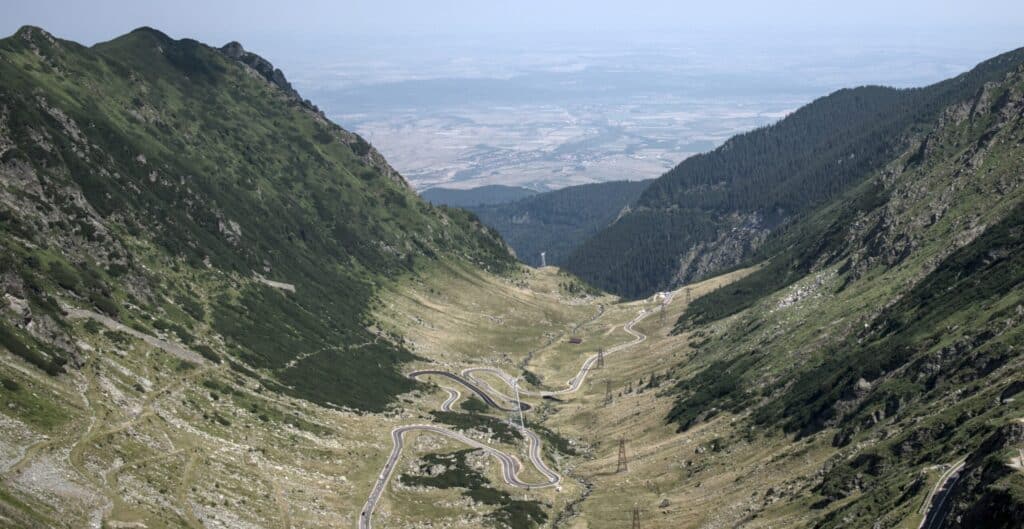
The best mountain road in the World – Transfagarasan
⚠️ About the bears. The Carpathians hold the largest brown bear population in Europe, and encounters are real, especially along the roadsides near Sinaia, Busteni, and the Transfagarasan. Never feed or approach a bear, don’t stop the car to photograph one, store food securely, and ask locally before you set off on a hike. Take it seriously and the wildlife becomes one of the best parts of the trip. Watching bears from a proper hide is something you won’t forget.
Best for hikers, drivers, skiers, castle lovers, and anyone with an appetite for adventure. There’s genuinely something here for everyone.
Transylvania: Castles, Citadels, and Saxon Villages
Transylvania is the Romania of everyone’s imagination, but the real thing is stranger and richer than the Dracula merchandise lets on. Picture a high plateau ringed by mountains, scattered with medieval Saxon and Hungarian towns, fortified churches, and walled citadels, plus some of the most atmospheric villages left in Europe. For a lot of travelers this is the most rewarding part of the country, and a strong candidate for the best place to visit in Romania, full stop. And getting to Transylvania is not difficult at all.
The cities: Brasov, Sibiu, and Cluj-Napoca
Brasov is the natural base. Its medieval core wraps around the Gothic Black Church (the largest Gothic church between Vienna and Istanbul), a busy main square, the narrow Rope Street, and Mount Tampa rising right behind town, with a cable car to the top. Even though it is a small city, you have plenty of things to do in Brasov.
Sibiu, a former European Capital of Culture, is the prettiest of the three. Think pastel facades, cobbled squares, the Bridge of Lies, the excellent Brukenthal Museum, and rooftops with their famous half-shut “eyes”. Its upper and lower towns are made for aimless wandering.
Cluj-Napoca is the young, cultured one. A student city with the best cafe, music, and festival scene in the country (Untold and, nearby, Electric Castle), anchored by St. Michael’s Church and the Matthias Corvinus statue.
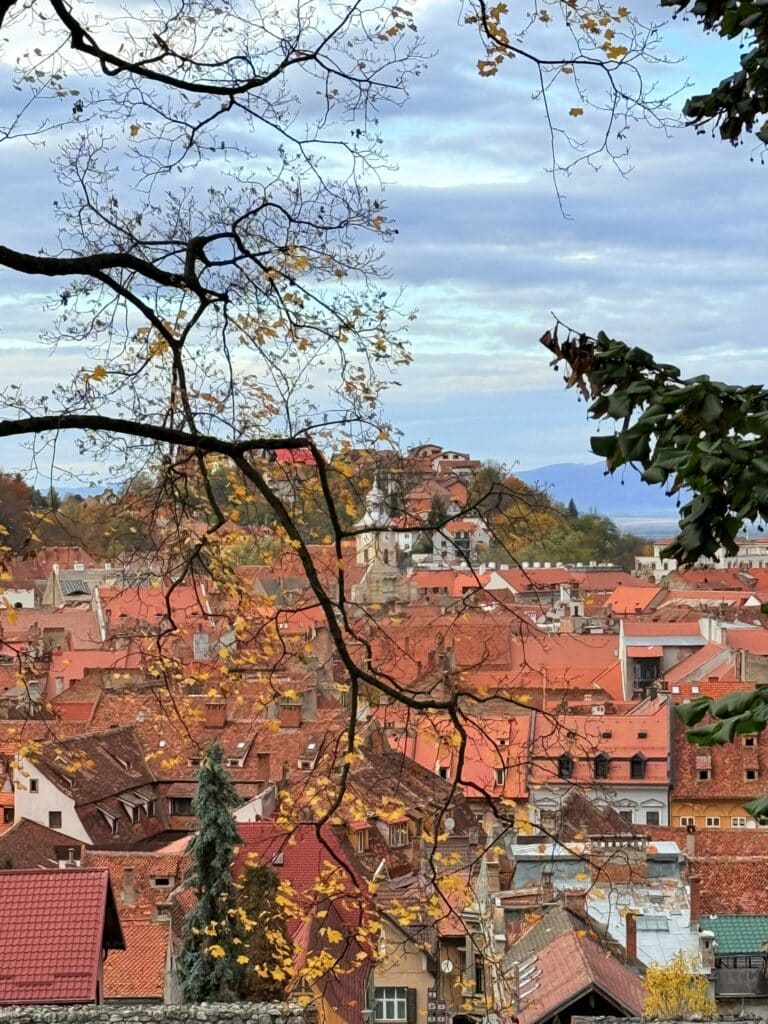
Brasov, Transylvania
Citadels and fortified churches: Sighisoara, Biertan, Feldioara
The fortified heritage is Transylvania’s quiet glory. Sighisoara is a perfectly preserved, UNESCO-listed citadel of pastel towers and a landmark Clock Tower, and it happens to be the birthplace of Vlad the Impaler. Biertan has one of the finest fortified Saxon churches, famous for its multi-bolt door. And the less-visited Feldioara, a fortress of the Teutonic Knights, is being restored and rewards anyone who likes their history without a crowd.
Country life, traditional experiences, and bear watching
The villages are the real prize. You can spend days in working farm communities, eat meals cooked straight from the garden, try your hand at rural crafts, and join bear-watching trips from hides in the forests nearby. It’s the slow, authentic side of Romania that no city can give you.
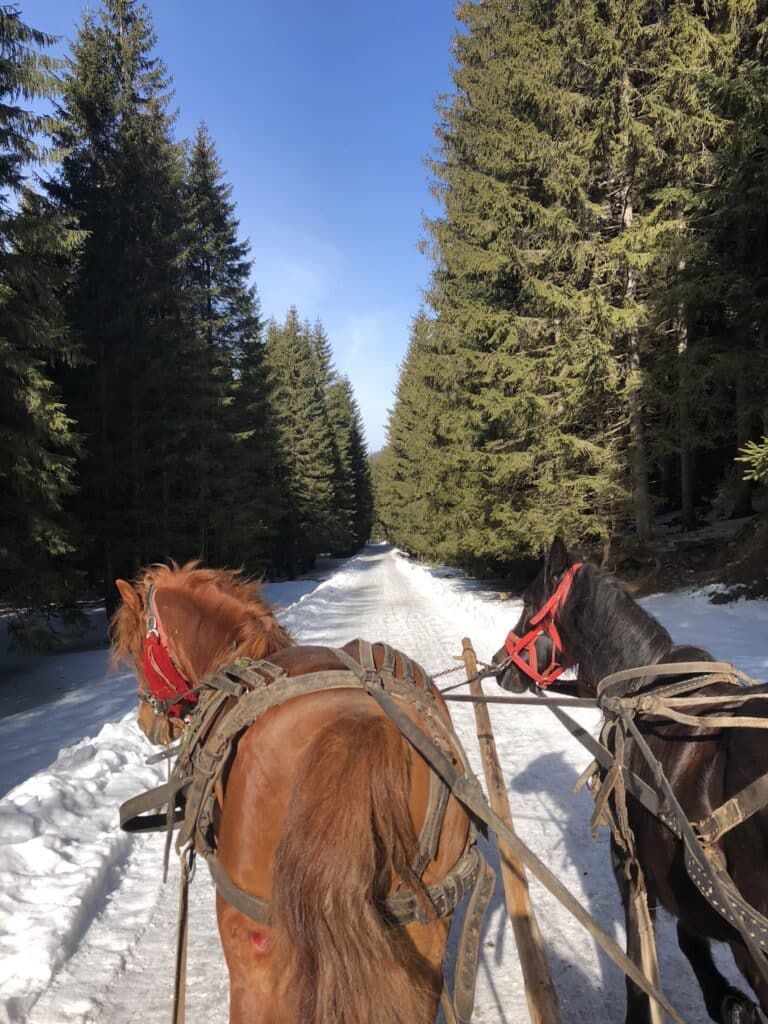
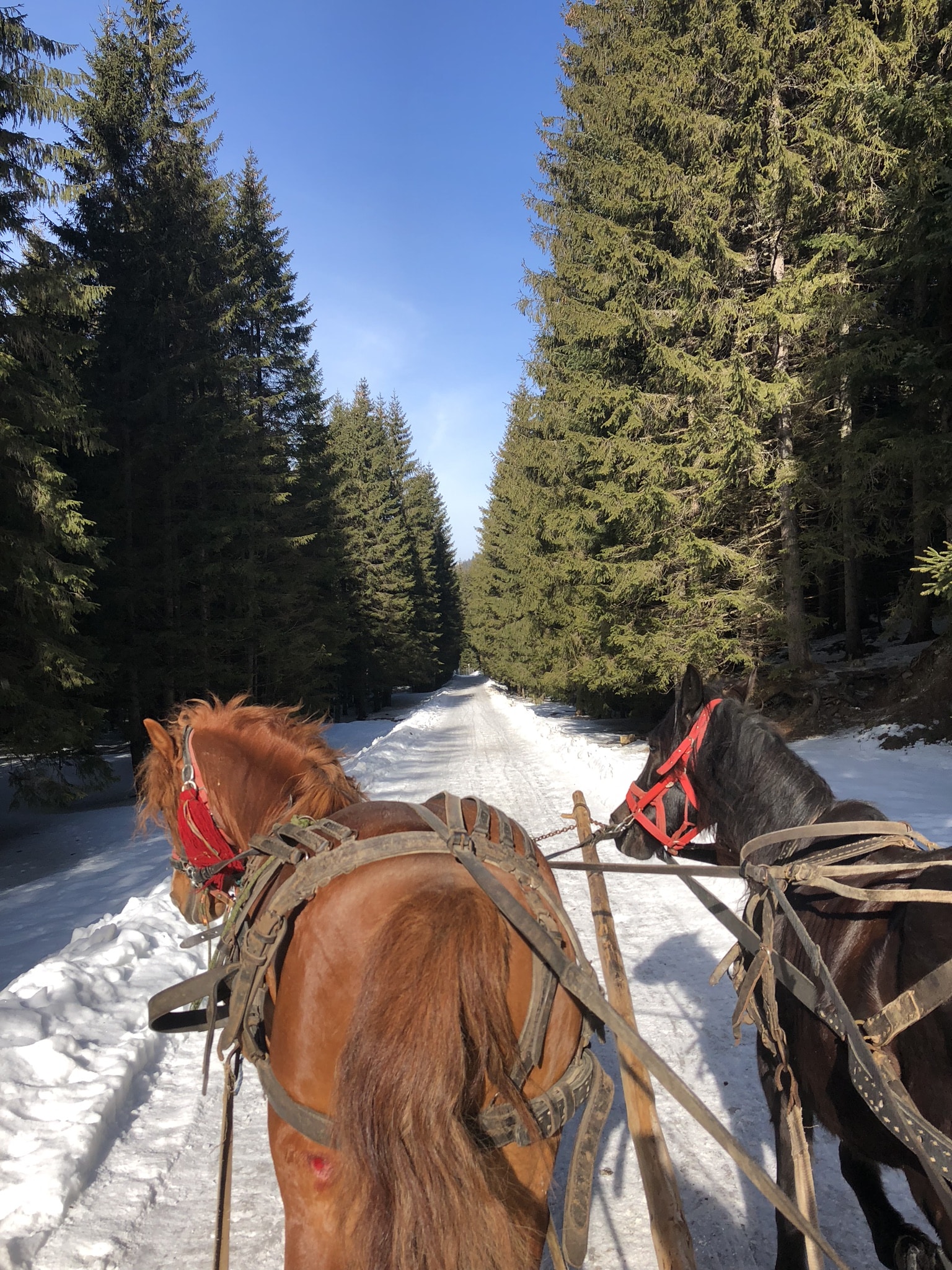
Sledge pulled by horses, Transylvania
Viscri and the King Charles connection
The tiny Saxon village of Viscri, with its whitewashed UNESCO-listed fortified church, became known around the world thanks to King Charles III. He fell for the region, bought and restored property here, and has spent years championing its old way of life and its conservation. Viscri is the emotional center of Saxon Transylvania, and a small case study in how tourism can actually keep a community alive.
Sleep in a nobleman’s estate: Miclosoara and Baraolt
Over in the Szekely Land, in villages like Miclosoara and around Baraolt, you can sleep in restored manor houses that once belonged to Hungarian nobility, eating dishes from the estate’s own kitchen and garden. It’s one of the most singular places to stay in the whole country, a living piece of old aristocratic Transylvania.
Off the map: Comandau
And if you want to vanish completely, the remote forest village of Comandau, deep in Covasna county at the end of an old narrow-gauge forestry railway, is about as far off the beaten track as Romania gets.
⚠️ An honest word on Bran Castle. Bran Castle gets sold as “Dracula’s Castle”, but I’ll be straight with you: it’s overrated. The Dracula link is thin, and the crowds are not. Stop briefly if you must, then spend your real time on the region’s quieter treasures.
Best for culture and history lovers, slow travelers, photographers, and anyone chasing the rural Europe that has disappeared everywhere else.
The Painted Monasteries of Bucovina
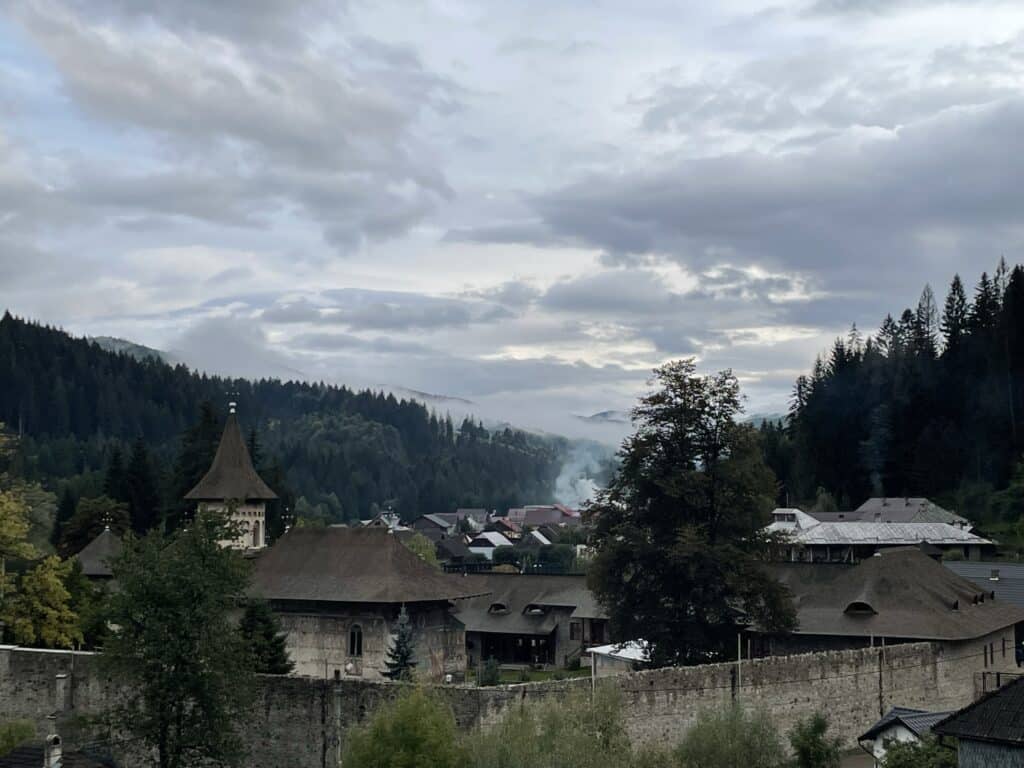
Up in the far northeast, Bucovina holds one of the most extraordinary sights in the whole country: a cluster of 15th and 16th century monasteries whose outer walls are painted, top to bottom, with biblical scenes that have somehow survived 500 years of weather. Several are UNESCO World Heritage Sites, and honestly there’s nothing else like them anywhere.
Voronet, Sucevita, Moldovita, and Humor
The “Voronet blue” of Voronet Monastery, often called the Sistine Chapel of the East and famous for its sweeping Last Judgment fresco, is reason enough to make the trip. Add Sucevita, the largest and most heavily fortified, with its remarkable Ladder of Virtues; the graceful Moldovita; and the intimate little Humor, and you’ve got a route through painted, fortified abbeys set in soft green hills. Nearby Putna, founded by Stephen the Great (who built many of these places), holds his tomb and is still a deeply important spiritual site.
The wider region
The countryside around them is a draw in itself. It’s quiet, traditional, and shaped by Orthodox life, with the painted houses of Ciocanesti and the distinctive black pottery of Marginea worth seeking out.
Best for anyone who loves art, history, and spirituality, and for travelers who’d rather sit with a place than tick it off a list.
Maramures and Oradea: Living Tradition and Art Nouveau
The northwest gives you two completely different experiences. One is rooted deep in the past, the other freshly polished, and together they make a real case for reaching this less-traveled corner.
Maramures, where the old life goes on
Maramures is the most traditional region in Romania, and arguably in Europe. Life here still follows the seasons. You’ll see hand-built wooden churches with soaring shingled spires (eight of them UNESCO-listed), horse carts on country lanes, intricately carved wooden gates, and woodwork everywhere you look.
The standouts are the famously cheerful Merry Cemetery of Sapanta, where painted, poem-inscribed grave markers turn death into folk art; the serene Barsana Monastery complex; and the Vaser Valley steam train, a working narrow-gauge forestry railway that climbs into the mountains. Sober but essential is Sighetu Marmatiei, home to the Memorial to the Victims of Communism in a former prison. The real pull, though, is just the rhythm of rural life. A great experience not to be missed is taking a ride with the steam train through the mountains in Viseu.
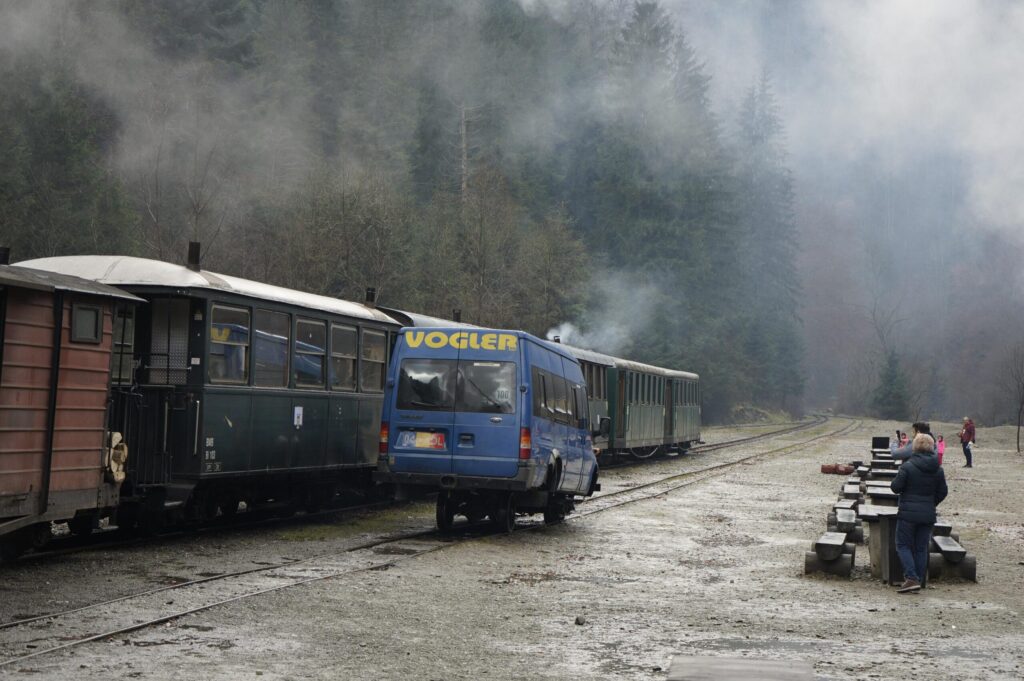
Steam train in Viseu, Maramures
Oradea, the Art Nouveau surprise
A drive away, Oradea is one of Romania’s recent surprises: a city of carefully restored Art Nouveau buildings, all pastel and ornament. Walk past the Black Eagle Palace, the unusual Moon Church, and the restored Oradea Fortress, then go soak in the thermal spas at nearby Baile Felix. It’s elegant, walkable, and still well under the international radar.
Best for slow travelers and culture seekers in Maramures, and for architecture lovers and spa-goers in Oradea.
The Apuseni Mountains: For the Adventure Travelers
The Apuseni Mountains, over in the western Carpathians, are built for adventure travel. This is karst country, full of caves, gorges, underground rivers, and high plateaus, and it’s far less developed than the eastern ranges. That’s exactly the point. If you want wilderness without the crowds, this is one of the best places to visit in Romania.
Caves and underground worlds
The signature experiences are literally beneath your feet. The Scarisoara Ice Cave holds one of the largest and oldest underground glaciers in Europe, its ancient ice glowing in the dark. The Bears’ Cave, named for the prehistoric cave-bear fossils found inside, is a beautifully formed show cave of stalactites and stalagmites.
Gorges, plateaus, and the outdoors
Above ground, the Padis plateau and the dramatic karst basin of Cetatile Ponorului anchor the Apuseni Natural Park, with endless room for hiking, caving, canyoning, rafting and mountain biking. The remote villages of the Moti highland people add a tough, self-reliant mountain culture to the scenery.
Best for active, adventurous travelers, cavers, and hikers who want real wilderness without the queues.
The Danube at Orsova: Fishing and the Iron Gates
Where the Danube cuts through the mountains on Romania’s southwestern border, Orsova sits on a wide blue stretch of river that feels more like a fjord than a frontier. It’s one of the country’s most quietly dramatic spots, and foreign visitors almost completely overlook it.
River fishing
This is one of the best places in Romania for serious river fishing. The Danube here is known for big wels catfish (somn in Romanian) and other freshwater species, and guided fishing trips out of Orsova and nearby Eselnita pull in anglers hoping for a trophy catch on the calm, deep water above the Iron Gates dam.
The Iron Gates and the Cazanele Dunarii
Even if you never pick up a rod, the setting alone is worth the drive. Boat trips into the Iron Gates, the Cazanele Dunarii, glide between sheer cliffs where the river suddenly narrows, past the huge rock sculpture of Decebalus carved straight into a cliff face (the tallest rock relief in Europe) and the riverside Mraconia Monastery. Across the water you can pick out the Roman-era Tabula Traiana plaque, and the great Iron Gates dam marks the far end of the gorge.
Best for anglers, photographers, and travelers after dramatic river scenery well off the tourist trail.
Oltenia: Monasteries, Mountains, and Heritage Stays
Oltenia, in the southwest, is a quietly rich region that links the southern Carpathians to the Danube plain. It’s a place of monasteries, spa towns, river valleys, and folk craft, uncrowded and authentic, and easy to slot into a road trip that takes in the Transalpina.
Monasteries and the Olt valley
The scenic Olt valley runs past some of the country’s most important monasteries: Cozia, one of the oldest, where the medieval ruler Mircea the Elder is buried, and the magnificent UNESCO-listed Horezu Monastery, the masterpiece of the ornate Brancovenesc style. The nearby town of Horezu is just as famous for its traditional ceramics, which are themselves recognized as UNESCO intangible cultural heritage. Throw in the cave monastery of Polovragi and you’ve got plenty for anyone drawn to faith and history.
Mountains, spas, and oddities
The forested hills hide caves, gorges, and the old spa towns of the Olt valley, Calimanesti-Caciulata and Baile Olanesti among them. For something stranger, the Trovants of Costesti, the so-called growing stones, pull in the curious.
Where to stay
For a bed with character, one place stands out: the Conacul Maldar, a beautifully restored boyar manor that offers an atmospheric stay rooted in the region’s aristocratic past, and a fine base for exploring Oltenia’s monasteries and hills.
Best for travelers drawn to monasteries, heritage, folk craft, quiet landscapes, and an unhurried pace.
Timisoara and the Banat: What to See in Western Romania
Timisoara, the capital of the Banat, is Romania’s most Central European city, and a recent European Capital of Culture. This is where the 1989 revolution that brought down the Communist regime began, and the city carries that history with a certain quiet confidence. If you’re flying in from the west, it makes an elegant start or finish to a trip.
The squares and the architecture
Timisoara’s pride is its three grand squares, framed by ornate, freshly restored facades. There’s the baroque Union Square (Piata Unirii), where Serbian and Catholic cathedrals face each other across the pastel buildings; Victory Square (Piata Victoriei), anchored by the Opera House and the soaring Orthodox Cathedral; and Liberty Square (Piata Libertatii). The medieval Huniade Castle and the green banks of the Bega Canal round out the center. Fittingly for a city that likes to look forward, Timisoara was one of the first in Europe lit by electric street lamps.
The Banat region
Beyond the city, the Banat is a cultural patchwork, with Serbian, Hungarian, German, and Romanian threads woven together over centuries and still visible in the churches, the food, and the wine (the Recas vineyards are well known). To the south, the region climbs into the wild Caras-Severin mountains, home to the faded grandeur of the Roman-era spa town of Baile Herculane and a scattering of dramatic natural sights tucked into the hills.
Best for city travelers, architecture and history lovers, wine drinkers, and anyone entering Romania from the west.
Romania’s Personality Match: The Verse Voyager Index
We don’t only rate places by what there is to see. We score them the same way we read travelers, across the five core personality dimensions, so you can tell at a glance whether a country fits the way you move through the world. Here is how Romania lands.
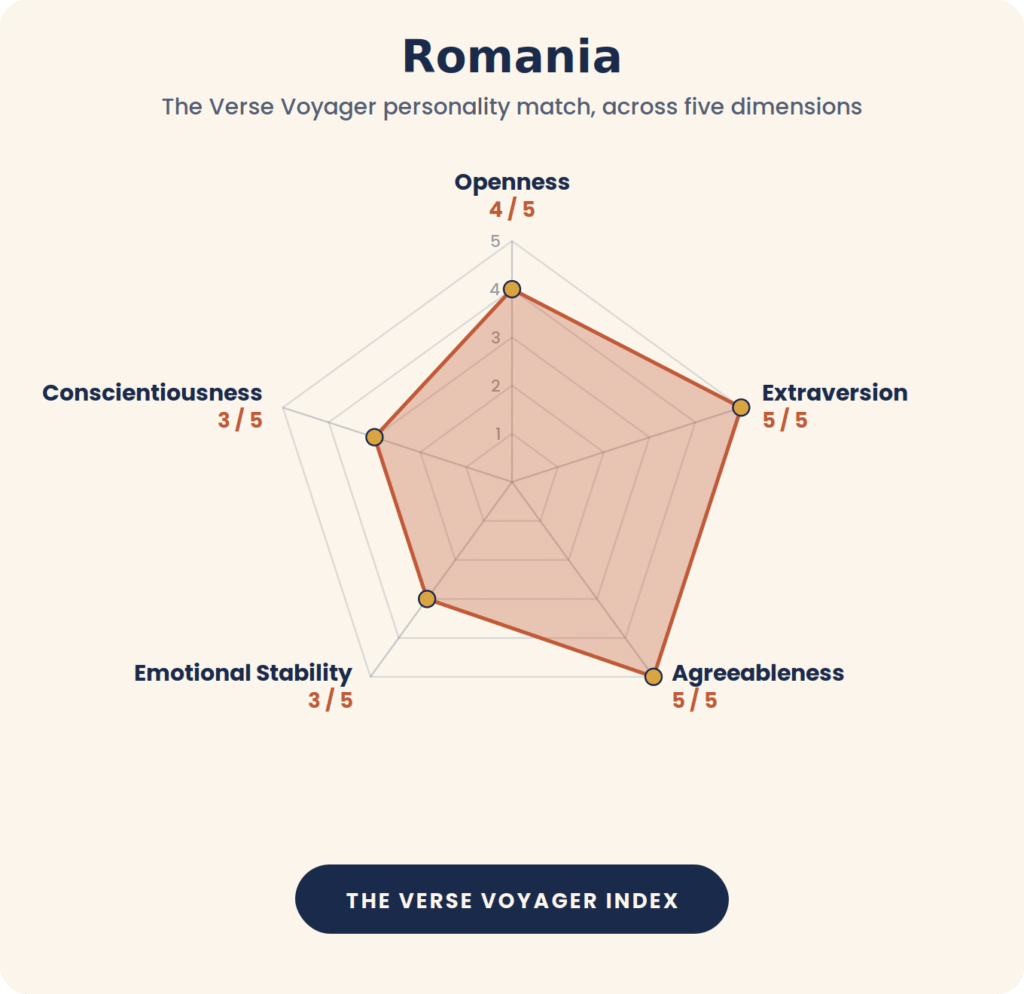
Romania’s travel personality across five dimensions.
A quick read of the profile:
- Extraversion, 5 out of 5. Romania gets loud and social when it wants to, from Bucharest and Cluj nightlife to the summer crowd at Vama Veche and a packed festival calendar. It also has a quiet, inward half, the monasteries, the Delta, a Maramures village at dawn, so the country swings easily between the two.
- Agreeableness, 5 out of 5. This is the one locals will recognize at once. Romanian hospitality is real, and a little overwhelming in the best way. Expect to be fed.
- Openness, 4 out of 5. Romania rewards the curious without ever overwhelming them. It is offbeat and full of things most of Europe forgot it had, yet easy enough to navigate that you rarely feel out of your depth.
- Emotional Stability, 3 out of 5. It is a safe EU country, but it still runs a little loose. Rural logistics, mountain roads, and the odd bear keep you on your toes, which is part of the appeal if you travel that way.
- Conscientiousness, 3 out of 5. Things mostly work, just not always to a tidy schedule. Come with a plan and a willingness to let it bend.
That five-dimension profile is the Verse Voyager Index for Romania. There is no single number to average; the shape of the chart is the score. Read together, it points to a country that suits warm, sociable, curious travelers who don’t mind a bit of unpredictability, and asks very little of anyone who needs everything buttoned down.
Not sure where you land on these five dimensions? Take the free quiz and we’ll match you to the version of Romania that fits.
Which Part of Romania Suits You?
Here’s the catch with any “best places to visit in Romania” list: it can’t tell you where you, specifically, will have the best time. The person who lives for Vama Veche’s late nights and Cluj’s cafe culture wants a wildly different trip from the one who comes alive in a silent Bucovina monastery or alone on a ridge in the Apuseni.
A rough guide:
- Love nature and quiet? Danube Delta, Bucovina, Maramures, Lake Colibita.
- After adventure and the outdoors? Apuseni Mountains, the Carpathians, Siriu, the Transfagarasan.
- Here for culture and history? Transylvania’s citadels, Timisoara, the painted monasteries, Dobrogea’s ancient cities.
- Want cities and nightlife? Bucharest, Cluj, Brasov, and Vama Veche in summer.
- Chasing something truly unusual? A manor stay in Miclosoara, bear watching in Transylvania, or fishing the Danube at Orsova.
This is how we think at The Verse Voyager. Rather than hand you a generic itinerary, we build trips around your real personality across five core dimensions, so the destinations, the pace, and the experiences fit the way you actually travel, not the way a guidebook assumes everyone does. Connect with us to understand better what fits you.
Common Questions About Visiting Romania
Is Romania worth visiting? Yes. Romania has dramatic, varied landscapes, the largest brown bear population in Europe, old-growth forests, UNESCO-listed monasteries and Saxon villages, very low prices, and far fewer crowds than Western Europe, which makes it one of the continent’s best-value and most rewarding destinations.
What are the best places to visit in Romania? The best places to visit in Romania include Bucharest, the Danube Delta and coast in Dobrogea, the Carpathian Mountains, Transylvania’s citadels and Saxon villages, the painted monasteries of Bucovina, traditional Maramures, Oradea, the Apuseni Mountains, the Danube at Orsova, Oltenia, and Timisoara.
What are the best things to do in Romania? The best things to do in Romania include driving the Transfagarasan mountain road, watching wild brown bears from a forest hide, taking a boat through the Danube Delta, and seeing the 500-year-old frescoes of the painted monasteries in Bucovina.
When is the best time to visit Romania? Late spring (May and June) and early autumn (September) give you the best mix of mild weather and small crowds. Summer (July and August) is ideal for the mountains and the Black Sea coast, and it’s the only time the high passes are fully open. Winter, December through March, is the season for skiing and Christmas markets.
How many days do you need in Romania? Plan for at least seven days to see Bucharest, Transylvania, and a slice of the Carpathians. With ten to fourteen days you can comfortably add the Danube Delta, Bucovina, or Maramures.
Is Romania safe for tourists? Romania is one of the safer countries in Europe for travelers, with low rates of violent crime. The main outdoor risk is meeting brown bears in the Carpathians, so never feed or approach them, store food securely, and follow local advice when you hike.
Is Romania expensive to visit? No. Romania is one of the most affordable countries in the EU. Food, accommodation, transport, and attractions all cost noticeably less than in Western Europe, so your budget goes much further.
Do people speak English in Romania? English is widely spoken among younger Romanians and across the tourism industry in cities and at major sights. In remote villages it’s less common, so a few words of Romanian are appreciated.
How do you get around Romania? Renting a car is the best way to explore, since many of the top places to visit are villages, mountain roads, and viewpoints that public transport doesn’t reach. Trains link the major cities, and the Bucharest to Brasov route is especially scenic.
What is Romania famous for? Romania is famous for the Carpathian Mountains and their wildlife, Transylvania’s castles and fortified Saxon villages, the Dracula legend, the Danube Delta, the painted monasteries of Bucovina, and the dramatic Transfagarasan road.
Is Bran Castle worth visiting? Bran Castle is heavily marketed as “Dracula’s Castle”, but the connection is thin and the site is often crowded. Many travelers find Romania’s lesser-known citadels, like Sighisoara, Biertan, and the Saxon fortified churches, far more rewarding.
Start With Who You Are, Not Just Where to Go
Romania gives back about as much as you bring the right expectations to it. The best places to visit in Romania aren’t the same for everyone, and the gap between a good trip and an unforgettable one usually comes down to matching the right region, pace, and experiences to the kind of traveler you actually are.
That’s what we do at The Verse Voyager. Our free personality quiz maps how you travel across five core dimensions, and we use it to design trips, in Romania and beyond, built around you instead of a one-size-fits-all checklist.
Let’s plan your trip to Romania together.
More about Romania: see all our Romania travel guides.