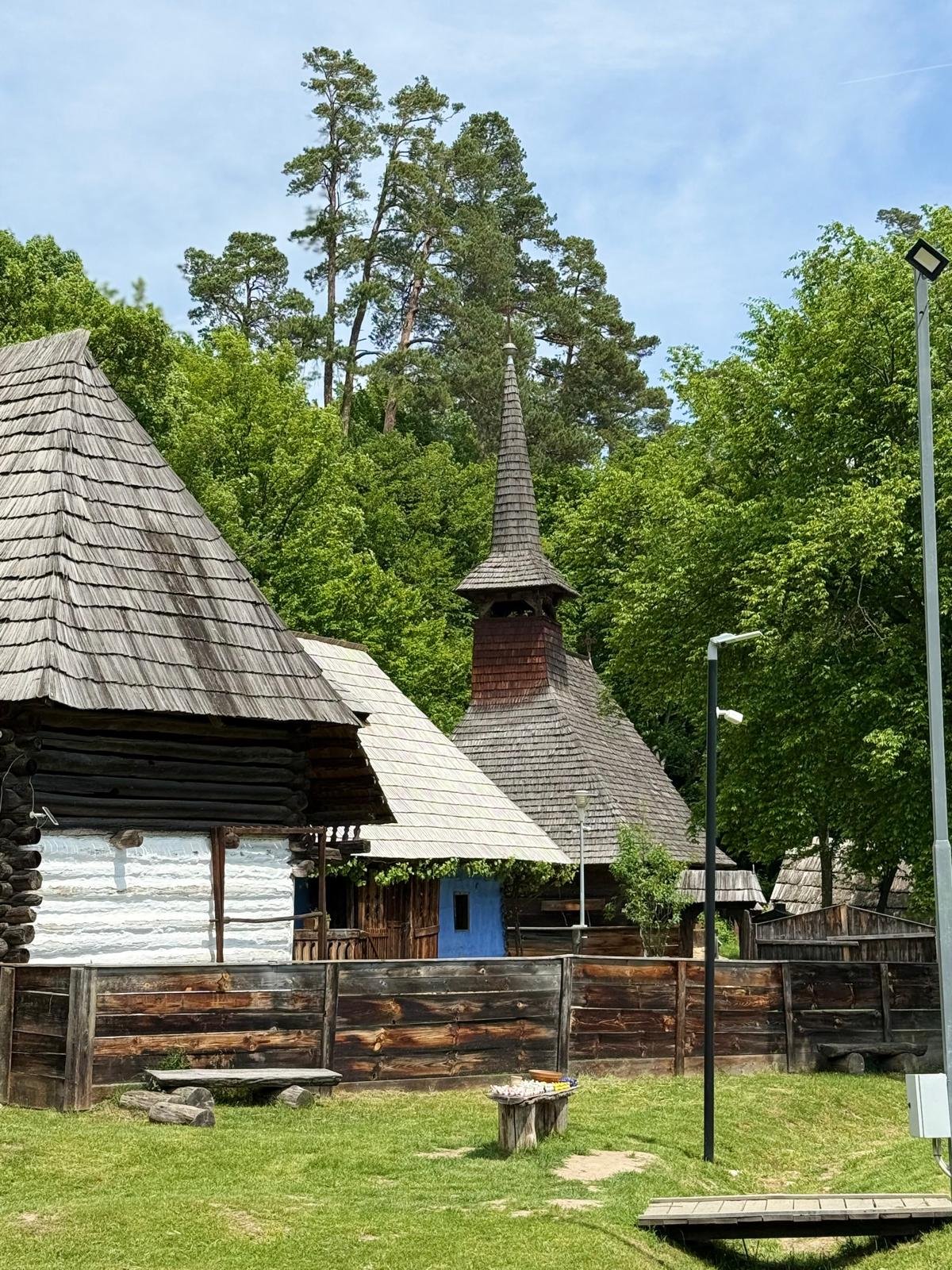
Table of Contents
Transylvania is the part of Romania everyone thinks they already know, and almost nobody does. They picture a castle, a vampire, some fog. What they get instead, if they come with the right expectations, is a high plateau ringed by the Carpathians, scattered with eight-hundred-year-old Saxon villages, walled churches built to survive sieges, brown bears in the forests above the pastures, and a pace of life that most of Europe gave up a century ago.
So when people ask me about the best things to do in Transylvania, I never start with a list. I start with a question: what kind of traveler are you? Because the same week here can be the trip of a lifetime for one person and a slow grind for the one sitting next to them, and the difference has nothing to do with the destinations. It has to do with you.
I’m Romanian, I’ve been designing trips to this region for years, and Transylvania is the place I send travelers to more than almost any other. This guide is the honest version: where it is, how to get there, when to come, what it costs, what to actually do, and where the famous stuff is overrated. The things to do in Transylvania span everything from medieval citadels and bear watching to mountain roads and half-empty Saxon churches nobody told you about. By the end you’ll know whether this is your kind of place, and exactly how to do it well.
Summary about Transylvania
If you only read one section, read this one.
- What it is: the central plateau of Romania, wrapped by the Carpathian Mountains, full of medieval Saxon and Hungarian towns, fortified churches, walled citadels, wild forests, and living village traditions.
- Why go: authentic rural Europe that has vanished nearly everywhere else, some of the continent’s best wildlife, UNESCO heritage by the armful, and prices that still feel gentle.
- The best things to do in Transylvania: wander Brasov, Sibiu, and the citadel of Sighisoara; sleep in a Saxon or Szekely village; watch wild bears from a proper hide; visit the fortified churches; drive a mountain pass; and skip the tourist trap that everyone tells you is the highlight.
- When to go: May and June or September for the best mix of weather and quiet. July and August for full mountain access. December for the Christmas markets.
- How long: four days minimum, a week to do it justice, ten days to do it slowly.
- How to get around: rent a car. A Transylvania road trip is the whole point.
Transylvania in three numbers
Before the long version, here’s the region at a glance. The infographic below captures the three things that make Transylvania unlike anywhere else in Europe, and each one shapes the trip you’ll have.
[IMAGE: transylvania-by-the-numbers-infographic.png | Transylvania by the numbers infographic: brown bear population, vanishing Saxons, and UNESCO fortified churches]
First, the wildlife. A 2025 genetic census put Romania’s brown bear population at between 10,419 and 12,770 animals, the largest in Europe outside Russia, and almost all of them live in the Carpathians that ring Transylvania. That’s why responsible bear watching is one of the signature things to do here. Second, the people. The Transylvanian Saxons who built the walled towns and fortified churches numbered around 300,000 in the 1930s, and after the communist-era emigrations fewer than about 12,000 remain today.
That collapse is exactly why the villages feel suspended in time, and why visiting now matters. Third, the heritage. More than 150 fortified churches still stand from an original 300, seven villages are inscribed as a UNESCO World Heritage Site, and the region holds two UNESCO sites in total once you add the citadel of Sighisoara. Keep those three numbers in mind as you read on, because the bears, the Saxon villages, and the fortified churches are the heart of everything that follows.
Now the long version, the one that actually helps you plan.
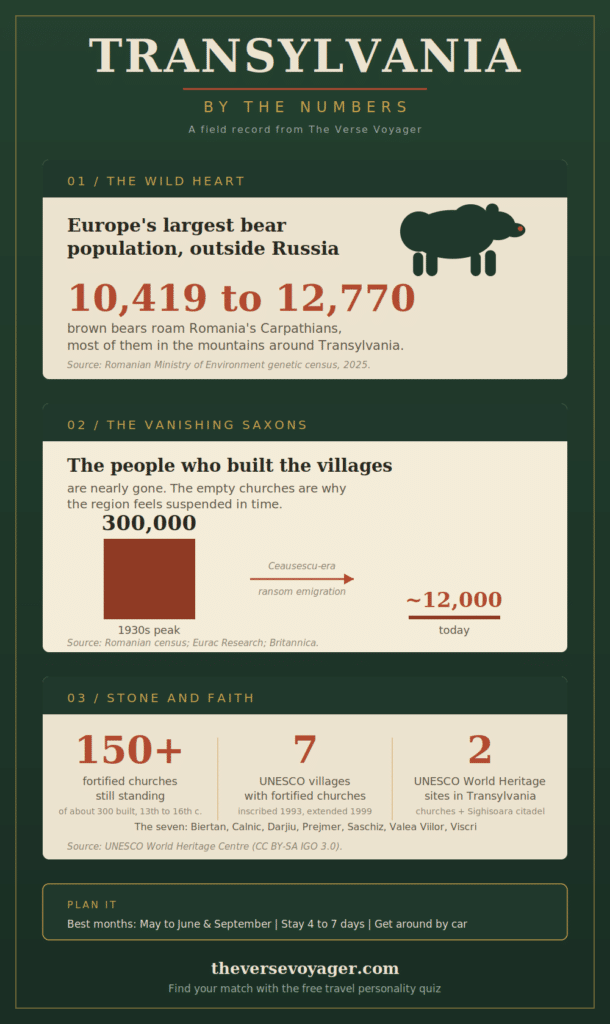
Some interesting numbers about Transylvania
This route rewards some temperaments more than others. Take the two-minute quiz and find out whether it fits the way you actually travel, before you copy a single day of it.
Where Transylvania Actually Is, and a Short History That Explains Everything
Transylvania sits in the center and northwest of Romania, a broad plateau cradled on three sides by the arc of the Carpathian Mountains. The name comes from Latin, “the land beyond the forest,” which tells you how the rest of medieval Europe saw it: remote, wooded, on the far side of the mountains. That remoteness is exactly why so much survives here.
To understand the things to do in Transylvania, you need about ninety seconds of history, because the layers are the attraction.
For centuries this was a frontier of the Kingdom of Hungary. In the twelfth century the Hungarian kings invited German-speaking settlers east to defend the border, work the land, and build up trade. Those settlers became known as the Transylvanian Saxons, even though most of them came from the Rhine and Moselle regions rather than Saxony. They built the walled towns, the trade guilds, and the fortified churches that still define the landscape. Alongside them lived the Szekelys, a Hungarian-speaking people who guarded the eastern passes, and the Romanians, who farmed the valleys and the mountains and slowly became the majority.
Three peoples, three languages, three architectures, layered on the same ground for eight hundred years. That’s the texture you feel when you travel here. A Saxon church with a German inscription, a Hungarian-speaking village an hour away, an Orthodox monastery in the next valley, and Romanian spoken across all of it.
The Saxons didn’t come as ordinary peasants. In 1224 the Hungarian king Andrew II granted them the Diploma Andreanum, often called the Golden Charter, one of the oldest known documents of regional self-government in Europe. It gave the Saxon settlers their own elected leaders, their own judges, their own priests, and freedom from feudal landlords, in exchange for paying tax to the king and providing soldiers in time of war. That eight-hundred-year-old deal is why these communities built such wealthy, organized, self-reliant towns and villages, and why they fortified them so well. They governed themselves, so they defended themselves.
For most of that history Transylvania ran on a system of “three nations,” the Hungarian nobility, the Szekelys, and the Saxons, who shared political power while the Romanian majority was largely excluded from it. You don’t need the details, but knowing the shape of it makes the layered, slightly unequal feel of the old towns click into place.
The Szekely Land, in the east of the region around Covasna, Harghita, and Mures counties, is its own world within Transylvania. The Szekelys are Hungarian-speaking, were the frontier guardians of the medieval kingdom, and they kept their language, their carved wooden gates, their spas, and a fierce sense of identity right up to today. Drive from a Saxon village into Szekely country and the signs, the food, and the churches all change, even though you’ve crossed no border at all. For a traveler, that’s one of the quiet thrills of the place.
The Saxon story has a sad final chapter that you’ll see with your own eyes. In the 1930s there were around 300,000 Transylvanian Saxons. Under the communist regime, dictator Nicolae Ceausescu effectively sold them to West Germany, which paid a per-head ransom for each emigrant, and after 1989 the rest mostly left too. Today fewer than 15,000 Saxons remain in Romania, most of them elderly. Whole villages that their ancestors built for centuries now stand half empty, the great churches tended by a handful of caretakers. It’s melancholy, and it’s also the reason these places feel suspended in time. You’re walking through a culture in its twilight, which is part of why getting here now matters.
Keep that history in your back pocket. It makes every village, every church, and every awkwardly trilingual road sign make sense. For the full national picture, my complete guide to the best places to visit in Romania sets Transylvania against the rest of the country.
How to Get to Transylvania
One of the most common things people search before a trip is simply how to go to Transylvania, and the honest answer is that it’s easier than its remote reputation suggests.
Flying in directly. Transylvania has three useful airports. Cluj-Napoca (the busiest, with the most European connections), Sibiu (small, central, and beautifully placed for the Saxon villages), and Targu Mures (smaller still, handy for the middle of the region). If your trip is Transylvania and only Transylvania, flying straight into Cluj or Sibiu saves you a long transfer and is the move I’d recommend.
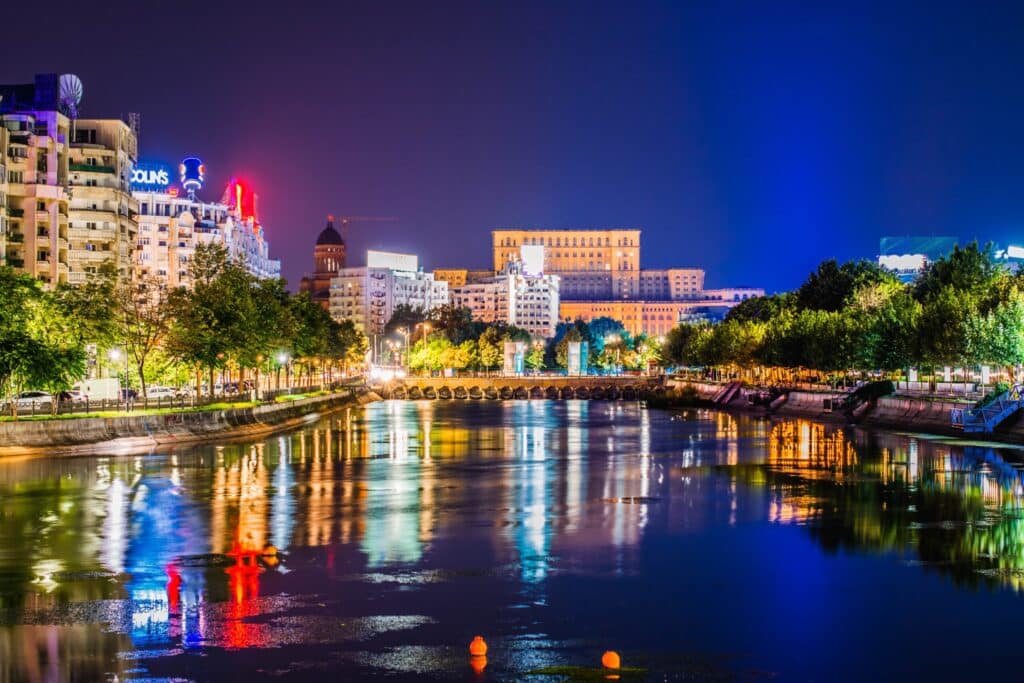
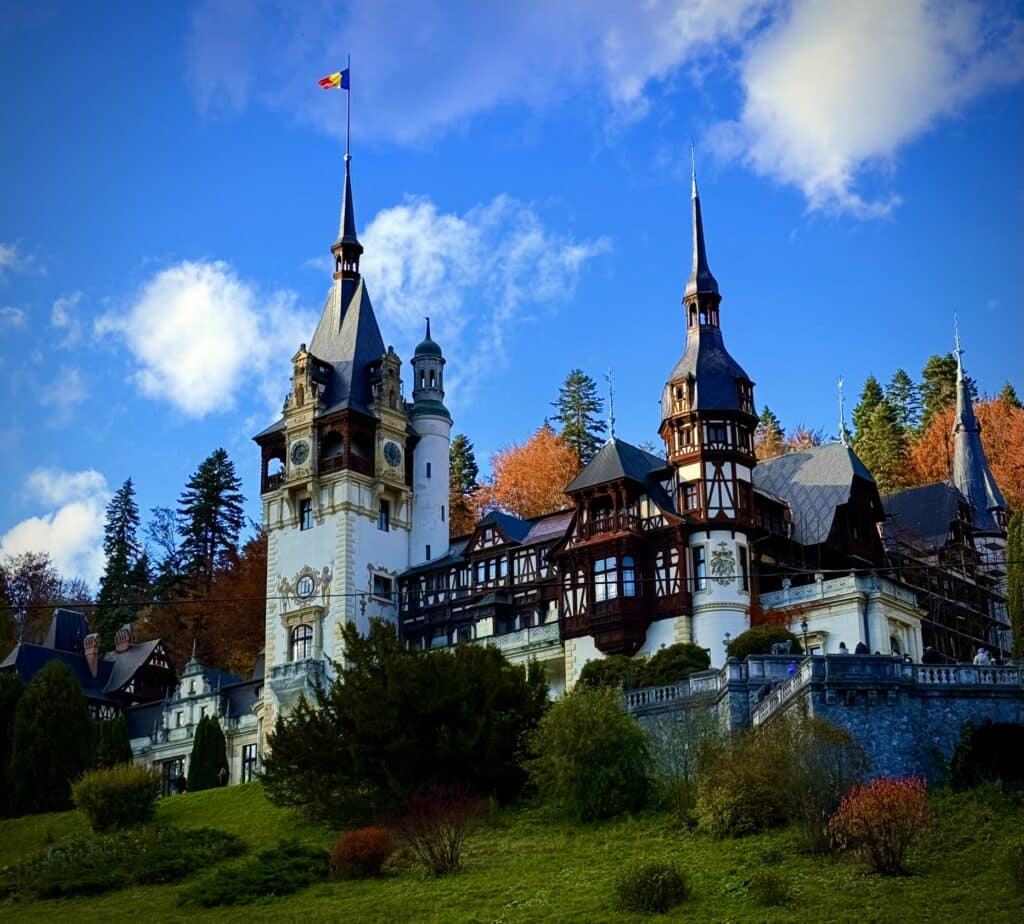
Bucharest to Transylvania. Most international visitors land in Bucharest, the capital, which sits south of the mountains rather than in Transylvania itself. From Bucharest to Transylvania you have two good options. The drive north through the Prahova Valley takes you over the mountains to Brasov in about two and a half to three hours, past Sinaia and Peles Castle, and it’s a lovely introduction to the Carpathians. The train on the same Bucharest to Brasov line is genuinely scenic, climbing through the gorges, and it runs frequently. Either way, Brasov is the natural gateway from the capital.
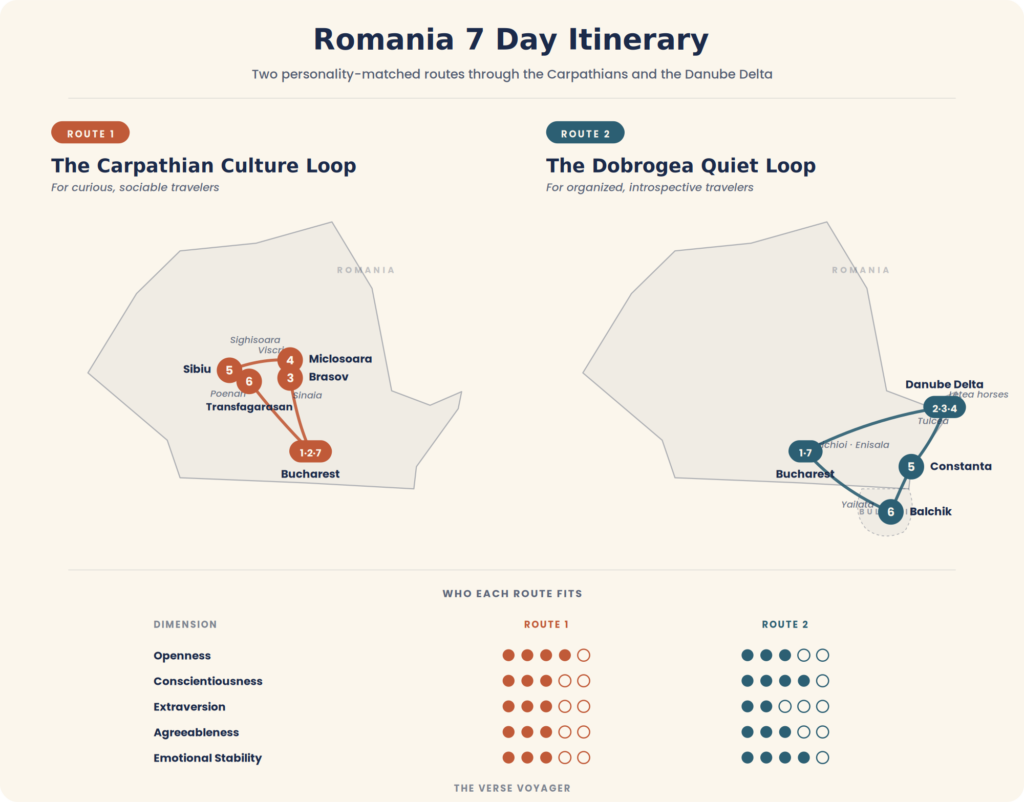
If you want to combine the two, I’ve mapped a full week that runs Bucharest up into Transylvania and back in my Romania 7 day itinerary, which gives you the exact route, the stops, and the timing.
Getting around once you’re there. Rent a car. I’ll keep saying it because it’s the single most important planning decision you’ll make. Transylvania’s best moments are villages, viewpoints, fortified churches, and mountain roads that buses simply don’t reach. Trains and coaches link the big cities well enough, but a Transylvania road trip without a car is a Transylvania road trip you only half do. Pick the car up at the airport on arrival and drop it on departure.
[IMAGE: bucharest-to-transylvania-prahova-valley-road.jpg | The mountain road from Bucharest to Transylvania winding through the Prahova Valley]
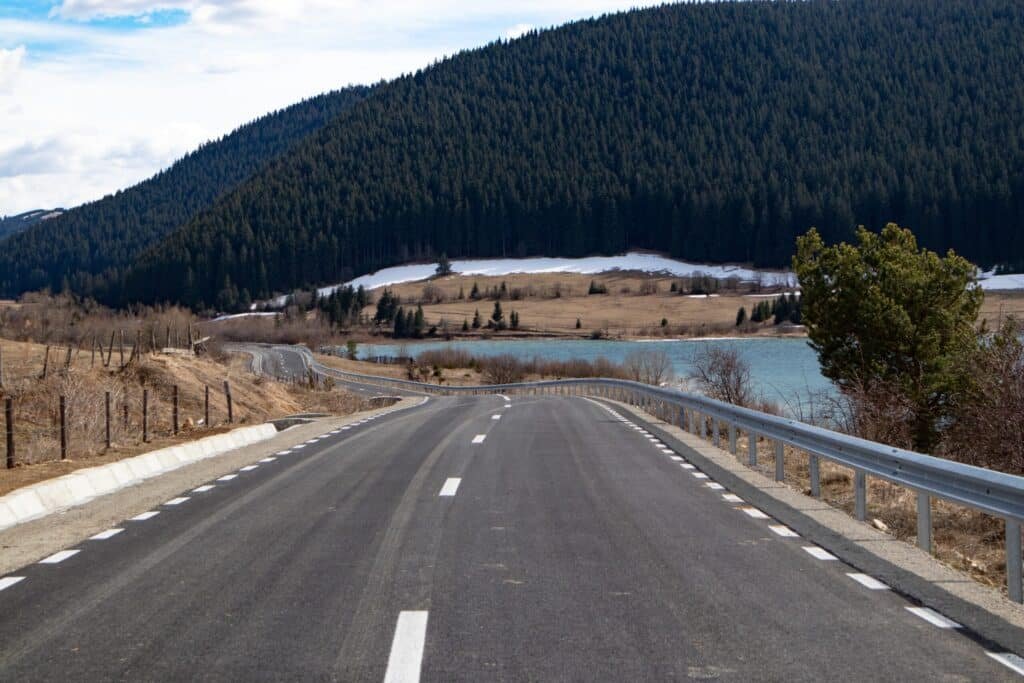
Roads of Transylvania, Romania
Planning a Transylvania Trip: When to Go, How Long, and What It Costs
Before the things to do in Transylvania, the practical frame. Get these three decisions right and the rest falls into place.
When to go, season by season
Transylvania works across three seasons, and each one changes the feel.
Spring, from May into June. My favorite, alongside September. The hills turn green, the meadows fill with wildflowers, the days are mild, and the crowds haven’t arrived. Bears are active after hibernation, which makes for good watching. The one catch is the high mountain roads: the famous Transfagarasan usually only opens fully from late June, so in May you plan around it.
Summer, July and August. The warmest and busiest stretch. Both high mountain passes are open, the festival calendar is full, and every village guesthouse is running. It’s the easiest season logistically because everything is accessible, but the popular spots get their thickest crowds, and you’ll want to book the best stays well ahead.
Autumn, September and October. Many travelers, me included, think this is the best season of all. The beech forests turn gold and copper, the crowds thin, the light goes soft, and the bears are at their hungriest before winter, which makes wildlife watching reliable. Days stay mild, nights start to bite, so pack layers.
Winter, roughly December. A different trip entirely. The Christmas markets in Sibiu, Brasov, and Cluj are among the prettiest in Eastern Europe, the ski slopes around Poiana Brasov open up, and the whole region takes on a quiet, snowbound calm. Mountain driving needs more care.
If avoiding crowds is your priority, aim for late May, June, or the first half of September. You get warm weather, open roads, and villages that still belong to the people who live in them.
How many days you need
Four days is the workable minimum: a city, a cluster of villages, a fortified church or two, and one day in the mountains. A week is the sweet spot and lets you fold in bear watching, a second city, and a slow village stay without rushing. Ten days or more and you can add the wilder corners and never feel hurried. Transylvania rewards slowness, so resist the urge to cram.
What it costs
Transylvania remains one of the better-value regions in Europe, though it’s no longer dirt cheap, and I’d rather be straight with you than sell a fantasy. As a rough guide for two people traveling comfortably in 2026:
- Guesthouses and boutique stays in Brasov, Sibiu, or a good village run roughly 60 to 130 EUR a night, often with breakfast.
- A proper restaurant dinner rarely tops 25 to 35 EUR per person with wine. A home-cooked village lunch sits around 15 to 25 EUR.
- Car rental runs about 250 to 450 EUR a week depending on season, plus fuel.
- Entry tickets to castles, fortified churches, and museums are modest, usually a few euros each.
- Guided bear watching from a licensed hide is the one premium line item worth paying for, typically 50 to 90 EUR per person.
A well-designed week for two, excluding international flights, tends to land somewhere between 1,400 and 2,600 EUR all in. Not a backpacker trip, not a luxury one, just a good one.
Transylvania by Personality: Who Loves It, and Who Should Think Twice
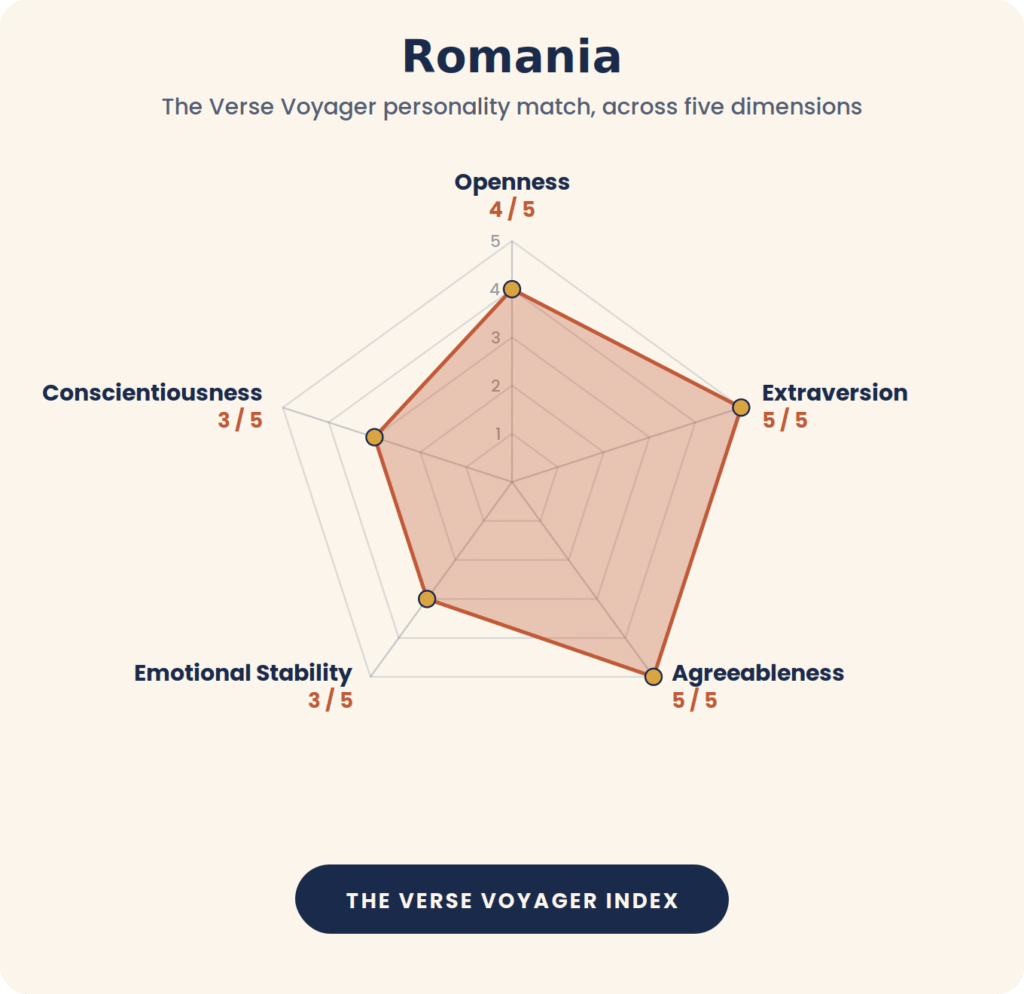
At The Verse Voyager I design every trip around five core personality dimensions, the same five that the science of personality has been built on for decades: Openness, Conscientiousness, Extraversion, Agreeableness, and Emotional Stability. Two travelers with very different scores will experience the identical itinerary in completely different ways. So instead of handing everyone the same checklist, I match the place, the pace, and the experiences to how a person actually moves through the world.
Here’s how Transylvania tends to land.
It rewards high Openness most of all. If you’d rather decode a 500-year-old fresco than tick off a capital city, if a conversation with a village churchwarden over a glass of plum brandy beats a fancy meal, Transylvania was built for you. The layers of history, the trilingual culture, the offbeat detail: this is catnip for the curious.
It suits travelers across the Extraversion range, if you choose the right base. The cities, Cluj especially, get loud and social. The villages are deeply quiet. So an extravert can have their festivals and cafe scene while an introvert can disappear into a Saxon hamlet, and a couple split between the two can both be happy if you sequence it well.
It asks a little of your Emotional Stability. Rural logistics, mountain roads, the occasional bear, churches that are locked until you track down whoever holds the key. If you need everything buttoned down and on schedule, you’ll find Transylvania a touch loose. If a delayed lunch or an unplanned detour is part of the fun, you’ll thrive.
If you’re not sure where you land on these five dimensions, take my free travel personality quiz. It takes about ten minutes and it’ll tell you which version of Transylvania fits you, and whether you’d be happier basing in a buzzing city or a silent village. If you want to see the same method applied to another country before you trust it here, my Spain regions by personality guide is the sister piece to this one.
You can understand more about how your personality tailors your travel preferences by reading my dedicated article about this topic.
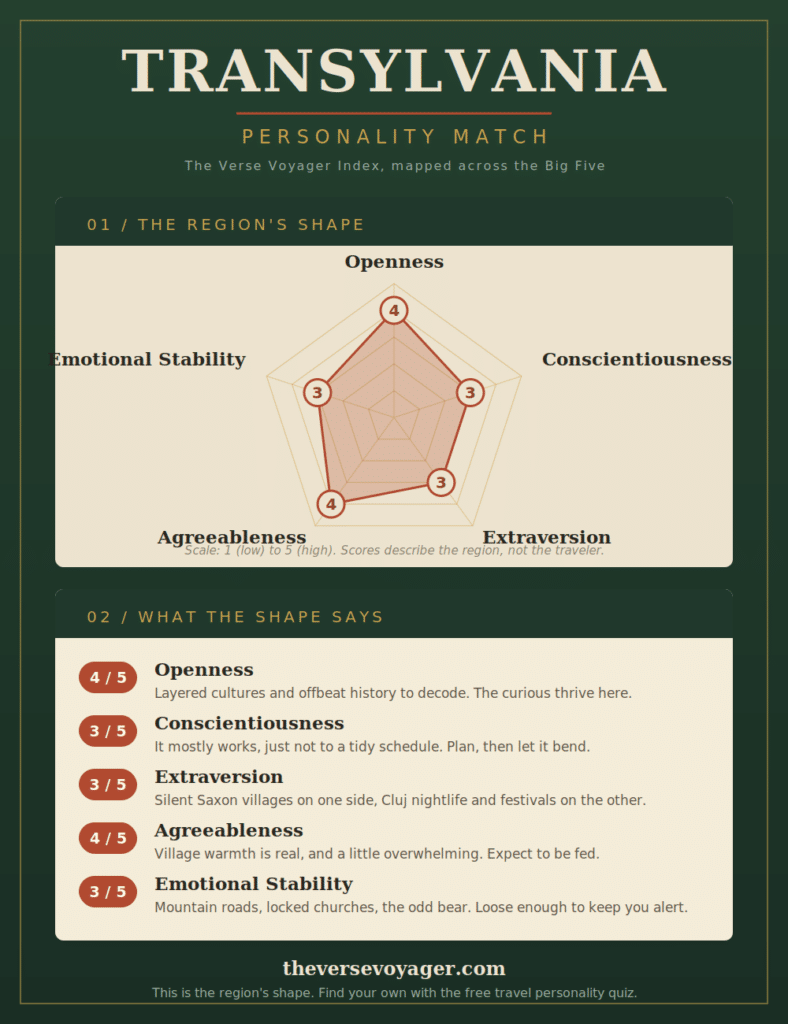
Overall personality match for Transylvania
The Cities of Transylvania
Transylvania’s cities are where most trips begin, and each one has a personality of its own. You won’t have time for all of them on a short trip, so here is each city in full, with the best things to do, when to visit, and what to skip. If you only have a few days, pick one as your base and day-trip from it.
Brasov: The Best Things to Do
If you do one city, make it Brasov. It sits right where the mountains meet the plateau, an easy gateway from Bucharest, and it packs a lot into a walkable medieval core. It’s also the best base in the region, so most of my Transylvania trips start here.
The list of things to do in Brasov starts in the Council Square (Piata Sfatului), the old market heart, ringed with painted merchant houses and watched over by the Council House and its squat clock tower. From the square it’s a two-minute walk to the Black Church (Biserica Neagra), the largest Gothic church between Vienna and Istanbul. It took its name from the soot that blackened its walls after a great fire in 1689, and inside it holds two treasures: one of the largest church bells in Romania and a remarkable collection of Anatolian rugs, gifts brought back by Saxon merchants over the centuries.
From there, the classic Brasov things to do are mostly on foot. Squeeze down Rope Street (Strada Sforii), one of the narrowest streets in Europe. Walk out through Catherine’s Gate into the old Schei district, the historically Romanian quarter, and visit the First Romanian School museum with its early printed books. Trace the surviving medieval walls past the White Tower and the Black Tower and the old bastions for the best views back over the red roofs.
Then take the cable car up Mount Tampa for sunset over the city, with the big Hollywood-style BRASOV sign right behind you.
Day trips from Brasov. This is where the city earns its keep as a base. Within an hour or so you can reach Rasnov Citadel on its hilltop, the ski and hiking resort of Poiana Brasov, the dramatic Seven Ladders Canyon (Canionul Sapte Scari) with its waterfalls and ladders, the licensed bear hides in the surrounding forests, and yes, Bran Castle, though I’ll tell you later why that one is overrated.
Where to eat: the old town is full of options, and Bistro de l’Arte, tucked into a side street, does excellent modern Romanian cooking.
When to go to Brasov: late spring and early autumn for mild weather and thinner crowds. Summer weekends fill with Romanian visitors, so come midweek if you can. December brings one of the loveliest Christmas markets in the country to the main square.
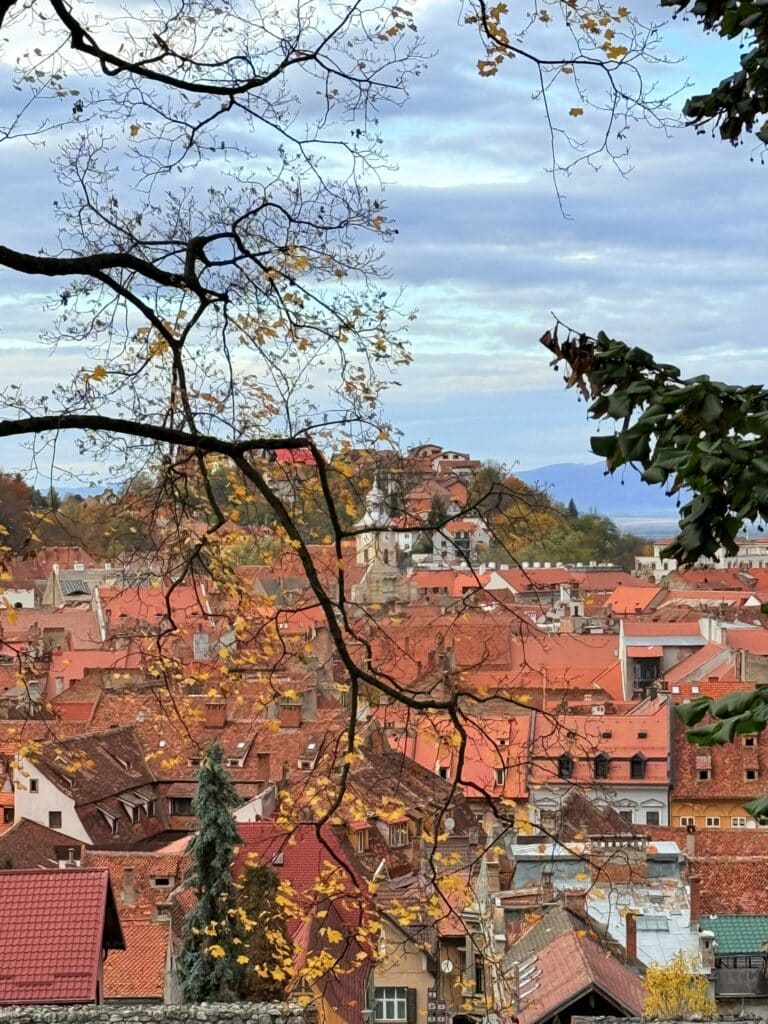
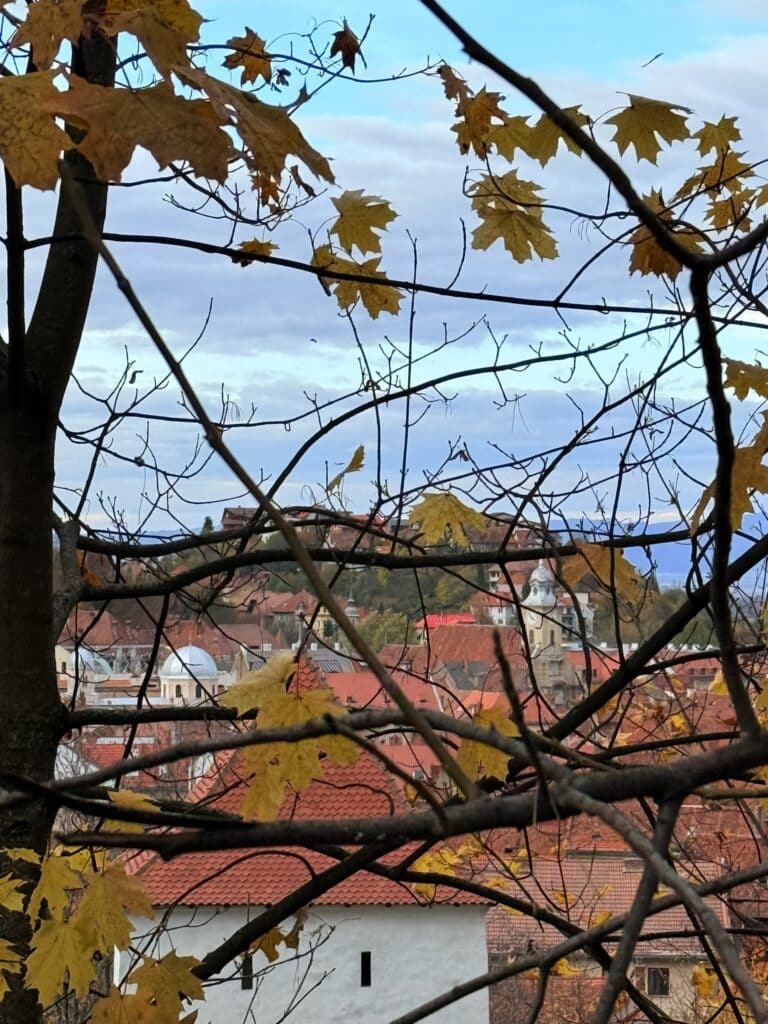
View from Brasov, Transylvania
Sibiu: The Best Things to Do
Sibiu is considered the most beautiful city in Transylvania and the former capital of Saxon culture. A onetime European Capital of Culture, it’s all pastel facades, cobbled upper and lower towns linked by stairways and passages, and the famous “eyes of Sibiu,” the half-shut attic windows on the steep roofs that seem to watch you walk by. Spend a little time here and you’ll understand why I rate it the prettiest city in the country.
The best things to do in Sibiu cluster around its two linked squares. The Grand Square (Piata Mare) is the grand stage, framed by the Brukenthal Palace and the Jesuit Church. Step through to the smaller, more intimate Small Square (Piata Mica), and cross the Bridge of Lies, the cast-iron footbridge that local legend says will creak if you tell a fib while standing on it. Climb the Council Tower (Turnul Sfatului) between the two squares for the best rooftop panorama in the city.
Give a serious afternoon to the Brukenthal National Museum, one of the oldest public museums in Europe, with an old-master painting collection that genuinely surprises people. Walk the Passage of Stairs (Pasajul Scarilor) down to the lower town, climb the steeple of the Lutheran Cathedral, and leave time for the ASTRA Museum on the edge of the city, one of the largest open-air ethnographic museums in Europe, where traditional houses, mills, and workshops from across Romania sit in a wooded park. Sibiu is also the ideal base for the Saxon villages and fortified churches to its south and east, and its small airport makes it an easy place to start or end a trip.
When to go to Sibiu: the same rule holds, May to June and September for the sweet spot. The Christmas market here, set up in the Grand Square, is arguably the finest in Romania.
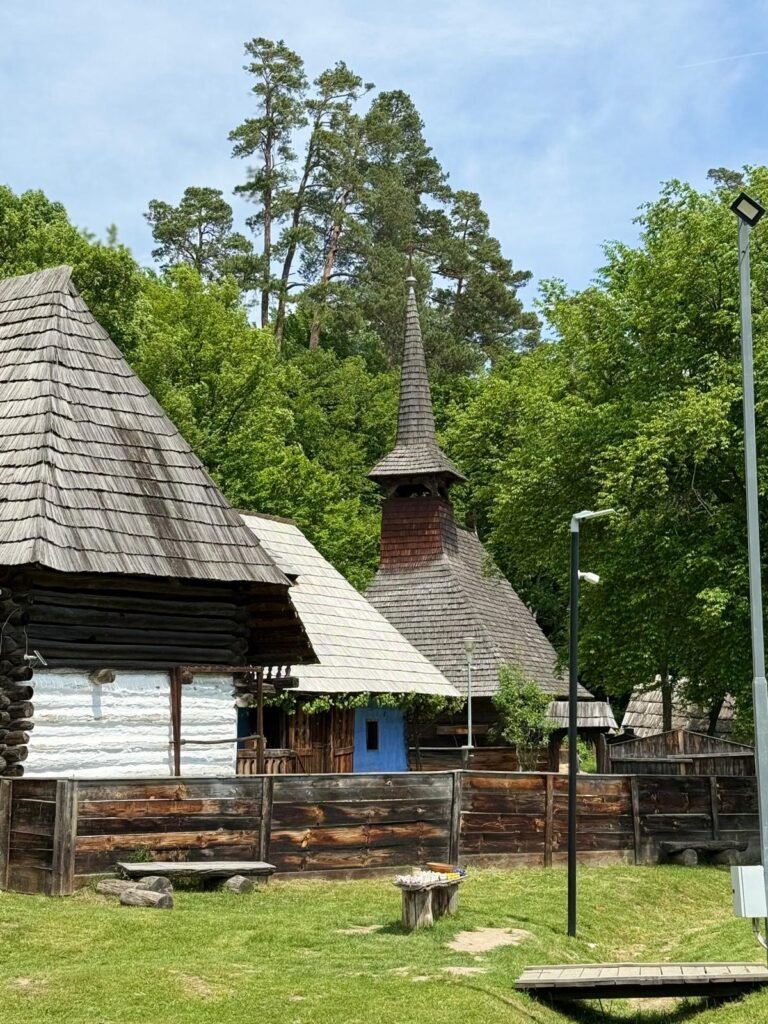
One of the biggest open-spaces museums in the World, Sibiu
Sighisoara: The Best Things to Do
Sighisoara is the city you visit for the place itself rather than for a single sight. Its hilltop citadel is a perfectly preserved medieval town, listed by UNESCO, still lived in, still ringed by the towers the old craft guilds built and defended. It’s the kind of place where the thing to do is simply to be there.
The best things to do in Sighisoara begin at the Clock Tower (Turnul cu Ceas), the citadel’s landmark gate, where a set of painted wooden figures turns with the days of the week. Climb it for the history museum inside and the viewing gallery up top, which gives you the whole tangle of red roofs and green hills at once. From the main square, find the covered Scholars’ Stairs (Scara Acoperita), a wooden staircase of around 175 steps built to shelter students on their climb, and follow it up to the Church on the Hill (Biserica din Deal), a quiet Gothic church with a small painted interior and an old Saxon cemetery behind it.
Down in the citadel, wander the pastel lanes and find the surviving guild towers, the Tinsmiths’, the Tailors’, the Cobblers’, each once defended by its trade. You’ll also pass the ochre-colored house where Vlad the Impaler was born, now a restaurant trading on the connection. I’ll give you the honest version of that whole Dracula story later in this guide, because the marketing is mostly a trap. If you visit in late July, the Sighisoara Medieval Festival fills the citadel with music, crafts, and costume.
An hour or two walking the upper town is enough to feel it, though staying a night inside the walls after the day-trippers leave is its own quiet reward. Sighisoara sits right in the middle of Saxon village country, so it pairs naturally with the fortified churches.
Cluj-Napoca: The Best Things to Do
Cluj is the unofficial capital of Transylvania and its most energetic city, a university town with the best cafe, music, and nightlife scene in the country. If you score high on Extraversion, this is your base. It’s also the most practical arrival airport for the north of the region and for combining Transylvania with Maramures.
[IMAGE: cluj-napoca-union-square-st-michaels-church-transylvania.jpg | Union Square and the Gothic St. Michael’s Church, the heart of things to do in Cluj Transylvania]
The things to do in Cluj start in Union Square (Piata Unirii), dominated by the soaring Gothic St. Michael’s Church, which has one of the tallest church towers in Romania, and the dramatic equestrian statue of Matthias Corvinus, the Hungarian king who was born in this city. His birthplace house still stands a few streets away. On the square itself, the Banffy Palace holds the National Museum of Art, worth an hour for its Transylvanian collection.
Beyond the square, the best Cluj things to do mix history with the city’s young energy. Climb Cetatuia Hill for the classic view over the rooftops and the river, walk the restored Tailors’ Bastion, the largest surviving piece of the medieval walls, and spend a slow afternoon in the Alexandru Borza Botanical Garden, one of the largest in southeastern Europe, with its Japanese and Roman sections. Central Park and its lake, with the Belle Epoque casino now a cultural center, are where the city relaxes. Then there’s the cafe and rooftop-bar scene around the old town, which is the real reason a lot of people fall for Cluj.
When to go to Cluj: late spring through early autumn. If you want the festivals, aim for the relevant summer dates and book accommodation early, because the city fills completely.
Targu Mures: The Overlooked Surprise
Most itineraries skip Targu Mures, and that’s a small shame. Sitting in the middle of the region, it’s a Hungarian-flavored city with one genuinely show-stopping sight: the Palace of Culture, an early-twentieth-century secessionist building with a Hall of Mirrors and stained-glass windows that stop you in your tracks. The central squares, Avram Iancu and the Square of Roses, make for a pleasant stroll, and the city works well as a stopover between Sighisoara and the north. If you like architecture and quieter cities away from the tour buses, give it half a day.
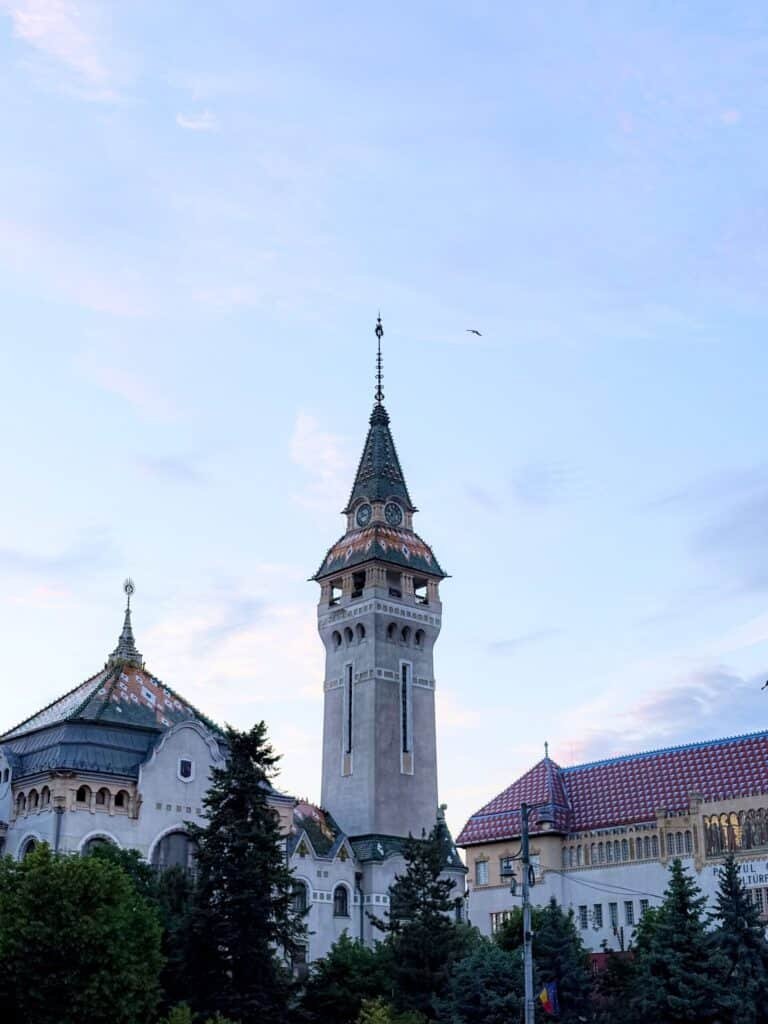
Targu Mures City Hall
The Wild Side: Carpathians, Valleys, and Bear Watching in Romania
Here’s where Transylvania separates itself from every other “pretty old town” region in Europe. Step out of the cities and you’re in genuine wilderness, the kind that most of the continent paved over generations ago. The Carpathian Mountains curl around the plateau in a long arc of dark spruce forest, high meadow, glacial lakes, and limestone gorges, and they’re home to a population of large wild animals you won’t find together anywhere else this side of Russia.
The bears, and bear watching in Romania
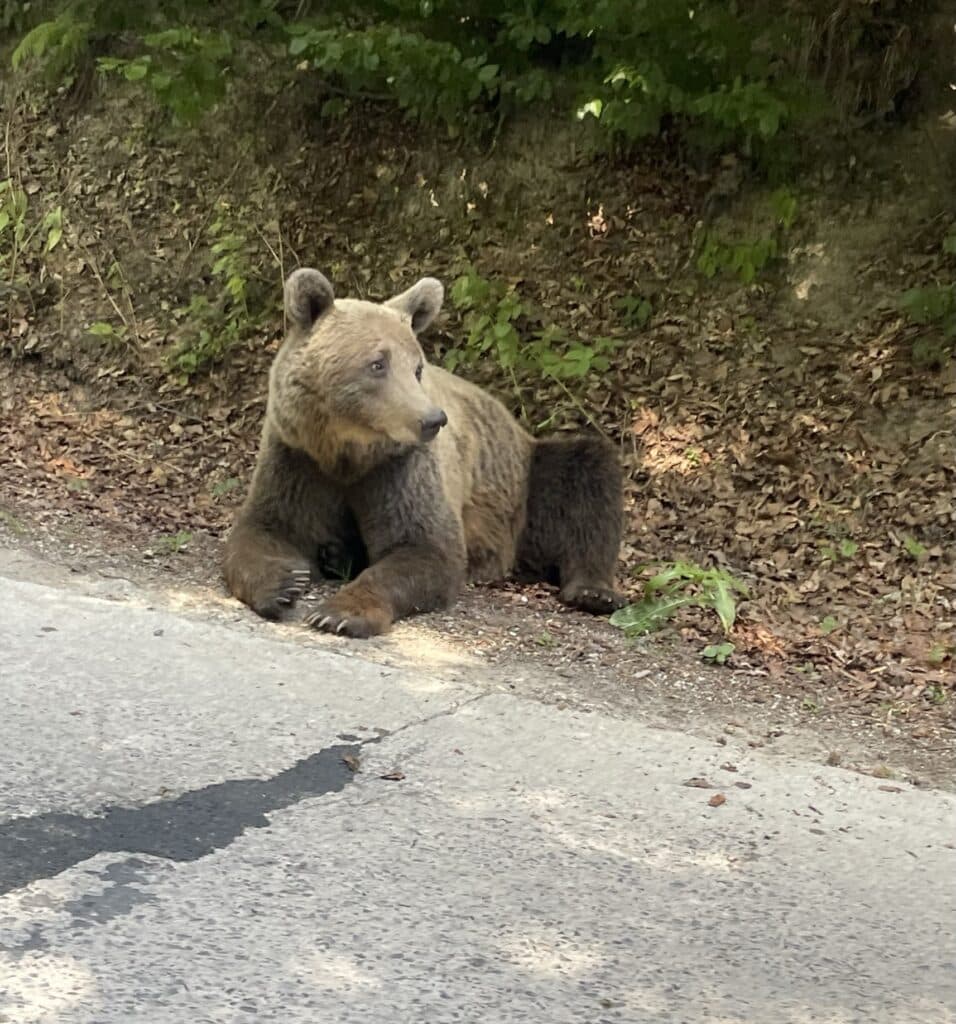
Let’s talk numbers, because this is one of the great wildlife facts in Europe and most people get it wrong. Romania holds the largest brown bear population on the continent outside Russia, and almost all of it lives in the Carpathians that ring Transylvania. After years of guesswork, a major EU-funded genetic study completed in 2025 analyzed more than 24,000 samples across 25 counties and put the official population at between 10,419 and 12,770 brown bears. That’s roughly double the older estimates, and it makes the forests above these villages one of the densest bear habitats in the world.
That density is why bear watching in Romania has become one of the most sought-after things to do in Transylvania. The right way to do it is from a permanent, licensed hide in the forest, with a guide, where you sit quietly at dusk and wait for the animals to come on their own terms. The estates and operators around the Szekely Land and the forests near Brasov run exactly this kind of ethical setup. No baiting that turns wild animals dangerous, no chasing, just patience and a pair of binoculars.
A word of genuine caution, because it matters. Do not go looking for bears yourself. The wrong kind of bear encounter, a roadside animal that’s been fed by tourists, a hiker who startles a mother and cub, has turned fatal here. Never feed a bear, never stop your car to photograph one, store food securely, and ask locally before you set off on a hike. Treated with respect, the wildlife becomes the best memory of the trip. Treated carelessly, it’s the worst.
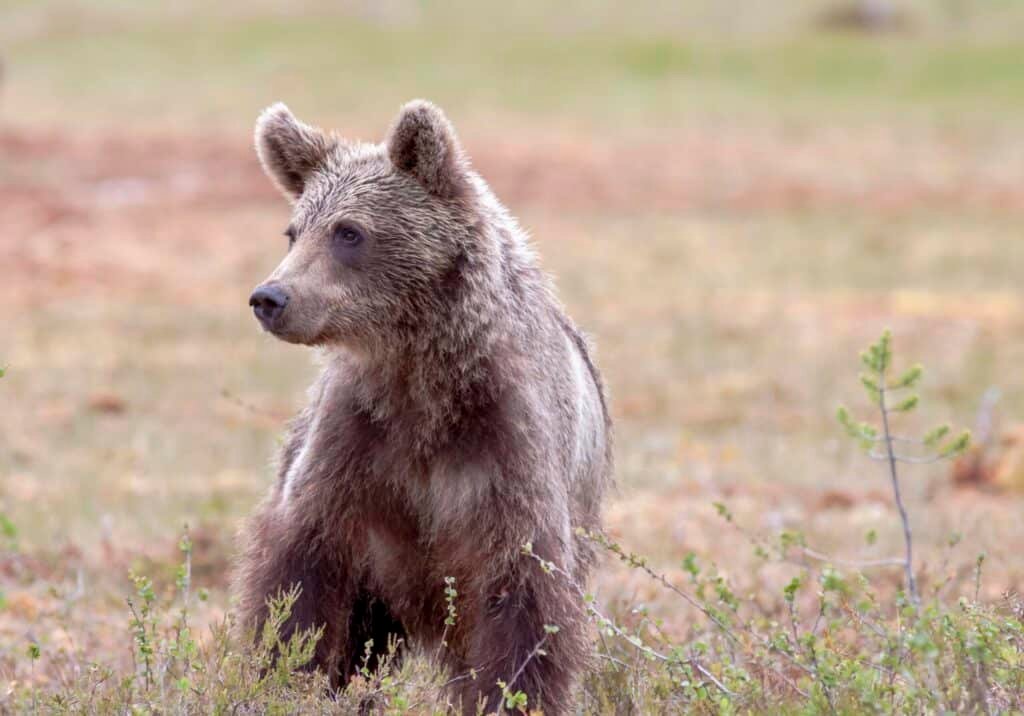
Bear watching in Romania
The mountains and the legendary roads
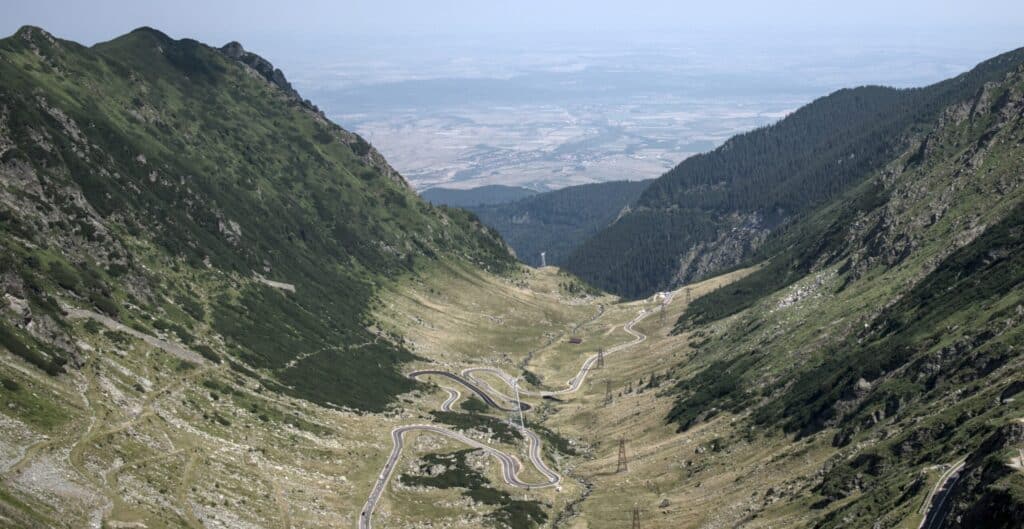
Beyond the bears, the Carpathians are a playground. The Bicaz Gorges carve a narrow road between sheer limestone walls near the Red Lake. Glacial lakes and high trails crisscross the Fagaras range, the tallest in the country. And then there are the two famous mountain roads. The Transfagarasan climbs past 2,000 meters in a frenzy of hairpins to Balea Lake and its waterfall, a genuine bucket-list drive, open roughly from late June into October. The Transalpina, the highest road in Romania, crosses wide-open alpine pasture nearby. Both are summer-only and both stay with you long after the trip.
If you’d rather walk than drive, the meadows above the Saxon villages are some of the most species-rich grasslands in Europe, grazed the old way and dense with wildflowers and butterflies in early summer. A guided walk here, often with a shepherd or a local naturalist, is a quieter pleasure than the famous passes and just as memorable.
Underground Transylvania: Salina Turda and the gorges
Some of the most surprising things to do in Transylvania are below ground. The headline is Salina Turda, a vast former salt mine near Cluj that’s been turned into one of the strangest attractions in the country. You descend into echoing chambers hundreds of meters deep, where the old workings now hold a Ferris wheel, a small boating lake, an amphitheatre, and a mini golf course, all carved out of glowing salt walls. It sounds absurd and it sort of is, but standing in that cathedral-sized cavern is genuinely unforgettable, and it’s a brilliant rainy-day option with kids.
Right next door, the Turda Gorge (Cheile Turzii) cuts a dramatic limestone canyon you can hike in a couple of hours, a good pairing with the mine. Further west, in the Apuseni Mountains, the Scarisoara Ice Cave holds one of the oldest underground glaciers in Europe, and the Bears’ Cave is named for the prehistoric cave-bear bones found inside it. None of these show up on the standard Dracula-and-castles circuit, which is exactly why I like sending people to them.
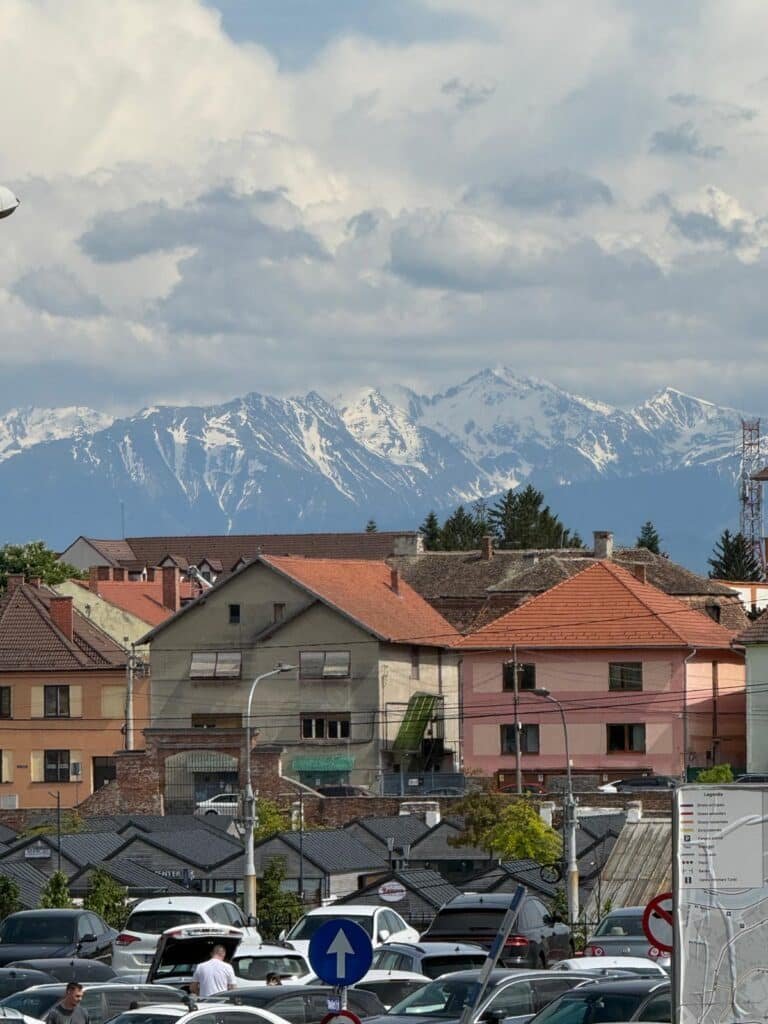
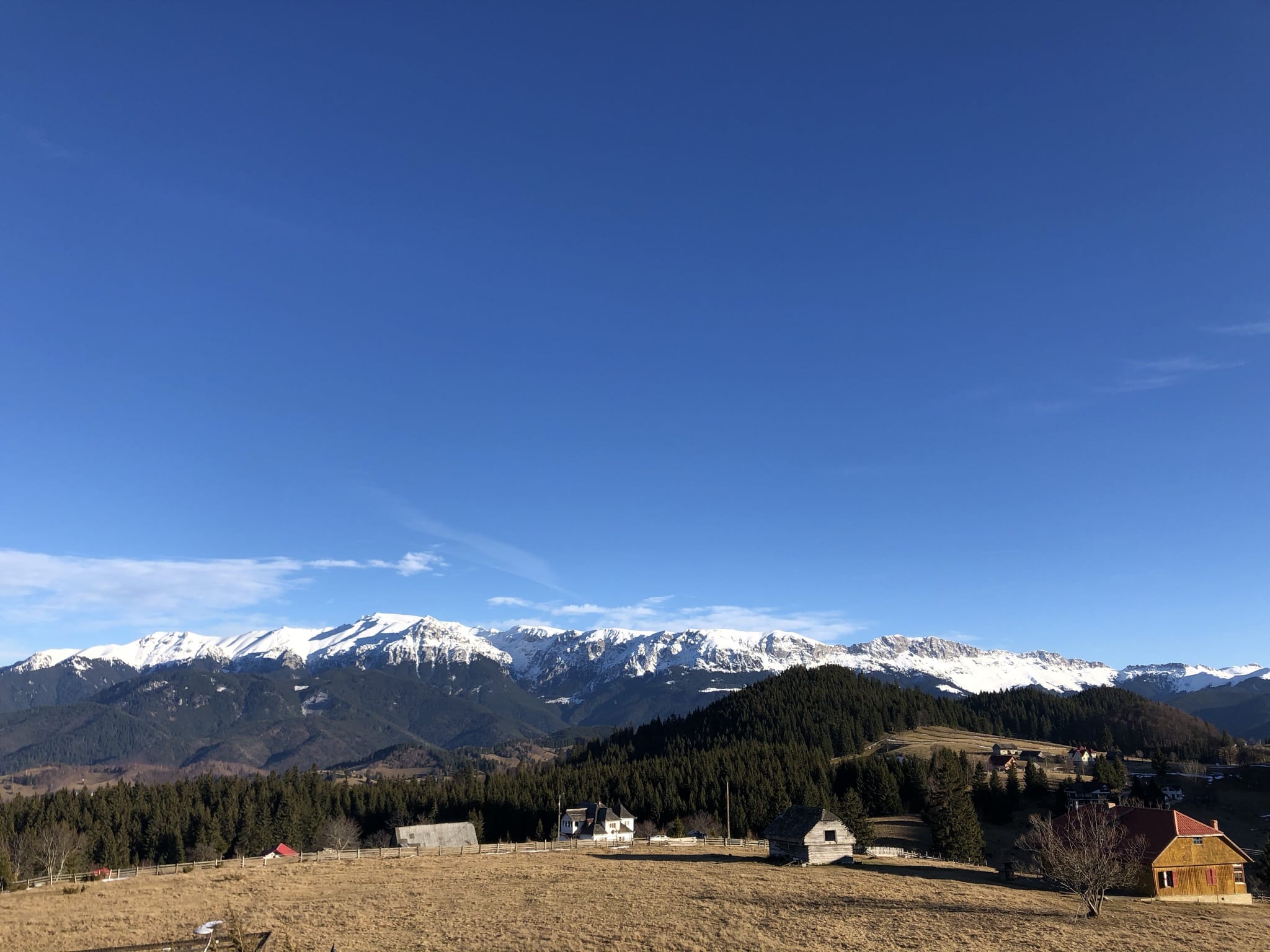
A view of the Fagaras Mountains from a random parking in Sibiu
Villages, Traditions, and the Slow Life
For me, the single best thing to do in Transylvania isn’t a sight at all. It’s to slow down in a village and let the rhythm of the place reset you.
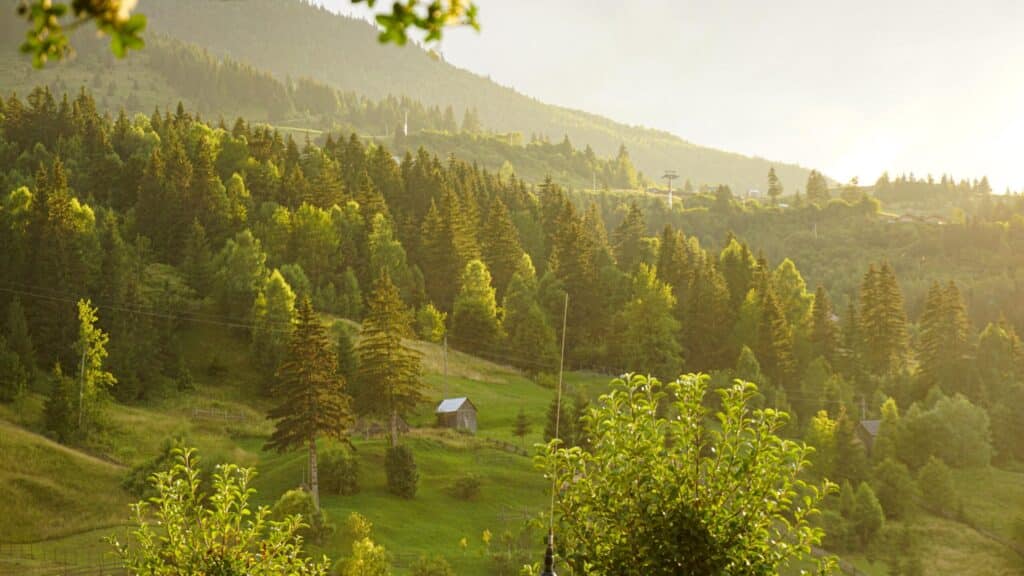
This is where the region does something almost no other part of Europe can. In the Saxon and Szekely villages, and in the Romanian hamlets in the hills, the old life isn’t a performance staged for visitors. It’s just Tuesday.
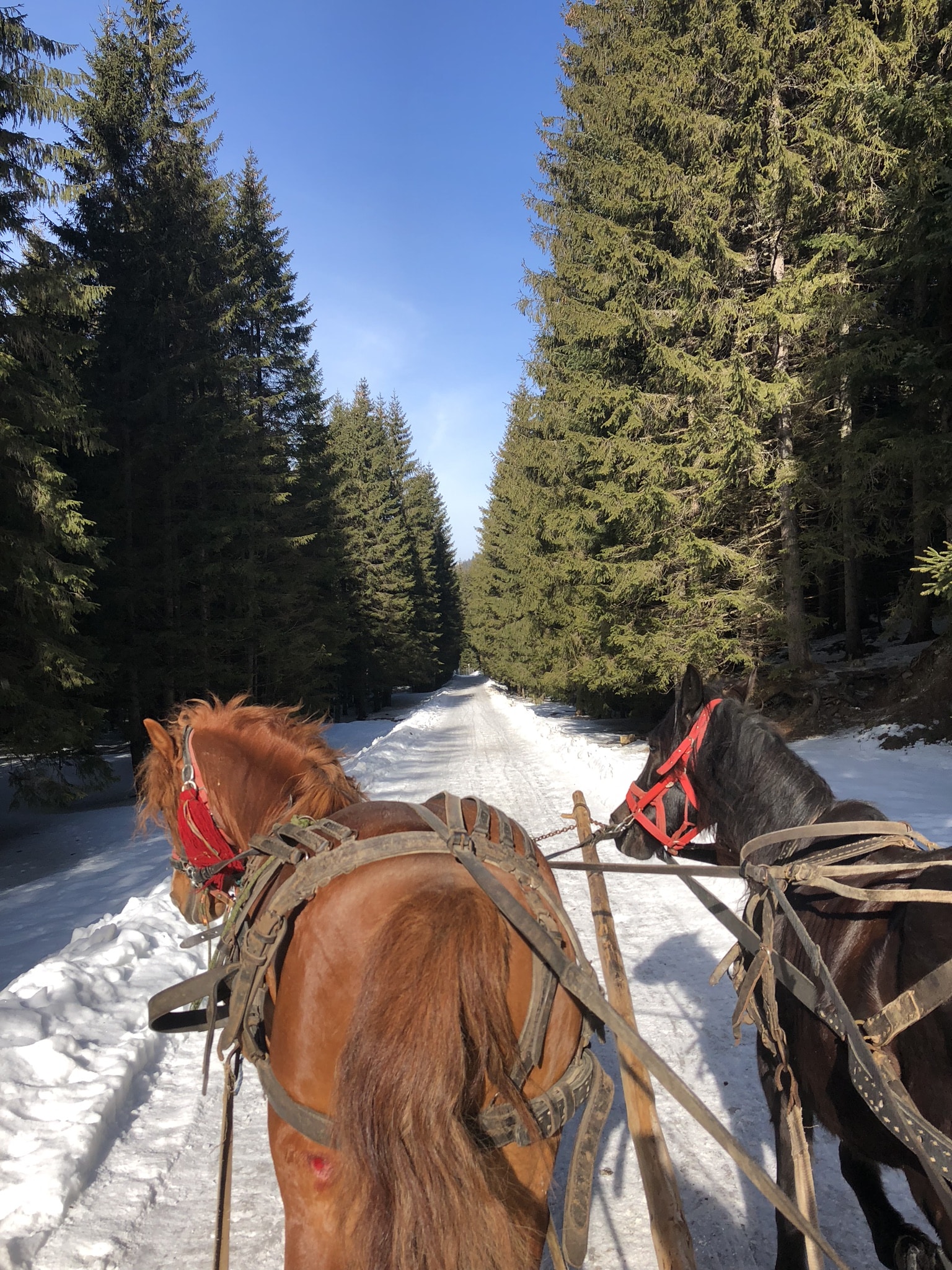
Cows walk themselves home in the evening, peeling off one by one at the right gate. Hay is cut by hand with scythes on slopes too steep for machines and stacked into the conical haystacks you’ll photograph a hundred times. Horse carts share the lane with the occasional delivery van. Older women still wear the layered skirts and headscarves daily, not for a festival.
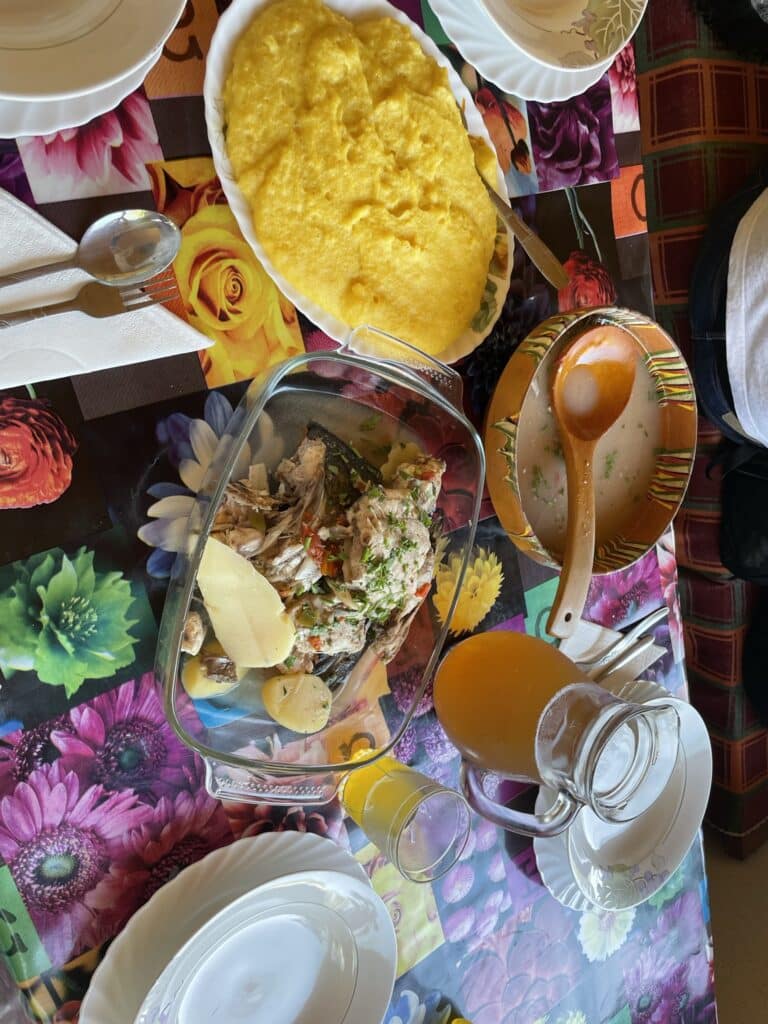
Stay in a village guesthouse run by a family and you’ll eat what the garden and the farm produced that day: sour soups, polenta with sheep cheese and sour cream, slow-cooked meats, preserves, homemade plum brandy poured whether you asked for it or not. Vegetarians do well in summer, less effortlessly in deep winter. The hospitality is real and a little overwhelming in the best way. Expect to be fed past the point of comfort and sent off with jars of things.
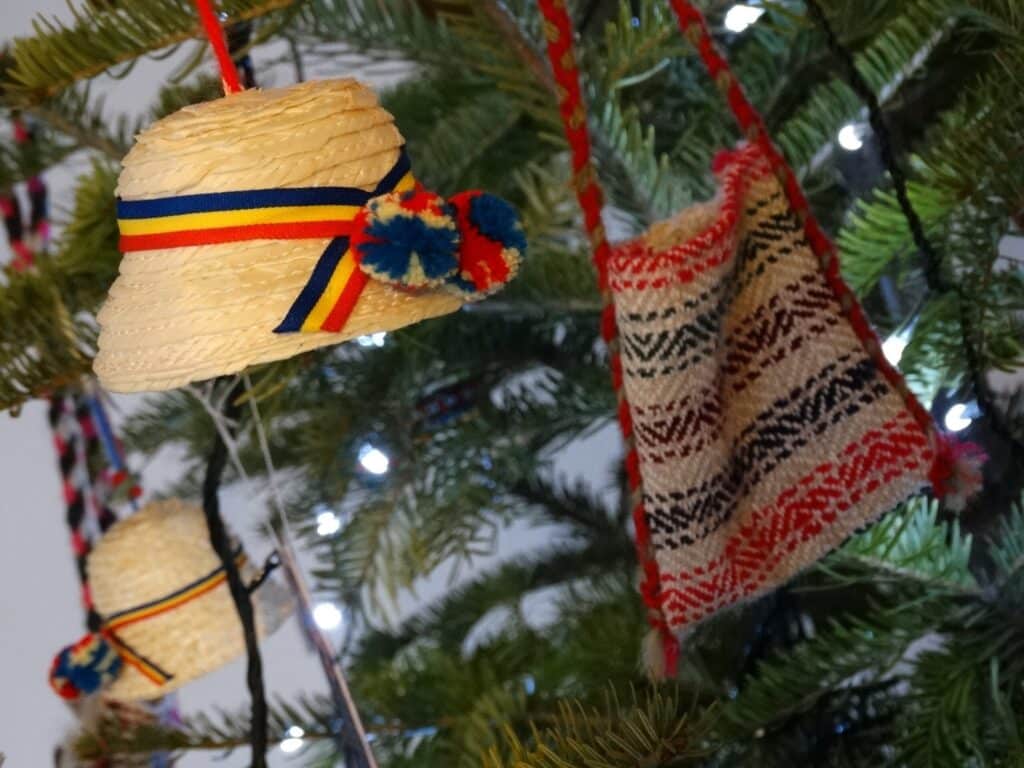
The crafts are alive too, if you go looking. Pottery, weaving, woodwork, blacksmithing in some villages. Buy directly from the maker and you’ll pay a fraction of a city gallery price and walk away with the story. This slow, lived-in authenticity is exactly what I match high-Openness, lower-Extraversion travelers to first, because for them it reads as luxury in a way that no five-star hotel can replicate.
While we’re on food, a few things are worth seeking out by name. Sarmale, cabbage rolls stuffed with spiced minced meat and rice, slow-cooked for hours, are the dish every grandmother has an opinion about. Mici (or mititei) are little grilled skinless sausages you eat with mustard and a cold beer. Papanasi, fried cheese doughnuts with sour cream and jam, are the dessert to order at least once. In the Szekely Land, look for kurtoskalacs, the spit-roasted “chimney cake” turning over coals at every market.
And Transylvania quietly makes good wine: the Tarnave region around the Saxon villages, and producers like those at Jidvei, turn out crisp whites that pair perfectly with a long village lunch. Ask your host what’s local and they’ll usually produce a bottle, or a jar of homemade plum brandy, or both.
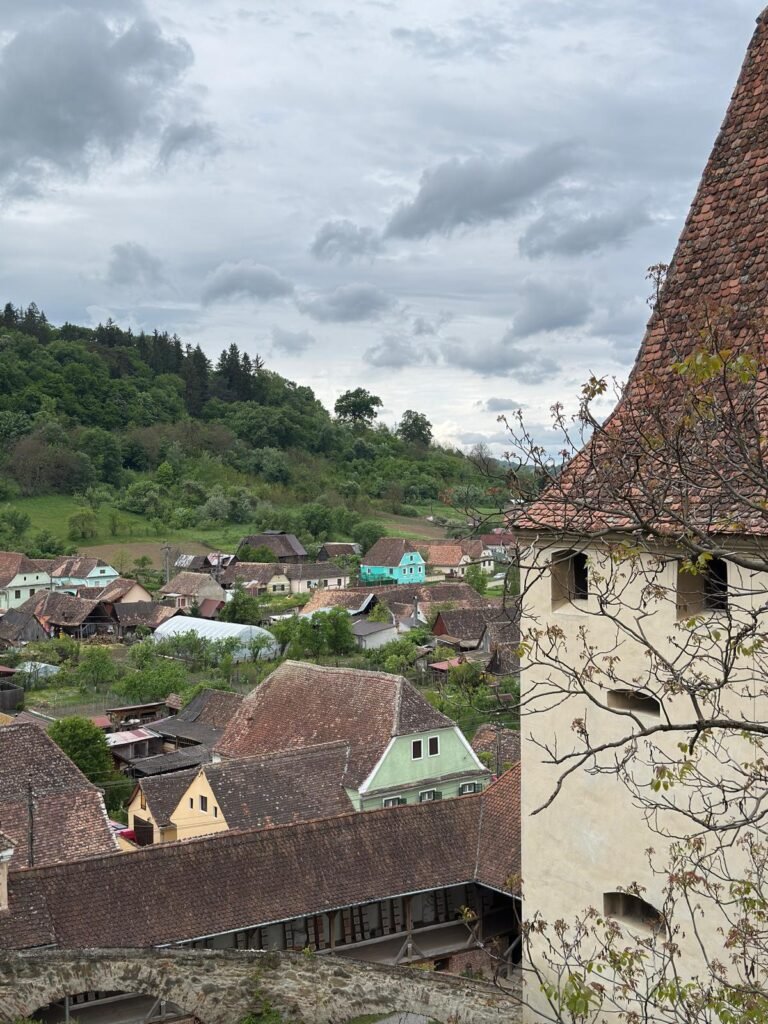
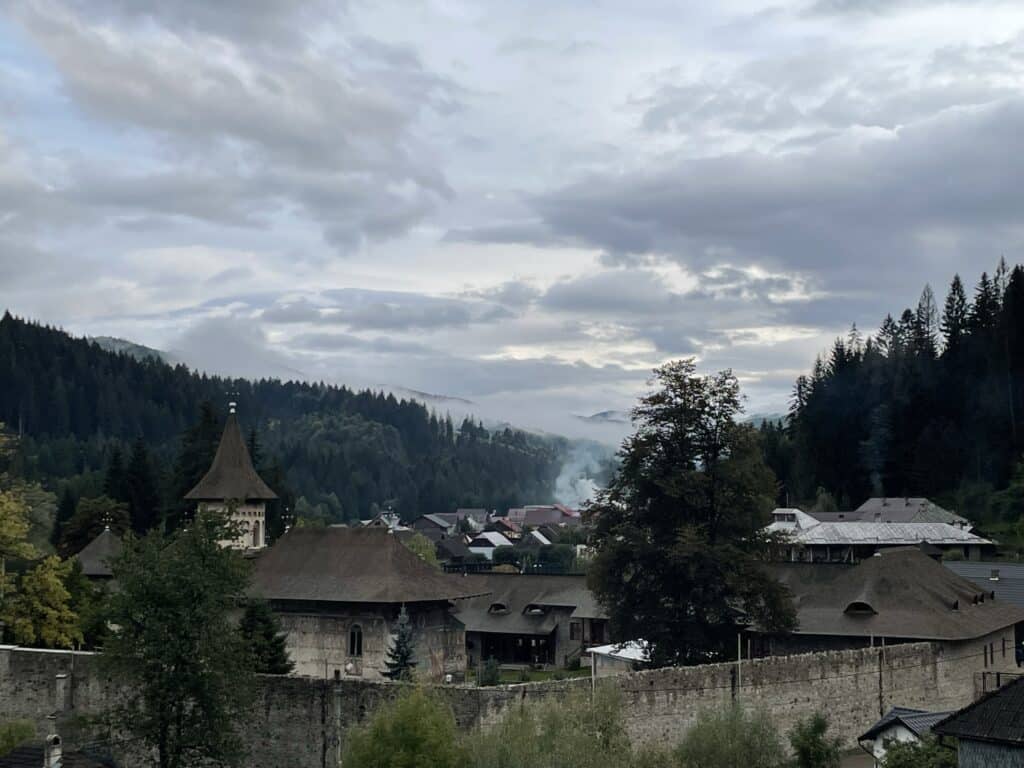
The view from the citadel of a village in Transylvania
Sleeping in a noble estate
One experience I send a particular kind of traveler to above almost anything else: spend a night or two on a restored noble estate in the Szekely Land. In villages like Miclosoara, the guesthouses run by Count Tibor Kalnoky let you sleep in rooms furnished from the family’s own collection, eat dishes grown and cooked on the estate, and head out in the late afternoon to the bear hide the estate operates in the nearby forest. It’s one of the most singular places to stay in the whole country, a living piece of old aristocratic Transylvania rather than a hotel pretending to be one. It books out weeks or months ahead in summer and autumn, so plan early if it appeals.
Viscri and the King Charles Connection
No village in Transylvania is more famous than Viscri, and the reason is a king.
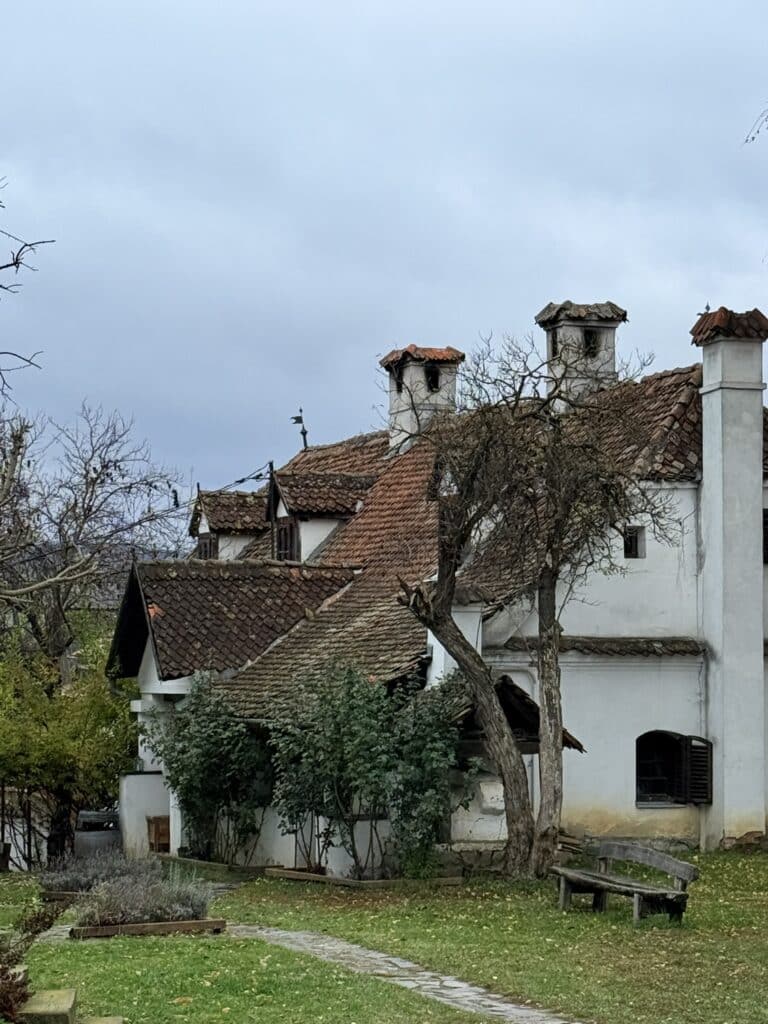
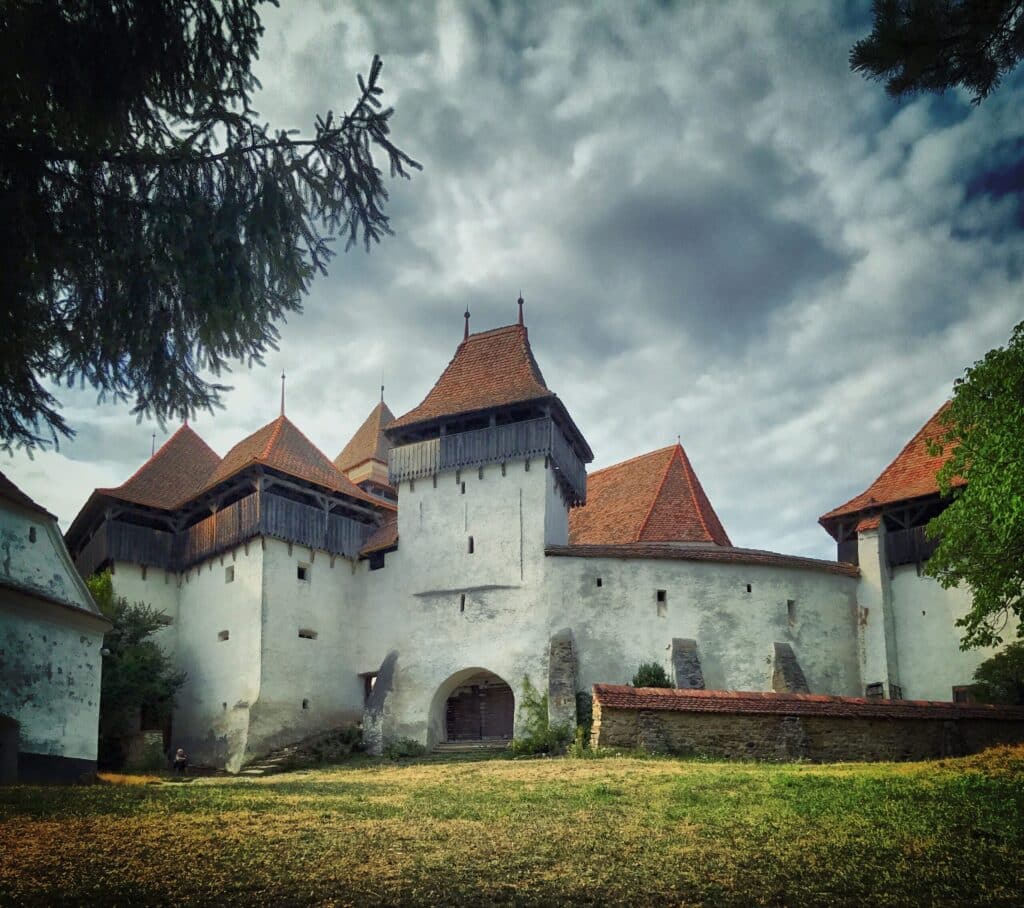
Viscri is a small, half-Saxon, half-Roma village at the end of a few kilometers of rough road, with a whitewashed UNESCO-listed fortified church at its heart. It became known around the world because of King Charles III of the United Kingdom, who fell in love with this corner of Transylvania decades ago, bought and restored property here, and has spent years championing the region’s traditional way of life, its old crafts, and the conservation of these grasslands and buildings.
His guesthouse in the village is a real, bookable place, and his foundation’s work has helped keep Viscri and villages like it economically alive.
So what is there to do in Viscri, and why bother with the detour? A few things make it worth it. Climb the fortified church and its defensive towers for the view over the red roofs and the green hills, and read the small museum that explains Saxon village life.
Watch the village blacksmith and the other craftspeople still working the old trades. Arrange lunch in a local family’s home, where you eat what they cooked that morning, which I’d argue you’ll remember longer than any restaurant meal in the country. And simply walk the single main street in the late afternoon when the cows come home, because Viscri at that hour is as close as you’ll get to seeing the nineteenth century still breathing.
A word of honesty: Viscri’s fame is a double-edged thing. In peak summer the tour buses do find it, and a village of a few hundred people can feel briefly overrun. Come early, come midweek, or come in the shoulder season, and you’ll have the King Charles village close to yourself. The story of Viscri, a community saved from emptying out by tourism done thoughtfully, is one of the more hopeful threads in the whole bittersweet Saxon story.
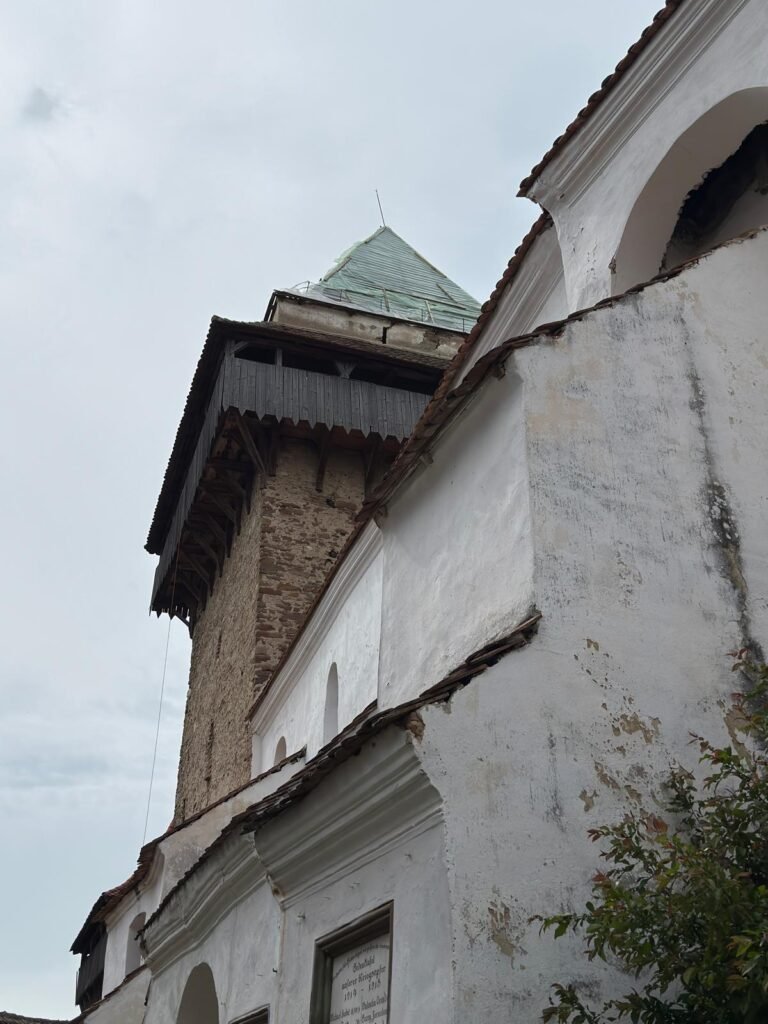
Fortified citadel of Viscri, Transylvania, Romania
The Fortified Churches of Transylvania
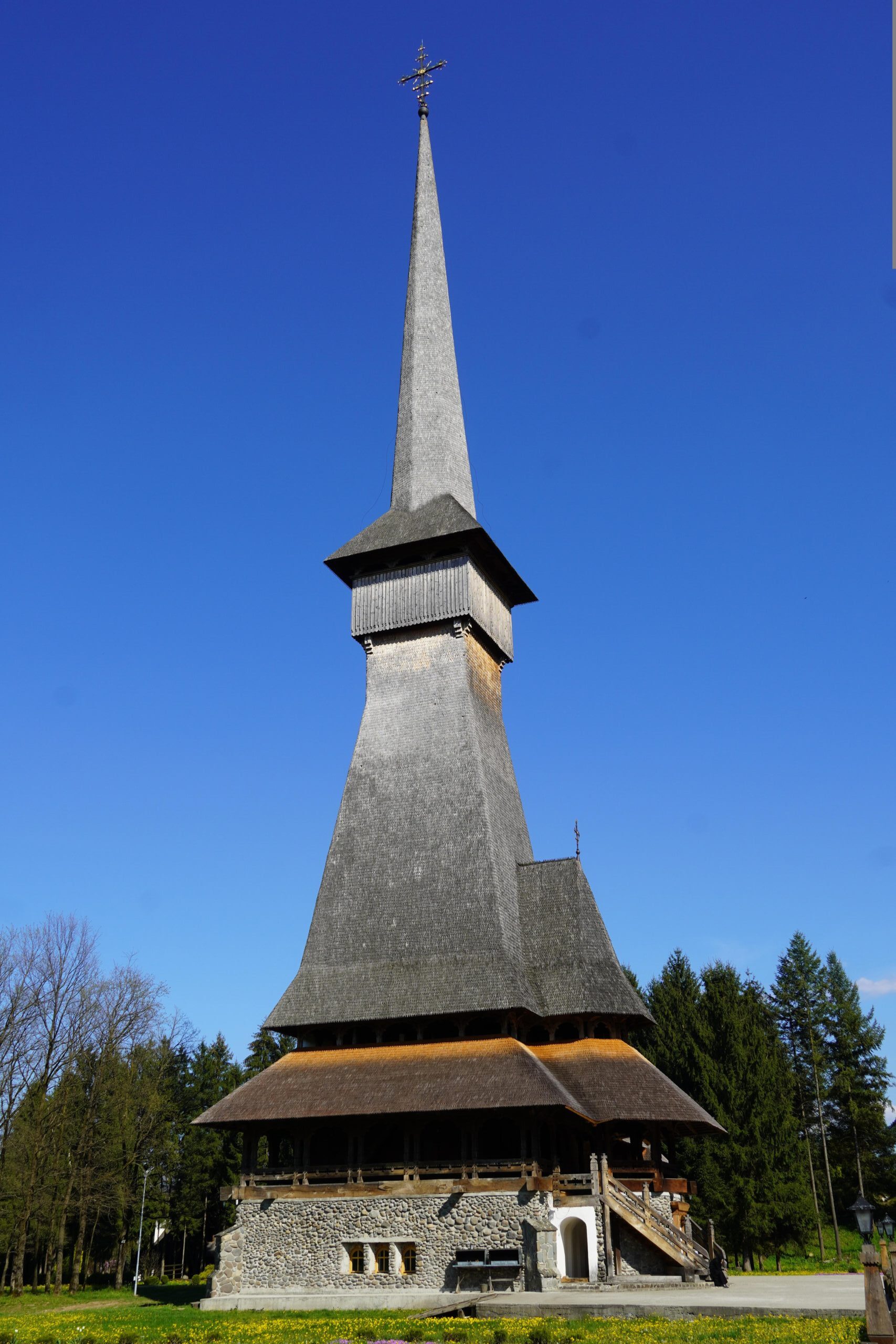
If Transylvania has a signature, it’s the fortified church. You’ll see them from the road across the whole southern half of the region: a church in the middle of a village, wrapped in high stone walls, towers, and gates, looking more like a small castle than a place of worship. That’s exactly what they were meant to be.
The history is the point. When the Ottoman and Tatar raids threatened these frontier villages from the fourteenth century on, the Saxon communities, too small for proper town fortifications, did something ingenious. They fortified the one large stone building every village already had: the church.
They ringed it with walls, sometimes two or three concentric rings, added towers and gatehouses, and built storage rooms and refuge chambers into the walls where whole villages could shelter, with their food and valuables, during a siege. Some held bacon rooms where families stored their winter meat in a communal larder inside the church walls, each with its own key.
The scale of what survives is remarkable. Transylvania once had something like 300 of these fortified churches. More than 150 still stand today, built between the thirteenth and sixteenth centuries, and seven of the best were chosen by UNESCO as a World Heritage Site: Biertan, Calnic, Darjiu, Prejmer, Saschiz, Valea Viilor, and Viscri. Six are Saxon, one is Szekely, and together they were inscribed in 1993 and extended in 1999.
If you only have time for a couple, I’d send you to Biertan, the grandest, with three rings of walls and a famous door with a fifteen-bolt lock, which served as the seat of the Saxon bishops for nearly three centuries; and Prejmer, near Brasov, one of the strongest and best-preserved fortified churches in Eastern Europe, its circular walls honeycombed with hundreds of refuge rooms.
But honestly, half the pleasure is the unlisted ones, the dozens of fortified churches in villages you’ve never heard of, often locked, where the magic is tracking down the neighbor with the key and being shown around an empty 600-year-old church by the last person in the village who remembers how it was. That’s the kind of afternoon Transylvania gives you if you let it.
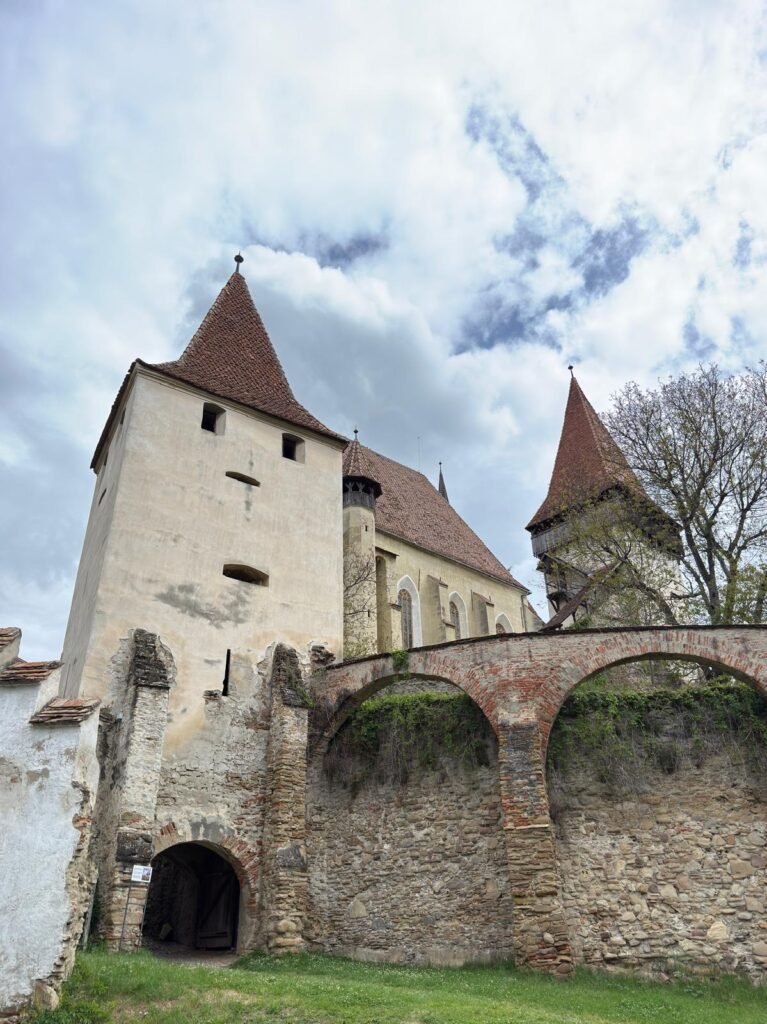
Fortified church from Biertan, Transylvania; a UNESCO World Heritage site
A Transylvania Road Trip: Tying It All Together
By now you can see why I keep insisting on a car. The best things to do in Transylvania as a connected experience is a road trip that strings the cities, the villages, the churches, and the mountains into a loop.
A classic week, starting and ending in either Bucharest or Cluj, might run like this. Base first in Brasov for the city and the nearby mountains. Spend a day in the Szekely Land for bear watching and a noble-estate stay. Cross into Saxon country for Viscri, Sighisoara, and Biertan. Land in Sibiu for two nights of cities and fortified churches. Then close the loop, either over the Transfagarasan in summer or through the gentler Olt valley in spring. That’s roughly the Carpathian culture route I lay out stop by stop, with timings and accommodation, in my Romania 7 day itinerary.
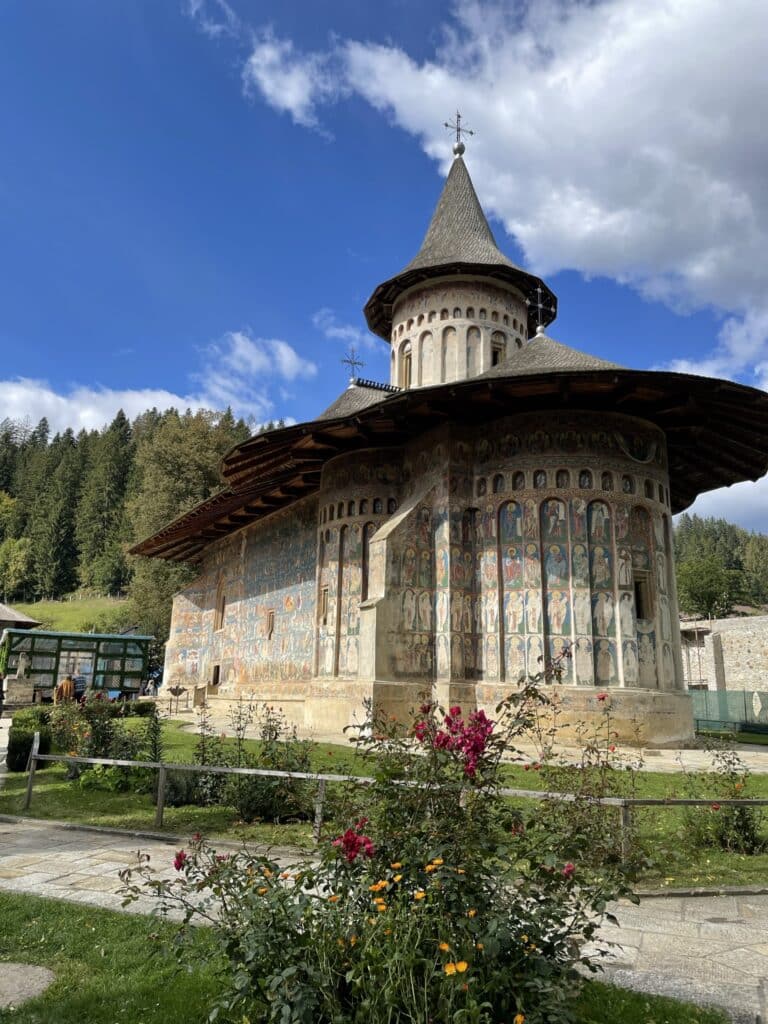
If you have more time, Transylvania connects beautifully northward to Maramures and Bucovina, the most traditional corner of the country and the home of the painted monasteries. I’ve written that northern loop up in full in my guide to Maramures and Bucovina, and the two regions back to back make one of the great road trips in Europe.
The Truth About Bran Castle, Dracula, and Vlad the Impaler
Now the part where I’m going to disappoint a lot of people, and save you half a day.
Almost everyone who looks up things to do in Transylvania ends up at Bran Castle, sold the world over as “Dracula’s Castle.” I’ll be straight with you, the way I am with every client: Bran is overrated, and the Dracula connection is mostly marketing.
Here’s the real story. Dracula is a novel, written in 1897 by Bram Stoker, an Irishman who never set foot in Transylvania. He built his fictional Count from a vague atmosphere of the place and a borrowed name. The historical figure tangled up in the legend is Vlad III, known as Vlad the Impaler, a fifteenth-century ruler of Wallachia (the region south of the mountains, not Transylvania) infamous for the brutal way he dealt with his enemies. His link to Transylvania is real but thin: he was born in Sighisoara, and his father’s name, Dracul, meaning dragon or devil, gave the family the name Stoker later borrowed.
Vlad almost certainly never lived at Bran. The castle’s entire Dracula identity was essentially invented later to sell tickets, and sell tickets it does.
So what about going inside Dracula’s Castle? If you must, treat Bran as a forty-five-minute photo stop from the outside. It’s a handsome enough hilltop fortress, but the interior is a series of small rooms with thin historical substance, and in summer the crowds and the souvenir stalls at the bottom are genuinely grim. Don’t build a half day around it. The rest of Transylvania is the reward.
If you actually want the real fortress of Vlad the Impaler, go to Poenari Citadel instead. Perched on a crag above the Arges valley at the foot of the Transfagarasan, Poenari was a genuine stronghold that Vlad rebuilt and used. It’s a ruin, and you earn it: around 1,480 steps climb up to it through the forest. Far fewer people make the effort, which is exactly why it feels real in a way Bran never will. Stand on those broken walls with the valley falling away below and you get the actual history, the actual location, and the actual sense of the man, with none of the gift-shop theater.
That’s the honest take, and it’s the kind of thing I tell every traveler I design a Romania trip for. The famous name isn’t always the best experience. Often the better thing is quieter, harder to reach, and a hundred times more rewarding.
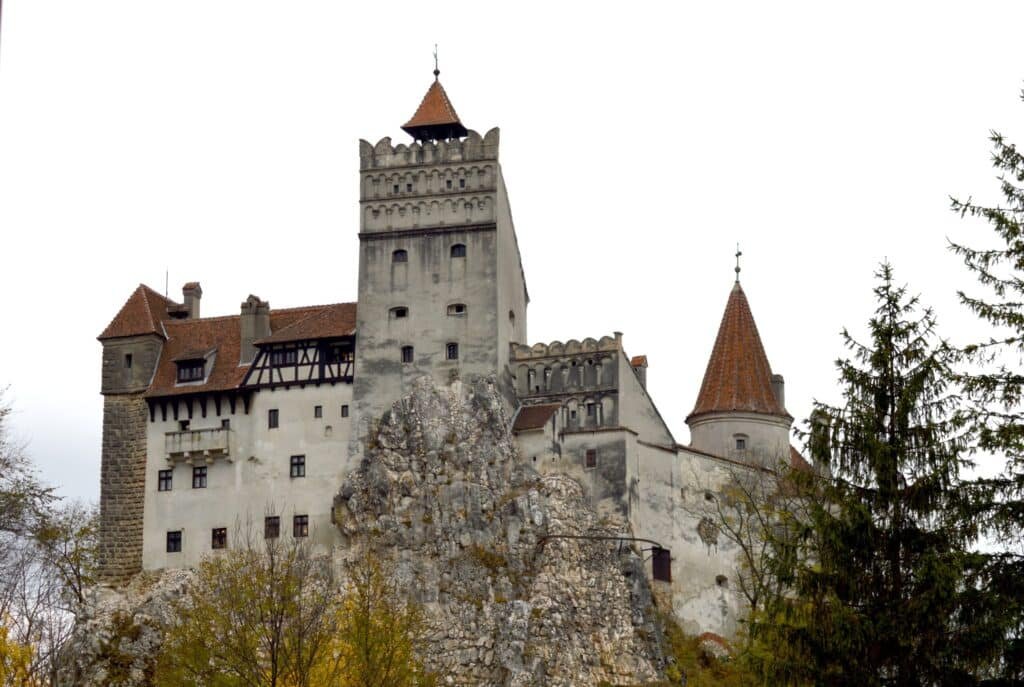
Bran castle, Romania
Common Mistakes to Avoid in Transylvania
I’ve watched a lot of well-meaning Transylvania trips lose a day here and a memory there to the same handful of avoidable errors. None of these are fatal, but each one quietly costs you.
Building the trip around Bran Castle. I’ve said it already and I’ll say it once more: Bran is a forty-five-minute photo stop, not a half day. Plan the rest of the region first and slot Bran in only if it’s convenient.
Trying to see every city. Brasov, Sibiu, Cluj, Targu Mures, and Sighisoara are all worth time, but cramming all five into a week turns your trip into a parade of car parks. Pick two cities, go deep, and spend the rest of the time in the villages and the mountains.
Skipping the villages because they’re “not on the map.” The fortified churches and the Saxon hamlets are the soul of Transylvania, and the unlisted ones are often better than the famous ones. Leave unscheduled time to wander and to track down the neighbor with the church key.
Underestimating driving times. Roads look short on a map, then a slow truck, a stretch of roadworks, and a flock of sheep turn forty minutes into ninety. Add a buffer to every leg, and try not to arrive in the mountains after dark.
Driving the Transfagarasan in May. The road usually only opens fully around late June. Locals will swear they cleared the snow, and sometimes they have, but plan the gentler Olt valley alternative for spring and treat an early opening as a bonus.
Going looking for bears. Walking into the Carpathian woods at dusk hoping to spot a bear is the wrong kind of memorable. Book a licensed hide with a guide. It’s safer, it’s ethical, and the sightings are far more reliable.
Treating Viscri as a quick selfie. The King Charles village rewards the people who arrive early or in the shoulder season and actually slow down. Roll in at noon in August and you’ll meet the tour buses instead of the village.
Transylvania gives back about as much as you bring the right expectations to it. The best things to do in Transylvania aren’t the same for everyone, and the gap between a good trip and an unforgettable one almost always comes down to matching the right region, the right pace, and the right experiences to the kind of traveler you actually are. The curious, slow traveler and the high-energy, city-and-spectacle traveler should plan two completely different weeks here, even though they’re looking at the same map.
That’s what I do at The Verse Voyager. My free personality assessment maps how you travel across five core dimensions, and I use it to design trips, in Transylvania and beyond, built around you instead of a one-size-fits-all checklist. If you’d like the version of this region tuned to your exact personality, your season, and your non-negotiables, that’s what my custom travel design service is for. And if you’d rather just talk it through first, you can book a free discovery call.
Not just where you go. How it changes you.
Frequently Asked Questions About Things to Do in Transylvania
Is Transylvania worth visiting? Yes. The things to do in Transylvania include medieval Saxon towns, UNESCO fortified churches, the largest brown bear population in Europe, dramatic mountain roads, and living village traditions, all with low prices and far fewer crowds than Western Europe. It’s especially rewarding for travelers drawn to history, nature, and authenticity over nightlife and resorts.
What are the best things to do in Transylvania? The highlights are exploring Brasov, Sibiu, and the medieval citadel of Sighisoara; visiting the UNESCO fortified churches at Biertan, Viscri, and Prejmer; bear watching from a licensed hide in the Carpathians; sleeping in a Saxon or Szekely village; and driving the Transfagarasan in summer. Most travelers find the quieter villages and churches more memorable than the famous Bran Castle.
How do you get to Transylvania? You can fly directly into Cluj-Napoca, Sibiu, or Targu Mures, or land in Bucharest and travel north. From Bucharest to Transylvania, it’s about a two-and-a-half to three-hour drive or a scenic train ride through the mountains to Brasov, the main gateway city.
How many days do you need in Transylvania? Four days is the minimum for a city, some villages, and a day in the mountains. A week is ideal and lets you add bear watching and a second city. Ten days or more allows a slower trip that can extend north into Maramures and Bucovina.
When is the best time to visit Transylvania? Late spring (May and June) and early autumn (September) offer the best balance of mild weather, open access, and small crowds. Summer brings full mountain-road access but more visitors, and December brings the Christmas markets and skiing.
Is Bran Castle worth visiting? Honestly, not as a highlight. Bran Castle is heavily marketed as Dracula’s Castle, but the connection to both Dracula and Vlad the Impaler is thin, and the site is crowded and commercial. Treat it as a brief photo stop. The real fortress of Vlad the Impaler is Poenari Citadel, and the citadel of Sighisoara is a far more rewarding medieval experience.
What is the connection between Dracula and Transylvania? Dracula is a fictional character from Bram Stoker’s 1897 novel; Stoker never visited Transylvania. The historical inspiration, Vlad the Impaler, was a fifteenth-century ruler of Wallachia who was born in Sighisoara in Transylvania, but the famous Bran Castle has almost no genuine link to him.
Can you go bear watching in Transylvania? Yes. Romania has the largest brown bear population in Europe, mostly in the Carpathians around Transylvania, officially estimated at between 10,419 and 12,770 bears in a 2025 genetic study. Responsible bear watching is done from licensed permanent hides with a guide, usually near Brasov or in the Szekely Land. Never try to find bears on your own.
What is Viscri famous for? Viscri is a small Saxon village with a UNESCO-listed fortified church, made internationally famous by King Charles III, who restored property there and champions the region’s traditional life and crafts. Visitors come for the church, the village blacksmith and craftspeople, home-cooked local lunches, and the preserved nineteenth-century rhythm of village life.
What are the fortified churches of Transylvania? They are medieval churches, mostly built by the Transylvanian Saxons between the thirteenth and sixteenth centuries, ringed with defensive walls and towers to protect villagers during Ottoman and Tatar raids. More than 150 survive of an original 300, and seven villages with fortified churches are inscribed as a UNESCO World Heritage Site.
Do you need a car in Transylvania? Yes, for the best experience. Trains and buses connect the major cities, but the villages, fortified churches, viewpoints, and mountain roads that make Transylvania special are reached by car. A Transylvania road trip with a rental car is by far the best way to see the region.
Is Transylvania expensive? No, it remains one of the better-value regions in Europe. Quality guesthouses run roughly 60 to 130 EUR a night, restaurant dinners rarely top 35 EUR per person, and entry tickets are modest. A comfortable week for two, excluding flights, typically costs between 1,400 and 2,600 EUR.
Is Transylvania safe for tourists? Yes. Romania is one of the safer countries in Europe, with low violent crime. The main outdoor risk is brown bears in the Carpathians, so never feed or approach them and follow local advice when hiking. Mountain driving calls for normal care, especially in winter.
Which Transylvanian city should I base myself in? Brasov is the best all-round base, central and well-connected to the mountains and villages. Sibiu is the prettiest and best for the Saxon villages. Cluj-Napoca suits travelers who want nightlife and a young, energetic city. The right choice depends on your travel personality, which the free quiz can help you pin down.