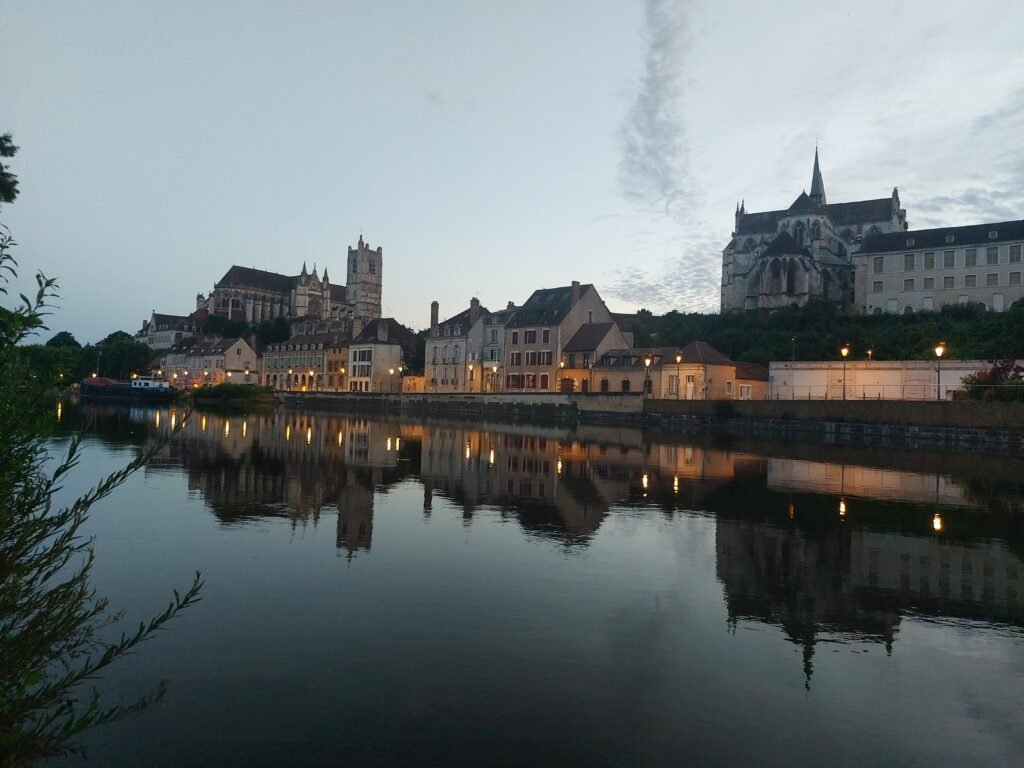
Where Did This Journey Actually Start? An Erasmus Experience in Nancy
In a globalized world it seems easier to move from one place to another for longer or shorter periods of time, whether for work or for studies. Yet, it’s worth remembering that this holds true more for some parts of the world than others. There are still borders in this world that become life projects. But for those who have this freedom of movement, sometimes travelling happens so slowly that you actually settle for a while in a place. And as you try to slowly comprehend and take in all the novelty of your new environment, you discover one powerful form of immersive travel.
I was one of the many Erasmus students at the University of Lorraine, a huge international hub. As with all Erasmus experiences, it happens both in the University, as well as in everything that surrounds it. France has traditionally gathered bright minds from its former colonies. In places like this, everybody arrives with a story, and that was my favourite part of the semester there: the fact that the place itself was open to the world. France is a social hub, a node that ties together all the far-reaching arms of la Francophonie, and nowadays, through programs like Erasmus Mundus, even more than that.
There were all these extraordinarily interesting students, coming from every corner of the world through an Erasmus Mundus Master, all having the opportunity to experience local living in France. Most of them were from French-speaking African countries, but others came from Asia, the United States, and Latin America. Studying abroad in France like this, in a university city with deep historical roots, offered a broad contact with various cultures around the globe.
The French teacher was the main agent of acculturation. His role was far more than simply helping us improve our French. With every lesson he introduced us to French history, traditions, geography, and various representative cultural productions. We were fed French culture by the spoonful, from iconic bande dessinée characters such as Lucky Luke to ongoing political tensions. He gave us rather neutral advice, making us aware that we were about to be put under some forces of tension and to be moulded in yet another shape:
“You all come from different countries all around the world. All of you received a certain education and now you should look around, question your beliefs and decide what to keep, what to let go and what to adopt.”
The university was central to life in Nancy. A good part of the city’s infrastructure and activities revolved around higher education. The city filled with young people when the autumn semester started and emptied again in summer.
Art Nouveau Nancy: Where Stone Grows and Iron Blooms
One student association offered city tours, and during one sunny weekend, I joined. The guide was actually a student of architecture and he could very eloquently speak about the elegant elements of the buildings. Nancy is one of the most rewarding places to visit in France outside of Paris precisely because it offers this kind of layered, walkable local experience, one that belongs entirely to its own history rather than performing itself for visitors.
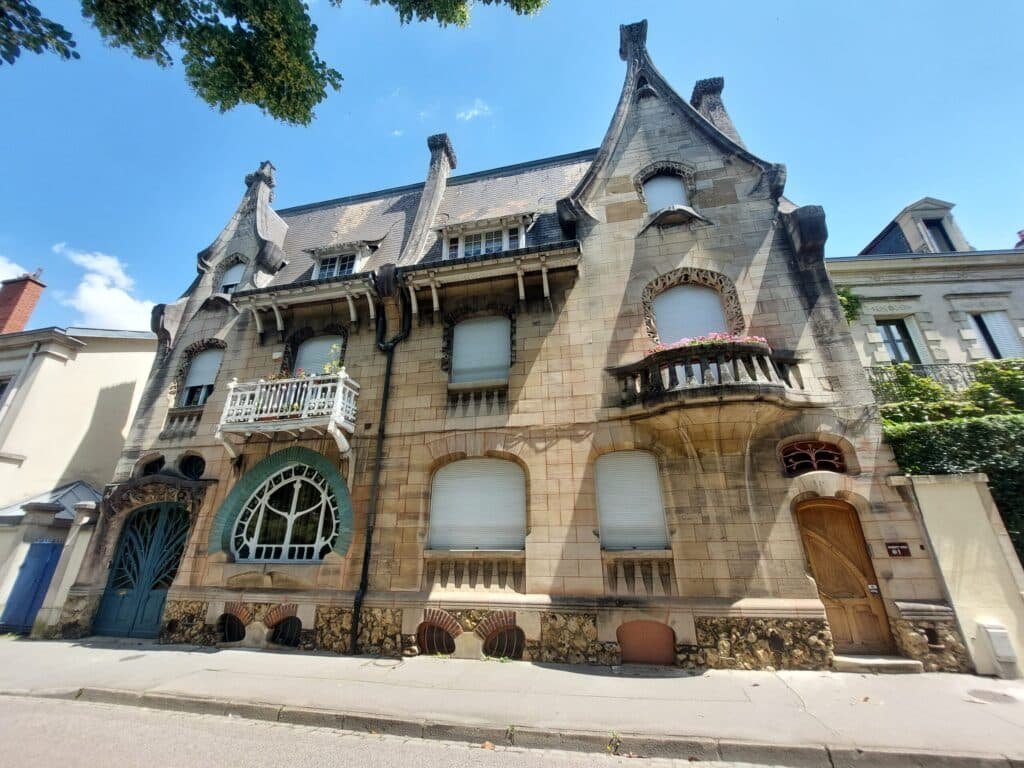
The building you see here is the Huot Houses, designed between 1902 and 1903 by Émile André (1871–1933), one of the most distinctly regionalist architects of the École de Nancy (the alliance of artists, craftsmen, and industrialists that made this small city, improbably, one of the great capitals of Art Nouveau in Europe). What arrests the eye immediately is the façade’s refusal to behave like stone: it breathes, curves, erupts into organic ornament. The characteristic wheel-shaped window at ground level, its radiating white mullions encased in green ceramic tile, evokes a cross-section of a plant stem or a dragonfly wing caught mid-flight. Above it, carved surrounds frame the windows like frozen tendrils, while the steeply pointed gables and sculpted finials reach upward with an almost Gothic restlessness, softened by the warm golden grès vosgien sandstone that gives Nancy’s Art Nouveau its deeply rooted, earthly character. Shell and fan motifs line the plinth; sinuous ironwork guards the gate. These were not mere decorative choices. André was, according to historian Peter Clericuzio, the most committed regionalist among Nancy’s architects: a designer who studied local flora, Vosges vernacular architecture, and the iconography of Lorraine’s troubled political history to create buildings that were, in the fullest sense, of their place. The École de Nancy believed that ornament should carry meaning: the thistle, emblem of Nancy’s civic motto “Non inultus premor” (Latin for ‘I am not injured unavenged’), the Lorraine cross, the monnaie-du-pape flower all appear across the city’s façades as a semiotic landscape of regional pride and, beneath it, the unhealed wound of the 1871 annexation of Alsace-Lorraine by Germany. Nancy’s Art Nouveau was never merely aesthetic; it was a manifesto in stone, iron, and glass, insisting that a province could challenge a capital, and that beauty could carry the weight of history.
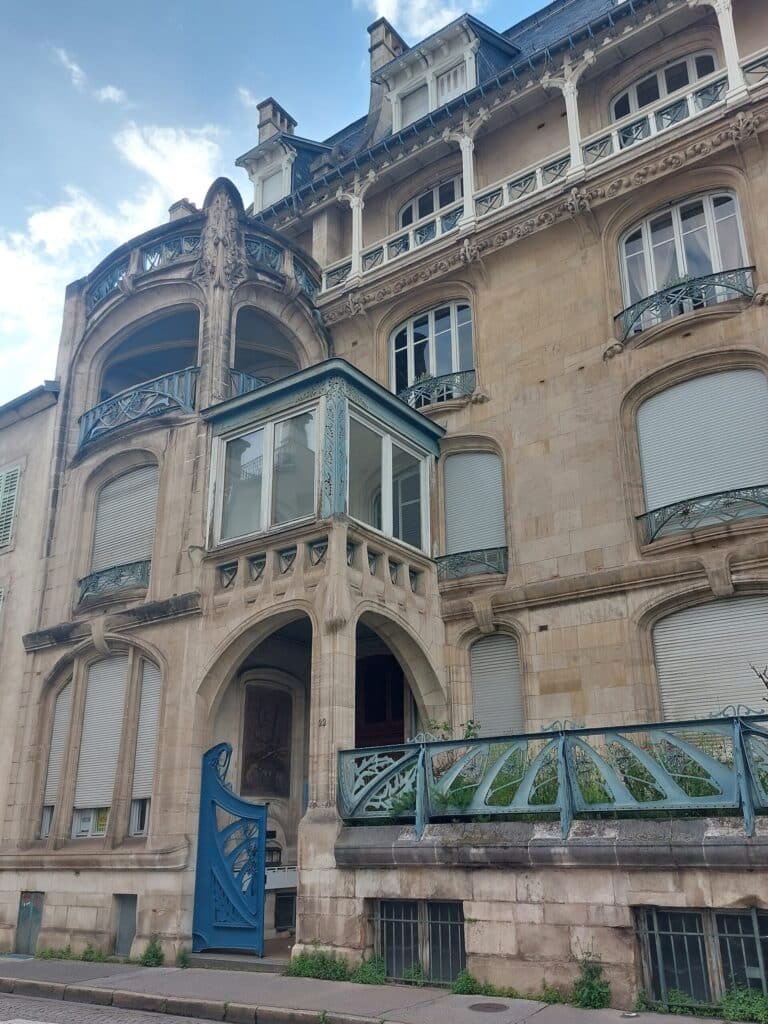
At the beginning of the tour, we followed the Circuit Art Nouveau de Nancy. We passed the Huot Houses and into the Quartier Saurupt, the garden suburb that André himself helped plan and populate with experimental cottages. The trail also takes in the Villa Majorelle, the Brasserie Excelsior, and numerous façades along the rue Félix Faure and avenue Foch, where one can enjoy the full richness of this school: stained glass by Jacques Gruber, ironwork by Louis Majorelle and beautifully carved stone.
One of the Best Local Experience in Nancy: History and Architecture Through an Insider’s Eyes
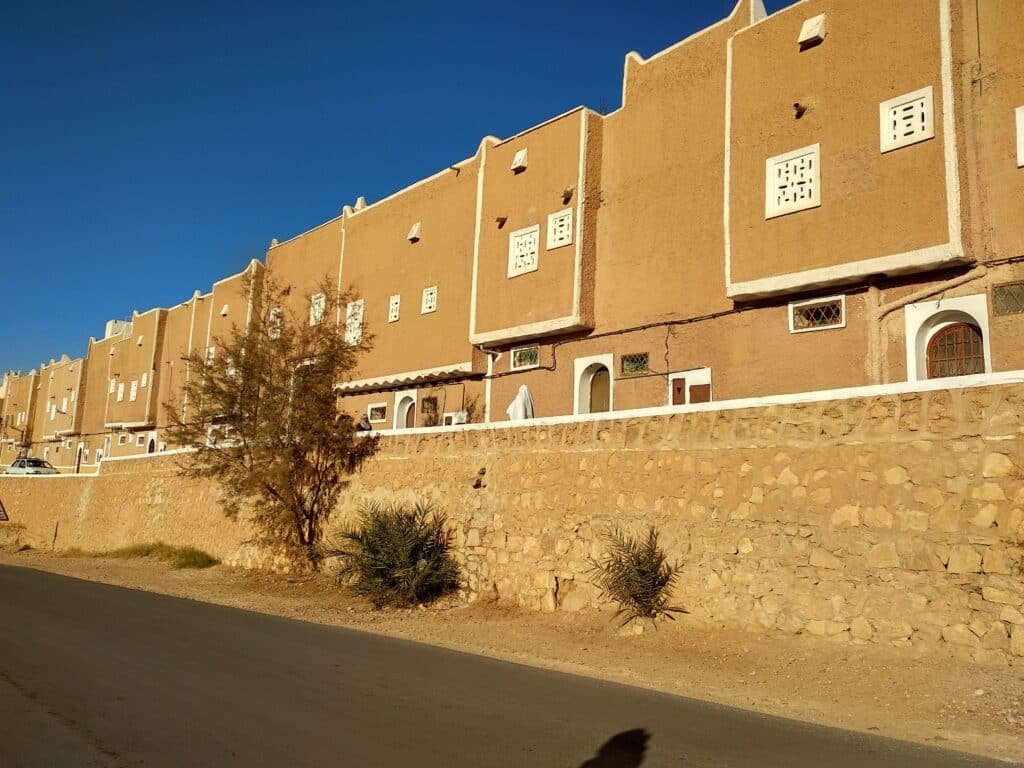
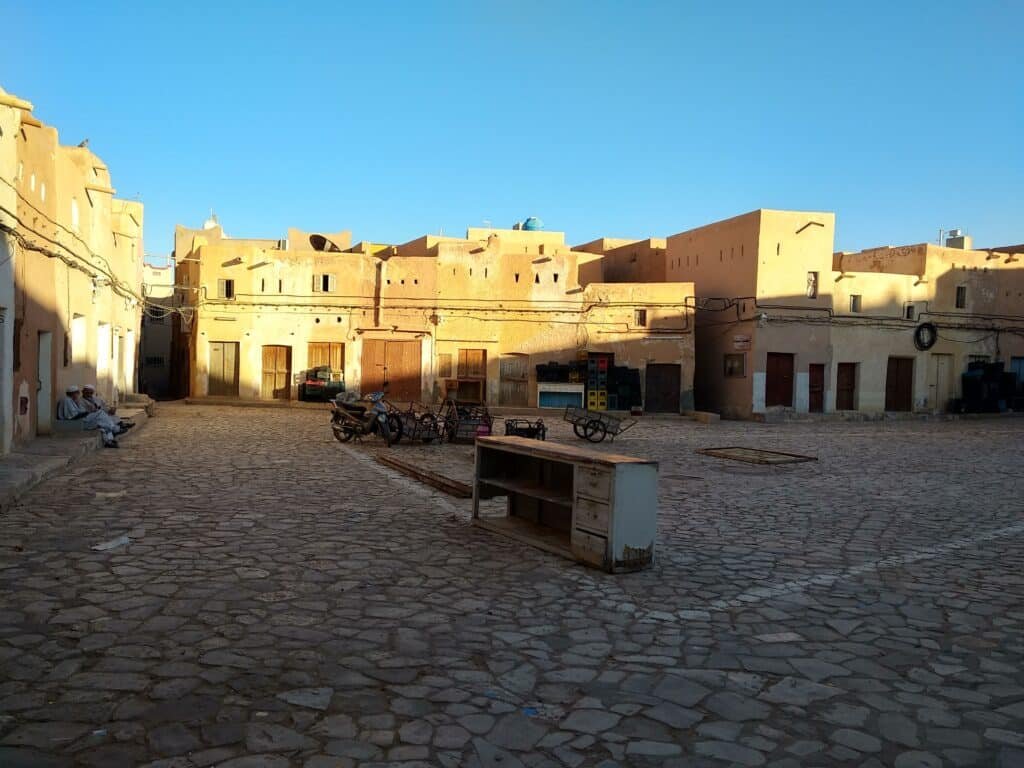
There were only three of us, so alongside the story of the city, I also got the story of our tour guide. He was Algerian and I knew a little about the long and complicated relationship between Algerians and the French. He was born in Aïn Témouchent, and I do remember this small detail because I too had passed through this absolutely random small provincial city in Algeria for about thirty minutes between two buses. Stumbling on this coincidence made us more inclined to converse through our true selves, the kind of meeting with locals that completes one’s understanding of a place with irreplaceable details.
We stopped first at the Porte de la Craffe, one of the last surviving medieval gates of Nancy, its two round towers rising with the stubborn permanence of things that have outlasted everything around them. Our guide explained that Nancy had been the capital of the independent Duchy of Lorraine since the 11th century, a buffer territory perpetually squeezed between the ambitions of France to the west and the Germanic world to the east.
It was here, he reminded us, that in 1477 Duke René II defeated Charles the Bold of Burgundy in the Battle of Nancy, a victory so decisive that Charles was found dead in a frozen pond outside the city walls. Lorraine had always been a land that others wanted, and testimony to that was the Cross of Lorraine. Our guide explained that the distinctive double-barred cross originated as the heraldic symbol of the medieval Dukes of Lorraine.
After the Franco-Prussian War and the German annexation of 1871, it took on a second, more poignant meaning: the upper bar came to represent the lost city of Metz, the lower bar Nancy, and the cross itself became a quiet, defiant symbol of a divided province that refused to forget it had once been whole, a meaning that resonated so deeply it was later adopted by de Gaulle as the emblem of the Free French Forces in World War II.
We then turned onto the rue de la Craffe, the ancient spine of the old city, the route that once carried pilgrims, merchants, and ducal processions southward through the medieval fabric of Nancy. The street has the particular quality of old urban arteries everywhere: slightly too narrow, slightly too crooked, slightly too layered with centuries to feel entirely of the present. It led us toward the Palais des Ducs de Lorraine, the former seat of the Duchy’s rulers, a handsome Renaissance structure whose courtyard still breathes something of the sixteenth-century confidence of the dukes who commissioned it.
Immediately beside it stands the Chapelle des Cordeliers, the ducal mausoleum where many of those same rulers are buried. The chapel’s interior holds one of the most quietly extraordinary optical events I encountered in Nancy: a stained glass rose window through which, in the afternoon hours, a pattern of coloured rays fans out across the stone floor, deep reds and blues dissolving into amber as the light shifts.
At some point we crossed the rue Poincaré, and so I discovered that he was born in Nancy in 1854. I remembered him from high school with the specific fondness one reserves for intellectual heroes encountered young. He was one of the most extraordinary mathematical minds France ever produced, a man whose work on topology, chaos theory, and the philosophy of science still echoes through contemporary thought.
We took a detour through the Parc de la Pépinière, which was originally laid out in the eighteenth century as a tree nursery. Today it is the living room of Nancy’s student local community. On that particular sunny afternoon, small groups were scattered all over the grass, relaxing, reading, discussing, and engaged in various activities from sports to projects related to the university.
We exited through the Place de la Carrière, a long, elegant esplanade flanked by uniform Baroque façades, and walked under the triumphal arch, directly into the Place Stanislas. We stopped for a while to listen to an impressive One Man Band musician that brought the light, flowing, jazzy atmosphere to our ears, all by himself.
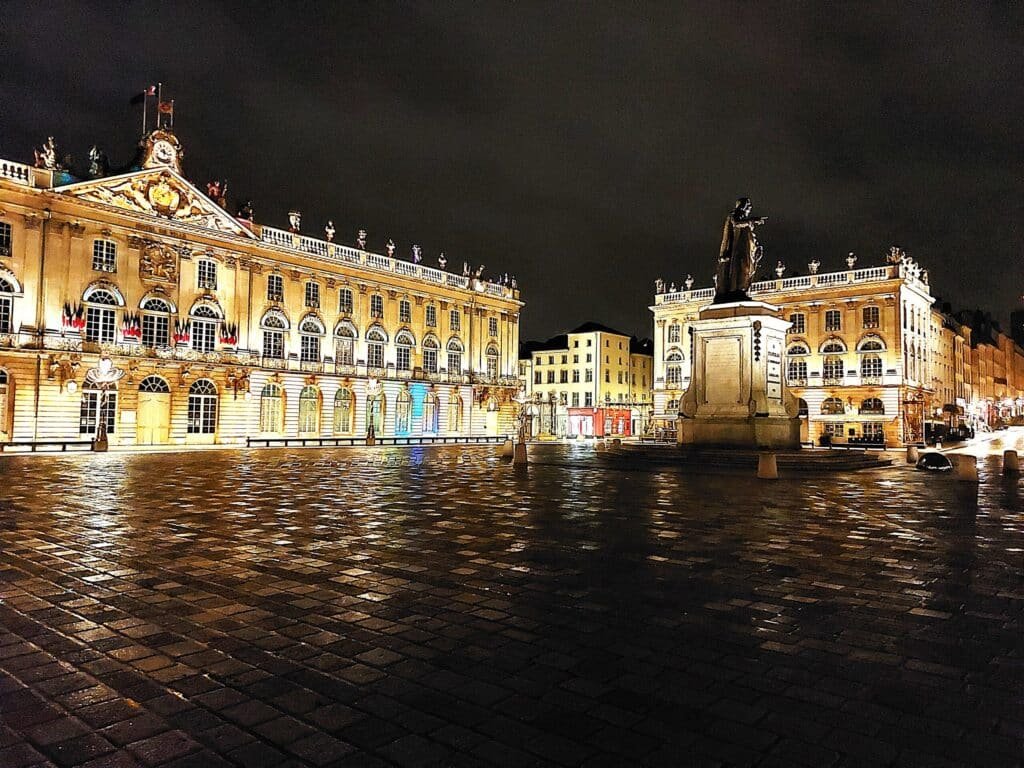
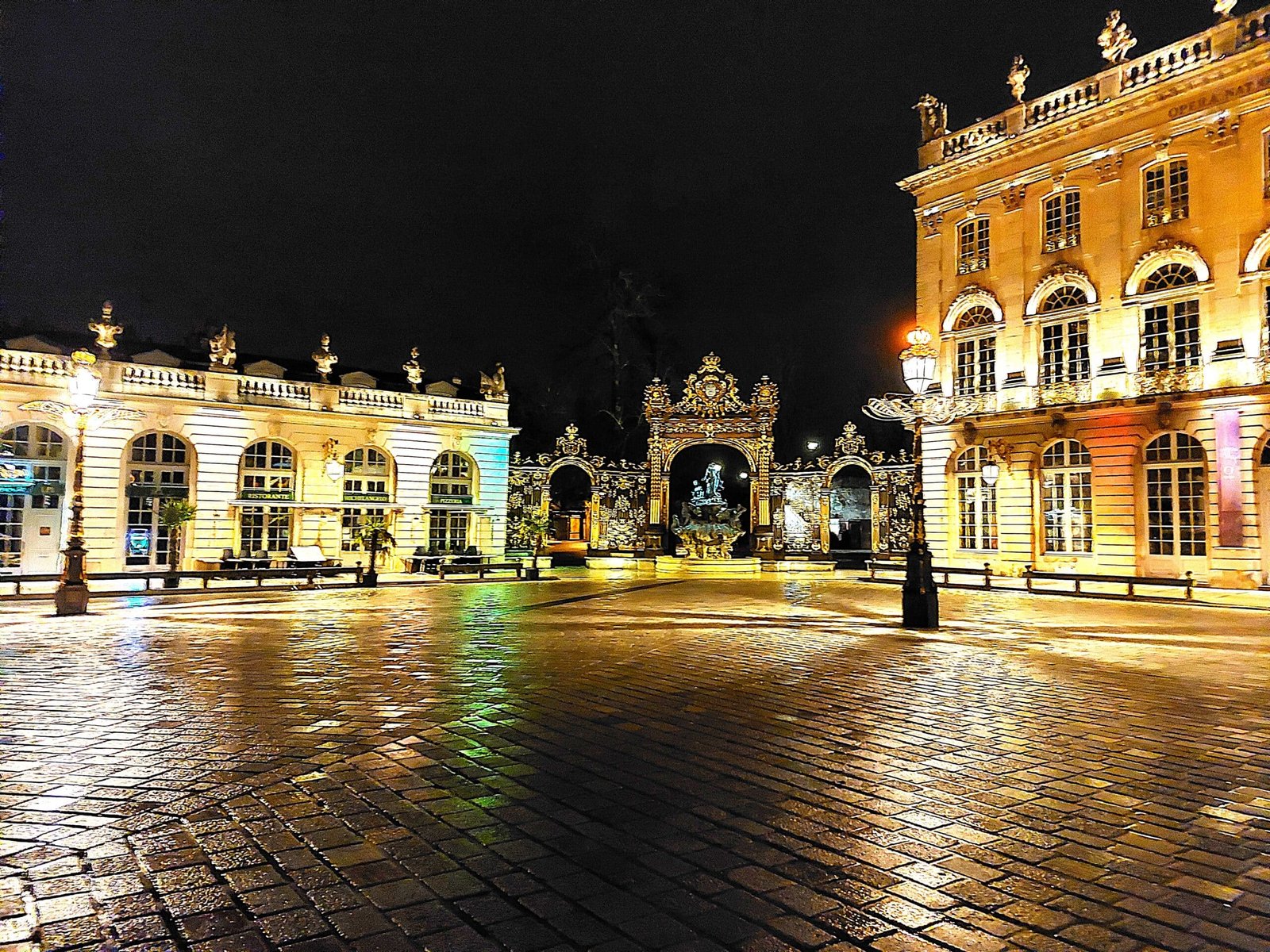
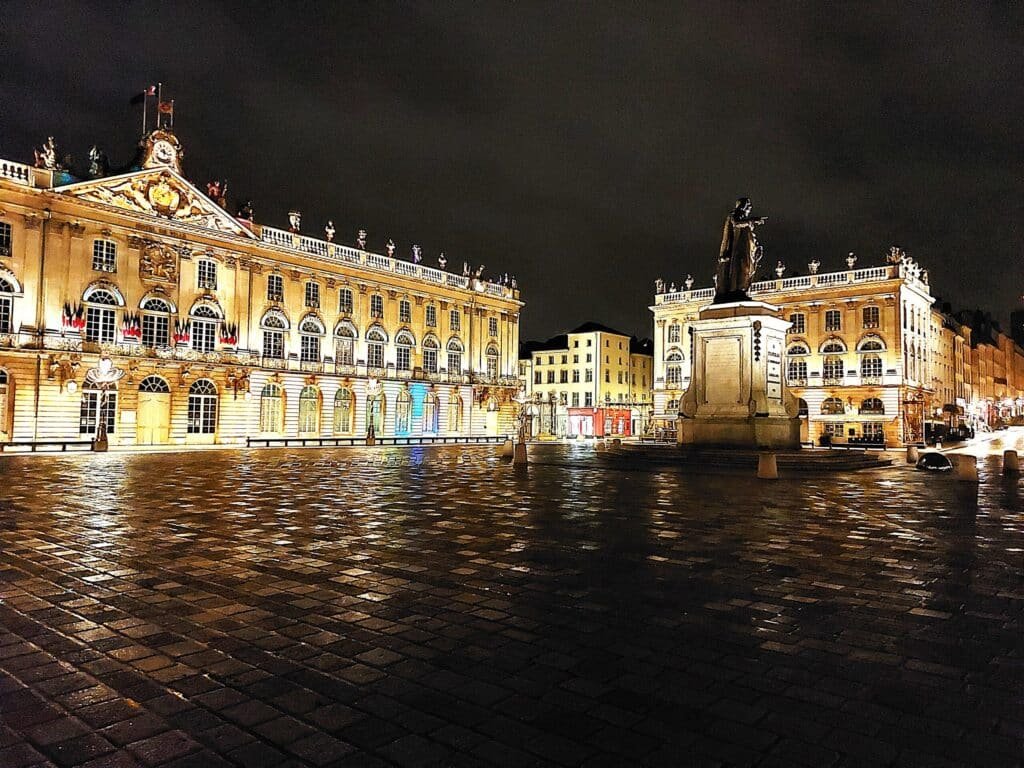
When you arrive in Place Stanislas you know beyond any doubt that you are in France. The grandiose space, the opulent Baroque façades, the opera house, the imposing fountains and the gilded ironwork gates. There is nonetheless an elegance in this opulence. The lamp posts had gentle golden flower-like petals, floating during the night like glimpsed from a wonderland.
We stopped for a while and listened to the story of King Stanislas. By family name Leszczyński, he had been King of Poland twice and lost the throne both times. After his second deposition, his son-in-law, who happened to be Louis XV of France, having married Stanislas’s daughter Marie, arranged a comfortable consolation: the Duchy of Lorraine, which Stanislas would rule for the rest of his life, after which it would pass peacefully to France. It was, in essence, a gilded retirement, and Stanislas, generous, cultivated, and apparently genuinely beloved by his subjects, spent it building. He gave Nancy the square that now bears his name, a fountain of Neptune, a triumphal arch connecting the old and new towns, and a reputation for Rococo civic grandeur that Nancy has never quite relinquished. At the centre of the square stands his statue, gesturing with the benevolent authority.
The photo shows the Hôtel de Ville de Nancy. The building was designed by Emmanuel Héré de Corny in neoclassical style, built in ashlar stone, opening officially in 1755. Three projecting bays break up the long façade, the central one crowned by a pediment bearing the Stanislas coat of arms; flanking the central clock are two allegorical statues representing Justice and Prudence. Inside, though not visible here, the building holds a grand staircase with wrought-iron banisters by Jean Lamour and ceiling murals painted by Jean Girardet.
The bronze statue on the right is Stanislas Leszczyński himself, standing on the pedestal at the centre of the square. The square was originally called Place Royale, built to honour Louis XV and it was actually a statue of Louis XV that originally stood on the pedestal now occupied by the duke. The square’s name changed to Place du Peuple during the Revolution, and only later took the name Place Stanislas in recognition of “the Beneficent” duke — so the statue you’re looking at is a later addition honouring Stanislas, not an original royal monument.
Our guide noted, with a smile, that the city of Metz, Nancy’s great historical rival sitting barely fifty kilometres to the north, had for much of the nineteenth century actually been the larger and more industrially significant of the two. When the Franco-Prussian War ended in 1871 and Germany annexed most of Alsace and the northern third of Lorraine, Metz found itself suddenly on the other side of the new border, swallowed into the German Empire. Nancy, meanwhile, absorbed a flood of refugees, industrialists, glassmakers, and artists from the lost territories.
That sudden influx of talent and grief and displaced regional pride became, against all expectation, the seed of the École de Nancy and the extraordinary flowering of Art Nouveau that would make the city internationally famous. The loss of Metz, in other words, made Nancy. History, as it so often does in Lorraine, had turned catastrophe into something unexpectedly luminous.
Meeting the Locals: The Architect Who Wouldn’t Cut Corners
We went to a nearby café. Talking to a tour guide is a handy way to start conversing with locals. One sip after another, I found out his story of becoming.
He didn’t particularly want to become an architect, it was his best friend who did. Yet through an irony of fate, he passed the admission exam and his friend didn’t. He was a good student, eloquent, charming, liked by the best teachers, possessing a promising ambition. Algiers la Blanche is an interesting place to mould a mind that in turn will shape the aspect of physical reality.
I shared with him my fleeting impressions of Algiers, among them the white, impenetrable front de mer, imposing the elegance of French imperialism. We talked and discovered that in this world we live in, the stories are no longer one-sided. Some voices are louder and you may think that is everything that can be heard, but if you listen carefully you will hear the whispered-loud voices of the sirocco from the nearby desert.
It takes a while to discover what you are, who you are, and a longer while to accept what you are.
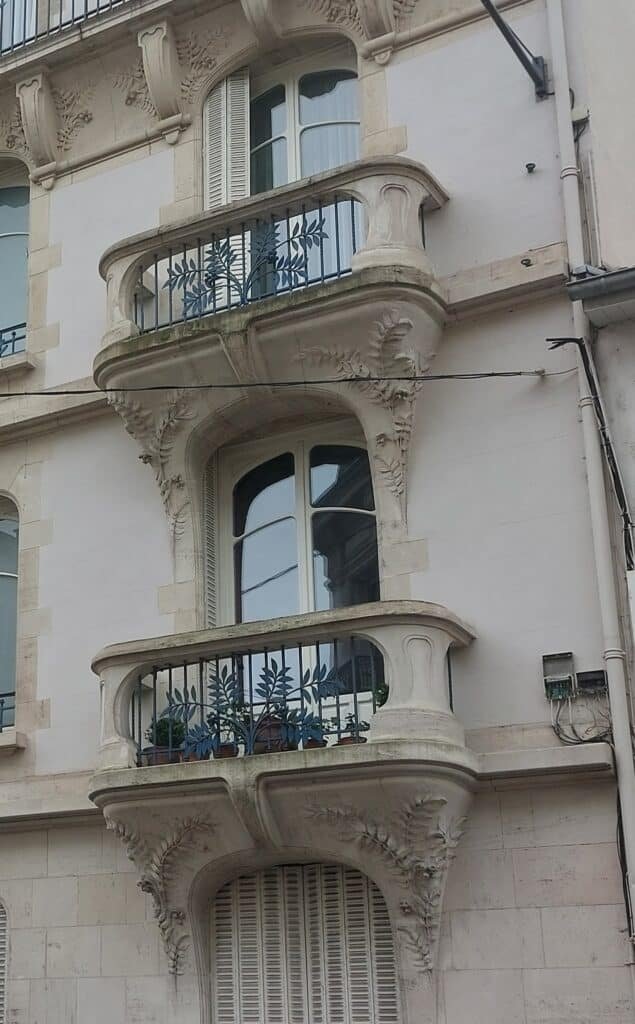
How does one’s life influence one’s artistic thought? After all, Art Nouveau was a revolt against recycling. Maybe at that time, change was confused with revolt. And they decided to run away from the rigours of classicism and from the opulence of Rococo into gentle emulations of nature.
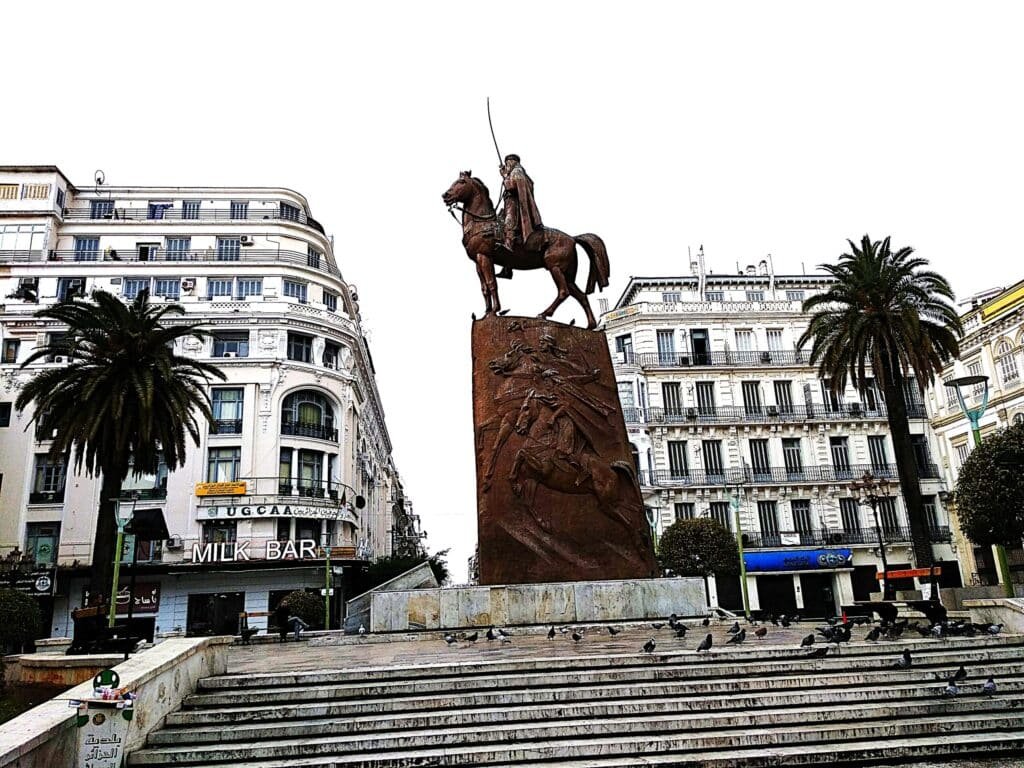
The buildings framing the statue of Emir Abdelkader are classic Haussmann-style apartment blocks: wrought-iron balconies, symmetrical window bays, mansard-adjacent rooflines, and ground-floor arcades for shopfronts. The same motives that you’d find in Paris or Lyon, transplanted wholesale during the colonial period when French planners rebuilt central Algiers as an extension of the metropole. This is the layer locals call “Algiers the White”: the gleaming, French-built downtown that contrasts sharply with the Ottoman-era Casbah just up the hill. The square’s surrounding buildings, including the nearby Grande Poste, were built in Neo-Moorish style, a 19th-century movement that combined European engineering with traditional Arabic decorative elements such as horseshoe arches, mosaics, and domes.
The bronze equestrian figure depicts Emir Abdelkader (1808–1883), an Algerian religious and military leader who led a struggle against the French colonial invasion in the mid-19th century, an Islamic scholar and Sufi who unexpectedly found himself leading a military campaign, building up a collection of Algerian tribesmen that for years successfully held out against one of the most advanced armies in Europe. He’s remembered too for his conduct toward enemies: his consistent regard for what would now be called human rights, especially toward his Christian opponents, and his crucial intervention to save the Christian community of Damascus from a massacre in 1860, which brought him honours from around the world.
The square’s other layer of history sits at its southern edge: the famous Milk Bar café, which was the site of an FLN attack during the Battle of Algiers on 30 September 1956.
My one-time conversation companion continued to recall his life.
“I was quite vehement against moving to France.”
“I remember from my time there, that for many young people, university was just a way to earn a visa.” I told him.
“It was not my case. I went through all the stages. I tried to change myself, become involved socially, change the others around me, change the system.”
He told the story of how, after university, he was employed by an architecture bureau. He worked for them for a while, but the relationship was tense. Algeria was going through a boom in construction. Tall apartment buildings sprang up one after another in the suburbs of major cities. Yet one thing was written on the structural plans and another turned out to be built in reality.
He did not want to cut corners on construction materials in order to increase his and the company’s earnings. His bosses thought he would eventually give up his youthful stubbornness. But he did not, especially not after what happened with the earthquake at the Turkish-Syrian border, where many buildings did not comply with construction norms. After he obstructed a project once, twice, a third time, he was removed from the bureau. The idea of constructing safer, yet more expensive buildings had not taken hold in that particular Algerian company.
That evening, I was left wondering: how this particular architect of Algerian origins, with such a strong personality, will shape the physical reality. How a mind familiarized with the mellow hills of the Atlas in a country brewing with tumultuous change and controversy will, in turn, shape the art of leaving.
Find your own local experience
If this guided walk through the architectural gems of Nancy sparked something in you, or if you find the concept of local living and discovering a place through immersive travel appealing, let yourself be guided by The Verse Voyager’s personality-based travel planning — it will help you find the right idea for your desired length of stay.
TL;DR:
A six-month Erasmus experience at the University of Lorraine, part of an Erasmus Mundus master’s program, becomes a deep dive into local living in Nancy: an evening with a One Man Band in Place Stanislas, a walking tour through Art Nouveau Nancy with a fellow student, layers of history and architecture from the Porte de la Craffe to the Cross of Lorraine, and a café conversation with locals that opens into the immersive travel local experience travel writing rarely captures. The post closes with a postscript on French architectural influence in Algiers, connecting the local community of Nancy’s Art Nouveau builders to the colonial-era streets of Algiers the White. For anyone looking for places to visit in France outside of Paris, Nancy offers history, beauty, and human connection in equal measure.
Transylvania is the part of Romania everyone thinks they already know, and almost nobody does. They picture a castle, a vampire, some fog. What they get instead, if they come with the right expectations, is a high plateau ringed by the Carpathians, scattered with eight-hundred-year-old Saxon villages, walled churches built to survive sieges, brown bears in the forests above the pastures, and a pace of life that most of Europe gave up a century ago.
So when people ask me about the best things to do in Transylvania, I never start with a list. I start with a question: what kind of traveler are you? Because the same week here can be the trip of a lifetime for one person and a slow grind for the one sitting next to them, and the difference has nothing to do with the destinations. It has to do with you.
I’m Romanian, I’ve been designing trips to this region for years, and Transylvania is the place I send travelers to more than almost any other. This guide is the honest version: where it is, how to get there, when to come, what it costs, what to actually do, and where the famous stuff is overrated. The things to do in Transylvania span everything from medieval citadels and bear watching to mountain roads and half-empty Saxon churches nobody told you about. By the end you’ll know whether this is your kind of place, and exactly how to do it well.
Summary about Transylvania
If you only read one section, read this one.
What it is: the central plateau of Romania, wrapped by the Carpathian Mountains, full of medieval Saxon and Hungarian towns, fortified churches, walled citadels, wild forests, and living village traditions.
Why go: authentic rural Europe that has vanished nearly everywhere else, some of the continent’s best wildlife, UNESCO heritage by the armful, and prices that still feel gentle.
The best things to do in Transylvania: wander Brasov, Sibiu, and the citadel of Sighisoara; sleep in a Saxon or Szekely village; watch wild bears from a proper hide; visit the fortified churches; drive a mountain pass; and skip the tourist trap that everyone tells you is the highlight.
When to go: May and June or September for the best mix of weather and quiet. July and August for full mountain access. December for the Christmas markets.
How long: four days minimum, a week to do it justice, ten days to do it slowly.
How to get around: rent a car. A Transylvania road trip is the whole point.
Transylvania in three numbers
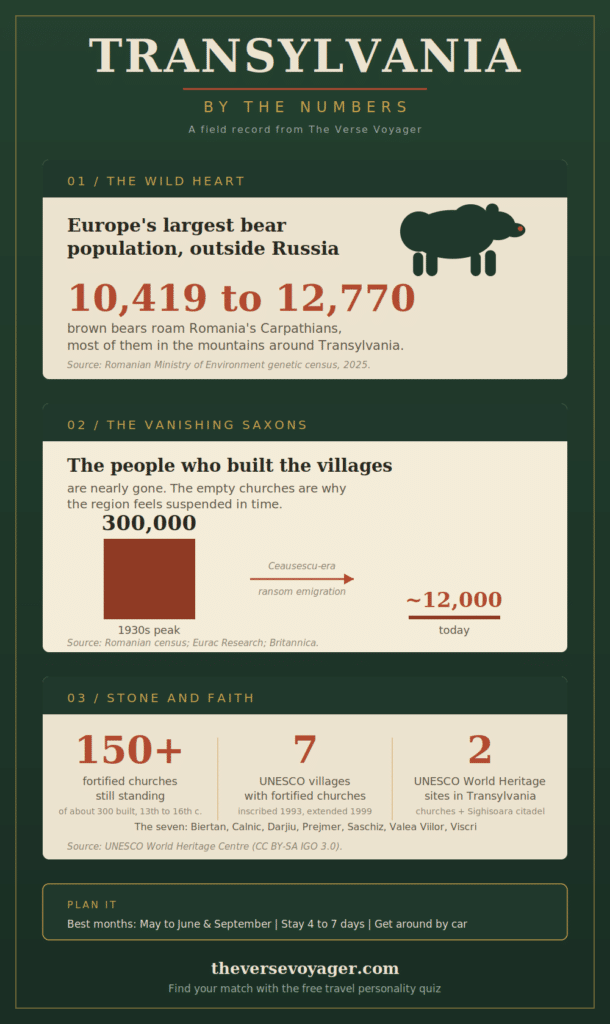
Before the long version, here’s the region at a glance. The infographic below captures the three things that make Transylvania unlike anywhere else in Europe, and each one shapes the trip you’ll have.
[IMAGE: transylvania-by-the-numbers-infographic.png | Transylvania by the numbers infographic: brown bear population, vanishing Saxons, and UNESCO fortified churches]
First, the wildlife. A 2025 genetic census put Romania’s brown bear population at between 10,419 and 12,770 animals, the largest in Europe outside Russia, and almost all of them live in the Carpathians that ring Transylvania. That’s why responsible bear watching is one of the signature things to do here. Second, the people. The Transylvanian Saxons who built the walled towns and fortified churches numbered around 300,000 in the 1930s, and after the communist-era emigrations fewer than about 12,000 remain today.
That collapse is exactly why the villages feel suspended in time, and why visiting now matters. Third, the heritage. More than 150 fortified churches still stand from an original 300, seven villages are inscribed as a UNESCO World Heritage Site, and the region holds two UNESCO sites in total once you add the citadel of Sighisoara. Keep those three numbers in mind as you read on, because the bears, the Saxon villages, and the fortified churches are the heart of everything that follows.
Now the long version, the one that actually helps you plan.
Some interesting numbers about Transylvania
Before you plan
What kind of traveler are you, really?
This route rewards some temperaments more than others. Take the two-minute quiz and find out whether it fits the way you actually travel, before you copy a single day of it.
20 questions · about 3 minutes · no account needed to start
Where Transylvania Actually Is, and a Short History That Explains Everything
Transylvania sits in the center and northwest of Romania, a broad plateau cradled on three sides by the arc of the Carpathian Mountains. The name comes from Latin, “the land beyond the forest,” which tells you how the rest of medieval Europe saw it: remote, wooded, on the far side of the mountains. That remoteness is exactly why so much survives here.
To understand the things to do in Transylvania, you need about ninety seconds of history, because the layers are the attraction.
For centuries this was a frontier of the Kingdom of Hungary. In the twelfth century the Hungarian kings invited German-speaking settlers east to defend the border, work the land, and build up trade. Those settlers became known as the Transylvanian Saxons, even though most of them came from the Rhine and Moselle regions rather than Saxony. They built the walled towns, the trade guilds, and the fortified churches that still define the landscape. Alongside them lived the Szekelys, a Hungarian-speaking people who guarded the eastern passes, and the Romanians, who farmed the valleys and the mountains and slowly became the majority.
Three peoples, three languages, three architectures, layered on the same ground for eight hundred years. That’s the texture you feel when you travel here. A Saxon church with a German inscription, a Hungarian-speaking village an hour away, an Orthodox monastery in the next valley, and Romanian spoken across all of it.
The Saxons didn’t come as ordinary peasants. In 1224 the Hungarian king Andrew II granted them the Diploma Andreanum, often called the Golden Charter, one of the oldest known documents of regional self-government in Europe. It gave the Saxon settlers their own elected leaders, their own judges, their own priests, and freedom from feudal landlords, in exchange for paying tax to the king and providing soldiers in time of war. That eight-hundred-year-old deal is why these communities built such wealthy, organized, self-reliant towns and villages, and why they fortified them so well. They governed themselves, so they defended themselves.
For most of that history Transylvania ran on a system of “three nations,” the Hungarian nobility, the Szekelys, and the Saxons, who shared political power while the Romanian majority was largely excluded from it. You don’t need the details, but knowing the shape of it makes the layered, slightly unequal feel of the old towns click into place.
The Szekely Land, in the east of the region around Covasna, Harghita, and Mures counties, is its own world within Transylvania. The Szekelys are Hungarian-speaking, were the frontier guardians of the medieval kingdom, and they kept their language, their carved wooden gates, their spas, and a fierce sense of identity right up to today. Drive from a Saxon village into Szekely country and the signs, the food, and the churches all change, even though you’ve crossed no border at all. For a traveler, that’s one of the quiet thrills of the place.
The Saxon story has a sad final chapter that you’ll see with your own eyes. In the 1930s there were around 300,000 Transylvanian Saxons. Under the communist regime, dictator Nicolae Ceausescu effectively sold them to West Germany, which paid a per-head ransom for each emigrant, and after 1989 the rest mostly left too. Today fewer than 15,000 Saxons remain in Romania, most of them elderly. Whole villages that their ancestors built for centuries now stand half empty, the great churches tended by a handful of caretakers. It’s melancholy, and it’s also the reason these places feel suspended in time. You’re walking through a culture in its twilight, which is part of why getting here now matters.
Keep that history in your back pocket. It makes every village, every church, and every awkwardly trilingual road sign make sense. For the full national picture, my complete guide to the best places to visit in Romania sets Transylvania against the rest of the country.
How to Get to Transylvania
One of the most common things people search before a trip is simply how to go to Transylvania, and the honest answer is that it’s easier than its remote reputation suggests.
Flying in directly. Transylvania has three useful airports. Cluj-Napoca (the busiest, with the most European connections), Sibiu (small, central, and beautifully placed for the Saxon villages), and Targu Mures (smaller still, handy for the middle of the region). If your trip is Transylvania and only Transylvania, flying straight into Cluj or Sibiu saves you a long transfer and is the move I’d recommend.
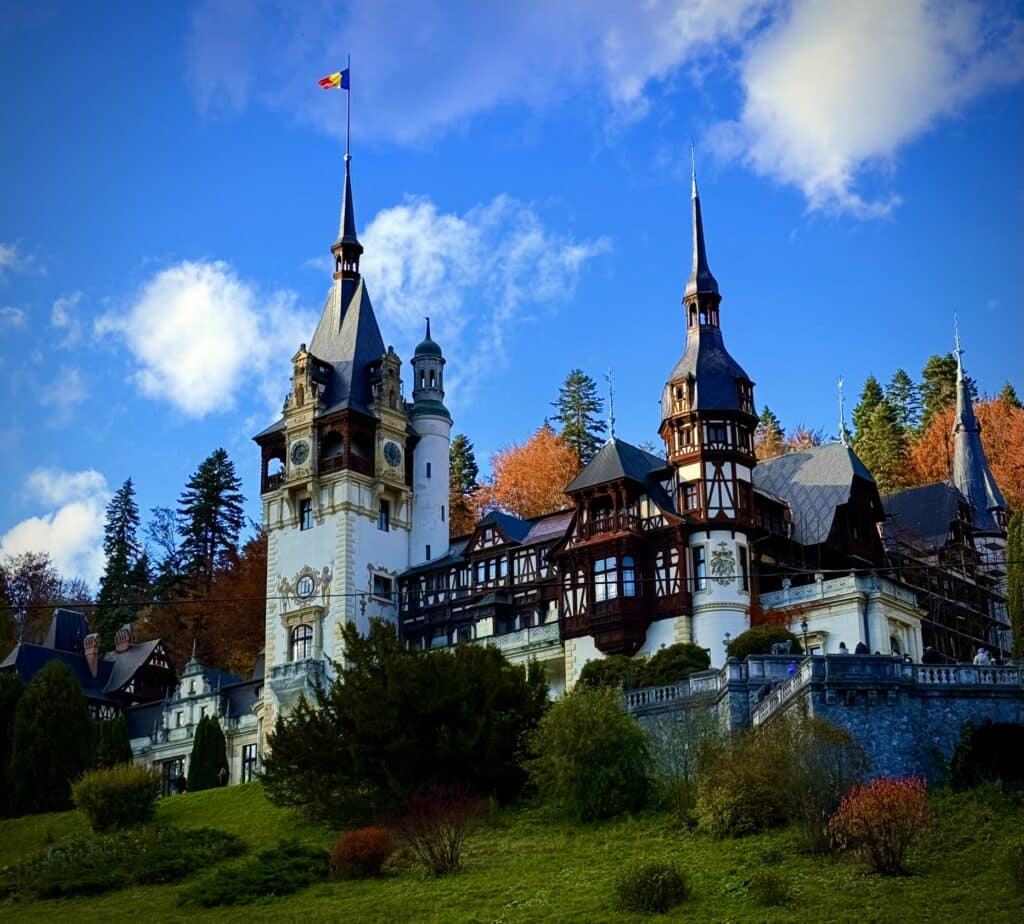
Bucharest to Transylvania. Most international visitors land in Bucharest, the capital, which sits south of the mountains rather than in Transylvania itself. From Bucharest to Transylvania you have two good options. The drive north through the Prahova Valley takes you over the mountains to Brasov in about two and a half to three hours, past Sinaia and Peles Castle, and it’s a lovely introduction to the Carpathians. The train on the same Bucharest to Brasov line is genuinely scenic, climbing through the gorges, and it runs frequently. Either way, Brasov is the natural gateway from the capital.
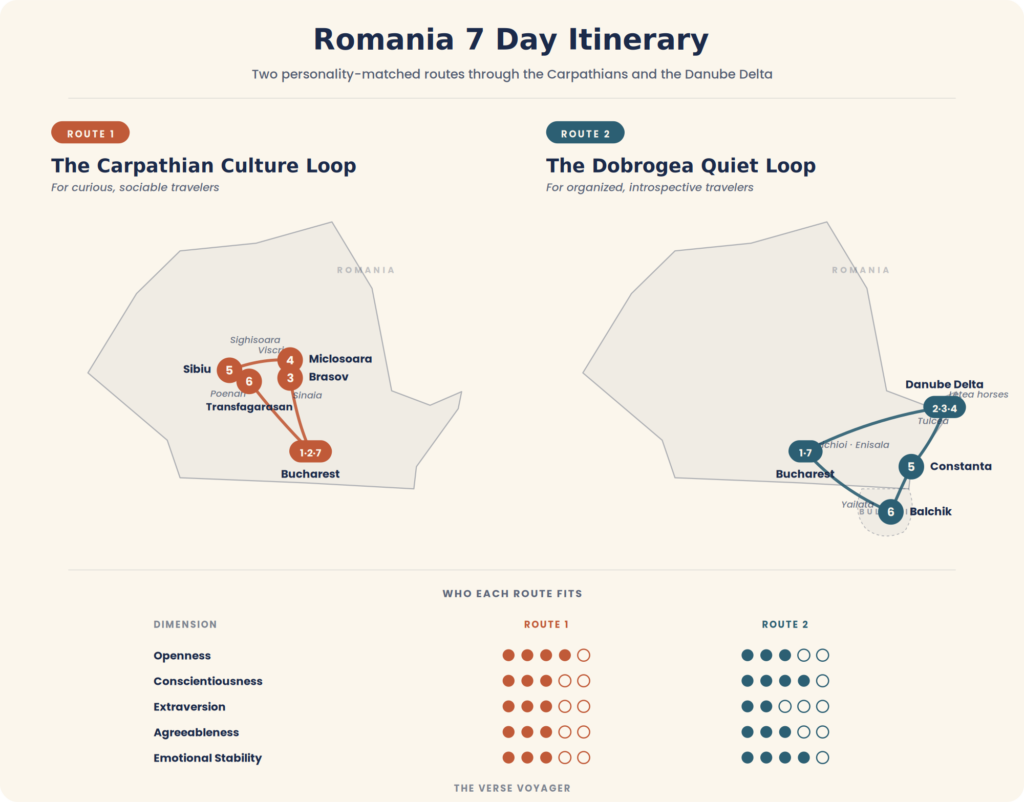
If you want to combine the two, I’ve mapped a full week that runs Bucharest up into Transylvania and back in my Romania 7 day itinerary, which gives you the exact route, the stops, and the timing.
Getting around once you’re there. Rent a car. I’ll keep saying it because it’s the single most important planning decision you’ll make. Transylvania’s best moments are villages, viewpoints, fortified churches, and mountain roads that buses simply don’t reach. Trains and coaches link the big cities well enough, but a Transylvania road trip without a car is a Transylvania road trip you only half do. Pick the car up at the airport on arrival and drop it on departure.
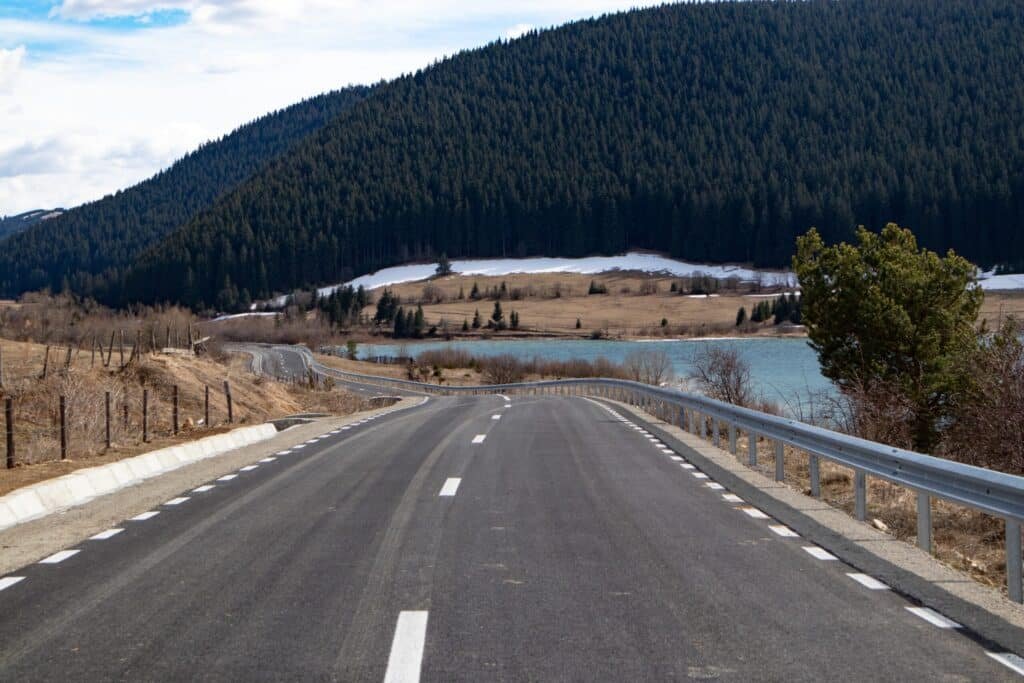
[IMAGE: bucharest-to-transylvania-prahova-valley-road.jpg | The mountain road from Bucharest to Transylvania winding through the Prahova Valley]
Roads of Transylvania, Romania
Planning a Transylvania Trip: When to Go, How Long, and What It Costs
Before the things to do in Transylvania, the practical frame. Get these three decisions right and the rest falls into place.
When to go, season by season
Transylvania works across three seasons, and each one changes the feel.
Spring, from May into June. My favorite, alongside September. The hills turn green, the meadows fill with wildflowers, the days are mild, and the crowds haven’t arrived. Bears are active after hibernation, which makes for good watching. The one catch is the high mountain roads: the famous Transfagarasan usually only opens fully from late June, so in May you plan around it.
Summer, July and August. The warmest and busiest stretch. Both high mountain passes are open, the festival calendar is full, and every village guesthouse is running. It’s the easiest season logistically because everything is accessible, but the popular spots get their thickest crowds, and you’ll want to book the best stays well ahead.
Autumn, September and October. Many travelers, me included, think this is the best season of all. The beech forests turn gold and copper, the crowds thin, the light goes soft, and the bears are at their hungriest before winter, which makes wildlife watching reliable. Days stay mild, nights start to bite, so pack layers.
Winter, roughly December. A different trip entirely. The Christmas markets in Sibiu, Brasov, and Cluj are among the prettiest in Eastern Europe, the ski slopes around Poiana Brasov open up, and the whole region takes on a quiet, snowbound calm. Mountain driving needs more care.
If avoiding crowds is your priority, aim for late May, June, or the first half of September. You get warm weather, open roads, and villages that still belong to the people who live in them.
How many days you need
Four days is the workable minimum: a city, a cluster of villages, a fortified church or two, and one day in the mountains. A week is the sweet spot and lets you fold in bear watching, a second city, and a slow village stay without rushing. Ten days or more and you can add the wilder corners and never feel hurried. Transylvania rewards slowness, so resist the urge to cram.
What it costs
Transylvania remains one of the better-value regions in Europe, though it’s no longer dirt cheap, and I’d rather be straight with you than sell a fantasy. As a rough guide for two people traveling comfortably in 2026:
Guesthouses and boutique stays in Brasov, Sibiu, or a good village run roughly 60 to 130 EUR a night, often with breakfast.
A proper restaurant dinner rarely tops 25 to 35 EUR per person with wine. A home-cooked village lunch sits around 15 to 25 EUR.
Car rental runs about 250 to 450 EUR a week depending on season, plus fuel.
Entry tickets to castles, fortified churches, and museums are modest, usually a few euros each.
Guided bear watching from a licensed hide is the one premium line item worth paying for, typically 50 to 90 EUR per person.
A well-designed week for two, excluding international flights, tends to land somewhere between 1,400 and 2,600 EUR all in. Not a backpacker trip, not a luxury one, just a good one.
Transylvania by Personality: Who Loves It, and Who Should Think Twice
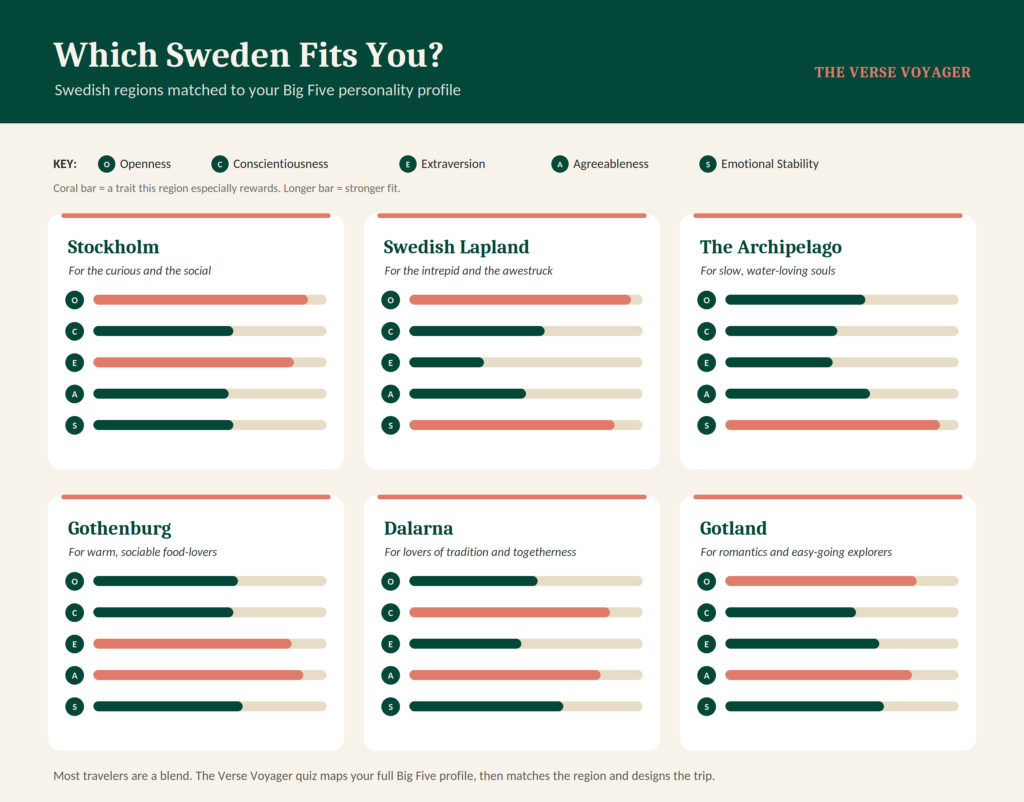
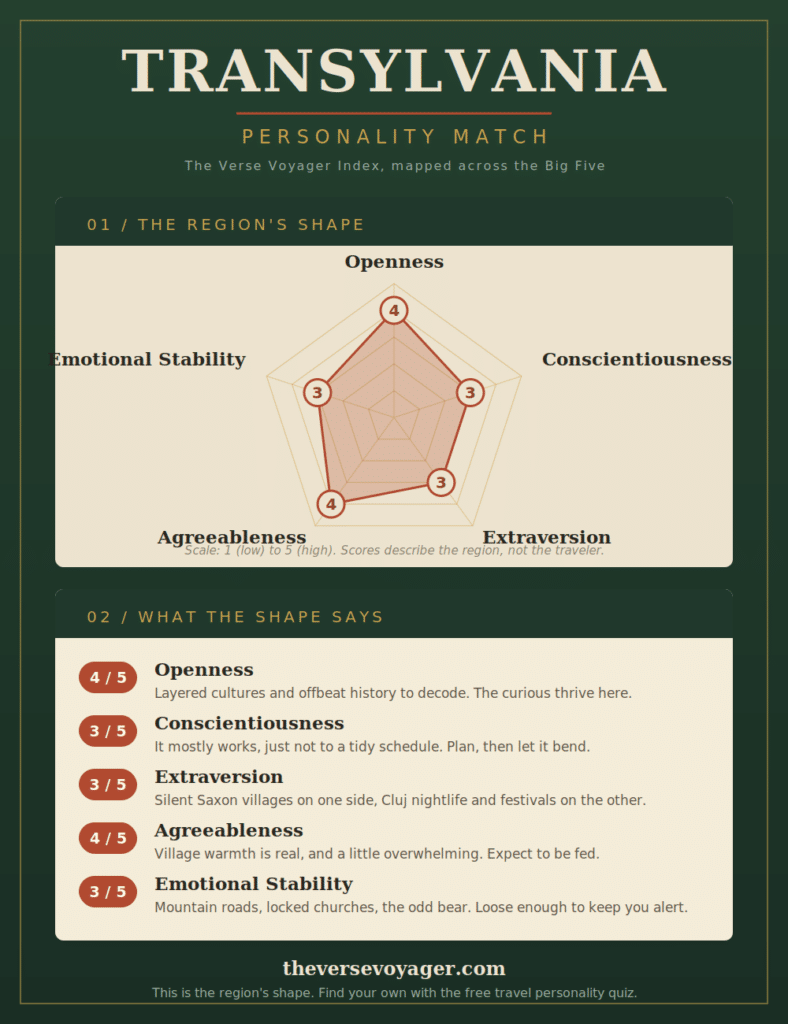
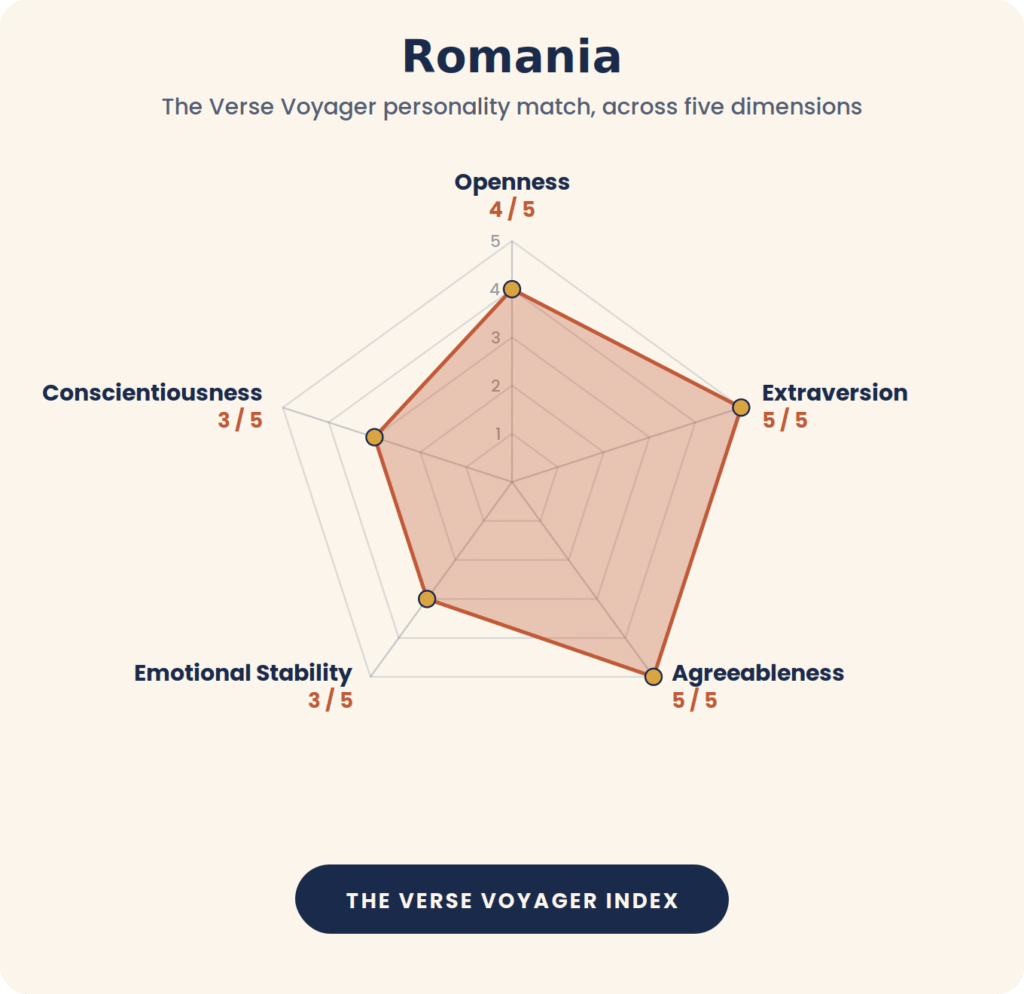
At The Verse Voyager I design every trip around five core personality dimensions, the same five that the science of personality has been built on for decades: Openness, Conscientiousness, Extraversion, Agreeableness, and Emotional Stability. Two travelers with very different scores will experience the identical itinerary in completely different ways. So instead of handing everyone the same checklist, I match the place, the pace, and the experiences to how a person actually moves through the world.
Here’s how Transylvania tends to land.
It rewards high Openness most of all. If you’d rather decode a 500-year-old fresco than tick off a capital city, if a conversation with a village churchwarden over a glass of plum brandy beats a fancy meal, Transylvania was built for you. The layers of history, the trilingual culture, the offbeat detail: this is catnip for the curious.
It suits travelers across the Extraversion range, if you choose the right base. The cities, Cluj especially, get loud and social. The villages are deeply quiet. So an extravert can have their festivals and cafe scene while an introvert can disappear into a Saxon hamlet, and a couple split between the two can both be happy if you sequence it well.
It asks a little of your Emotional Stability. Rural logistics, mountain roads, the occasional bear, churches that are locked until you track down whoever holds the key. If you need everything buttoned down and on schedule, you’ll find Transylvania a touch loose. If a delayed lunch or an unplanned detour is part of the fun, you’ll thrive.
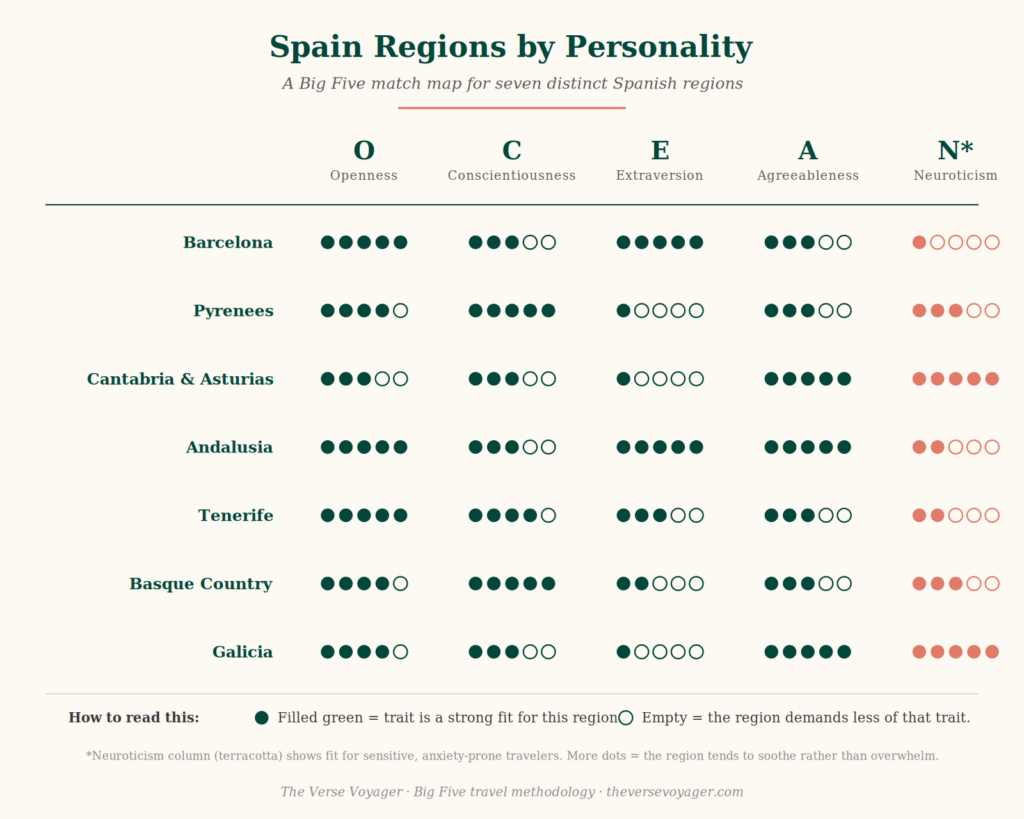
If you’re not sure where you land on these five dimensions, take my free travel personality quiz. It takes about ten minutes and it’ll tell you which version of Transylvania fits you, and whether you’d be happier basing in a buzzing city or a silent village. If you want to see the same method applied to another country before you trust it here, my Spain regions by personality guide is the sister piece to this one.
Transylvania’s cities are where most trips begin, and each one has a personality of its own. You won’t have time for all of them on a short trip, so here is each city in full, with the best things to do, when to visit, and what to skip. If you only have a few days, pick one as your base and day-trip from it.
Brasov: The Best Things to Do
If you do one city, make it Brasov. It sits right where the mountains meet the plateau, an easy gateway from Bucharest, and it packs a lot into a walkable medieval core. It’s also the best base in the region, so most of my Transylvania trips start here.
The list of things to do in Brasov starts in the Council Square (Piata Sfatului), the old market heart, ringed with painted merchant houses and watched over by the Council House and its squat clock tower. From the square it’s a two-minute walk to the Black Church (Biserica Neagra), the largest Gothic church between Vienna and Istanbul. It took its name from the soot that blackened its walls after a great fire in 1689, and inside it holds two treasures: one of the largest church bells in Romania and a remarkable collection of Anatolian rugs, gifts brought back by Saxon merchants over the centuries.
From there, the classic Brasov things to do are mostly on foot. Squeeze down Rope Street (Strada Sforii), one of the narrowest streets in Europe. Walk out through Catherine’s Gate into the old Schei district, the historically Romanian quarter, and visit the First Romanian School museum with its early printed books. Trace the surviving medieval walls past the White Tower and the Black Tower and the old bastions for the best views back over the red roofs.
Then take the cable car up Mount Tampa for sunset over the city, with the big Hollywood-style BRASOV sign right behind you.
Day trips from Brasov. This is where the city earns its keep as a base. Within an hour or so you can reach Rasnov Citadel on its hilltop, the ski and hiking resort of Poiana Brasov, the dramatic Seven Ladders Canyon (Canionul Sapte Scari) with its waterfalls and ladders, the licensed bear hides in the surrounding forests, and yes, Bran Castle, though I’ll tell you later why that one is overrated.
Where to eat: the old town is full of options, and Bistro de l’Arte, tucked into a side street, does excellent modern Romanian cooking.
When to go to Brasov: late spring and early autumn for mild weather and thinner crowds. Summer weekends fill with Romanian visitors, so come midweek if you can. December brings one of the loveliest Christmas markets in the country to the main square.
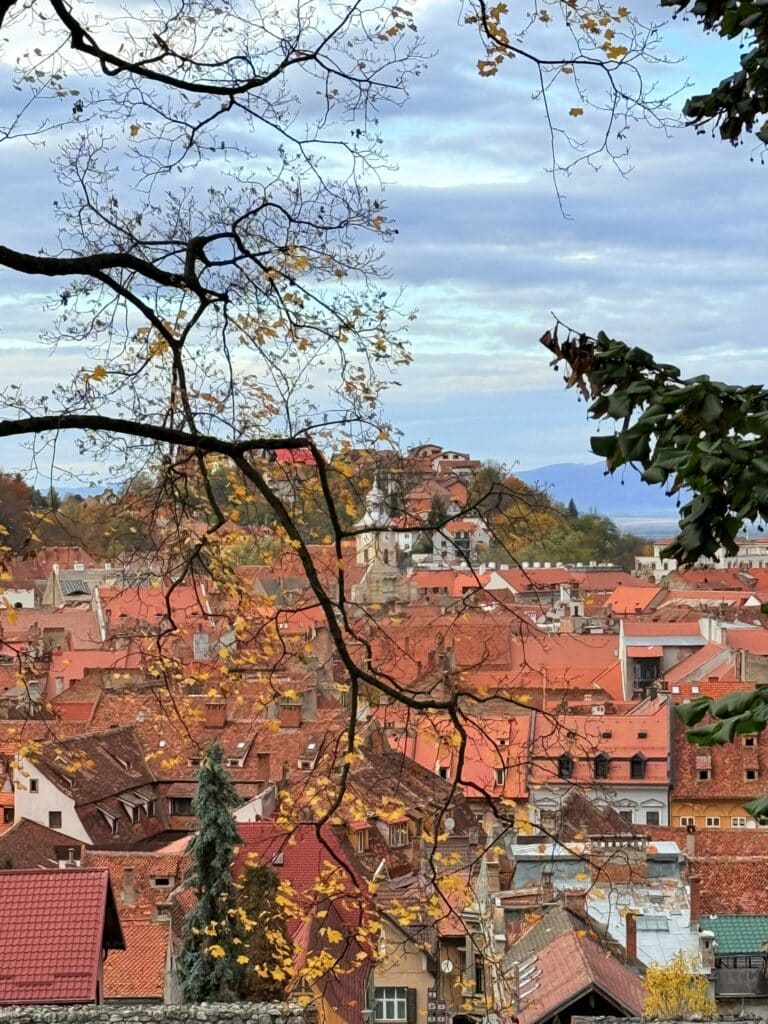
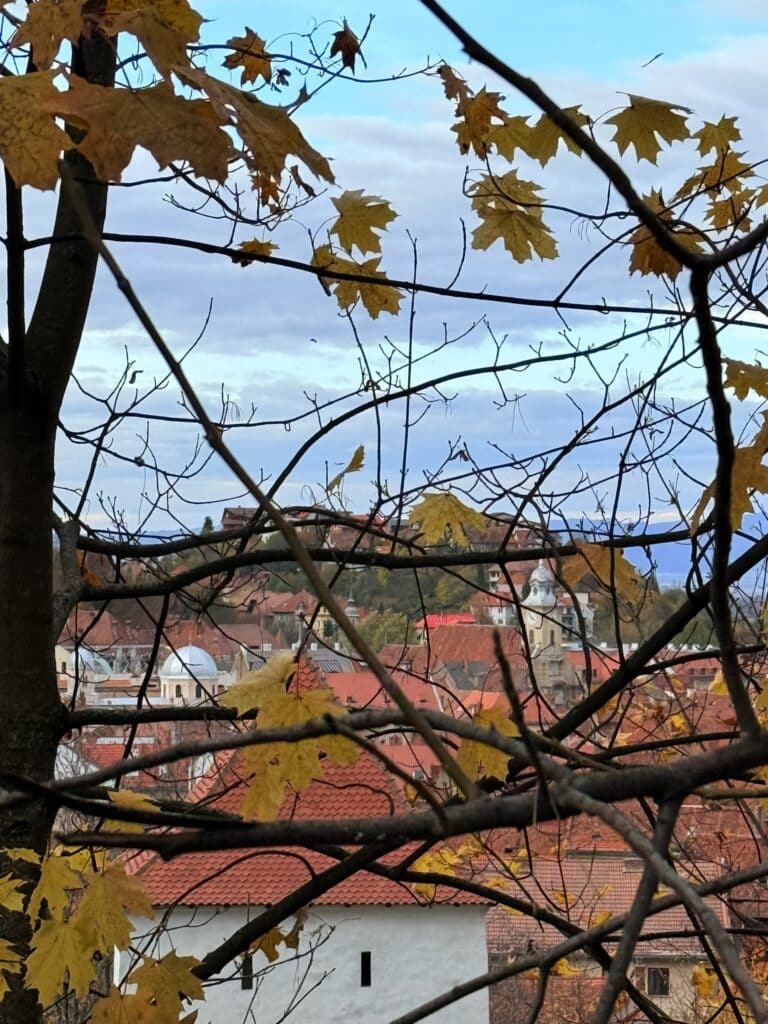
View from Brasov, Transylvania
Sibiu: The Best Things to Do
Sibiu is considered the most beautiful city in Transylvania and the former capital of Saxon culture. A onetime European Capital of Culture, it’s all pastel facades, cobbled upper and lower towns linked by stairways and passages, and the famous “eyes of Sibiu,” the half-shut attic windows on the steep roofs that seem to watch you walk by. Spend a little time here and you’ll understand why I rate it the prettiest city in the country.
The best things to do in Sibiu cluster around its two linked squares. The Grand Square (Piata Mare) is the grand stage, framed by the Brukenthal Palace and the Jesuit Church. Step through to the smaller, more intimate Small Square (Piata Mica), and cross the Bridge of Lies, the cast-iron footbridge that local legend says will creak if you tell a fib while standing on it. Climb the Council Tower (Turnul Sfatului) between the two squares for the best rooftop panorama in the city.
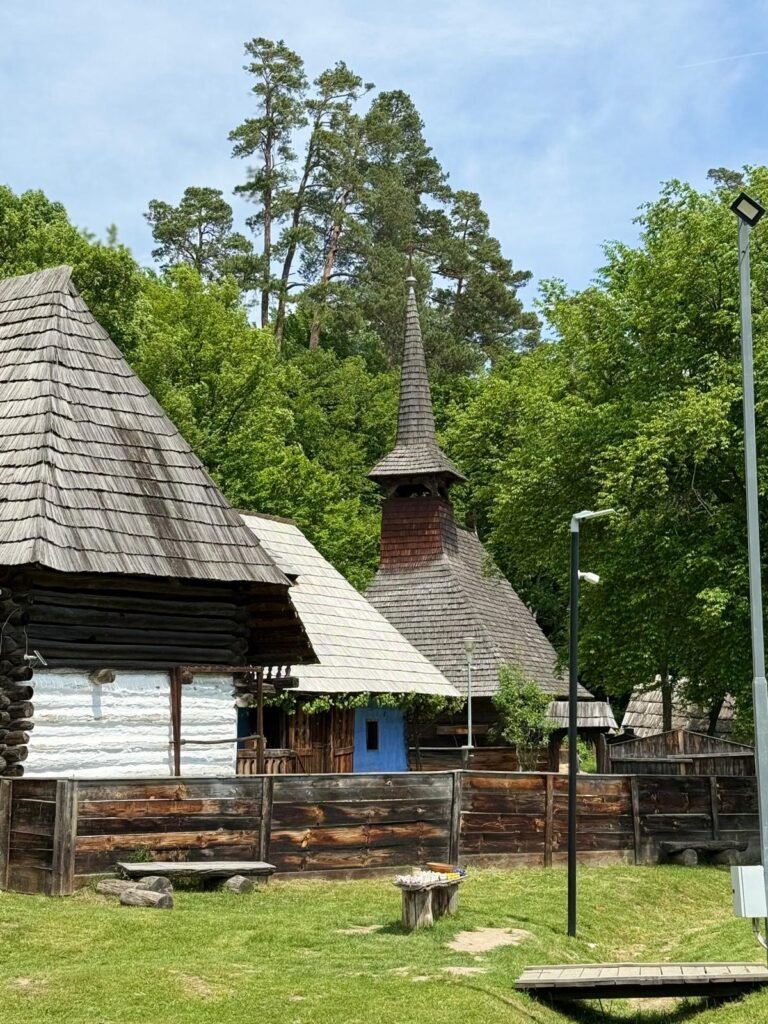
Give a serious afternoon to the Brukenthal National Museum, one of the oldest public museums in Europe, with an old-master painting collection that genuinely surprises people. Walk the Passage of Stairs (Pasajul Scarilor) down to the lower town, climb the steeple of the Lutheran Cathedral, and leave time for the ASTRA Museum on the edge of the city, one of the largest open-air ethnographic museums in Europe, where traditional houses, mills, and workshops from across Romania sit in a wooded park. Sibiu is also the ideal base for the Saxon villages and fortified churches to its south and east, and its small airport makes it an easy place to start or end a trip.
When to go to Sibiu: the same rule holds, May to June and September for the sweet spot. The Christmas market here, set up in the Grand Square, is arguably the finest in Romania.
One of the biggest open-spaces museums in the World, Sibiu
Sighisoara: The Best Things to Do
Sighisoara is the city you visit for the place itself rather than for a single sight. Its hilltop citadel is a perfectly preserved medieval town, listed by UNESCO, still lived in, still ringed by the towers the old craft guilds built and defended. It’s the kind of place where the thing to do is simply to be there.
The best things to do in Sighisoara begin at the Clock Tower (Turnul cu Ceas), the citadel’s landmark gate, where a set of painted wooden figures turns with the days of the week. Climb it for the history museum inside and the viewing gallery up top, which gives you the whole tangle of red roofs and green hills at once. From the main square, find the covered Scholars’ Stairs (Scara Acoperita), a wooden staircase of around 175 steps built to shelter students on their climb, and follow it up to the Church on the Hill (Biserica din Deal), a quiet Gothic church with a small painted interior and an old Saxon cemetery behind it.
Down in the citadel, wander the pastel lanes and find the surviving guild towers, the Tinsmiths’, the Tailors’, the Cobblers’, each once defended by its trade. You’ll also pass the ochre-colored house where Vlad the Impaler was born, now a restaurant trading on the connection. I’ll give you the honest version of that whole Dracula story later in this guide, because the marketing is mostly a trap. If you visit in late July, the Sighisoara Medieval Festival fills the citadel with music, crafts, and costume.
An hour or two walking the upper town is enough to feel it, though staying a night inside the walls after the day-trippers leave is its own quiet reward. Sighisoara sits right in the middle of Saxon village country, so it pairs naturally with the fortified churches.
Cluj-Napoca: The Best Things to Do
Cluj is the unofficial capital of Transylvania and its most energetic city, a university town with the best cafe, music, and nightlife scene in the country. If you score high on Extraversion, this is your base. It’s also the most practical arrival airport for the north of the region and for combining Transylvania with Maramures.
[IMAGE: cluj-napoca-union-square-st-michaels-church-transylvania.jpg | Union Square and the Gothic St. Michael’s Church, the heart of things to do in Cluj Transylvania]
The things to do in Cluj start in Union Square (Piata Unirii), dominated by the soaring Gothic St. Michael’s Church, which has one of the tallest church towers in Romania, and the dramatic equestrian statue of Matthias Corvinus, the Hungarian king who was born in this city. His birthplace house still stands a few streets away. On the square itself, the Banffy Palace holds the National Museum of Art, worth an hour for its Transylvanian collection.
Beyond the square, the best Cluj things to do mix history with the city’s young energy. Climb Cetatuia Hill for the classic view over the rooftops and the river, walk the restored Tailors’ Bastion, the largest surviving piece of the medieval walls, and spend a slow afternoon in the Alexandru Borza Botanical Garden, one of the largest in southeastern Europe, with its Japanese and Roman sections. Central Park and its lake, with the Belle Epoque casino now a cultural center, are where the city relaxes. Then there’s the cafe and rooftop-bar scene around the old town, which is the real reason a lot of people fall for Cluj.
When to go to Cluj: late spring through early autumn. If you want the festivals, aim for the relevant summer dates and book accommodation early, because the city fills completely.
Targu Mures: The Overlooked Surprise
Most itineraries skip Targu Mures, and that’s a small shame. Sitting in the middle of the region, it’s a Hungarian-flavored city with one genuinely show-stopping sight: the Palace of Culture, an early-twentieth-century secessionist building with a Hall of Mirrors and stained-glass windows that stop you in your tracks. The central squares, Avram Iancu and the Square of Roses, make for a pleasant stroll, and the city works well as a stopover between Sighisoara and the north. If you like architecture and quieter cities away from the tour buses, give it half a day.
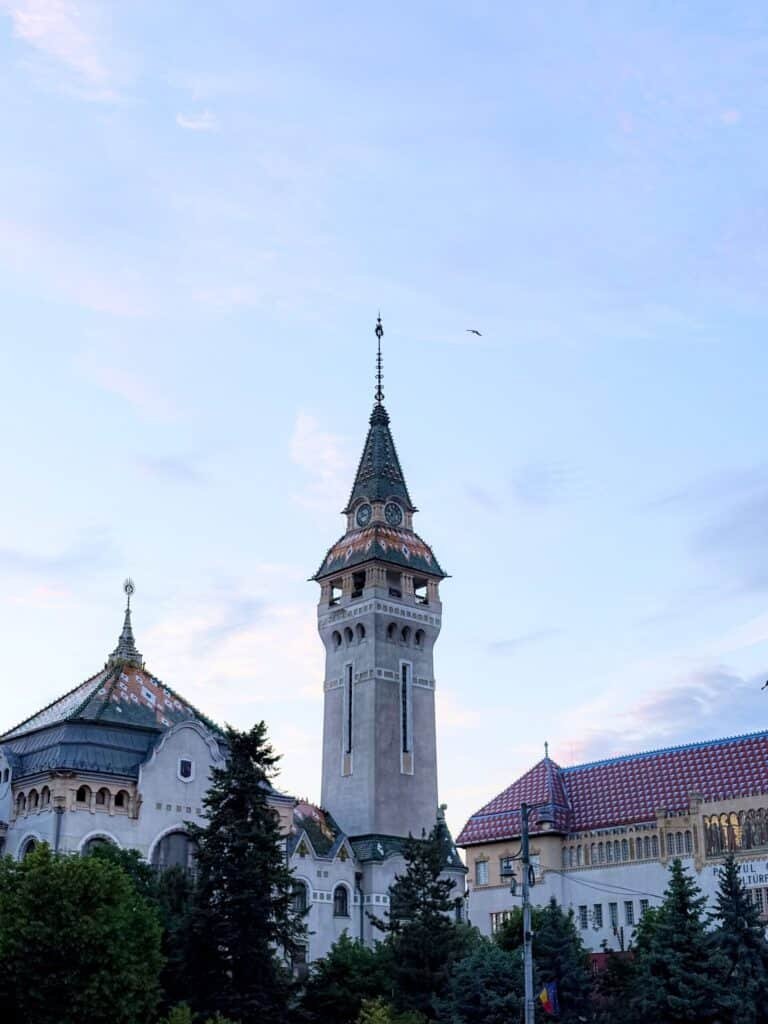
Targu Mures City Hall
The Wild Side: Carpathians, Valleys, and Bear Watching in Romania
Here’s where Transylvania separates itself from every other “pretty old town” region in Europe. Step out of the cities and you’re in genuine wilderness, the kind that most of the continent paved over generations ago. The Carpathian Mountains curl around the plateau in a long arc of dark spruce forest, high meadow, glacial lakes, and limestone gorges, and they’re home to a population of large wild animals you won’t find together anywhere else this side of Russia.
The bears, and bear watching in Romania
Let’s talk numbers, because this is one of the great wildlife facts in Europe and most people get it wrong. Romania holds the largest brown bear population on the continent outside Russia, and almost all of it lives in the Carpathians that ring Transylvania. After years of guesswork, a major EU-funded genetic study completed in 2025 analyzed more than 24,000 samples across 25 counties and put the official population at between 10,419 and 12,770 brown bears. That’s roughly double the older estimates, and it makes the forests above these villages one of the densest bear habitats in the world.
That density is why bear watching in Romania has become one of the most sought-after things to do in Transylvania. The right way to do it is from a permanent, licensed hide in the forest, with a guide, where you sit quietly at dusk and wait for the animals to come on their own terms. The estates and operators around the Szekely Land and the forests near Brasov run exactly this kind of ethical setup. No baiting that turns wild animals dangerous, no chasing, just patience and a pair of binoculars.
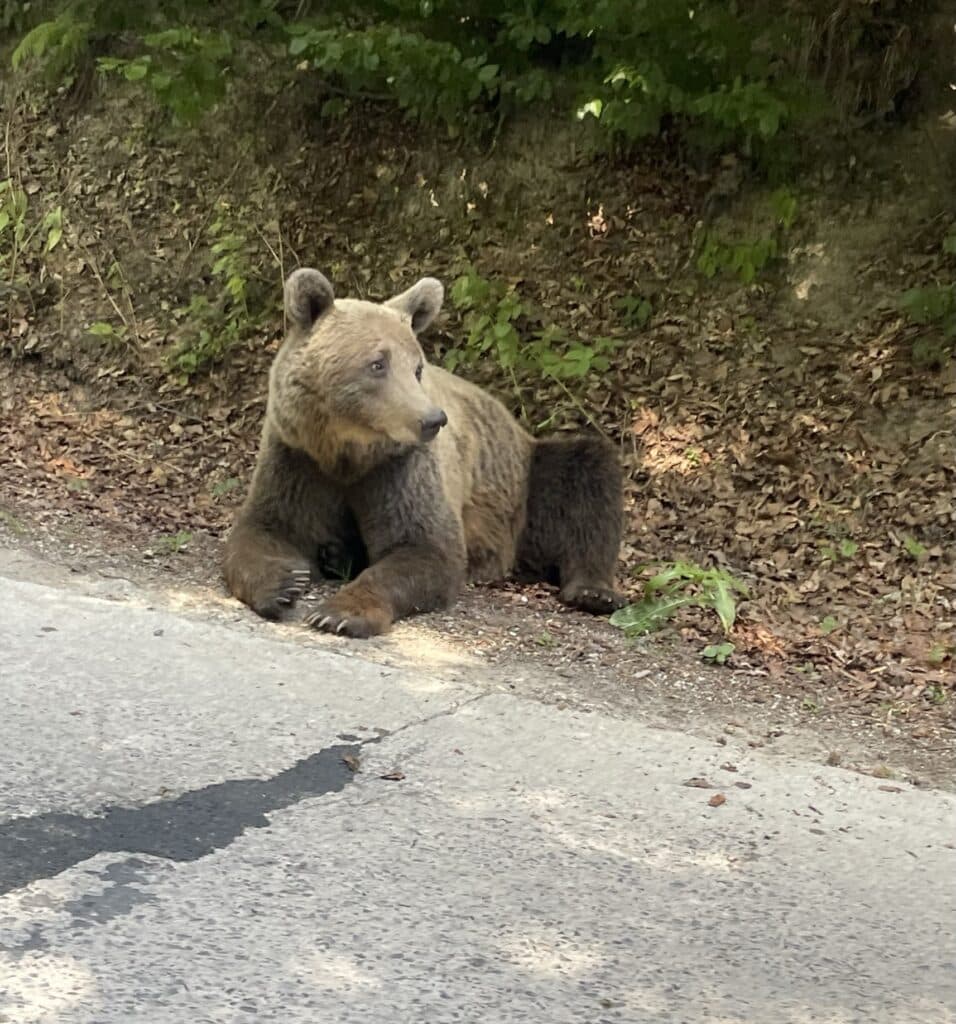
A word of genuine caution, because it matters. Do not go looking for bears yourself. The wrong kind of bear encounter, a roadside animal that’s been fed by tourists, a hiker who startles a mother and cub, has turned fatal here. Never feed a bear, never stop your car to photograph one, store food securely, and ask locally before you set off on a hike. Treated with respect, the wildlife becomes the best memory of the trip. Treated carelessly, it’s the worst.
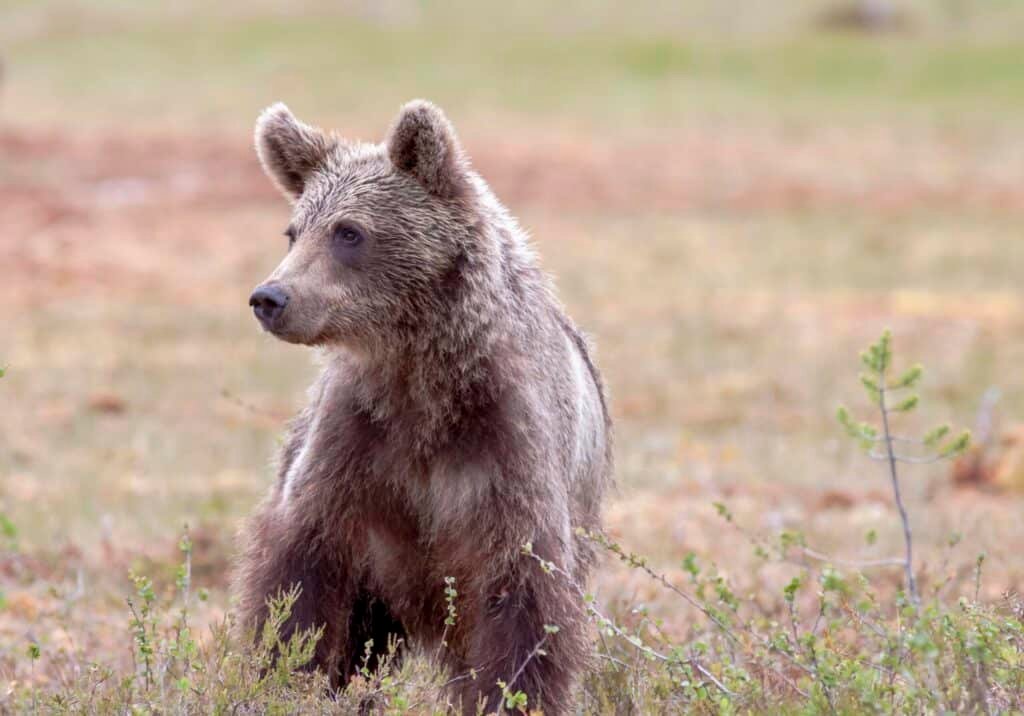
Bear watching in Romania
The mountains and the legendary roads
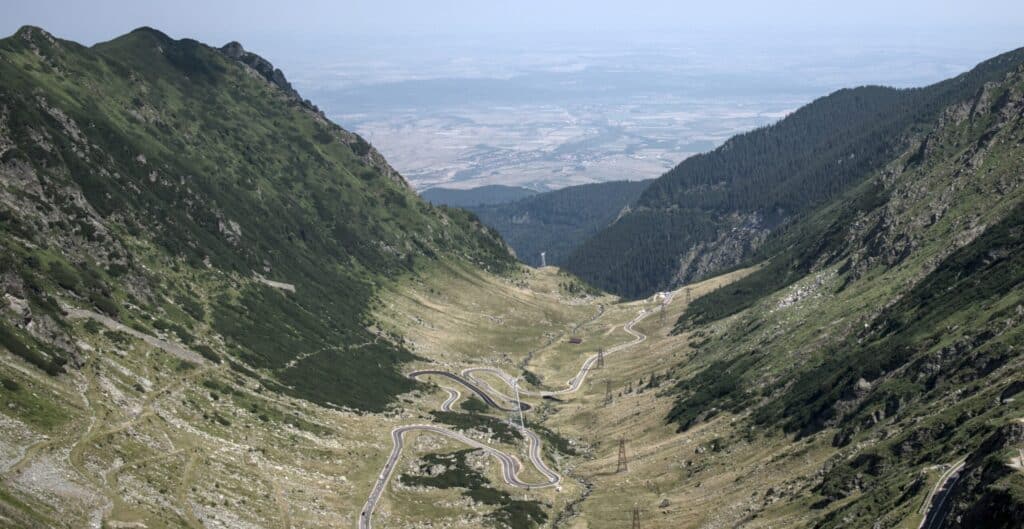
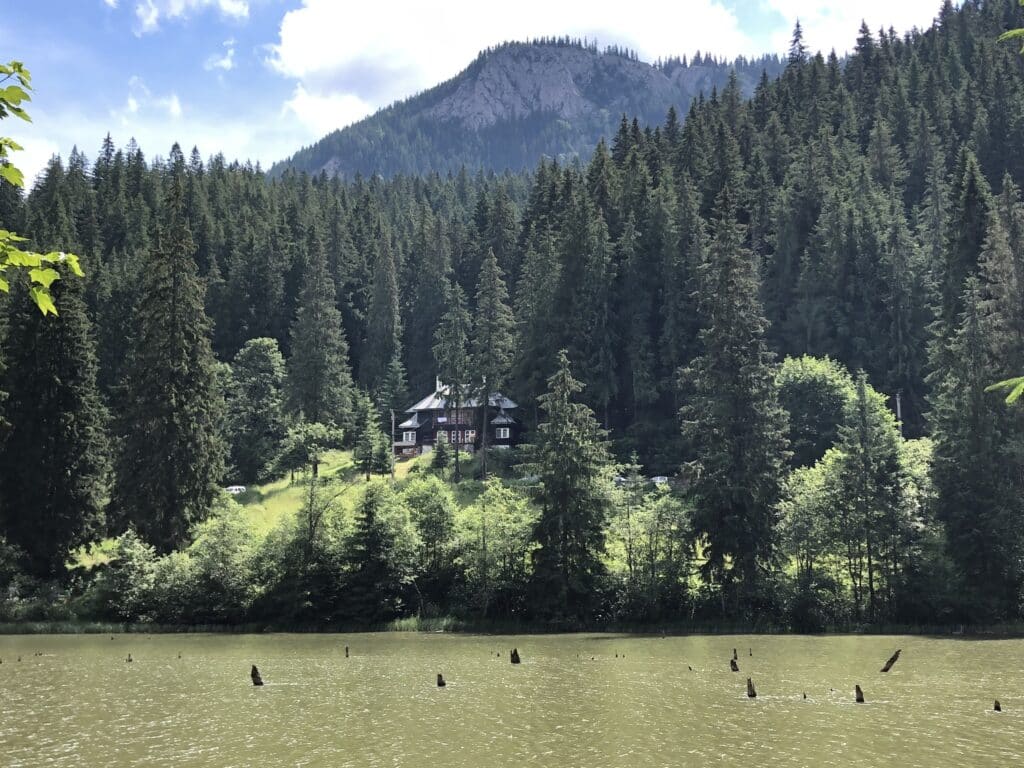
Beyond the bears, the Carpathians are a playground. The Bicaz Gorges carve a narrow road between sheer limestone walls near the Red Lake. Glacial lakes and high trails crisscross the Fagaras range, the tallest in the country. And then there are the two famous mountain roads. The Transfagarasan climbs past 2,000 meters in a frenzy of hairpins to Balea Lake and its waterfall, a genuine bucket-list drive, open roughly from late June into October. The Transalpina, the highest road in Romania, crosses wide-open alpine pasture nearby. Both are summer-only and both stay with you long after the trip.
If you’d rather walk than drive, the meadows above the Saxon villages are some of the most species-rich grasslands in Europe, grazed the old way and dense with wildflowers and butterflies in early summer. A guided walk here, often with a shepherd or a local naturalist, is a quieter pleasure than the famous passes and just as memorable.
Underground Transylvania: Salina Turda and the gorges
Some of the most surprising things to do in Transylvania are below ground. The headline is Salina Turda, a vast former salt mine near Cluj that’s been turned into one of the strangest attractions in the country. You descend into echoing chambers hundreds of meters deep, where the old workings now hold a Ferris wheel, a small boating lake, an amphitheatre, and a mini golf course, all carved out of glowing salt walls. It sounds absurd and it sort of is, but standing in that cathedral-sized cavern is genuinely unforgettable, and it’s a brilliant rainy-day option with kids.
Right next door, the Turda Gorge (Cheile Turzii) cuts a dramatic limestone canyon you can hike in a couple of hours, a good pairing with the mine. Further west, in the Apuseni Mountains, the Scarisoara Ice Cave holds one of the oldest underground glaciers in Europe, and the Bears’ Cave is named for the prehistoric cave-bear bones found inside it. None of these show up on the standard Dracula-and-castles circuit, which is exactly why I like sending people to them.
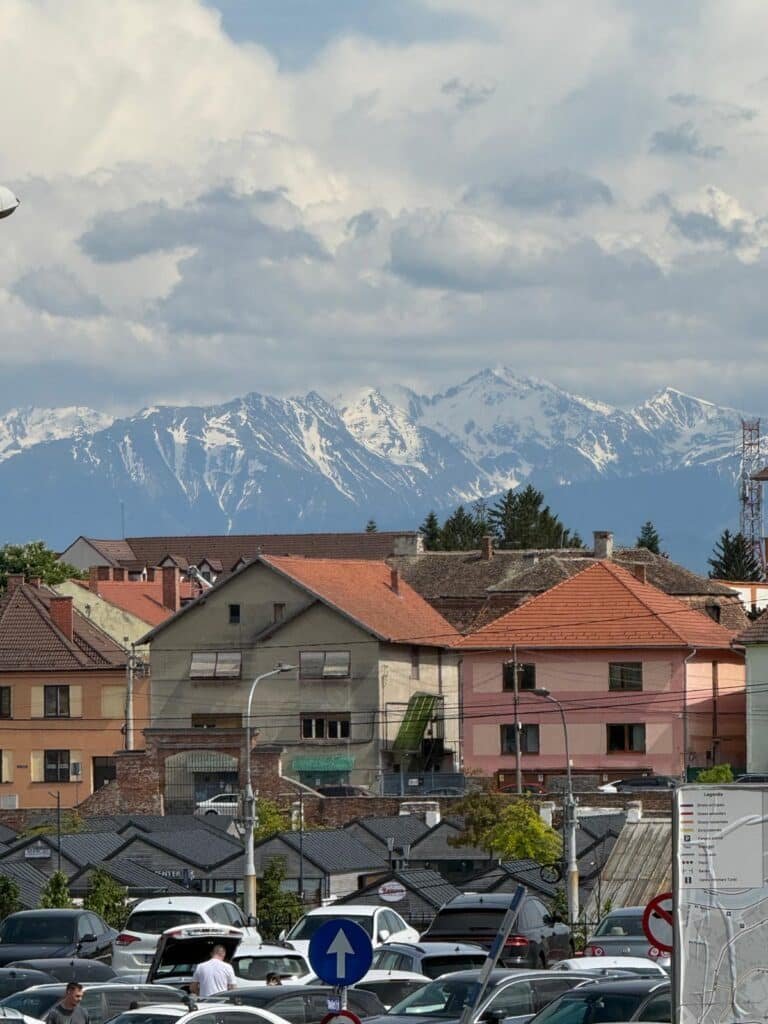
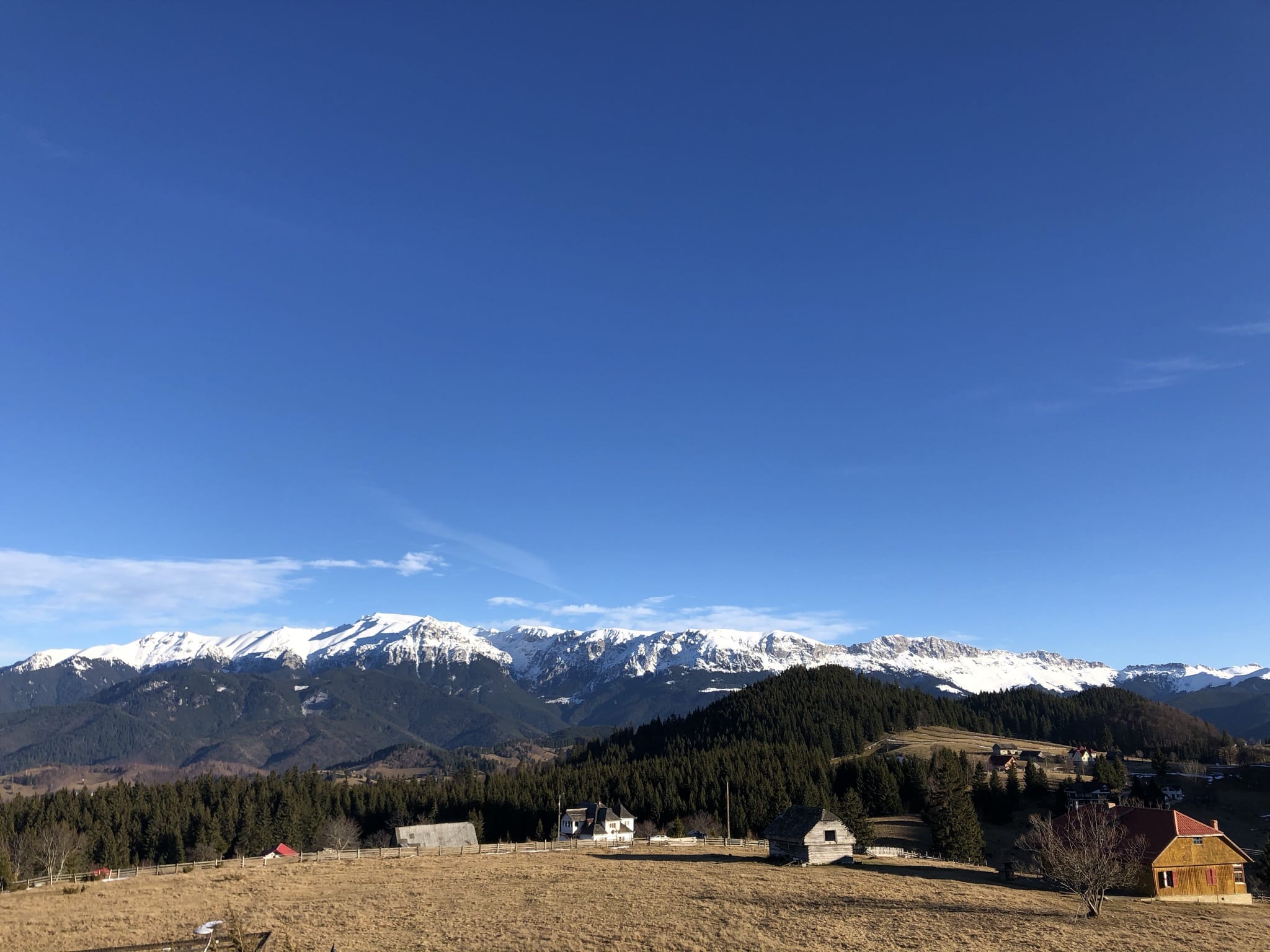
A view of the Fagaras Mountains from a random parking in Sibiu
Villages, Traditions, and the Slow Life
For me, the single best thing to do in Transylvania isn’t a sight at all. It’s to slow down in a village and let the rhythm of the place reset you.
This is where the region does something almost no other part of Europe can. In the Saxon and Szekely villages, and in the Romanian hamlets in the hills, the old life isn’t a performance staged for visitors. It’s just Tuesday.
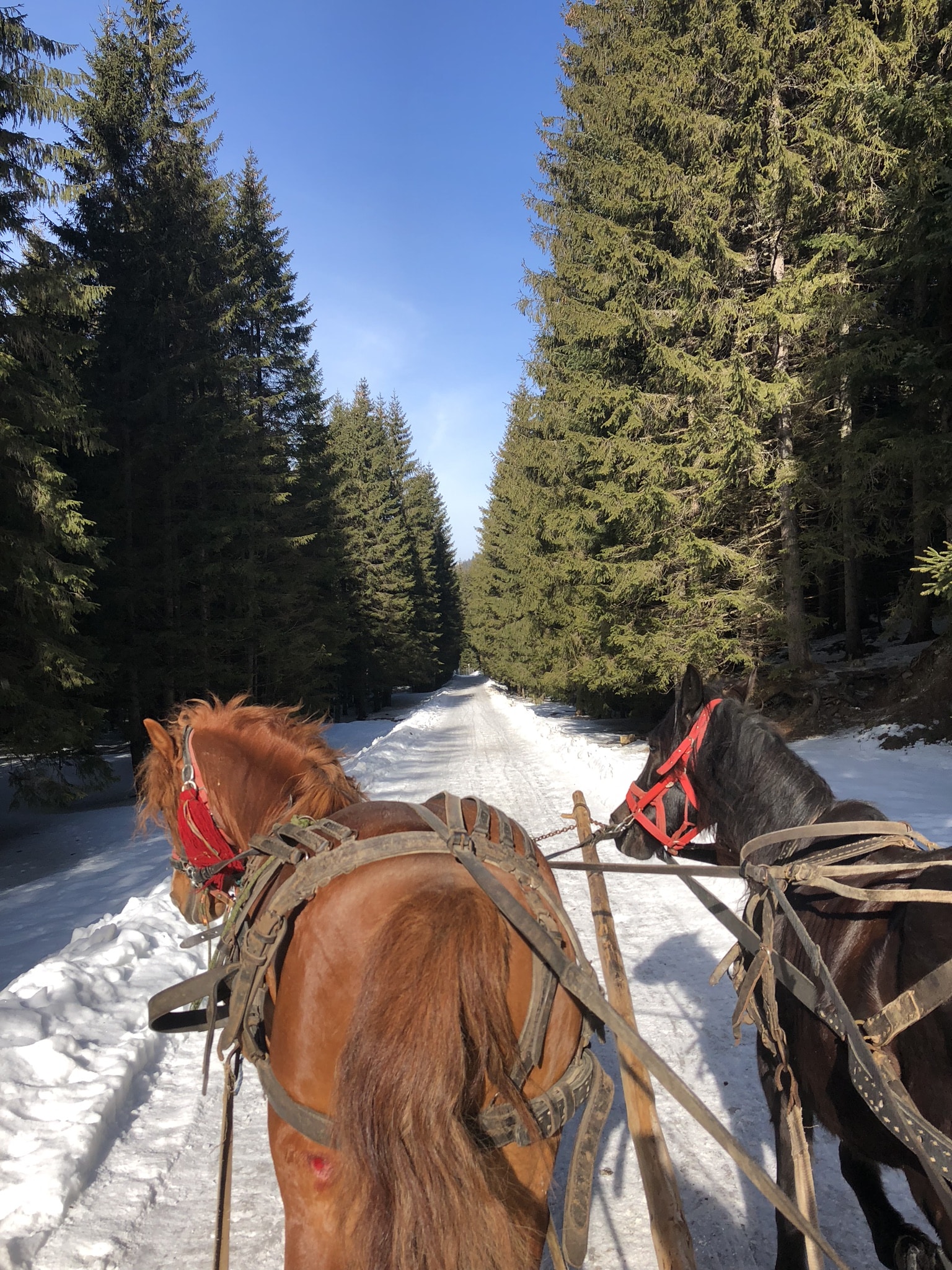
Cows walk themselves home in the evening, peeling off one by one at the right gate. Hay is cut by hand with scythes on slopes too steep for machines and stacked into the conical haystacks you’ll photograph a hundred times. Horse carts share the lane with the occasional delivery van. Older women still wear the layered skirts and headscarves daily, not for a festival.
Stay in a village guesthouse run by a family and you’ll eat what the garden and the farm produced that day: sour soups, polenta with sheep cheese and sour cream, slow-cooked meats, preserves, homemade plum brandy poured whether you asked for it or not. Vegetarians do well in summer, less effortlessly in deep winter. The hospitality is real and a little overwhelming in the best way. Expect to be fed past the point of comfort and sent off with jars of things.
The crafts are alive too, if you go looking. Pottery, weaving, woodwork, blacksmithing in some villages. Buy directly from the maker and you’ll pay a fraction of a city gallery price and walk away with the story. This slow, lived-in authenticity is exactly what I match high-Openness, lower-Extraversion travelers to first, because for them it reads as luxury in a way that no five-star hotel can replicate.
While we’re on food, a few things are worth seeking out by name. Sarmale, cabbage rolls stuffed with spiced minced meat and rice, slow-cooked for hours, are the dish every grandmother has an opinion about. Mici (or mititei) are little grilled skinless sausages you eat with mustard and a cold beer. Papanasi, fried cheese doughnuts with sour cream and jam, are the dessert to order at least once. In the Szekely Land, look for kurtoskalacs, the spit-roasted “chimney cake” turning over coals at every market.
And Transylvania quietly makes good wine: the Tarnave region around the Saxon villages, and producers like those at Jidvei, turn out crisp whites that pair perfectly with a long village lunch. Ask your host what’s local and they’ll usually produce a bottle, or a jar of homemade plum brandy, or both.
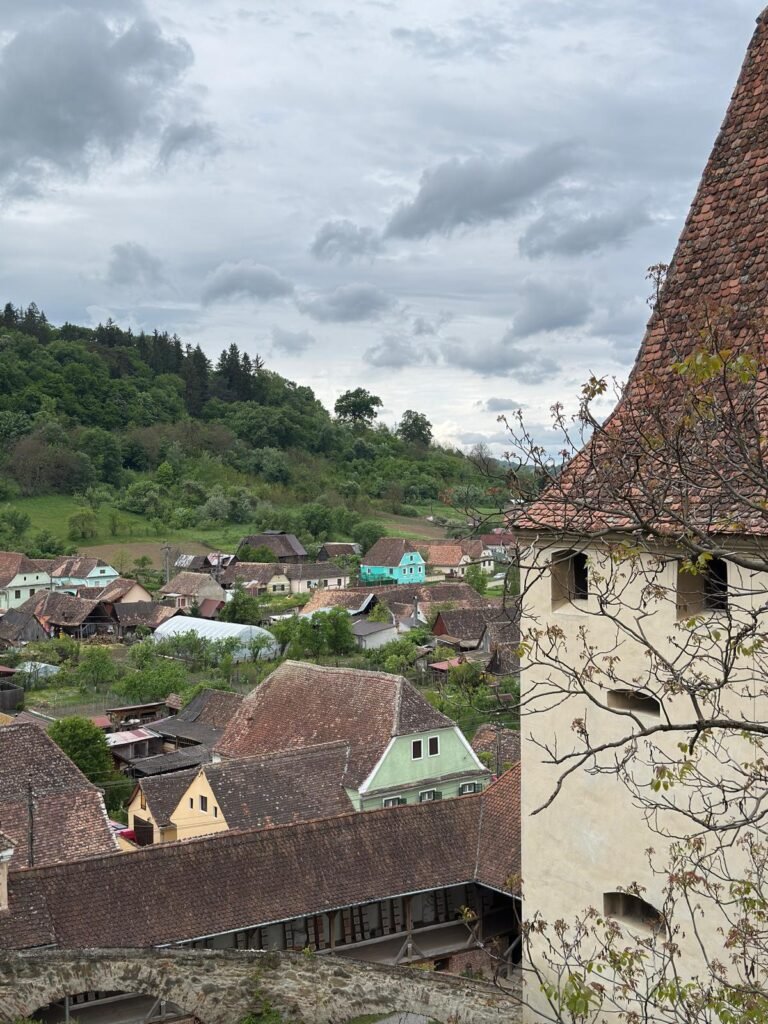
The view from the citadel of a village in Transylvania
Sleeping in a noble estate
One experience I send a particular kind of traveler to above almost anything else: spend a night or two on a restored noble estate in the Szekely Land. In villages like Miclosoara, the guesthouses run by Count Tibor Kalnoky let you sleep in rooms furnished from the family’s own collection, eat dishes grown and cooked on the estate, and head out in the late afternoon to the bear hide the estate operates in the nearby forest. It’s one of the most singular places to stay in the whole country, a living piece of old aristocratic Transylvania rather than a hotel pretending to be one. It books out weeks or months ahead in summer and autumn, so plan early if it appeals.
Viscri and the King Charles Connection
No village in Transylvania is more famous than Viscri, and the reason is a king.
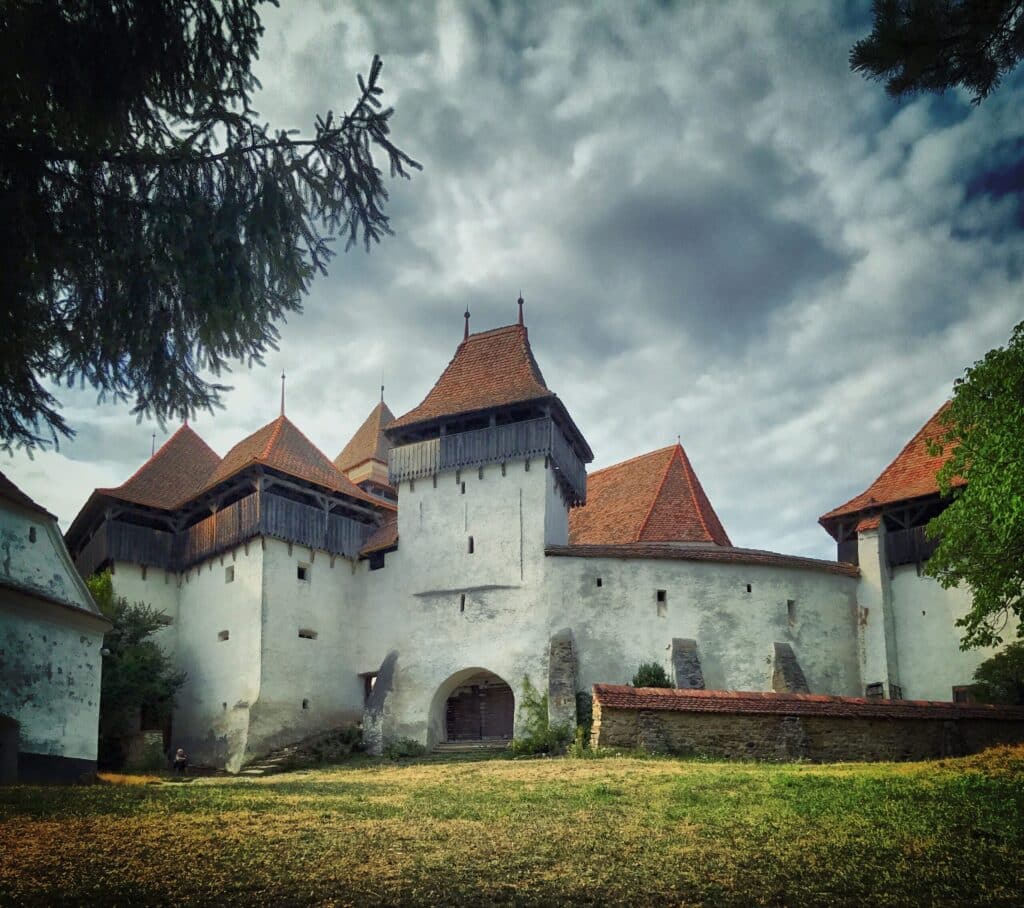
Viscri is a small, half-Saxon, half-Roma village at the end of a few kilometers of rough road, with a whitewashed UNESCO-listed fortified church at its heart. It became known around the world because of King Charles III of the United Kingdom, who fell in love with this corner of Transylvania decades ago, bought and restored property here, and has spent years championing the region’s traditional way of life, its old crafts, and the conservation of these grasslands and buildings.
His guesthouse in the village is a real, bookable place, and his foundation’s work has helped keep Viscri and villages like it economically alive.
So what is there to do in Viscri, and why bother with the detour? A few things make it worth it. Climb the fortified church and its defensive towers for the view over the red roofs and the green hills, and read the small museum that explains Saxon village life.
Watch the village blacksmith and the other craftspeople still working the old trades. Arrange lunch in a local family’s home, where you eat what they cooked that morning, which I’d argue you’ll remember longer than any restaurant meal in the country. And simply walk the single main street in the late afternoon when the cows come home, because Viscri at that hour is as close as you’ll get to seeing the nineteenth century still breathing.
A word of honesty: Viscri’s fame is a double-edged thing. In peak summer the tour buses do find it, and a village of a few hundred people can feel briefly overrun. Come early, come midweek, or come in the shoulder season, and you’ll have the King Charles village close to yourself. The story of Viscri, a community saved from emptying out by tourism done thoughtfully, is one of the more hopeful threads in the whole bittersweet Saxon story.
Fortified citadel of Viscri, Transylvania, Romania
The Fortified Churches of Transylvania
If Transylvania has a signature, it’s the fortified church. You’ll see them from the road across the whole southern half of the region: a church in the middle of a village, wrapped in high stone walls, towers, and gates, looking more like a small castle than a place of worship. That’s exactly what they were meant to be.
The history is the point. When the Ottoman and Tatar raids threatened these frontier villages from the fourteenth century on, the Saxon communities, too small for proper town fortifications, did something ingenious. They fortified the one large stone building every village already had: the church.
They ringed it with walls, sometimes two or three concentric rings, added towers and gatehouses, and built storage rooms and refuge chambers into the walls where whole villages could shelter, with their food and valuables, during a siege. Some held bacon rooms where families stored their winter meat in a communal larder inside the church walls, each with its own key.
The scale of what survives is remarkable. Transylvania once had something like 300 of these fortified churches. More than 150 still stand today, built between the thirteenth and sixteenth centuries, and seven of the best were chosen by UNESCO as a World Heritage Site: Biertan, Calnic, Darjiu, Prejmer, Saschiz, Valea Viilor, and Viscri. Six are Saxon, one is Szekely, and together they were inscribed in 1993 and extended in 1999.
If you only have time for a couple, I’d send you to Biertan, the grandest, with three rings of walls and a famous door with a fifteen-bolt lock, which served as the seat of the Saxon bishops for nearly three centuries; and Prejmer, near Brasov, one of the strongest and best-preserved fortified churches in Eastern Europe, its circular walls honeycombed with hundreds of refuge rooms.
But honestly, half the pleasure is the unlisted ones, the dozens of fortified churches in villages you’ve never heard of, often locked, where the magic is tracking down the neighbor with the key and being shown around an empty 600-year-old church by the last person in the village who remembers how it was. That’s the kind of afternoon Transylvania gives you if you let it.
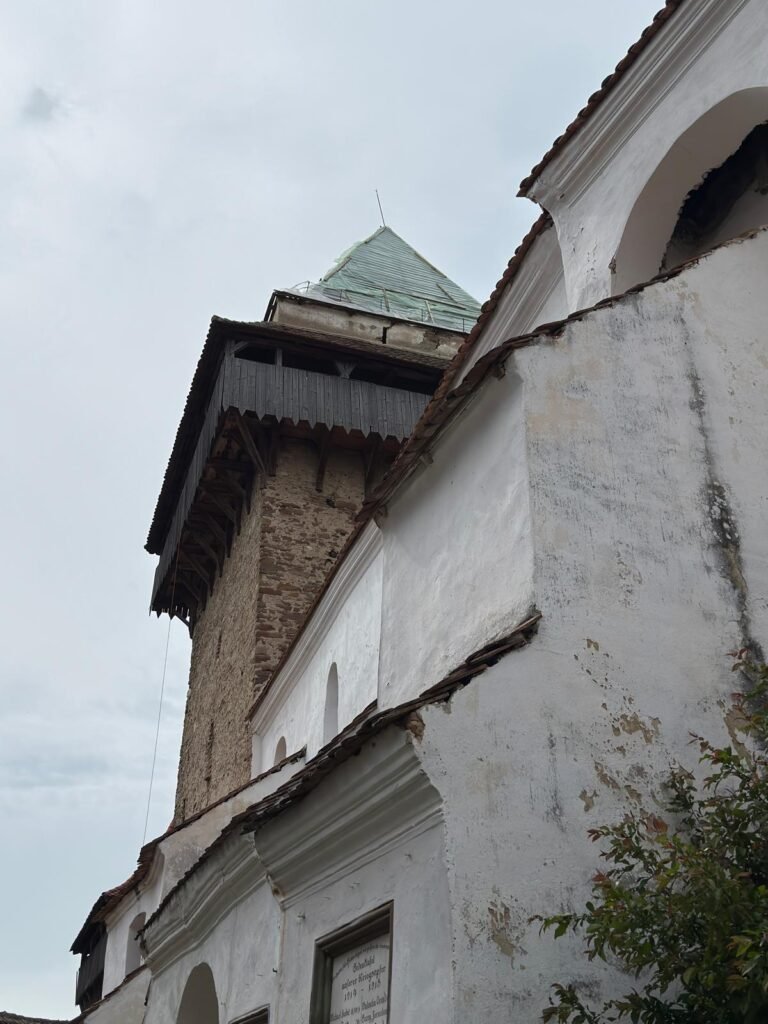
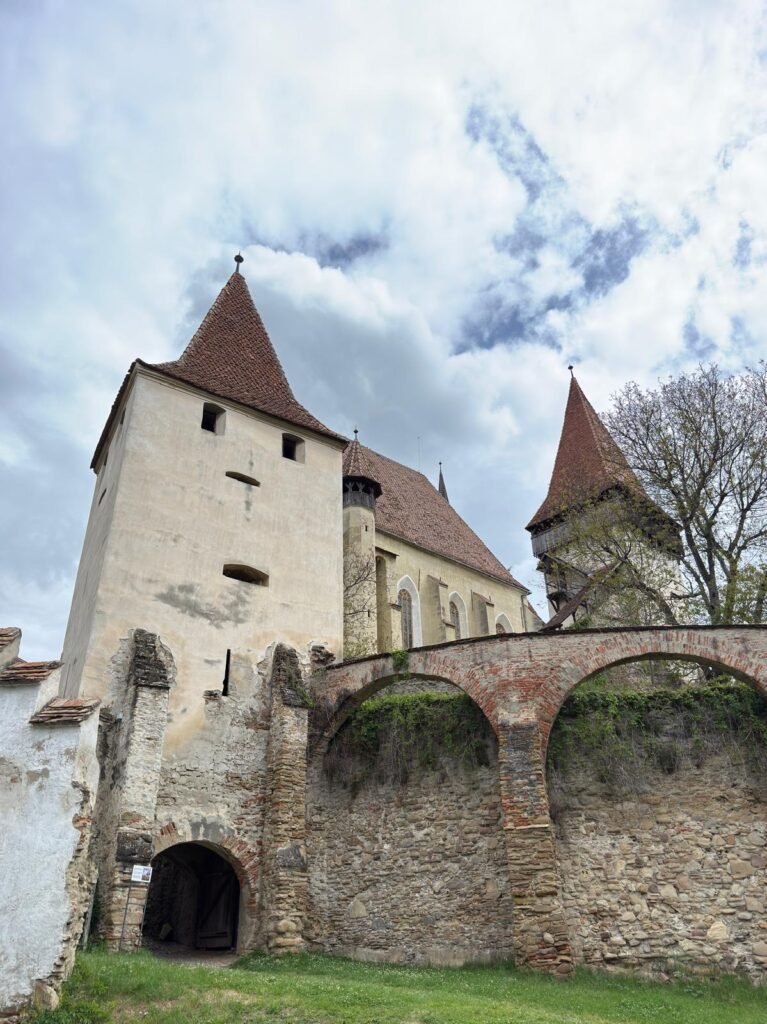
Fortified church from Biertan, Transylvania; a UNESCO World Heritage site
A Transylvania Road Trip: Tying It All Together
By now you can see why I keep insisting on a car. The best things to do in Transylvania as a connected experience is a road trip that strings the cities, the villages, the churches, and the mountains into a loop.
A classic week, starting and ending in either Bucharest or Cluj, might run like this. Base first in Brasov for the city and the nearby mountains. Spend a day in the Szekely Land for bear watching and a noble-estate stay. Cross into Saxon country for Viscri, Sighisoara, and Biertan. Land in Sibiu for two nights of cities and fortified churches. Then close the loop, either over the Transfagarasan in summer or through the gentler Olt valley in spring. That’s roughly the Carpathian culture route I lay out stop by stop, with timings and accommodation, in my Romania 7 day itinerary.
If you have more time, Transylvania connects beautifully northward to Maramures and Bucovina, the most traditional corner of the country and the home of the painted monasteries. I’ve written that northern loop up in full in my guide to Maramures and Bucovina, and the two regions back to back make one of the great road trips in Europe.
The Truth About Bran Castle, Dracula, and Vlad the Impaler
Now the part where I’m going to disappoint a lot of people, and save you half a day.
Almost everyone who looks up things to do in Transylvania ends up at Bran Castle, sold the world over as “Dracula’s Castle.” I’ll be straight with you, the way I am with every client: Bran is overrated, and the Dracula connection is mostly marketing.
Here’s the real story. Dracula is a novel, written in 1897 by Bram Stoker, an Irishman who never set foot in Transylvania. He built his fictional Count from a vague atmosphere of the place and a borrowed name. The historical figure tangled up in the legend is Vlad III, known as Vlad the Impaler, a fifteenth-century ruler of Wallachia (the region south of the mountains, not Transylvania) infamous for the brutal way he dealt with his enemies. His link to Transylvania is real but thin: he was born in Sighisoara, and his father’s name, Dracul, meaning dragon or devil, gave the family the name Stoker later borrowed.
Vlad almost certainly never lived at Bran. The castle’s entire Dracula identity was essentially invented later to sell tickets, and sell tickets it does.
So what about going inside Dracula’s Castle? If you must, treat Bran as a forty-five-minute photo stop from the outside. It’s a handsome enough hilltop fortress, but the interior is a series of small rooms with thin historical substance, and in summer the crowds and the souvenir stalls at the bottom are genuinely grim. Don’t build a half day around it. The rest of Transylvania is the reward.
If you actually want the real fortress of Vlad the Impaler, go to Poenari Citadel instead. Perched on a crag above the Arges valley at the foot of the Transfagarasan, Poenari was a genuine stronghold that Vlad rebuilt and used. It’s a ruin, and you earn it: around 1,480 steps climb up to it through the forest. Far fewer people make the effort, which is exactly why it feels real in a way Bran never will. Stand on those broken walls with the valley falling away below and you get the actual history, the actual location, and the actual sense of the man, with none of the gift-shop theater.
That’s the honest take, and it’s the kind of thing I tell every traveler I design a Romania trip for. The famous name isn’t always the best experience. Often the better thing is quieter, harder to reach, and a hundred times more rewarding.
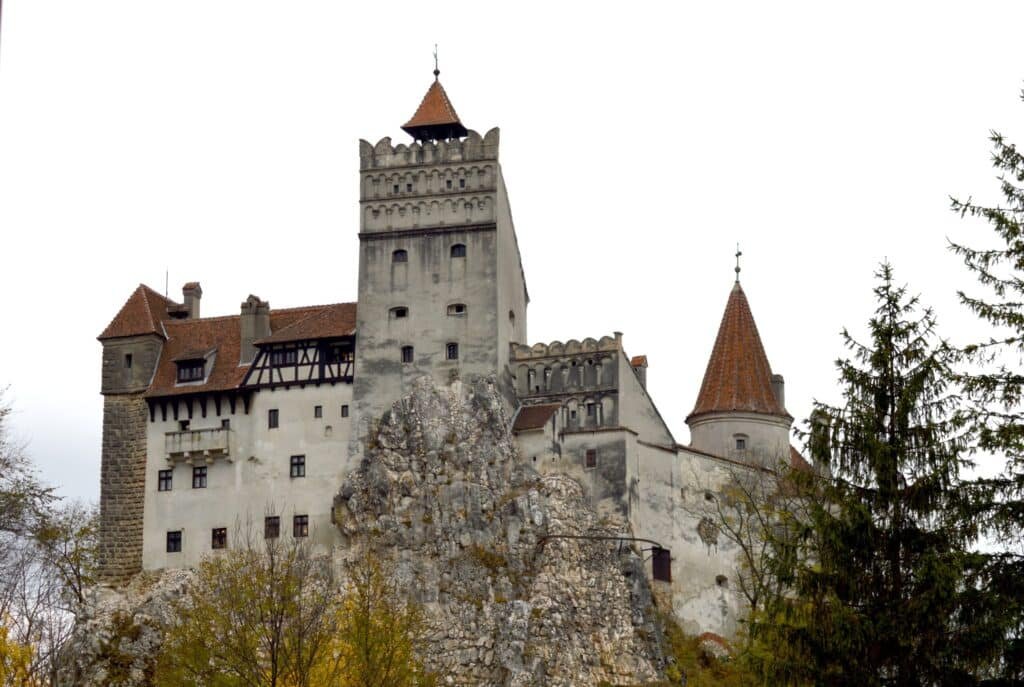
Bran castle, Romania
Common Mistakes to Avoid in Transylvania
I’ve watched a lot of well-meaning Transylvania trips lose a day here and a memory there to the same handful of avoidable errors. None of these are fatal, but each one quietly costs you.
Building the trip around Bran Castle. I’ve said it already and I’ll say it once more: Bran is a forty-five-minute photo stop, not a half day. Plan the rest of the region first and slot Bran in only if it’s convenient.
Trying to see every city. Brasov, Sibiu, Cluj, Targu Mures, and Sighisoara are all worth time, but cramming all five into a week turns your trip into a parade of car parks. Pick two cities, go deep, and spend the rest of the time in the villages and the mountains.
Skipping the villages because they’re “not on the map.” The fortified churches and the Saxon hamlets are the soul of Transylvania, and the unlisted ones are often better than the famous ones. Leave unscheduled time to wander and to track down the neighbor with the church key.
Underestimating driving times. Roads look short on a map, then a slow truck, a stretch of roadworks, and a flock of sheep turn forty minutes into ninety. Add a buffer to every leg, and try not to arrive in the mountains after dark.
Driving the Transfagarasan in May. The road usually only opens fully around late June. Locals will swear they cleared the snow, and sometimes they have, but plan the gentler Olt valley alternative for spring and treat an early opening as a bonus.
Going looking for bears. Walking into the Carpathian woods at dusk hoping to spot a bear is the wrong kind of memorable. Book a licensed hide with a guide. It’s safer, it’s ethical, and the sightings are far more reliable.
Treating Viscri as a quick selfie. The King Charles village rewards the people who arrive early or in the shoulder season and actually slow down. Roll in at noon in August and you’ll meet the tour buses instead of the village.
Transylvania gives back about as much as you bring the right expectations to it. The best things to do in Transylvania aren’t the same for everyone, and the gap between a good trip and an unforgettable one almost always comes down to matching the right region, the right pace, and the right experiences to the kind of traveler you actually are. The curious, slow traveler and the high-energy, city-and-spectacle traveler should plan two completely different weeks here, even though they’re looking at the same map.
That’s what I do at The Verse Voyager. My free personality assessment maps how you travel across five core dimensions, and I use it to design trips, in Transylvania and beyond, built around you instead of a one-size-fits-all checklist. If you’d like the version of this region tuned to your exact personality, your season, and your non-negotiables, that’s what my custom travel design service is for. And if you’d rather just talk it through first, you can book a free discovery call.
Not just where you go. How it changes you.
Frequently Asked Questions About Things to Do in Transylvania
Is Transylvania worth visiting? Yes. The things to do in Transylvania include medieval Saxon towns, UNESCO fortified churches, the largest brown bear population in Europe, dramatic mountain roads, and living village traditions, all with low prices and far fewer crowds than Western Europe. It’s especially rewarding for travelers drawn to history, nature, and authenticity over nightlife and resorts.
What are the best things to do in Transylvania? The highlights are exploring Brasov, Sibiu, and the medieval citadel of Sighisoara; visiting the UNESCO fortified churches at Biertan, Viscri, and Prejmer; bear watching from a licensed hide in the Carpathians; sleeping in a Saxon or Szekely village; and driving the Transfagarasan in summer. Most travelers find the quieter villages and churches more memorable than the famous Bran Castle.
How do you get to Transylvania? You can fly directly into Cluj-Napoca, Sibiu, or Targu Mures, or land in Bucharest and travel north. From Bucharest to Transylvania, it’s about a two-and-a-half to three-hour drive or a scenic train ride through the mountains to Brasov, the main gateway city.
How many days do you need in Transylvania? Four days is the minimum for a city, some villages, and a day in the mountains. A week is ideal and lets you add bear watching and a second city. Ten days or more allows a slower trip that can extend north into Maramures and Bucovina.
When is the best time to visit Transylvania? Late spring (May and June) and early autumn (September) offer the best balance of mild weather, open access, and small crowds. Summer brings full mountain-road access but more visitors, and December brings the Christmas markets and skiing.
Is Bran Castle worth visiting? Honestly, not as a highlight. Bran Castle is heavily marketed as Dracula’s Castle, but the connection to both Dracula and Vlad the Impaler is thin, and the site is crowded and commercial. Treat it as a brief photo stop. The real fortress of Vlad the Impaler is Poenari Citadel, and the citadel of Sighisoara is a far more rewarding medieval experience.
What is the connection between Dracula and Transylvania? Dracula is a fictional character from Bram Stoker’s 1897 novel; Stoker never visited Transylvania. The historical inspiration, Vlad the Impaler, was a fifteenth-century ruler of Wallachia who was born in Sighisoara in Transylvania, but the famous Bran Castle has almost no genuine link to him.
Can you go bear watching in Transylvania? Yes. Romania has the largest brown bear population in Europe, mostly in the Carpathians around Transylvania, officially estimated at between 10,419 and 12,770 bears in a 2025 genetic study. Responsible bear watching is done from licensed permanent hides with a guide, usually near Brasov or in the Szekely Land. Never try to find bears on your own.
What is Viscri famous for? Viscri is a small Saxon village with a UNESCO-listed fortified church, made internationally famous by King Charles III, who restored property there and champions the region’s traditional life and crafts. Visitors come for the church, the village blacksmith and craftspeople, home-cooked local lunches, and the preserved nineteenth-century rhythm of village life.
What are the fortified churches of Transylvania? They are medieval churches, mostly built by the Transylvanian Saxons between the thirteenth and sixteenth centuries, ringed with defensive walls and towers to protect villagers during Ottoman and Tatar raids. More than 150 survive of an original 300, and seven villages with fortified churches are inscribed as a UNESCO World Heritage Site.
Do you need a car in Transylvania? Yes, for the best experience. Trains and buses connect the major cities, but the villages, fortified churches, viewpoints, and mountain roads that make Transylvania special are reached by car. A Transylvania road trip with a rental car is by far the best way to see the region.
Is Transylvania expensive? No, it remains one of the better-value regions in Europe. Quality guesthouses run roughly 60 to 130 EUR a night, restaurant dinners rarely top 35 EUR per person, and entry tickets are modest. A comfortable week for two, excluding flights, typically costs between 1,400 and 2,600 EUR.
Is Transylvania safe for tourists? Yes. Romania is one of the safer countries in Europe, with low violent crime. The main outdoor risk is brown bears in the Carpathians, so never feed or approach them and follow local advice when hiking. Mountain driving calls for normal care, especially in winter.
Which Transylvanian city should I base myself in? Brasov is the best all-round base, central and well-connected to the mountains and villages. Sibiu is the prettiest and best for the Saxon villages. Cluj-Napoca suits travelers who want nightlife and a young, energetic city. The right choice depends on your travel personality, which the free quiz can help you pin down.
Maramureș Romania is the corner of the country most travelers never reach, and the one that rewards them most when they do. Most people trace the same line instead: Bucharest, Brașov, a castle with a vampire rumor, home. It’s a good trip. It’s also the version of Romania that algorithms recommend, and it misses the north entirely. If you are looking for something more interesting, remote, or simply there are no more things to do in Transylvania for you, visiting Maramures can be a good option.
Maramures, Romania’s far north, is where the country keeps the things it never modernized away. Wooden churches with spires like needles. A cemetery that laughs at death. Villages where hay is still cut by hand and Sunday clothes are still woven at home. Drive east over the mountains and you reach Bucovina, where 500-year-old monasteries wear their frescoes on the outside, exposed to five centuries of rain and still burning with color. Between the two regions sits a road Bram Stoker borrowed for Dracula without ever seeing it, and a mountain lake most foreigners have never heard of.
This guide covers the full northern loop: what to see in Maramureș, the drive over Colibița and the Tihuța Pass, and the painted monasteries of Bucovina, with a day-by-day itinerary, honest costs, and a clear answer to whether this trip fits the way you actually travel. If you’re still deciding between regions, start with my overview of the best places to visit in Romania, then come back here.
Who This Trip Fits (And Who Should Skip It)
I design trips around personality, not around top-ten lists, so let me be direct about who northern Romania rewards.
This loop is built for travelers high in Openness: the ones who’d rather decode a fresco than tick off a capital city, who find a conversation with a Săpânța cross-carver more memorable than a Michelin meal. It also suits lower-Extraversion travelers unusually well. The north is quiet. Evenings end early, villages don’t perform for visitors, and the most powerful moments happen in near silence: a monastery courtyard at 8 am, an empty pass road in fog. If you recharge alone, this region feels like it was designed for you.
Who should skip it: travelers who need nightlife, beaches, or a new spectacle every two hours. There is no resort infrastructure here and that’s the point. If that sounds like a problem rather than a relief, one of my two personality-matched Romania routes through the south and the coast will serve you better. And if you’re curious about the method behind these matches, I’ve written about how Big Five traits shape where you should travel using Spain as the case study.
Maramureș Romania: Where the 20th Century Asked Permission
Maramureș sits against the Ukrainian border, sealed off by mountains on three sides. That geography is the reason it exists in its current form. Collectivization came late and incompletely here, industrialization mostly passed it by, and the result is the last place in Europe where a full pre-industrial village culture survives not as a museum exhibit but as a Tuesday.
You’ll see it within an hour of arriving: monumental carved wooden gates in front of ordinary houses, conical haystacks in every yard, horse carts sharing the road with delivery vans. None of it is staged. That’s what separates Maramureș from every “traditional village experience” sold elsewhere in Europe, and it’s why this region anchors any honest list of hidden gems in Romania.
Sighetu Marmației: Memory at the Border
Sighetu Marmației is the region’s northern town, pressed against the Tisa river and Ukraine on the far bank. Come for two reasons.
The first is the Sighet Memorial, housed in the former political prison where communist Romania locked up the country’s interwar elite. Ministers, bishops, historians; many of them died in these cells, including Iuliu Maniu, the former prime minister. The prison is now the Memorial of the Victims of Communism and of the Resistance, and it is one of the most important museums in Eastern Europe. Give it two hours and don’t rush the basement.
The second is quieter: the childhood home of Elie Wiesel, now a memorial house. Wiesel was born in Sighet in 1928 and deported with the town’s Jewish community in 1944. Reading Night and then standing in that house reorders something in you.
The Merry Cemetery at Săpânța
Sighetu Marmației is the region’s northern town, pressed against the Tisa river and Ukraine on the far bank. Come for two reasons.
The first is the Sighet Memorial, housed in the former political prison where communist Romania locked up the country’s interwar elite. Ministers, bishops, historians; many of them died in these cells, including Iuliu Maniu, the former prime minister. The prison is now the Memorial of the Victims of Communism and of the Resistance, and it is one of the most important museums in Eastern Europe. Give it two hours and don’t rush the basement.
The second is quieter: the childhood home of Elie Wiesel, now a memorial house. Wiesel was born in Sighet in 1928 and deported with the town’s Jewish community in 1944. Reading Night and then standing in that house reorders something in you.
The Wooden Churches
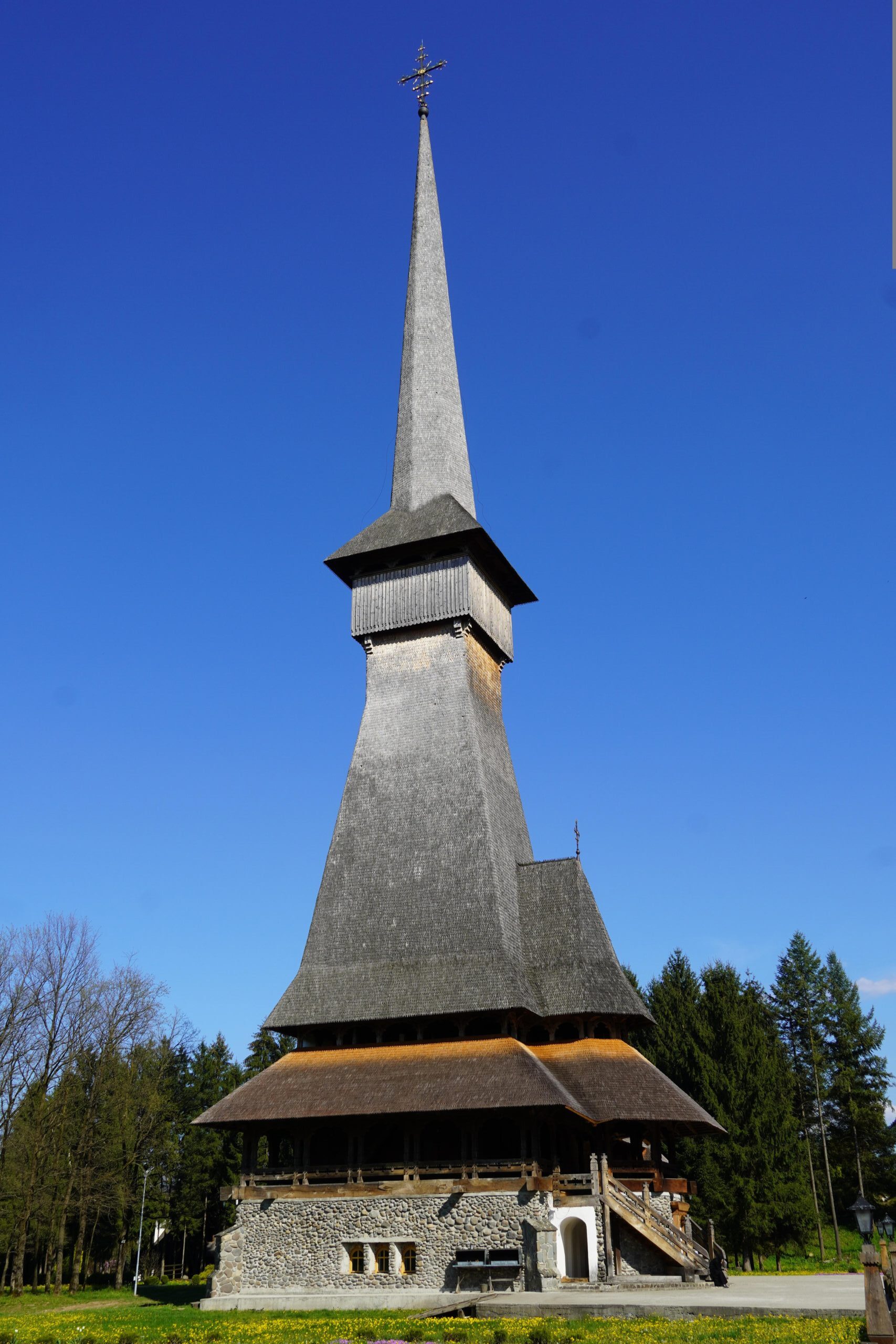
Eight wooden churches in Maramureș are UNESCO World Heritage Sites, and dozens more stand outside the list. They were built mostly in the 17th and 18th centuries, after Austrian rule forbade Orthodox communities from building in stone, and the carpenters answered the insult with architecture: Gothic proportions executed entirely in oak, towers that seem too tall to stand, interiors painted floor to ceiling by itinerant artists.
You don’t need all eight. See three well:
Șurdești, whose 54-meter tower made it one of the tallest wooden structures in Europe when it was raised in 1721. Ieud, in a valley that feels like the region’s spiritual core, where locals will tell you their hill church is the oldest in Maramureș and the argument itself is part of the visit. Bârsana, technically a cheat: the UNESCO church from 1720 stands in the village, while the famous monastery complex on the hill is new, built from the 1990s onward in flawless traditional carpentry. Purists sniff at it. I think watching a 300-year-old craft tradition still operating at full strength is exactly the point of coming here.
Churches are often locked; a phone number on the gate or a neighbor with a key is the normal protocol. This is not an inconvenience. It’s how you end up drinking horincă (the local double-distilled plum brandy) with a churchwarden at 11 in the
Breb and the Living Villages
If you stay one night anywhere in Maramureș, stay in Breb, under the Gutâi mountains. The village has become quietly known among travelers who want the real thing: wooden houses, working farms, guesthouses run by families who’ll feed you their own cheese and vegetables. Walk the lanes in the evening when the cows come home on their own, each one peeling off at its own gate. Nobody choreographs this.
The traditions here aren’t performances either. Hay is cut with scythes because the slopes are too steep for machines. Older women wear the layered skirts and headscarves daily, not for festivals. If you’re nearby in late December, the Marmația winter customs festival in Sighet brings out masks, bells, and rituals that predate Christianity by a comfortable margin.
Borșa and the Rodna Mountains
The eastern end of Maramureș rises into the Rodna Mountains, the highest range of Romania’s Eastern Carpathians, and Borșa is the base for getting into them. Pietrosul Rodnei, the summit, stands at 2,303 meters; the full ascent from Borșa is a serious day hike through a national park where chamois sightings are routine.
The accessible classic is the Horses Waterfall (Cascada Cailor), about 90 meters of stepped cascade reachable by chairlift from Borșa’s small resort area plus a 30-minute walk. Legend says a herd of horses sheltering from a bear was driven over the cliff here, which is the kind of cheerful origin story this region specializes in.
From Borșa you have a decision to make, and it shapes the rest of the trip.
The Mocanita: Steam Up the Vaser Valley
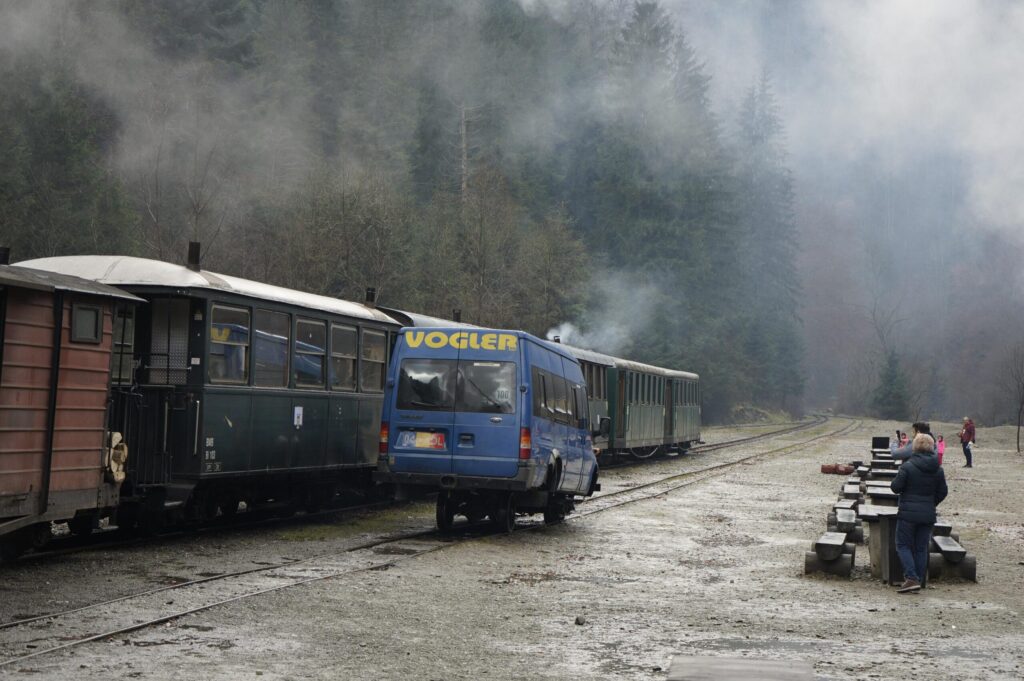
Before leaving Maramureș, one detour I’d argue is non-negotiable: the Mocănița, Europe’s last working forestry steam railway, running from Vișeu de Sus up the wild Vaser Valley. The line was built in the 1930s to haul timber and it still does, but morning passenger trains carry visitors deep into a roadless valley along the Ukrainian border, all steam, creaking wood, and river gorge. Book ahead in summer, take the earliest departure, and bring layers; the valley stays cold.
The Road Between: Colibița and the Tihuța Pass
Most travelers connect Maramureș and Bucovina over the Prislop Pass, the direct road east from Borșa at 1,416 meters. It’s beautiful and it works. But there’s a longer southern arc that I think makes the better trip, dropping through the Salva valley toward Bistrița and climbing back northeast, and it holds two stops most itineraries miss entirely.
Colibița is a mountain reservoir at around 800 meters in the Bârgău Mountains, created in the 1980s when the Bistrița Ardeleană river was dammed. Locals call it the sea in the mountains, and on a still morning, with the Călimani range doubled in the water, the nickname stops sounding like marketing. It’s a place Romanians keep for themselves: a night here means pine air, grilled trout, and almost no foreign voices. As a halfway camp between the two regions, nothing else comes close.
The Tihuța Pass (1,201 meters) carries the old road from Bistrița over into Bucovina, and it has a strange literary afterlife. This is Bram Stoker’s Borgo Pass, the road Jonathan Harker travels by night coach in the opening of Dracula, written by a man who never set foot in Transylvania. Stoker picked well from his armchair. The pass rolls through dark spruce forest and high meadow, fog is practically resident, and yes, there’s a Hotel Castel Dracula at the top, built in 1983, which is either a charming piece of kitsch or a crime against the landscape depending on your mood. Stop for the view either way. The descent drops you into Bucovina at Vatra Dornei, a faded Habsburg spa town that makes a practical overnight.
If you take this southern arc one way, you can return over Prislop on the way back and see both passes. That’s the loop I’d design.
Bucovina, Romania: The Painted Monasteries
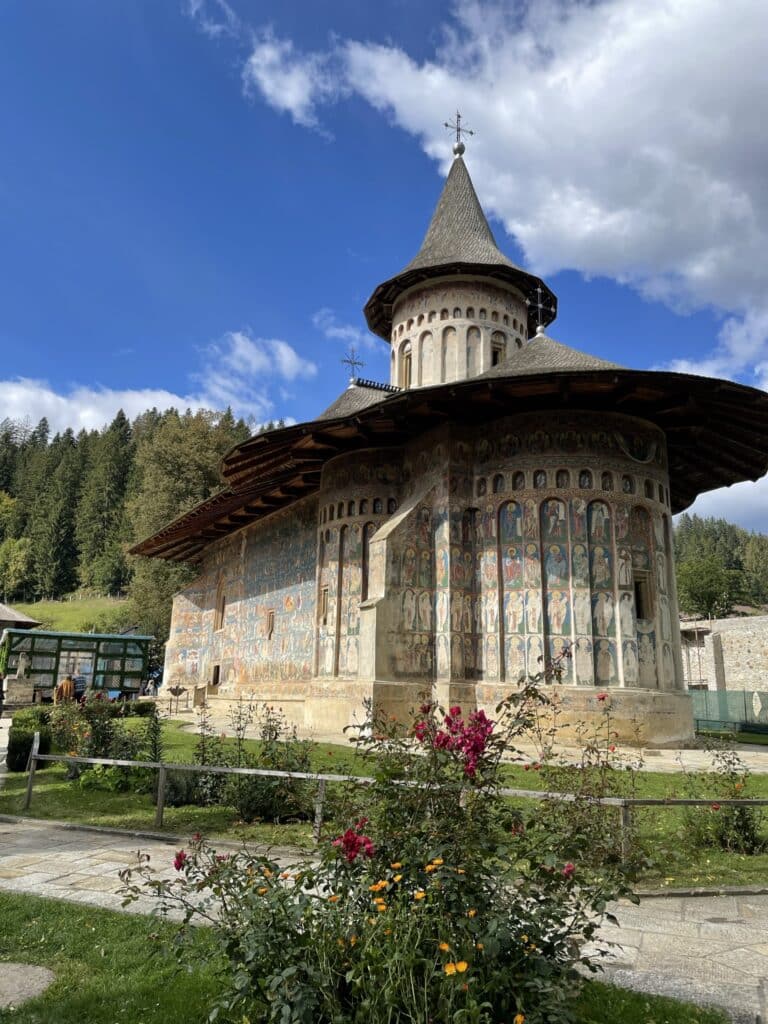
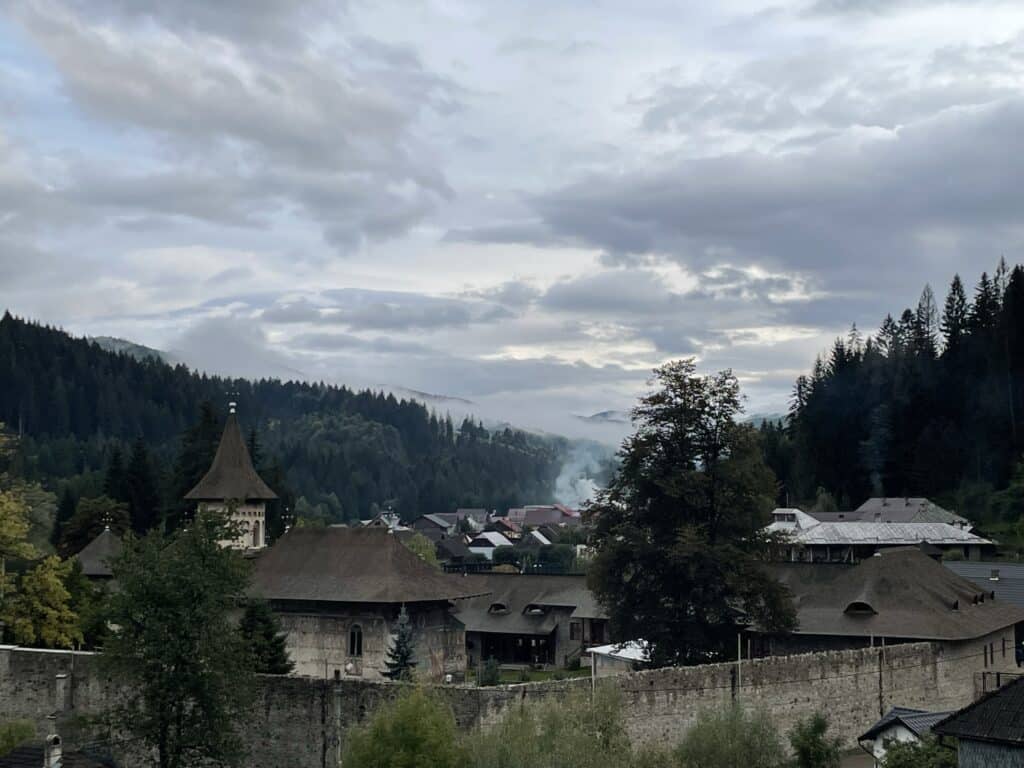
Bucovina means land of beech trees, a name the Habsburgs gave the region when they annexed it in 1775, and the Austrian century left its mark in the orderly towns and the pastel railway stations. But the reason you’re here is older: a cluster of fortified monasteries built in the late 1400s and 1500s whose churches are painted on the outside, every external wall covered in frescoes, and the frescoes have survived 500 years of Carpathian winters in the open air.
There’s nothing else like them in Europe. Eight of these churches form the UNESCO Churches of Moldavia listing, and they exist because of one man’s victories.
A Two-Minute History
Stephen the Great ruled the principality of Moldavia from 1457 to 1504 and spent most of that reign fighting the Ottoman Empire, with a success rate that made him a legend across Christian Europe. His habit, and later his son Petru Rareș’s, was to raise a church or monastery after a victory. The exterior painting came slightly later, in the early 1500s: an illiterate population needed the Bible, the saints, and current politics explained, so the walls became billboards. Theology, propaganda, and folk art fused into a single medium, and the pigment recipes were so good that conservators still argue about how some of them were made.
Sucevita and Moldovita
Sucevița is the largest and the last, painted around 1600, ringed by genuine fortress walls with towers at the corners. Its signature fresco is the Ladder of Virtue on the north wall: 32 rungs to paradise, angels in formation on one side, a chaos of falling sinners and gleeful demons on the other. The dominant green of its palette gives the whole complex a submerged, forest light.
Moldovița, raised by Petru Rareș in 1532, glows yellow and gold, and its famous panel is the Siege of Constantinople, ostensibly depicting a 7th-century Persian attack but painted with unmistakably Ottoman besiegers. Sixteenth-century Moldavians knew exactly what they were looking at.
Voroneț: The Sistine Chapel of the East
Start here. Voroneț was built by Stephen the Great in 1488 in less than four months, which is its own kind of flex, and its west wall carries the most famous image in Romanian art: a full-wall Last Judgment where the saved file upward, the damned tumble into a river of fire, and the surrounding sky is painted in a blue so distinctive it has its own name. Voroneț blue holds its intensity outdoors after five centuries, and nobody has conclusively reproduced it.
Look closely at the Last Judgment and you’ll find the politics: the crowd of the damned includes figures in Ottoman dress. The walls were preaching resistance.
Putna, Marginea, and the Crafts of the North
Putna Monastery, near the Ukrainian border, holds Stephen the Great’s tomb and functions as something close to a national shrine. The church was rebuilt over the centuries so the painting is gone, but the weight of the place is intact, and the museum holds medieval embroidery that belongs in any conversation about European textile art.
On the road to Sucevița, stop in Marginea, where workshops still produce the region’s black ceramics, smoke-fired in a technique that predates written records here. You can watch a pot thrown and buy it for the price of a sandwich in Paris.
Bucovina’s other living art is the painted egg. Decorated with wax-resist geometry in patterns specific to individual villages, they’re a serious craft tradition with museums dedicated to them in Vama and Moldovița. If you travel before Orthodox Easter, the villages produce them in volume and you can sit in on the work.
Rarău and Ciocănești: The Quiet Additions
Two stops most Bucovina itineraries skip. The Transrarău road climbs over the Rarău massif past Pietrele Doamnei, a set of limestone towers above the treeline, and it’s a 90-minute detour that delivers the best mountain views in the region. And Ciocănești, on the upper Bistrița river near Vatra Dornei, paints its houses the way other villages paint eggs: traditional motifs in black and white wrap every façade. It calls itself a museum-village and for once the label is earned.
A 7-Day Northern Romania Itinerary
This is the loop in its full form, starting and ending at Cluj-Napoca, the most practical airport. Baia Mare or Suceava work as alternatives if your flights cooperate.
Day 1: Cluj to Breb. Drive north (about 3 hours), settle into a village guesthouse, evening walk as the animals come home. Dinner at the guesthouse, always. Do not neglect the city of Cluj Napoca. There are plenty of things to do in Cluj.
Day 2: Săpânța and Sighet. Merry Cemetery early, Sighet Memorial before lunch, Elie Wiesel house after. Back to Breb or sleep in Vadu Izei.
Day 3: Wooden churches and the Iza valley. Șurdești or Desești, Bârsana village church and the monastery hill, Ieud. Sleep in Vișeu de Sus.
Day 4: The Mocănița. Earliest steam departure up the Vaser Valley, back by mid-afternoon. Drive to Borșa, chairlift and walk to the Horses Waterfall if light allows.
Day 5: South to Colibița. The Salva road to Bistrița, then up to the lake. Slow afternoon, trout, water, mountains. This is the rest day the trip needs.
Day 6: Tihuța Pass into Bucovina. Over the Borgo Pass, coffee stop for the view and the Dracula kitsch, descend to Vatra Dornei, detour through Ciocănești, optionally the Transrarău. Sleep around Vama or Gura Humorului.
Day 7: The painted monasteries. Voroneț at opening, Humor, Moldovița, Marginea pottery, Sucevița. Return west over the Prislop Pass for symmetry, or overnight near Suceava and depart from there.
Hikers should add a day at Borșa for Pietrosul. Travelers who hate moving nightly can base three nights in Breb and three around Vama and still see almost everything.
Practical Notes: When, How, and What It Costs
When to go. May, June, and September are the sweet spots: green or golden, warm days, no crowds worth mentioning. July and August are fine outside the late-morning bus window at Voroneț and Săpânța. Late December is its own category, for the winter customs, if you’re comfortable with mountain driving. The passes can close briefly in heavy snow.
Getting around. Rent a car. Public transport exists but turns a 7-day loop into a 12-day exercise in patience. Roads are better than Romania’s reputation suggests, and the driving itself, especially the two passes, is a reason to come. If you’d rather not drive, this is exactly the kind of trip where a designed itinerary with arranged drivers earns its keep.
What it costs. Here’s the part that surprises people. Northern Romania delivers one of the best value-to-depth ratios in Europe. As of 2026, expect roughly 35 to 60 EUR per night for a double room in an excellent village guesthouse with breakfast, 8 to 12 EUR for a generous dinner with local wine or horincă, and entry fees to monasteries and museums that rarely pass 2 to 3 EUR. A couple traveling comfortably, car included, lands around 100 to 140 EUR per day total. The same texture of trip in Tuscany or Provence runs triple. I won’t pretend Romania is the “cheapest” destination in Europe, because chasing cheapest gets you a hostel in a city you didn’t want. But for travelers who measure cost against what they actually experience, the north of Romania is hard to argue with.
Food. Guesthouse dinners beat restaurants almost everywhere on this route. Expect soups (the sour ciorbă tradition), polenta with sheep cheese and cream, slow-cooked meats, garden vegetables in summer, and homemade everything. Vegetarians manage well in summer, less effortlessly in winter.
Language. English is solid among younger people and guesthouse owners, thinner in villages. Romanian is a Romance language; if you have French, Italian, or Spanish, written signs start making sense within days.
Why I Send Certain Travelers North First
When someone takes my free personality assessment and scores high on Openness with moderate or low Extraversion, Maramureș and Bucovina are often the first thing I sketch, before Spain, before anywhere glamorous. Not because the north is obscure and obscurity is cool, but because this specific combination of traits predicts that depth, authenticity, and quiet will register as luxury, and this region concentrates all three at a price that lets you stay longer.
That’s the entire premise of The Verse Voyager: the best destination isn’t the best-reviewed one, it’s the one matched to how you process the world. Take the assessment, and if northern Romania is your shape of trip, I’ll design the version of this loop that fits your pace, your season, and your non-negotiables through mycustom travel design services. If you’d rather just talk it through first, get in touch and book a discovery call.
Not just where you go. How it changes you.
FAQ
Is Maramureș worth visiting? Yes, and arguably first. Maramureș is the last region in Europe where pre-industrial village life continues uninterrupted: UNESCO wooden churches, the Merry Cemetery at Săpânța, working steam railways, and living craft traditions. It rewards travelers who want culture over spectacle.
How many days do you need for Maramureș and Bucovina? Seven days covers both regions comfortably as a loop from Cluj-Napoca, including the Tihuța Pass and Colibița lake between them. Five days is the workable minimum if you skip the hikes. Maramureș alone needs three full days.
What is the Merry Cemetery in Romania? The Merry Cemetery in Săpânța, Maramureș, is a village cemetery with more than 800 oak crosses painted in a signature blue, each carrying a folk portrait and a humorous first-person epitaph about the deceased’s life. The tradition was started by carver Stan Ioan Pătraș in 1935 and continues today.
Can you visit the painted monasteries of Bucovina without a car? It’s possible using buses and taxis from Gura Humorului or Suceava, but connections are slow and you’ll see fewer monasteries per day. A rental car or a designed itinerary with a driver makes the five main painted monasteries achievable in a single day.
When is the best time to visit northern Romania? May, June, and September offer the best balance of weather and quiet. Before Orthodox Easter adds the painted egg traditions in Bucovina; late December brings the winter customs festivals of Maramureș. Mountain passes can briefly close in heavy snow.
Is northern Romania expensive to travel? No. Expect around 35 to 60 EUR per night for quality village guesthouses with breakfast, 8 to 12 EUR for dinner, and monastery entries under 3 EUR. A couple traveling by rental car spends roughly 100 to 140 EUR per day in total, a fraction of comparable rural trips in Western Europe.
If you only read one paragraph: this Romania 7 day itinerary gives you two completely different one-week trips, one for travelers drawn to culture, movement and variety, and one for travelers drawn to quiet nature and structure. Route 1, the Carpathian Culture Loop, runs Bucharest into the mountains, across Transylvania, and back over the Transfagarasan. Route 2, the Dobrogea Quiet Loop, runs Bucharest to the Danube Delta, down the wild coast of Dobrogea, briefly into northern Bulgaria, and home. Both work in spring, summer, and autumn, with small swaps depending on the season. Pick the one that fits the way you actually travel.
Route 1 is for: curious, sociable travelers who like a packed pace, castles, food, and surprise turns in the road.
Route 2 is for: organized, introspective travelers who want birdsong, water, and slow days with a clear plan.
Best months: late April through mid October, with a few seasonal swaps noted below.
How to get around: rent a car. A 7 day trip to Romania without one is a 7 day trip you only half do.
How This Romania Itinerary Works
Most “things to do in Romania” lists assume every traveler wants the same trip. They don’t. The exact same week in Romania can be the best holiday of someone’s life and a slow seven-day grind for the person next to them, and the difference comes down to personality, not destinations.
At The Verse Voyager we design every trip around five personality dimensions, the same ones the science of personality has been built on for decades. Two of those dimensions, Openness and Extraversion, change pace and stimulation. The other three (Conscientiousness, Agreeableness, Emotional Stability) shape how much structure, social warmth, and predictability you want. Two travelers with very different scores will love Romania in very different ways. That is exactly what these two routes do.
A 7 day trip to Romania works in any of three seasons, but each one changes the feel and the practicalities. Quick read of the tradeoffs.
Spring (mid April to June)
Romania at its greenest. Hills come alive, the Delta fills with migrating birds, and bears are out of hibernation and active, which is ideal for wildlife. Temperatures sit between mild and warm, prices stay low, and the country is uncrowded.
The one catch: the high mountain roads. The Transfagarasan usually only opens fully around late June, and the Transalpina is similar. If you travel in May or early June, you’ll need the alternative Olt valley route on Route 1 Day 6 (still beautiful, still worth it). The Delta is at its absolute best for birdwatching from late April through May.
Summer (July and August)
The warmest, busiest months. Both high passes are fully open. The Black Sea coast is in full swing, Vama Veche is loud, and the Delta is hot and lush. Bears are still very active in the Carpathians. Bucharest gets warm enough that you’ll plan around midday heat.
Summer is the easiest season logistically because everything is open and accessible. It is also the season where booking a few weeks ahead actually matters, particularly for the Delta and the Kalnoky estate stays.
Autumn (September and October)
Many travelers, including us, think this is the best season for Romania. The Transfagarasan is still open, crowds thin out, the forests turn, and bears are at their hungriest before hibernation, which makes for excellent watching. The Delta light in September is something else. Days are mild and nights start to bite, so pack layers.
Rent a car. Both routes depend on it. Pick it up at Bucharest airport on arrival, drop it on departure.
Currency. Romanian leu (RON). Cards work in cities and tourist spots, cash matters in villages and at small Delta restaurants.
Language. Younger Romanians and anyone in tourism speak English. In Saxon villages and the Szekely Land a few words of German or Hungarian go a long way.
Safety. Low crime overall. The real outdoor risk is bears in the Carpathians. Don’t feed, don’t approach, don’t stop your car to photograph one.
Border with Bulgaria. Both countries are in Schengen, so the Route 2 day trip south is a smooth EU crossing now.
What a 7 Day Trip to Romania Actually Costs
Romania is still one of the better-value European destinations, but a few line items genuinely change the budget. Here’s an honest read of where money goes on either route, in per-person terms for two travelers sharing a room during a 7 day itinerary.
Flights. Bucharest is well connected from across Europe with low-cost carriers. From the US or Asia you’ll usually route through a Western European hub. Budget what you’d budget for any European city.
Car rental. A small to mid-size car for seven days runs roughly 250 to 450 EUR depending on season, plus fuel. Book through a known international agency at Bucharest airport. Don’t take the smallest car for Route 1; you’ll be on mountain roads.
Accommodation. Bucharest, Brasov and Sibiu boutique stays sit in the 70 to 130 EUR per night range outside high summer. Delta lodges run 80 to 150 EUR per person per night, often with meals included, which is where Route 2’s value actually shows. The Kalnoky estate guesthouses are a step up (rightfully so) and book out months ahead.
Food. Dinner at a real restaurant rarely tops 25 to 35 EUR per person with wine. Village meals on Route 2 are usually included in your lodge. Saxon village home lunches on Route 1 sit around 15 to 25 EUR a head.
Entry tickets and tours. Peles, Bran, the Palace of the Parliament, fortified churches, the Delta boat days, bear watching, Balchik palace and garden. Budget around 200 to 350 EUR per person across the week for entries and guided activities, more if you do every premium tour on Route 1.
Extras. Tips for guides (10 to 15 percent at most), a small budget for craft buys in Maramures and Horezu if you wander into them, and a comfortable cushion for fuel detours.
A realistic all-in Romania 7 day itinerary for two travelers, excluding international flights, lands between roughly 1,500 and 2,800 EUR depending on accommodation choices and season. That covers a proper version of either route, not a backpacker version and not a luxury one.
What to Pack for Romania in One Week
Both routes share most of a packing list, with a few small differences.
Layers, always. Romanian weather changes fast, especially in spring and autumn. A light fleece and a packable rain shell live in your day bag.
Real walking shoes. Cobblestones in Sibiu, gravel at Viscri, sand at Letea, climbing steps at Poenari. A single comfortable closed shoe handles all of it.
A swimsuit. For the Szekely spa on Route 1 and the Delta swimming and Black Sea on Route 2.
Binoculars and a zoom lens. Worth their weight on Route 2 (Delta birds, Letea horses). On Route 1, useful for bear watching from the hides.
A power adapter (Type F, European two-pin). Same as most of mainland Europe.
Cash in small denominations. For tips, small village shops, and Delta restaurants.
A printed copy of your booking confirmations. Particularly useful for the Kalnoky estate on Route 1 and the Delta lodge on Route 2, where mobile signal is patchy.
Route 1: The Carpathian Culture Loop
A high-variety, high-stimulation week. You sleep in five different beds, drive one of the most famous mountain roads in Europe, sit down with shepherds and counts in the same trip, and watch wild brown bears at dusk. There is no wasted day.
High Openness. You want novelty, art, ideas, layers of history, food you haven’t tried, and you will happily reroute for something interesting.
Mid Extraversion. You enjoy company and a busy day, but you don’t need crowds. You like a good dinner conversation, not a packed club.
Mid Agreeableness. You’re warm with hosts and travel companions, but you have your own opinions and you’ll voice them.
Mid Emotional Stability (mid Neuroticism). You can roll with a delayed lunch, a closed road, or an unplanned bear. You don’t need everything controlled.
In plain English, you are the kind of traveler who wakes up curious and goes to bed happy that the day was long. Not sure if that’s you? Take the free personality quiz and find out before you book anything.
How this loop changes by season
Spring (May, early June): Transfagarasan likely closed. Day 6 runs Sibiu to Bucharest via the Olt valley instead, which is genuinely lovely (Cozia monastery, Calimanesti spa town). Bears at the Kalnoky hides are very active.
Summer (July, August): Full Transfagarasan day on Day 6. Book Viscri lunch and bear watching well ahead.
Autumn (September, October): The best version of this loop. Transfagarasan still open. Colors. Quiet. Bears at peak watching intensity. Book Kalnoky stays a month or more in advance, the property fills up.
Day 1: Bucharest, Settling In
You’ll likely land in the morning or early afternoon, pick up the rental, and check into a hotel in the old town. Resist the urge to over-plan day one. A high-openness traveler is going to want to walk, and Bucharest rewards walking.
Spend the afternoon in the Old Town (Lipscani): the ruins of the Old Princely Court, the photogenic Stavropoleos church, and the much-photographed Carturesti Carusel bookshop. Drift into the Romanian Athenaeum if there’s a free moment (the building alone is worth the stop). Have your first dinner at one of the city’s modern bistros. Save the heavy classics for tomorrow.
Day 2: A Deeper Day in Bucharest
This is the day to do the heavyweight sight. Book a morning guided tour of the Palace of the Parliament, one of the largest and heaviest buildings on the planet (book ahead, especially in summer). Walk down the giant Unirii boulevard afterward to feel the deliberate scale of it.
Afternoon: contrast it with somewhere green and human. Cismigiu Gardens in the center, or the open-air Village Museum by Lake Herastrau, where traditional houses from across the country sit side by side. Dinner at a proper old beer hall like Caru’ cu Bere for one classic Romanian meal under stained glass, then a drink in one of the rooftop bars off Calea Victoriei. If you want a deeper read on the capital, the Bucharest section of our main guide covers what else is worth your time. For more details about things to do in Bucharest you can check out this website.
Day 3: Bucharest to Sinaia to Bran to Brasov
A driving day, and a beautiful one. Roughly two and a half hours of total driving spread over a day full of stops.
Leave Bucharest by 8 AM. First stop, Sinaia in the Prahova Valley. Spend two hours at Peles Castle, the neo-Renaissance former royal summer residence. Carved wood, painted ceilings, the lot. It is probably the most beautiful castle in Romania and it earns the visit. Coffee in town afterward.
Continue to Bran Castle. Here’s the honest version: Bran is mainstream and overrated, the Dracula link is thin, and the crowds are real. We tell every client this. If you must see it, treat it as a 45-minute photo stop from the outside, then move on. Don’t waste a half day there. Also, be careful from which website you are buying the tickets. You can buy your ticket directly at the castle or from the official website.
Push through to Brasov by late afternoon. Walk the medieval Council Square, see the soaring Gothic Black Church, take the cable car up Mount Tampa for sunset over the rooftops. Dinner at Bistro de l’Arte, a small artisan bistro hidden in the old town that does excellent modern Romanian cooking. Sleep in Brasov.
Peles Castle, Sinaia
Day 4: Miclosoara, Bear Watching, Daniel Castle, Szekely Spa
Today is the heart of this route, and the day most travelers remember years later. Drive about an hour and a half east into the Szekely Land, the Hungarian-speaking part of Transylvania.
Base yourself at one of the restored noble estates run by Count Tibor Kalnoky in Miclosoara (Miklosvar), a tiny village rebuilt around the family’s old manor houses. You’ll be eating from the estate’s own kitchen and garden and sleeping in rooms that were furnished by the count himself. It is one of the singular places to stay in Romania.
Mid-afternoon, head out to the bear-watching hide the estate operates in the forest nearby. You sit, you stay quiet, you wait, and the bears come. In good autumn weeks the sightings are reliable. This is one of the few places in Europe where you can do this responsibly, from a permanent hide, with no baiting that turns wildlife dangerous.
After bear watching, drive a short way to Tálișoara to see Castelul Daniel (Daniel Castle), a 17th century manor restored as a guesthouse and a stop in its own right. End the day with a traditional Szekely thermal bath, wood-heated, deeply restorative, the local cure for a hard week. Sleep back at Miclosoara.
Kalnoky Estate, Miclosoara
Day 5: Viscri, Sighisoara, Biertan, Sibiu
Saxon Transylvania day. Drive west to Viscri, the small village made internationally famous by King Charles III, who fell for the place and bought property here. Visit the UNESCO-listed fortified church. The right way to do Viscri is to arrange lunch in a local family’s home (a few houses in the village offer this) and eat what they cooked that morning. You will remember it longer than any restaurant meal.
From Viscri, drive to Sighisoara, the perfectly preserved citadel where Vlad the Impaler was born. An hour or two is enough: walk the upper town, climb the Clock Tower, see the birth house. Push on through to Biertan, one of the great fortified Saxon churches, with its famous multi-bolt door.
Sleep in Sibiu. Pastel facades, cobbled squares, the Bridge of Lies, the rooftops with their half-shut “eyes.” Dinner in the lower town. For more on the Saxon citadels and villages, see the Transylvania section of the main guide.
Viscri fortified church
Day 6: Sibiu Back to Bucharest via the Transfagarasan
The driver’s day. From Sibiu, one of the most beautiful cities in Romania, head south and climb the Transfagarasan, one of the great mountain roads in the world. Hairpins, glacial valleys, Balea Lake and its waterfall at the top, then a long descent past Poenari Citadel, Vlad the Impaler’s actual fortress (a steep climb up steps if you have the legs for it). Arrive in Bucharest in the evening. Roughly five to six hours of driving, but you’ll want all day for stops.
Spring alternative: if the Transfagarasan is still closed, drop south through the Olt valley instead. Stop at Cozia Monastery (one of the oldest in the country, burial place of Mircea the Elder) and the spa towns of Calimanesti-Caciulata. Slower, gentler, and very beautiful in spring green.
Transfagarasan road, Romania
Day 7: Bucharest, Departure
Late breakfast in Bucharest, last walk through Lipscani, drop the car at the airport. If your flight is in the afternoon, you can fit one more thing in: the Romanian Athenaeum if you missed it, the Museum of the Romanian Peasant, or the Thermespa complex outside the city for a long unwinding morning. Be aware that the experience at the Therme spa complex can be totally different depending on how crowded it is. I would recommend calling in advance in the same day to ask for capacity. Then home.
Route 2: The Dobrogea Quiet Loop
A slower, quieter week. You’ll spend more time on water than in cars, eat freshwater fish you’ve never had before, watch pelicans drift past at sunrise, and end with a small cross-border day into Bulgaria for one of Romania’s lesser-known heritage threads. This tour is focused more on Danube Delta. You can read my article about the 15 underrated places in Europe to understand why this place is a must-see for certain types of people.
High Conscientiousness. You like a plan. You like knowing what tomorrow looks like. You appreciate trips that respect your time and your structure.
Mid Openness. You’re not chasing constant novelty. You’d rather go deeper into one place than skim five.
Low Extraversion. Crowds drain you. You travel to come back to yourself, not to be on stage.
Mid Agreeableness. Warm, polite, but you don’t need every stranger to be your best friend.
High Emotional Stability (low Neuroticism). You’re calm, you don’t catastrophize, and you sleep through wind on a Delta houseboat just fine.
In plain English, you’re the kind of traveler who packs lists, books in advance, and finds the best version of a trip in slowness and detail. Not sure that’s you? The free quiz will tell you in ten minutes.
How this loop changes by season
Spring (late April, May): the absolute best season for the Danube Delta. Bird migration is in full swing, the channels are full of life, and temperatures are mild. Book Delta accommodation early because the operators are still ramping up.
Summer (July, August): the Delta is hot, the coast is busy. Vama Veche is at peak, which you’ll want to avoid on this route (drive past, don’t stop). The Bulgaria day works well because the sea is warm.
Autumn (September, October): quiet, golden, the second migration is on. The light in the Delta in September is something experienced birdwatchers travel for. Cheile Dobrogei (the climbing area) is at its best in autumn temperatures.
Day 1: A Slower Day in Bucharest
You land, pick up the rental, and check in centrally. Where Route 1 spends its first day walking, this one spends it sitting and looking. Start at the Museum of the Romanian Peasant, one of the most thoughtfully curated ethnographic museums in Europe. Spend an unhurried afternoon at the open-air Village Museum by Lake Herastrau. Skip the loud old town tonight and have a quiet dinner near the lake or in the embassy district. You will not miss the Palace of Parliament even if you try. This building is BIG.
Tomorrow is an early start, so go to bed early.
Palace of the Parliament, Bucharest
Day 2: Bucharest to Tulcea, the Danube Delta tour
Four hours of driving northeast to Tulcea, the gateway city to the Delta. You’ll arrive by lunch. Park the car at your accommodation (most Delta lodges have secure parking or shuttle you in from a meeting point) and switch to the boat that takes you into the channels.
The afternoon is the slow read. The Delta announces itself in stages: first the wide arms of the Danube, then narrower side channels lined with reeds three metres high, then the silence. Settle in at your lodge in a village like Crisan, Mila 23, or Sfantu Gheorghe. Dinner is whatever the cook caught that morning, almost certainly carp or pike or sturgeon, with cold mamaliga (polenta). Sleep with the windows open.
The biggest day of this route. You go out with your guide before sunrise, when the Delta is at its quietest and the birds are most active. Pelicans, herons, kingfishers, cormorants. Over 300 species live or pass through here, which is why this is one of the most serious Danube Delta birdwatching destinations in Europe.
Mid-morning, switch into a smaller kayak (or stay in the motorboat if you prefer) and head into the interior lakes. Late morning, try a guided fishing session with a local. Lunch is back at the lodge or out on a sandbank with the boatman cooking the catch over a fire. Afternoon, a long unscheduled rest. Evening: a slow sunset cruise. The Delta has a habit of giving you exactly what you came for if you stop trying to fill the time.
Day 4: The Delta Villages and Letea Forest
Today is about the human side of the Delta. Spend the morning visiting one of the more remote villages, ideally Sfantu Gheorghe or Mila 23, where you can sit in a fisherman’s house and see how a community shaped entirely by water actually lives. Lunch on the boat or back at the lodge.
In the afternoon, take the trip to the Letea Forest, a strange sub-tropical sand-dune forest at the north of the Delta, and the famous wild horses that roam it. A Letea outing is half boat, half cart pulled by hardy local horses through deep sand. It is one of the most photographed and least understood corners of Romania. Be respectful: the wild herd is wild, watch from distance. You can also have an authentic experience by having lunch at a gastronomical spot, in a local’s house.
Last night in the Delta. If you’ve ever wondered what truly dark skies look like, walk out late.
Traditional Danube Delta food at a local’s house: fish soup and polenta
Day 5: Sarichioi, Cheile Dobrogei, Enisala, on to the Coast
A long, varied day on the road back toward the sea. Drive south from the Delta to Sarichioi, a village on Lake Razelm with deep Lipovan roots (Russian Old Believers who settled here generations ago). Visit the small wooden Lipovan church and stop for lunch at LeGaFish, a local fish restaurant known for fresh turbot from the Black Sea. If you’ve only ever had farmed turbot, this will reset your standards.
After lunch, drive inland into central Dobrogea to Cheile Dobrogei (the Dobrogea Gorges). Small, rarely visited, and oddly underrated. There’s beginner-friendly rock climbing here if you’ve booked a local guide in advance (this fits a structured traveler: arrange it ahead, don’t show up cold), or simply walk the gorges and read the limestone like a quiet geology lesson.
Late afternoon, climb up to Enisala Fortress, a 14th-century stone fortress on a hill above Lake Razim, with one of the great views in Dobrogea. Sleep just outside Constanta, ideally in a quiet hotel away from the Mamaia beach strip.
Turbot in Sarichioi, Dobrogea
Day 6: Across to Northern Bulgaria, Yailata and Balchik
A surprising, delightful day that most tourists skip entirely. Both countries are in Schengen now, so the border crossing south of Constanta is smooth. The drive to your first stop is under two hours.
Lead with Balchik, a small Bulgarian coastal town that’s quietly part of Romanian history: in the 1920s and 30s it was the favorite summer place of Queen Marie of Romania, who built the Quiet Nest Palace (Tenha Nuvar) and the magnificent Botanical Garden that climb up the seafront. Spend the morning walking the palace, the garden, and the seafront. It is one of those places where heritage and quiet just fit, exactly what a high-conscientiousness traveler comes to find.
Balchik boats
After lunch, drive north to Yailata, an archaeological reserve on a wild Black Sea cliff plateau full of rock-cut tombs, a small Byzantine fortress, and almost no other people. This is the quiet, structured, deeply atmospheric stop most travelers never hear about.
Optional stretch: if you’ve got an adventurous streak and the weather is right, the cliffs at Tyulenovo a little further on are known among climbers for deep water solo (free climbing above the sea with the water as your only landing). It is a beautiful site even just to stand on. If your week has been calm and structured, only consider this if you have the experience and an instructor. We mention it for completeness; for most travelers on this route, leave it out.
Drive back to Romania, sleep near Constanta one more night (or push back to Bucharest if you prefer to be near the airport).
Day 7: Back to Bucharest, Departure
A relaxed last drive, roughly three and a half hours back to Bucharest. Drop the car at the airport. If you have spare hours, the Therme complex on the way is the best transition between a quiet trip and a long flight: hours of thermal pools, palms, and nothing to do.
Where to stay on Route 2
Bucharest (nights 1, 6 optional, 7): stay near the Athenaeum or the embassy district for quiet, not the loud old town.
Danube Delta (nights 2, 3, 4): a single lodge in Crisan, Mila 23, or Sfantu Gheorghe, booked at least a month ahead in spring and autumn. Pick one and stay put rather than hopping; this is a slow-travel route.
Near Constanta (night 5, possibly 6): a quiet hotel outside the main Mamaia strip. The boutique stays inland from the coast are calmer than the seafront blocks.
Which Route Fits You?
If you’ve gotten this far you’re probably already leaning one way. A quick decision shortcut:
If this sounds like you…
Pick
Curious, sociable, packs the day, loves castles and surprises
Route 1, the Carpathian Culture Loop
Organized, quiet, plans ahead, drawn to water, birds and detail
Route 2, the Dobrogea Quiet Loop
Both, depending on the year
Do one this trip, the other next year (they fit together beautifully back to back)
We’ve designed both routes so they can be lifted, customized and booked. If you want either of them tailored to your exact personality scores, with the bookings made for you, that’s what our custom itinerary service does. We’ve built the same logic for other countries too (the Spain by personality guide is the closest sibling to this one).
Common Mistakes to Avoid on a 7 Day Romania Itinerary
We’ve watched a lot of well-intentioned Romania itineraries fall apart for the same handful of reasons. None of these are fatal, but each one quietly steals time, money, or a memory from your week.
Trying to fit both routes into one week. This is the single biggest mistake. The Carpathian loop and the Dobrogea loop are deliberately opposite, and trying to combine them turns seven days into a thirteen-hour-a-day driving competition with no rest. Pick one, do it properly, come back for the other.
Spending half a day at Bran Castle. We’ve said it twice already, we’ll say it again: Bran is overrated and crowded. Forty-five minutes from the outside, then drive on. The rest of Transylvania is the reward.
Booking the Kalnoky estate or a Delta lodge “when you arrive.” The two single best stays on either route both book out weeks or months ahead in summer and autumn. If you want them, plan early. If you leave it late, you’ll get a generic guesthouse and feel like the trip lost a tier.
Underestimating Carpathian driving times. Roads look short on a map. Mountain switchbacks, slow trucks, road works, and the occasional bear roadside stop add real time. Always add 30 to 45 minutes to whatever your map says, and never plan an arrival after dark in the Carpathians if you can help it.
Driving the Transfagarasan in May. The road usually only opens fully around late June. Locals will tell you “they cleared the snow already” and they sometimes have, but reliable opening is later. Plan the spring alternative (the Olt valley route) and treat any earlier opening as a bonus.
Treating the Danube Delta as a day trip. People drive from Bucharest, take a one-hour boat from Tulcea, see reeds, leave. They miss the whole point. The Delta opens up over two or three nights, when you start to read the channels and the light shifts. Day-tripping it is the worst version of the experience.
Eating in Mamaia rather than near it. The main Mamaia strip is loud, touristy, and overpriced. The best fish on the Romanian coast is in the small Lipovan villages around Lake Razelm or further down toward Vama Veche, not on the boardwalk.
Skipping Balchik because “it’s in Bulgaria.” The Queen Marie palace and gardens at Balchik are one of the most quietly Romanian places you’ll see all week, even though the border is now drawn the other way. It is a 90 minute drive, not a separate trip.
Renting the cheapest car. A subcompact on the Transfagarasan is a long, slow, slightly unhappy day. Spend the small upgrade.
Trying to wing the bear watching. Walking into the Carpathian woods at dusk to “look for bears” without a guide or a licensed hide is the wrong kind of memorable. The proper hide experience is structured, ethical, and reliable. Book it. <!– Build this section with the “FAQ by Rank Math” block so it emits FAQPage schema –>
Is 7 days enough for Romania? Seven days is enough for a focused, well-designed Romania itinerary covering Bucharest and either the Carpathians and Transylvania or Dobrogea and the Danube Delta. It is not enough to do everything. If you can stretch to 10 to 14 days you can do more in one trip.
What is the best time of year for a Romania 7 day trip? Late April through mid October. Spring is best for greenery, bird migration in the Delta, and active bears. Summer is busiest, with full access to the high mountain roads. Autumn (September and October) is many people’s favorite for color, calm and bear watching.
Which Romania itinerary is better, the mountains or the Delta? Neither, they suit different travelers. The Carpathian and Transylvania loop suits curious, sociable, high-variety travelers. The Dobrogea and Danube Delta loop suits quieter, more organized travelers drawn to nature. The Verse Voyager personality quiz will tell you which fits you.
Do you need a car for a Romania trip? Yes, for both of these routes. Trains link the major Romanian cities but most of the highlights (Saxon villages, Delta lodges, mountain roads, Dobrogea fortresses) are reached by car or by boat from a road head.
Is Bran Castle worth visiting on a 7 day Romania itinerary? Treat it as a brief photo stop, not a half day. The Dracula link is thin and the crowds are real. Sighisoara and Biertan are more rewarding stops in the same region.
How much driving is in each route? Route 1 is roughly 1,000 km spread across seven days, with the longest single day being the Transfagarasan return (five to six hours of driving with stops). Route 2 is closer to 1,200 km, mostly the long out-and-back to the Delta and the short Bulgaria day.
Is the Danube Delta safe and easy to visit? Yes. The Danube Delta is a UNESCO biosphere reserve with established lodges, registered guides, and well-run boat tours. Pre-book a lodge in Crisan, Mila 23, or Sfantu Gheorghe and they handle transfers from Tulcea.
Do I need to book bear watching in advance? Yes. The hides operated by the Kalnoky estate and other licensed operators have limited seats and book weeks ahead in summer and autumn. This is not a walk-up activity.
Can I drive from Romania to Bulgaria on this trip? Yes. Both Romania and Bulgaria are now in Schengen, so the crossing south of Constanta is smooth. Balchik and Yailata are an easy day trip from the Romanian coast.
What does “personality-matched” actually mean? At The Verse Voyager we design itineraries around five core personality dimensions (Openness, Conscientiousness, Extraversion, Agreeableness, Emotional Stability). Two travelers with very different scores will love Romania in very different ways. The two routes here are tuned to two opposite personality patterns; the free quiz tells you which fits you.
Can one just decide to go on a Leh Ladakh motorcycle trip one day from another?
I was surprised to see that what seemed an intangible childhood dream came together in a single phone call from the Dhaka airport at nine in the evening, three days before my schedule could afford to let me disappear. The man on the other end arranged the bike, the hotel, the special Inner Line Permit and even the airport taxi in under ten minutes. The next morning I was on a small Airbus rising through the smog of Delhi towards Leh, watching the Indo-Gangetic plain disappear under clouds and the first glaciers of the Himalayas rise into view.
What follows is the story of those three days. A solo trip across the Ladakh range by motorcycle, following the itinerary: starting from Leh through the Kardung La Pass to Nubra Valley and back through the Wari La Pass. A Himalaya adventure I had not been ready for and yet, in some quiet way, had been preparing for over years. If you are considering your own Leh Ladakh road trip, or simply curious what it is like to ride alone across the roof of the world, this is one honest account of how it actually went.
Table of Contents
Planning a Spontaneous Leh Ladakh Motorcycle Trip
Everything went smoothly. I adjusted my trip to the time constraints of a modern traveler bound by a job in her own country. While waiting in the airport of Dhaka, I searched for a motorcycle rental in Leh, the capital of the north-western region of India. It was 9pm, so I was quite surprised when I received an instantaneous reply. After a short phone call, everything was arranged, including things that I haven’t been expecting to solve through a motorcycle renting business: like the hotel I was going to stay in, the special permit one needed in order to roam around Ladakh, full motorcycle gear and even the taxi from the airport.
Usually I am reticent in accepting services that I haven’t been purposefully asking for, but the whole incursion in Ladakh was last minute arranged and somehow the guy from the bike shop seemed genuinely helpful and trustworthy. Even though it wasn’t a proper expedition, it was going to be a first taste of the Himalayas.
After four hours of flight, a short stay in a cheap-close-to-the-airport-hotel and a chicken masala, next morning at 7 am, I found myself in the small airbus serving the domestic flight to Leh. When we took off, the sun was rising through the smog of Delhi. I was extremely happy with my decision. Maybe Mughal architecture had its enchantments, but for three days, I hoped to take a rest from humankind.
I was lucky to have a seat near the window and soon enough I watched how we rose above the sea of clouds. Everything that was below a certain altitude was covered by a thick layer of white-yellowish foam, so that there was nothing to be seen from the Indo-Gangetic plain. I let my thoughts wander, far in front of me to the mountain ranges that were rising in the north. And soon enough, beneath us, gentle fingers of fog were trying to climb up through the green pine forests of the Shiwalik Range.
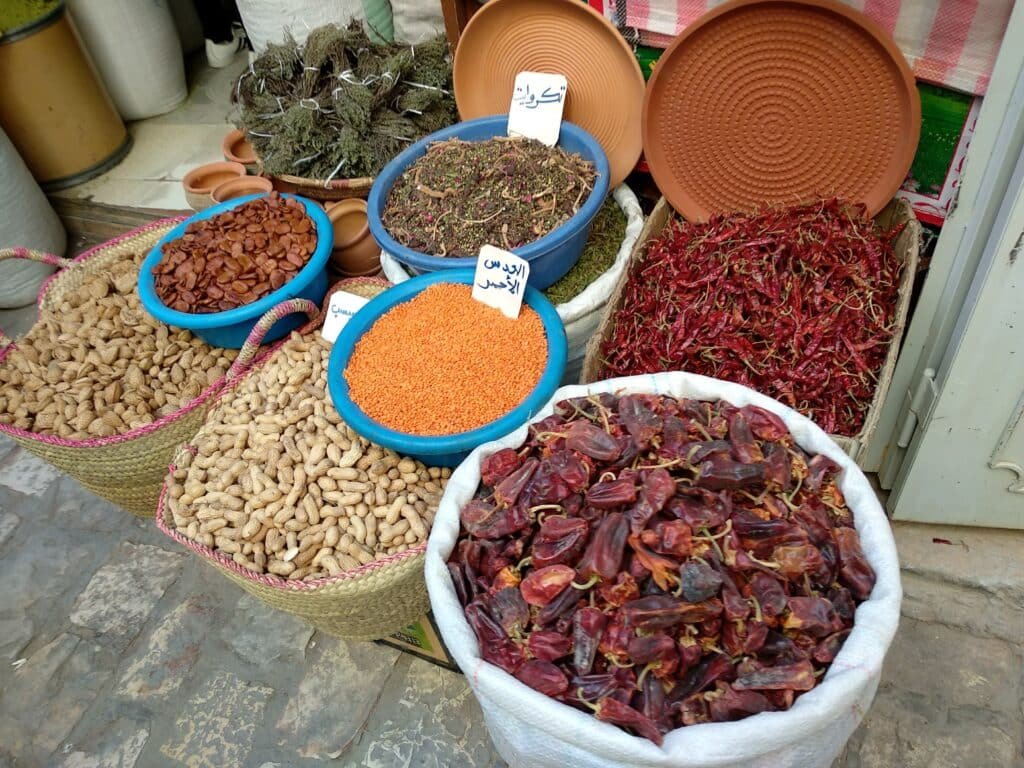
First Impressions of Leh: Where the Himalaya Adventure Begins
What did I actually know about Ladakh? That it was neighbouring the infamously beautiful Kashmir and supposedly also sharing its beauties, that it was also sometimes torn by political forces that rise between huge nations, that it was disputed by China, Pakistan and India, and yet it remained Indian territory, that people were proud of their glacier water and that it bordered what once seemed to me intangible dreamy dreams: the Karakoram mountain ranges, whose most famous peaks rise just across the border. Let’s not forget the Indian movie Three Idiots, referred to by everyone in Bangladesh immediately after Ladakh was mentioned.
The flight to Leh was a treat on its own. We were flying above endless rows of mountain ridges and unpopulated valleys. The scenery looked tough, steep, corroded by unfinished ice ages. I had never before seen such massive glaciers: long tongues of ice slithering away toward the lower ends of valleys, endless plains of bluish ice, wrinkled and cracked by time. This was not a sight made for the living, and yet life crawled its way up as high as it could.
The atmosphere was perfectly clear, nothing like the lower Indian plains. One had the impression that one could see all the details of the surface and follow with the gaze each distinct crevice. The broken surface of steep glaciers was slowly flowing down, bordered by rocky moraines and glacial steps.
The anthropic markers were scarce. Every five valleys, one could trace a tiny road; every tenth valley, one could find a small settlement. The mountains seemed somehow loaded with ice, as if the last ice age had never ended. And yet it was the end of summer, and the rocky crests showed just a few traces of new snow. I could imagine myself walking on these endless plains of ice. I had not yet landed in Ladakh, but a desire for more had arisen, a desire to return to a place I had not yet been.
The Ladakh Range and the Zanskar Range frame the broad Indus Valley, while to the north, the Karakoram rises to some of the highest peaks on earth. Across the border in Pakistan-administered Karakoram stands K2, the world’s second highest mountain, alongside Broad Peak, the Gasherbrums and endless unnamed ridges of ice and rock. Karakoram hosts the largest concentration of high-altitude glaciers outside the polar regions, earning it the title of the Third Pole. For the adventure traveler, Ladakh is among the best places to go in Asia: home to some of the highest motorable roads in the world, including the legendary Khardung La Pass at over 5,300 meters. The Nubra Valley, the Shyok Valley and the remote Wari La Pass remain among the last truly off-the-beaten-path destinations in Asia.
Soon, the Zanskar Range decreased in altitude; the glaciers were replaced by turquoise strings of water and occasional mountain lakes. As we were nearing the broad Indus Valley, we were also nearing our destination: Leh. We circled the city one and a half times as the plane was trying to lose altitude and approach the landing line from a suitable angle. Little gray houses with surprisingly flat rooftops were spread across the flat and broad Indus Valley. A huge dune of reddish sand was gathered just outside the town, where the steep heights of Ladakh Range were starting.
The banks of the Indus and the city of Leh didn’t look so barren, as endless spikes of tall poplars alternated with rows of houses. Here we were already at 3,500 m altitude, and it seemed that autumn had already arrived. All the poplars had already lost their foliage and looked like an army holding high spikes. We landed. Near the airport was a military base, one of many in this region. As I would learn from my half day in New Delhi, army personnel were a common sight in this country, and so were military bases in Ladakh.
The airport was very small and had the air of a mountain hut decorated with timber structures sculptured with Tibetan geometric patterns. I had to complete a few formalities, nothing taking longer than 15 min, due to the special political status of Ladakh (they are governed by India, but have some degree of local autonomy through the hill development councils). Another particularity is that you require a SIM card from this region, but luckily for me, I found someone nice enough to share some internet with me. I remembered what struck me, as I entered the plane: it was filled mostly by men with darker skin shades and central Asian features.
As I exited the airport, a warm, gentle breeze enveloped me. I was at 3500m in November, but nonetheless this mountain region was warmer than its equivalents in Europe. On the way to the hotel, I was absorbed by the wooden Tibetan houses and by the fact that yet again in a very short interval I was immersing myself in a new environment. I tried to take it all in: the white stupas with tinted gold rooftops, the imposing walls of Namgyal Tsemo Fortress overlooking the city, the desert dust and the mountain air, occasional street fruit and food merchants, smiling people walking in a relaxed manner.
I went straight up the hill, on the Old Leh road, which eventually stopped at the gates of the fortress. Soon I reached the hotel, another wooden structure carved with Tibetan ridges, with broad glass windows. The reception was warm, in the most proper sense of the word: they welcomed me with a classical Ladakhi salty butter tea: Po Cha.
As I drank my tea, two black cows with thorny horns passed down the street and then Thin arrived with the motorcycle. He was all smiles; I could see he had experience with tourists: both communication and understanding were easy with him.
“You know, I have a permit, and I went to a good motorcycling school, but I must be honest with you: in the past 4 years I have ridden the motorcycle only once and I am rusty in my riding skills.”
By the way he reacted to this information, I knew that we were kindred minds. He proposed that he would accompany me on my first day and help me remember how to ride a motorcycle. He showed no sign whatsoever that he wouldn’t entrust me with the beautiful Himalayan Enduro 450cc for the following three days.
After a short practice ride he handed me the motorcycle. I was afraid! I felt like I didn’t know anything anymore about this powerful animal. I started really slowly, easing the clutch into first gear. In a way, I thought to myself, this is the perfect place to relearn how to ride a motorcycle: lightly trafficked, steep and twisted roads. I tested the brakes, front and rear, foot and hand, and tested the clutch a couple of times. I was feeling quite unsure of myself: taking turns, changing gear, braking in time, avoiding potholes.
After a short ride around, I returned to Thin and found him in a state of distress. The thing is that I had left without my phone and he was unsure that I would find my way back on the labyrinthine streets. And yet he very quickly switched to what I came to realise was his normal serene state.
The next hour we spent crossing the town to visit various friends of his in order to gather all the equipment I needed for the trip: helmet, gloves, jacket. On the outskirts the roads were dusty and unpaved. We almost reached the big red dune outside the town, and from there we picked up a big warm jacket for me and two large sacks filled with unprocessed wool for him. At that moment I felt like I was in a proper Himalayan movie.
One needs a special permit to drive around Ladakh. Luckily for me, Thin knew where to get it and how to get it in less than a half of a day.
We went to the local tourism office, filled in the forms, and then roamed around the city center for about one hour, until the permit was ready.
Geared up, and with only half a day left we decided to drive down the Indus valley to the famous Thiksey monastery. I let him drive, since I was not yet comfortable driving on national roads. I tried to relax as the back passenger, and to remember how to minimally shift my center of gravity. We flew along a turquoise strip of the Indus. I was quite anxious. I felt exposed. Only on the two wheels, 50km/h felt too fast, the occasional cars and trucks seemed massive in comparison with us. I was tense, hypervigilant and rigid.
Thiksey Monastery: Buddhist Art, Butter Tea and Motorcycle Driving Lessons
After a sudden and pointy curve of the road, we saw the world-renowned Thiksey monastery. A forest of white 2-3 story buildings climbing up in terraces on the shoulder of a prominent mountain ridge. It was built to dominate the Indus Valley. We left the main road, passed by a row of white stupas with golden towers with lotus leaves on the top. Thin accelerated, the road was empty and took a very broad turn that almost followed the altitude line.
We parked inside the second wall. It was a new area of the monastery, newly painted for the visit of the 14th Dalai Lama. A huge, wooden cylinder, painted and adorned with metal, was constructed right after the second gate. Thin explained that it was a lakhkar, a Buddhist praying wheel. One could turn it around the spindle and it was as if one read all the mantras written on it.
Thiksey Monastery is twelve-story complex houses an extraordinary collection of Buddhist art including stupas, thangkas, statues, and richly detailed wall paintings. The crown jewel is the Maitreya Temple, built to commemorate the 14th Dalai Lama’s visit in 1970, which houses a 15-meter tall statue of Maitreya, the Future Buddha, the largest such statue in Ladakh, spanning two full floors of the building. An active place of worship and learning, the monastery is home to around 60 monks, who can be observed performing daily rituals, chanting prayers, and engaging in philosophical debate. Each year, the Gustor Festival brings the monastery to life with vibrant Cham mask dances performed by the monks, depicting the triumph of good over evil.
Nothing moved, not even the colorful Buddhist flags. Everything was very clean; the red, black, and yellow paint looked no more than a year old. But the monks were nowhere to be seen. We took off our shoes and climbed a set of steep stairs. We entered through a short doorway that forced me to lower my head. Candles were lit, the intense smell of incense enveloped me, and slowly, slowly my eyes adjusted to the semidarkness. Almost all the space in the room was occupied by a gigantic Buddha head. Maitreya Buddha, or the Future Buddha. I understood why it was named like this: its serene gaze, looked somewhere beyond.
On the walls various Buddhist saints and Buddha incarnations were depicted surrounded by their own mythology. I was such an ignorant profane. In that instant, I wanted to know all the stories and mythology behind the Buddhist iconography. And yet, in general, I was so saturated by information. I just wanted to to directly engage with the paintings without any prior knowledge. To ignore my unsatisfied thirst for factual information. To make this visit purely experiential. I left behind the huge buddha head and the numerous instances of painted buddhas.
Down and up on the steep sets of stairs, I found my way to the old side of the monastery. Here the iconography was even richer. Ultramarine gods and humans, surrounded by hollows of clouds and flames, were protecting the entrance in the main praying hall. I was fascinated by the details and richness of symbols unknown to me. This hall was dated back to the 15th century, the paintings were old, the time and smoke left their marks on them.
Part of the experience was that I knew nothing about those creatures: gods, humans and other kinds. Rows of heads, heads flowering from other heads, looking grotesque, evil, comic, threatening or serene. Battling, playing music, practicing yoga, making love in heavenly ways.
These paintings must have had a striking impact on the neofite, who could for the first time see with his own eyes what the heavens and underworlds contained, to whom upon the entrance in the monastery, what was previously hidden from his mundane eyes was suddenly relieved.
This wall painting is located in the Gonkhang, Thiksey’s temple of guardian deities, believed to be among the oldest structures in the complex, dating to the sixteenth or seventeenth century. The entrance mural on its south wall depicts protector deities in a visual style that shows a strong Chinese influence, differing from the more traditional Tibetan iconographic conventions found elsewhere in the monastery. The central figure is Dhritarashtra (Yul Khor Srung in Tibetan), Guardian of the Eastern Direction and King of the Gandharvas, celestial musicians. He is recognizable by his broad square face, his moustache and beard, and above all by the lute (vina) he holds and plays. In Buddhist iconography, the lute is not decorative: music is considered a medium capable of teaching the Dharma and subduing negativity. To his left is the darker, fiercer Virudhaka, Guardian of the South. Both figures are traditionally placed at monastery entrances, worldly deities powerful enough to guard the threshold, yet not permitted inside the sacred inner halls. What makes this mural particularly compelling is precisely what art historians note about the Gonkhang’s style: the swirling clouds, the fluid drapery, and the vivid ultramarine ground all reflect Chinese pictorial influence absorbed into a Tibetan iconographic framework, a visual record of the cultural crossroads that Ladakh has always occupied.
On one of the walls, I have recognised some gods performing yoga poses. All of them were couples depicted in some ritualistic entanglement. I made a note to myself: sometime in the future, when I will have time to travel through my memories, I will try to learn more about this foreign pantheon, about the deeds and misdeeds of these creatures, about what is to be strived for inside this system.
This mural belongs to a room reserved for tantric initiation rites within a Tibetan monastery. Flaming halos, skull garlands, bulging eyes, and trampling bodies can strike the uninitiated viewer as jarring, hard to reconcile with the popular notion of Buddhism as a serene religion. Yet these figures are not expressions of uncontrolled rage, but carefully coded embodiments of protection and transformative clarity. Their flames burn away ignorance, their weapons cut through delusion. The dominant central figure, multi-armed, deep blue, wreathed in fire, is almost certainly Mahakala (“the Protector”), the Great Black One, chief among the wrathful dharmapalas, whose temples are traditionally decorated with weapons, animal skins, and murals painted against deep, dark backgrounds. His crown of five skulls symbolizes the transformation of the five poisons (ignorance, anger, desire, pride, and jealousy) into the five wisdoms. The white figure riding a mule in the upper left is Palden Lhamo, the only female among the Eight Great Dharmapalas and Tibet’s principal protector deity, personal guardian of all fourteen Dalai Lamas. Emaciated and fearful, she rides her mule surrounded by flames and retinue. The yellow-green figure below is likely Kubera or a regional yaksha protector, one of several guardian deities represented in Thiksey’s Gonkhang alongside Vajrabhairava and Dharmaraja. Together they form a pantheon of fierce compassion, guardians standing at the precise threshold between the sacred and the profane, between this world and liberation.
This frieze, running along the upper register of one of Thiksey’s inner halls, depicts a row of yidams, tantric meditational deities, shown in the characteristic yab-yum (“father-mother”) embrace. In Vajrayana iconography, this union is never erotic in the mundane sense: the sexual embrace symbolizes the union of wisdom and compassion, the two inseparable pillars of Buddhist enlightenment. The dominant central figure, dark blue, multi-headed, radiating dozens of arms, is almost certainly Vajrabhairava (Dorje Jigje), also known as Yamantaka. Yamantaka, the “Destroyer of Death,” is the paramount yidam of the Gelugpa school, the very tradition that governs Thiksey Monastery. A guardian and destroyer of death, he is represented with thirty-four arms brandishing weapons, his sixteen legs trampling birds, dogs, and deities, holding his consort Vajravetali in sacred union, the couple encircled by a flaming aureole. Each anatomical detail carries precise symbolic meaning: his nine heads represent the nine scriptural categories; his thirty-four arms the thirty-seven limbs of enlightenment; his sixteen legs the sixteen types of emptiness. The golden-yellow figure to the left in a wide dancing stance is likely Chakrasamvara or a related heruka, one of the three principal meditational deities of the Gelug school alongside Vajrabhairava and Guhyasamaja. All figures stand on prostrate bodies, not acts of cruelty, but a standard iconographic statement: the trampling of ego, delusion, and the forces that bind beings to samsara.
On one of the old walls, one could see the famous Wheel of Life, the Samsara, the depiction of the realms of Buddhist cosmogony. How many realms did I know of the world, such as I knew it? The first was the realm of schools and grooming institutions. The second was the realm of the countryside and remote areas. The realm of hospitals and healing institutions. The antechamber of death, where elderly people spend their last years of life. Then there were the sub-realms of different professions and the structures they form in order to organize.
The sub-realm, yet popular realm, of corporations. The virtual, vast and illusory realm of the internet, where all sorts of intellectual productions were dispersed by humankind for humankind. The realms of solitary natural places. The urban-anthropic realms. The underworld, the realm to which all the misfits belonged.
The realm of our minds. The realm of fashion, theater, circus and other performing arts, all glittering sub-worlds of show. The universe, beyond our planet, as we reach it through our scientific instruments and with our model-building, hypothesis-forming minds. The world of decisionmakers and powerful people, overlapping with the realm of capital holders.
A fundamental cosmological diagram of Vajrayana Buddhism, painted in the Thangka style within a Himalayan monastery. The wheel is gripped by Yama, the fearsome Lord of Death, whose presence reminds that no being escapes impermanence. At the center, three animals (a pig, snake, and rooster) represent the Three Poisons: ignorance, hatred, and desire, the root causes of all suffering. Radiating outward, the wheel’s segments illustrate the Six Realms of Samsara (gods, demigods, humans, animals, hungry ghosts, and hell beings) into which consciousness is reborn according to karma. The outermost ring depicts the Twelve Nidanas, the chain of dependent origination perpetuating cyclic existence. Crucially, a golden Buddha figure outside the wheel points toward liberation, offering the path beyond Samsara. This image embodies the Buddha’s core teaching: that recognizing the Three Poisons is the first step toward breaking the cycle of rebirth and attaining Nirvana.
I moved on to the other chambers of the monastery. Maybe because I associated the air of reclusiveness with reflection, I let my train of thoughts flow. There was this feeling through which, already for one even two years, I started seeing people. I saw their personality features, or had thoughts with common labels for social cognition. But it was as if all their asperities and rough edges stopped in a thick layer of universal acceptance of the human condition.
I wondered where the point is where acceptance becomes anesthesia or anergia. If you reach the point where you just witness the world and others, you are no longer part of the world. And I do want to participate in the world, in its continuous shaping. I have yet to learn where the point where acceptance turns into detachment. I am not interested in detachment.
The Indus Valley is the spine of Ladakh: the river that carved it, known locally as Singge Chu, the Lion River, rises near Mount Kailash on the Tibetan Plateau at over 5,000 metres and travels some 3,180 kilometres before emptying into the Arabian Sea in Pakistan, making it one of the longest rivers in Asia. In Ladakh, it runs west through a valley unusually broad for a Himalayan river system, wide enough to sustain irrigated fields of barley and wheat, poplar-lined villages, and one of the highest-altitude cities on earth — Leh, at 3,524 metres. The valley’s exceptional fertility, rare at this elevation, made it a natural corridor for the ancient Silk Road, and it was along these banks that Buddhism entered the Indian subcontinent from Central Asia, leaving behind a density of monasteries unmatched in the region: Hemis, founded in the 11th century and home to one of Ladakh’s most important annual festivals; Thiksey, whose tiered white architecture mirrors Tibet’s Potala Palace; and Shey, the former summer capital of the Ladakhi kings. The river itself, impossibly turquoise at altitude, fed by the snowmelt of both the Zanskar and Ladakh ranges, has been shaping this civilisation — architecturally, spiritually, agriculturally — for over a thousand years.
On the rooftop, Thin rejoined me. We took a couple of photos and then, out of the blue, he asked me:
“You live in your own world, don’t you?”
“I live in the world that I have constructed for myself.”
He didn’t say anything, I pondered on my own reply. I wondered if it was as such, or if it was just a fitting answer.
We went down to the kitchen. There were three monks inside, all of them dressed in their red clocks, with rough hands and square features. These were people used to hard manual labour. The monastery, after all, was self-sustaining. The room was darker than the others. Smoked by the great cooking stove placed in the middle. One of them went outside and brought some more firewood. Another moved a big pot from the sides to the center, and then added some ingredients.
Thin conversed with the monks. I asked, and he said it’s just about some local ongoings. Curious as I was, I didn’t pursue it further. Then we drank another butter tea with spices. I smiled, as it was my only means of communication. They smiled back and charged us through some QR-reading wallet app. Secluded, yet not running from the modern world? Courteous and welcoming, yet not charity.
After the Thiksey Monastery, I said to myself, the time to drive the two wheeled vehicle has come. I needed to overcome this mental blockage or drop the idea of crossing the Ladakh range on my own altogether. We had one other stop for the day: Hemis Monastery, that was a little bit further down the Indus. I was very tense, until the point I could start to say that I was fearful. It was even harder to drive with a passenger.
Firstly we went with 15km/h, which worked perfectly fine until the cross with the national road. Even so, I decided to not go faster than 20km/h. Thin calmly gave advice when they were necessary. I tried to relax, but my knuckles were white on the handlebar. I had thoughts of little stones flowing towards my helmet, or cars suddenly breaking in front of me, or trucks not giving me enough space.
The road was low circulated, the asphalt impeccable and clean and visibility perfect. I used to go faster with the bike when I went downhill. My stress increased further when I saw that on the secondary road leading to Hemis, I needed to take sharper turns. Funnily enough, I took the turns and my motor stopped on a straight strip of the road where it turns out, I should have accelerated more. I gave back the wheel to the master and soon enough we reached the monastery, which was of similar esthetics with the first one.
On the way back, we took the road on the other side of the Indus and Thin told me the stories of the land. Many had cattle and lived out of it, some also had gardens and orchards. Apricots, apples and grapes were popular in the region. A good percentage of the male population worked for the army. And then it was tourism, mostly for the people living in the town. The sunset scenery bypassed us peacefully. Kinetic beauty: Reddish barren rocks taking shades of purple in the sunset. What I love about it is the continuous change of scenery, the preserved delight of the unknown.
We didn’t quite eat anything that day, apart from the butter tea and bread in Thiksey. We stopped near what looked like a small local road shop mixed with a very rudimentary tavern. The protocol was like this: you basically shopped for ingredients on the shelves, paid for them and then went to the stove at the back and cooked them.
Nestled in the dramatic mountains of Ladakh, about 45 km southeast of Leh, Hemis Monastery is the largest and wealthiest Buddhist monastery in the region. Founded in the 17th century and belonging to the Drukpa lineage of Tibetan Buddhism, it is renowned for its stunning architecture, sacred murals, and impressive collection of ancient thangkas, statues, and religious artifacts. Hemis is best known for the annual Hemis Festival, held each summer in honor of Guru Padmasambhava. During the festival, monks perform vibrant masked dances (Cham dances), attracting visitors from around the world. Surrounded by the rugged landscapes of the Himalayas and located near the famous Hemis National Park, the monastery offers both a spiritual and cultural highlight for travelers exploring Ladakh.
We bought some local spicy noodles, and because I was with a local connoisseur, he asked for the local specialty, Gyuma: sheep intestines filled with blood and spices, boiled and then cooked in a huge pan, over a huge fire in front of us. I told them that we too in Romania have this type of dish, except that ours are intestines filled with rice and blood. My barbarous side liked it quite a lot. Afterwards we raced against the sunset. I was finally feeling comfortable on the motorcycle.
A Solo Adventure Begins: Riding Through Khardung La Pass
The next day, I was supposed to meet Thin at 8 am in front of the hotel to sign some paperwork. He arrived at 9 am with a car, trying to convince me to rent the car for my trip. Initially, I was persuaded. He said that the road is not asphalted all the way up, and given my riding skills, it would be quite challenging. But then he added that they don’t rent cars without a driver. And that was a dealbreaker. I needed solitude. I wanted to have two days alone.
The Leh Ladakh motorcycle trip is one of the most iconic rides in the world, and the road from Leh to Khardung La Pass is its crown jewel. Rising to an altitude of approximately 5,359 meters (17,582 ft), Khardung La is among the highest motorable roads on Earth and serves as the gateway to Nubra Valley. Starting from Leh at around 3,500 meters, riders face a rapid altitude gain on a winding mountain road that climbs nearly 1,800 meters in less than 40 km. The Leh to Nubra Valley distance via Khardung La is approximately 120 km, while the climb from Leh to the pass itself is around 39–40 km.
When he saw that I was headstrong, he offered me the keys. We signed the papers, and he refused any kind of advance, deposit, or insurance. He basically just gave me the motorcycle, hoping that I would bring it back in the same condition, myself included. He also said that if anything happened to me on the road, I should give them a call and they would send someone with a car after me. That was soothing, since there were no emergency services to call in this area.
In the end, he offered to accompany me with the car, just a few km above Leh, to make sure that I could handle the road. And so, my first solo motorcycle adventure through the Himalayas started.
In the first 20km there were indeed a couple of road portions without asphalt. Again, I was driving at 25km/h. But afterwards the asphalt was impeccable and the road was scarcely circulated. Even though I had gloves and the sun was up, after passing 3000m, I had to stop from time to time to warm my hands. The road was a continuous exercise for my driving skills. With every curve, I rose a little bit higher and I had an increasingly broader perspective over Indus valley and Leh. On the other side of the broad valley, the icy crests of the Zanskar Range were rising like a dream.
Soon, I too have reached the realm of ice and snow. The asphalt was clean, but the crests that I was climbing were powdered with snow. Right before completely leaving behind the Indus valley, I had to stop for a mandatory check. The permit that I have obtained, was not after all useless. As I drove deeper and deeper into the mountains, the Indus disappeared, and I was entering the realm of glaciers.
The road to Khardung La Pass was famous for travelers, bikers, adventurers and tourists alike. Yet the season almost ended.
The road surface is generally well maintained. Apart from a short stretch of broken asphalt just above Leh, the road from Leh to Khardung La is in good condition. Up to South Pullu, the asphalt is excellent. The first permit checkpoint is located at South Pullu; if you have not obtained the required permit in Leh, you will not be allowed to proceed beyond this point. After crossing Khardung La, on the northern side of the mountain crest, riders may encounter occasional sections of broken pavement, loose gravel, and, toward the end of autumn, patches of ice. Early morning departures are recommended, as road conditions are typically more stable and traffic is lighter.
To those that are wondering, I must say that the road remained free of ice and snow all the way.
I was hyperattentive to the prospect of encountering either regular ice or black ice. Funnily enough, I did manage to find a strip of ice. It was right at the end of the climb, in the parking lot of the Khardung La Pass. Right when I wanted to stop, I slipped on a small frozen puddle and fell with the motorcycle in front of the tourist crowd that had stopped there for photos.
Beyond the technical challenge, this route delivers one of the most spectacular experiences of any Leh Ladakh road trip. Hairpin bends snake through barren Himalayan landscapes, prayer flags flutter across the road, buddhist gates mark various passages and panoramic views stretch toward the Karakoram Range. It is the perfect combination of extreme riding and unforgettable scenery, making it a bucket-list Himalaya adventure for motorcyclists worldwide.
I did not feel ridiculous. I was actually quite glad that I fell there at 0 km/h, surrounded by people and not somewhere else. At least three people came to my aid, and together we lifted the motorcycle. In theory, I knew how to do it on my own (back against the saddle, using the strength of the quadriceps, pushing it upright with my backside), but I was glad I had help.
Khardung La Pass and the Road from Leh to Nubra Valley
Khardung La Pass, situated at over 5,300 meters above sea level, is known as one of the highest motorable roads in the world. A sign warned the drivers not to stop there for longer than 10 minutes, due to the risk of pulmonary edema.
I looked on the other side, and my gaze got lost in endless rows of rocky mountains. As the yellow board announced to me, I was just looking for the first time in my life towards the Karakoram Mountain Range.
I remembered an old dream of mine as a young adult reading a travelling book: crossing Karakoram by motorcycle. High mountain passes, altitude roads, torrent valleys and slithering, narrow roads.
I thanked all those that helped me put up the motorcycle, and I left. I was breathing deeply and heavily, there was no point in stopping until the lack of oxygen caught up with me.
The Leh to Nubra Valley distance via Khardung La is roughly 150 kilometres, and on a good day this can be ridden in five to six hours of careful pacing.
At an altitude of 5,359 m (17,582 ft), Khardung La is one of the highest motorable mountain passes in the world and the gateway to Nubra Valley. The pass offers breathtaking views of the Ladakh and Karakoram ranges, making it a must-stop destination on any Leh Ladakh road trip. However, due to the extreme altitude and low oxygen levels, visitors who are not fully acclimatized should limit their stay at the summit to no more than 10–15 minutes. Symptoms of Acute Mountain Sickness (AMS), such as headache, dizziness, and shortness of breath, can develop quickly. Enjoy the views, take a few photos, and continue your Himalaya adventure to lower altitudes.
I mounted the motorcycle, eager to continue my journey. I was still driving slow, not confident enough to surpass 30km/h. The first 500m of altitude descent took all my attention span, I was on the northern side of the mountain and the temperature was somewhat lower. I had to make quite frequent stops to warm up my hands, because I started not feeling them on the handlebar. After I re-entered the realm of sun, the slopes decreased and even flattened into a broad glacial step.
A silent village, North Pullu, with 5 houses was nestled there, along with another mobile military base with a couple of rows of tents. There were some soldiers guarding the crossing point, but they didn’t stop me. With the sun above and fewer switchbacks, the degree of comfort increased. The scenery was magnificent and now I had the attentional resources to take it in.
I was euphoric, flowing through endless kinetic beauties. It was like euphoria invented itself in various nuances with every new detail of the scenery that I took in. For the little creature that I am, the broad valleys and the massive, rock-solid ridges that were rising 3000m above them, were generating a feeling of awe inside me.
Somewhere between Khardung La Pass and the descent into Nubra Valley, this truck became an unlikely companion. “Free Tibet” livery rolls as a quiet political statement through one of the most contested landscapes on earth. The Leh to Nubra Valley distance covers roughly 150 kilometres of this: bare mineral mountains, impeccable asphalt curving into the unknown, and a sky so deeply blue it looks painted. This is what a Leh Ladakh road trip actually feels like: not a postcard, but a moving, breathing thing. The Himalaya adventure is not in arriving. It is in following the road as it bends.
I am a veteran searcher for endless, empty, heavenly roads, as they are for me perfect metaphors for freedom. This Leh to Nubra Valley road didn’t disappoint: the sky was blue, the asphalt impeccable, there was no wind, and only a couple of other vehicles passed by me. My desires for freedom, solitude and kinetic beauty were satisfied all at once. I let part of my mind free to wander.
I remembered a conversation that I had with a professor of philosophy of the mind. “Be the woman, Alexandra”, he told me in a rather different context, yet the words stuck with me. I kept them in my mind to ponder upon in such a moment. “One is not born, but rather becomes a woman”, are de Beauvoir’s most famous words. I am sometimes a solo female traveler, and yet it is not a purpose in itself but rather a degree of freedom that I have and I quite enjoy.
Exploring the world helps one develop a mind of one’s own, and this is true for any young person. I do think that there are plenty of groups and countries where a feminist discourse still is quite necessary, as for myself I am not a feminist, nor do I seek to prove that I am capable of a certain thing despite the fact that I am a woman. The woman that I am, almost by chance, discovered that it is deliriously beautiful to drive through the Himalayas on a motorcycle.
Even though the asphalt was impeccable, the roads were broken from place to place by torrents during the summer, or by avalanches during the winter. People were brought from different regions of India to repair the damage every year. They worked all day long in harsh conditions, slept in modest tents, and were paid only 800 rupees a day. During one of the conversations that I had with Thin, I found out that they were regarded as outsiders by Ladakhi people, who mostly didn’t interact with them. I was also warned not to interact with these modern Sisyphs, who were removing rocks from the road with their bare hands.
Every summer, from May to mid-October, migrant workers arrive in Ladakh from some of India’s poorest states — Bihar, Jharkhand, Chhattisgarh, Madhya Pradesh — to do the work that makes every road journey in the region possible. They clear rockfall, carry heavy loads of mud and stone at altitudes between 3,350 and 5,490 metres. They work ten hours a day, six days a week, in harsh mountain sunlight, with almost no safety gear. At night, canvas tents by the roadside are their shelter. Despite being indispensable to Ladakh’s connectivity, and to its booming tourism, they remain socially invisible. Ladakh is increasingly worry about demographic change and the erosion of traditional communal labour, and the road workers are caught in this tension: economically necessary, socially marginalised.
Around 5pm, I reached the confluence of Shyok and Nubra River. After a short stop in a modest road restaurant, where I drank the classical spiced milk tea, and I had a delicious local dish, I turned left towards the Diskit Monastery and Shyok Valley.
Hunder Sand Dunes: A Night at the Edge of the Karakoram
On the left side, a huge golden statue of Buddha was overlooking the two valleys and gazing westward across the valley toward the disputed Siachen frontier. This deliberate orientation is deeply symbolic: it represents an eternal prayer for peace, compassion, and reconciliation across one of the world’s most contested borders.
It was already getting late, I didn’t want to drive after sunset. For accommodation, I have decided to follow Thin’s recommendation: a small resort in Hunder. The region of Nubra valley was rich in inedite natural sights. One could find in the same area: a small desert with sand dunes, hotwater springs and glaciers.
Dominating the adjacent hilltop is a 32-metre statue of Maitreya — the Future Buddha — inaugurated by the 14th Dalai Lama in 2010. In Buddhist cosmology, Maitreya is prophesied to reestablish the Dharma when the teachings of Shakyamuni have been entirely forgotten. He is depicted seated with legs pendant, signifying readiness to descend. The statue faces west toward the Siachen Glacier, the world’s highest battlefield at elevations between 5,400 and 6,400 metres, contested by India and Pakistan since 1984. A future Buddha of loving-kindness, gazing permanently toward one of the planet’s most protracted and meteorologically brutal military standoffs. The symbolism requires no elaboration.
Pacefull dogs and a dromedary
I was glad when I finally entered the village, the last 10 km were covered in patches of black ice. I drove slowly through the narrow streets of Hunder. The local dogs followed me with their gaze bored. Two villagers walked by spinning their portable Mani Wheels, the equivalent of a portable continuous generator of luck. Then I met the most beautiful and fluffy animal: a dromedary, returning home with his master.
I left the motorcycle at the resort. The dinner was at seven, so I had time for a short incursion in the Hunder sand dunes area. How can one have all these natural beauties at the same time? White sand dunes, lakes, mountains over 5000m and glaciers?
Slowly, slowly the sun went down. I set down on a dune, the sand had a minute granularity and was very smooth to the touch. Further away, also among the sand dunes, a group of nomads were camping in their yurts. I could see them because they had already made a big fire and the sparking ashes were confounding with the stars settling on the darkening sky.
Hunder Sand Dunes
Reluctantly, I had to return for dinner. The architecture of the resort respected the principles of local Ladakh houses: a big stove in the center of the dining room, little wooden tables distributed with cushions around them. Those that came for dinner were either Indian tourists or local Ladakh people. I timidly tried to insert myself in the conversation, but I met a clear linguistic barrier. At some point I could make out the fact that they were talking about local politics and Tibet. Sometimes I feel that I stepped into a narrative in which the others were frozen for a while.
Next morning, I woke up before the sunrise, drank lots of tea and saddled for my last day of adventures. As the sun rose up over the mountain ridges, I reached Diskit monastery again. I have only shortly interacted with the monks. An old one with very cool sunglasses let me take some photos with him. Another one, upon my return to the parking lot, helped me raise the motorcycle after it fell. He was kind and his English was impeccable.
The road down was quite steep, and I was unsure that my skills were adequate for it. His voice was calm, he told me to put the clutch on neutral and to move really slow down on the steep and narrow road. He also accompanied me for the first two turns. I expressed my gratitude along with my awe for the way some people in this region were: kind and knowing naturally when and with what to bring in the interactions with the others.
I had no time for the hot water springs of Panamik, but enough for a stop in the Sumoor Sand Dunes. There I found the most beautiful spot from my trip. I was literally in heaven, or anyhow my own personal version of it. There was everything at once to be grasped by my gaze: white sand dunes, the turquoise-blue waters of Nubra and high altitude mountains with glaciers in the background. There was no other soul to be seen as far as I could see.
I sat there on the little warm sand, trying to stop the normal race of my thoughts. I wanted to take the serenity in, to breathe it through my lungs, so that whenever I would need it I would have it in a room of my mind. Peace. I need to remember this feeling and keep it with me. Keep it at the roots of all of my endeavours. How does one make peace part of oneself? I am nowhere close to solving my own interior conflicts, I am getting into the habit of letting go of those that overpass me in complexity.
I dug my fingers into the white sand. I am just one human being. With plenty of faults and limited resources. Not to think of anything is a privilege. I attempted to switch from thoughts to sensations. I am part of the world and the world is part of me. And yet what shall I keep with me from my passage through the world. Emptying one’s mind requires practice. To empty it in order to gain control over the content of one’s mind. I am at the level of random associations of random mental garbage.
Sumoor Sand Dunes
“What type of human being are you?” Asked the philosophy of the mind teacher.
“There are no types of human beings.”
I stayed irritated. We typecast people for certain working models and yet, behind all these, at a fundamental level, I can’t see our nature anything but fluid.
Shyok Valley and the Wari La Pass: The Hardest Stretch of the Leh Ladakh Road Trip
I reluctantly left the white sand dunes, feeling that I didn’t have enough time for beauty and serenity. I was a little bit worried that I had left too late. With the experience gained from one full day of riding the motorcycle, I felt more confident in my driving skills, so I sped up to 50, 60 even 80km/h on straight parts of the road.
This time, after reaching the confluence of Nubra with Shyok, I followed downstream the broad Shyok valley, along the turquoise-blue interwoven arms of water.
Confluence of Nubra and Shyok
I have passed by two other sleepy military bases and a couple of villages. In between settlements, from time to time, one sees two or three yurts or a group of yaks grazing. I took a rest near such a group
These huge animals looked at me with kind but fearful eyes. I wondered: did they not realise how huge they were? I was amazed at how agile they were, given their massive, bulky bodies, going up and down on steep slopes with boulders.
At one point, the road was completely broken, taken by an avalanche during the last winter or by a torrent of water. The bridge was under construction and there was no other way to pass except through the river.
It was a river with boulders and water, from what I could appreciate from the shores, 2 or 3 palms deep. I took into consideration turning back and crossing the Ladakh Range through Khardung La Pass, but there was not enough daylight for that. The worst that could have happened would have been to slip in the middle of the river.
The solution for that would have been to ask the road workers for help to take out the motorcycle from the river. I hoped that wouldn’t be necessary. This was an adventure after all. I put it in second gear, made sure that I had enough speed, but not too much, and then without hesitation I ventured into the river. The adrenaline filled me, my hands were tightly clasped on the handlebar, trying to keep it straight despite the boulders underneath. My feet became soaking wet, but I didn’t dare to raise them like they do in adventure movies.
I resisted the need to give thanks to a silent god when I reached the asphalt again. For a while I continued my drive through the broad glacial valley, the road being completely empty and straight before me. I took the next road to the right. The path was less circulated and less known. The road was just a narrow, one lane for both directions, strip of asphalt. The first 2000m in altitude were quite enjoyable. Most of the turns weren’t that steep.
There were even some trees, a string of rapid waters, even more yaks. The road was rarely circulated, and I didn’t have access to the telecommunication network. In a couple of hours, only two or three cars passed in either direction.
When I reached the last stretch of the climb, the conditions became unsettling. The road was paved with cobblestones and from time to time it was covered by patches of 10 or 20 metres of ice, some of them covering steep and narrow turns. I was above 5000m on the northern side, and the temperature had decreased significantly. Luckily there were some car tracks that I could follow.
I could see Wari La Pass in a notch of the mountain ridge, all I had to do was to focus until I reached that place. I felt the potential danger that I was in. I tried to steer my mind to stay focused, but I had a number of self blaming thoughts: why didn’t I inform myself better about the road, why did I end up in a potentially dangerous situation again, do I really need the adrenaline, how will I tell this to my psychologist? And other irrelevant questions for the situation.
My hands were painful from the frost. And yet it was a small inconvenience. I should travel with others. This was an old conclusion that I meant to implement, yet not succeeded. I kept reminding myself to pay attention to the road, to the frost and the ice under my wheels. I felt like praying that everything would go on well, yet I was stubborn enough not to do it.
What a hypocrisy, to ask God’s help only when you are endangered. What a stereotypically cultural thought. Why wouldn’t I ask the help of a god that I don’t believe in, if this is the thought that comes to my mind when I am in danger. After all who says the relationship with God should respect the same norms as a friendship. “One does not get to disrespect the mountain twice.” The words of my father. One thing is sure, I do understand why people are closer to God or Gods in places like this.
Dining with the locals in Leh: discovering a glimpse of the mundane life of Ladakh
Thin was sincerely and tremendously happy to see me and his Himalayan Enduro intact. He lived somewhere in the outskirts of Leh in a house along with his family. In order to respect the local customs, we stopped on our way there at a fruit street merchant to buy a gift for the hosts. We bought a kilo of bananas and some eggs. I told him that in my culture this kind of gift for a dinner invitation would have been considered strange, and that we usually bring dessert or a bottle of wine. Here one could bring any kind of ingredients for cooking.
He lived in a classical Tibetan house, with a central room and a central wooden pillar. I met his sister, his cousin, the wife of the cousin and their child. His sister used to work in a big international corporation, she had studied computer science, and now was doing a local governmental job related to accounting. His cousin was an ex-military man, like many in the region, and now he was trying to get into local real estate, while his wife was teaching Hindi in the local school for first and second cycle children. They were all warm towards me and as curious about me as I was about them.
At first, they didn’t know what it was that I was doing as a job back in my country. And that made me weirdly happy. There was a corner in this world where my job did not exist. I find it quite healthy for one’s ego, to become aware of such alternatives from time to time. When I explained that I am a kind of doctor for the mind, Thin’s sister, the one that had been the most exposed to the big, diverse world, recognised the job. The others started to ask me for medical advice for their current troubles.
Ladakhi houses are traditionally built from sun-dried mud brick and stone, with flat rooftops designed to collect firewood, fodder, and dry apricots during summer. The roof functions as a working platform, not merely shelter. Walls are thick to insulate against the brutal winters. A prayer room (chokhang) occupies the highest, most sacred floor, often marked by juniper incense and small butter lamps. The wooden furniture is characteristic: warm pine, carved and lacquered in golden tones. The tiered cabinet (kongtse) displaying copper kettles and brass vessels is nearly universal in Ladakhi homes, a marker of household wealth and pride. Hospitality is near-sacred. A guest is immediately offered butter tea (gur gur cha): salted, churned with yak butter, and refusing is considered rude. Meals are often served sitting cross-legged on the floor on rugs or namda felt mats: cooking and serving from floor level, pots arranged directly on cloth, the family gathered around without a table as intermediary. This flattens hierarchy beautifully.
The grandmother had leg and back pain, the cousin suffered from pyrosis, his wife had occasional headaches. I happily provided advice, along with the recommendation to also see a local doctor. I was more happy to be treated as a travelling healer than I ever was being an employed doctor. It made me happy that I could use my skills to give something in return for their warm invitation. Maybe travelling and getting into a different context does help in resolving inner conflicts. With them, something melted inside me and I felt, for one evening, that I had actually enjoyed that part of me that was a doctor.
Thin drove me back to the hotel. The black Himalayan sky was punctured by countless stars. We parted as friends. I promised to return to Ladakh with more of my friends. I looked one more time at the perfect skies. No wonder this region also hosted one of the highest astronomical observatories in the world.
Why is Ladakh One of the Best Places to Go in Asia
Ladakh defies easy categorization. In a single journey, you move between glacier lakes and high-altitude sand dunes, between motorable roads that rank among the most scenic on earth and monastery walls where Buddhist mythology unfolds in pigment and silence across centuries-old frescoes.
The air is thin, the light extraordinary, and for those so inclined, the altitude itself becomes a kind of theology — a feeling of proximity to something beyond the ordinary world. The region sits at the gateway to the Karakoram, one of the most formidable mountain ranges on the planet, home to peaks of near-mythical stature.
Yet Ladakh is not merely wilderness: Leh offers comfortable lodging ( you could also try Thin recommendation), and villages like Hunder place you steps from the surreal: Bactrian camels drifting across cold dunes beneath snowfields. In the high pastures, Changpa nomads still move with the seasons, their black yak-hair tents anchored against winds that seem to come from the edge of the world. Ancient monasteries climb the hillsides as if reaching for the sky they’ve always belonged to. Ladakh is, in the end, a place that gives everything at once – and takes your breath away, quite literally.
If this journey has sparked something in you and you are wondering where to go next, The Verse Voyager offers personality-based travel planning: destinations matched to who you are, custom day-by-day itineraries, and guidebooks designed to take you deeper than any algorithm would. Travel planned around you and towards the future you.
A Word of Caution: Riding Solo at the Edge of the World
Before you romanticize this route into your own itinerary, a few honest warnings. Altitude sickness is not theoretical above 5,000m. Khardung La’s own signage limits stops to ten minutes for good reason, and headaches, dizziness or breathlessness can escalate fast if you push on regardless. The roads themselves shift by the hour: black ice on cobblestones near Wari La, river fords where bridges have washed out, and stretches with zero phone signal for hours. If something goes wrong: a fall, a stuck bike, a medical issue, there are no emergency services to call; your only safety net is whoever you arranged the bike with, and even that depends on a working signal. Riding solo, with rusty skills, on a borrowed Enduro, is not something to attempt without honestly assessing your own riding level first. Preferably do not ride solo. Acclimatize properly in Leh before climbing, carry warm layers for sudden temperature drops, and seriously consider telling someone your route and expected return time each day. The beauty here is real, but so is the risk. Ladakh doesn’t forgive carelessness twice.
TLDR
TLDR: A solo female traveler recounts a spontaneous, Leh Ladakh solo bike trip, three-day Himalayan road trip through Ladakh, India, arranged in a single phone call from Dhaka airport. Riding a 450cc Himalayan Enduro with minimal prior recent riding experience, she travels from Leh over Khardung La Pass (5,300m) to Nubra Valley, camps near the Hunder sand dunes, crosses the challenging Wari La Pass on icy cobblestone roads, and returns to Leh. The account weaves visceral road narrative with Buddhist monastery visits (Thiksey, Hemis, Diskit), reflections on solitude and freedom, and a dinner with a local Ladakhi family. Covers practical realities — Inner Line Permits, road conditions, altitude risks, seasonal timing — alongside the philosophical texture of solo travel at high altitude. Suitable for readers researching solo motorcycle trips in Ladakh, female solo travel in India, Nubra Valley itineraries, Khardung La Pass road conditions, and off-the-beaten-path destinations in the Indian Himalayas.
If you only read one paragraph: the best places to visit in Romania fall into a handful of very different worlds. There’s Bucharest, the loud, contradictory capital. There’s Dobrogea in the southeast, where the Danube spills into the sea past old fishing villages and Greek ruins. There are the Carpathian Mountains down the spine of the country, fairy-tale Transylvania with its castles and Saxon villages, and the painted monasteries of Bucovina. Then come Maramures, Oradea, the Apuseni Mountains, the Danube at Orsova, Oltenia, and the Banat.
Why go: wild nature on a scale Western Europe lost long ago, fortified Saxon villages, low prices, and room to breathe.
When to go: May and June or September for mild weather, July and August for the mountains and the coast, December through March for skiing.
How long: seven days for a first taste, ten to fourteen if you want to do it properly.
How to get around: rent a car. Romania is built for road trips.
Before you plan
What kind of traveler are you, really?
This route rewards some temperaments more than others. Take the two-minute quiz and find out whether it fits the way you actually travel, before you copy a single day of it.
20 questions · about 3 minutes · no account needed to start
The Best Things to Do in Romania at a Glance
If you want the highlights before you dig into the regions, here they are. The unmissable things to do in Romania run from driving the hairpins of the Transfagarasan and watching wild brown bears from a forest hide, to gliding by boat through the Danube Delta and standing in front of the 500-year-old frescoes of the painted monasteries in Bucovina.
Tour the fairy-tale Peles Castle, descend into the surreal underground world of Salina Turda, wander the pastel citadel of Sighisoara, and ride the Vaser Valley steam train deep into the Maramures mountains. Add a boat trip through the Iron Gates past the giant Decebalus carving, a night in a restored nobleman’s manor in the Szekely Land, and a ski run above Poiana Brasov in winter, and you’ve got the shape of a trip. Each of these sits inside one of the regions below, so use this as your map and jump to whatever pulls at you.
A couple of notes if you want to tighten it: I kept every item to something the article actually covers in depth, so the internal links will all have a real destination. If you’d rather it read as a scannable bulleted list (which tends to win the “things to do” featured snippet more often than prose), say the word and I’ll convert it, keeping each line linked to its region section.
Table of Contents
Why Visit Romania?
Plenty of travelers have done Paris, Rome, and Barcelona twice over and want somewhere that still surprises them. That’s where Romania comes in. It packs the variety of a small continent into one country, and it does it without the crowds or the prices you’d expect.
In a single trip you can go from a fine-dining city to a shepherd’s village where not much has changed in a hundred years. You can drive a mountain pass in the morning and watch wild bears at dusk. Here’s what actually sets the country apart, the stuff you won’t easily find anywhere else on the map:
Wild nature, and a lot of it. Romania has one of the largest brown bear populations in Europe and some of the continent’s last old-growth forest. Wolves and lynx still live in the Carpathians, and you can join responsible bear-watching trips from proper hides.
The Danube Delta, one of Europe’s biggest and best-kept river deltas, a UNESCO biosphere reserve, and a serious destination for birdwatchers.
Fortified Saxon churches and walled citadels, several of them UNESCO-listed, dotted quietly across Transylvania.
The painted monasteries of Bucovina, their outside walls still covered in 500-year-old frescoes. There’s nothing else quite like them.
Folk culture that isn’t staged for tourists. In Maramures and the Szekely Land, the old way of life is simply the way people still live.
Prices that feel like a flashback. Food, beds, transport, and tickets all cost a fraction of Western Europe.
So the honest answer to why to visit Romania is this: range, value, and space, all in one place.
This is what people mean when they talk about bears in the Carpathians. You round a bend on a mountain road and there one is, sitting on the verge like it owns the place. It’s a thrill, and it’s also the reason for the warning above. Most roadside bears are there because tourists have fed them from car windows, which slowly turns a wild animal into a dangerous one. Admire it, take your photo from inside the car if you must, and drive on.
Before You Go: A Few Things Worth Knowing
When to visit. Late spring (May into June) and early autumn (September) give you the best of it: mild days, green hills, and far fewer people. Summer is peak season for the mountains and the Black Sea, and it’s the only stretch when the high alpine roads are fully open. Winter, roughly December to March, is for skiing in the Prahova Valley and Poiana Brasov, and for the Christmas markets in Sibiu, Brasov, and Cluj. One thing to plan around: the two famous mountain roads, the Transfagarasan and the Transalpina, usually only open in full from about July to October, depending on the snow.
How many days. A focused first trip works in a week: Bucharest, a few days in Transylvania, and a slice of the Carpathians. Give it ten to fourteen days and you can fold in the Danube Delta, Bucovina, or Maramures without rushing. Two weeks is the sweet spot for a country this varied.
Getting around. Rent a car. Distances look tiny on the map, but mountain roads are slow and gorgeous, and most of the best places to visit in Romania are villages, viewpoints, and monasteries that buses never reach. Trains do link the major cities, and the run from Bucharest to Brasov through the mountains is lovely, but for the countryside a car turns the whole country into one long road trip.
Money and language. The currency is the leu (RON). Cards work everywhere in cities and tourist spots, less so in remote villages, so carry some cash. Younger Romanians and anyone working in tourism tend to speak good English. Out in the deep countryside it’s patchier, and a few words of Romanian (or German in Saxon areas, Hungarian in the Szekely Land) buys a lot of goodwill.
Is it safe? Yes. Romania is one of the safer countries in Europe for travelers, with low violent crime. The one real outdoor risk is bears in the Carpathians, and we’ll get to that. Drive carefully on mountain roads and you’ll be fine.
💡 A note from us. Romania treats different travelers very differently. The trip that lights one person up will bore another, and that isn’t a problem to solve, it’s the whole reason we do what we do. Throughout this guide we point out which regions suit which kind of person, because at The Verse Voyager we build itineraries around your actual personality across five core dimensions rather than a generic top-ten list. More on that, and a free quiz, at the end.
Bucharest: Things to Do in Romania’s Capital
Most trips start here, and most travelers use Bucharest as a gateway rather than a destination. That’s fair enough. It’s a sprawling, contradictory place, all grand boulevards, Communist-era concrete, faded Belle Epoque mansions, and shiny new towers, and it won’t seduce you the way Prague or Vienna do. Give it a day or two anyway. There are more things to do in Romania, Bucharest included, than its reputation lets on.
The Palace of the Parliament and the Communist city
The one sight you shouldn’t skip is the Palace of the Parliament, one of the largest and heaviest buildings on the planet. Ceausescu had whole neighborhoods flattened to build it, and walking its endless marble halls on a guided tour is the most memorable thing you’ll do in the capital. While you’re at it, stroll the giant boulevard it sits on, deliberately built to outdo the Champs-Elysees.
The Palace Of Parliament – Bucharest
Old Town, parks, and culture
The restored Old Town, Lipscani, is where the city comes alive at night: cobbled lanes packed with cafes and bars, old churches like Stavropoleos, the ruins of the Old Princely Court founded by Vlad the Impaler himself, and the much-photographed Carturesti Carusel bookshop. For something grander, the neoclassical Romanian Athenaeum concert hall and Revolution Square carry the weight of modern Romanian history. The city is also greener than people expect. Herastrau wraps around a lake in the north, Cismigiu offers shade in the center, and the open-air Village Museum gathers traditional houses from all over the country into one park.
Nightlife and food
Bucharest’s nightlife is one of its genuine strengths: terraces, cocktail bars, and clubs that run late and stay cheap, mostly around the Old Town and Calea Victoriei. For food, old beer halls like Caru’ cu Bere serve hearty Romanian classics under stained glass, and the modern bistro scene is better than you’d guess.
Best for city travelers, first-timers easing into the country, and night owls. If you came for nature, give Bucharest a day and move on.
Dobrogea: The Danube Delta, the Coast, and Ancient Ruins
Down in the southeast, where the Danube finally reaches the Black Sea, Dobrogea is the country’s most underrated region. It’s flat, sun-baked, and full of water, reeds, vineyards, and antiquity, and it feels nothing like the mountainous interior. Some of the most distinctive things to see in Romania are here. Check out theofficial tourism website in Dobrogea. If you ask for my honest opinion, Dobrogea is one of the most diverse and interesting region’s not only in Romania, if not in Europe.
The Danube Delta
The headline act is the Danube Delta, one of Europe’s largest and best-preserved river deltas and a UNESCO biosphere reserve. It’s a maze of channels, lakes, floating reed islands, and forest, home to more than 300 bird species, including big colonies of pelicans and herons.
That makes it one of the great birdwatching spots anywhere. You explore it slowly, by boat, setting out from the gateway town of Tulcea and from villages like Sfantu Gheorghe, Crisan, and Mila 23, where fishing communities still live a life shaped entirely by water. Stay a night out there and slow travel stops being a slogan. Don’t miss the wild beaches where the Delta meets the sea, or the ancient Letea Forest with its sand dunes and wild horses.
Inland, Lake Razelm, the largest lake in the country, and the village of Sarichioi offer quiet lagoon scenery, birdlife, and a glimpse of the area’s Lipovan heritage. The Lipovans are Russian Old Believers, and their onion-domed churches and fishing traditions still mark the landscape.
Ancient cities and ruins
This is also Romania’s deep-history corner, the old Scythia Minor. You can walk the ruins of Histria, founded by Greek colonists in the 7th century BC and reckoned to be the oldest documented town on Romanian soil, along with Roman and Byzantine sites scattered across the region. Most visitors to Romania never realize this layer of antiquity is even here.
The wild horses from Danube Delta
Vama Veche and the coast
Just south, near the Bulgarian border, Vama Veche is Romania’s bohemian beach village. It’s famous for free-spirited summer partying, live music, and camping right on the sand, and it’s a rite of passage for young Romanians. The opposite of the polished resorts up the coast. Head north and you reach Constanta, the ancient port of Tomis, with its restored seafront Casino, a statue of the poet Ovid (Rome exiled him here), and the long beach strip at neighboring Mamaia.
Best for nature lovers and birdwatchers in the Delta, free spirits in Vama Veche, and history buffs at the ancient cities.
The Carpathian Mountains: Romania’s Wild Heart
The Carpathians curve through the middle of the country, and for a lot of travelers they’re the best single reason to come. This is real mountain country, and it doubles as a playground for everything from castle-hopping and salt-mine tours to skiing, hiking, and proper adventure travel. You can plan a 7 day itinerary in Romania mostly based on the mountains.
Prahova Valley: Sinaia, Peles Castle, and Busteni
The Prahova Valley, about an hour from Bucharest, is many people’s first taste of the mountains. The resort town of Sinaia is home to Peles Castle, the neo-Renaissance summer residence built for King Carol I and probably the most beautiful castle in the country, with its turrets, carved wood, and painted rooms. Just up the road, Busteni sits below the Bucegi peaks, where the strange Sphinx and Babele rock formations stand on the plateau above. Busteni also has the romantic Cantacuzino Castle, which a lot of people now recognize as a filming location for the Netflix series Wednesday. Peles castle should be on most itineraries through Romania.
Peles Castle – Romania
Salt mines
Some of Romania’s oddest attractions are underground. The salt mines you can walk straight into are cavernous and faintly surreal. Slanic Prahova and Praid are huge, echoing chambers, while the famous Salina Turda, deeper into Transylvania, has been turned into a kind of subterranean theme park, complete with a Ferris wheel, a boating lake, and an amphitheatre carved into the salt.
Wild gorges and lakes: Bicaz, Siriu, and Lake Colibita
Go deeper and the Carpathians turn wild. The limestone walls of the Bicaz Gorges drop away beside a narrow, twisting road near the Red Lake (Lacu Rosu), and it’s one of the most dramatic drives in the country. Further east, around Siriu and Intorsura Buzaului, adventure tourism is taking off, with hiking, biking, and trips around the Siriu reservoir. Up north, Lake Colibita, nicknamed the Transylvanian Sea, is a calm, mountain-ringed reservoir made for kayaking, swimming, and quiet stays by the water.
The Red Lake – eastern Romania
The legendary roads: Transfagarasan and Transalpina
Then there are the roads that put Romania on every driver’s wish list. The Transfagarasan climbs past 2,000 metres in a frenzy of hairpins, past Balea Lake and its waterfall, with Vlad the Impaler’s real fortress, Poenari Citadel, perched nearby. The Transalpina, the highest road in the country, crosses the Parang Mountains over wide-open alpine pasture. Both are summer-only, and both stay with you long after the trip.
Skiing and winter
Come winter, the same mountains turn into ski country. Poiana Brasov is the flagship resort, while the Prahova Valley (Sinaia, Predeal, Azuga) keeps slopes within easy reach of Bucharest.
The best mountain road in the World – Transfagarasan
⚠️ About the bears. The Carpathians hold the largest brown bear population in Europe, and encounters are real, especially along the roadsides near Sinaia, Busteni, and the Transfagarasan. Never feed or approach a bear, don’t stop the car to photograph one, store food securely, and ask locally before you set off on a hike. Take it seriously and the wildlife becomes one of the best parts of the trip. Watching bears from a proper hide is something you won’t forget.
Best for hikers, drivers, skiers, castle lovers, and anyone with an appetite for adventure. There’s genuinely something here for everyone.
Transylvania: Castles, Citadels, and Saxon Villages
Transylvania is the Romania of everyone’s imagination, but the real thing is stranger and richer than the Dracula merchandise lets on. Picture a high plateau ringed by mountains, scattered with medieval Saxon and Hungarian towns, fortified churches, and walled citadels, plus some of the most atmospheric villages left in Europe. For a lot of travelers this is the most rewarding part of the country, and a strong candidate for the best place to visit in Romania, full stop. And getting to Transylvania is not difficult at all.
The cities: Brasov, Sibiu, and Cluj-Napoca
Brasov is the natural base. Its medieval core wraps around the Gothic Black Church (the largest Gothic church between Vienna and Istanbul), a busy main square, the narrow Rope Street, and Mount Tampa rising right behind town, with a cable car to the top. Even though it is a small city, you have plenty of things to do in Brasov.
Sibiu, a former European Capital of Culture, is the prettiest of the three. Think pastel facades, cobbled squares, the Bridge of Lies, the excellent Brukenthal Museum, and rooftops with their famous half-shut “eyes”. Its upper and lower towns are made for aimless wandering.
Cluj-Napoca is the young, cultured one. A student city with the best cafe, music, and festival scene in the country (Untold and, nearby, Electric Castle), anchored by St. Michael’s Church and the Matthias Corvinus statue.
Brasov, Transylvania
Citadels and fortified churches: Sighisoara, Biertan, Feldioara
The fortified heritage is Transylvania’s quiet glory. Sighisoara is a perfectly preserved, UNESCO-listed citadel of pastel towers and a landmark Clock Tower, and it happens to be the birthplace of Vlad the Impaler. Biertan has one of the finest fortified Saxon churches, famous for its multi-bolt door. And the less-visited Feldioara, a fortress of the Teutonic Knights, is being restored and rewards anyone who likes their history without a crowd.
Country life, traditional experiences, and bear watching
The villages are the real prize. You can spend days in working farm communities, eat meals cooked straight from the garden, try your hand at rural crafts, and join bear-watching trips from hides in the forests nearby. It’s the slow, authentic side of Romania that no city can give you.
Sledge pulled by horses, Transylvania
Viscri and the King Charles connection
The tiny Saxon village of Viscri, with its whitewashed UNESCO-listed fortified church, became known around the world thanks to King Charles III. He fell for the region, bought and restored property here, and has spent years championing its old way of life and its conservation. Viscri is the emotional center of Saxon Transylvania, and a small case study in how tourism can actually keep a community alive.
Sleep in a nobleman’s estate: Miclosoara and Baraolt
Over in the Szekely Land, in villages like Miclosoara and around Baraolt, you can sleep in restored manor houses that once belonged to Hungarian nobility, eating dishes from the estate’s own kitchen and garden. It’s one of the most singular places to stay in the whole country, a living piece of old aristocratic Transylvania.
Off the map: Comandau
And if you want to vanish completely, the remote forest village of Comandau, deep in Covasna county at the end of an old narrow-gauge forestry railway, is about as far off the beaten track as Romania gets.
⚠️ An honest word on Bran Castle. Bran Castle gets sold as “Dracula’s Castle”, but I’ll be straight with you: it’s overrated. The Dracula link is thin, and the crowds are not. Stop briefly if you must, then spend your real time on the region’s quieter treasures.
Best for culture and history lovers, slow travelers, photographers, and anyone chasing the rural Europe that has disappeared everywhere else.
The Painted Monasteries of Bucovina
Up in the far northeast, Bucovina holds one of the most extraordinary sights in the whole country: a cluster of 15th and 16th century monasteries whose outer walls are painted, top to bottom, with biblical scenes that have somehow survived 500 years of weather. Several are UNESCO World Heritage Sites, and honestly there’s nothing else like them anywhere.
Voronet, Sucevita, Moldovita, and Humor
The “Voronet blue” of Voronet Monastery, often called the Sistine Chapel of the East and famous for its sweeping Last Judgment fresco, is reason enough to make the trip. Add Sucevita, the largest and most heavily fortified, with its remarkable Ladder of Virtues; the graceful Moldovita; and the intimate little Humor, and you’ve got a route through painted, fortified abbeys set in soft green hills. Nearby Putna, founded by Stephen the Great (who built many of these places), holds his tomb and is still a deeply important spiritual site.
The wider region
The countryside around them is a draw in itself. It’s quiet, traditional, and shaped by Orthodox life, with the painted houses of Ciocanesti and the distinctive black pottery of Marginea worth seeking out.
Best for anyone who loves art, history, and spirituality, and for travelers who’d rather sit with a place than tick it off a list.
Maramures and Oradea: Living Tradition and Art Nouveau
The northwest gives you two completely different experiences. One is rooted deep in the past, the other freshly polished, and together they make a real case for reaching this less-traveled corner.
Maramures, where the old life goes on
Maramures is the most traditional region in Romania, and arguably in Europe. Life here still follows the seasons. You’ll see hand-built wooden churches with soaring shingled spires (eight of them UNESCO-listed), horse carts on country lanes, intricately carved wooden gates, and woodwork everywhere you look.
The standouts are the famously cheerful Merry Cemetery of Sapanta, where painted, poem-inscribed grave markers turn death into folk art; the serene Barsana Monastery complex; and the Vaser Valley steam train, a working narrow-gauge forestry railway that climbs into the mountains. Sober but essential is Sighetu Marmatiei, home to the Memorial to the Victims of Communism in a former prison. The real pull, though, is just the rhythm of rural life. A great experience not to be missed is taking a ride with the steam train through the mountains in Viseu.
Steam train in Viseu, Maramures
Oradea, the Art Nouveau surprise
A drive away, Oradea is one of Romania’s recent surprises: a city of carefully restored Art Nouveau buildings, all pastel and ornament. Walk past the Black Eagle Palace, the unusual Moon Church, and the restored Oradea Fortress, then go soak in the thermal spas at nearby Baile Felix. It’s elegant, walkable, and still well under the international radar.
Best for slow travelers and culture seekers in Maramures, and for architecture lovers and spa-goers in Oradea.
The Apuseni Mountains: For the Adventure Travelers
The Apuseni Mountains, over in the western Carpathians, are built for adventure travel. This is karst country, full of caves, gorges, underground rivers, and high plateaus, and it’s far less developed than the eastern ranges. That’s exactly the point. If you want wilderness without the crowds, this is one of the best places to visit in Romania.
Caves and underground worlds
The signature experiences are literally beneath your feet. The Scarisoara Ice Cave holds one of the largest and oldest underground glaciers in Europe, its ancient ice glowing in the dark. The Bears’ Cave, named for the prehistoric cave-bear fossils found inside, is a beautifully formed show cave of stalactites and stalagmites.
Gorges, plateaus, and the outdoors
Above ground, the Padis plateau and the dramatic karst basin of Cetatile Ponorului anchor the Apuseni Natural Park, with endless room for hiking, caving, canyoning, rafting and mountain biking. The remote villages of the Moti highland people add a tough, self-reliant mountain culture to the scenery.
Best for active, adventurous travelers, cavers, and hikers who want real wilderness without the queues.
The Danube at Orsova: Fishing and the Iron Gates
Where the Danube cuts through the mountains on Romania’s southwestern border, Orsova sits on a wide blue stretch of river that feels more like a fjord than a frontier. It’s one of the country’s most quietly dramatic spots, and foreign visitors almost completely overlook it.
River fishing
This is one of the best places in Romania for serious river fishing. The Danube here is known for big wels catfish (somn in Romanian) and other freshwater species, and guided fishing trips out of Orsova and nearby Eselnita pull in anglers hoping for a trophy catch on the calm, deep water above the Iron Gates dam.
The Iron Gates and the Cazanele Dunarii
Even if you never pick up a rod, the setting alone is worth the drive. Boat trips into the Iron Gates, the Cazanele Dunarii, glide between sheer cliffs where the river suddenly narrows, past the huge rock sculpture of Decebalus carved straight into a cliff face (the tallest rock relief in Europe) and the riverside Mraconia Monastery. Across the water you can pick out the Roman-era Tabula Traiana plaque, and the great Iron Gates dam marks the far end of the gorge.
Best for anglers, photographers, and travelers after dramatic river scenery well off the tourist trail.
Oltenia: Monasteries, Mountains, and Heritage Stays
Oltenia, in the southwest, is a quietly rich region that links the southern Carpathians to the Danube plain. It’s a place of monasteries, spa towns, river valleys, and folk craft, uncrowded and authentic, and easy to slot into a road trip that takes in the Transalpina.
Monasteries and the Olt valley
The scenic Olt valley runs past some of the country’s most important monasteries: Cozia, one of the oldest, where the medieval ruler Mircea the Elder is buried, and the magnificent UNESCO-listed Horezu Monastery, the masterpiece of the ornate Brancovenesc style. The nearby town of Horezu is just as famous for its traditional ceramics, which are themselves recognized as UNESCO intangible cultural heritage. Throw in the cave monastery of Polovragi and you’ve got plenty for anyone drawn to faith and history.
Mountains, spas, and oddities
The forested hills hide caves, gorges, and the old spa towns of the Olt valley, Calimanesti-Caciulata and Baile Olanesti among them. For something stranger, the Trovants of Costesti, the so-called growing stones, pull in the curious.
Where to stay
For a bed with character, one place stands out: the Conacul Maldar, a beautifully restored boyar manor that offers an atmospheric stay rooted in the region’s aristocratic past, and a fine base for exploring Oltenia’s monasteries and hills.
Best for travelers drawn to monasteries, heritage, folk craft, quiet landscapes, and an unhurried pace.
Timisoara and the Banat: What to See in Western Romania
Timisoara, the capital of the Banat, is Romania’s most Central European city, and a recent European Capital of Culture. This is where the 1989 revolution that brought down the Communist regime began, and the city carries that history with a certain quiet confidence. If you’re flying in from the west, it makes an elegant start or finish to a trip.
The squares and the architecture
Timisoara’s pride is its three grand squares, framed by ornate, freshly restored facades. There’s the baroque Union Square (Piata Unirii), where Serbian and Catholic cathedrals face each other across the pastel buildings; Victory Square (Piata Victoriei), anchored by the Opera House and the soaring Orthodox Cathedral; and Liberty Square (Piata Libertatii). The medieval Huniade Castle and the green banks of the Bega Canal round out the center. Fittingly for a city that likes to look forward, Timisoara was one of the first in Europe lit by electric street lamps.
The Banat region
Beyond the city, the Banat is a cultural patchwork, with Serbian, Hungarian, German, and Romanian threads woven together over centuries and still visible in the churches, the food, and the wine (the Recas vineyards are well known). To the south, the region climbs into the wild Caras-Severin mountains, home to the faded grandeur of the Roman-era spa town of Baile Herculane and a scattering of dramatic natural sights tucked into the hills.
Best for city travelers, architecture and history lovers, wine drinkers, and anyone entering Romania from the west.
Romania’s Personality Match: The Verse Voyager Index
We don’t only rate places by what there is to see. We score them the same way we read travelers, across the five core personality dimensions, so you can tell at a glance whether a country fits the way you move through the world. Here is how Romania lands.
Romania’s travel personality across five dimensions.
A quick read of the profile:
Extraversion, 5 out of 5. Romania gets loud and social when it wants to, from Bucharest and Cluj nightlife to the summer crowd at Vama Veche and a packed festival calendar. It also has a quiet, inward half, the monasteries, the Delta, a Maramures village at dawn, so the country swings easily between the two.
Agreeableness, 5 out of 5. This is the one locals will recognize at once. Romanian hospitality is real, and a little overwhelming in the best way. Expect to be fed.
Openness, 4 out of 5. Romania rewards the curious without ever overwhelming them. It is offbeat and full of things most of Europe forgot it had, yet easy enough to navigate that you rarely feel out of your depth.
Emotional Stability, 3 out of 5. It is a safe EU country, but it still runs a little loose. Rural logistics, mountain roads, and the odd bear keep you on your toes, which is part of the appeal if you travel that way.
Conscientiousness, 3 out of 5. Things mostly work, just not always to a tidy schedule. Come with a plan and a willingness to let it bend.
That five-dimension profile is the Verse Voyager Index for Romania. There is no single number to average; the shape of the chart is the score. Read together, it points to a country that suits warm, sociable, curious travelers who don’t mind a bit of unpredictability, and asks very little of anyone who needs everything buttoned down.
Not sure where you land on these five dimensions? Take the free quiz and we’ll match you to the version of Romania that fits.
Which Part of Romania Suits You?
Here’s the catch with any “best places to visit in Romania” list: it can’t tell you where you, specifically, will have the best time. The person who lives for Vama Veche’s late nights and Cluj’s cafe culture wants a wildly different trip from the one who comes alive in a silent Bucovina monastery or alone on a ridge in the Apuseni.
A rough guide:
Love nature and quiet? Danube Delta, Bucovina, Maramures, Lake Colibita.
After adventure and the outdoors? Apuseni Mountains, the Carpathians, Siriu, the Transfagarasan.
Here for culture and history? Transylvania’s citadels, Timisoara, the painted monasteries, Dobrogea’s ancient cities.
Want cities and nightlife? Bucharest, Cluj, Brasov, and Vama Veche in summer.
Chasing something truly unusual? A manor stay in Miclosoara, bear watching in Transylvania, or fishing the Danube at Orsova.
This is how we think at The Verse Voyager. Rather than hand you a generic itinerary, we build trips around your real personality across five core dimensions, so the destinations, the pace, and the experiences fit the way you actually travel, not the way a guidebook assumes everyone does. Connect with us to understand better what fits you.
Is Romania worth visiting? Yes. Romania has dramatic, varied landscapes, the largest brown bear population in Europe, old-growth forests, UNESCO-listed monasteries and Saxon villages, very low prices, and far fewer crowds than Western Europe, which makes it one of the continent’s best-value and most rewarding destinations.
What are the best places to visit in Romania? The best places to visit in Romania include Bucharest, the Danube Delta and coast in Dobrogea, the Carpathian Mountains, Transylvania’s citadels and Saxon villages, the painted monasteries of Bucovina, traditional Maramures, Oradea, the Apuseni Mountains, the Danube at Orsova, Oltenia, and Timisoara.
What are the best things to do in Romania? The best things to do in Romania include driving the Transfagarasan mountain road, watching wild brown bears from a forest hide, taking a boat through the Danube Delta, and seeing the 500-year-old frescoes of the painted monasteries in Bucovina.
When is the best time to visit Romania? Late spring (May and June) and early autumn (September) give you the best mix of mild weather and small crowds. Summer (July and August) is ideal for the mountains and the Black Sea coast, and it’s the only time the high passes are fully open. Winter, December through March, is the season for skiing and Christmas markets.
How many days do you need in Romania? Plan for at least seven days to see Bucharest, Transylvania, and a slice of the Carpathians. With ten to fourteen days you can comfortably add the Danube Delta, Bucovina, or Maramures.
Is Romania safe for tourists? Romania is one of the safer countries in Europe for travelers, with low rates of violent crime. The main outdoor risk is meeting brown bears in the Carpathians, so never feed or approach them, store food securely, and follow local advice when you hike.
Is Romania expensive to visit? No. Romania is one of the most affordable countries in the EU. Food, accommodation, transport, and attractions all cost noticeably less than in Western Europe, so your budget goes much further.
Do people speak English in Romania? English is widely spoken among younger Romanians and across the tourism industry in cities and at major sights. In remote villages it’s less common, so a few words of Romanian are appreciated.
How do you get around Romania? Renting a car is the best way to explore, since many of the top places to visit are villages, mountain roads, and viewpoints that public transport doesn’t reach. Trains link the major cities, and the Bucharest to Brasov route is especially scenic.
What is Romania famous for? Romania is famous for the Carpathian Mountains and their wildlife, Transylvania’s castles and fortified Saxon villages, the Dracula legend, the Danube Delta, the painted monasteries of Bucovina, and the dramatic Transfagarasan road.
Is Bran Castle worth visiting? Bran Castle is heavily marketed as “Dracula’s Castle”, but the connection is thin and the site is often crowded. Many travelers find Romania’s lesser-known citadels, like Sighisoara, Biertan, and the Saxon fortified churches, far more rewarding.
Start With Who You Are, Not Just Where to Go
Romania gives back about as much as you bring the right expectations to it. The best places to visit in Romania aren’t the same for everyone, and the gap between a good trip and an unforgettable one usually comes down to matching the right region, pace, and experiences to the kind of traveler you actually are.
That’s what we do at The Verse Voyager. Our free personality quiz maps how you travel across five core dimensions, and we use it to design trips, in Romania and beyond, built around you instead of a one-size-fits-all checklist.
Most travel guides do not label Spain regions by personality and start with a destination and ask you to fit yourself into it. You read about Barcelona, decide it sounds nice, book a flight, and hope your personality does not quietly rebel three days in. Anyone who has stood in a midday queue outside the Sagrada Familia in August, sweating, hungry, and faintly furious, knows the feeling.
This article runs the question backwards. You start with who you are, and we work toward where in Spain you will feel most alive.
The framework is the Big Five personality model, which is the most validated structure in personality science. Five traits: Openness, Conscientiousness, Extraversion, Agreeableness, and Neuroticism. Each has been studied for decades, and several specific facets within them, like Excitement-Seeking, Aesthetics, and Anxiety, are unusually strong predictors of which kinds of places restore you and which ones drain you.
Spain is the perfect country to apply this lens to. Few other destinations contain so many genuinely different worlds inside one border. Catalonia and Andalusia barely share a temperament. The green Atlantic north feels closer to Ireland than to Seville. Tenerife sits four hours by plane from Madrid and might as well be a different planet. Picking the wrong corner of Spain for your personality is not a small mistake. It is the difference between a holiday that loosens something inside you and a holiday that just leaves you tired.
What follows is a tour through seven Spanish regions, mapped to the kinds of travelers each one tends to suit best. Barcelona, the Pyrenees, Cantabria and Asturias, Andalusia, Tenerife, the Basque Country, and Galicia. Read with curiosity. The point is not to box yourself in but to recognize the regions where the way you naturally move through the world is met halfway by the way the place is.
Before you plan
What kind of traveler are you, really?
This route rewards some temperaments more than others. Take the two-minute quiz and find out whether it fits the way you actually travel, before you copy a single day of it.
20 questions · about 3 minutes · no account needed to start
A Brief Note on the Big Five (and Why It Beats “Adventurous vs Relaxed”)
If you have ever taken a personality quiz online, you have probably been told you are an “explorer,” a “wanderer,” or a “free spirit.” These categories are flattering and almost entirely useless for travel planning, because they describe what you want to be, not how you actually function under pressure, fatigue, novelty, or social demand.
The Big Five works differently. It measures five dimensions on a continuum:
Openness: how much you crave novelty, beauty, and ideas.
Conscientiousness: how much you rely on order, planning, and discipline.
Extraversion: how much energy you draw from people and stimulation.
Agreeableness: how much you value warmth, harmony, and trust.
Neuroticism: how reactive you are to stress, uncertainty, and discomfort.
Each trait also breaks down into smaller facets that matter even more for travel. Excitement-Seeking, a facet of Extraversion, predicts whether you light up in a Madrid plaza at midnight or want to lie down. Aesthetics, a facet of Openness, predicts whether the Alhambra moves you to tears or registers as “nice tilework.” Anxiety, a facet of Neuroticism, predicts whether unfamiliar transit systems feel like an adventure or a slow horror.
Travel research consistently finds that these facets predict trip satisfaction better than the broad traits do. Someone scoring high on Openness in general but low on Excitement-Seeking will love a Galician monastery and hate a Barcelona club. The averages lie. The details tell the truth.
This is the framework we use at The Verse Voyager when designing tailor-made trips. The IPIP-NEO assessment gives a structured read on these five traits and their thirty facets, and the result becomes the quiet logic underneath every recommendation we make. The regional matches below follow the same logic, distilled.
1. Barcelona: For High Openness, High Extraversion, Low Anxiety
Barcelona is the easiest Spanish region to explain in personality terms, because it is so unambiguously stimulating. Density, architecture you have to physically lean back to take in, food eaten standing up at 11 p.m., a coastline pressed against a mountain range pressed against a medieval grid. The city does not whisper. It performs.
This rewards two specific patterns. The first is high Openness, especially the Aesthetics facet. Gaudi, Miro, the Modernista facades along Passeig de Gracia, the Gothic Quarter’s compressed centuries, all of it rewards a mind that genuinely enjoys taking in unusual forms. If “interesting buildings” is something you would say aloud to no one in particular while walking, you will do well here.
The second is moderate-to-high Extraversion. Barcelona’s social tempo is closer to Buenos Aires than to most of Northern Europe. Dinner at 10. Conversation at full volume. Strangers happy to keep talking past midnight. If you score high on Excitement-Seeking, this is where Spain will feel most like itself. If you lean introverted, the city is still rich, but you will need to design more recovery time than you think, and the quieter neighborhoods (Gracia, Sant Antoni, parts of Poblenou) become essential rather than optional.
The pattern that struggles in Barcelona is high Neuroticism combined with low Openness. The constant input, the pickpocket vigilance, the August heat, the sheer choice of where to eat and what to skip, all of it amplifies anxiety in travelers who already arrive a little stretched. In the years I lived in Barcelona, the friends who returned again and again were the ones who treated the city as a long bath rather than a checklist. The friends who came once and never came back tried to see everything in four days.
We sometimes redirect anxiety-prone travelers to Girona or the Costa Brava villages instead, with day trips into the city, and they come away loving Catalonia far more than they would have.
Best fits: travelers high in Openness, especially the Aesthetics and Ideas facets, with moderate-to-high Extraversion and the resilience to handle a busy environment. If you are in this category check my article about what to see in Barcelona in 3 days.
2. The Pyrenees: For High Conscientiousness, Low Excitement-Seeking, High Openness to Nature
The Pyrenees do not announce themselves the way the Alps do. The Spanish side, in particular, runs quieter and rougher and more local. Stone villages sitting at valley heads. Trails that have been walked since the medieval pilgrimage routes. Wolves still in the Sierra de Guara. Few crowds outside of high August.
This is a region for travelers who feel restored by physical effort and clear structure. High Conscientiousness, especially the Achievement-Striving facet, finds something deeply satisfying in a multi-day route with a measurable arc. The Carros de Foc circuit, a section of the GR-11 traverse, the climb up to Aiguestortes lakes, all of these are the kind of trips where the day’s purpose is honestly described by a kilometre count and an elevation gain.
Openness matters too, but a particular kind. High Aesthetics for natural landscapes, less so for urban variety. Travelers who score high on Openness but low on the Actions facet (the one that predicts variety-seeking) often do beautifully here, because the Pyrenees offer one consistent register, slowly varying, rather than a constant change of scene.
Where the Pyrenees push back is on Excitement-Seeking and Gregariousness. There is no nightlife. Restaurants close at nine. Dinner in a refugio with eight strangers can be the social peak of the week. If you score high on these facets, you will find the silence productive for two days and then start to itch.
There is also an unexpected fit worth naming. Moderately anxious travelers who score high on Conscientiousness often do beautifully in the Pyrenees, because the structure of a mountain day, leave at seven, water at the col, summit by noon, descend before the afternoon storms, feels containing rather than exposing. Anxiety likes a plan that respects it. The mountains give you one for free. Read about one of my favorite rustic town in the Pyrenees, La Seu D’Urgell.
Best fits: high Conscientiousness, low to moderate Extraversion, high Openness to natural environments, comfort with quiet.
3. Cantabria and Asturias: For High Agreeableness, Sensitive Travelers, and the Quietly Curious
The green coast of Spain is the country’s best-kept secret, and the personality reasons it stays a secret are also the reasons it works so well for the people it suits.
This is a slow region. Asturian fishing villages tucked into Atlantic coves. Cantabrian valleys with cows and chestnut forests and the Picos de Europa rising behind. Cider houses where the server pours from above their head and you eat seafood your grandmother would recognize. The pace is genuinely deliberate, not curated as deliberate.
Two patterns thrive here. The first is high Agreeableness, especially the Altruism and Trust facets. The communities in this part of Spain are unusually warm in a quiet, unfussy way. People look you in the eye. Kindness shows up in small unannounced gestures. Travelers who value warmth and emotional honesty over spectacle find themselves disarmed in the best way.
The second is unusual but worth naming carefully. Travelers who score high on Neuroticism, particularly the Anxiety facet, often do badly in Spain’s marquee destinations because the sensory volume is too much. Cantabria and Asturias dial that volume down. The food is gentle. The towns are small. The pace gives the nervous system room to settle. We have sent several anxiety-prone travelers here who came back saying it was the first vacation in years that did not require recovery afterward.
Where the green coast does not work is for travelers high on Excitement-Seeking or low on patience. There is no Ibiza here, no Madrid energy, no late-night plaza scene. Sunsets along the Camino del Norte and a slow bowl of fabada are the structure. If that sounds like not enough, listen to that signal.
If you are travelling with someone whose personality runs hotter than yours, Cantabria can also work as a recovery base between busier trips. A week of green quiet between Madrid and Barcelona resets things in a way few other regions in Europe can match.
Best fits: high Agreeableness, sensitive or anxiety-prone travelers, those who restore through quiet rather than stimulation.
4. Andalusia: For High Aesthetic Openness, High Extraversion, High Warmth
Andalusia is the Spain that lives in the global imagination. Flamenco, white villages, the Alhambra, sherry, Moorish arches, sun. What is less obvious is that this is one of the most personality-demanding regions in Spain, in the sense that it rewards a specific configuration deeply and overwhelms people without it.
The first thing that has to be high is Openness, especially the Aesthetics facet. Andalusia is one of the great aesthetic concentrations in Europe. The Alhambra in Granada, the Mezquita-Catedral in Cordoba, the Real Alcazar in Seville, the white villages of the Sierra de Grazalema. Travelers who score high on Aesthetics describe these as among the most moving experiences of their lives. Travelers who score low describe them as “old buildings.” Both are honest reports of the same place. The trait does the talking.
The second is Extraversion, particularly the Gregariousness and Warmth facets. Andalusian social life is participatory. Tapas culture means standing close to strangers. Flamenco is best in tiny rooms. Plazas are where people live, not where tourists pose. If you draw energy from this, you will float through Seville. If you do not, ten days here will feel exhausting, no matter how impressive the architecture.
Agreeableness adds the third layer. Andalusian hospitality is real but it has a specific texture. Travelers who lead with warmth get warmth back. Travelers who lead with reserve sometimes report the region as “unfriendly,” which is almost always a misreading. The relational style matches the climate. Open, direct, generous, immediate.
The pattern that struggles is high Neuroticism combined with low Openness. The summer heat above 40 degrees Celsius, the sensory density of the cities, the noise, the late dinners, all of it pushes nervous systems hard. Anxious travelers do better in the white villages and shoulder seasons (October to early May) than in Seville in August. We almost always recommend the off-season for first-timers, and the difference in their experience is dramatic. If you are interested in planning a trip to Andalusia you can read more about this in my article where we present a 10 days Andalusia itinerary. Or if you want something which is made for you, let us plan the trip for you.
Best fits: high Openness with strong Aesthetics, high Extraversion with high Warmth, high Agreeableness, low to moderate Neuroticism.
5. Tenerife: For High Openness to Variety, Moderate Conscientiousness, and Low Anxiety
Tenerife is misunderstood. Most travelers see only the south coast resorts and write the island off. The actual island, the one north of the autopista, has more landscape variety per square kilometre than almost anywhere in Europe. Volcanic moonscapes, ancient laurel forests, cloud-piercing peaks, banana plantations, sheer cliffs falling into the Atlantic, all within a two-hour drive.
This is why Tenerife rewards a specific Openness facet: Actions, the variety-seeking one. Travelers who get bored on the third day in any single landscape and start looking for the next thing tend to thrive here. In one day you can hike Teide National Park at 2,300 metres in the morning, descend through pine forest, and swim in a black sand cove by sunset. If that sequence sounds tiring, Tenerife is not your island. If it sounds clarifying, it is.
Moderate Conscientiousness helps. The island’s geography is steep, the roads are slow, and good logistics matter. Travelers who like a loose plan with a few key reservations (sunrise at Teide requires permits, the Anaga forest needs an early start) do better than travelers who want everything spontaneous or everything micromanaged.
Low Anxiety is also useful. The driving in the north can be vertiginous. The weather changes fast at altitude. The microclimates surprise people. Travelers who treat unpredictability as part of the texture of the place rather than as a logistical failure get the best of Tenerife.
The pattern that struggles is travelers seeking pure rest. The south coast offers that, but it is not really Tenerife. Travelers who arrive expecting the Canary Islands to be a generic beach destination and discover the island wanting variety from them sometimes resent it. If you want the island to ask nothing of you, pick another. If you want it to surprise you, almost daily, with amazing hidden gems, this is the right one.
Best fits: high Openness in the Actions facet, moderate Conscientiousness, low Anxiety, comfortable with active days.
6. The Basque Country: For High Conscientiousness, High Openness to Craft, and Comfort With Reserve
The Basque Country is, in personality terms, the most demanding region in Spain to describe well, because it rewards an unusual combination: high standards, intellectual openness, and a tolerance for emotional reserve.
Start with Conscientiousness. The Basque approach to food, design, and craft is unusually precise. The pintxos at a serious bar in San Sebastian are not casual snacks. They are constructed. The kitchens of Asador Etxebarri, Mugaritz, and Arzak operate at a level of seriousness about technique that is rare anywhere in the world. Travelers high in Conscientiousness, especially the Order and Achievement-Striving facets, recognize this immediately and feel respected by it. Also, the Basque country is, for sure, the best region in Spain for foodies.
Openness matters too, in a specific way. High on Aesthetics, particularly for restrained design rather than ornamentation. The Guggenheim in Bilbao, the Chillida-Leku sculpture park, the way a Basque txoko (a private gastronomic society) holds its own quiet rituals. This is openness for the considered, not the flamboyant.
The unexpected piece is Extraversion, where the Basque Country runs lower than the rest of Spain. Basques are warm but reserved. Conversations build slowly. Eye contact has weight. The social style is closer to Northern Europe than to Andalusia. Introverted travelers, or moderately extraverted ones who appreciate depth over breadth, and quiet shore landscapes like in Zoumaia, often describe the region as the first place in Spain where they felt fully comfortable.
Where the Basque Country does not work is for travelers seeking the typical Spanish stereotype. The flamenco, the late-night plaza energy, the warm chaos. None of that is here. Travelers who arrive expecting it sometimes describe the region as “not Spanish enough,” which is true and beside the point. The Basques have been here longer than Spain has.
Best fits: high Conscientiousness with strong Order and Achievement-Striving, high Openness for restrained craft, moderate Extraversion or comfort with reserve.
7. Galicia: For Sensitive Travelers, High Openness, and Anyone Carrying a Question
Galicia sits in Spain’s northwest corner, soaked in Atlantic weather and mythology. Stone villages, granite churches, the long arrival of the Camino de Santiago, oysters and Albarino from the rias, fog rolling in over the Costa da Morte. It is the most introspective region in the country, and one of the most genuinely transformative places in Europe to travel through.
This is where high Neuroticism, the trait most travel guides treat as a problem to be hidden, becomes an asset. Travelers who are sensitive, reflective, easily moved, prone to thinking too much, find a region that operates at their tempo. The weather slows everything down. The Camino in particular, walked by hundreds of thousands of pilgrims a year, is a structure that lets sensitive minds metabolize their lives. We have sent several travelers here in the middle of difficult years (a divorce, a job loss, the death of a parent) and they returned different. Not fixed. Different.
Openness matters here, especially the Aesthetics facet, but tilted toward melancholy beauty rather than grandeur. The cathedral in Santiago de Compostela. Cabo Fisterra at sunset. The Roman walls of Lugo. Galician piano music. Travelers who are moved by the slightly mournful and the genuinely old find a deep groove here.
Agreeableness completes the fit. Galicians are warm in a quiet, undemanding way. The hospitality of pulperias and rural inns has a familial quality. Travelers high in Agreeableness feel met without performing.
Where Galicia does not work is for travelers who need sun, energy, and momentum. The weather is genuinely temperamental, even in summer. The pace is genuinely slow. Travelers high on Excitement-Seeking get restless within a week, and travelers low on Openness sometimes describe the region as “a lot of stones and rain,” which is also true and also beside the point.
Best fits: high Openness Aesthetics, sensitive or reflective travelers, high Agreeableness, comfort with rain and reflection.
How to Use This Big Five Travel Guide Without Boxing Yourself In
The risk of any personality-based travel guide for Spain is that you read it as a verdict. It is not. It is a starting point. Most travelers are not pure types. You might score high in Openness and Excitement-Seeking but also high in Anxiety, which means Barcelona’s energy attracts you and exhausts you in roughly equal measure, and the answer is to design the trip differently rather than to skip the city. Early-morning museum slots. A quiet apartment in Gracia rather than a hotel on La Rambla. Day trips to the Costa Brava when the city tips over.
This is why we always start with the IPIP-NEO assessment before designing a tailor-made Spain trip at The Verse Voyager. Trait scores tell us which Spain region to lean toward. Facet scores tell us how to balance the itinerary once we get there. A traveler scoring high on Openness, low on Extraversion, and moderate on Neuroticism does not need a single region. They need a Galicia base with one carefully designed Barcelona weekend, planned for early arrivals at museums and quiet dinners in Gracia, with an exit strategy if the city gets loud.
Matching your personality to a Spain region is not about narrowing your options. It is about stopping you from picking against yourself.
If you are not sure which part of Spain to visit next, the most useful first step is not more research on the best regions in Spain. It is taking the free travel personality quiz, getting your Big Five and facet scores, and reading the result with the seven regions above in mind. The pattern usually clarifies fast.
Take the Next Step
The Verse Voyager designs tailor-made trips around who you actually are, not who you wish you were. Every itinerary starts with the same free personality assessment used in the methodology above, then becomes a day-by-day plan built for your pace, your energy, and the kind of beauty that actually moves you. Contact us and make your next travel in Spain personality based.
Spain is not one place. It is seven distinct worlds, each suited to a different kind of traveler. Barcelona rewards high Openness and high Extraversion but overwhelms anxious travelers.
The Pyrenees suit high Conscientiousness and low Extraversion.
Cantabria and Asturias are the best Spanish regions for sensitive, anxiety-prone travelers who restore through quiet.
Andalusia is for high Aesthetics, high Warmth, and the social confidence to participate rather than observe.
Tenerife suits variety-seekers high on the Openness Actions facet who want active, unpredictable days.
The Basque Country rewards high Conscientiousness and a taste for restrained craft over spectacle.
Galicia is the most introspective region in Spain, best suited to sensitive, reflective travelers carrying a question they have not yet answered. The Big Five personality model predicts which of these will restore you and which will quietly drain you.
Which region of Spain is best for introverts? Galicia, the Pyrenees, and the Basque Country are the three regions that consistently suit introverted travelers best. Galicia offers slow pace, misty Atlantic landscapes, and warm but undemanding hospitality. The Pyrenees reward solitude and physical structure. The Basque Country’s reserve makes it unusually comfortable for travelers who prefer depth over breadth. Cantabria and Asturias are also strong options for introverts who want a quieter version of Spanish culture without giving up good food and coastal scenery.
Which part of Spain is best for anxious or sensitive travelers? Cantabria and Asturias are the best regions in Spain for anxiety-prone travelers. The pace is slow, the towns are small, and the sensory volume is genuinely low compared to the marquee destinations. Galicia is a close second, particularly if the traveler finds purpose in a Camino de Santiago walk, which provides structure and meaning alongside the quiet. Both regions are best in spring and early autumn.
Which region of Spain has the best food? The Basque Country is widely considered the food capital of Spain, with the highest concentration of Michelin-starred restaurants in the world relative to population and a pintxos culture in San Sebastian that is a travel experience in its own right. Andalusia is the second strong answer, particularly for travelers who love tapas culture, fresh seafood, and locally produced sherry and olive oil.
Is Barcelona right for me if I am a first-time Spain visitor? Barcelona is a strong first visit for travelers who score high on Openness and are comfortable in dense, fast-moving cities. It is a poor first visit for travelers high in Anxiety or low in Openness, who tend to find it exhausting rather than energizing. If you are unsure which camp you fall into, take the personality quiz before booking. The result will tell you whether Barcelona is your entry point or whether starting in Andalusia or the Basque Country would give you a stronger first impression of Spain.
What is the calmest region of Spain to visit? Cantabria and Asturias are the calmest regions in mainland Spain. Galicia is a close second. Both sit on the Atlantic coast, run at a slower pace than the south or east, and attract fewer international tourists. For island calm, the quieter parts of Tenerife (the Anaga peninsula, the north coast villages) offer a gentler experience than the south coast resorts, though the island itself is more active than the green north.
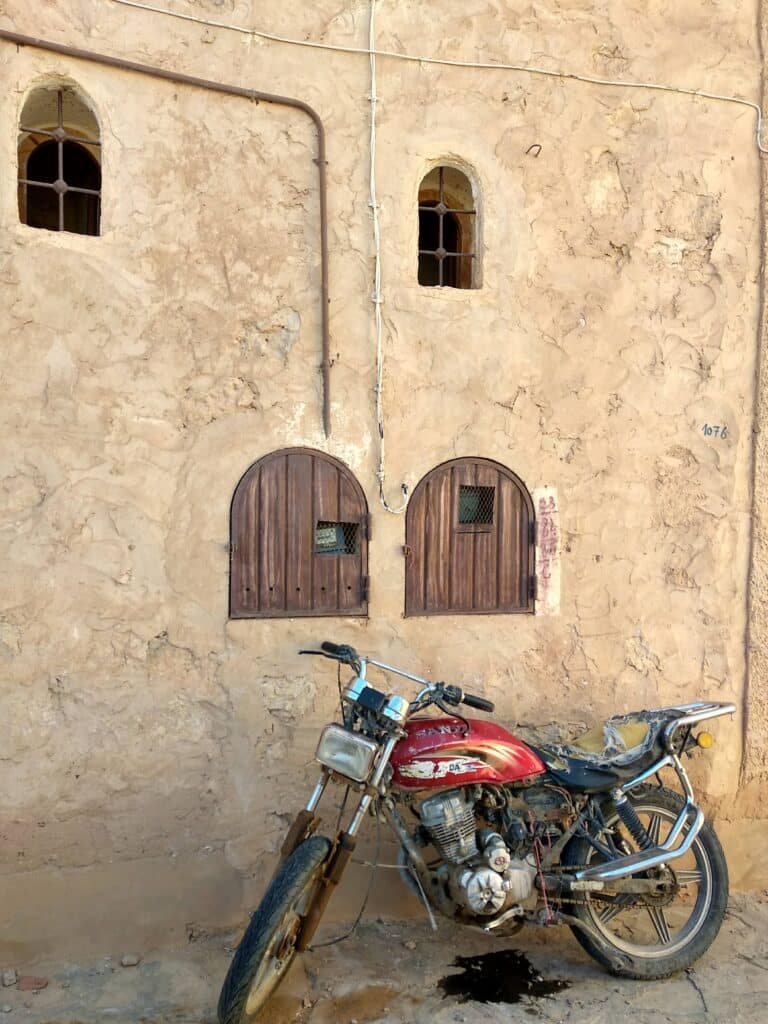
How do I know which Spain region matches my personality? The most reliable way is to take a validated Big Five personality assessment, such as the free IPIP-NEO quiz, and read your trait and facet scores against the regional profiles in this guide. At The Verse Voyager, we use this exact framework as the first step in every tailor-made Spain itinerary we design. The free travel personality quiz on our site gives you a travel-specific interpretation of your results, which makes the match significantly clearer than reading the raw scores alone.
Southern Spain whispers secrets that most travelers never hear. While crowds flock to Barcelona’s Sagrada Familia or Madrid’s Prado Museum, Andalusia unfolds its own narrative—one written in Moorish arches, flamenco rhythms, and sun-bleached villages that seem to melt into the Mediterranean horizon. This region stands quietly among the underrated places in Europe, offering a depth of experience that rewards those who venture beyond the obvious. If this region does not attract you, try to understand what region in Spain suits your personality.
This Andalusia travel itinerary reveals a land where three cultures—Muslim, Jewish, and Christian—have left their fingerprints on every cobblestone, creating one of the most culturally layered destinations on the continent. Here, you’ll discover how to move through this region with intention, uncovering both its celebrated monuments and its lesser-known treasures.
Understanding Andalusia’s Geographic Soul
Andalusia sprawls across southern Spain like a study in contrasts. The region encompasses snow-capped Sierra Nevada mountains, endless olive groves, pristine Mediterranean beaches, and arid desert landscapes that have doubled for the American West in countless films. This diversity means your itinerary can shift from alpine hiking to beach lounging within a single day’s drive.
The region’s eight provinces each possess distinct personalities. Seville embodies aristocratic elegance, Granada wears its Moorish heritage proudly, Córdoba contemplates its philosophical past, while coastal areas like Málaga and Cádiz pulse with maritime energy. Understanding these differences allows you to craft an itinerary that matches your travel temperament.
The 10-Day Andalusia Travel Itinerary Framework
Days 1-3: Seville’s Passionate Heart
Things to Do in Seville: Beyond the Cathedral
Begin your journey in Andalusia’s capital, where orange trees perfume narrow streets and flamenco isn’t a tourist attraction—it’s a Thursday night. Seville demands at least three days, though you could easily spend a week peeling back its layers.
Start with the obvious: the Cathedral and Giralda tower form one of Christianity’s largest religious monuments, built atop a mosque that once called Muslims to prayer. The Alcázar palace complex deserves a full morning, its Mudéjar architecture representing the rare moments when cultures collaborated rather than conquered.
But Seville’s magic lives in its neighborhoods. Triana, across the river, remains the heartbeat of flamenco culture. Visit in the evening when locals fill the streets, and you’ll understand why this barrio produced Spain’s greatest dancers. The ceramics workshops here have operated for centuries—watch artisans hand-paint tiles using techniques unchanged since the 16th century.
Hidden Flamenco Venues and Local Markets
Skip the tourist tablaos and seek out peñas—private flamenco clubs where locals gather. Casa Anselma in Triana operates without a sign or schedule; you simply show up, squeeze into the tiny space, and witness flamenco in its purest form. No choreography, no costumes—just raw emotion transmitted through voice, guitar, and footwork.
The Feria Market on Thursday mornings reveals Seville’s collector soul. Vendors spread antiques, vintage cameras, old maps, and curiosities across Plaza del Cabildo. It’s where you’ll find that perfect piece that carries a story back home.
Days 4-5: Córdoba’s Contemplative Interlude
Two hours by train from Seville, Córdoba offers a quieter, more introspective experience. The Mezquita-Catedral stands as architecture’s most powerful argument for cultural fusion—a mosque-cathedral that refuses to choose sides, instead embodying both traditions simultaneously.
Walk the Judería (Jewish Quarter) in early morning before tour groups arrive. The maze of whitewashed alleys, flower-filled patios, and intimate plazas creates a meditative space that encourages slow exploration. The synagogue, one of only three remaining in Spain from before the 1492 expulsion, speaks volumes through its modest size and exquisite Mudéjar details.
Days 6-8: Granada’s Moorish Masterpiece
Things to Do in Granada: The Alhambra and Beyond
Granada deserves its reputation, but most visitors experience only a fraction of its depth. The Alhambra stands as the crown jewel of Islamic architecture in Europe—a palace complex so breathtaking that it inspired Washington Irving’s “Tales of the Alhambra” and continues to leave visitors speechless centuries after its construction.
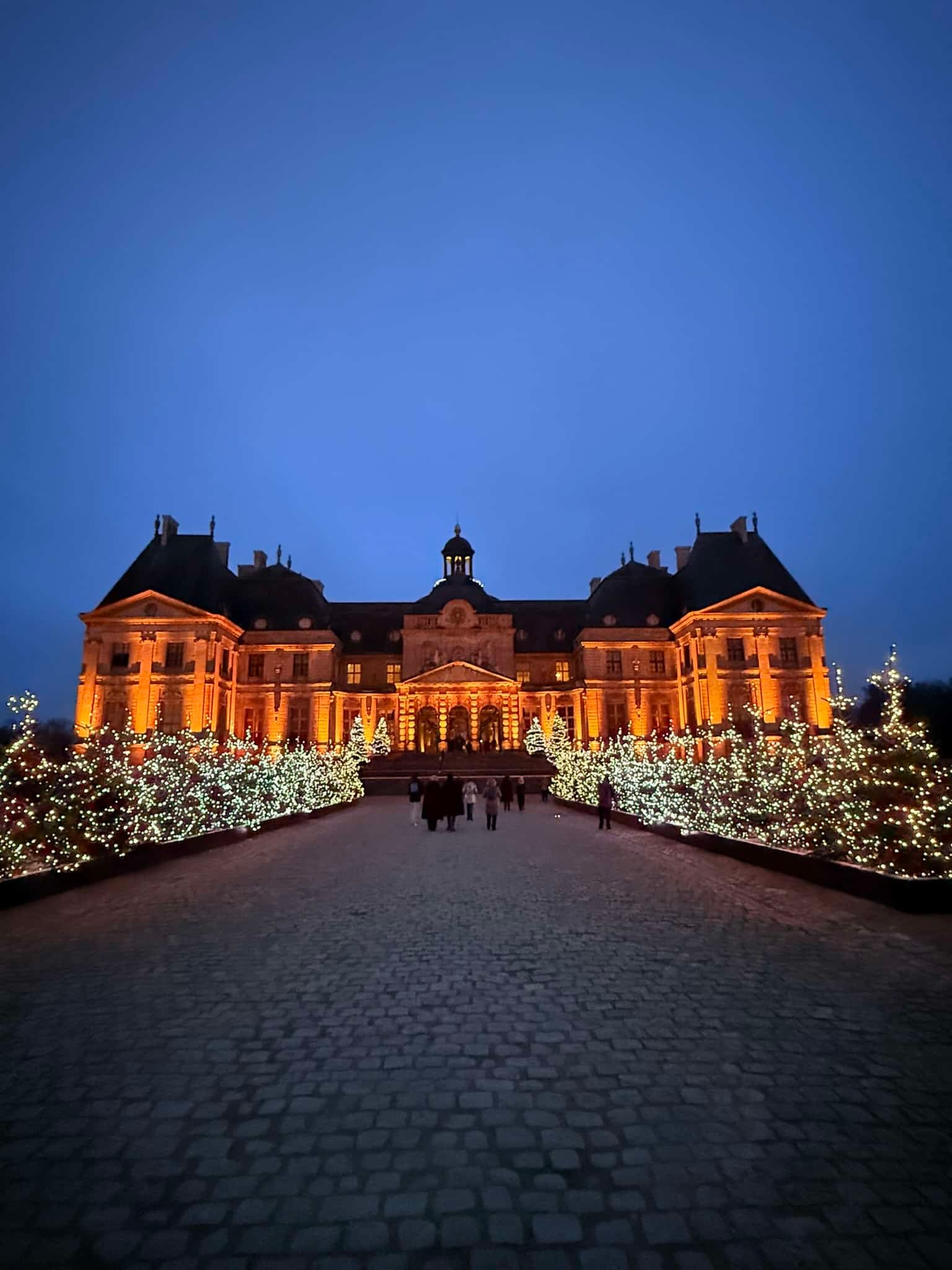
The Alhambra isn’t a single building but rather a sprawling complex that encompasses palaces, gardens, fortifications, and a small city. The Nasrid Palaces represent the artistic pinnacle, where every surface displays intricate geometric patterns, calligraphy, and arabesques that demonstrate Islamic art’s mathematical sophistication. The Court of the Lions, with its marble fountain supported by twelve stone lions, creates a meditative space where water, light, and architecture harmonize perfectly.
The Generalife gardens extend beyond the main palace complex, offering terraced landscapes where Moorish rulers once escaped summer heat. Water features everywhere—fountains, channels, pools—all fed by an ingenious hydraulic system that still functions after 700 years. Visit in spring when roses bloom, or in early morning when mist rises from the gardens and you might have entire sections nearly to yourself.
Plan a full day for the Alhambra, as rushing through diminishes the experience. The complex requires walking several kilometers across varied terrain, and the artistry demands time to appreciate properly. Audio guides help decode the symbolism and history embedded in every decorative element.
Critical planning note: The Alhambra limits daily visitors to protect the site, and tickets sell out weeks or months in advance, especially for the essential Nasrid Palaces section. Book your tickets as early as possible through the official Alhambra website or through authorized tour operators if official tickets are unavailable. Your ticket includes a specific time slot for the Nasrid Palaces—arrive on time, as entry is strictly enforced.
The Sacromonte Caves and Authentic Flamenco
Sacromonte, Granada’s gypsy quarter, clings to a hillside in a collection of cave dwellings that still house families today. This neighborhood developed its own flamenco style—more rhythmic and percussive than Seville’s emotional intensity. Evening zambra performances in candlelit caves feel less like shows and more like invitations into someone’s home.
For a different perspective, hike to San Miguel Alto in late afternoon. The trail climbs above Sacromonte, offering panoramic views of the Alhambra, Sierra Nevada, and the city spread below. Stay for sunset when the Alhambra’s red walls justify its name (“The Red One” in Arabic).
Days 9-10: The Costa del Sol’s Unexpected Depth
Things to Do in Nerja: Where Mountains Meet Mediterranean
The Costa del Sol suffers from reputation problems—too developed, too touristy, too British. But venture to Nerja, and you’ll discover one of the hidden gems in Europe that somehow escaped mass tourism’s homogenizing effect.
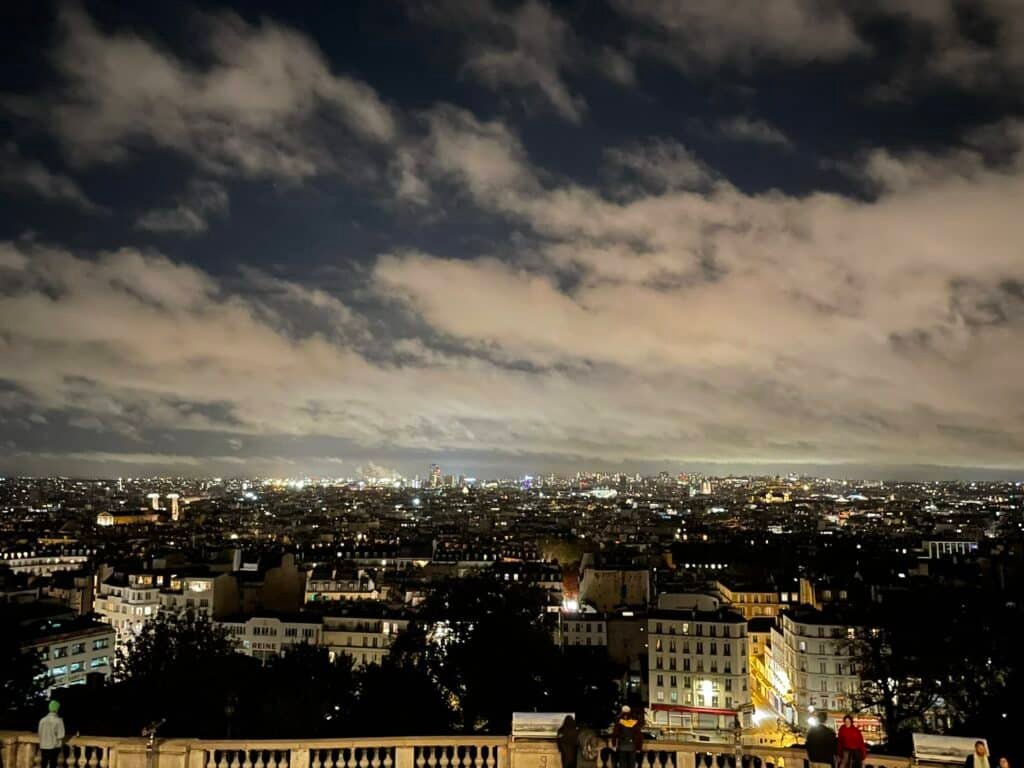
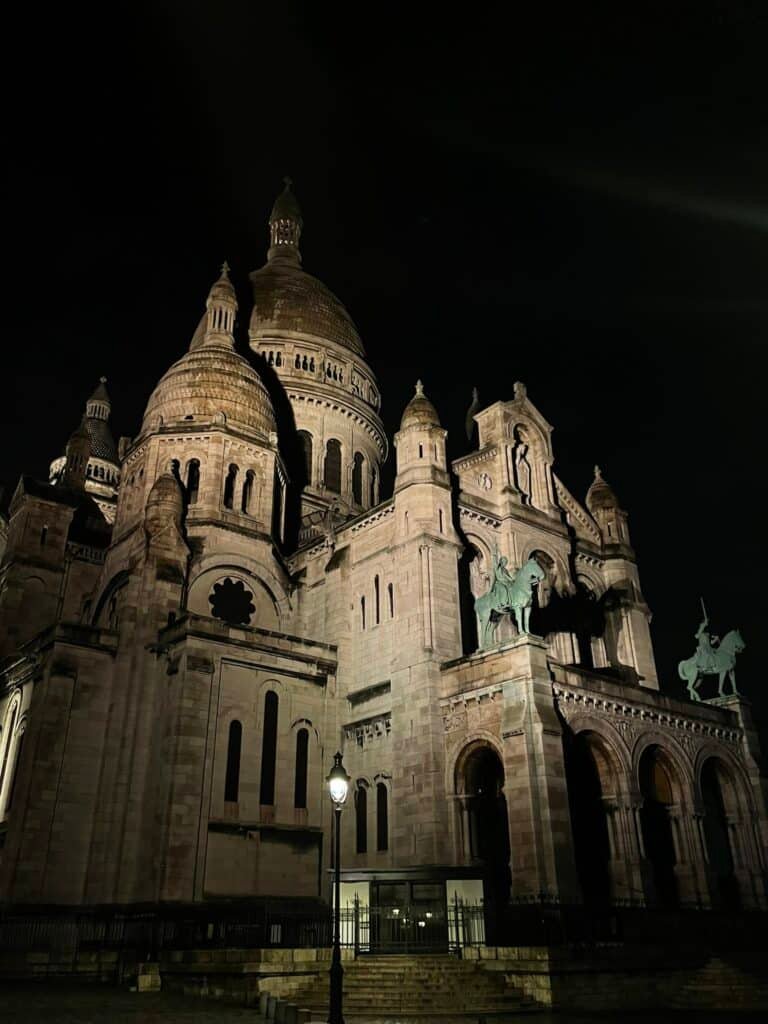
Nerja maintains an authentic Andalusian character despite its coastal location. The Balcón de Europa, a promontory jutting into the Mediterranean, offers views that rival anything on the Amalfi Coast without the crowds or prices. Walk east along the cliffside path to discover a series of small coves and beaches accessible by steep staircases cut into the rock.
The Cuevas de Nerja (Nerja Caves) represent one of Spain’s most impressive geological sites. These caverns extend for nearly five kilometers, featuring stalactites and stalagmites of cathedral-like proportions. Archaeological evidence suggests humans sheltered here 40,000 years ago, making it one of Europe’s longest-inhabited sites.
Frigiliana: A White Village Frozen in Time
Just eight kilometers inland from Nerja, Frigiliana cascades down a hillside in a tumble of whitewashed houses, flower-draped balconies, and cobblestone lanes too narrow for cars. This pueblo blanco (white village) has earned recognition as one of Spain’s most beautiful villages, yet it remains refreshingly uncommercial.
Walk the Barribarto quarter, the Moorish old town, where street signs share historical facts about the last Muslim rebellion in Spain. Stop at a local bar for a glass of sweet Málaga wine and honey-drizzled goat cheese—a flavor combination that’s sustained this region for centuries.
Practical Wisdom for Your Andalusia Travel Itinerary
Transportation Strategies
Andalusia’s cities connect efficiently via train, with frequent AVE high-speed services linking Seville, Córdoba, and Málaga. However, to access smaller villages and coastal areas, a rental car becomes necessary. Consider a hybrid approach: train for city-to-city travel, then rent a car for a few days to explore rural areas.
Driving in Andalusia rewards patience. Mountain roads wind dramatically, village streets challenge modern vehicle dimensions, and parking in historic centers often requires walking from distant lots. But this slight inconvenience grants access to experiences impossible otherwise.
Seasonal Considerations
Spring (April-May) and fall (September-October) offer ideal conditions—warm but not scorching, with manageable crowds and full cultural calendars. Seville’s April Fair and Córdoba’s Patio Festival occur in late spring, offering immersive cultural experiences.
Summer (June-August) brings intense heat, particularly inland. Temperatures routinely exceed 40°C (104°F) in Seville and Córdoba. If visiting in summer, adopt local rhythms: early mornings for sightseeing, long afternoon siestas, and late-night dinners when temperatures finally drop.
Winter (November-March) presents a different Andalusia—quieter, sometimes rainy, but with rare opportunities to see the Alhambra dusted with snow or enjoy heated terrace time without crowds.
Andalusian Cuisine Navigation
Andalusia’s food culture revolves around sharing. Order multiple tapas rather than individual entrees, and understand that dining happens late—lunch peaks at 2-3 PM, dinner rarely begins before 9 PM.
In Seville, seek out salmorejo (a thicker, richer cousin of gazpacho), espinacas con garbanzos (spinach with chickpeas), and anything featuring Iberian pork. Granada famously offers free tapas with every drink—order at the bar rather than sitting at tables to participate in this tradition.
The coast specializes in pescaíto frito (fried fish), served in paper cones for informal eating. In mountain villages, game dishes and hearty stews reflect harsher climates and agricultural traditions.
Beyond the Main Route: Essential Andalusia Destinations
Málaga: Where Ancient History Meets Contemporary Culture
Málaga has transformed from a gritty port city into one of Spain’s most dynamic cultural destinations, yet it remains surprisingly overlooked in most Andalusia travel itinerary planning. This coastal capital combines Roman theaters, Moorish fortresses, and Picasso’s birthplace with a thriving contemporary art scene and some of the region’s best beach access.
The Alcazaba fortress and Gibralfaro castle crown the city’s hillside, offering panoramic views across the Mediterranean. Below, the historic center pulses with life—tapas bars spill onto pedestrian streets, the Mercado Central overflows with fresh seafood, and over 30 museums (including branches of the Pompidou and Thyssen collections) have earned Málaga recognition as Spain’s “City of Museums.”
What makes Málaga special for travelers is its authenticity. Despite growing tourism, this remains a working city where locals vastly outnumber visitors. The beaches stretch for miles in both directions, the maritime promenade invites evening strolls, and the dining scene rivals anything in more famous Spanish cities—all at more accessible prices.
Marbella: Beyond the Glamour to Authentic Andalusian Charm
Marbella carries associations with luxury yachts and celebrity sightings, but the city contains multitudes beyond the Golden Mile’s opulence. The Casco Antiguo (Old Town) preserves a traditional Andalusian heart that predates the resort development by centuries.
Wander Plaza de los Naranjos, where orange trees shade outdoor cafés and whitewashed buildings adorned with geraniums create perfect photo opportunities. The narrow streets radiating from this square house family-run restaurants, artisan shops, and small galleries that feel worlds away from the beachfront glitz.
For those seeking coastal beauty without crowds, Marbella’s extensive coastline includes quieter stretches beyond Puerto Banús. The beaches near Cabopino feature pristine sand dunes and crystal-clear water, while the coastal path offers scenic walks with mountain backdrops.
Cádiz: Europe’s Oldest City and Andalusia’s Best-Kept Secret
Cádiz occupies a unique position in any Andalusia travel itinerary—it’s simultaneously one of Europe’s most historically significant cities and one of its least touristy major destinations. Founded by the Phoenicians around 1100 BCE, this Atlantic port has witnessed every Mediterranean civilization, yet it maintains an unpretentious, lived-in character that larger Spanish cities have lost.
The city juts into the ocean on a narrow peninsula, surrounded by water on three sides. This geography creates a distinct atmosphere—salty breezes, brilliant light reflecting off whitewashed buildings, and a maritime culture that permeates every aspect of local life. The beaches within city limits rival resort destinations, particularly La Caleta, where you can swim with a view of two historic fortresses.
Cádiz’s old town tangles into a labyrinth of narrow alleys that open suddenly onto sun-drenched plazas. The Barrio del Pópulo, the oldest neighborhood, contains Roman theater ruins you can walk through freely. The covered market (Mercado Central) showcases the city’s seafood obsession—locals gather here for ultra-fresh fish served at standing-room-only bars.
What distinguishes Cádiz most is its authenticity. Tourism represents a small fraction of the local economy, so the city functions primarily for its residents. Restaurants serve local specialties like tortillitas de camarones (shrimp fritters) without menu translations, shops close whenever owners feel like it, and February’s Carnaval transforms the entire city into a weeks-long street party that rivals Rio’s famous celebration.
The White Villages: Andalusia’s Mountain Jewels
The pueblos blancos (white villages) scattered across Andalusia’s mountain ranges represent some of the most photogenic and culturally preserved destinations in southern Spain. These settlements cling to dramatic hillsides, their whitewashed houses cascading down slopes in tumbles of geometric beauty that seem almost too perfect to be real.
Each white village possesses its own character and history. Ronda, the most famous, straddles a dramatic gorge spanned by the Puente Nuevo bridge—a marvel of 18th-century engineering that drops 120 meters to the river below. The town’s history as a bullfighting center and its stunning setting make it a must-visit, though increasing tourism has changed its dynamics.
For more authentic experiences, venture to lesser-known villages. Grazalema, nestled in Spain’s rainiest spot, maintains traditional wool-weaving workshops and serves as a gateway to spectacular hiking in the Sierra de Grazalema Natural Park. Zahara de la Sierra, reflected in the turquoise reservoir at its base, offers stunning views and a medieval castle that requires a steep climb but rewards with panoramic vistas.
Arcos de la Frontera commands a limestone ridge with sheer drops on multiple sides, creating one of Andalusia’s most dramatic urban landscapes. Park outside the old town and walk the narrow streets where houses seem to balance on cliff edges, offering vertiginous views across olive-covered plains.
These villages share common architectural elements—dazzling white walls that reflect intense summer heat, red-tiled roofs, iron balconies overflowing with geraniums, and maze-like street layouts inherited from Moorish times. They also share a slower rhythm of life that provides welcome contrast to cities’ intensity.
Hidden Gems in Andalusia: Landscapes Beyond the Cities
Sierra Nevada Mountains and Trevélez: Europe’s High Country
The Sierra Nevada mountain range creates a dramatic backdrop across Granada province, its snow-capped peaks visible from beaches just 50 kilometers away. This proximity of alpine and Mediterranean environments makes the region unique in Europe—you can ski in the morning and swim in the sea by afternoon.
Beyond winter sports, the Sierra Nevada offers phenomenal hiking and a collection of mountain villages that preserve ancient traditions. Trevélez, perched at 1,476 meters above sea level, claims distinction as Spain’s highest village. This elevation creates the perfect conditions for curing jamón serrano—the village’s economic foundation for centuries.
Visit Trevélez for more than just the famous ham. The village cascades down the mountainside in three distinct barrios (neighborhoods), connected by steep cobblestone streets that challenge modern vehicles. The air here carries a crystalline quality, views extend across valleys to distant peaks, and the pace of life moves to mountain rhythms unchanged by modernity.
The Sierra Nevada’s hiking trails range from gentle valley walks to challenging summit attempts. The Mulhacén peak (3,479 meters) represents mainland Spain’s highest point, accessible via full-day hikes from various starting points. More moderate trails wind through the Alpujarras region on the range’s southern slopes, connecting white villages through landscapes of terraced fields, chestnut forests, and rushing streams.
Cabo de Gata-Níjar Natural Park: Andalusia’s Desert Coast
Cabo de Gata represents one of the hidden gems in Europe that genuinely surprises visitors who think they know the Mediterranean. This protected natural park in Almería province showcases volcanic landscapes, pristine beaches, and desert environments found nowhere else in Europe.
The park’s geology creates its dramatic character. Ancient volcanic activity left black cliffs, hidden coves, and rock formations that glow red at sunset. The climate—Europe’s driest—supports only specialized flora adapted to minimal rainfall, creating landscapes more reminiscent of North Africa than typical Spanish coastal regions.
Beaches here require effort to reach, which preserves their pristine condition. Playa de los Genoveses, a wide crescent of golden sand backed by dunes, remains undeveloped despite its extraordinary beauty. Playa de Mónsul, with its distinctive volcanic rock formation rising from the sand, has appeared in films from “Lawrence of Arabia” to “Indiana Jones” yet sees far fewer visitors than Costa del Sol resorts.
The fishing village of San José serves as the park’s main base, offering accommodations and restaurants while maintaining an authentic character. From here, explore coastal hiking trails that link secluded beaches, drive to remote lighthouse viewpoints, or kayak into sea caves carved from volcanic rock.
Desierto de Tabernas: Europe’s Only Desert
Just inland from Cabo de Gata, the Tabernas Desert stretches across Almería’s interior—a genuine desert landscape that seems transported from the American Southwest. This badlands terrain of eroded hills, dry arroyos, and sparse vegetation creates an otherworldly environment that has attracted filmmakers for decades.
The desert’s cinematic history adds a surreal layer to visits. Beginning in the 1960s, Sergio Leone shot his famous “Spaghetti Westerns” here, with Clint Eastwood riding through landscapes that doubled convincingly for the American frontier. Several film sets remain open to visitors—Fort Bravo and Oasys MiniHollywood preserve Western towns where Eastwood, Lee Van Cleef, and countless others filmed iconic scenes.
Beyond movie nostalgia, the desert itself fascinates. This represents Europe’s only true desert environment, receiving less than 250mm of annual rainfall. The geology showcases dramatic erosion patterns, with gullies and ridges creating a constantly changing play of light and shadow. Wildlife has adapted to extreme conditions—if you’re observant, you might spot ladder snakes, stone curlews, or even the rare Trumpeter finch.
For adventurous travelers incorporating this into an Andalusia travel itinerary, the Tabernas Desert offers hiking, photography opportunities, and a landscape utterly different from coastal or mountain regions. Visit in early morning or late afternoon when temperatures moderate and lighting enhances the desert’s sculptural qualities.
Understanding What Makes Places “Hidden”
The concept of hidden gems in Europe has become paradoxical—once published, they lose their hidden status. But certain qualities persist: authentic local life continuing despite visitors, preservation of traditional crafts and customs, and an economic foundation based on something beyond tourism.
Seek places where you hear Spanish in the streets, where restaurants close on Sundays because that’s family day, where shop hours follow local logic rather than tourist expectations. These indicators suggest communities that welcome visitors without depending entirely on them—a sustainable model that preserves the qualities that make places worth visiting. And also they really are some totally underrated places in Europe.
Conclusion: Crafting Your Personal Andalusia Narrative
The Andalusia travel itinerary outlined here provides structure, but your actual journey should remain flexible enough to accommodate discoveries and detours. The region rewards spontaneity—that unexpected restaurant recommendation, that festival happening to occur during your visit, that perfect light at sunset that demands you abandon your schedule.
Southern Spain offers something increasingly rare: a developed European destination that maintains authentic cultural traditions while welcoming visitors with genuine warmth. Whether you’re searching for underrated places in Europe, hoping to experience world-class architecture and art, or simply wanting to slow down and savor life at Mediterranean pace, Andalusia delivers.
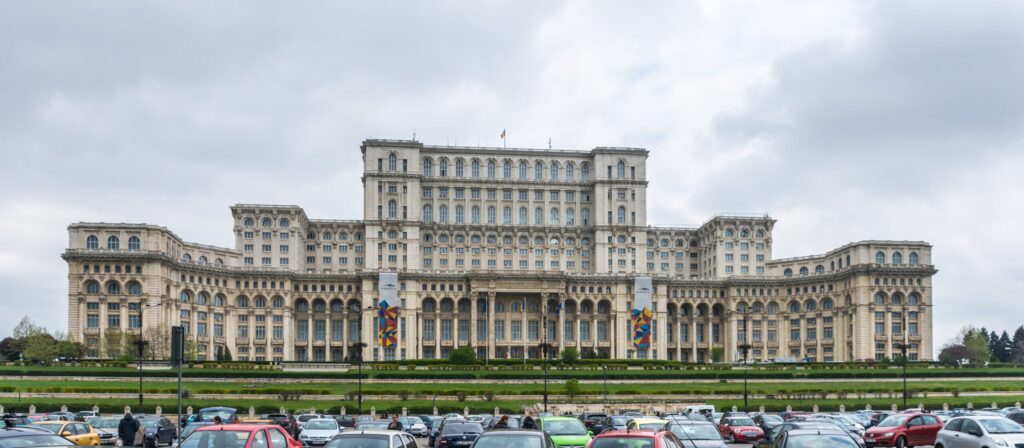
The itinerary presented here balances iconic sights with lesser-known experiences, urban energy with village tranquility, coastal ease with mountain adventure. Adjust it to match your interests—add more time in cities that captivate you, skip regions that don’t resonate, and always leave room for the unexpected encounters that transform trips into transformative experiences.
Ready to Bring Your Andalusia Dream to Life?
Planning a trip to Southern Spain can feel overwhelming with so many incredible destinations to choose from. If you’d like personalized help crafting your perfect Andalusia travel itinerary—whether you have 7 days or a month, prefer luxury or budget travel, want to focus on culture or beaches—I’m here to help. Contact me for customized travel planning that matches your interests, pace, and travel style.
Looking for more European travel inspiration? Explore my other articles on Spain’s diverse regions, hidden gems across Europe, and detailed destination guides that help you travel deeper, not just farther. From Portugal’s coastal villages to Italy’s lesser-known regions, I share insider tips and thoughtful itineraries for travelers who value authentic experiences over checking boxes.
TLDR: Quick Andalusia Itinerary Overview
Best Time to Visit: April-May or September-October for ideal weather and manageable crowds
Transportation: Train for major cities, rental car for coastal and rural areas
Must-Experience: Alhambra palace, authentic flamenco, tapas culture, white villages, Mezquita-Catedral
Budget: €80-150 per person daily including mid-range accommodation, meals, attractions, and local transport
Cultural Notes: Embrace late dining schedules, siesta time closures, and the Spanish concept of sobremesa (extended conversation after meals)
Frequently Asked Questions
How many days do you need for an Andalusia travel itinerary?
A minimum of seven days allows you to experience Seville, Granada, and one additional destination. Ten to fourteen days provides a more relaxed pace and enables you to explore both major cities and smaller villages without rushing. If you have only a long weekend, focus on a single city rather than attempting to cover multiple destinations.
Is it better to rent a car or use public transportation in Andalusia?
For city-to-city travel between Seville, Córdoba, Granada, and Málaga, trains offer efficiency and comfort. However, exploring coastal areas, white villages, and rural regions requires a car. A hybrid approach works best: use trains for major cities, then rent a car for a few days to access areas beyond the rail network.
When is the best time to visit Andalusia?
Spring (April-May) and autumn (September-October) provide optimal conditions with pleasant temperatures, fewer crowds than summer, and active cultural calendars. Summer (June-August) brings intense heat but lively coastal scenes and festivals. Winter (November-March) offers the quietest experience with occasional rain but also the possibility of snow-dusted Sierra Nevada views.
Do I need to book Alhambra tickets in advance?
Yes, absolutely. The Alhambra limits daily visitors and frequently sells out weeks or even months in advance, especially for the Nasrid Palaces during peak season. Book online through the official website as soon as your travel dates are confirmed. If official tickets are sold out, authorized tour operators sometimes have allocations available.
Are the things to do in Seville, Granada, and Nerja suitable for families?
Yes, Andalusia welcomes families warmly. Cities offer pedestrian-friendly historic centers, parks, and attractions that engage various ages. Seville’s Alcázar gardens, Granada’s Alhambra fortress elements, and Nerja’s caves appeal to children. Spanish culture embraces multigenerational dining, and restaurants accommodate families without the strict formality found in some European destinations.
Is Andalusia budget-friendly compared to other European destinations?
Andalusia offers better value than many Western European destinations. Accommodation, dining, and attractions generally cost less than in France, Italy, or Northern Spain. Free tapas in Granada, affordable menu del día lunch specials, and reasonable museum entry fees make it accessible. However, peak season in major cities and coastal resorts can approach prices elsewhere in Europe.
What makes Andalusia one of the underrated places in Europe?
Despite housing some of Spain’s most famous monuments, Andalusia receives less international attention than Barcelona, Paris, or Rome. This creates a remarkable situation: world-class architecture, art, and culture without overwhelming crowds in many locations. The region’s cultural depth—from Islamic heritage to flamenco traditions—often surprises visitors expecting only beaches and paella.
Can you experience authentic flamenco in Andalusia, or is it mainly for tourists?
Authentic flamenco absolutely exists in Andalusia, but you must know where to look. Skip large commercial venues with fixed showtimes and dinner packages. Instead, seek out peñas (flamenco clubs), small bars in Triana or Sacromonte, and impromptu performances that happen organically. Locals continue to practice flamenco as a living art form, not merely a tourist attraction—you just need to access those spaces.
This route rewards some temperaments more than others. Take the two-minute quiz and find out whether it fits the way you actually travel, before you copy a single day of it.
20 questions · about 3 minutes · no account needed to start
Why visit some underrated places in Europe?
Picture this: you’ve saved for months to visit that Instagram-famous European destination, only to arrive and find yourself shoulder-to-shoulder with thousands of other tourists, paying inflated prices for mediocre experiences while struggling to capture that perfect photo without strangers in the background. Sound familiar?
The harsh reality is that Europe’s most popular destinations have become victims of their own success. Cities like Barcelona, Venice, and Santorini are drowning under the weight of mass tourism, with locals priced out of their own neighborhoods and authentic culture replaced by tourist traps. The magic that originally drew people to these places has been commercialized beyond recognition.
But here’s the secret that savvy travelers know: Europe’s most extraordinary experiences aren’t found in guidebook darlings or social media hotspots. The continent’s true treasures lie in its underrated places in Europe – destinations that offer authentic culture, breathtaking landscapes, and genuine hospitality without the overwhelming crowds or wallet-draining prices.
These hidden gems in Europe provide everything you’re seeking in a European adventure: rich history, stunning architecture, incredible cuisine, and unforgettable landscapes, all while allowing you to travel Europe on a budget and experience destinations as they were meant to be enjoyed. From underrated European cities that rival Paris and Rome in beauty to secret European destinations that offer unique experiences unavailable anywhere else, these unusual city breaks in Europe will restore your faith in authentic travel.
Discovering these underrated places in Europe means escaping the tourist traps and experiencing authentic European culture. Each of these underrated places in Europe offers something special that mainstream destinations have lost to commercialization.
In this comprehensive guide, we’ll unveil 15 extraordinary, underrated places in Europe that will transform your perspective on European travel. These underrated places in Europe span from Spain’s hidden gems to Romania’s untouched wilderness, each offering unique reasons to visit and unforgettable experiences that you simply can’t find in overcrowded tourist magnets. When exploring underrated places in Europe, you’ll discover that authentic travel experiences still exist for those willing to venture beyond the obvious choices.
1. Spanish Pyrenees: Spain’s Hidden Gems in Europe’s Most Underrated Mountain Paradise
More pristine and less commercialized than the Alps
Significantly cheaper accommodation and activities
Excellent hiking trails with diverse difficulty levels
Consistently pleasant weather with over 300 sunny days annually
Rich medieval history with perfectly preserved villages
Primarily attracts local Spanish tourists, maintaining authenticity
Spain’s mountainous reputation overshadowed by coastal tourism
The Spanish Pyrenees represent one of Europe’s most spectacular yet underexplored mountain ranges, stretching 491 kilometers across northern Spain. While travelers flock to the overcrowded and expensive Alps, the Pyrenees offer an equally stunning but far more authentic mountain experience among the best underrated places in Europe. This region exemplifies why Spain’s hidden gems deserve recognition beyond the country’s famous beaches, standing out as one of the premier underrated places in Europe for mountain enthusiasts.
What makes the Spanish Pyrenees truly special is their incredible diversity. Within a single day, you can explore medieval villages like Ainsa or Alquézar, hike through pristine national parks such as Ordesa y Monte Perdido, and discover Romanesque churches tucked away in remote valleys. The region boasts over 200 peaks exceeding 3,000 meters, yet maintains an intimate, undiscovered feel that the Alps lost decades ago.
The cost advantage is remarkable – accommodation in charming mountain villages costs a fraction of Alpine equivalents, while local restaurants serve hearty mountain cuisine featuring regional specialties like ternasco (roasted lamb) and local cheeses at incredibly reasonable prices. This makes the Pyrenees perfect for those seeking Europe on a budget without compromising on quality or beauty.
Adventure enthusiasts will find endless opportunities, from gentle valley walks suitable for families to challenging multi-day treks like the GR-11, which traverses the entire Pyrenean range. The region also offers world-class skiing in winter, with resorts like Formigal and Baqueira-Beret providing excellent facilities at lower costs than their French or Swiss counterparts.
The cultural richness of the Spanish Pyrenees adds another layer to their appeal. Ancient pilgrimage routes crisscross the mountains, connecting monasteries and churches that have stood for over a millennium. Villages like Sos del Rey Católico and Ujué appear frozen in time, their stone streets and traditional architecture offering glimpses into Spain’s medieval past.
As I have lived in Spain for 5 years, I know dozens ofhidden gems in Spain, but this article has a more balanced approach, covering places worth visiting around all of Europe.
2. Basque Country: Spain’s Culinary Crown Jewel
Country: Spain Region: Basque Country (País Vasco) Main reasons why it’s underrated:
World’s highest concentration of Michelin-starred restaurants per capita
Unique culture and language completely distinct from mainstream Spain
Stunning coastline with dramatic cliffs and pristine beaches
Exceptional pintxos (tapas) culture at fraction of tourist-trap prices
Rich industrial heritage and cutting-edge contemporary architecture
Passionate local culture with festivals and traditions unknown to most tourists
San Sebastián offers luxury experiences at reasonable costs
The Basque Country stands as one of Europe’s most distinctive regions, yet remains surprisingly overlooked by international tourists who focus on Madrid, Barcelona, or Andalusia. This autonomous community offers an entirely different Spanish experience among the top underrated places in Europe, with its own language (Euskera), unique architecture, and world-renowned culinary scene that puts it among the globe’s greatest food destinations. As one of the finest underrated places in Europe, the Basque Country demonstrates why travelers should explore beyond mainstream Spanish destinations.
San Sebastián, the region’s crown jewel, deserves special recognition as one of Europe’s most underrated cities. This elegant coastal city boasts more Michelin stars per square meter than anywhere except Paris, yet maintains an accessible, unpretentious atmosphere. The city’s pintxos bars offer some of the world’s finest small plates at incredibly reasonable prices – a meal that would cost hundreds in Paris or London can be enjoyed for under 30 euros.
The city’s beaches, particularly La Concha and Zurriola, rival the Mediterranean’s finest but with dramatically fewer crowds and a more sophisticated atmosphere. The Belle Époque architecture, exemplified by the Kursaal Congress Centre and the restored María Cristina Hotel, creates an elegant backdrop that feels both timeless and contemporary.
Beyond San Sebastián, the Basque Country offers incredible diversity. Bilbao has transformed from an industrial city into a cultural powerhouse, anchored by the iconic Guggenheim Museum but extending far beyond into neighborhoods filled with traditional bars, innovative restaurants, and cutting-edge galleries. The smaller coastal towns like Getaria and Zarautz provide authentic fishing village experiences with exceptional seafood and fewer tourists than equivalent Mediterranean destinations.
The region’s inland areas offer equally compelling experiences, from the dramatic Urdaibai Biosphere Reserve to the medieval streets of Vitoria-Gasteiz, Spain’s 2012 European Capital of Culture. The Basque countryside, with its distinctive farmhouses (etxe) and rolling green hills, provides a Spain that few international visitors ever experience.
What truly sets the Basque Country apart is its fierce cultural identity. Local festivals like San Fermín in nearby Pamplona or San Sebastián’s own Tamborrada showcase traditions that have remained unchanged for centuries. This cultural authenticity, combined with exceptional cuisine, stunning landscapes, and reasonable prices, makes the Basque Country one of Europe’s most rewarding yet underrated destinations.
3. Bordeaux and Arcachon: Hidden Gems in Europe for France’s Sophisticated Secret
Country: France Region: Nouvelle-Aquitaine Main reasons why it’s underrated:
UNESCO World Heritage city with more preserved 18th-century architecture than Paris
World’s wine capital offering premium experiences at accessible prices
Arcachon Bay provides unique coastal experiences away from Riviera crowds
Exceptional cuisine blending Atlantic and continental influences
Efficient public transport connecting urban sophistication with natural beauty
Significantly less expensive than Paris or Riviera destinations
Rich cultural scene with world-class museums and festivals
Bordeaux represents one of France’s most underrated treasures, a city that combines the sophistication of Paris with the accessibility and warmth that the capital often lacks. This UNESCO World Heritage city boasts the largest urban collection of 18th-century architecture in the world, yet attracts a fraction of the tourists that overwhelm other French destinations.
The city’s transformation over the past two decades has been remarkable. The addition of a modern tram system, the restoration of historic buildings, and the creation of spaces like the Miroir d’eau (water mirror) have created a contemporary European city that honors its heritage while embracing the future. The revitalized riverfront, stretching for several kilometers along the Garonne, provides a perfect introduction to the city’s blend of historic grandeur and modern livability.
As the world’s wine capital, Bordeaux offers unparalleled access to premium wine experiences. Unlike the often-intimidating wine culture of other regions, Bordeaux’s approach is welcoming and educational. The Cité du Vin, a stunning contemporary wine museum, provides an immersive introduction to wine culture, while nearby châteaux offer tastings and tours that cost significantly less than equivalent experiences in Champagne or Burgundy.
Just an hour from Bordeaux, Arcachon provides one of Europe’s most unique coastal experiences. This elegant 19th-century resort town sits at the edge of Arcachon Bay, famous for its oyster cultivation and the nearby Dune du Pilat – Europe’s tallest sand dune. The contrast between the sophisticated Belle Époque architecture of Arcachon’s Winter Town and the casual beach atmosphere of its summer quarters creates a distinctive French coastal experience unavailable elsewhere.
The Dune du Pilat deserves special mention as one of Europe’s most spectacular natural phenomena. At over 100 meters high and stretching for nearly three kilometers, this massive sand dune offers panoramic views across the Atlantic Ocean, the vast Landes forest, and Arcachon Bay. The experience of climbing this natural monument and watching the sunset over the Atlantic provides memories that rival any European landmark.
Arcachon Bay itself is a gastronomic paradise, particularly for seafood lovers. The bay produces some of France’s finest oysters, and local restaurants serve them fresh from the water at prices that would be unthinkable in more famous coastal destinations. The combination of exceptional cuisine, natural beauty, and authentic French culture makes the Bordeaux-Arcachon region a perfect example of France’s hidden gems.
The region’s accessibility adds to its appeal. High-speed TGV trains connect Bordeaux to Paris in just over three hours, while the excellent local transport system makes exploring the wider region effortless. This ease of access, combined with costs significantly lower than Paris or the Riviera, makes Bordeaux and Arcachon ideal for those seeking sophisticated French experiences while traveling Europe on a budget.
4. Annecy: the Venice of the Alps
Country: France Region: Auvergne-Rhône-Alpes Main reasons why it’s underrated:
Called “Venice of the Alps” but with cleaner water and fewer crowds
Stunning lake setting with pristine Alpine backdrop
Perfectly preserved medieval old town with a unique canal system
Year-round appeal with summer water activities and winter mountain access
Exceptional French cuisine at reasonable mountain town prices
Easy access to hiking, skiing, and water sports from a single base
Authentic French Alpine culture without (too much) tourist commercialization
4. Annecy: the Venice of the Alps
Annecy represents everything travelers seek in a European destination: stunning natural beauty, rich history, authentic culture, and reasonable prices, yet it remains surprisingly overlooked by international tourists who gravitate toward more famous Alpine destinations. This enchanting city, built around one of Europe’s cleanest lakes and surrounded by dramatic Alpine peaks, offers experiences that rival Switzerland’s beauty at a fraction of the cost.
The city’s old town is a masterpiece of medieval architecture, with its network of canals, bridges, and perfectly preserved buildings creating an atmosphere that truly deserves comparison to Venice. However, unlike Venice, Annecy’s canals run with crystal-clear mountain water, and the city maintains an authentic, lived-in feel rather than existing solely for tourism. The iconic Palais de l’Isle, a 12th-century prison situated on a small island in the Thiou canal, has become the symbol of Annecy and one of France’s most photographed buildings.
Lake Annecy itself is the crown jewel of this destination. Fed by Alpine springs, the lake maintains remarkable clarity and offers a stunning blue-green color that changes with the light and weather. The lake provides numerous activities year-round: swimming and water sports in summer, when temperatures can reach comfortable levels for Alpine swimming, and scenic walks along the shoreline in other seasons. The 42-kilometer cycle path that circumnavigates the lake offers one of Europe’s most scenic and accessible cycling experiences.
The surrounding mountains provide immediate access to world-class outdoor activities. In summer, hiking trails range from gentle lakeside walks to challenging Alpine ascents, including routes that lead to spectacular viewpoints over the lake and surrounding peaks. The nearby Semnoz and La Tournette mountains offer hiking suitable for all levels, with mountain restaurants serving traditional Savoyard cuisine in stunning settings.
Winter transforms Annecy into a gateway to the French Alps, with major ski resorts like La Clusaz and Le Grand-Bornand just 30 minutes away. Unlike expensive Alpine resort towns, Annecy provides comfortable, reasonably priced accommodation while offering easy access to world-class skiing. The Christmas market in Annecy’s old town creates a particularly magical winter atmosphere, with local crafts and regional specialties sold against the backdrop of snow-covered mountains.
5. Uhldingen-Mühlhofen: Germany’s Prehistoric Lake Paradise
UNESCO World Heritage prehistoric pile dwellings offer unique historical experience
Stunning Lake Constance setting shared with Switzerland and Austria
Open-air museum brings Stone Age and Bronze Age to life
Beautiful lakeside location without crowds of more famous German destinations
Excellent value accommodation and dining in charming lake town
Perfect base for exploring three-country Lake Constance region
Unique combination of prehistoric history and natural beauty rarely found elsewhere
Uhldingen-Mühlhofen, located on the shores of Lake Constance (Bodensee), represents one of Germany’s most fascinating yet underrated destinations among the many underrated places in Europe that offer unique historical experiences. This small lakeside community hosts one of Europe’s most significant archaeological sites and offers visitors a unique journey into prehistoric Europe that cannot be experienced anywhere else among the underrated places in Europe.
The town’s claim to fame is the Pfahlbauten Museum, an open-air archaeological museum featuring reconstructed prehistoric pile dwellings that date back over 6,000 years. These UNESCO World Heritage sites provide an extraordinary window into Stone Age and Bronze Age life, with authentic reconstructions built using traditional techniques and materials. Visitors can walk through these ancient villages built on stilts over the lake, experiencing how our prehistoric ancestors lived, worked, and survived in this region.
The museum’s significance extends beyond mere historical curiosity. The pile dwellings represent some of Europe’s earliest examples of organized communities, and the preservation conditions in Lake Constance have provided archaeologists with unprecedented insights into prehistoric European life. Organic materials that would normally decay – wooden tools, textiles, food remains – have been perfectly preserved in the lake’s sediments, creating one of the world’s most complete pictures of prehistoric daily life.
Country: Germany Region: Baden-Württemberg Main reasons why it’s underrated:
Vast wilderness area with authentic German forest culture
Traditional cuckoo clock craftmanship and fairy tale atmosphere
Excellent hiking trails ranging from gentle walks to challenging mountain routes
Thermal spas and wellness centers at fraction of Swiss spa costs
Authentic German cuisine and hospitality away from tourist crowds
Year-round appeal with summer hiking and winter cross-country skiing
Rich cultural traditions including traditional Black Forest cake and regional crafts
The Schwarzwald, or Black Forest, embodies the Germany of fairy tales and childhood imagination, yet remains surprisingly overlooked by international travelers who often bypass this magnificent region for more famous German destinations. This vast forested mountain range in southwestern Germany offers an authentic German experience combining natural beauty, cultural traditions, and outdoor activities that rival any European destination, ranking among the most rewarding underrated places in Europe for nature lovers. As one of the most authentic underrated places in Europe, the Black Forest provides experiences that showcase traditional German culture away from tourist crowds.
Stretching across 6,000 square kilometers, the Black Forest provides some of Europe’s best hiking and outdoor experiences. The region features over 23,000 kilometers of marked hiking trails, ranging from gentle valley walks suitable for families to challenging mountain routes that reward hikers with spectacular panoramic views. The Westweg, one of Germany’s oldest long-distance hiking trails, traverses the entire Black Forest from north to south, offering multi-day trekking experiences through pristine wilderness.
The forest’s cultural significance extends far beyond its natural beauty. This is the birthplace of the cuckoo clock, and visitors can still watch traditional clockmakers practicing their craft in workshops that have operated for generations. The region’s traditional farmhouses, with their distinctive steep roofs and carved wooden balconies, create a landscape that appears unchanged from centuries past. These Schwarzwaldhöfe (Black Forest farms) often serve as guesthouses, offering visitors the chance to experience authentic rural German hospitality.
or those seeking unusual city breaks in Europe, the Black Forest’s small towns offer distinctive German experiences among the most authentic underrated places in Europe. Freiburg, the region’s largest city, combines medieval charm with contemporary sustainability initiatives, earning recognition as one of Germany’s most environmentally friendly cities. Smaller towns like Schönau or St. Georgen maintain traditional Black Forest culture while providing modern amenities for visitors, representing the best of underrated places in Europe for cultural immersion.
The accessibility of the Black Forest adds to its appeal for budget-conscious travelers. The region is easily reached from major German cities and neighboring countries, while accommodation ranges from luxury spa hotels to family-run guesthouses and mountain huts. This variety ensures that the Black Forest can accommodate any budget while providing authentic German experiences unavailable in more commercialized destinations.
The region’s seasonal appeal ensures year-round interest for visitors. Summer brings perfect hiking weather and the opportunity to swim in pristine mountain lakes. Autumn transforms the forest into a spectacular display of colors, while also marking the season for mushroom gathering and regional harvest festivals. Winter provides excellent cross-country skiing conditions, with hundreds of kilometers of groomed trails winding through snow-covered forests.
7. Rügen Island: Germany’s Baltic Pearl
Country: Germany Region: Mecklenburg-Western Pomerania Main reasons why it’s underrated:
Dramatic white chalk cliffs rivaling England’s Dover but with fewer crowds
Pristine Baltic Sea beaches with traditional German seaside resort atmosphere
UNESCO World Heritage beech forests offering unique ecosystem experiences
Rich history from Stone Age settlements to GDR-era architecture
Excellent value accommodation and dining in authentic German coastal setting
Steam railway network providing nostalgic transportation through stunning landscapes
Four distinct landscapes from beaches to forests to cliffs on single island
Rügen Island stands as Germany’s largest island and one of its most spectacular yet underrated destinations, ranking highly among all underrated places in Europe for coastal beauty. Located in the Baltic Sea off Germany’s northeastern coast, Rügen offers dramatic landscapes, pristine beaches, and authentic German seaside culture that rival any European coastal destination while maintaining an untouched, authentic atmosphere rarely found in more famous seaside resorts. This makes Rügen one of the most appealing underrated places in Europe for authentic coastal experiences.
The island’s most famous feature, the chalk cliffs of Jasmund National Park, provides one of Europe’s most dramatic coastal landscapes. These brilliant white cliffs, immortalized in paintings by Caspar David Friedrich, rise up to 118 meters above the Baltic Sea, creating a landscape that rivals England’s famous Dover cliffs but with far fewer crowds. The beech forests that crown these cliffs represent some of Europe’s last primeval forests and have earned UNESCO World Heritage status for their unique ecosystem.
Rügen’s beaches offer a completely different but equally compelling experience. The island boasts over 60 kilometers of pristine sandy beaches, from the famous Binz resort with its distinctive pier and Belle Époque architecture to quieter stretches where visitors can enjoy solitude even during peak summer months. The Baltic Sea’s gentle waves and gradually sloping beaches make Rügen ideal for families, while the consistent winds provide excellent conditions for sailing and windsurfing.
The island’s internal diversity creates multiple destinations within a single location. The Rasender Roland, a narrow-gauge steam railway dating from 1895, connects Rügen’s major towns while providing scenic journeys through diverse landscapes. This historic railway offers not just transportation but a nostalgic experience that appeals to all ages, with steam engines pulling period carriages through forests, across meadows, and along coastal sections.
For outdoor enthusiasts, Rügen offers activities ranging from gentle cycling along coastal paths to challenging hikes through Jasmund’s ancient beech forests. The island’s network of cycling routes connects all major attractions while providing access to hidden beaches and viewpoints unknown to casual visitors. Bird watching opportunities are exceptional, particularly during migration seasons when thousands of cranes use Rügen as a resting point.
8. Eastbourne and the Seven Sisters: England’s Dramatic Coastal Masterpiece
Country: United Kingdom Region: East Sussex, England Main reasons why it’s underrated:
Spectacular Seven Sisters chalk cliffs offer Dover’s drama without the crowds
Charming Victorian seaside town atmosphere with authentic English character
Excellent hiking opportunities along South Downs Way with panoramic views
Affordable accommodation and dining compared to London or Brighton
Rich cultural scene with theaters, galleries, and festivals throughout the year
Easy access from London while maintaining authentic English coastal experience
Stunning photography opportunities with dramatic cliff and sea views
Eastbourne represents one of England’s most underrated coastal destinations, certainly ranking among the finest underrated places in Europe for dramatic natural beauty, offering the dramatic beauty of chalk cliffs, pristine countryside, and authentic Victorian seaside charm without the overwhelming crowds that plague more famous English coastal destinations. This elegant South Coast resort town provides access to some of England’s most spectacular natural landscapes while maintaining the comfortable, welcoming atmosphere that characterizes the best of English hospitality, making it one of the most charming underrated places in Europe.
The Seven Sisters cliffs, Eastbourne’s most famous natural feature, create one of Europe’s most dramatic coastal landscapes. These undulating chalk cliffs stretch for several miles along the coast, reaching heights of over 160 meters and providing panoramic views across the English Channel. Unlike the heavily visited Dover cliffs, the Seven Sisters maintain a wild, untouched character, with the South Downs National Park protecting both the cliffs and the surrounding countryside from development.
The cliff-top walks offer some of England’s finest hiking experiences, with the South Downs Way providing well-maintained paths that showcase the area’s natural beauty while remaining accessible to walkers of varying abilities. The contrast between the brilliant white chalk cliffs, the green downs rolling inland, and the deep blue sea creates a landscape of remarkable beauty that changes dramatically with weather and lighting conditions.
Eastbourne itself embodies the best of English seaside towns without the commercialization that has affected many coastal destinations. The town’s Victorian and Edwardian architecture creates an elegant seafront, anchored by the historic Eastbourne Pier, which extends 300 meters into the sea and houses traditional seaside attractions alongside contemporary restaurants and entertainment venues. The three-tier promenade allows for pleasant walks with sea views while providing shelter from coastal winds.
The cultural life of Eastbourne surprises many visitors who expect only seaside attractions. The Devonshire Park Theatre hosts West End productions and touring shows, while the town’s numerous galleries showcase both traditional and contemporary art. The annual Eastbourne International tennis tournament brings world-class professional tennis to this seaside setting, creating a unique sporting and social event.
For photographers and nature lovers, the Eastbourne area provides exceptional opportunities throughout the year. The chalk cliffs create dramatic compositions in any weather, while the changing seasons transform both the coastal and inland landscapes. Spring brings wildflowers to the downs, summer provides perfect conditions for cliff-top walks, autumn offers spectacular light and fewer crowds, and winter storms create dramatic seascapes that showcase the coast’s raw power.
9. Trieste: Italy’s Multicultural Adriatic Jewel
Country: Italy Region: Friuli-Venezia Giulia Main reasons why it’s underrated:
Unique multicultural heritage blending Italian, Austrian, and Slavic influences
Stunning Adriatic coastline without the crowds of Venice or Amalfi Coast
Rich coffee culture as Italy’s gateway to Central Europe
Magnificent Habsburg architecture creating distinctive urban landscape
Exceptional seafood cuisine influenced by multiple culinary traditions
Fascinating history as major port of Austrian Empire
Significantly less expensive than Venice while offering comparable cultural richness
Trieste occupies a unique position in European culture and geography, serving as Italy’s window to Central Europe and one of the continent’s most fascinating yet underrated cities, definitely ranking among the most culturally rich underrated places in Europe. Located at the head of the Adriatic Sea, where Italy meets Slovenia and the cultural influences of the former Austrian Empire remain deeply embedded in daily life, Trieste offers experiences unavailable anywhere else among underrated places in Europe.
The city’s most striking feature is its magnificent Piazza Unità d’Italia, one of Europe’s largest sea-facing squares. Surrounded by Habsburg palaces and opening directly onto the Adriatic, this piazza encapsulates Trieste’s unique character – undeniably Italian yet distinctively different from the rest of Italy. The square serves as the heart of the city’s social life, particularly during the evening passeggiata when locals gather to enjoy the sea breeze and watch the sunset over the Gulf of Trieste.
Trieste’s position on the Adriatic provides access to stunning coastal experiences without the overwhelming crowds that characterize more famous Italian destinations. The Barcola waterfront offers urban beaches just minutes from the city center, while the nearby Karst plateau provides hiking opportunities through a landscape of underground caves, traditional villages, and wine-producing areas. The famous Grotta Gigante, one of the world’s largest tourist-accessible caves, lies just outside the city.
For travelers seeking authentic Italian experiences away from tourist crowds, Trieste provides exceptional value. Accommodation costs significantly less than Venice or other famous Italian destinations, while restaurants serve high-quality cuisine at reasonable prices. The city’s compact size makes it easily walkable, while excellent public transportation connects the center with coastal areas and surrounding attractions.
Dramatically different from tourist-focused southern Tenerife
Lush subtropical landscapes with traditional Canarian villages
Access to Mount Teide National Park without southern crowds
Authentic Canarian culture and cuisine away from resort areas
Stunning black volcanic beaches and dramatic coastlines
Excellent hiking opportunities through laurel forests and volcanic landscapes
Year-round mild climate perfect for outdoor activities
While millions of tourists flock to southern Tenerife’s resort areas, the island’s northern region remains surprisingly overlooked among underrated places in Europe, offering authentic Canarian experiences in landscapes that seem worlds away from the developed south. Northern Tenerife showcases the Canary Islands as they existed before mass tourism, with traditional villages, subtropical forests, and dramatic volcanic landscapes that provide genuine alternatives to the beach resort experience. This region stands out among underrated places in Europe for its unique combination of European accessibility and subtropical beauty.
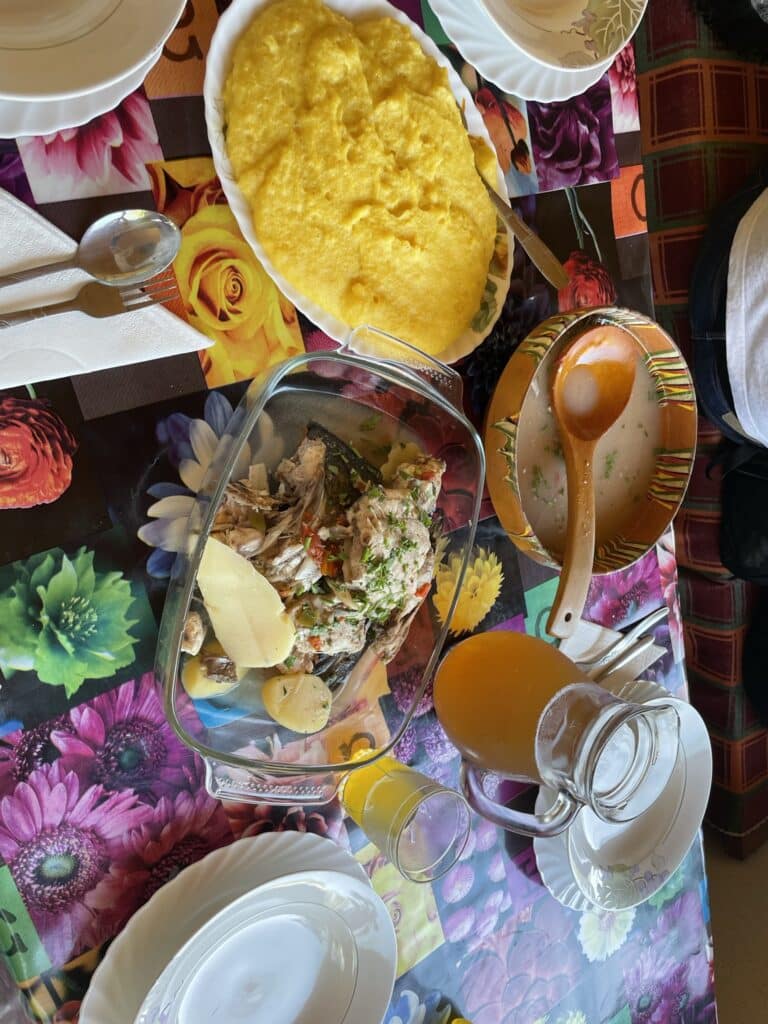
The contrast between north and south Tenerife is remarkable. While the south features arid landscapes and purpose-built resorts, the north enjoys a subtropical climate that supports lush vegetation, traditional agriculture, and authentic Canarian communities. Towns like La Orotava and Puerto de la Cruz maintain their historic character, with traditional Canarian architecture, local markets, and restaurants serving authentic island cuisine rather than international tourist fare.
The northern region provides superior access to Tenerife’s greatest natural attraction: Mount Teide National Park. This UNESCO World Heritage site centers around Spain’s highest peak and Europe’s third-largest volcano, creating landscapes that feel otherworldly. The northern approach to Teide offers less crowded access routes and better hiking opportunities than the more popular southern routes, allowing visitors to experience this remarkable volcanic environment with greater solitude and authenticity.
The Anaga Mountains in Tenerife’s northeast showcase one of Europe’s most unique ecosystems: the laurisilva or laurel forest. These ancient subtropical forests, remnants of vegetation that covered much of southern Europe millions of years ago, create hiking experiences unavailable anywhere else on the continent. The misty, primeval atmosphere of these forests, combined with dramatic viewpoints over the Atlantic, provides outdoor experiences that rival any European destination.
Northern Tenerife’s coastal areas offer completely different beach experiences from the crowded southern resorts. Black volcanic sand beaches like Playa Jardín in Puerto de la Cruz provide dramatic beauty enhanced by the contrast between dark sand, white waves, and tropical vegetation. These beaches maintain authentic local atmosphere, with Spanish families rather than international tourists, and beachside restaurants serving fresh local fish rather than international resort food.
For those interested in unusual city breaks in Europe, northern Tenerife’s combination of subtropical climate, volcanic landscapes, ancient forests, and authentic Spanish culture creates a European destination unlike any other. The year-round mild climate allows for hiking, swimming, and outdoor activities in any season, while the cultural richness and natural beauty provide experiences that satisfy travelers seeking both relaxation and authenticity.
11. Wrocław: Underrated European Cities Showcasing Poland’s Renaissance Jewel
Country: Poland Region: Lower Silesia Main reasons why it’s underrated:
One of Europe’s most beautiful market squares with stunning Gothic and Baroque architecture
Vibrant university city atmosphere with excellent cultural scene
Fascinating history spanning Polish, Czech, Austrian, and German periods
Exceptional value for money with world-class experiences at budget prices
Unique dwarf statue trail creating whimsical city exploration
Outstanding cuisine blending Polish, German, and Czech influences
European Capital of Culture 2016 with ongoing cultural investments
Wrocław stands as one of Europe’s most beautiful and culturally rich cities, yet remains surprisingly overlooked by international travelers who focus on more famous Eastern European destinations like Prague or Krakow. This magnificent Polish city offers experiences that rival Europe’s most celebrated urban destinations while providing exceptional value and authentic Central European culture that hasn’t been diluted by mass tourism, making it one of the most rewarding underrated places in Europe. Among all underrated places in Europe, Wrocław provides perhaps the best combination of architectural beauty, cultural richness, and affordability.
The city’s Market Square (Rynek) ranks among Europe’s most spectacular urban spaces, surrounded by colorful Gothic and Baroque townhouses that create a fairy-tale atmosphere particularly magical during golden hour and evening illumination. The square’s centerpiece, the Gothic Old Town Hall, houses one of Poland’s finest examples of medieval civic architecture, while the surrounding buildings showcase centuries of architectural evolution in this strategically important Central European city.
Wrocław’s unique character stems from its complex multicultural history. Over the centuries, the city has been part of the Kingdom of Poland, Bohemia, the Austrian Empire, Prussia, and Germany before returning to Poland after World War II. This diverse heritage created a distinctive urban culture that blends Polish, German, Czech, and Austrian influences in ways visible throughout the city’s architecture, cuisine, and cultural traditions.
One of Wrocław’s most charming features is its collection of over 300 small bronze dwarf statues scattered throughout the city. These whimsical sculptures, each with its own character and story, create a unique treasure hunt that encourages exploration of neighborhoods visitors might otherwise overlook. The dwarfs originated as symbols of resistance during the communist era and have evolved into beloved city mascots that add playful elements to serious historical and architectural sightseeing.
The Oder River and its islands add another dimension to Wrocław’s appeal. Cathedral Island (Ostrów Tumski), the city’s oldest section, houses the magnificent Gothic Cathedral of St. John the Baptist and maintains an atmospheric medieval character enhanced by gas street lamps that are still lit manually each evening. The riverside areas provide peaceful walks and beautiful views of the city’s skyline, while numerous bridges connect different districts and create romantic urban landscapes.
As a major university city with over 130,000 students, Wrocław maintains a vibrant cultural and nightlife scene that rivals much larger European cities. The student population ensures a dynamic atmosphere with numerous cafés, bars, clubs, and cultural venues that cater to young, international crowds. This youthful energy, combined with the city’s historical gravitas, creates an urban environment that satisfies both cultural tourists and those seeking contemporary European city experiences.
For budget-conscious travelers, Wrocław represents exceptional value among European destinations. High-quality accommodation, excellent restaurants, and world-class cultural attractions cost significantly less than equivalent experiences in Western European cities, making Wrocław perfect for those seeking to explore Europe on a budget without compromising on quality or authenticity.
Country: Romania Region: Northern Moldavia Main reasons why it’s underrated:
UNESCO World Heritage painted monasteries unique in world architecture
Pristine Carpathian Mountain landscapes with authentic rural culture
Exceptional value with luxury experiences at budget prices
Rich folklore traditions and traditional crafts still practiced
Excellent hiking and outdoor activities in unspoiled natural settings
Authentic Romanian cuisine and hospitality away from tourist crowds
Fascinating history combining Romanian, Austrian, and Russian influences
Bucovina, located in northern Romania near the Ukrainian border, harbors one of Europe’s most extraordinary artistic and cultural treasures, yet remains virtually unknown to most international travelers, making it one of the most overlooked underrated places in Europe. If you have already visited Romania, did the most popular 7 days itineraries through the country, or you have just ran out of things to do in Transylvania, this region is the one you should go next.
This historic region houses the famous painted monasteries – UNESCO World Heritage sites featuring complete exterior frescoes that represent unique achievements in medieval art and architecture. Among all underrated places in Europe, Bucovina offers perhaps the most unique artistic experiences that simply cannot be found elsewhere on the continent.
The painted monasteries of Bucovina, built primarily in the 15th and 16th centuries, feature complete biblical stories painted on their exterior walls in vivid colors that have survived centuries of weather and political upheaval. Monasteries like Voroneț (famous for its distinctive blue), Moldovița, Sucevița, and Humor showcase medieval artistry on a scale unmatched anywhere in Europe. These exterior frescoes were designed to teach religious stories to illiterate populations, creating what amounts to medieval comic books rendered in extraordinary artistic detail.
The Voroneț Monastery deserves special mention for its famous “Voroneț blue,” a color so distinctive and well-preserved that it’s often compared to the blues in Giotto’s frescoes. The monastery’s exterior walls feature complete scenes from biblical stories, including the famous Last Judgment fresco that covers the entire western wall. The artistic achievement represented by these monasteries cannot be experienced anywhere else in Europe, yet visitor numbers remain minimal compared to other UNESCO sites.
Beyond the monasteries, Bucovina offers authentic rural Romanian experiences that showcase traditional European life largely unchanged by modernization. Traditional villages feature wooden houses, horse-drawn carts, and agricultural practices that have remained constant for centuries. Local artisans continue traditional crafts, including pottery, wood carving, and textile production, often using techniques passed down through generations.
The natural beauty of Bucovina encompasses pristine Carpathian Mountain landscapes that provide excellent hiking, wildlife watching, and outdoor activities. The region’s forests house brown bears, wolves, and lynx, making it one of Europe’s premier destinations for wildlife enthusiasts. The unspoiled nature of these landscapes, combined with the minimal tourist infrastructure, creates opportunities for authentic wilderness experiences increasingly rare in modern Europe.
The accommodation and dining options in Bucovina provide exceptional value for travelers seeking authentic experiences. Traditional guesthouses offer comfortable rooms with home-cooked meals featuring local specialties like mămăligă (polenta), local cheeses, and fresh mountain trout. The hospitality of Bucovina residents, combined with prices that seem impossibly low by Western European standards, creates vacation experiences that deliver luxury comfort at budget costs.
13. Dobrogea and the Danube Delta: Romania’s Natural Wonder
Country: Romania Region: Dobrogea (Southeast Romania) Main reasons why it’s underrated:
UNESCO World Heritage Danube Delta offers unique European ecosystem
Pristine wetlands supporting over 300 bird species and diverse wildlife
Authentic fishing village experiences in traditional delta communities
Exceptional value for eco-tourism and wildlife watching experiences
Unique cultural blend of Romanian, Turkish, Russian, and Ukrainian influences
Access to both delta wilderness and Black Sea coastal areas
Traditional boat transportation creating authentic delta exploration experiences
The Dobrogea region and its crown jewel, the Danube Delta, represent one of Europe’s most spectacular yet underrated natural destinations, certainly among the most remarkable underrated places in Europe for wildlife enthusiasts. This UNESCO World Heritage site, where Europe’s second-longest river meets the Black Sea, creates a unique ecosystem that supports an extraordinary diversity of wildlife while providing authentic cultural experiences in traditional fishing communities largely unchanged by modern development. The Danube Delta stands out among underrated places in Europe as offering unparalleled wildlife experiences.
The Danube Delta covers over 4,000 square kilometers and represents Europe’s largest remaining wetland, creating habitats that support over 300 bird species, 160 fish species, and numerous mammals including wildcats, wolves, and the occasional wild horses. For wildlife enthusiasts, the delta provides opportunities to observe species and behaviors impossible to witness elsewhere in Europe, from massive pelican colonies to the seasonal migrations that bring millions of birds through this critical flyway.
The delta’s unique geography requires boat transportation for most exploration, creating inherently authentic and peaceful travel experiences. Traditional fishermen serve as guides, using wooden boats to navigate the intricate network of channels, lakes, and floating islands that characterize the delta landscape. These boat journeys provide constantly changing scenery and wildlife viewing opportunities while maintaining the quiet, meditative pace essential for wildlife observation.
The bird watching opportunities in the Danube Delta rank among Europe’s finest, with species ranging from common European varieties to exotic migrants from Africa and Asia. The delta serves as a crucial stopover point for birds traveling between northern breeding grounds and southern wintering areas, creating seasonal spectacles that attract ornithologists from around the world. Spring and autumn migrations provide particularly impressive displays, with thousands of birds visible simultaneously.
The traditional communities within the delta maintain lifestyles that have remained essentially unchanged for centuries. Villages like Mila 23, accessible only by boat, showcase authentic delta life where fishing provides the primary livelihood and horse-drawn carts navigate the few roads. These communities offer guesthouse accommodation and traditional meals featuring fresh delta fish, providing authentic cultural experiences that contrast dramatically with typical European tourism.
Beyond the delta proper, the broader Dobrogea region offers additional attractions that complement the wetland experience. The region’s multicultural heritage reflects its position at the crossroads between Europe and Asia, with influences from Romanian, Turkish, Russian, Ukrainian, and other cultures creating unique architectural and culinary traditions. Ancient Greek and Roman ruins dot the landscape, while traditional villages showcase building styles adapted to both delta flooding and steppe weather conditions.
The seasonal variations in Dobrogea ensure different experiences throughout the year. Spring brings nesting birds and wildflowers, summer provides ideal conditions for boat exploration and beach visits, autumn offers spectacular migrations and comfortable weather, while winter creates peaceful delta landscapes perfect for solitude and wildlife photography.
14. Northern Greece: Ancient Heritage Meets Natural Beauty
Rich ancient Greek heritage without crowds of southern tourist sites
Dramatic mountain and coastal landscapes offering diverse outdoor activities
Samothraki island provides pristine Greek island experience away from tourist masses
Xanthi showcases authentic traditional Greek town culture
Exceptional value compared to famous Greek islands and Athens
Unique blend of Greek, Ottoman, and Balkan cultural influences
Year-round appeal with mountains for winter activities and coast for summer
Northern Greece remains one of Europe’s most underrated regions among all underrated places in Europe, offering authentic Greek experiences that showcase the country’s diversity beyond its famous islands and ancient sites. This region combines spectacular mountain landscapes, pristine coastline, rich cultural heritage, and traditional Greek life that provides alternatives to the crowded, commercialized destinations that characterize much of modern Greek tourism. As one of the most culturally diverse underrated places in Europe, northern Greece offers experiences that demonstrate Greece’s complexity beyond typical island tourism.
Samothraki island deserves special recognition as one of Greece’s most spectacular yet overlooked destinations. This mountainous island in the northern Aegean Sea rises dramatically from the sea to over 1,600 meters at Mount Fengari, creating landscapes that range from pristine beaches to alpine meadows within a single island. The island’s relative isolation has preserved both its natural beauty and authentic Greek island culture largely unchanged by mass tourism.
Xanthi, located in the Thrace region of northern Greece, showcases a different aspect of Greek culture influenced by the region’s position at the crossroads between Greece, Turkey, and Bulgaria. The town’s old quarter features exceptional Ottoman-era architecture, with colorful mansions, narrow cobblestone streets, and traditional bazaars that reflect the area’s multicultural heritage. The weekly market brings together Greek, Turkish, and Pomak vendors, creating cultural exchanges that demonstrate the region’s continuing diversity. One of the most underrated places that I have visited in Europe is the House of Shadows museum in Xanthi, an amazing art exhibition, where sculptures and shadows create a new, very complex form of art.
The surrounding Rhodope Mountains provide excellent hiking opportunities through landscapes that span from Mediterranean vegetation at lower elevations to alpine environments at higher altitudes. Traditional mountain villages like Xanthi offer guesthouse accommodation and home-cooked meals that showcase regional Greek cuisine influenced by Balkan and Ottoman traditions. These mountain experiences provide authentic Greek rural life rarely accessible to tourists focused on coastal areas.
The region’s archaeological sites, while less famous than those in southern Greece, offer equally significant ancient Greek heritage without the overwhelming crowds. The ancient city of Philippi, where St. Paul first preached Christianity in Europe, provides extensive Roman and early Christian ruins in peaceful settings that allow for contemplative exploration impossible at more famous sites like the Acropolis or Delphi.
For travelers interested in unusual city breaks in Europe, northern Greece provides experiences that combine ancient history, natural beauty, and authentic Mediterranean culture without the commercialization that characterizes more famous Greek destinations. The year-round appeal includes summer coastal and island experiences, autumn hiking and cultural exploration, winter mountain activities, and spring wildflower seasons that transform the landscape. All of these together make Northern Greece not only a great underrated destination for vacation, but also a good place to organize a workaction.
15. Chișinău: Moldova’s Surprising Capital
Country: Republic of Moldova Region: Central Moldova Main reasons why it’s underrated:
Europe’s least visited capital offering authentic post-Soviet cultural experiences
Exceptional wine culture with world-class wineries and cellars
Remarkable value for money with luxury experiences at budget prices
Fascinating Soviet architecture and urban planning alongside traditional elements
Vibrant cultural scene with theaters, museums, and festivals
Unique position between Romanian and Russian cultural influences
Growing reputation as Eastern Europe’s hidden culinary destination
Chișinău, the capital of the Republic of Moldova, stands as Europe’s most underrated capital city among all underrated places in Europe, offering authentic Eastern European experiences that provide insights into post-Soviet cultural development while maintaining exceptional value and surprising sophistication. This city of approximately 700,000 people remains virtually unknown to most international travelers, yet offers cultural richness, historical significance, and unique experiences unavailable anywhere else among underrated places in Europe.
The city’s architectural landscape tells the story of Moldova’s complex history through buildings that span from 19th-century classical structures to Soviet modernist blocks to contemporary developments. The city center features elegant tree-lined boulevards reminiscent of other European capitals, while the famous Ștefan cel Mare Central Park provides green space that serves as the social heart of the city. This mixture of architectural styles creates an urban environment that feels both familiar and distinctly different from other European capitals.
Moldova’s wine culture provides one of Chișinău’s most compelling attractions. The country boasts some of the world’s largest wine cellars, including the famous Mileștii Mici cellars that extend for over 200 kilometers underground. These wine tourism experiences, combined with Moldova’s position as one of Europe’s oldest wine-producing regions, offer oenophiles opportunities to discover exceptional wines at prices that seem impossibly low by Western European standards.
For travelers interested in post-Soviet culture and history, Chișinău provides unique insights into how former Soviet republics have developed their independent identities. The city showcases the ongoing cultural evolution of a young European nation while maintaining connections to its complex historical heritage. Museums and cultural sites explore both the Soviet period and Moldova’s earlier history, providing educational experiences unavailable in other European capitals.
The surrounding countryside offers additional attractions that complement urban exploration. Traditional Moldovan villages maintain rural lifestyles that showcase authentic Eastern European agricultural culture, while numerous wineries provide tours and tastings that demonstrate Moldova’s viticultural heritage. These rural experiences can easily be combined with urban exploration to create comprehensive Moldova travel experiences.
The accessibility of Chișinău continues to improve, with increasing flight connections to major European cities and developing tourist infrastructure that maintains authenticity while providing necessary services for international visitors. The city serves as an excellent introduction to Moldova while providing access to the broader region’s attractions.
Bonus Destinations: Three More Hidden European Gems
Güímar, Tenerife: Archaeological Mystery
The Güímar pyramids in Tenerife create one of Europe’s most intriguing archaeological mysteries. These step pyramids, studied by explorer Thor Heyerdahl, offer alternative attractions to Tenerife’s beach resorts while showcasing the island’s pre-Hispanic Guanche culture. The surrounding ethnographic park provides insights into traditional Canarian life and agricultural practices.
Røros, Norway: Copper Mining Heritage
Røros, a UNESCO World Heritage mining town in central Norway, showcases exceptional wooden architecture and mining heritage in spectacular mountain settings. This historic copper mining town maintains authentic Norwegian culture while providing access to excellent hiking, skiing, and outdoor activities. The town represents Norway’s hidden gems away from expensive fjord tourism.
Lovech, Bulgaria: Medieval Fortress Town
Lovech represents one of Bulgaria’s most beautiful yet underrated destinations, featuring exceptional medieval architecture, dramatic fortress ruins, and authentic Bulgarian culture. The Varosha architectural reserve showcases traditional Bulgarian Revival houses, while the Hisarya fortress provides panoramic views over the surrounding countryside. This destination offers excellent value and authentic Balkan cultural experiences away from tourist crowds.
TL;DR: Top 15 Underrated Places in Europe for Authentic Travel
Skip the crowds and discover Europe’s hidden gems! These 15 secret European destinations offer authentic experiences, incredible value, and stunning beauty without tourist masses:
🏔️ Mountain Paradise: Spanish Pyrenees (cheaper than Alps, pristine nature)
🍷 Cultural Fusion: Basque Country & San Sebastián (world’s best pintxos culture)
🎨 Painted Monasteries: Bucovina, Romania (unique UNESCO frescoes)
🦆 Wildlife Paradise: Danube Delta, Romania (Europe’s largest wetland)
🏛️ Ancient Heritage: Northern Greece (Samothraki island, authentic culture)
🍇 Europe’s Secret: Chișinău, Moldova (world-class wines, incredible value)
Perfect for: Europe on a budget, unusual city breaks Europe, discovering Spain’s hidden gems, and authentic cultural experiences!
Conclusion: Discover Europe’s Best-Kept Secrets and Transform Your Travel
These 15 underrated places in Europe, plus our bonus secret European destinations, demonstrate that the continent’s most rewarding travel experiences often lie far from the beaten path. From the pristine mountain landscapes of the Spanish Pyrenees to the unique cultural fusion of Chișinău, from the painted monasteries of Bucovina to the dramatic cliffs of Eastbourne, these hidden gems in Europe offer authentic experiences that commercial tourism simply cannot replicate.
The common threads connecting these underrated places in Europe include exceptional value, authentic local culture, stunning natural beauty, and the opportunity to experience Europe as locals do rather than as tourists. Whether you’re seeking unusual city breaks in Europe, planning to explore Europe on a budget, or searching for Spain’s hidden gems specifically, these secret European destinations provide alternatives that satisfy wanderlust while supporting sustainable tourism practices.
These underrated European cities and regions offer experiences that will transform your perspective on European travel. Instead of fighting crowds for the perfect Instagram photo, you’ll have pristine landscapes to yourself in these hidden gems in Europe. Rather than paying inflated tourist prices, you’ll enjoy world-class cuisine and accommodation at reasonable costs while traveling Europe on a budget. Most importantly, you’ll return home with stories and memories that no one else has, having experienced the authentic Europe that still exists in these underrated places in Europe.
The future of European travel lies in destinations like these – secret European destinations that offer genuine cultural exchange, environmental sustainability, and economic benefits to local communities rather than exploitation. By choosing these underrated places in Europe for your next adventure, you’re not just ensuring a more authentic and affordable travel experience; you’re supporting a more sustainable and equitable form of tourism that benefits both travelers and the communities they visit.
💬 Share Your Hidden Gem Discoveries! Have you visited any of these underrated places in Europe? Planning to explore these hidden gems in Europe? Drop a comment below sharing your experiences or questions about these secret European destinations! Your insights help fellow travelers discover authentic Europe on a budget.
📸 Follow Us for More Hidden Gems in Europe Don’t miss our latest discoveries of underrated European cities and unusual city breaks in Europe! Follow us on Instagram[@theverse_voyager] for stunning photos from these secret European destinations, travel tips for Europe on a budget, and exclusive content about Spain’s hidden gems and other underrated places in Europe.
❤️ Love This Guide to Europe’s Hidden Gems? Help other travelers discover these incredible underrated places in Europe by sharing this post and tagging friends who need authentic European adventures! Every share helps preserve these secret European destinations by promoting responsible tourism.
FAQ: Everything About Europe’s Hidden Gems and Underrated Destinations
What makes these underrated places in Europe special?
These hidden gems in Europe offer authentic cultural experiences, stunning natural beauty, and exceptional value without the overwhelming crowds found at famous tourist destinations. Each of these secret European destinations provides unique experiences unavailable elsewhere, from UNESCO World Heritage sites to pristine wilderness areas.
How much can I save by visiting these underrated European cities instead of popular destinations?
Traveling to these hidden gems in Europe can save you 50-70% compared to famous European destinations. For example, accommodation in underrated places in Europe like Wrocław or Chișinău costs a fraction of Paris or Rome prices, while offering comparable cultural richness and experiences.
Which of these secret European destinations are best for Europe on a budget travel?
All 15 underrated places in Europe offer excellent budget value, but Romania (Bucovina, Danube Delta), Poland (Wrocław), Moldova (Chișinău), and northern Greece provide the most dramatic savings while delivering world-class experiences among underrated places in Europe. These destinations excel for those seeking Europe on a budget without compromising authenticity, representing the best value underrated places in Europe for budget-conscious travelers.
What are the best Spain hidden gems from this list?
Spain’s hidden gems featured include the Spanish Pyrenees (offering pristine mountain experiences cheaper than the Alps), Basque Country with San Sebastián (world’s best pintxos culture), and Northern Tenerife (authentic Canarian culture away from resort crowds). These Spain hidden gems showcase the country beyond its famous beaches.
Are these underrated places in Europe suitable for unusual city breaks in Europe?
Absolutely! Cities like Wrocław with its dwarf statue trail, Trieste with its unique coffee culture, Bordeaux with its wine heritage, and Annecy with its Alpine lake setting provide perfect unusual city breaks in Europe among the finest underrated places in Europe. Each offers distinctive experiences unavailable in mainstream European cities, making these underrated places in Europe ideal for travelers seeking unique urban adventures.
When is the best time to visit these hidden gems in Europe?
These underrated places in Europe offer year-round appeal with different seasonal highlights among the various underrated places in Europe:
Spring/Summer: Perfect for all destinations, especially coastal areas and mountain hiking in underrated places in Europe
Autumn: Ideal for wine regions (Bordeaux, Moldova) and cultural exploration of underrated places in Europe
Winter: Excellent for mountain destinations (Pyrenees, Schwarzwald) and indoor cultural activities in underrated places in Europe
Any season: Cities like Wrocław, Trieste, and Eastbourne among underrated places in Europe offer consistent appeal throughout the year
How do I get to these secret European destinations?
Most of these underrated places in Europe are easily accessible via major European transport networks:
By air: Nearest international airports with budget airline connections
By train: Excellent rail connections throughout Europe, especially Germany and France destinations
By car: Perfect for exploring multiple hidden gems in Europe on single trips
Local transport: All destinations feature good local transportation for exploring
Which destinations combine well for multi-destination trips to Europe’s hidden gems?
Perfect combinations include:
Germany’s southern duo: Schwarzwald + Uhldingen for diverse German experiences
Eastern Romania discovery: Bucovina + Danube Delta for complete authentic Romanian adventure
Northern Spain’s hidden gems tour: Pyrenees + Basque Country
France’s secret treasures: Bordeaux/Arcachon + Annecy for wine and mountains
Are these underrated places in Europe family-friendly?
Yes! Many of these hidden gems in Europe excel for families:
What to see in Toledo, Spain? Picture this: You’re wandering through a city where every cobblestone has witnessed more drama than a telenovela, where sword-makers still forge blades like medieval badasses, and where El Greco painted some of his most mind-bending masterpieces. Welcome to Toledo, Spain – a place so epic that even Don Quixote would hang up his lance and say, “Okay, this is actually worth the hype.” If Toledo does not attract you, explore my other article about how different regions in Spain might suit your personality.
Toledo isn’t just another pretty face in Spain’s lineup of gorgeous cities (though it definitely wins the beauty contest). This UNESCO World Heritage gem perched dramatically above the Tagus River is like that friend who speaks five languages, plays three instruments, and somehow still has time to make the perfect paella. It’s annoyingly talented, and you can’t help but love it.
Known as the “City of Three Cultures,” Toledo managed to get Christians, Jews, and Muslims to play nice together for centuries – which is more than most modern Twitter threads can achieve. The result? A cultural mashup so rich it makes fusion cuisine look basic. From Gothic cathedrals that’ll give you a crick in your neck from looking up, to hidden synagogues with stories that’ll break your heart, Toledo serves up history with a side of “how is this even real?”
Whether you’re planning to sprint through on a day trip from Madrid (totally doable, but you’ll feel like you’re speed-dating with history) or you want to take your sweet time and really get to know this medieval beauty, Toledo promises to be that destination you’ll still be bragging about years later.
How to Visit Toledo Spain
From Madrid: Hop on the AVANT train from Atocha Station, and in just 33 minutes you’ll go from modern metropolis to medieval magic. It’s like time travel, but with better Wi-Fi and air conditioning. Tickets run about €13-21, which is less than what you’d spend on craft cocktails in Madrid (and infinitely more culturally enriching).
The train ride itself is part of the experience – you’ll watch the Castilian landscape roll by like a Bob Ross painting come to life. Pro tip: Grab a window seat on the right side for the best views of Toledo’s dramatic approach.
Your thoughts on what to see in Toledo Spain will linger long after the visit.
Each experience shapes your answer to what to see in Toledo Spain on future trips.
If you’re more of a bus person, ALSA buses connect Plaza Elíptica with Toledo for about €5-8. Sure, it takes longer (about 1 hour 15 minutes), but you’ll save enough money for extra marzipan. And let’s be honest, Toledo’s marzipan is basically edible art.
From Other Spanish Cities: Toledo plays well with others, maintaining connections that would make a LinkedIn influencer jealous. From Seville or Valencia, you’ll connect through Madrid.
Ultimately, what to see in Toledo Spain is defined by your unique perspective.
When to visit Toledo Spain?
Spring (April-June): This is Toledo’s red carpet season. Perfect weather, blooming flowers, and temperatures that won’t make you question your life choices. It’s like the city put on its Sunday best just for you.
Summer (July-August): Hot enough to fry an egg on the cobblestones, but also when Toledo stays awake late into the evening. Early morning exploration is your friend here – think of it as earning your churros for breakfast.
Autumn (September-November): Fewer crowds, comfortable temps, and Instagram-worthy fall colors. It’s like having VIP access to Toledo without the velvet rope.
Winter (December-February): Cozy, intimate, and perfect for those “I have this charming medieval city all to myself” moments. Just bring layers – Toledo’s stones are beautiful but not exactly central heating material.
Where to Stay (Your Castle Awaits)
The Parador de Toledo offers views so stunning they should probably charge extra for the jaw-dropping factor. Located across the river, it’s like having front-row seats to the Toledo show every time you look out your window.
For something more intimate, boutique hotels in the historic center let you live like a medieval lord (with modern plumbing, thankfully). These places have more character than a Jane Austen novel and staff who know where to find the best local secrets.
Budget travelers, fear not! Toledo’s hostels occupy buildings with more history than most museums. You might be sharing a dorm, but you’re also sleeping in a place where actual historical figures might have plotted, painted, or philosophized.
Is Toledo Spain Worth Visiting
Is Toledo Spain worth visiting?
YES
Why Toledo is Basically the Overachiever of Spanish Cities
Toledo doesn’t just have history – it IS history. This city was making power moves when Madrid was still figuring out what it wanted to be when it grew up. As the former capital of the Spanish Empire, Toledo was basically the medieval equivalent of being verified on Twitter, but way more impressive.
The Catholic Monarchs, Ferdinand and Isabella (you know, the ones who funded Columbus and accidentally started globalization), held court here. They made decisions in Toledo that literally changed the world. No pressure or anything.
But here’s where Toledo gets really cool: it was the medieval equivalent of a multicultural success story. Christians, Jews, and Muslims didn’t just coexist here – they collaborated, creating a renaissance of learning that makes modern think tanks look amateur. The Toledo School of Translators was basically Google Translate, but with actual humans who knew what they were doing.
What to see in Toledo Spain? El Greco Factor (Prepare for Mind-Blowing Art)
El Greco didn’t just live in Toledo – he became Toledo. His paintings capture the city’s mystical essence like Instagram filters wish they could. “The Burial of the Count of Orgaz” isn’t just a painting; it’s a spiritual experience that’ll leave you questioning everything you thought you knew about art.
The best part? You’re seeing these masterpieces in their original context. It’s like hearing your favorite song performed live by the artist – except the artist has been dead for 400 years and his work still gives you goosebumps.
What to see in Toledo Spain? Food That’ll Ruin You for Regular Meals
Toledo’s cuisine is what happens when three cultures get together and decide to create edible magic. Perdiz a la toledana (Toledo-style partridge) isn’t just dinner – it’s a history lesson on a plate. And don’t get me started on the marzipan. Made by nuns in convents for centuries, it’s so good it’s practically a religious experience.
Plus, you’re in the heart of Castilla-La Mancha wine country. Remember Don Quixote? This is his stomping ground, and the wine here is so good it might make you see windmills as giants too.
What to see in Toledo Spain? The Don Quixote Connection (For Literary Nerds)
Speaking of Don Quixote, Toledo sits right in the heart of the Ruta de Don Quijote (Don Quixote Route). Cervantes’ immortal knight-errant wandered these very landscapes, tilting at windmills and chasing impossible dreams. You can literally follow in his footsteps – though we recommend staying on the designated paths rather than charging at agricultural equipment.
The Don Quixote Route connects Toledo with other Castilla-La Mancha gems, creating a literary road trip that would make any book club weep with joy. From Toledo, you can explore the windmills of Consuegra or visit Campo de Criptana, where those famous giants still stand sentinel over the plains.
What to see in Toledo Spain? That Indefinable Magic Factor
Here’s the thing about Toledo: it’s not just a museum city. Real people live here, go about their daily business, and somehow make medieval streets feel alive and relevant. It’s like stepping into a fairy tale where the characters have smartphones and the dragons have been replaced by tour buses.
Every corner reveals something new – a hidden courtyard, an unexpected viewpoint, a workshop where artisans still create damascened steel like their ancestors did centuries ago. It’s the kind of place where you’ll find yourself taking photos of random doorways because somehow they look like they belong in a fantasy novel.
Toledo Day Trip from Madrid
A Madrid to Toledo day trip is like dating the most interesting person in Spain – you know one day won’t be enough, but you’re going to make the most of every minute.
The Perfect Day Trip Game Plan
Catch that 8:50 AM train like you’re Harry Potter heading to Hogwarts (except instead of Platform 9¾, you’re at Atocha Station, and instead of magic… well, okay, Toledo is pretty magical). Arriving at 9:25 AM gives you a full day to fall head-over-heels for this medieval charmer.
From Toledo’s station, the city center is a quick bus ride or pleasant walk away. Choose the walk if you want to build up an appetite for all the amazing food waiting for you, or take the bus if you’re saving your energy for climbing cathedral towers and navigating cobblestone streets in style.
Your Day Trip Hit List (The Greatest Hits Album)
Toledo Cathedral: Start here while your camera battery is full and your jaw can still drop. This Gothic masterpiece will have you questioning why anyone bothers building anything else. The treasury alone could fund a small country, and El Greco’s “El Expolio” will make you understand why people travel thousands of miles to see original art.
Alcázar Fortress: This bad boy has been standing guard over Toledo for centuries, surviving sieges, wars, and really determined tourists. The Army Museum inside tells Spain’s military story, but honestly, the building itself is the real star. Plus, the views from up here are Instagram gold.
Jewish Quarter Adventures: Get lost in the narrow streets where Toledo’s Jewish community once thrived. The synagogues of Santa María la Blanca and El Tránsito aren’t just beautiful buildings; they’re time capsules of a vanished world that’ll give you all the feels.
El Greco’s Greatest Hit: No Toledo day trip is complete without seeing “The Burial of the Count of Orgaz” at Santo Tomé Church. It’s like the Mona Lisa, but with more spiritual oomph and fewer crowds trying to take selfies with it.
Trains run regularly back to Madrid, with the last one usually around 9:50 PM. But check the schedule because missing the last train means either an expensive taxi ride or an unplanned romantic night in Toledo (which, honestly, wouldn’t be the worst thing in the world). And remember, your journey through what to see in Toledo Spain doesn’t end here.
Morning: Hit the big attractions while you’re fresh and the lighting is perfect for photos. Midday: Lunch like a local (and trust me, you want to lunch like a local in Toledo). Afternoon: Explore the quieter corners and hidden gems when the tour groups are taking their siestas. Late afternoon: Mirador del Valle for those sunset shots that’ll make your friends back home seriously question their vacation choices.
Getting Back to Madrid
Trains run regularly back to Madrid, with the last one usually around 9:50 PM. But check the schedule because missing the last train means either an expensive taxi ride or an unplanned romantic night in Toledo (which, honestly, wouldn’t be the worst thing in the world).
What to see in Toledo Spain: Toledo attractions
Toledo Spain Attractions
Toledo’s attractions are like that friend’s vinyl collection – impressive in quantity, exceptional in quality, and somehow each one has an amazing story behind it.
The Heavy Hitters (Attractions That Deserve Their Fame)
Cathedral of Toledo: This isn’t just a church; it’s a masterclass in “how to make humans feel really, really small.” Five naves, countless chapels, and enough gold to make Midas weep with envy. The Custodia de Arfe alone weighs more than a small car and is probably worth more than your house.
The sacristy is basically an art museum that happens to be attached to a cathedral. El Greco’s “El Expolio” hangs here like it’s no big deal, surrounded by other masterpieces that would be the crown jewel of any other collection.
Alcázar of Toledo: This fortress has seen more action than a Marvel movie. Romans built here first, then Visigoths, then Muslims, then Christians – basically everyone who was anyone in Spanish history wanted this prime real estate. The current building houses the Army Museum, where you can trace Spain’s military adventures from ancient times to the modern era.
Monastery of San Juan de los Reyes: The Catholic Monarchs commissioned this beauty to celebrate victory, and they didn’t hold back on the bling. The chains hanging from the facade aren’t decoration – they’re from actual Christian prisoners freed during the Reconquest. Talk about making a statement.
The Cultural Heritage Triple Threat
Synagogue of Santa María la Blanca: This 12th-century beauty proves that medieval architecture was an equal opportunity employer. Built by Islamic craftsmen for Jewish worship under Christian rule, it’s like a United Nations of medieval cooperation, but with better interior design.
Synagogue of El Tránsito: Now housing the Sephardic Museum, this synagogue tells the story of Spanish Jewish culture with artifacts, manuscripts, and enough historical context to make you want to hug your history teacher.
Mosque of Cristo de la Luz: One of Europe’s oldest mosques still standing, this tiny treasure dates from 999 AD. It’s proof that good architecture never goes out of style, even when it changes religions.
Hidden Gems (The Hipster’s Toledo)
Hospital de Tavera: This Renaissance palace flies under most tourists’ radar, which means more elbow room for you to appreciate its incredible art collection. Plus, it’s got that “I discovered this amazing place” bragging potential.
Church of Santo Tomé: Technically famous for El Greco’s masterpiece, but the church itself is a gem. It’s like getting two attractions for the price of one, except one of them happens to be one of the world’s most important paintings.
Viewpoints That’ll Ruin Other Views for You
Mirador del Valle: The money shot. The view that launched a thousand postcards. Every angle is perfect, every photo looks professional, and every sunset makes you believe in magic again.
Puente de San Martín: This medieval bridge isn’t just functional transportation – it’s a monument with benefits. Cross it for different perspectives of the city, or just hang out and pretend you’re in a period drama.
Toledo Spain Itinerary
Planning a Toledo itinerary is like curating the perfect playlist – you want the hits, but also those deep cuts that show you really know what you’re doing.
One Day in Toledo (The Speed Dating Approach)
Morning (9:00 AM – 12:30 PM) Start at the cathedral because a) it’s awesome, and b) it opens early before the crowds turn it into medieval rush hour. Give yourself 90 minutes – trust me, you’ll need every second to process the visual overload.
Next, march yourself over to the Alcázar. It’s basically mandatory, like visiting the Eiffel Tower in Paris, except with more armor and fewer people trying to sell you miniature replicas.
Afternoon (12:30 PM – 6:00 PM) Lunch is non-negotiable. Find a spot serving perdiz a la toledana and prepare for your taste buds to write thank-you notes. Many restaurants occupy buildings older than entire countries, so you’re getting ambiance with your appetizers.
Post-lunch food coma recovery happens perfectly in the Jewish Quarter. The synagogues provide cultural enlightenment and air conditioning – a winning combination. Allow about 45 minutes per synagogue, more if you’re the type who reads every museum placard (we see you, and we respect you).
End at Santo Tomé for your El Greco encounter. “The Burial of the Count of Orgaz” isn’t just a painting – it’s a spiritual experience that justifies the entire trip.
Evening (6:00 PM – 8:00 PM) Mirador del Valle for sunset is like dessert after an amazing meal – the perfect ending that makes everything else taste better in memory.
Two Days in Toledo (The Proper Courtship)
Follow day one, but without the rushing. Add the Monastery of San Juan de los Reyes and the Mosque of Cristo de la Luz to day two. This gives you time to actually appreciate the details instead of just checking boxes like a medieval scavenger hunt.
Day two also allows for proper workshop visits. Toledo’s artisans still practice damascening and sword-making like their ancestors, except now they accept credit cards and pose for selfies.
Three Days in Toledo (The Full Romance)
With three days, you can explore the Don Quixote connections. Day trips to see the windmills of Consuegra or Campo de Criptana add literary context to your Toledo experience. It’s like a book club field trip, but with better weather and more wine.
Visit Illescas to see more El Greco works in their original setting, or explore Toledo’s surrounding countryside where Cervantes’ knight-errant wandered. The landscape hasn’t changed much – you can still imagine Don Quixote charging across those plains, convinced he was saving the world one windmill at a time.
Special Interest Itineraries (For the Obsessed)
Art Lovers: Focus on El Greco sites, including his house-museum and every church with his work. It’s like a pilgrimage, but with better gift shops.
History Buffs: Deep dive into Toledo’s role in Spanish history, from Roman foundations to medieval capital to Civil War battleground.
Foodies: A culinary tour hitting traditional restaurants, marzipan convents, and local markets. Your stomach will thank you, even if your pants won’t.
Frequently Asked Questions (FAQ)
Q: How long should I spend in Toledo? A: One day gives you the highlights, two days let you breathe and explore, three days make you consider changing your entire life plan. Start with a day trip and see how deep the rabbit hole goes.
Q: Is Toledo suitable for kids? A: Absolutely! Kids love the fortress, the narrow streets feel like a treasure hunt, and the sword-making workshops are basically real-life video games. Plus, the marzipan situation will keep them happy.
Q: What’s the best way to see Toledo’s attractions? A: Walking is king, but the tourist train helps cover ground if mobility is an issue. Many attractions are close together, so efficient routing saves time and energy.
Q: Is Toledo crowded? A: Peak season (summer) and weekends can feel like medieval rush hour. Early morning or late afternoon visits offer more breathing room and better photos.
Q: Can I see Toledo in a wheelchair? A: The historic center is challenging due to cobblestones and elevation changes, but major attractions like the cathedral and Alcázar are accessible. Check specific venue accessibility before visiting.
Q: What should I buy in Toledo? A: Damascened jewelry, replica swords (if you can get them home), marzipan, and local ceramics. Avoid the tourist traps and buy from actual artisan workshops.
Q: Is Toledo expensive? A: Moderate by Spanish standards. Meals range from €15-40 per person, attraction entries are €5-12 each. Budget €60-100 per person for a full day including meals and attractions.
TL;DR – What to see in Toledo Spain in a Nutshell
What to see in Toledo Spain: Everything. Seriously. But if you’re pressed for time: Cathedral (mind-blowing Gothic), Alcázar (fortress views), Jewish Quarter (historical feels), El Greco’s masterpiece (spiritual experience), and Mirador del Valle (perfect photos).
How to visit Toledo Spain: Train from Madrid (33 minutes, €13-21), bus (1h 15min, €5-8), or drive (1 hour). Spring and autumn are perfect, summer is hot but doable, winter is cozy.
Is Toledo Spain worth visiting: Does a bear… yes. It’s absolutely worth it. UNESCO World Heritage, incredible art, amazing food, and enough history to make your head spin.
Toledo day trip from Madrid: Totally doable. Catch the 8:50 AM train, hit the major sites, eat like royalty, watch the sunset, return by evening train. You’ll want to come back.
Toledo Spain itinerary: One day for highlights, two days to breathe, three days to fall in love. Add Don Quixote route exploration if you have extra time and a literary soul.Bottom line: Toledo is that rare destination that exceeds every expectation. Go. Take comfortable shoes. Prepare to have your mind blown.
For any questions, or comments, or if you simply need help organizing your trip to Toledo do not hesitate to contact me, or simplyDM me on Instagram. If you are looking for other interesting destinations in Spain check my article about mytop 20 destination in Spain.
Barcelona, the vibrant capital of Catalonia, offers an incredible blend of Gothic architecture, modernist masterpieces, Mediterranean beaches, and world-class cuisine. Whether you’re a first-time visitor or returning to explore more, knowing what to see in Barcelona in 3 days can help you maximize your experience in this captivating city.
Planning what to see in Barcelona in 3 days requires balancing must-visit attractions with hidden gems that locals cherish. This comprehensive guide will take you through both touristy and off-the-beaten-path experiences, help you understand Barcelona’s costs, discover the best nightlife spots, and provide detailed itineraries to make the most of your Barcelona adventure.
From Gaudí masterpieces to secret rooftop bars, from Gothic Quarter exploration to hidden Barcelona neighborhoods, this guide covers everything you need to know about what to see in Barcelona in 3 days.Barcelona, the vibrant capital of Catalonia, offers an incredible blend of Gothic architecture, modernist masterpieces, Mediterranean beaches, and world-class cuisine. Whether you’re a first-time visitor or returning to explore more, knowing what to see in Barcelona in 3 days can help you maximize your experience in this captivating city.
Planning what to see in Barcelona in 3 days requires balancing must-visit attractions with hidden gems that locals cherish. This comprehensive guide will take you through both touristy and off-the-beaten-path experiences, help you understand Barcelona’s costs, discover the best nightlife spots, and provide detailed itineraries to make the most of your Barcelona adventure.
From Gaudí masterpieces to secret rooftop bars, from Gothic Quarter exploration to hidden Barcelona neighborhoods, this guide covers everything you need to know about what to see in Barcelona in 3 days.
What to See in Barcelona in 3 Days: Non Touristy Things to Do
Discovering non touristy things to do in Barcelona reveals the city’s authentic soul beyond the crowded attractions. These secret things to do in Barcelona and local experiences provide genuine insights into Barcelona’s culture while offering hidden gems that most tourists never discover.
Parc del Labirint d’Horta stands as one of Barcelona’s most enchanting secret things to do in Barcelona. This 18th-century neoclassical garden features a beautiful hedge maze that provides fun exploration for visitors of all ages. The park’s peaceful atmosphere and intricate landscaping create a romantic escape from the city’s hustle, making it perfect for afternoon strolls and photography. Few tourists know about this local gem, ensuring a more intimate experience with Barcelona’s green spaces.
Tibidabo offers spectacular views as Barcelona’s highest point, crowned by the stunning Sacred Heart Cathedral. This elevated location provides panoramic vistas across the entire city and Mediterranean coastline. The cathedral’s neo-Gothic architecture creates dramatic silhouettes against Barcelona’s skyline, while the surrounding area offers peaceful walks and contemplative moments. Local Barcelona residents often visit Tibidabo for sunset viewing and spiritual reflection.
Carretera de les Aigües represents one of Barcelona’s best-kept hiking secrets. This elevated trail follows the Collserola mountain ridge, providing continuous stunning views over the city while offering perfect walking terrain for day exploration. The path attracts more locals than tourists, creating opportunities for authentic encounters with Barcelona’s outdoor community. The trail’s accessibility makes it suitable for various fitness levels while delivering extraordinary photographic opportunities.
Poble Sec embodies authentic Barcelona neighborhood culture, particularly along Carrer de Blai. This historic district overflows with traditional tapas bars and local pubs, creating ideal conditions for evening tapas bar hopping. The area’s narrow streets and intimate venues provide genuine interactions with Barcelona locals while offering authentic Catalan cuisine at reasonable prices. Evening exploration reveals the neighborhood’s true character as residents gather for traditional socializing.
Sakya Tashi Ling Buddhist Temple offers spiritual tranquility near Barcelona’s outskirts. This authentic Buddhist center provides meditation opportunities and cultural insights into Eastern philosophy within a peaceful mountain setting. The temple’s serene atmosphere contrasts beautifully with Barcelona’s urban energy, making it perfect for visitors seeking contemplative experiences and spiritual exploration.
Pedralbes Monastery and Neighborhood combines historical significance with Barcelona’s most elegant residential area. While the monastery itself offers modest attractions, the surrounding Pedralbes district showcases Barcelona’s most prestigious architecture and peaceful tree-lined streets. This upscale neighborhood represents Barcelona’s equivalent to affluent areas like Primaverii, featuring stunning mansions and sophisticated urban planning.
Playa del Petroli in Badalona delivers a more peaceful beach experience just 20 minutes from Barcelona’s center via metro. This cleaner, quieter alternative to crowded city beaches features affordable waterfront terraces and bars without tourist pricing. The beach’s relaxed atmosphere attracts primarily local families and residents, providing authentic Mediterranean coastal culture away from tourist crowds.
Playa de Castelldefels represents Barcelona’s most beautiful nearby beach, located 40-50 minutes from the city center. This stunning coastal resort town features elegant villas and mansions, including homes of many FC Barcelona players. The beach’s pristine conditions and upscale surroundings create a sophisticated coastal experience while maintaining accessibility from Barcelona’s urban core.
Playa de Nova Icaria offers a more relaxed beach experience within Barcelona itself, providing a calmer alternative to bustling Barceloneta. This local favorite features better facilities and less crowded conditions while maintaining easy access to city amenities. The beach’s positioning attracts more Barcelona residents than tourists, creating authentic local beach culture.
Costa Brava Day Trips extend Barcelona experiences to include spectacular coastal destinations. These hidden gems along Catalunya’s coastline offer pristine beaches, charming fishing villages, and dramatic cliff landscapes within easy reach of Barcelona. Day trips reveal authentic Catalan coastal culture while providing escape from urban environments. For more information about best places to go on Costa Brava you can check my article about Costa Brava.
Ideal Centre d’Arts Digitals showcases cutting-edge digital art experiences through VR and immersive installations. This innovative cultural center represents Barcelona’s modern artistic evolution while providing interactive experiences that traditional museums cannot offer. The center’s technology-focused exhibitions create unique memories while demonstrating Barcelona’s commitment to contemporary culture.
What to See in Barcelona in 3 Days: Touristic Things to Do in Barcelona
Understanding what to see in Barcelona in 3 days means embracing the city’s iconic attractions alongside its hidden treasures. These popular destinations became famous for good reasons and deserve inclusion in any comprehensive Barcelona itinerary.
Sagrada Família – Barcelona’s Crown Jewel. The Sagrada Família stands as Barcelona’s most recognizable landmark and essential component of what to see in Barcelona in 3 days. Antoni Gaudí’s masterpiece combines Gothic and Art Nouveau forms in ways that continue inspiring architects worldwide. This UNESCO World Heritage site requires advance Barcelona ticket booking to avoid lengthy queues and explore both the basilica’s interior and towers. The morning light filtering through the stained glass windows creates magical color displays, while the intricate facades tell biblical stories through stone sculptures.
Park Güell showcases Gaudí’s whimsical approach to landscape design, featuring colorful mosaics, organic shapes, and stunning city views. The park’s main terrace provides excellent photo opportunities while the surrounding gardens offer peaceful walks through Gaudí’s imaginative world. The famous mosaic dragon and serpentine bench demonstrate Gaudí’s innovative use of broken ceramics (trencadís technique). Early morning visits ensure better lighting and fewer crowds for optimal photography.
The Magic Fountain (Font Màgica) creates spectacular evening entertainment combining water, light, and music in synchronized displays. Located on Montjuïc Hill, this attraction draws crowds for its free performances, particularly during weekend evenings. The fountain’s shows feature classical music, popular songs, and dramatic lighting effects that transform the water into dancing sculptures. The surrounding area offers additional attractions including the National Art Museum of Catalonia and Olympic installations.
The Gothic Quarter represents Barcelona’s historical heart, containing Roman ruins, medieval churches, and atmospheric plazas. Barcelona walking tours through these ancient streets reveal layers of history from Roman Barcino to medieval Barcelona. The Cathedral of Barcelona anchors the quarter with its impressive facade and peaceful cloister, while Plaça Sant Jaume serves as Barcelona’s political center.
Barceloneta Beach represents Barcelona’s most famous coastal destination, offering golden sand, Mediterranean waters, and vibrant beach culture. This central beach features numerous chiringuitos (beach bars), water sports rentals, and the iconic boardwalk perfect for evening strolls. The area’s .
seafood restaurants serve fresh paella and local specialties while street performers create entertaining atmospheres. Barceloneta’s proximity to the city center makes it easily accessible via Barcelona public transport.
Additional Gaudí Masterpieces. Casa Batlló and Casa Milà (La Pedrera) demonstrate Gaudí’s residential architecture mastery. These UNESCO World Heritage sites feature innovative facades, creative interior spaces, and rooftop terraces with distinctive chimney designs. Audio guides enhance understanding of Gaudí’s techniques and philosophical approaches to modernist architecture
Is Barcelona Expensive? – What Budget for Barcelona?
Understanding Barcelona’s costs helps answer “is Barcelona expensive?” and enables better trip planning. Barcelona budget travel requires strategic choices about accommodation, dining, and activities while maintaining quality experiences.
Accommodation Costs
Barcelona offers accommodation options for various budgets, from hostels to luxury hotels. Central locations like Gothic Quarter and Eixample command premium prices, while neighborhoods like Gràcia and Poblenou provide more affordable alternatives with excellent Barcelona public transport connections.
Budget travelers can find hostel beds for €20-30 per night, mid-range hotels typically cost €120-200 per night, while luxury accommodations range from €200-400+ per night. Booking in advance and avoiding peak tourist seasons significantly reduces costs.
Dining and Food Expenses
Barcelona’s dining scene accommodates different budgets through various options. Tapas bars offer affordable meals with portions costing €3-8 each, while set lunch menus (menú del día) provide full meals for €12-18. These represent excellent value compared to tourist-oriented restaurants.
Local markets enable budget-conscious travelers to purchase fresh ingredients for picnic meals. Combining market visits with park dining creates memorable experiences while controlling food costs. Barcelona’s numerous parks and Barcelona beaches provide perfect picnic settings.
Transportation and Activity Costs
Barcelona public transport proves both efficient and economical. The T-Casual transport card offers ten journeys for approximately €13, covering metro, bus, and tram systems. Walking remains the best way to explore compact neighborhoods while saving money and discovering unexpected attractions. The taxi is a bit expensive compared to other prices in Spain. A ride from the airport to the city center being around 50 euros.
Many Barcelona attractions offer combined tickets or city passes that reduce individual entry costs. Free activities include beach visits, park exploration, and architectural appreciation from exterior viewpoints. Planning ahead with Barcelona ticket booking ensures availability while sometimes providing discounts.
For more information about Barcelona transportation, more city maps and schedule you can check the official city website.
Barcelona Clubs – Where to have fun in Barcelona?
Barcelona’s nightlife scene offers diverse experiences from intimate cocktail bars to massive dance clubs. Understanding Barcelona clubs helps visitors experience the city’s renowned party culture while respecting local customs and timing.
Nightlife Districts
The Gothic Quarter contains numerous bars and smaller clubs perfect for starting evening adventures. These venues typically open earlier than major clubs and offer more intimate atmospheres for conversation and socializing. The area’s medieval streets create unique settings for bar hopping.
El Born and Barceloneta neighborhoods feature waterfront clubs and Barcelona rooftop bars with stunning city and sea views. These venues combine excellent cocktails with memorable settings, making them popular choices for both locals and visitors seeking sophisticated nightlife experiences.
Club Culture and Timing
Barcelona clubs operate on Mediterranean schedules, with most venues reaching peak activity between 2-5 AM. This timing allows for extended dinner experiences and bar visits before transitioning to dance clubs. Understanding these schedules prevents disappointment and ensures optimal experiences.
Entry policies vary significantly between venues, with some requiring advance reservations or guest list registration. Dress codes tend toward smart casual, though specific requirements depend on individual establishments. Researching venues beforehand helps avoid entry complications.
Barcelona Rooftop Bars and Sunset Venues
Barcelona’s rooftop bars provide spectacular sunset viewing opportunities while offering premium cocktails and refined atmospheres. These venues combine excellent drinks with panoramic city views, creating memorable experiences perfect for romantic evenings or special celebrations.
Many rooftop venues operate seasonally, with summer months providing optimal weather for outdoor enjoyment. Reservations often prove necessary, particularly for weekend evenings and sunset hours when demand peaks significantly.
Example of 3 Days Barcelona Itinerary
Day 1: Central Barcelona Highlights
9:00 AM – 11:00 AM: Sagrada Família
Full exploration including towers (pre-booked tickets essential)
Allow 2 hours for comprehensive visit
12:00 PM – 12:30 PM: Travel to Passeig de Gràcia
15-minute metro ride from Sagrada Família
Short walk to start of avenue
12:30 PM – 2:00 PM: Walk Passeig de Gràcia
Explore luxury shopping street
Admire Casa Batlló and Casa Milà exteriors
Window shopping and architecture photography
2:00 PM – 3:00 PM: Lunch break
Traditional Catalan restaurant along Passeig de Gràcia
Rest before afternoon exploration
3:00 PM – 3:30 PM: Travel to El Born
20-minute walk or short metro ride
Navigate to Santa Maria del Mar area
3:30 PM – 5:30 PM: Explore El Born
Santa Maria del Mar basilica
Picasso Museum (if time permits)
Browse trendy boutiques and galleries
Experience neighborhood’s artistic atmosphere
5:30 PM – 6:00 PM: Walk to Gothic Quarter
Adjacent neighborhoods, 10-minute walk
Enter via Carrer de la Princesa
6:00 PM – 8:00 PM: Gothic Quarter exploration
Barcelona Cathedral and cloister
Roman walls and medieval streets
Plaça Sant Jaume and surrounding areas
Traditional shops and hidden courtyards
8:00 PM – 8:30 PM: Travel to Barceloneta
25-minute walk or metro L4 to Barceloneta
Head directly to beachfront
8:30 PM – 10:00 PM: Barceloneta Beach and dinner
Beach stroll and sunset viewing
Fresh seafood at beachfront chiringuito
Experience Mediterranean atmosphere
10:30 PM – Late: Night in Poble Sec
Tapas bar hopping along Carrer de Blai
Authentic local nightlife experience
Day 2: Nature, Heights, and Hidden Gems
8:00 AM – 9:00 AM: Early breakfast and travel preparation
Light breakfast near accommodation
Check weather conditions for outdoor activities
9:00 AM – 10:00 AM: Travel to Parc del Labirint d’Horta
Metro L3 to Mundet station
10-minute walk to park entrance
10:00 AM – 12:00 PM: Parc del Labirint d’Horta
Explore hedge maze and neoclassical gardens
Photography and peaceful garden walks
Experience Barcelona’s most beautiful secret park
12:00 PM – 1:00 PM: Travel to Carretera de les Aigües
Probably the best way is to travel by taxi.
Pack water and snacks for hiking; also it would be a good idea to pack the lunch for the hike
1:00 PM – 3:00 PM: Hike Carretera de les Aigües
Elevated trail with continuous city views
Moderate difficulty hiking experience
Spectacular photography opportunities
3:00 PM – 4:00 PM: Travel to Tibidabo
Continue from hiking area or return to city center
Funicular or bus to summit
4:00 PM – 6:00 PM: Tibidabo
Sacred Heart Cathedral visit
Panoramic city and coastline views
Peaceful spiritual atmosphere
6:00 PM – 7:00 PM: Travel to Park Güell
The best way for transit is taxi + metro
Metro and bus connections required
7:00 PM – 8:30 PM: Park Güell
Gaudí’s landscape architecture masterpiece
Famous mosaic dragon and serpentine bench
City views during golden hour
08:30 PM – 09:00 PM: Travel to central Barcelona
Return to city center for nightlife
Choose rooftop bar or club location
11:00 PM – Late: Club or rooftop bar experience
Barcelona’s famous nightlife scene
Dancing, cocktails, and late-night socializing
Experience Mediterranean party culture
Day 3: Costa Brava Day Trip
7:00 AM – 8:00 AM: Early breakfast and departure preparation
Understanding what to see in Barcelona in 3 days requires balancing iconic attractions with authentic local experiences. This comprehensive approach ensures visitors appreciate both Barcelona’s international reputation and its genuine character as a living, breathing Mediterranean city.
Successful Barcelona visits combine careful planning with spontaneous discovery opportunities. While major attractions like Gaudí masterpieces and Gothic Quarter exploration deserve inclusion in any itinerary, the most memorable experiences often emerge from unexpected encounters with local culture, hidden neighborhoods, and authentic Catalan traditions.
Barcelona’s diverse offerings ensure that every visitor can find personally meaningful experiences, whether through art appreciation, culinary adventures, architectural wonder, or simply enjoying the Mediterranean lifestyle that defines this remarkable city.
The key to maximizing what to see in Barcelona in 3 days lies in understanding that Barcelona rewards both structured planning and flexible exploration. By combining must-see attractions with personal interests and local discoveries, visitors create comprehensive Barcelona experiences that extend far beyond typical tourist encounters.
What to see in Barcelona in 3 days: Focus on Gaudí masterpieces (Sagrada Família, Park Güell), Gothic Quarter exploration, and Barcelona beaches. Include both touristy attractions and non touristy things to do in Barcelona like going to the hills above the city and other hidden gems as Parc del Labirint d’Horta, or Tibidabo.
Budget: Barcelona is moderately expensive. Expect €20-30 for hostel beds, €120-200 for mid-range hotels, €12-18 for lunch menus, and €12 for 10-journey transport cards. Advanced Barcelona ticket booking saves money and time.
Nightlife: Barcelona clubs operate late (2-5 AM). Start with Gothic Quarter or El Born bars, then move to major clubs. Barcelona rooftop bars offer sunset views and premium experiences.
Essential Barcelona itinerary: Day 1 – Sagrada Familia and the old city center; Day 2 – Try a hike in the mountains nearby and enjoy other hidden gems in Barcelona; Day 3 – Have a day trip around!
Beyond the sun-soaked beaches of Costa Adeje and the bustling promenades of Playa de las Américas lies a completely different Tenerife – one where ancient villages cling to volcanic cliffs, where locals gather in family-run eateries called guachinches, and where dramatic landscapes remain untouched by mass tourism. These hidden gems in Tenerife offer authentic experiences that most visitors never discover, transforming your typical Canary Islands vacation into an unforgettable journey of exploration (and trust us, your Instagram followers will be seriously jealous).
While millions flock to Tenerife’s popular tourist destinations each year, the island’s most magical moments happen in its secret corners – from the mystical village of Masca perched dramatically between towering cliffs to the forgotten coastal settlements of the northeast where time seems to have stopped. This comprehensive guide reveals Tenerife’s best-kept secrets, including authentic dining experiences, strategic accommodation choices, and insider tips to help you avoid tourist traps while discovering the island’s true character. If high openness defines you as a person, Tenerife is one of the Spanish regions that are the most suitable for your personality.
Whether you’re seeking off-the-beaten-path adventures, authentic Canarian cuisine, or simply want to experience Tenerife like a local, these hidden treasures will show you why this volcanic island offers so much more than meets the eye. From mysterious pyramids to traditional wine cellars, prepare to uncover a side of Tenerife that will leave you planning your return before you’ve even left.
Before you plan
What kind of traveler are you, really?
This route rewards some temperaments more than others. Take the two-minute quiz and find out whether it fits the way you actually travel, before you copy a single day of it.
20 questions · about 3 minutes · no account needed to start
Table of Contents
Tenerife Secret Places: Undiscovered Villages and Natural Wonders
1. Hidden gems in Tenerife: Los Catalanes and the Forgotten North-East Villages
Tucked away in Tenerife’s rugged northeast corner, Los Catalanes represents everything that makes the island’s Tenerife secret places so special. This tiny hamlet, accessible only via winding mountain roads, offers visitors a glimpse into authentic Canarian life that has remained largely unchanged for generations. The village’s name pays homage to Catalan settlers who arrived centuries ago, and their influence can still be felt in the local architecture and cultural traditions.
The journey to Los Catalanes is half the adventure – narrow roads snake through ancient laurel forests and offer breathtaking views of the Atlantic Ocean crashing against dramatic black volcanic cliffs. Unlike the manicured tourist areas, this region showcases Tenerife’s wild beauty, where endemic plants thrive in microclimates created by the trade winds and mountainous terrain.
What makes Los Catalanes particularly special is its proximity to other forgotten settlements like Almáciga, Benijo, and Taganana. These authentic Tenerife villages form a network of undiscovered destinations where you can witness traditional farming methods, sample homemade cheese from local goats, and experience the warm hospitality that defines rural Canarian culture. The best time to explore this region is during the morning hours when mist often clings to the mountains, creating an almost mystical atmosphere that photographers and nature lovers find irresistible.
The view from the north-eastern side of Tenerife
2. Hidden gems in Tenerife: Masca
Perched precariously between towering cliffs in the Teno Mountains, Masca ranks among Tenerife’s most spectacular Tenerife secret places. This ancient village, once home to pirates and smugglers (who clearly had excellent taste in real estate), seems to defy gravity as it clings to the mountainside at an elevation of nearly 650 meters. The journey to Masca involves navigating one of Europe’s most dramatic mountain roads, with hairpin turns revealing increasingly stunning vistas of the surrounding ravine.
The village itself consists of just a handful of traditional stone houses, a small church, and a restaurant where you can sample local specialties while gazing across the dramatic Masca Gorge. What truly sets this hidden gem apart is the famous Masca Trail, a challenging hiking route that descends through the ravine to a secluded black sand beach accessible only on foot or by boat.
Due to its popularity among hikers, access to the Masca Trail is now regulated with advance bookings required, making it essential to plan ahead. However, even without hiking the trail, simply visiting the village and exploring the surrounding viewpoints offers unforgettable experiences. The late afternoon provides the most dramatic lighting for photography, when the western sun illuminates the cliff faces and creates stunning contrasts between light and shadow.
3. Hidden gems in Tenerife: Icod de los Vinos, Beyond the Dragon Tree
While many visitors to Icod de los Vinos come solely to see the famous Drago Milenario – the thousand-year-old dragon tree – this charming town offers numerous other attractions that qualify it as one of Tenerife’s overlooked treasures. The historic center features beautiful colonial architecture, traditional Canarian balconies, and peaceful plazas where locals gather for evening conversations (and the occasional heated debate about football).
The town’s wine-making heritage runs deep, with several family-owned bodegas offering tastings of distinctive Canarian wines made from volcanic soil. These intimate wine experiences provide insight into traditional viticultural methods that have been passed down through generations. The volcanic caves beneath the town, known as Cueva del Viento, represent one of the world’s longest lava tube systems and offer guided tours through underground chambers formed by ancient volcanic activity.
Beyond the main attractions, Icod de los Vinos serves as an excellent base for exploring the surrounding Teno Rural Park, where numerous hiking trails lead through pristine forests and offer spectacular coastal views. The town’s authentic atmosphere, combined with its strategic location and rich cultural heritage, makes it an ideal destination for travelers seeking genuine Canarian experiences away from tourist crowds.
4. Hidden gems in Tenerife: Güímar, Ancient Mysteries and Coastal Charms
The town of Güímar holds two distinct treasures that make it essential for any exploration of Tenerife secret places. The mysterious Güímar Pyramids, studied extensively by Norwegian explorer Thor Heyerdahl, continue to puzzle archaeologists and visitors alike. These step pyramids, built from volcanic stone without mortar, demonstrate sophisticated astronomical alignments that suggest advanced ancient knowledge.
The Ethnographic Park at Güímar provides comprehensive information about these enigmatic structures while showcasing traditional Canarian culture through exhibits on local crafts, agriculture, and maritime history. The park’s gardens feature plants from around the world, creating a peaceful environment for contemplation and learning.
Just a short drive from the pyramids, Puertito de Güímar offers a completely different but equally rewarding experience. This small fishing village maintains its authentic character despite being easily accessible from the main tourist areas. The natural pools formed by volcanic rock provide perfect swimming spots, while the small harbor area features excellent seafood restaurants where local fishermen sell their daily catch. The combination of historical mystery and coastal tranquility makes Güímar an ideal destination for visitors seeking both cultural enrichment and relaxation.
View of Puertito Guimar
What Food is Tenerife Famous For: Authentic Culinary Experiences
Traditional Canarian Cuisine Overview
Tenerife’s culinary landscape reflects its unique position as a bridge between Europe, Africa, and the Americas, creating a distinctive gastronomy that goes far beyond typical Spanish fare. The island’s volcanic soil produces exceptional ingredients, from sweet potatoes and plantains to exotic fruits that thrive in the subtropical climate. Understanding what food is Tenerife famous for requires appreciating how geography, history, and local traditions combine to create unforgettable dining experiences.
The cornerstone of Canarian cuisine is “papas arrugadas” – small potatoes boiled in heavily salted water until wrinkled, served with “mojo” sauces that come in green (cilantro and parsley) or red (paprika and chili) varieties. These simple yet flavorful dishes represent the essence of local cooking: fresh ingredients prepared with time-honored techniques that enhance natural flavors rather than masking them.
Fresh fish and seafood play crucial roles in Tenerife’s culinary identity, with varieties like “vieja” (parrotfish), “sama” (sea bream), and “cherne” (wreckfish) prepared simply to showcase their oceanic freshness. Local fishing boats bring daily catches to small coastal restaurants where traditional preparation methods ensure authentic flavors that transport diners directly to the Atlantic’s edge.
Gofio, a toasted grain flour that predates Spanish colonization, appears in numerous traditional dishes and represents the islands’ indigenous Guanche heritage. This versatile ingredient adds nutty flavors and nutritional value to everything from breakfast porridge to dessert mousses, demonstrating how ancient foods continue to define modern Canarian gastronomy.
Hidden gems in Tenerife: The Guachinche Experience
No exploration of what food is Tenerife famous for would be complete without experiencing a guachinche – traditional family-run establishments that originated as private homes where locals served homemade wine and simple meals to neighbors and friends. These authentic dining venues offer the most genuine Canarian culinary experiences, far removed from tourist-oriented restaurants (and thankfully, far from anyone trying to sell you a timeshare).
Guachinches typically operate seasonally, usually from November to May, coinciding with the local wine harvest and fermentation cycle. The concept stems from centuries-old traditions where families would sell their surplus wine production along with hearty home-cooked meals. Today’s guachinches maintain this intimate atmosphere, often featuring just a few tables in converted garages or rural homes where multiple generations of the same family prepare and serve traditional dishes.
The menu at a typical guachinche changes daily based on available ingredients and family recipes, but usually includes specialties like “carne fiesta” (marinated pork), “conejo en salmorejo” (rabbit in herb sauce), and “ropa vieja” (shredded beef stew). These substantial dishes reflect the agricultural heritage of Tenerife’s rural communities, prepared using techniques passed down through generations.
Finding authentic guachinches requires local knowledge, as they rarely advertise and operate primarily through word-of-mouth recommendations. The most traditional establishments are located in small villages throughout the island, particularly in areas like La Matanza, El Sauzal, and Tacoronte. Prices remain remarkably reasonable, with complete meals including wine often costing less than a single course at tourist restaurants.
The social aspect of dining at guachinches is equally important as the food itself. These venues serve as community gathering places where locals catch up on neighborhood news, families celebrate special occasions, and visitors can experience genuine Canarian hospitality. Don’t expect fancy presentations or extensive wine lists – the appeal lies in honest, flavorful food served in welcoming environments that embody the island’s authentic spirit.
Best Places to Stay in Tenerife: Strategic Locations for Hidden Gem Hunters
North Coast: Base for Village Exploration
The northern region of Tenerife offers the best places to stay in Tenerife for travelers prioritizing authentic experiences and easy access to the island’s most charming hidden villages. Puerto de la Cruz, the island’s original tourist destination, maintains much of its traditional character while providing excellent accommodations and transportation connections to hidden gems in Tenerife that remain largely undiscovered by mainstream tourism.
Staying in the north provides several strategic advantages for exploring hidden gems in Tenerife. The region’s cooler, more humid climate supports lush vegetation and dramatic landscapes that contrast sharply with the arid south. Morning mist and afternoon trade winds create constantly changing atmospheric conditions that make each day’s exploration unique and photogenic, perfect for discovering secret things to do in Tenerife.
Hotels in Puerto de la Cruz range from historic properties that have hosted visitors for over a century to modern boutique establishments that blend traditional architecture with contemporary amenities. Many accommodations feature traditional Canarian courtyards, volcanic stone construction, and panoramic views of the Atlantic Ocean or Mount Teide
The town serves as an excellent base for day trips to Los Catalanes and other northeast villages, with rental cars easily accessible and scenic driving routes that transform transportation into part of the adventure. While the north is generally safe, it’s worth noting some areas to avoid in Tenerife during certain weather conditions – coastal paths can become slippery during heavy rains, and some mountain roads may be challenging for inexperienced drivers.
Alternative accommodation options in the north include rural hotels in La Orotava, where traditional mansions have been converted into intimate lodging experiences surrounded by banana plantations and ancient forests. These properties offer authentic immersion in Canarian rural life while maintaining comfortable amenities that ensure restorative nights after days of exploring hidden gems in Tenerife.
Central/Mountain Areas: For Nature Lovers
Mountain accommodations provide unparalleled access to Tenerife’s most dramatic landscapes and best hiking opportunities. The areas around La Orotava and the foothills of Mount Teide offer some of the best places to stay in Tenerife for travelers seeking both natural beauty and cultural authenticity, with easy access to unique things to do in Tenerife that most visitors never experience.
Rural houses, known locally as “casas rurales”, represent the most authentic accommodation option in central Tenerife. These traditional properties, often featuring original volcanic stone construction and surrounded by terraced gardens, provide intimate experiences of rural Canarian life. Many casas rurales are working farms where guests can participate in daily activities like goat milking, cheese making, or vegetable harvesting – authentic things to do in Tenerife that beat room service any day.
The central mountains offer excellent access to Masca and numerous hidden gems in Tenerife, with several accommodation options in nearby villages like Buenavista del Norte or Santiago del Teide.
These locations provide stunning sunset views while serving as strategic bases for exploring the Teno Mountains and their hidden villages.
Higher altitude accommodations near Teide National Park offer unique experiences for stargazing enthusiasts and early morning hikers. The Parador de Cañadas del Teide, located within the national park itself, provides luxury accommodations at over 2,000 meters elevation, making it possible to witness spectacular sunrises from Spain’s highest peak – one of the most spectacular things to do in Tenerife.
Climate considerations are important when choosing mountain accommodations, as temperatures can be significantly cooler than coastal areas, particularly during winter months. Some areas to avoid in Tenerife include high-altitude locations during severe weather warnings, as mountain roads can become treacherous in fog or ice conditions.
Ready to Discover Your Perfect Tenerife Adventure?
Tenerife’s incredible diversity means there’s truly something magical waiting for every type of traveler. From the hidden gems in Tenerife tucked away in ancient villages to the stunning volcanic landscapes that define this remarkable island, your perfect Canary Islands adventure is just waiting to be planned.
But here’s the thing – with so many incredible things to do in Tenerife and countless accommodation options to choose from, planning the perfect itinerary can feel overwhelming. That’s exactly why I’m here to help.
Let’s Plan Your Dream Tenerife Trip Together
Whether you’re drawn to discovering Tenerife secret places, exploring charming mountain villages, or wondering what food is Tenerife famous for, I’d love to help you create a personalized itinerary that matches your travel style and interests. I can also guide you on areas to avoid in Tenerife to ensure your trip is both safe and unforgettable.
What type of experiences excite you most – hidden gems in Tenerife or popular attractions?
Are you a foodie curious about what food is Tenerife famous for?
Are you traveling solo, as a couple, or with family?
Stay Connected for More Tenerife Secrets
Follow along for more:
📖 Read my other travel articles – I’ve covered more topics and travel destinations. If Tenerife does not seem for you maybe there are other destination in Spain you would like to explore, like the Costa Brava.
📸 Follow me on Instagram [@theverse_voyager] – I share real-time updates, stunning photos from my latest hidden gems in Tenerife discoveries, and behind-the-scenes glimpses of authentic local experiences
💬 Join the conversation – Your questions and experiences help me create even better content for fellow travelers
Your Tenerife Adventure Starts Now
Don’t let analysis paralysis keep you from experiencing one of World’s most diverse and beautiful destinations. Whether you’re planning your first visit or returning to explore more Tenerife secret places, I’m here to ensure you discover not just the popular attractions, but the authentic experiences that will make your trip truly unforgettable.
I’ll help you navigate everything from the most exciting things to do in Tenerife to areas to avoid in Tenerife for safety reasons, plus I’ll share my insider knowledge about what food is Tenerife famous for so you can eat like a local throughout your stay.
Ready to start planning? Let’s make your Tenerife dreams a reality – I can’t wait to help you discover your own favorite hidden gems in Tenerife! For more general information about the island I totally recommend you to read the offical tourism page of the island.
But here’s the thing – with so many incredible things to do in Tenerife and countless accommodation options to choose from, planning the perfect itinerary can feel overwhelming. That’s exactly why I’m here to help.