
Part II of our Peru travel blog: taking the colectivo from Cusco to Ollantaytambo, up into the Peru mountains to meet the locals from the communities of the Sacred Valley, while disentangling life roads. The article continues with Part III: Lost Cities of the Incas & alternatives to Machu Picchu.
1. Inca roads, life roads
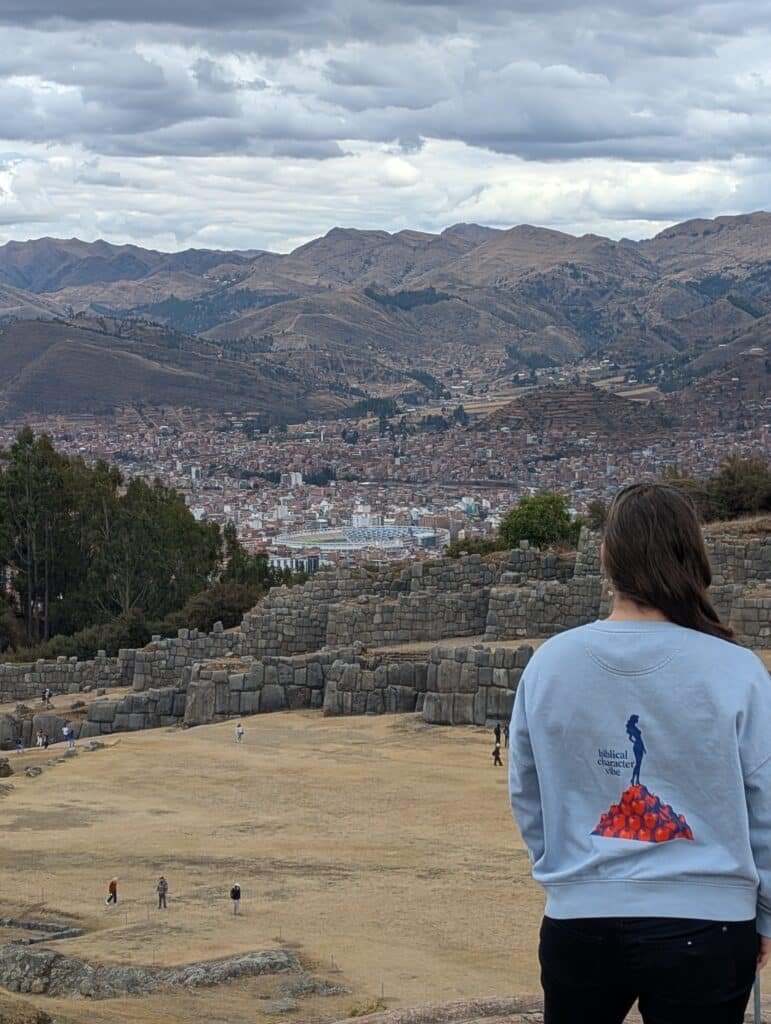
Cusco viewed from Sacsayhuamán
What am I doing with my life? A question that has been pressing on me for years. A question I perhaps should have outgrown at another age. What am I doing with my life has become a pervasive feeling that gnaws at me from the inside. But something has changed. I was used to finding my answers alone. But from one I became two, and I no longer have to make my decisions alone, for they are reflected both on me and on the other. Andrei helps me contain the fervour of this search for self, which, engraved on a somewhat more fragile sense of self, has become hyper-inflamed and will not leave me in peace. Talking with him calms me; perhaps what I am is enough. Life is a long string of decisions. He tells me to stop confusing my career with who I am. Perhaps I need to develop other sides of myself too.
I bathe in this warmth that comes from being beside him. Every word, every touch is charged with meaning. Now I understand why I live. Of course, a whole host of existential fears I didn’t have before are now blooming in me as well. Perhaps on certain planes I am, and am becoming, less than I used to be, but I am a less with much more meaning.
–You could keep writing, you know?
–But my inspiration to write comes from my studies and my work; the emotions there are much more intense, and that is what motivated and inspired me to write.
He, once again, finds those words that help me choose the more temperate path. We kept having this conversation for almost our entire trip. It was hard for me to give up the extra tasks I had taken on at work. Teaching, in particular, had turned out to be important to me.
–It’s normal to keep thinking and changing your mind; the decisions you have to make have become much more complex now. It’s no longer only about what you want to do, but also about what is good for you to do. And that is something unknown to you.
I was afraid that if I took my foot off the accelerator, I would not be able to pick up the same activities later, and in essence my career, from the same point. I was afraid of the irreversibility of decisions. And probably of time. And, in essence, of life. His calm and his warmth drove away my fears, and I was completely unused to that.
I move more slowly, and I have stopped running towards an ever-new horizon, waiting to be discovered, meant to transform me. In his presence, the constant irritation of dissatisfaction disappears.
1.1 From Cusco to Pisac by colectivo
That day, we set off on foot before dawn towards the bus station. On our way, we admired neighbourhoods of unfinished buildings, left in bare red brick. The small local traders were opening for the day. From what I had noticed, there were no big chains of shops or other companies in Peru. On the street there were general stores or shops specialising in different kinds of goods: building supplies, household items, lots of rotisseries and small kitchen-restaurants. The shops and flats had no bars on their windows, which meant we were in a good neighbourhood and that we were safe. As we were heading down towards the bus station, along a street that sloped steeply, a colectivo honked at us.
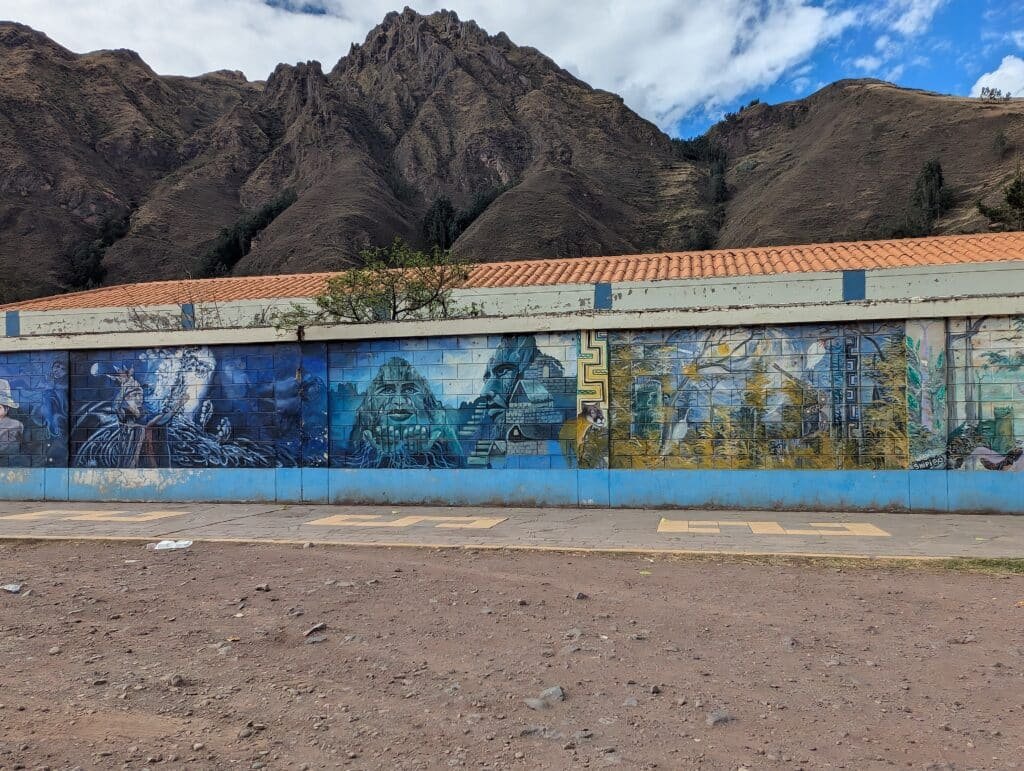
Sacred Valley Peru, from the colectivo Cusco
–To Pisac?
We nodded. How had they guessed? Perhaps because we were obviously travellers, and we would have had no reason to come to that part of the city other than the bus station.
We climbed in, grateful that we didn’t have to wait at all. Next to us, four or so men were passionately discussing football. An elderly lady, in a tall hat and very dusty traditional dress, held a large woven basket in her arms. We passed by Sacsayhuamán, the ceremonial complex above Cusco, the historic capital of the Inca Empire, a complex of monumental walls made of carved monoliths fitted into one another without mortar.
I was thinking that it would be a pity for my education to go to waste, while at the same time thinking up at least five alternative plans for the future. Andrei calmed me, telling me to use my knowledge first of all to take care of myself.
1.2 Pisac, Peru: the ruins, the oven and a wedding
In Pisac, we got off the colectivo and immediately struck up a conversation with a taxi driver. He wanted to take us around the town; we thought it would be good to have someone to go with up to the mountain communities: Chawaytiri and Paru Paru. We were lucky, because the driver turned out to be extremely sociable and willing to take us in his car up to over 4,000 metres. But first we decided to take a walk through Pisac, a mountain town, quite touristy, a classic destination in the Sacred Valley. Above us, on the steep slopes covered in vegetation, we could see the terraces of the Pisac ruins, remnants of Inca architecture. In the end, we found the village oven, a traditional dome-shaped clay oven, 200 years old. It amused me that this was exactly where the vloggers we had followed through the Sacred Valley had gone too. We stopped there as well for a few very delicious empanadas.
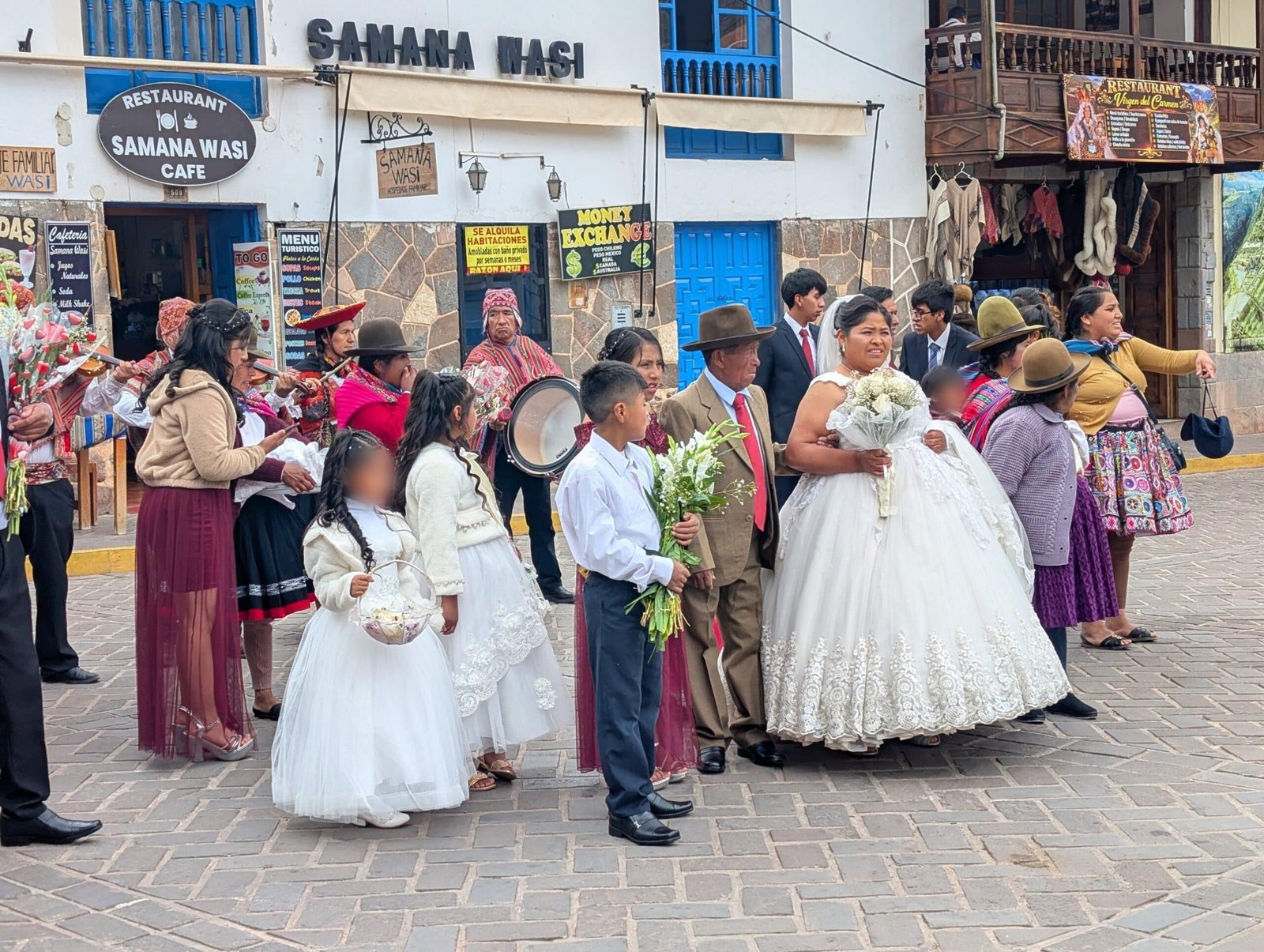
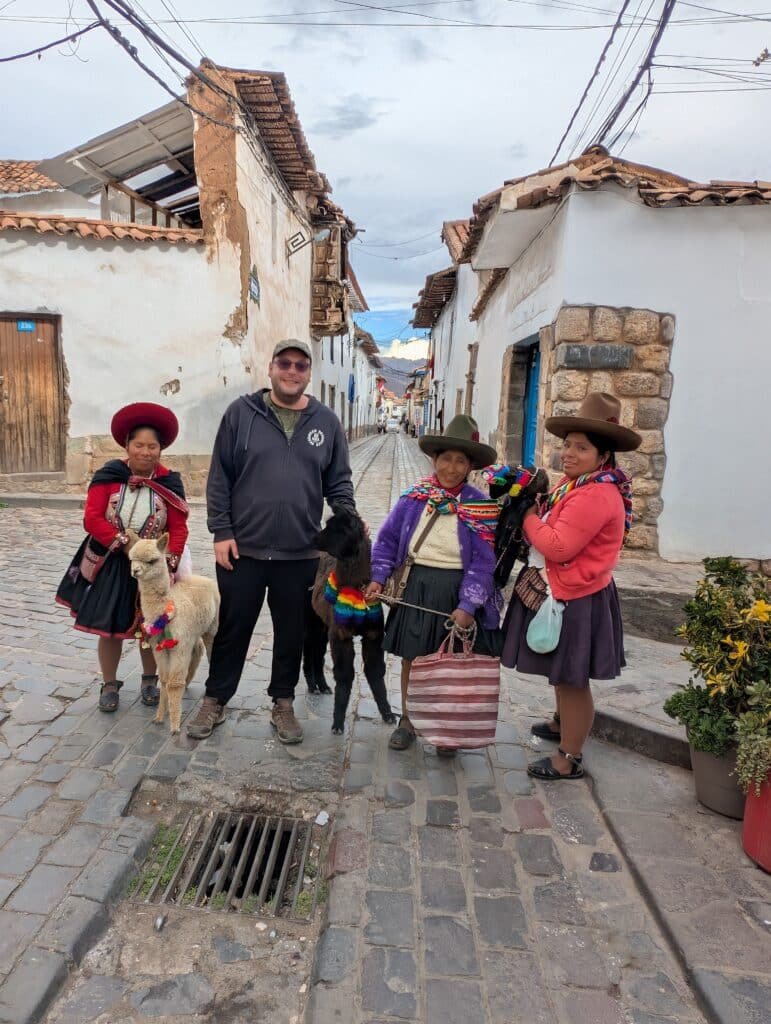
In the Plaza de Armas, present here as everywhere, we came across a wedding. A plump bride in a white, puffy dress with a thousand layers was accompanied in procession by a small band rich in wind instruments. Their rhythms filled the square with vitality. The other women were dressed in colourful traditional costume, in shades of pink surrounded by multicoloured flowers, all embroidered on a black background. Two women and an alpaca came up to us in the hope of getting a few coins. They were everywhere in the tourist areas, these women trying to supplement their income by posing in their Andean outfits for tourists.
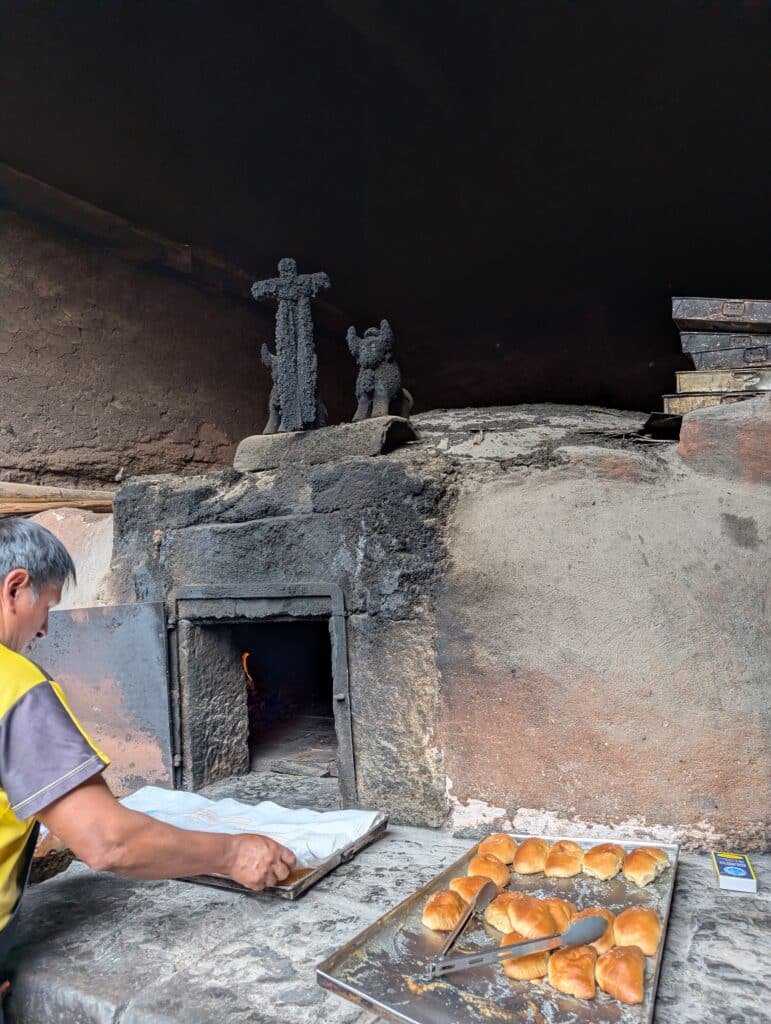
The community oven, Pisac Peru
1.3 Travel with locals: Up into the Peru mountains
We met up with the driver again and set off along the winding roads towards the heights. He was sociable and eager to tell us about the little corner of the world where he lived. His name was Ernesto. As we climbed steeply, he told us about the crafts of the people in the area, about the farm work, the crops of quinoa, maize and potatoes, about what it was like to be a father in Pisac, about the education system and how you had to send your children to private schools because they were much better.
He was happy to talk about what the area had to offer tourists too; personally, he was a supporter of turismo vivencial, a form of community based tourism: staying and living with locals in their families.
It began to drizzle, and then to rain harder. He and Andrei were talking in Spanish; I deduced what I could from their conversation. There was a note of pity in his voice for the fate of those in the rural communities.
– Down in the valley, we have more varied activities; there is trade, there are all kinds of small businesses providing the services the towns need, but up there people live only from farming.
And it was just as he said.
It was raining, and the drops clung to the window. I was a spectator of the conversation, caught between deciphering the Spanish and my contentment at simply listening. Something was escaping me; something was slipping between the thick drops. Perhaps it was the feeling of being the wanderer at the side of the road in Abbas Kiarostami’s photographs, steps always stretched towards an open and unknown horizon. Is this human nature, always missing something? Something it once had, something it never had.
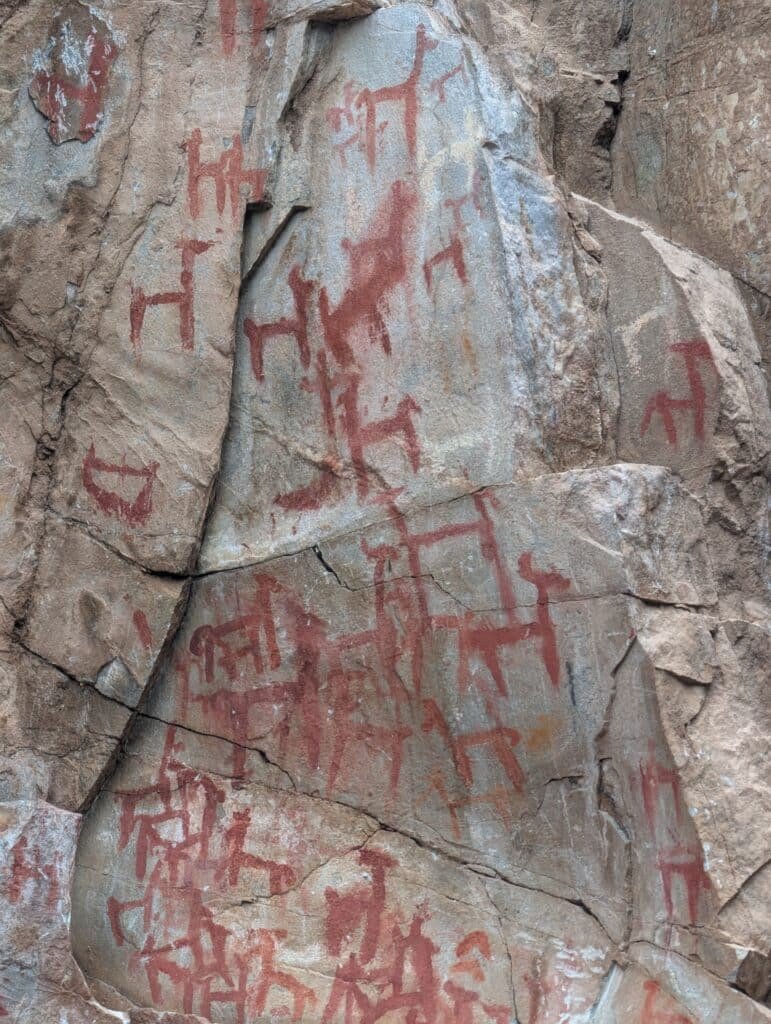
Prehistoric lamma paintings
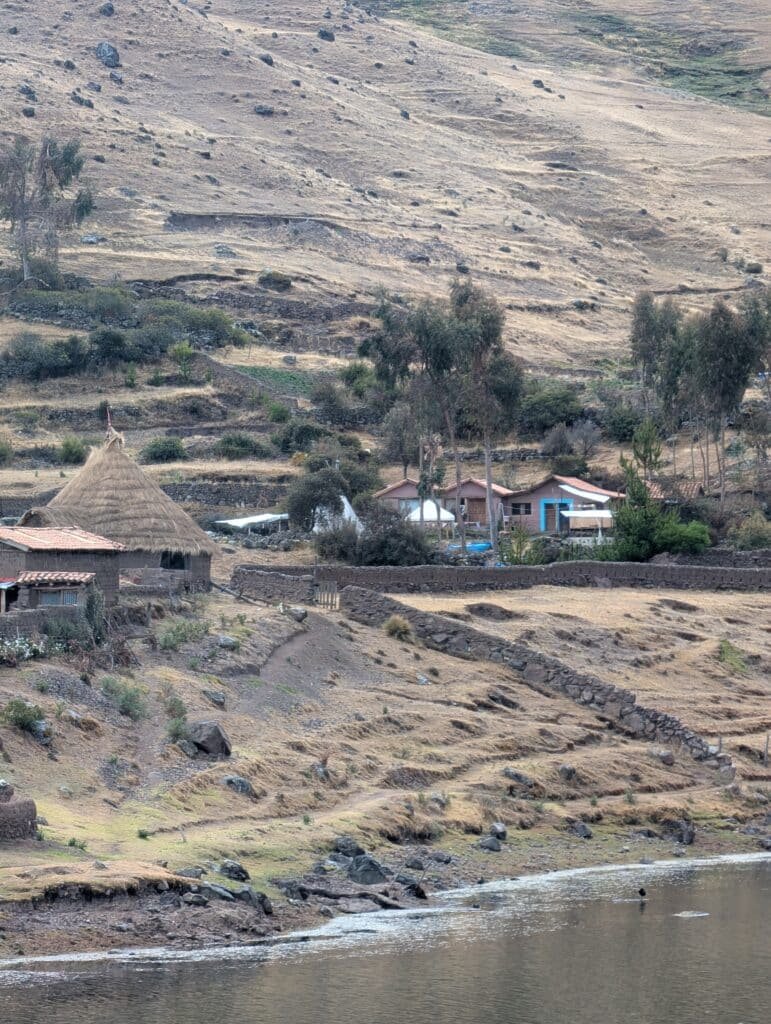
Andean community: Paru Paru
The trickle of the water drops reminds me of the passing of time, of transience. I looked at the drops and at the landscapes and tried to bring a feeling of contentment into my mind. After all, even when I was the solitary wanderer at the side of the road, I was missing something far more important. I was missing a half with whom to share the solitude, which I nonetheless loved.
The blurred window and the drops of water, through which I could see the mountains and villages, brought a smile to my lips. I have seen such a wealth of beauty. And I feel that I am walking a road so rich in feelings and experiences. Perhaps the fact that I no longer hitchhike and no longer throw myself headlong into the world means that I am changing, that I have accumulated a block of experience that I have understood and integrated, and that this lets me move on to something else. I no longer need to prove my experience at any cost. I no longer need to prove anything. Now I can simply be, and try to coexist with Andrei in a way that is fulfilling for both of us.
1.4 Chawaytiri: meet the locals, the weavers and their natural dyes
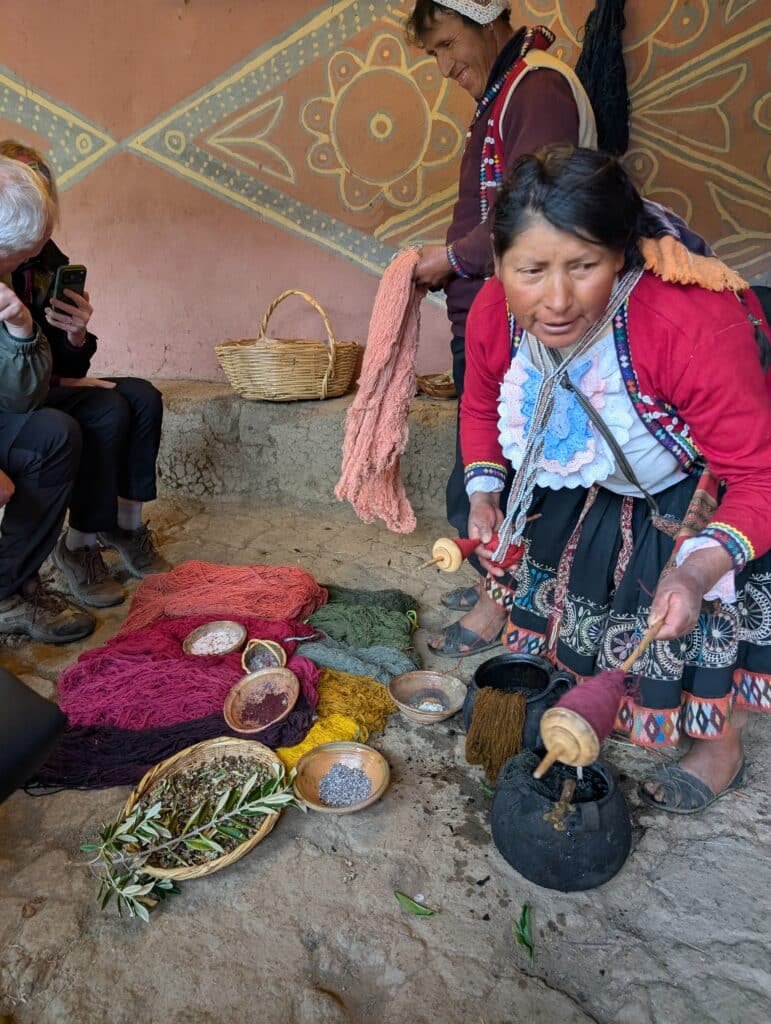
We stopped first at a rock face with cave paintings, which showed a herd of llamas. Then, passing through the village of Chawaytiri, we saw a few villagers giving a demonstration of wool processing. They were very close to the earth, able to use its resources directly to make all kinds of textiles. From local plants and minerals found in the mountains, they managed to dye the fabrics in intense, lasting colours.
They used cochinilla, cochineal dye, for red, qotokiswar and amarillio for yellow, chillka for green, haway for pink, quechima for brown and hintetq for dark green. We took shelter under a covered porch and watched them boil the tinctures for the dyes and mix them with the wool that was about to be spun.
Rain, colours and people working hard for their living. Someone recently gave me the speech that after a certain age, other people’s projections no longer matter: you do what you want. That’s what you tell someone who, in some ways, has remained a child. A “doing what I want” is rather infantile, but I certainly have more freedom in choosing my own road than my own mind lets me see. In my adult life, I have never felt closer to myself than when travelling. Perhaps here, along such rainy, high roads, truly lies my road.
1.5 Paru Paru, an Andean community
We left Chawaytiri and climbed up a neighbouring valley towards the community of Paru Paru. They lived at the edge of a superb glacial lake. When we arrived, the air was heavy with water and with melancholy. I drew the clean air into my chest, feeling it give me vigour. On the shore of the lake, in a house with large glass windows, there was a small museum. We talked with some local women, who told us about local life in the area. They believed in Pachamama, and their lives were bound to the seasons and the harvest. They told us simply that their greatest joys come when the harvest turns out well, and the greatest sorrows of their lives when something happens to the harvest.
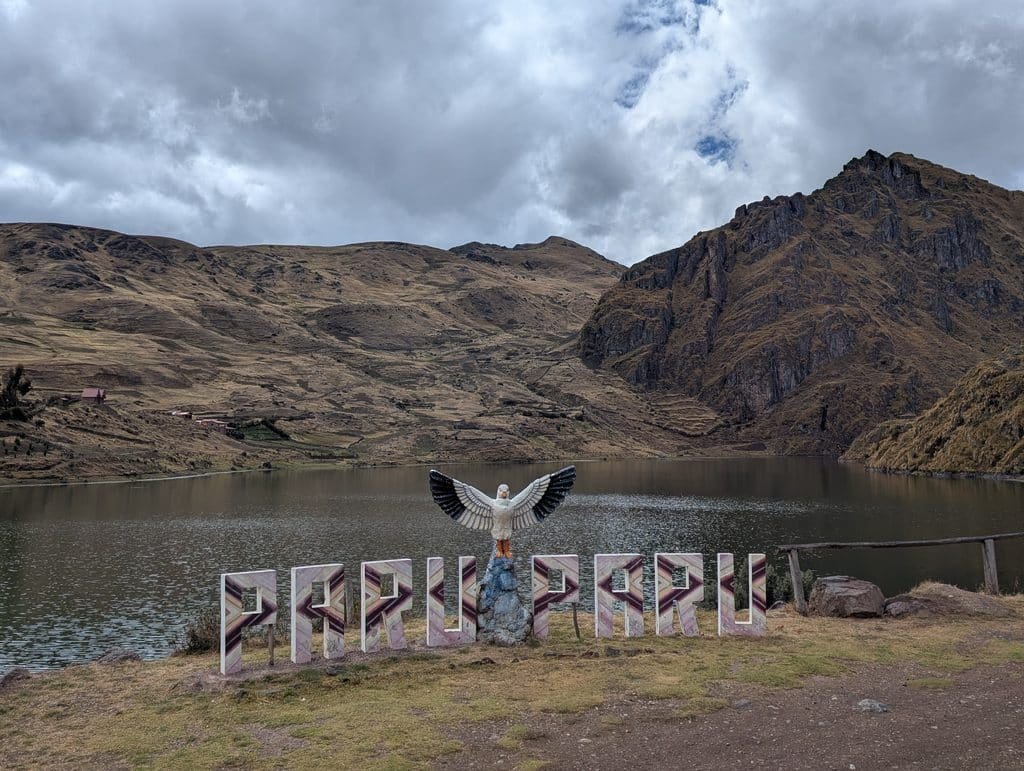
Time. Fallen in heavy drops into a bottomless hollow. There is something in speech, in the feeling that flows through you when you manage to connect with the other. On the far shore of the lake, I looked at a little round house with a conical thatched roof. Such different lives from mine. In the community they spoke Quechua, not even Spanish. How little these people must know about the wider world! The municipality, like those of the neighbouring villages, had built them a sports hall and a football pitch. They grew potatoes, because maize grew down in the valley. They spoke with determination about their lives.
1.6 Down the Urubamba River: Lamay, Calca and Urubamba
Space. The Milky Way flows into the Urubamba River and forms the Sacred Valley. The road wound quietly along the bottom of the wide glacial valley. We continued to Lamay, where we stopped for lunch and tasted cuy, Peru’s roasted guinea pig. Three boys were climbing the rock face across the road. I would have joined them; the weather was right for it. We carried on and stopped for the day in Calca.
In Calca we stayed at a very well-kept guesthouse, with a superb courtyard full of flowers and a view of the mountains behind. Some of the hills were used as natural billboards. And because there was no large-scale commerce, the messages on the hills said a lot about life in these small towns. Somewhere behind the house, the name of Calca’s high school was written in giant letters. Our host was a young woman, curious and full of cheer. She had two big dogs, and one of them, the younger one, stuck to us like a burr, trying at all costs to win our attention. He also had a favourite game: hunting shadows. It kept him always alert and ready to attack, since he was almost always surrounded by enemies.
Calca is a paradise for anyone who wants to quiet their heart in a simpler world.
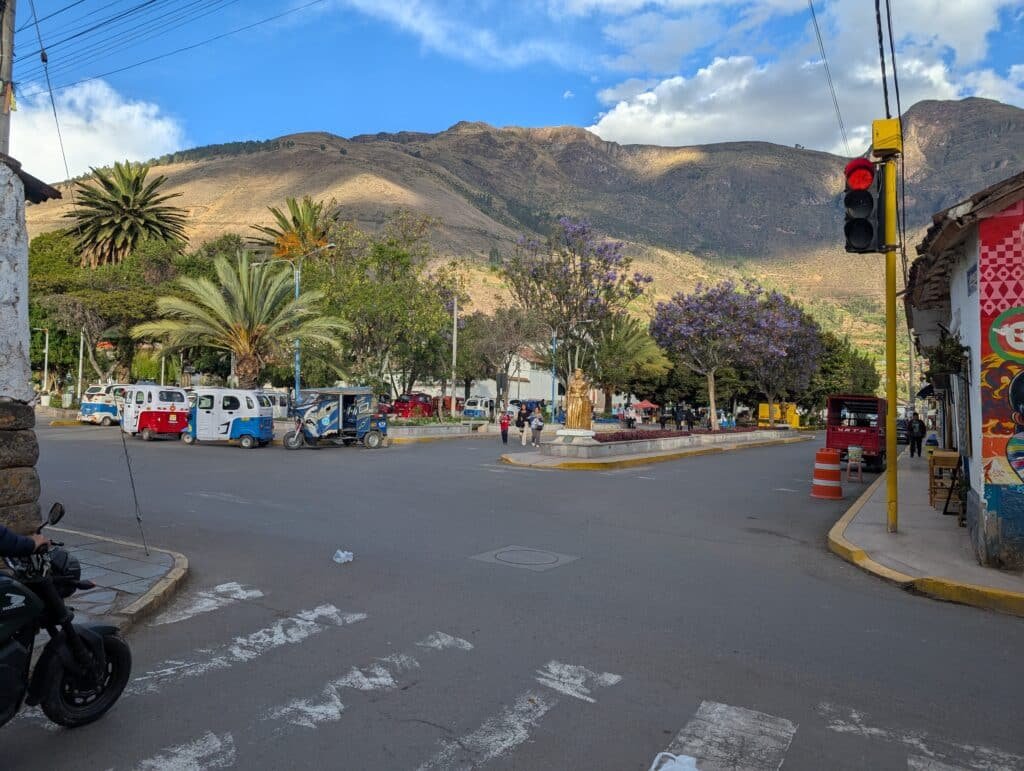
Off the beaten path: Calca Peru
It was the weekend, and many of the locals were in the centre. We bought a variation of chicha morada and stopped to watch life go by. A group of girls was doing a flash mob in one corner of the esplanade. By the fountain, children of all ages were riding a kind of mechanical pony, which they drove themselves with graceful movements that mimicked riding. It was noisy and full of life. Some young soldiers sold us a military newspaper, appealing to our patriotism. Someone was repairing watches, and various other traders were trying to sell their goods. We stopped at a tavern where the owner had reached the age at which she could keep everyone on a short leash. The staff smirked behind her back. Andrei had a straight pisco and chased it with anticuchos, beef hearts grilled on skewers. We left in high spirits and stayed up late looking at the starry sky. Truly, the Milky Way seemed to be trickling down towards us.
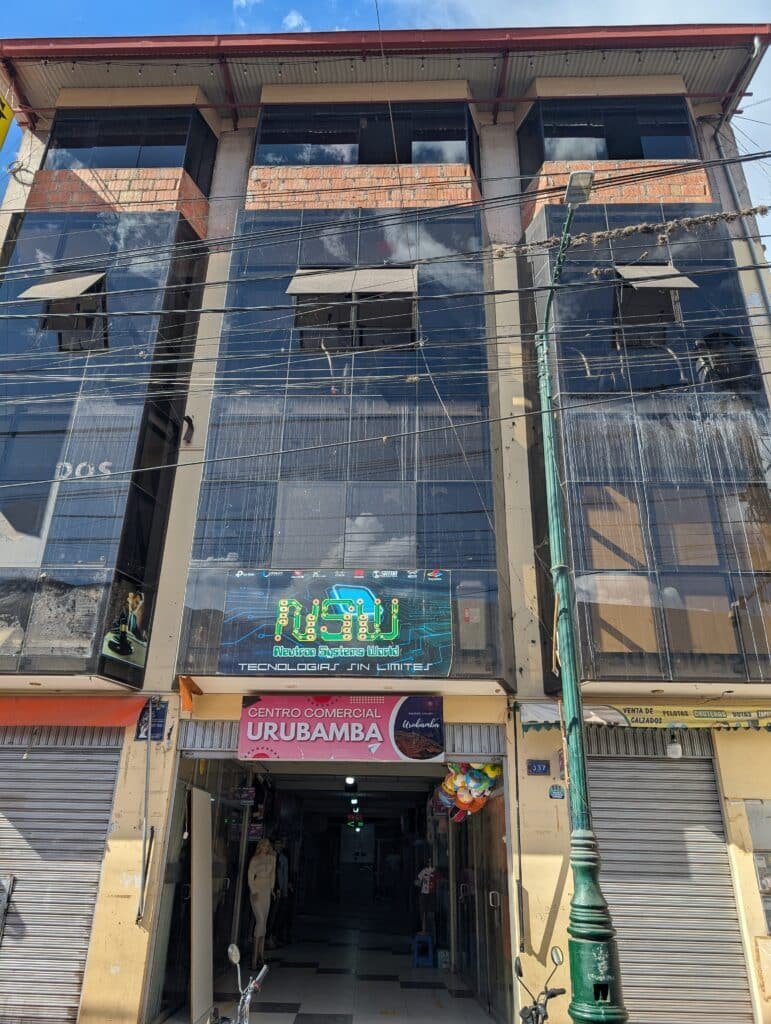
Authentic travel: Tech center in Urubamba
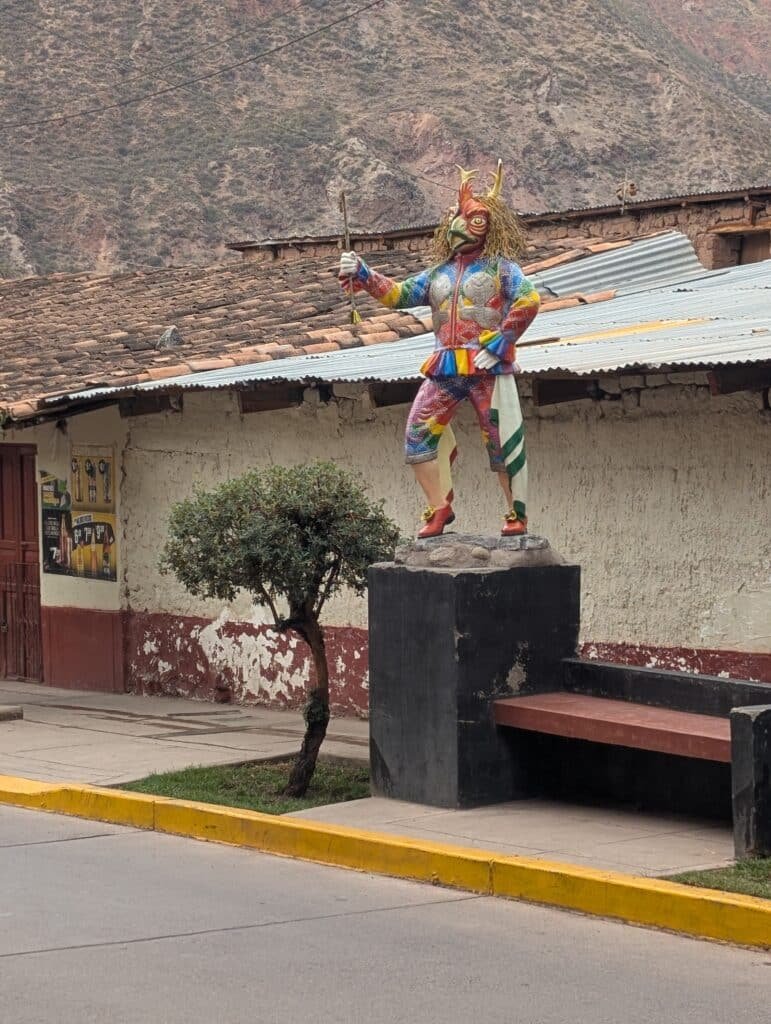
Statue of Ukuku dancer
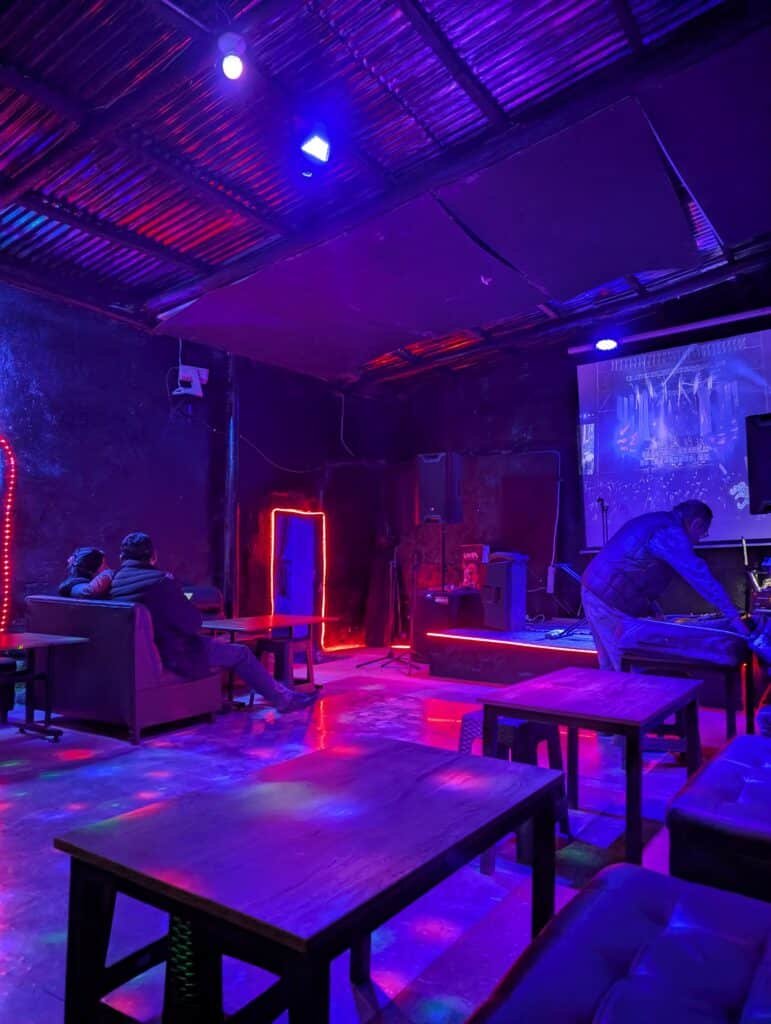
Living like a local: Urubamba disco
The next day we set off for Urubamba, where, once we arrived, we wanted to repeat our trick of finding a driver. In fact, I would have liked to hitchhike. But there were other options, that period of my life really was behind me, and Andrei said, rightly, that it wouldn’t be fair of us, since we were in a fairly poor region of the world. So we set about looking for a driver. We weren’t as lucky as the first time, and we ended up with a less talkative driver, who was suspiciously interested in the camera we were filming with and in how much it cost. We misled him, saying it was second-hand.
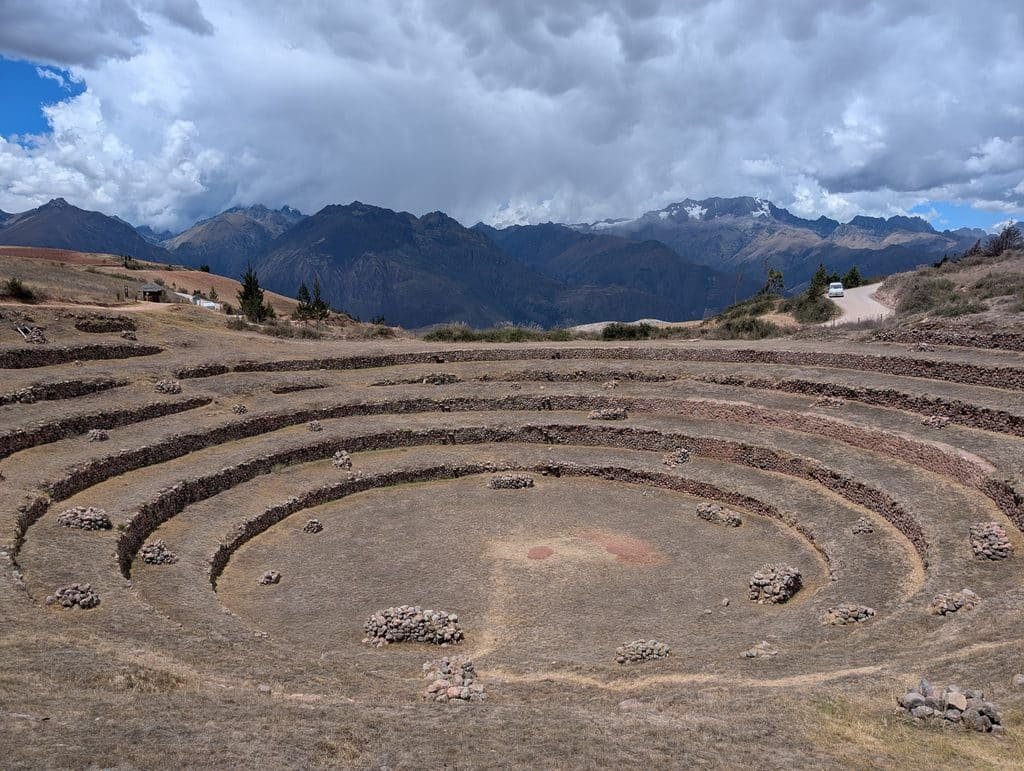
High on the plateau between Urubamba and Maras, at about 3,500 metres, the earth opens into giant concentric circles. Moray’s terraces descend in rings into natural hollows, like an amphitheatre built for the sky. The most widely accepted theory is that the site was an Inca agricultural laboratory. Because of the depth and orientation of the rings, the temperature differs between the top and the bottom terraces, by as much as 15°C according to some studies. This may have let the Incas test how crops such as maize and potatoes would grow in different climates. Standing at the rim, the geometry seems almost too perfect to be agricultural. Moray is included in the Cusco tourist ticket (boleto turístico).
A few kilometres away, the Salineras de Maras pour down a steep hillside in thousands of small terraced pools, white, ochre and pink depending on the light and the season. A salty spring emerges from the mountain and is channelled from pool to pool. As the water evaporates in the sun, it leaves behind crystals of salt, which local families still harvest by hand, as they have since before the Incas. Each pool belongs to a family from the surrounding communities, who work it through a cooperative. The salt mines have a separate entrance fee, not covered by the tourist ticket. From the salt pans, a path leads down the slope to the Urubamba River, an easy walk back to the floor of the Sacred Valley.
We continued our pilgrimage across the plateau. It was a different world from the valley. Here people lived in pre-industrial times. We passed through villages where poverty shone through, letting only clay and potatoes show. The most telling scene was on the shore of Lake Huaypo: beside a modest house, villagers had yoked two oxen and were ploughing with them. Andrei was moved by their toil, so cut off from our world, and he wrote a poem.
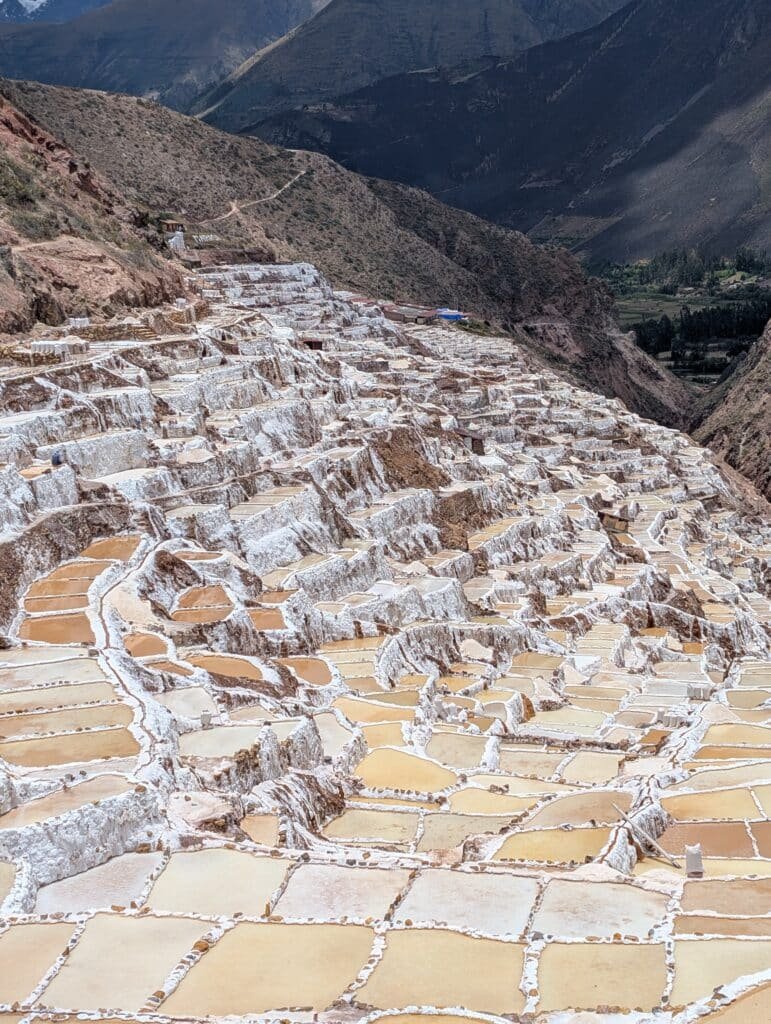
Maras salt mines
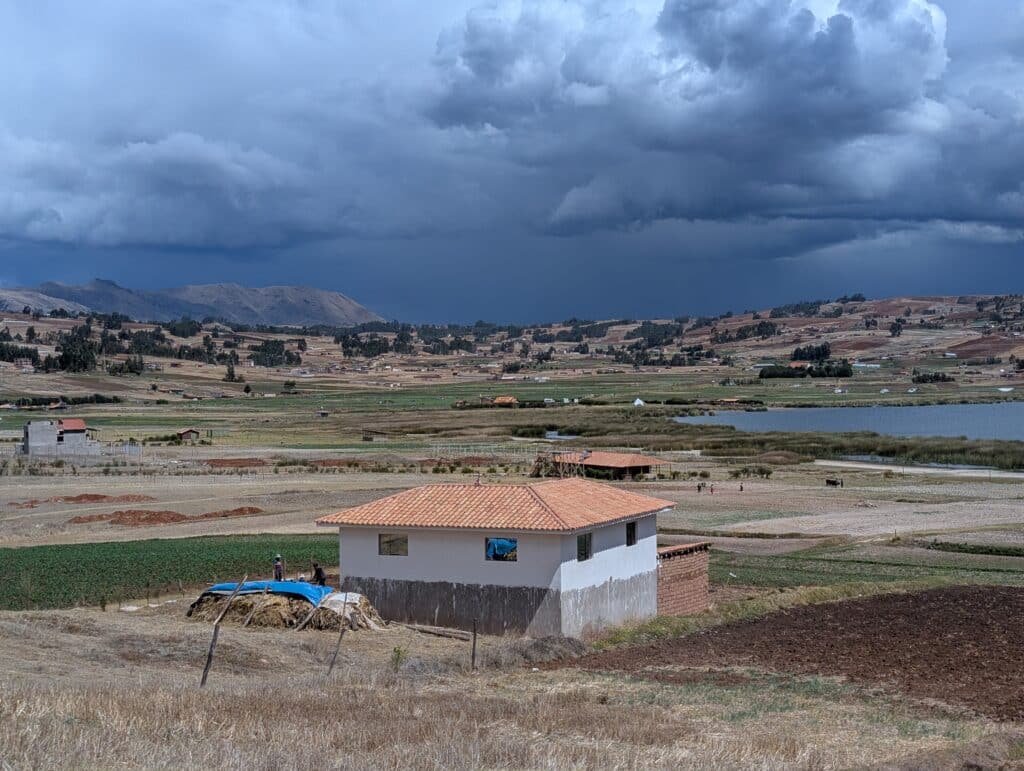
Plowing oxen
The clouds are covering the heights
And from the valley we can’t see
The struggle, sweat and the deep sighs
Of the oxen who still plow
And from here we cannot hear
The plowing oxen empty bites,
Warmish rains above the corn.
And when the oxen will be torn
With their tears absorbed and dried
We wish we would’ve seen and tried
The corn had died and we’re alone.
In the evening, we went out for a walk through the little town. The rhythm of Latin music drew us into a local disco.
–Look, here, in this village disco, with these people, this is where I like to be.
Andrei told me.
True enough, it had an unpretentious charm. We listened to a few cumbia songs. A man of about sixty was singing with great feeling. You could see that he himself was there to have a good time. The place was empty: apart from us, there was only one other couple, but that didn’t stop him from warming up the room as best he could. What were the stories of the people beside us? What filled their days? What did they leave behind on the rhythm of the music? I imagined that he traded in something, and I pictured her looking after the household. There was so much love and tenderness in their gestures.
Andrei asked me to dance, and we let ourselves be wrapped in the repetitive lyricism of “Bésame Mucho”.
TLDR
TL;DR: In Part II, Andrei and I travel by colectivo from Cusco into the Sacred Valley, Peru, carrying a question that follows me all the way: what am I doing with my life? In Pisac, Peru we find a 200-year-old village oven and a wedding in the Plaza de Armas. Then a local driver takes us up into the Peru mountains to meet the locals of two Andean communities: the weavers of Chawaytiri, who dye wool with cochineal and mountain plants, and the potato farmers of Paru Paru by their glacial lake. We follow the Urubamba River through Lamay, where we taste cuy, and Calca, where we drink chicha morada and watch the town’s weekend life. From Urubamba we cross the plateau to the circular terraces of the Moray ruins, the Maras salt mines and Laguna Huaypo, where villagers still plough with oxen, and we end the day dancing to “Bésame Mucho” in a village disco.