Table of Contents
Growing up in postmodern times but uncut from the wilderness
In this article I will introduce seven ways into Romania’s wilderness: mountaineering and trekking, canyoning, rafting, caves, climbing and via ferrata, wild skiing, and the cultures that give each landscape its voice.
Some people discover the mountains as adults. I was carried into them. My parents were passionate about the outdoors, and from my very first years we went hiking and camping together, long before I knew the places I was brought into had a name or that most of the world had barely heard of the places we walked through.
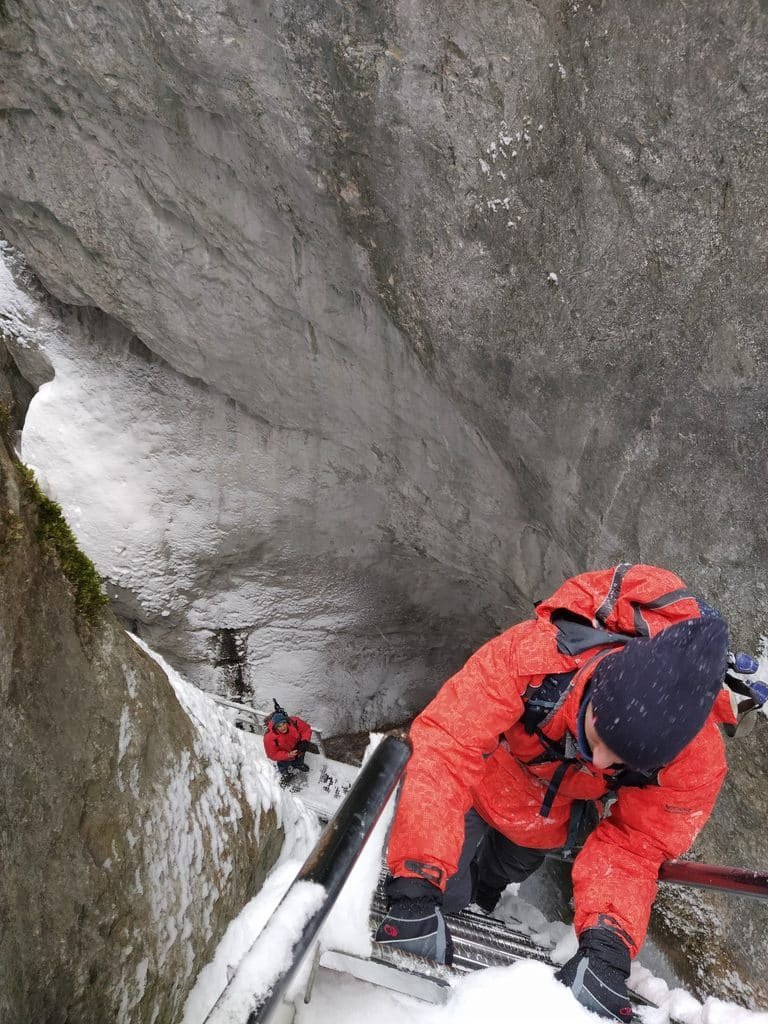
Wild Romania: Seven Ladders Canyon during winter
I remember discovering the world of nature at an age when children discover how to walk: crossing rivers, clambering over boulders, going down towards the centre of the earth through dark, silent caves. I remember swimming in underground lakes, probing every narrow tunnel, every cave gallery desiring to be the discoverer myself. I learned to ski at almost the same time as I learned to walk, and I still remember those first wooden skis. Then, in adolescence, came the gorges and canyons: proper adventures, nothing less than Indiana Jones, balancing on logs above waterfalls.
Every place had a legend and I was walking through a real storybook. It was that part of my childhood that taught me how to be free.
For anyone who hasn’t been to Romania, the Carpathians curve through the country like a spine, and Romania holds the largest share of their arc: ridges above the clouds, limestone gorges, forests where bears still have the right of way.
Not to forget their inhabitants.
Shepherds move their flocks between summer and winter pastures, the Moți of the Apuseni once called across valleys with the bucium, Szekler villages, the Huțuli of Maramureș and Bucovina, Saxon fortified churches and Lipovan fishermen at the edge of the Danube Delta all belong to the geographical space that we call Carpathian-Danubian-Pontic. For anyone searching for the last remaining corners of the wild Europe, or for the best hiking in Romania, this is it: wild, but lived-in.
This article intends to guide you into the wilderness. Below, I introduce seven ways into wild Romania: mountaineering and trekking, canyoning, rafting, caves, climbing and via ferrata, wild skiing, and the cultures that give each landscape its voice. Each has its own detailed article, so treat this page as your starting point.
And do not forget to combine culture with hikes!
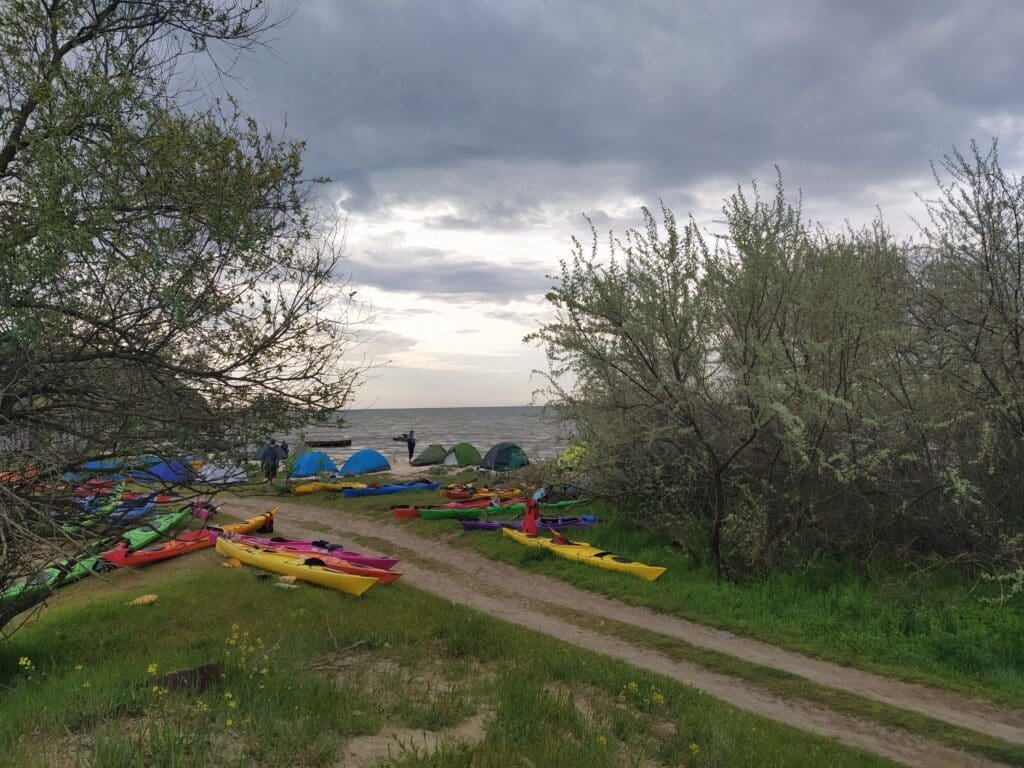
Kayaking in the Danube Delta until the Black Sea
Part I. Mountaineering & Trekking: Carpathian Mountains Hiking
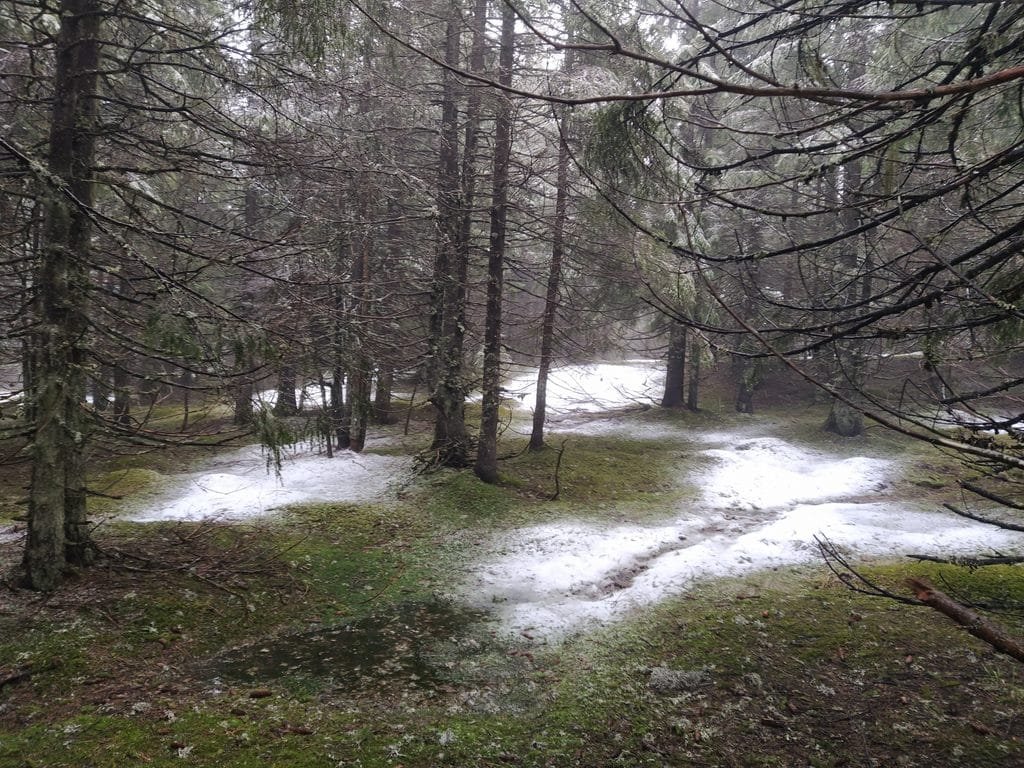
Wild Europe: First snow in Făgăraș
1. Făgăraș: the rooftop of Romania
If you want high altitude and multi-day hiking, walk sections of the Făgăraș ridge, the highest range of the Transylvanian Alps. For days the path stays above 2,000 metres, crossing Moldoveanu Peak (2,544 m), the highest point in Romania, and Negoiu (2,535 m). On Negoiu’s flank, the chained passage of Strunga Dracului, the Devil’s Gorge, leads down to the deep blue of Lake Călțun. The feeling is one of exposure and freedom, with Transylvania spread out to the north and Wallachia to the south. On the southern side, the Valea lui Stan canyon climbs on ladders and cables towards Lake Vidraru, a wild and less-travelled way into the range. You will often meet shepherds with their flocks. Stop at a stână and taste bulz, polenta pressed around sheep’s cheese and baked in the embers. Many of these shepherds come from Mărginimea Sibiului, the villages near Sibiu where moving flocks with the seasons is still a way of life.
2. Retezat: numerous glacial lakes in alpine uninhabited mountains
If you want to get lost in the middle of nowhere, there is no better place than Retezat National Park, Romania’s oldest and a UNESCO biosphere reserve. These are alpine, almost uninhabited mountains, with around 80 glacial lakes beneath jagged, threatening ridges. Bucura is the largest lake and Zănoaga the deepest, and above them rises Peleaga (2,509 m). Give it at least five days: long hikes, nights beside the lakes, and a silence that slowly rearranges your thoughts. For something rarely done, continue west into the wild Godeanu and Țarcu mountains, where you can walk a whole day without meeting anyone. At the foot of the range lies Țara Hațegului, the Land of Hațeg, where Dacian and Roman archeological sites ( Sarmizegetusa Regia and Ulpia Traiana) and some of Romania’s oldest stone churches share the valleys with the villages, not to forget the imposing Corvin Castle.
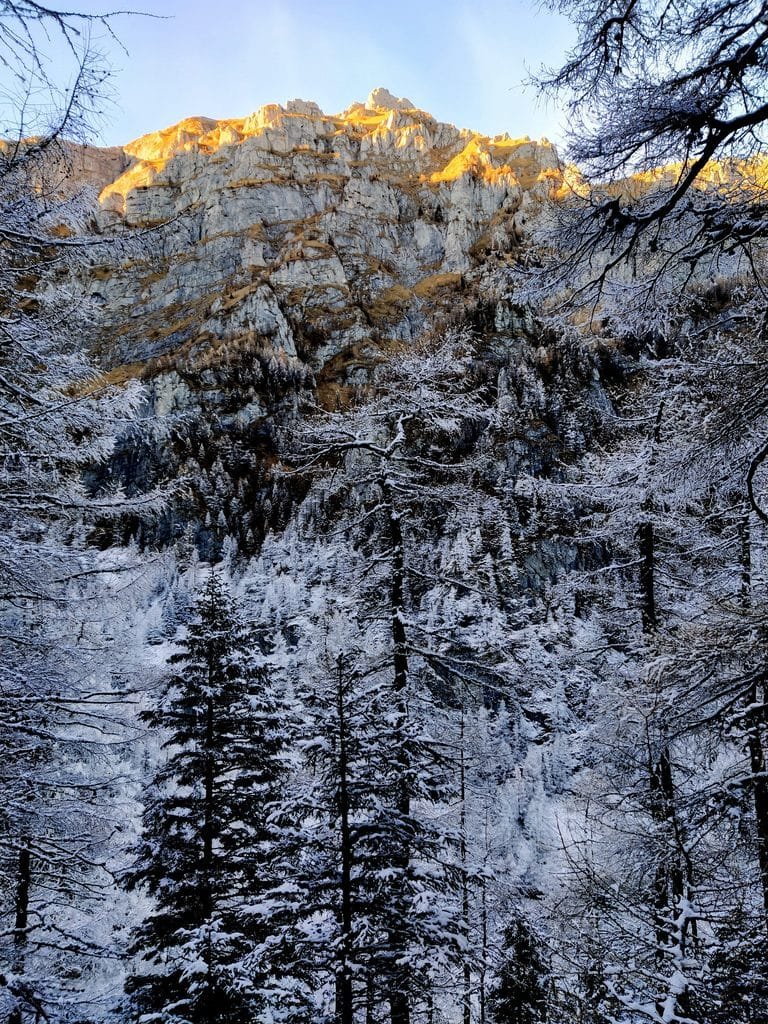
Wild Romania: Bucegi Mountains caught Between Winter and Summer
3. Bucegi: alpine, impressive, easy to reach
Go to Bucegi, the most popular mountain destination from Bucharest and the easiest to reach: by train to Sinaia or Bușteni, then by cable car up to the plateau. Up there, the wind has carved the Babele and the Bucegi Sphinx into shapes that feed a hundred legends. Omu Peak (2,505 m) keeps a hut on its summit, and on the western side Ialomița Cave shelters a small monastery at its entrance. The Bucegi works for easy tourist walks as well as for demanding alpine routes, such as the steep valleys that drop towards Bușteni. Combine a hike with Peleș Castle in Sinaia and Cantacuzino Castle in Bușteni, or come down on the Bran–Moieciu side, where scattered farmsteads climb the hills.
4. Via Transilvanica: the long road back to yourself
If you are going through a challenging chapter of your life and need to reconnect with yourself, and you love long walks and time alone with your thoughts, the Via Transilvanica is your road. It runs 1,428 kilometres, from Putna Monastery in Bucovina to Drobeta-Turnu Severin on the Danube, mostly through hills and low mountains, across seven regions:mostly through hills and low mountains, across seven regions: Bucovina, Ținutul Secuiesc (the Szekler Land), Țara Sașilor (the Saxon Land), Țara Dacilor (Orăștie Mountains Region), Banat and Oltenia’s Mehedinți, the old Roman land on the Danube.
Each region belongs to a different people: Szekler villages, Saxon fortified churches, the Dacian citadel of Sarmizegetusa Regia in the Orăștie Mountains in the many-voiced Banat. Along the way you meet mountain people who are unhurried and untouched by mass tourism. You can walk it in sections, a few days at a time, which makes it the gentlest way into hiking in Romania.
5. Piatra Craiului: the most beautiful mountain ridge in Romania
Piatra Craiului is a destination in its own right and, for me, by far the most beautiful mountain ridge in Romania: a single blade of limestone some 25 kilometres long, standing in the very heart of the country. Its crest is a gallery of towers, needles and deep straight fissures. It is a paradise for rock climbers and a classic pilgrimage for Romanian hikers from every corner of the country. It is also home to a flower found nowhere else on earth, the Piatra Craiului pink (Dianthus callizonus, Garofița Pietrei Craiului). Enter through the Zărnești Gorge, and sleep in Măgura or Peștera, hill villages of shepherds and hay meadows that still keep an older pace.
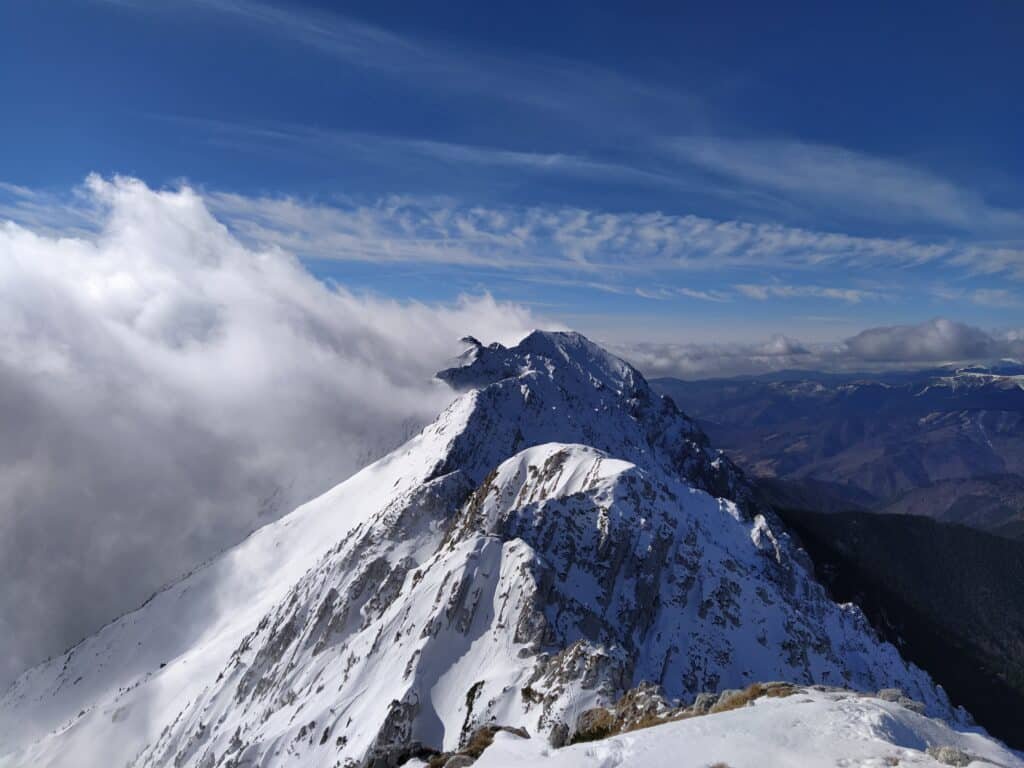
Romania mountains: The Piatra Craiului ridge, suitable for beginners in winter mountaineering
6. Apuseni: karst, gorges and the land of the Moți
The Apuseni are the gentlest of Romania’s mountains in height and the richest in secrets, a karst world where rivers vanish into the rock and reappear somewhere else. On the Padiș plateau, Cetățile Ponorului open as immense sinkholes whose walls plunge towards a cave that swallows the river.
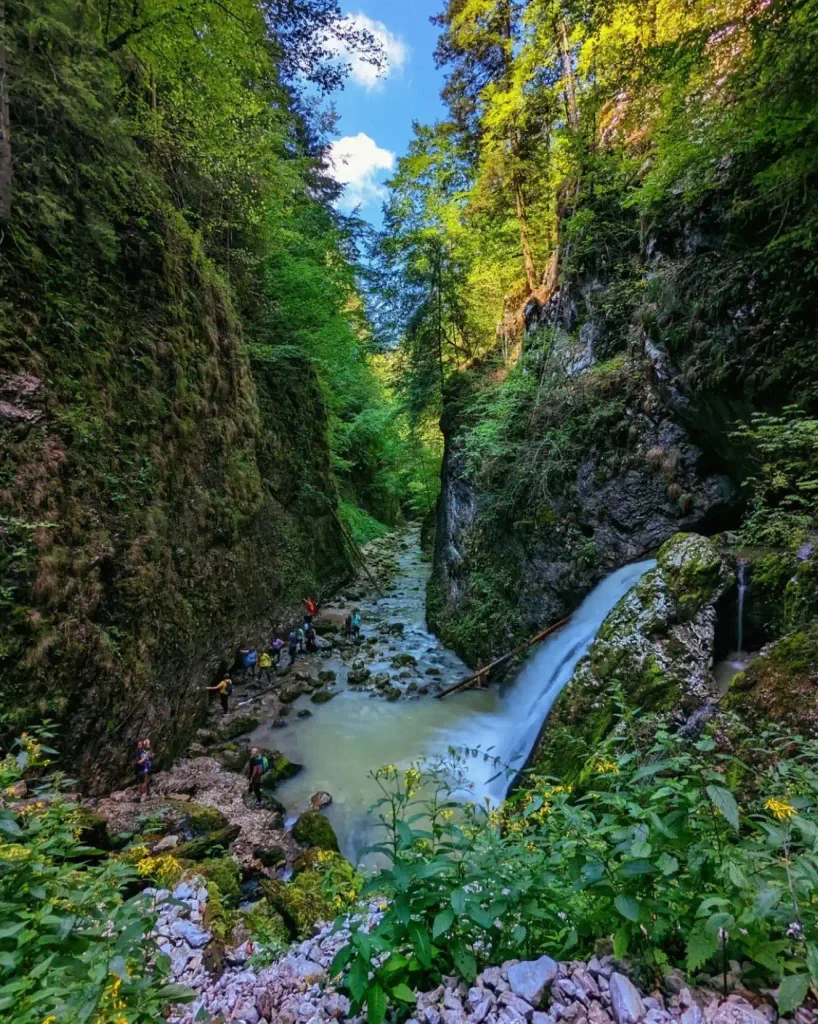
The water resurfaces at Izbucul Galbenei, the source of the Galbena, and from there the Galbena Gorge, becomes one of the most thrilling hikes in the country: chains and cables fixed along the walls take you just above the rushing water, past waterfalls and caves, on a long day’s circuit from Padiș.
This is also Țara Moților, the Land of the Moți, a Romanian highland people of woodcarvers and one-time gold miners who still carry the memory of Avram Iancu. In summer, on the Sunday closest to Saint Elijah’s Day, they climb Mount Găina for the Girls’ Fair, once a matchmaking fair where betrothals and even weddings were celebrated on the mountain, and today a festival of song, dance and costume. Its sunrise is still announced by the tulnic, the long wooden alphorn of the Apuseni, a cousin of the bucium. And the mountains have found new music too: each summer, music festival, like Smida Jazz, brings international jazz to a meadow near Lake Beliș, with caving, kayaking and hiking between concerts.
If you need further ideas about what can be discovered in Transylvania, please have a look on Andrei’s article: Best things to Do in Transylvania: The Complete 2026 Guide
7. Rodna and Maramureș: “Voroneț blue”, living tradition
To combine mountains with living tradition, go north. The Rodna Mountains rise to Pietrosul Rodnei (2,303 m), the highest peak of the Eastern Carpathians, with the glacial lake Iezer below it. The main ridge takes three to five days, and snow can linger into early summer. Beneath lies Maramureș: the village of Breb, eight wooden churches on the UNESCO World Heritage list, including Bârsana and Șurdești, and the Merry Cemetery of Săpânța, where blue-painted crosses tell the lives of the dead with humour. In the valleys of the Vișeu and the Ruscova live Hutsul communities, Ukrainian-speaking highlanders known for their horses and crafts. More of them live across the Prislop Pass in Bucovina, where you can continue to the painted monasteries and the famous “Voroneț blue”.
If you want to read further about the wooden churches of Maramureș please have a look on Andrei’s article: Maramures Romania: The Hidden Northern Loop to Bucovina (2026)
Try hikes combined with ethnography and culture!
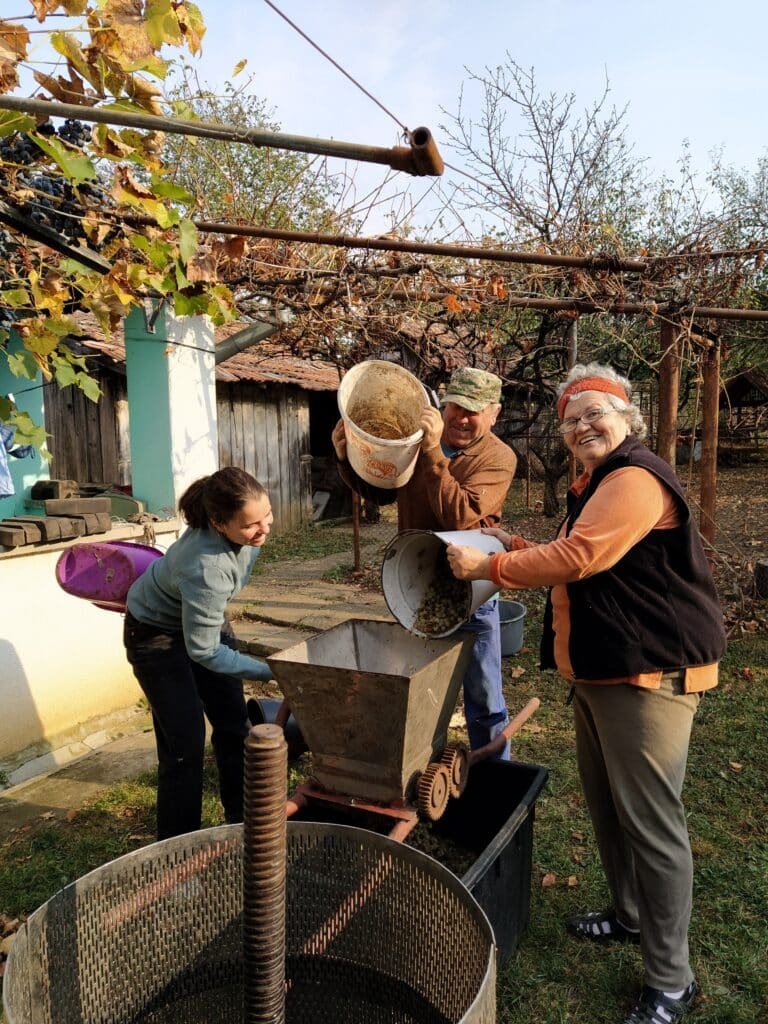
Harvest Days: Making Wine in a Romanian Village
Part II. Canyoning Romania & Gorges: Where Water Carved its own path and so did we
People seasoned in canyoning know that it is one of the most adventurous water sports there is. Be it for winter or for summer. For the wild canyons, one needs proper gear, ropes and harnesses, and proper knowledge of climbing on slippery rocks.
The fun part in a canyon is that it is like a natural adventure park. You have a small waterfall flowing into a dornă (a small lake in karst): what do you do? Climb it down or simply jump into the lake below? Along the waterfalls, you have natural slides polished by the water.
And splash… you are in a long, narrow lake, 20 m deep, cold and clear as only small mountain rivers can be. And the adventure and exploration do not stop here. After jumping a couple of small waterfalls and swimming across a number of lakes, who wants to go straight to the centre of the earth? In karst gorges one can also find rich labyrinthine caves. Highly fun and demanding canyoning will make sure that your adrenaline level stays up all day long. So… let’s see how Canyoning Romania looks like!
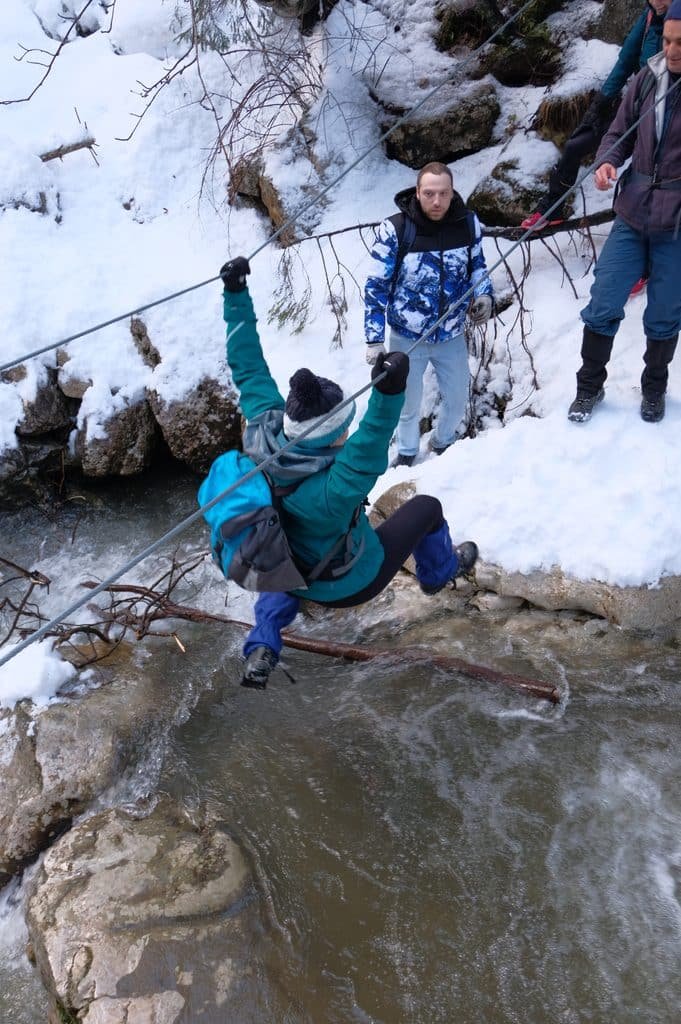
Adventure travel Romania: Cheile Zănoagei during winter
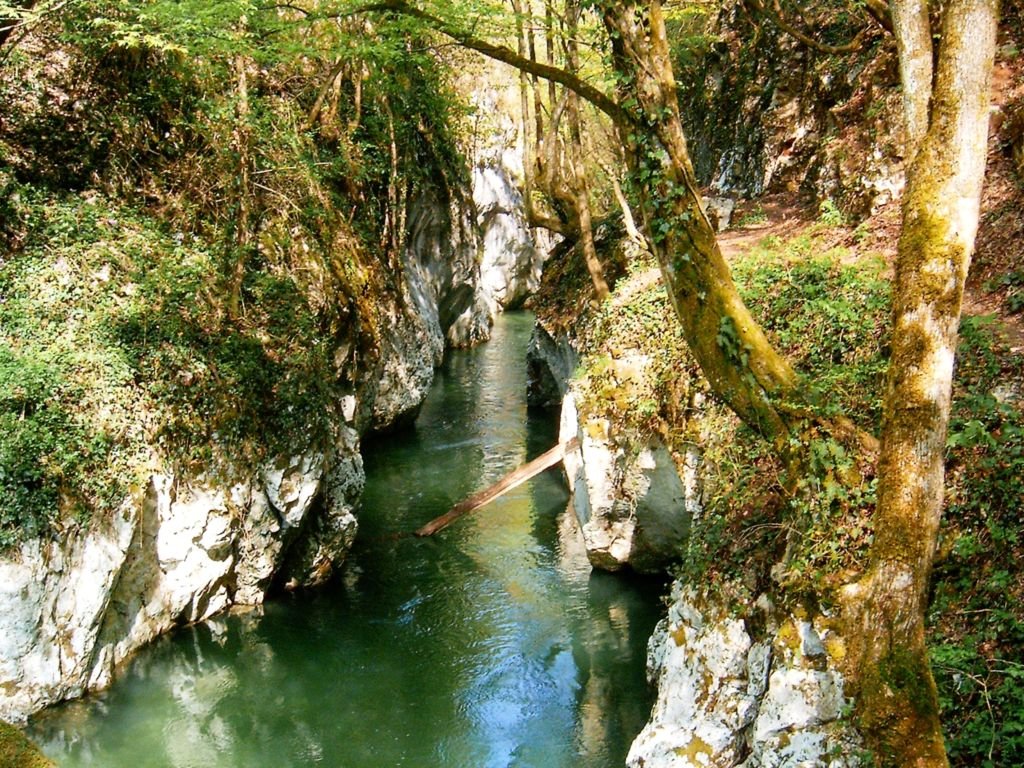
1. Cheile Carașului: the wildest canyon in Romania
If you want the best, the wildest and the most technical, go to Cheile Carașului, the Caraș Gorge in Banat. For 19 kilometres the river cuts through limestone walls up to 200 metres high, in places only two or three metres apart. What makes it unique is the endless succession of dorne, long, narrow lakes that fill the gorge from wall to wall, linked by small waterfalls and swallowed now and then by caves. The upper sector, from Țolosu Cave to Gura Comarnicului, has no trail at all: you swim, wade and scramble for hours. At the gorge’s mouth lies Carașova, home of the Krashovani, a Croatian community that has lived here for centuries; even the place names along the river, such as Prolaz, “the crossing”, speak their language.
2. Nera Gorge and the roads carved in stone
The Nera Gorge is the longest gorge walk in Banat and one of the wildest in Romania: 22 kilometres of limestone canyon between Șopotu Nou and Sasca Română. It follows the river closely, and in places the path becomes a narrow terrace carved into the rock above the water, secured with cables. At La Tunele, the trail passes through short tunnels cut straight through the stone. Most people make it a two-day adventure, camping at Damian’s cabin halfway. Halfway through, a short detour leads to Lacul Dracului, the Devil’s Lake, a deep, dark-green karst lake at the foot of the cliffs. The Nera is also one of the most beautiful rivers in Romania for rafting: trips start from Șopotu Nou and are liveliest in spring, when snowmelt swells the river. In summer they become a gentle float through the gorge.
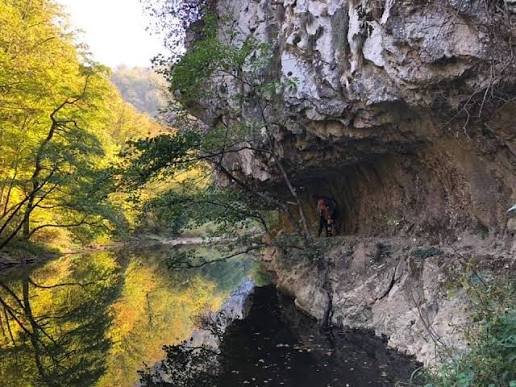
At the entrance to the gorge, the Czech village of Ravensca, one of the six Czech villages of Banat, keeps the language and customs brought by settlers around two hundred years ago.
3. Beușnița: the turquoise eye and the growing waterfall
On the western side of the national park, a separate, easier trail starts from Podul Bei. In about an hour and a half along the Bei stream, past the Văioaga waterfall, the Bey’s Eye, a small lake of an unreal turquoise. From there, the blue markings take you in 20–30 minutes to the Beușnița waterfall. It is about 15 metres high and made of travertine: the limestone-rich water deposits minerals on moss and plants, so the waterfall keeps growing year after year.
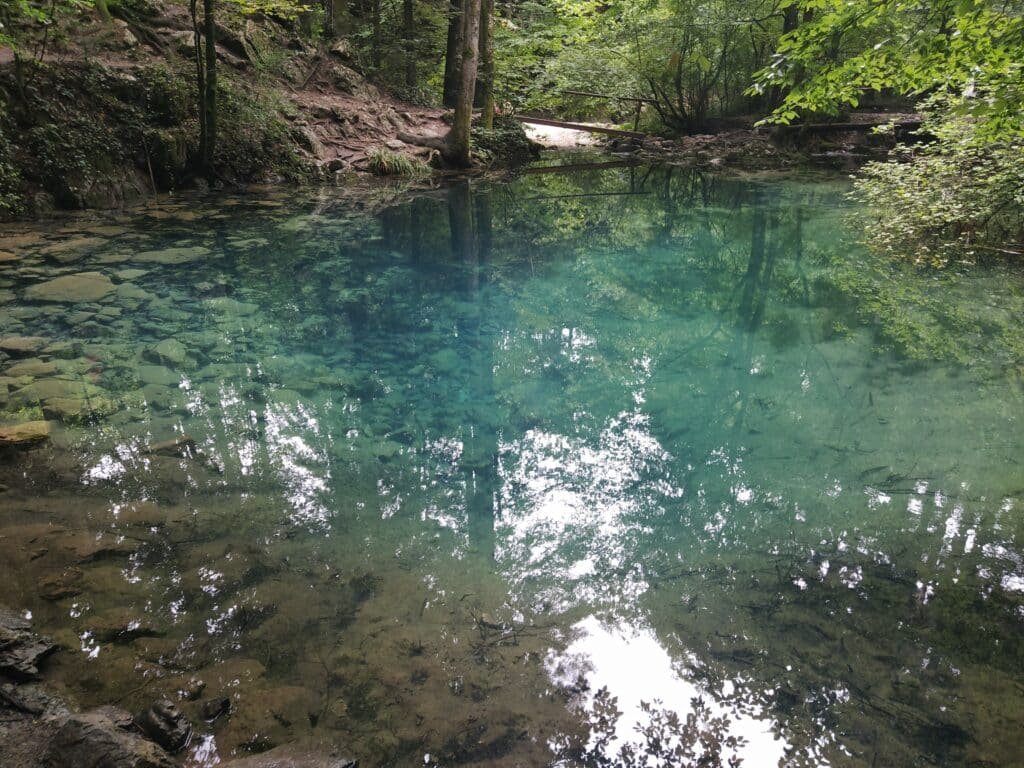
Southern Carpathians: Bey’s Eye Lake
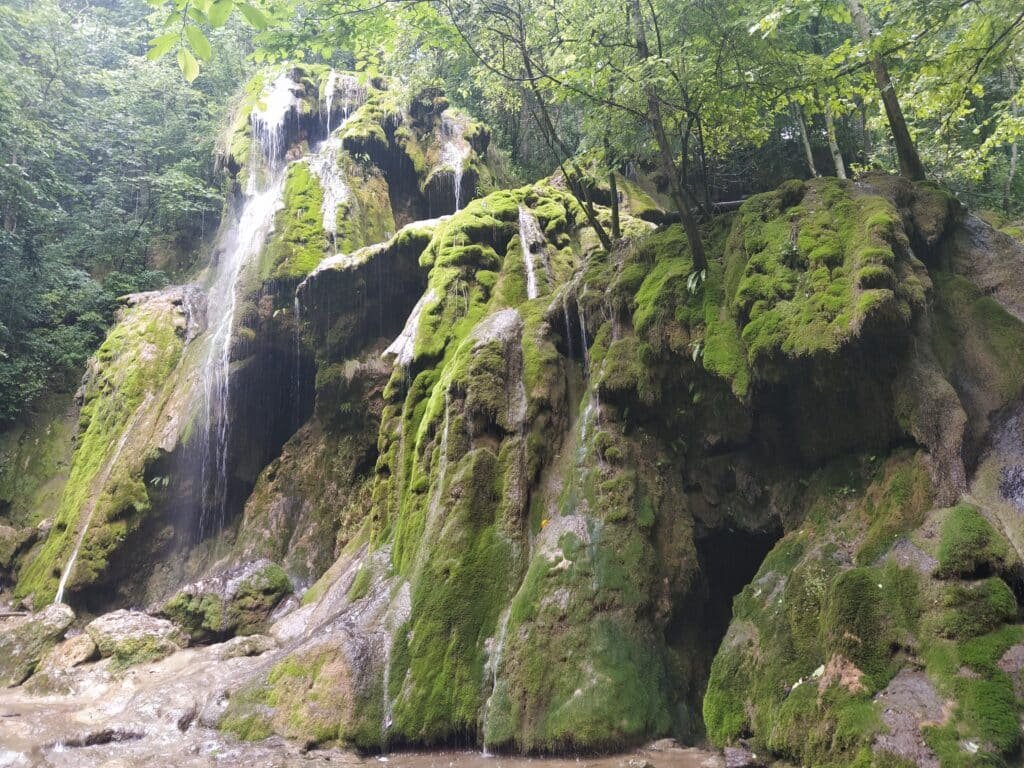
Southern Carpathians: Beușnița waterfall
If you pass through Târgu Jiu on your way to or from the Cheile Nerei-Beușnița National Park, don’t forget to stop and visit the sculptures of Constantin Brâncuși, one of the best-known representatives of modernism. His monumental ensemble, created in 1937–1938 as a memorial to the soldiers who fell in the First World War, stretches across the city along a single axis, the Avenue of Heroes. It includes the Table of Silence, surrounded by its hourglass-shaped stools; the Alley of Chairs; the Gate of the Kiss; and the Endless Column, almost 30 metres of rhythmic cast-iron modules rising towards the sky. In 2024 the ensemble was added to the UNESCO World Heritage list.
4. Bicaz Gorge and Lacul Roșu: stone walls and via ferrata
In the Eastern Carpathians, the road squeezes between the vertical walls of Cheile Bicazului. Just above lies Lacul Roșu, the Red Lake, born when a landslide dammed the valley in the nineteenth century and left drowned tree trunks standing in the water. Via ferrata routes climb the walls here and in the nearby Șugău Gorge. This is the borderland of the Szeklers and the Csángó, where Hungarian and Romanian villages share the valleys and the smell of kürtőskalács drifts from roadside stalls.
5. Turda Gorge, Rimetea and Piatra Secuiului
Hiking in Transylvania is especially rewarding for those who love the world of the village. Near Cluj, Turda Gorge is the classic: an easy walk along the river, with walls for climbers and a via ferrata above your head.
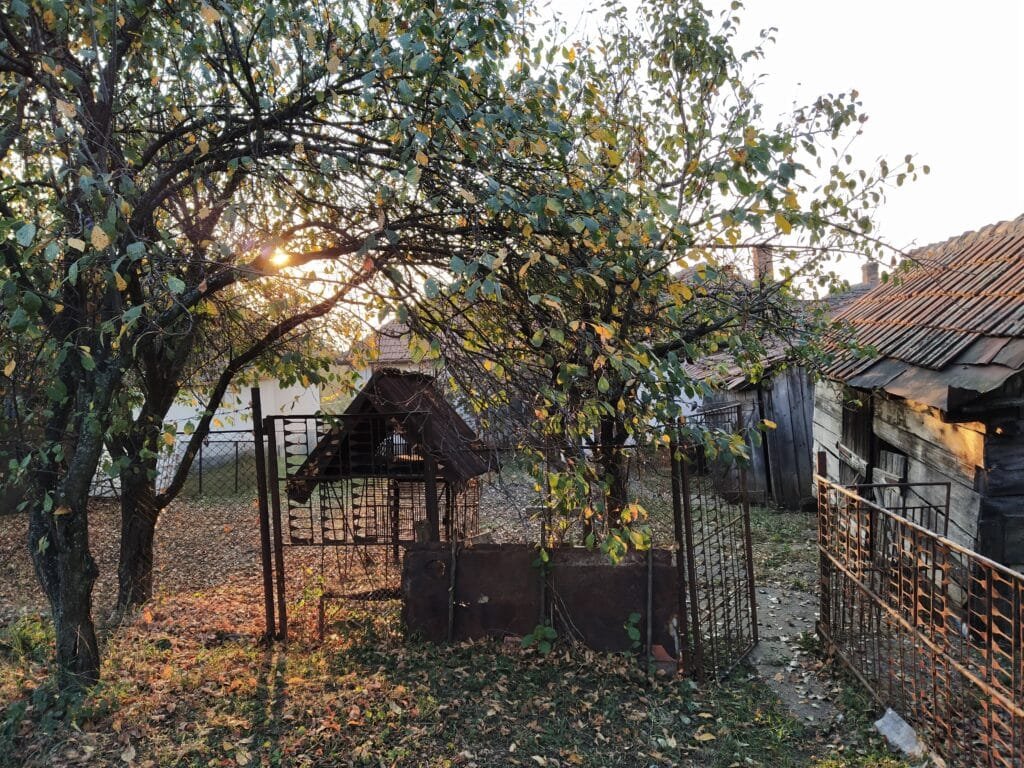
Hiking in Transylvania: Old barn
Legend says the gorge was born of a miracle. Fleeing a band of Cuman warriors, King Ladislaus of Hungary prayed, and the mountain split in two, swallowing his pursuers. The small round fossils you can still find in the riverbed are called “Saint Ladislaus’ coins”: money the fleeing Cuman chief scattered behind him, turned to stone at the king’s prayer. A short drive away, the Hungarian village of Rimetea (Torockó) sits beneath the limestone crest of Piatra Secuiului, whose summit is said to make the sun rise twice over the village.
Part III. Caves & Karst: Journeys to the Centre of the Earth
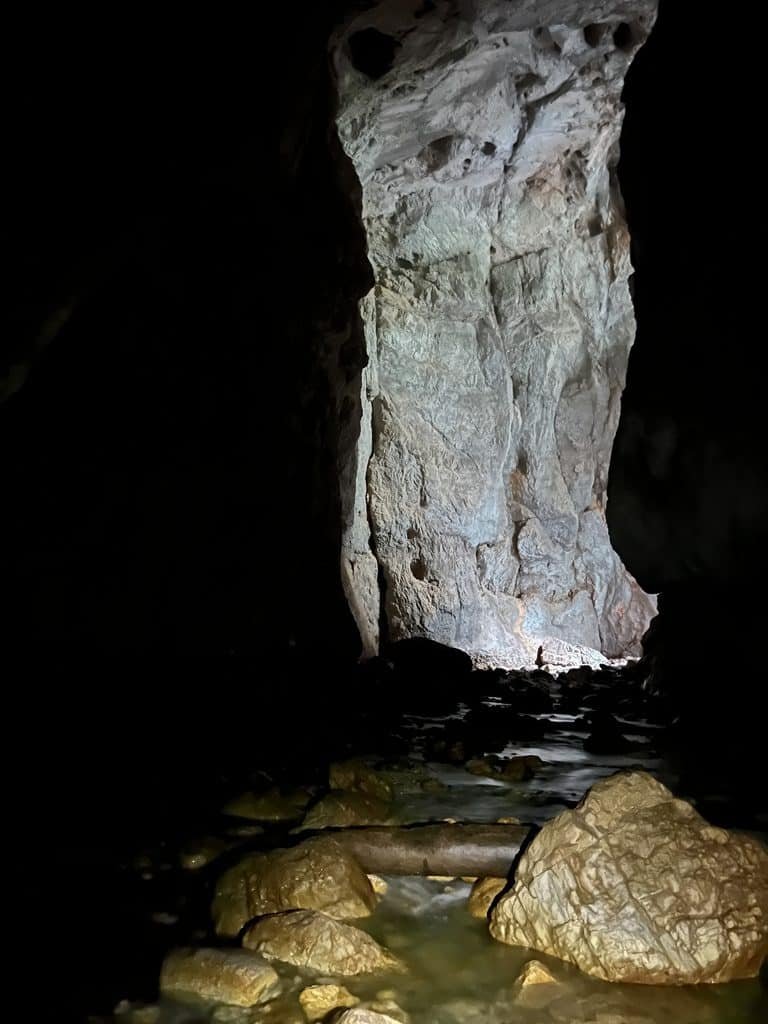
Adventure travel Romania: Cetățile Ponorului
Source: https://www.trecator.ro/infoturist/drumetii/pestera-cetatile-ponorului/
1. Cetățile Ponorului: the fortresses of water
Back in the Apuseni, Cetățile Ponorului is karst on the scale of a cathedral. A forested hollow more than a kilometre wide drops about three hundred metres into three giant sinkholes, the “fortresses” of its name. In the first, a Gothic arch about seventy metres high swallows the river of Valea Cetăților. Underground the river runs for some two kilometres past fourteen lakes, waterfalls and rapids, in a gallery up to a hundred metres high, before resurfacing elsewhere on the plateau. The other two sinkholes fall as sheer walls of two hundred metres and more. Visitors can follow the river only as far as the first great hall. Beyond it the cave belongs to speleologists, and to the floods that can fill it within hours.
2. Peștera Ponicova: the Gateway to the West
Further south, where the Danube forces its way through the Carpathians at the Iron Gates, lies another cave where the rock opens at both ends. Peștera Ponicova runs right through the Ciucaru Mare massif. A stream enters it from a hidden gorge off the road DN57, follows some 1,600 metres of galleries, and comes out at the river’s edge, so that the cave’s lower mouth looks straight across the water to Serbia. It is the longest cave in the Danube Gorge.
In 1692, during the Austro-Turkish war, an Austrian captain reportedly led troops up the valley and through Ponicova to attack the Turks from an unexpected direction. This was part of the fighting around the nearby Veterani Cave.
Under communism the Cazane were among the deadliest stretches of the border, where the river narrows to about two hundred metres of whirlpools under the guns of the border guards. Local memory holds that Ponicova, with one entrance in the forest and the other at the waterline, sheltered people waiting for nightfall to swim towards Yugoslavia.
3. Europe off the beaten path: A cave tied to legends and treasures, Peștera Bodii
In the Orăștie Mountains, the caves keep a quieter kind of secret. According to Cassius Dio, Decebal diverted the river Sargetia, buried his gold and silver in its bed, hid other valuables in caves, and then let the water flow back over them. A captured nobleman, Bicilis, later betrayed the hiding places to the Romans.
On the Vârtoape plateau, a few kilometres from Sarmizegetusa Regia, the villagers of Grădiștea de Munte still point to Peștera Bodii, a two-mouthed cave entered by a wooden ladder, which hermits once lived in. Their grandparents swore they had seen flames rising from the mountain at night, the old Romanian sign of buried treasure. The legend proved partly true.
Between 1999 and 2001, looters with metal detectors dug up twenty-four spiral gold bracelets on the terraces around the sanctuary, some of them within a few hundred metres of the sacred enclosure. Each was hammered from a single bar of native gold and weighs up to more than a kilo. Some show no trace of wear, as though they were made for the gods rather than for anyone’s arm. About half have since come home to the National History Museum in Bucharest, and the rest are still missing somewhere in the world.
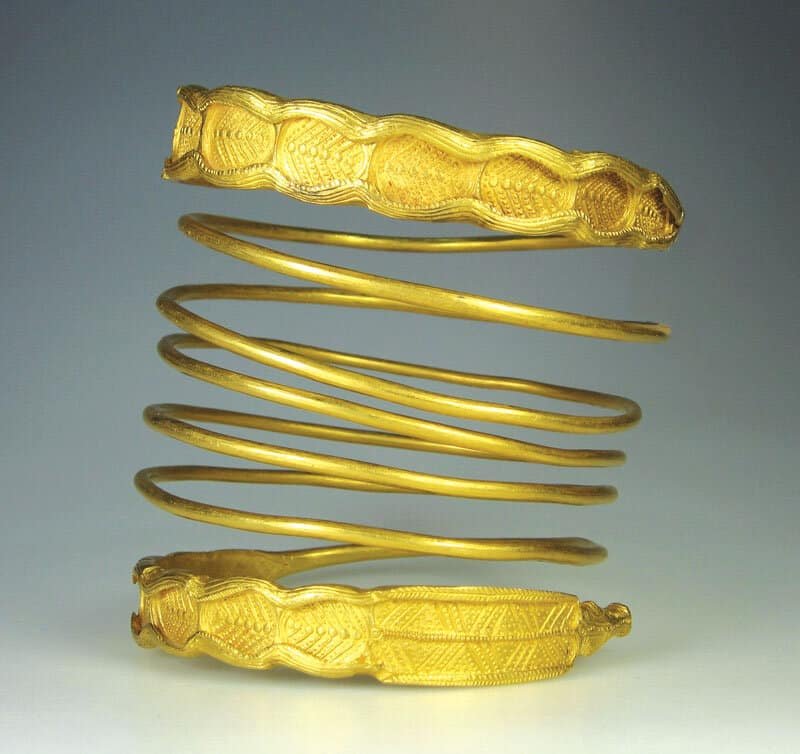
Dacian bracelet discovered around 2000, near Sarmizegetusa
Source: https://arhitectura-1906.ro/2012/01/bratarile-de-aur-dacice-ca-simbol/
4. And the list of caves goes on…
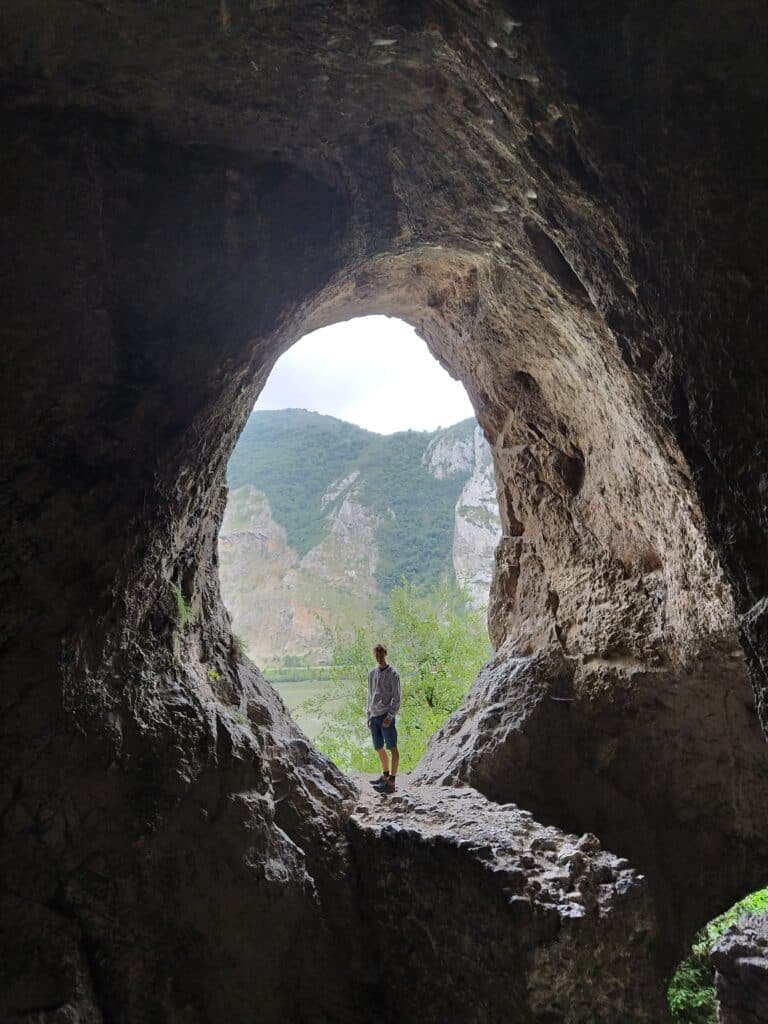
The country is rich in caves and the list does not end here. Beneath the Carpathian mountains Romania, lies a rich underworld. Some of the most remarkable are in the Apuseni. Scărișoara hides an underground glacier whose ice has been building up for thousands of years. The Bears’ Cave at Chișcău keeps the skeletons of cave bears where they lay down for the last time.
In Oltenia, Peștera Muierilor is one of the country’s best-known show caves, and in the Bucegi, Ialomița Cave shelters a small monastery at its entrance. Some caves are equipped with walkways and lights; others, with underground rivers and lakes, belong to cavers and to the child I once was, probing every tunnel with a torch.
Part IV. Rock Climbing Romania & via ferrata: Romania’s Vertical Playground
Climbing is a sport about determination, overcoming fear, balance, sometimes resilience to pain, and most importantly a sharp mind: a mind that is one with the body, that can stay crystal clear in the most tense moments. Climbing is about self-mastery above hundreds of metres of potential free fall. It is a sport for kinesthetic people, people who love the touch of the rock.
What does Romania have to offer to the global climbing scene? A lot of white, grippy, beautiful karst, easily accessible from roads you can drive on, along with granite and conglomerate, and plenty of places suitable from early spring to late autumn.
1. Piatra Craiului: from Prăpăstiile Zărneștilor to Refugiul Diana
The limestone blade of Piatra Craiului is a world of its own. In Prăpăstiile Zărneștilor, the Zărnești Gorge, more than a hundred routes climb the canyon walls, many of them long and steep. Higher up, Refugiul Diana, a small shelter at 1,510 metres below the Towers of Diana, is the base for the alpine routes up the steep gullies of the northern face and for the ridge itself; in winter these gullies are closed to ordinary hikers and belong to mountaineers.
2. Bucegi: the Costila wall, home of Romanian alpinism
Above Bușteni, the Costila wall is where generations of Romanian climbers learned big-wall alpinism. Refugiul Costila, a simple bivouac shelter at 1,690 metres managed by the Romanian Alpine Club, sits at the foot of the walls, an hour and a half to two hours up an unmarked path from the Căminul Alpin in Bușteni.
Look for edelweiss on the ledges of Brâna Costilei!
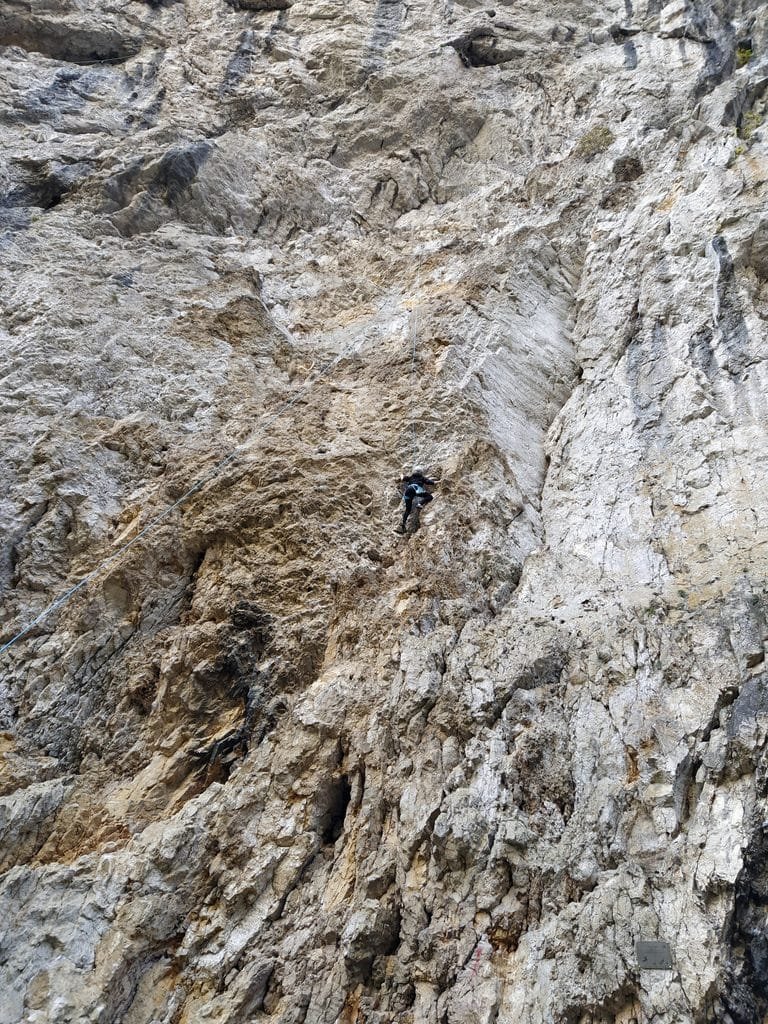
Climbing in Romania: Prăpăstiile Zărnești, karst
3. Southern Carpathians, Around Brașov
Around Brașov, forest crags such as Pârâul Rece, Tamina and Valea Peleșului near Sinaia offer hundreds of sport and multi-pitch routes within an hour of the city.
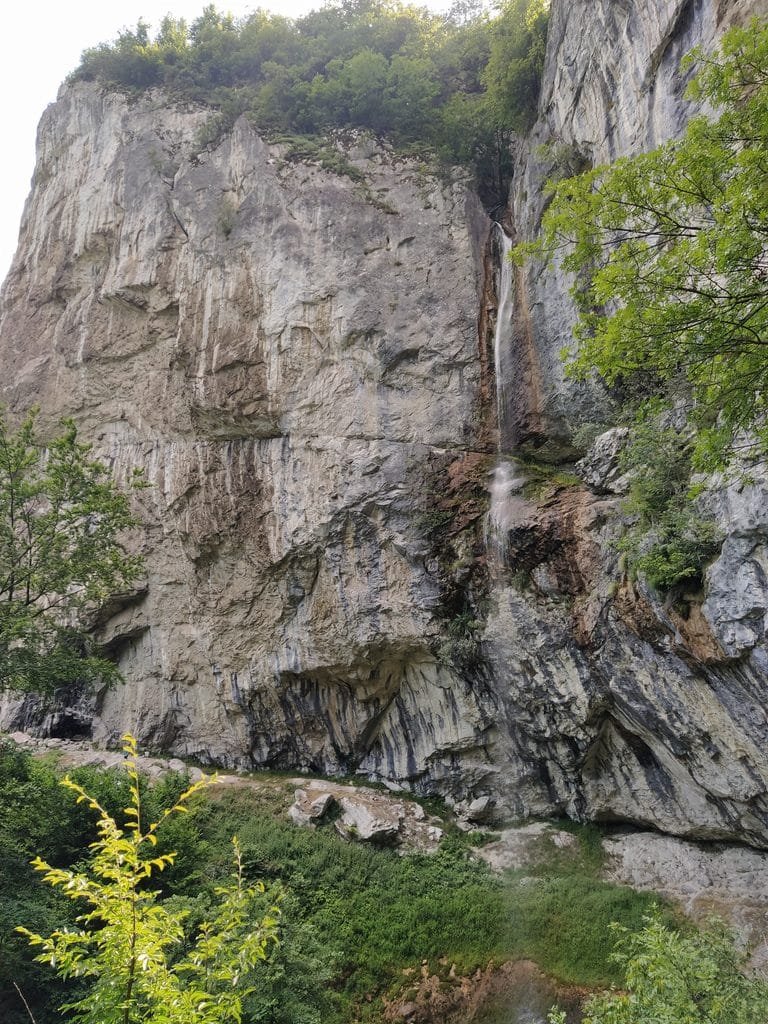
Vânturătoarea Waterfall: Where Paradise Spills Over
4. Băile Herculane and the Cerna Valley: the best rock in Romania
For many climbers, the Cerna Valley around Băile Herculane is the best climbing in Romania: more than 780 routes on excellent compact limestone, with a warm, almost Mediterranean feel. The crag at Cascada Vânturătoarea, beside a waterfall, has around a hundred routes up to the very hardest grades. After a day on the rock, soak in the thermal springs from Herculane Bath.
5. Bicaz Gorge: the big walls of the east
In Bicaz Gorge, around 300 routes climb walls that tower over the road, from single pitches to long multi-pitch lines, and in winter climbers come for dry tooling. Nearby lie the Astragalus via ferrata in the Șugău Gorge and the routes at Lacul Roșu, in the Szekler–Csángó borderland.
In the north, Rarău and its lone pinnacle, Piatra Singuratică, add high-altitude climbing above the forests of Bucovina.
6. Turda Gorge and the Apuseni crags
Turda Gorge is Romania’s classic climbing school, with around 560 routes, from easy scrambles to the hardest grades, multi-pitch lines and the Sky Fly via ferrata. The Apuseni around it are full of quieter crags: Cheile Turenilor next door, the compact grey limestone of Rimetea with more than 280 routes below Piatra Secuiului, the slot canyon of Cheile Mănăstirii, and the white pinnacles of Ampoița.
7. Cheile Dobrogei: where beginners start
Far from the Carpathians, near the village of Cheia in Dobrogea, the Dobrogea Gorge is the friendliest place in Romania to start. Its limestone was once a coral reef in the ancient Tethys Sea, and today it rises in sculpted towers above the steppe. Around 67 routes, most of them bolted sport routes, many in the easy grades, are spread over a dozen small sectors. Thanks to the low altitude and the mild climate near the Black Sea, you can climb here almost all year round, in the land of Dobrogea’s Turks, Tatars and Lipovans.
8. The most representative via ferrata routes in Romania
Via ferrata routes have multiplied across Romania. The essential ones are Astragalus in the Șugău Gorge near Bicaz, the longest in the country at about 700 metres; Casa Zmeului at Vadu Crișului in the Apuseni, which ends with a 25-metre bridge; Sky Fly in via ferrata Cheile Turzii; Cheile Râșnoavei near Brașov, one of the oldest, opened in 2001; White Wolf at Baia de Fier, next to Peștera Muierilor; and Wild Ferenc above Lacul Roșu. Most require a harness, helmet and via ferrata lanyard, which you can usually rent locally.
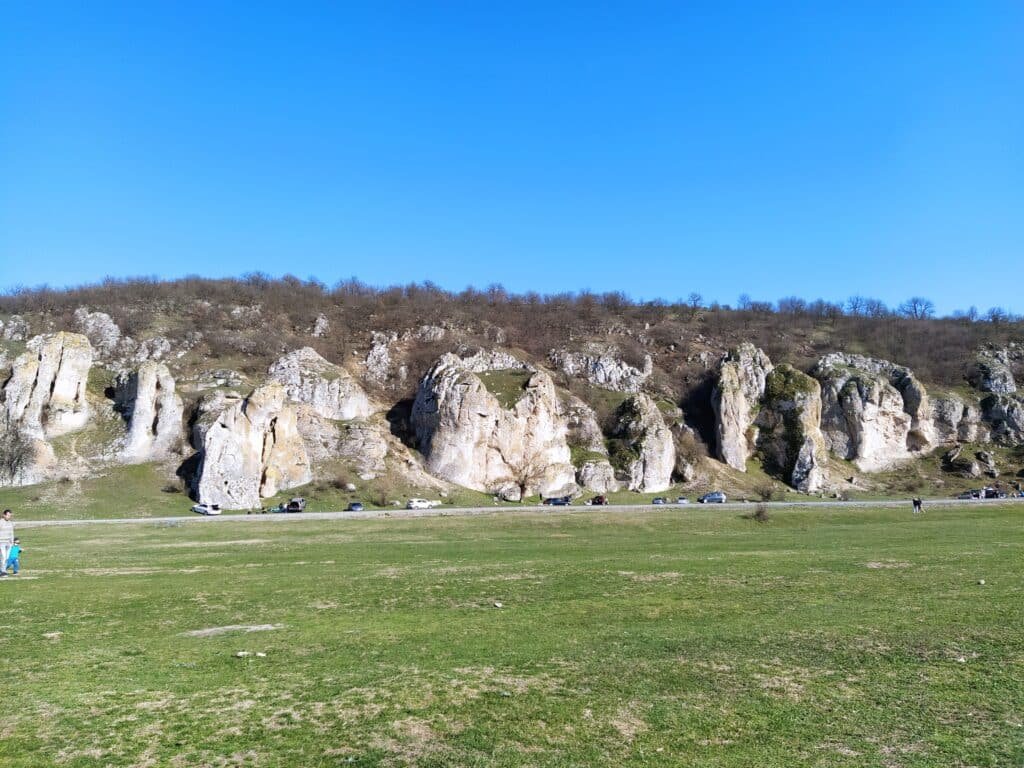
Cheile Dobrogei: an easy way to start climbing in Romania
Part V. Ski touring & wild skiing
Ski touring is a form of ultimate freedom in winter: the whole surface covered in snow is yours. No queues, no lifts, no groomed slopes, only the sound of your skins sliding uphill and, at the top, the silence before the first turn. Romania does not have a long tradition of large freeride areas, which is exactly why its winter mountains still feel untouched.
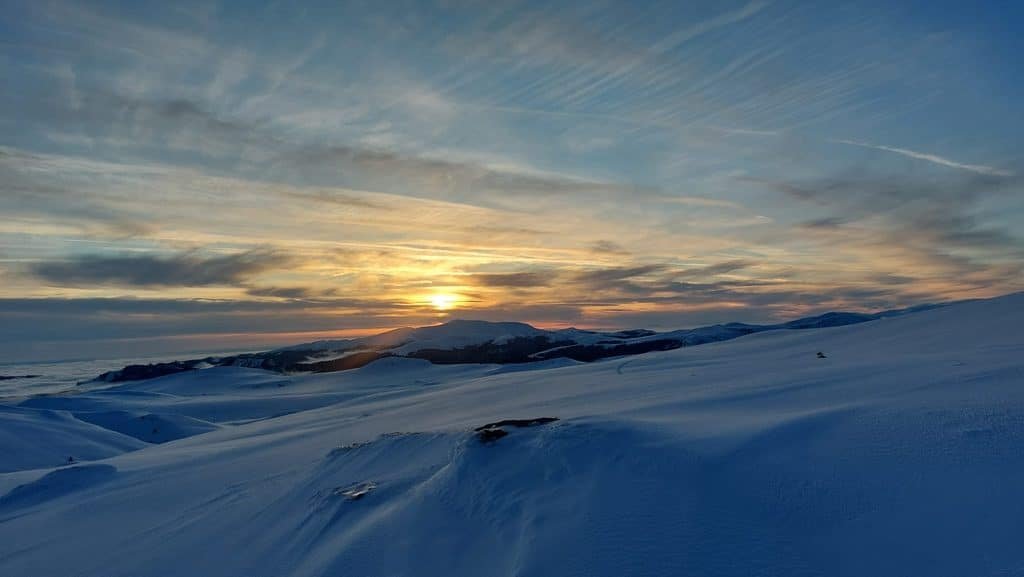
Sunset near Piatra Arsă, Bucegi Plateau
Before you go: a word of caution
Ski touring and off-piste skiing take place outside the official, patrolled ski areas. There are no marked ski touring routes, nobody checks the slopes for avalanches, and you go entirely at your own risk. Go only if you have the right equipment (avalanche transceiver, probe and shovel, helmet, skins and ski crampons, avalanche rucksack), know how to read avalanche terrain and how to avoid it, and have trained in companion rescue.
Before every outing, read the avalanche bulletin published by Romania’s National Meteorological Administration (ANM) which rates the danger on the European scale from 1 to 5, and in case of emergency call 112 and ask for Salvamont. If you are new to the mountains in winter, go with a certified mountain guide.
When to go
The season usually runs from December to April, depending on the winter. Late winter and early spring, from February to April, often bring the most stable snowpack and the longest days. In the high Făgăraș, good snow can last into May, and in the Rodna Mountains it sometimes lingers into June.
Bucegi: from Babele and Peștera across the plateau
The Bucegi are the most accessible realm for ski touring. Take the cable car from Bușteni up to Babele (when it runs), put the skins on your skis and tour across the wide, rolling plateau towards Peștera and Omu Peak, among the wind-carved rocks of the Babele and the Sphinx.
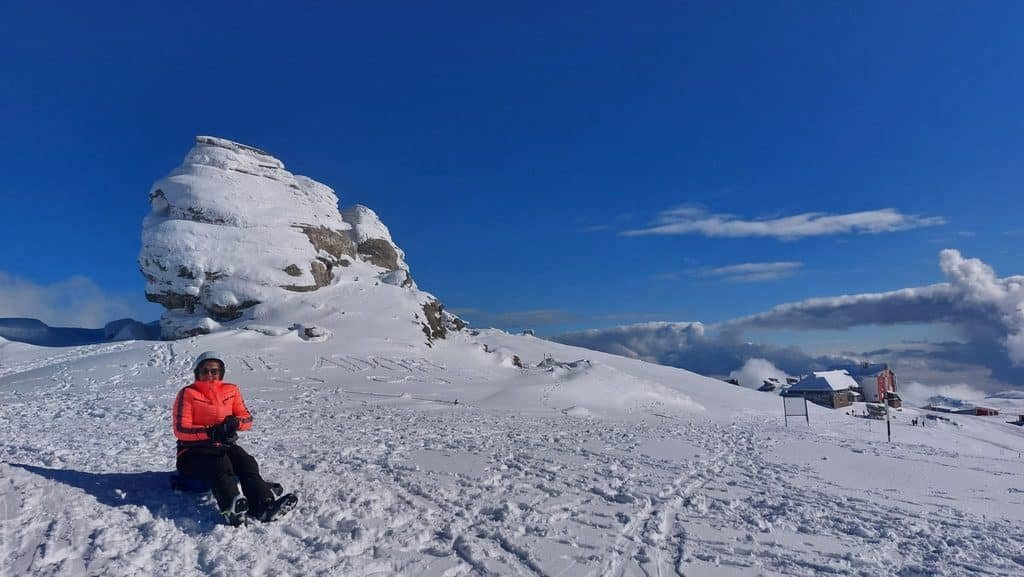
Ski touring Romania: The Sphinx in the winter
From the plateau, the descents range from moderate to very serious. Valea Cerbului, which drops from Omu Peak down to Bușteni, is the classic, but it is exposed to avalanches and should only be skied when the bulletin is favourable. For experienced ski mountaineers, the long loop up Valea Albă to Omu and down Valea Cerbului (about 20 km and 1,600 m of ascent) and the steep lines of Mălăiești and the north-east face of Bucșoiu are among the most demanding tours in the range.
Wild skiing on Șugărilor Valley
The other side of the Bucegi: down towards Peștera and the Ialomița
From Babele and the Sphinx, the plateau also tilts the other way, west, towards the quiet upper valley of the Ialomița. This side is gentler and wilder at the same time: long, open slopes, no town below, only Cabana Peștera at around 1,600 metres, and next to it Ialomița Cave with its small monastery at the entrance.
The most natural line follows the blue-marked summer path from Babele, which crosses Valea Cocora on its way down to Peștera. The following valley is Șugărilor, a steep but broad valley, narrowing down in the second half. Further north, below the great limestone block of Mecetul Turcesc, Valea Obârșiei (the valley of the Ialomița’s source) drops past the Obârșia Ialomiței waterfall. North of it, the broad ridge of Muntele Doamnele, the Ladies’ Mountain, offers wide, rolling terrain.
And for the truly wild, the unmarked Valea Horoabei hides a small canyon below Bătrâna. The summer trail through Valea Obârșiei is officially closed in winter, so these are ski-touring lines, not hiking routes: read the avalanche bulletin first, and go only with someone who knows the terrain. When the Peștera cable car is running, it can take you back up to Babele for another descent.
Part VI. Rafting Romania & paddling & kayaking
Romania’s rivers are still mostly a local secret. They tumble out of the Carpathians through gorges and forests, and almost every one of them has a stretch where you can raft, paddle or simply float. Most runs are easy to moderate and perfect for a first time on the water; a few are technical enough to make experienced paddlers smile. Here are the rivers I would choose, and then the great water world at the end of the Danube.
1. Buzău and Lake Siriu: rafting all year round
The Buzău is the river for everyone. Below the Siriu dam, the water released from the lake keeps the flow steady, so you can raft here for most of the year, not only in spring. The classic run goes from Nehoiu to the rafting base at Valea Lupului, about 15 kilometres and two hours of fast stretches broken by calm pools where you can jump out and swim. Upstream, Lake Siriu itself is a quiet place for kayaking and paddleboarding among the mountains.
2. Cerna and Jiu: the technical rivers
For more adrenaline, head south-west. The Cerna, near Băile Herculane, is often called the king of Romanian rafting rivers: a narrow bed full of bends where every second counts.
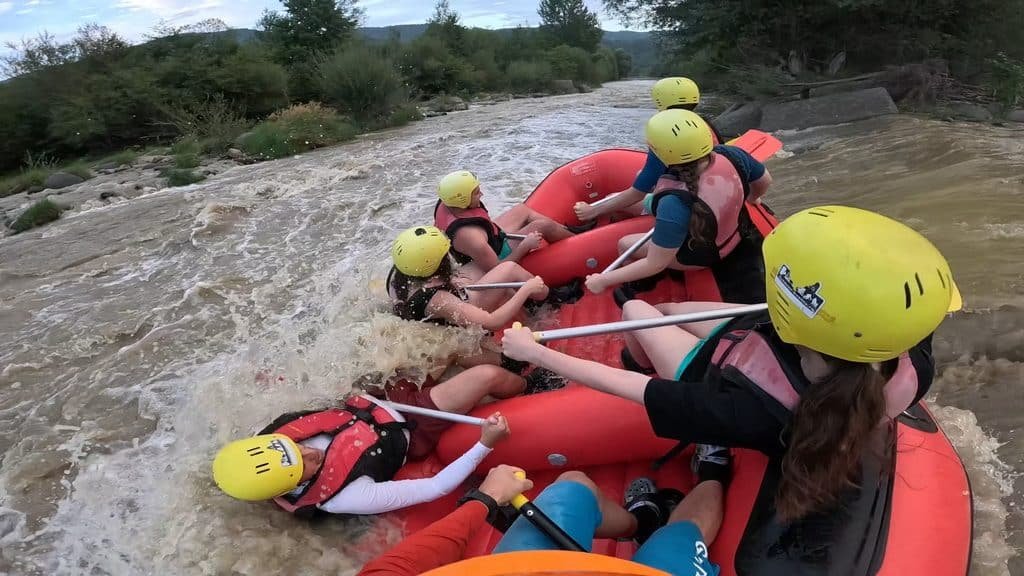
Rafting on Buzău
The Jiu cuts its gorge between the Parâng and Vâlcan mountains, with rocks and curves all the way; combine it with a visit to Brâncuși’s sculptures in Târgu Jiu.
3. Nera, Mureș, Bistrița and Crișul Repede: the gentle rivers
The Nera flows through the longest gorge in Banat and is at its best in spring and early autumn, when the water is high; in summer it turns into a slow, beautiful float. The Mureș gorge between Toplița and Deda offers some 50 kilometres of easy water, ideal for a multi-day trip by raft or two-person kayak. The Bistrița in Moldavia, once the road of the timber rafters who floated logs down to the plains, and the Crișul Repede in Bihor, home of some of Romania’s oldest organised rafting routes, are easy, friendly runs for families.
4. The Danube Delta: kayaking, fishing and camping at the edge of Europe
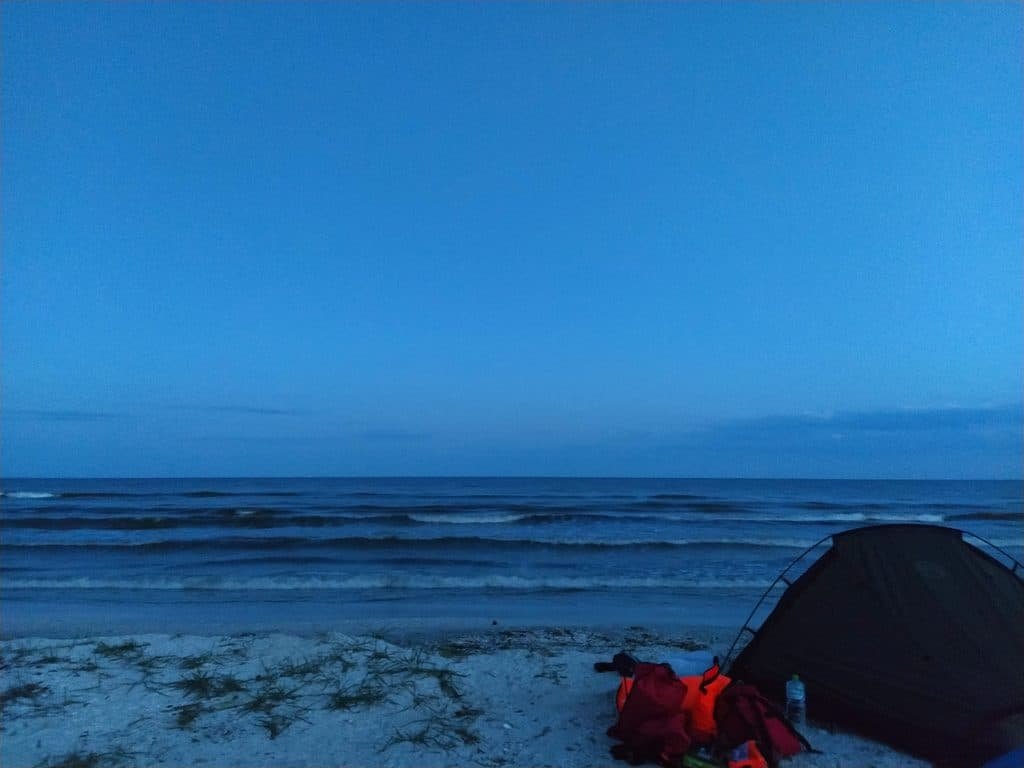
Where the Danube splits into three arms before reaching the Black Sea lies one of the largest and best-preserved wetlands in Europe: the Danube Delta, a UNESCO World Heritage Site and biosphere reserve of about 5,800 square kilometres.
The best way to discover it is by kayak or canoe, gliding along narrow channels where motorboats cannot follow, through reed beds, water lilies and lakes, with pelicans, herons and cormorants for company.
From Tulcea, ferries and boats take you to villages such as Crișan, Mila 23 or Murighiol, good bases for paddling and for meeting the Lipovans, Old Believer fishermen whose white and blue houses line the water.
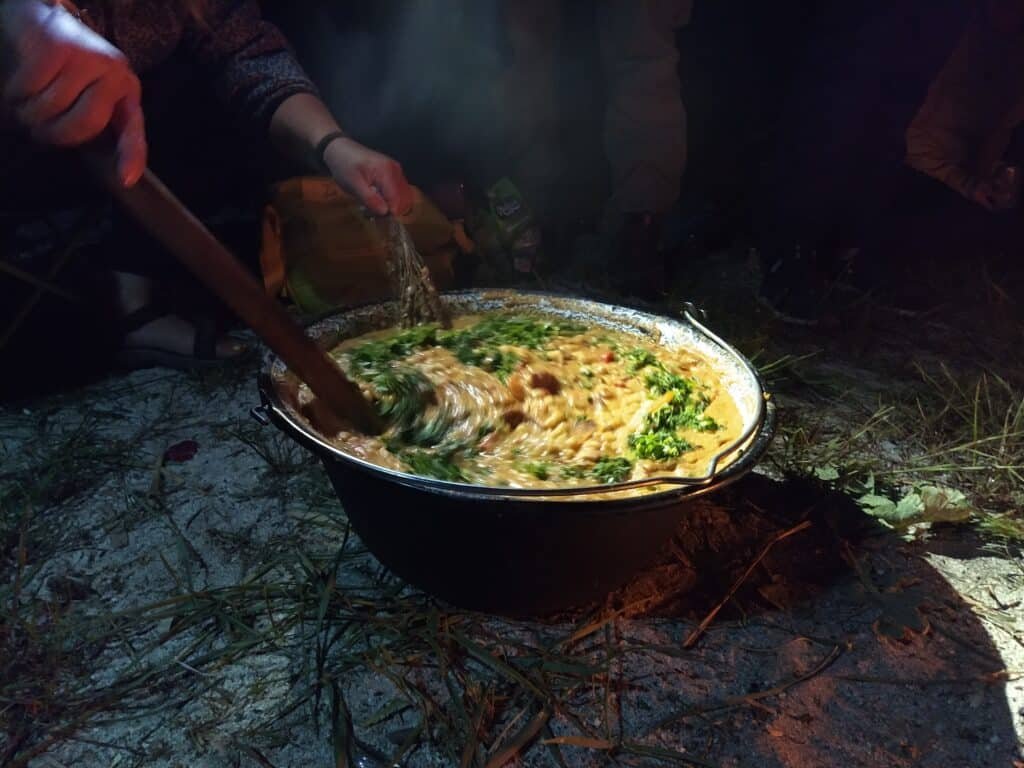
Fishing here is a way of life: taste the fish soup and the saramură grilled on the shore, and if you want to fish yourself, buy the reserve’s fishing permit and respect the limits; sturgeon fishing is banned. Every visitor needs an access permit from the Danube Delta Biosphere Reserve Administration, and camping is allowed only on approved sites, many of them simple campgrounds on the banks. Come between April and June, when the birds return and before the summer mosquitoes, or in September, when the light turns golden. The channels form a real labyrinth, so for your first trip go with a local guide in Danube delta tours.
Cauldron stew
Part VII. Culture & Ethnography: Europe Off the Beaten Path
Every adventure in this guide passes through someone’s home: a shepherd’s hut on a ridge, a village beneath a limestone wall, a fishing hamlet on a channel of the Danube. Knowing the people who live there is what turns a hike into a journey, and a trip into a story worth telling. Here is how the people you will meet along the way fit into each adventure.
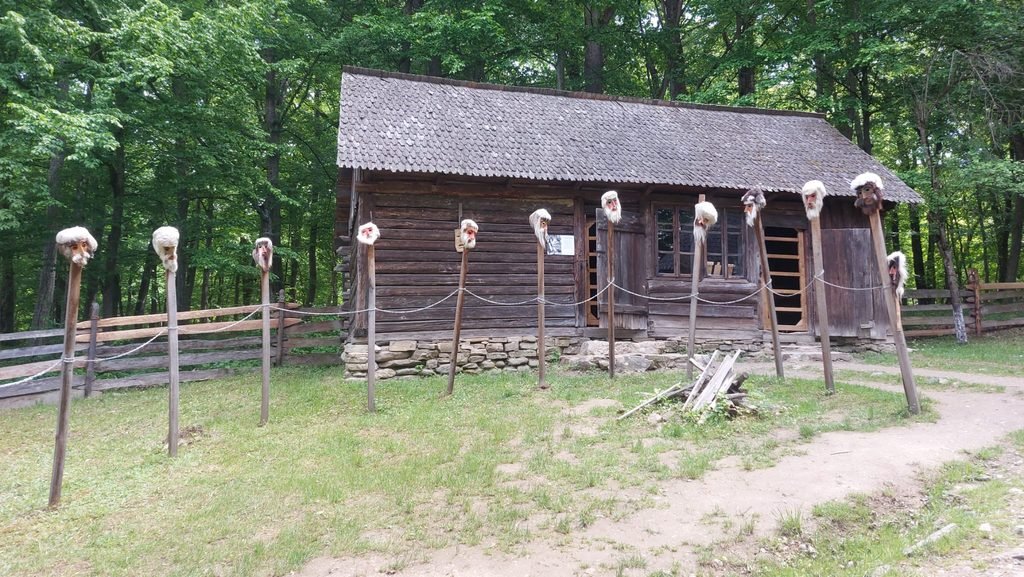
ASTRA Museum in Sibiu: old man masks
The shepherds of the high ridges
On the Făgăraș and Retezat ridges you will often meet flocks and their shepherds, many of them from Mărginimea Sibiului, the villages near Sibiu where moving the sheep between summer and winter pastures is still a way of life. Their stâne, the summer sheepfolds, are the oldest hospitality in the Carpathians: ask politely, and you may be offered bulz, polenta pressed around sheep’s cheese and baked in the embers, or balmoș, polenta cooked in butter and whey. Keep your distance from the sheepdogs and let the shepherd call them off. Around Bran, the villages of Măgura and Peștera keep the same pastoral rhythm, with scattered farmsteads and hay meadows below Piatra Craiului; at the foot of Retezat, Țara Hațegului adds Dacian and Roman ruins and the castle of Colț.
The Moți of the Apuseni
The Apuseni belong to the Moți, a Romanian highland people of woodcarvers and one-time gold miners who still honour the memory of Avram Iancu. Their long wooden alphorns, the tulnic and the bucium, once carried messages across the valleys, and each July, on the Sunday closest to Saint Elijah’s Day, they climb Mount Găina for the Girls’ Fair, a former matchmaking fair now celebrated with song and dance. Time a walk through Cheile Galbenei, Cetățile Ponorului or the caves of Padiș with the fair, and the karst landscape suddenly has a voice.
Saxons, Szeklers, Csángó, the Hungarians
Transylvania is a mosaic. The Saxons, German-speaking settlers who arrived in the Middle Ages, left behind the fortified churches of villages such as Viscri and Biertan, walking from one church to the next, for example along the Via Transilvanica, is still the best way to read their history. In the Eastern Carpathians, around Bicaz Gorge and Lacul Roșu, live the Szeklers, Hungarian-speaking communities known for their carved wooden gates, the chimney cake you will smell at every roadside stall, and, further east, the Csángó or Ceangăi, Catholic communities whose music is among the oldest in the region. Near Turda, the Hungarian village of Rimetea lies beneath Piatra Secuiului, where climbers spend the day on the rock and the night in white-washed houses.
Maramureș, the Hutsuls and the Zipsers of the north
After the Rodna ridge, the north offers some of the most living traditions in Europe. In Maramureș, wooden churches with soaring spires stand on the UNESCO list, the Merry Cemetery of Săpânța tells the lives of the dead with humour, and every host pours horincă, the double-distilled plum brandy. In the valleys of the Vișeu and the Ruscova, and across the Prislop Pass in Bucovina, live the Hutsuls, highlanders known for their sturdy horses and fine crafts. In Vișeu de Sus, the Zipser Germans gave their name to a quarter of the town, the starting point of the Mocănița, the old forestry railway into the Vaser valley.
The peoples of Banat
The gorges of Banat hide some of Romania’s smallest communities. Around the Nera and towards the Danube, six Czech villages, among them Ravensca, Gârnic and Sfânta Elena, have kept their language and customs for about two hundred years. At the mouth of the Caraș Gorge, the Krashovani of Carașova, a Croatian community, are the last people you see before entering Romania’s wildest canyon; even the names along the river speak their language.
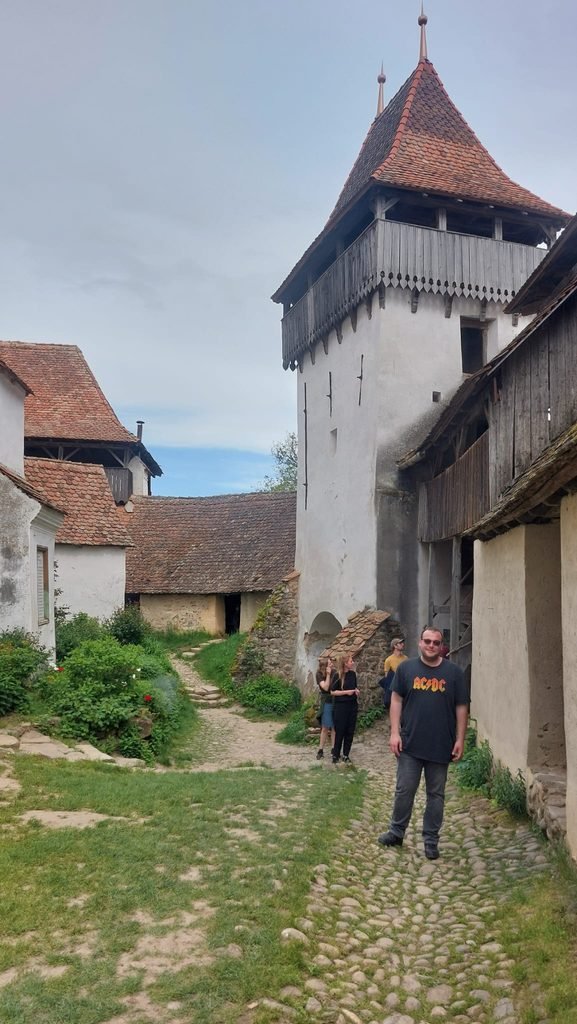
Viscri Fortified Church
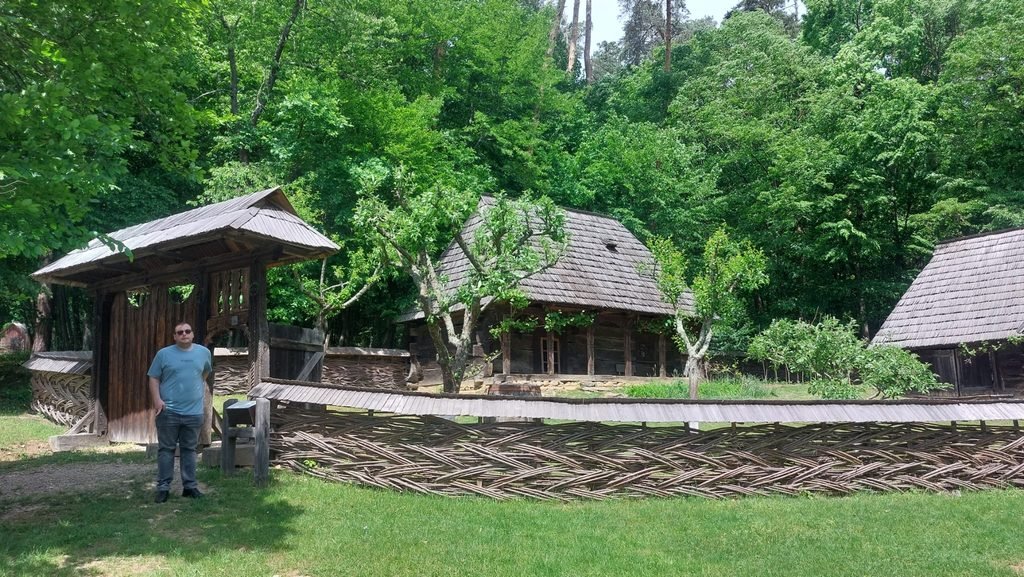
ASTRA Museum in Sibiu: House from Maramureș
The Lipovans of the Danube Delta and the peoples of Dobrogea
At the end of the Danube, the Lipovans, Russian Old Believers who settled here centuries ago, live from fishing in villages of white and blue houses such as Mila 23. Paddle with a local guide, share a fish soup or a saramură on the shore, and you will understand the Delta better than from any boat tour. Inland, in Dobrogea, Turkish and Tatar communities live alongside Romanians, a short drive from the climbing towers of Cheile Dobrogei.
Where The Verse Voyager comes to your aid
If you already have an adventurous itinerary and want to make it even better, or if you would like us to design the best adventure for you, The Verse Voyager is here to help. With our itinerary review service, we look at your plan and suggest routes, villages and hidden places you might have missed. With our itinerary design service, we build a journey from scratch, matched to your personality, your pace and the kind of wilderness that calls you. It can be a multi-day trek across the Carpathians, a wild skiing weekend in Bucegi or a slow kayaking through the Danube Delta.
Let your mind wander, forget tourism, and become a traveller!
TLDR
TL;DR: Romania holds the largest share of the Carpathian Mountains, and this guide is your starting point for wild adventures there. For Carpathian mountains hiking, walk the Făgăraș ridge in the Transylvanian Alps up to Moldoveanu Peak. You can also explore the glacial lakes of Retezat National Park, the Bucegi plateau with the Babele, the Bucegi Sphinx and Ialomița Cave, or the limestone ridge of Piatra Craiului. Hiking in Romania can also mean walking the Via Transilvanica through the Southern Carpathians and beyond. Hiking in Transylvania leads to Turda Gorge, Rimetea and the gorges of Cheile Bicazului. For canyoning in Romania, try Cheile Carașului and the Nera Gorge. Underground, explore caves such as Cetățile Ponorului and Scărișoara Ice Cave. Climbers will find via ferrata routes from Turda to Bicaz Gorge, and the best rock in Romania at Băile Herculane. In winter, there’s ski touring in Romania on the Bucegi plateau. Rafting in Romania means the Buzău, Cerna and Jiu rivers, followed by kayaking in the Danube Delta. Along the way, discover Europe off the beaten path through the shepherds, Moți, Saxons, Szeklers, Hutsuls and Lipovans, who make this one of the last corners of wild Europe and give Romania’s mountains their voice.
More about Romania: see all our Romania travel guides.