
Table of Contents
The Short Version
The right Peru itinerary depends on how many days you have and how you like to travel. Here are four routes, from one week to three, built from the weeks Alexandra and I spent in Peru in October and November 2026.
- 7 days: Cusco, the Sacred Valley and Machu Picchu. One region, done properly.
- 10 days: the 7-day route plus Lake Titicaca, reached by the slow road south through Andahuaylillas, Raqchi and Pukara.
- 14 days: Lima and the desert coast at Paracas and Huacachina, then Cusco, Machu Picchu and Titicaca.
- 21 days: close to our own route, adding the Amazon at Tambopata, with rest days between regions.
If you’re still choosing which parts of the country to see, start with my guide to the best things to do in Peru, region by region, then come back here to put them in order.
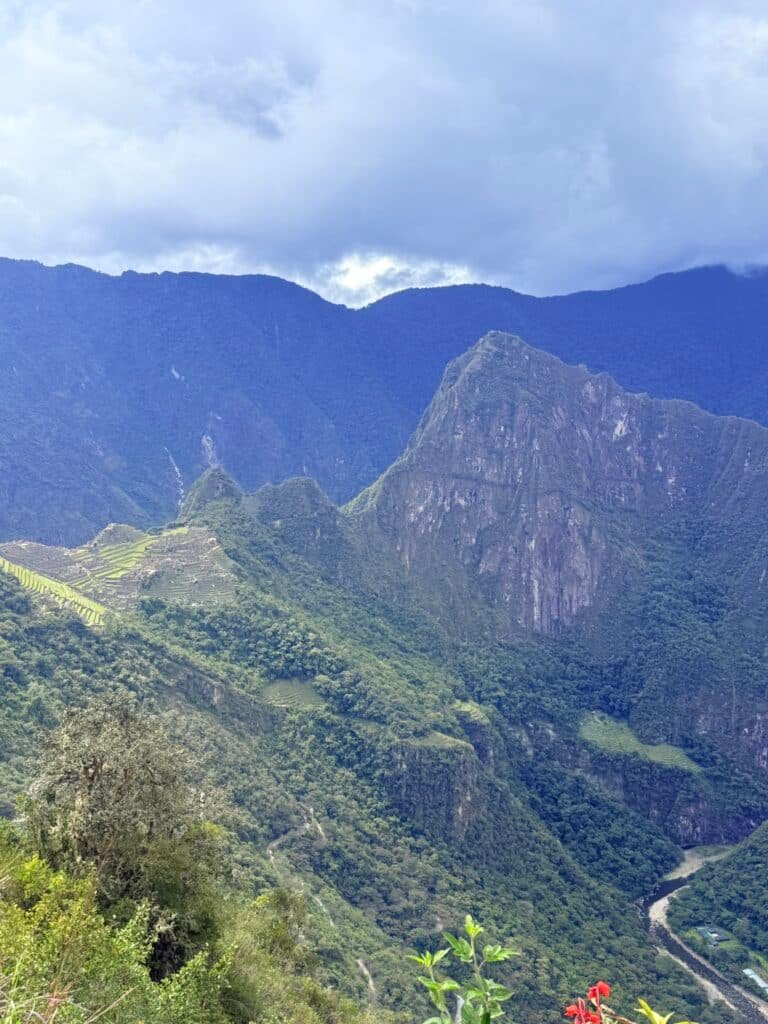
Machu Picchu above the Urubamba gorge. Every Peru itinerary below is built around reaching this point rested, with the altitude already behind you.
A Peru itinerary that suits one traveller can wear out another. Take the free quiz, which takes about 3 minutes, and see which route and what pace fit the way you actually travel, before you copy a single day of it.
How This Peru Itinerary Works
Every route in this Peru itinerary follows three rules. They decide whether the trip feels good or exhausting more than any single sight does.
Respect the altitude ladder. Cusco sits around 3,400 m and Puno around 3,830 m. Lima, Paracas and the Amazon are near sea level. Every time you go back up, your body has to adjust again, so every climb gets an easy first day.
Book the fixed points first. Machu Picchu entry works on timed circuits with daily caps, and Inca Trail permits are limited. These are the dates everything else bends around. Buy Machu Picchu tickets through the official site, tuboleto.cultura.pe, or through your trek operator.
Leave slack after flights and long roads. Flights out of the Amazon can be delayed by weather, and mountain roads run late. One empty day after a risky leg stops a single delay from knocking over the whole plan. We planned a spare day in Cusco after the jungle for exactly this reason.
Here’s how the four routes compare:
| Route | Regions | Highest night | Pace | Best for |
|---|---|---|---|---|
| 7 days | Cusco, Sacred Valley, Machu Picchu | Cusco, about 3,400 m | Easy to moderate | A first trip or a short holiday |
| 10 days | Adds Lake Titicaca | Puno, about 3,830 m | Moderate | Culture, villages and high landscapes |
| 14 days | Adds Lima, Paracas and Huacachina | Puno, about 3,830 m | Moderate to full | Three very different Perus in one trip |
| 21 days | Adds the Amazon at Tambopata | Puno, about 3,830 m | Full, with rest days built in | The whole picture, without rushing |
When to Visit Peru for This Itinerary
Dry Season (May to September)
The most reliable weather for Machu Picchu, the treks and Lake Titicaca, with clear days and cold nights. It’s also the busiest time, so book Machu Picchu and trail permits early.
Shoulder Season (October and November)
When we travelled. Quieter than the July peak, with more cloud on the mountains and the first rains arriving. Early cloud over Machu Picchu often clears by mid-morning.
Wet Season (December to April)
Greener and emptier in the Andes, with muddier trails and some closures. It’s the best time for the beaches, especially in the north, so a coast-heavy version of the 14-day route works well then.
Practical Basics for a Peru Trip
Most international flights land in Lima. From there, domestic flights reach Cusco, Juliaca (for Puno) and Puerto Maldonado in around an hour or two, which is how these routes link regions.
For the Cusco to Puno bus, a direct service takes around six to seven hours. I’d take it slowly, with stops at Andahuaylillas, Raqchi and Pukara, and make a full day of it.
From Lima to Paracas is roughly three and a half to four hours by road on the Panamericana Sur, and Huacachina is about an hour further. That stretch of coast is easy to drive yourself. Driving from the coast up into the Andes is a different matter, and I wouldn’t do it on a first trip.
Cards work in cities and lodges. Carry cash in soles for markets, boats, community homestays and tips.
What to Pack for Peru
- Warm layers. Nights in Cusco and on Lake Titicaca are cold, and homestays often have no heating.
- A light rain jacket, whatever the season.
- Strong insect repellent, long sleeves and long trousers for the Amazon.
- A headtorch and a power bank. Jungle lodges often run on solar power.
- Sun protection. The sun at altitude burns faster than you expect.
- Comfortable walking shoes that can handle Inca stone steps.
Route 1: 7 Day Peru Itinerary (One Week in Peru)
A week is enough for one region, and this Cusco, Sacred Valley and Machu Picchu itinerary is the one to choose on a first trip. Sleep low in the valley first and save Cusco for the end, once you’ve adjusted.
Who This Route Is For
Travellers with one week, a first visit, or anyone who doesn’t want to spend half the week in transit. It suits people who enjoy history and walking, and who don’t mind an early start for Machu Picchu.
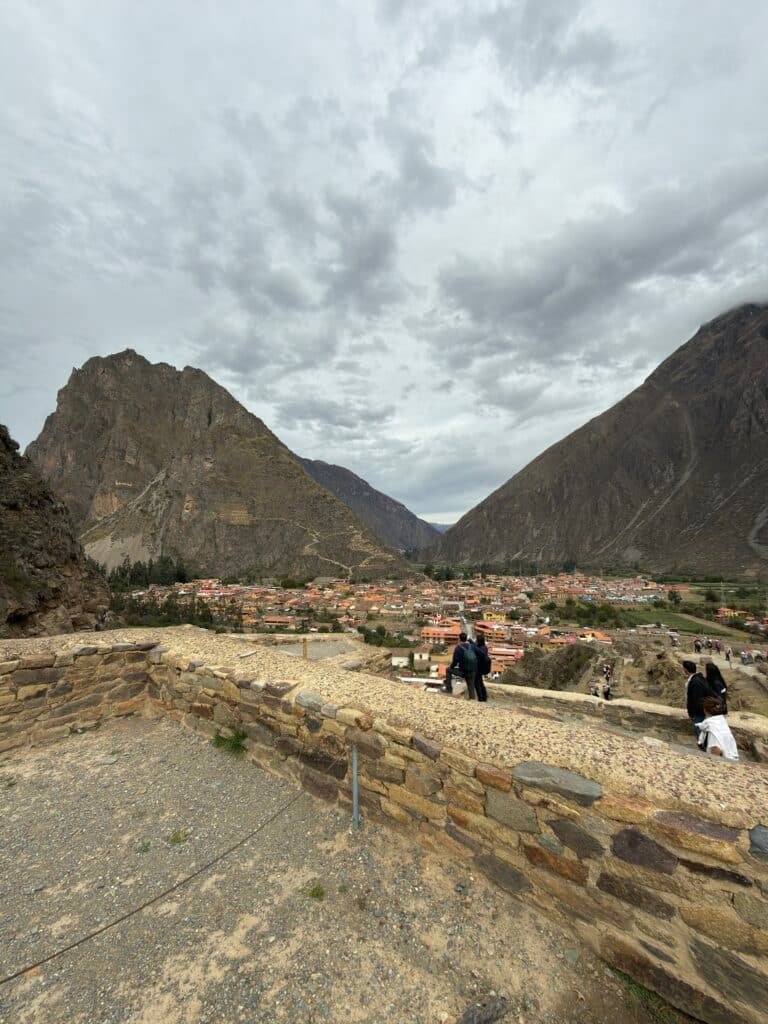
Ollantaytambo, the best base for the train or the trail to Machu Picchu, and a town people still live in on its original Inca plan.
Day 1: Fly Into Cusco, Sleep in the Sacred Valley
Fly from Lima to Cusco in the morning and go straight down to the Sacred Valley, which is several hundred metres lower than the city. Rest, drink coca or muña tea, and eat light. Nothing else today.
Day 2: Pisac Market and the Quiet North Bank
Visit the market at Pisac (Sunday is the big day), then take a colectivo along the valley to Lamay or Calca for a long lunch away from the tour circuit. Alexandra wrote about these villages in our piece on the communities of the Sacred Valley.
Day 3: Maras, Moray and Ollantaytambo
Morning at the Maras salt pans and the circular terraces of Moray, then on to Ollantaytambo for the night. Walk the old town in the late afternoon, when the day visitors have gone.
Day 4: The Short Inca Trail, or the Train
Either take the early train to KM104 and walk the Short Inca Trail through Wiñay Wayna to the Sun Gate, or take the scenic train straight to Aguas Calientes. We walked, and I’d do it again: you reach the Sun Gate and see Machu Picchu from above before you ever stand in it. Sleep in Aguas Calientes.
Day 5: Machu Picchu, Then Back to Cusco
Early bus up to the citadel for your timed entry and a guided circuit, then lunch in Aguas Calientes and the train and road back to Cusco.
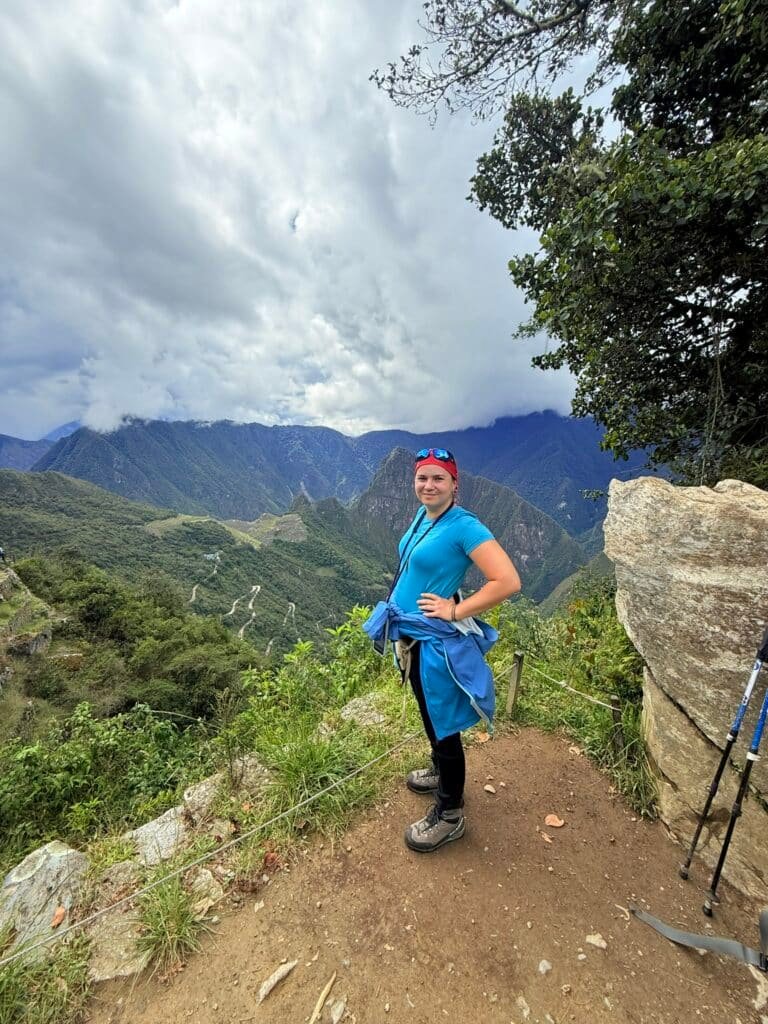
Near the Sun Gate on the Short Inca Trail. Arriving on foot means you see Machu Picchu first from above, which is how the Inca road was designed.
Day 6: Cusco, Properly
Now that you’ve acclimatised, give Cusco a full day: Sacsayhuamán at opening, San Pedro market, San Blas and a good dinner. Or walk the old Inca road down from Puka Pukara to Sacsayhuamán, which we describe in our guide to Inca sites beyond Machu Picchu.
Day 7: Fly Out
Fly back to Lima for your international connection.
You give up the coast, the lake and the jungle on this route. In exchange, you see one region without rushing, and on a first trip I think that’s the better deal.
Route 2: 10 Day Peru Itinerary With Lake Titicaca
Three extra days let you add Titicaca, and I’d spend one of them on the road there, stopping along the way from Cusco.
Who This Route Is For
Curious travellers who like culture and village life as much as monuments, and who can handle a couple of nights at higher altitude than Cusco.
Days 1 to 6: Cusco, the Sacred Valley and Machu Picchu
Follow days 1 to 6 of the 7 day route above.
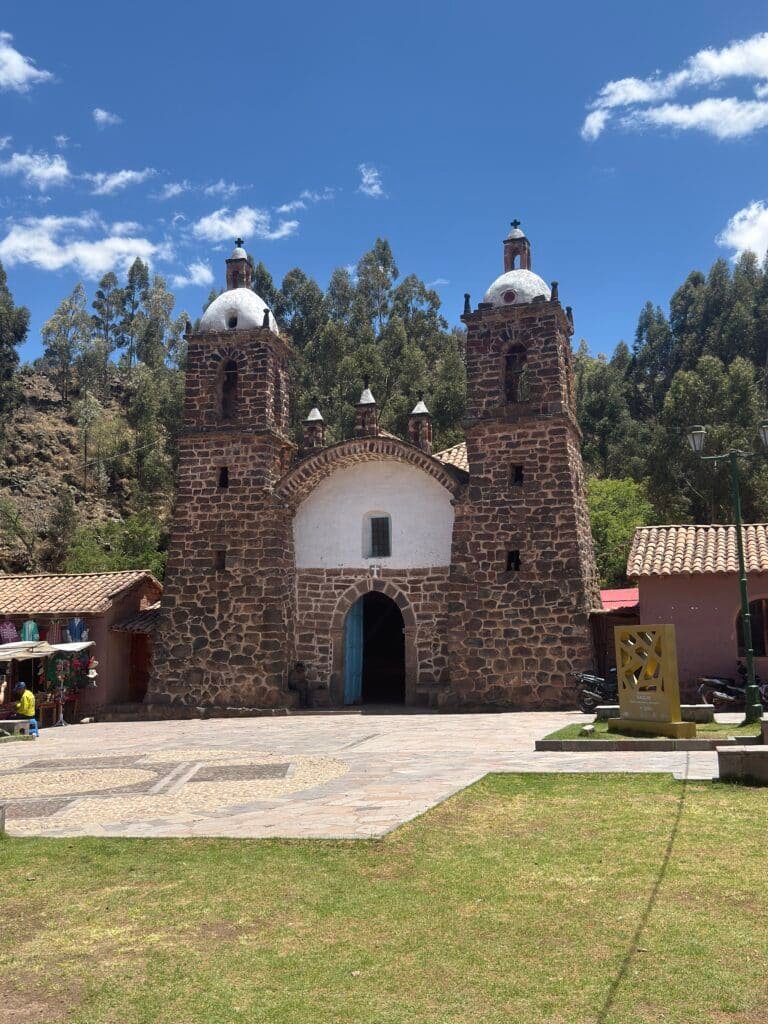
Raqchi’s village church, one of the stops on the road from Cusco to Puno.
Day 7: The Road From Cusco to Puno
Travel south with stops at Andahuaylillas and its painted church, the Temple of Wiracocha at Raqchi, and the lithic museum at Pukara. This is the road we took. A direct bus takes around six to seven hours; with stops, plan on most of the day.
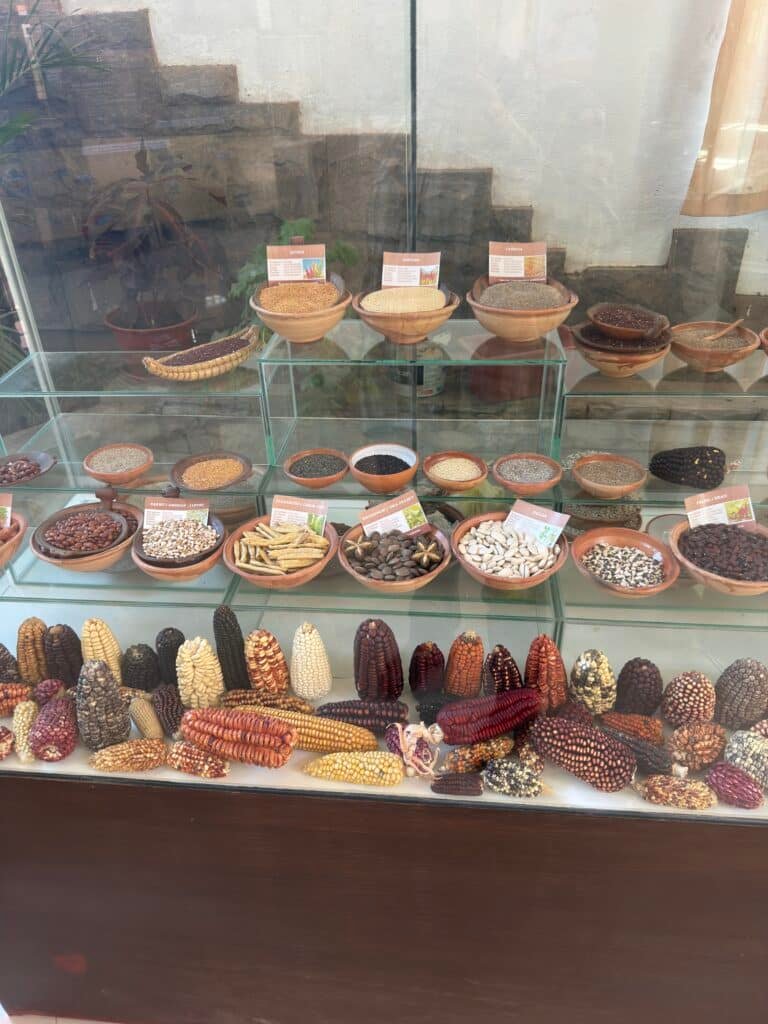
Andean corn on the road south.
Day 8: Lake Titicaca and a Homestay
Take a boat out on the lake. Visit an Uros reed settlement away from the busiest islands near Puno, then stay the night with a family on the Capachica peninsula or on one of the islands. Puno and the lake sit higher than Cusco, so keep the pace slow and pack warm layers.
Day 9: Taquile and Back to Puno
Cross to Taquile for its textiles and village life, then return to Puno.
Day 10: Fly Out From Juliaca
Juliaca airport is about an hour from Puno, with flights to Lima for your connection home.
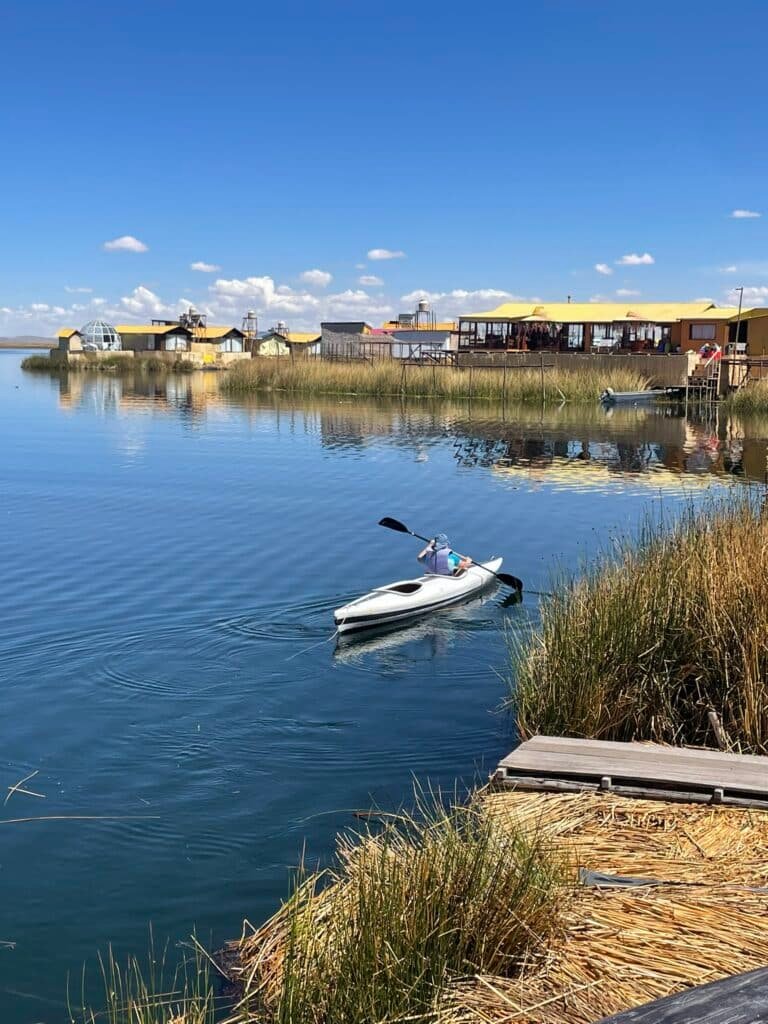
The Uros floating islands on Lake Titicaca, built from totora reed.
If wildlife matters more to you than the lake, swap days 7 to 9 for three days in the Tambopata reserve near Puerto Maldonado, a one-hour flight from Cusco. Put the jungle first, before the Sacred Valley, while you’re fresh.
Route 3: Peru Itinerary for 2 Weeks (14 Days)
Two weeks in Peru is enough for the Pacific desert, the Inca heartland and the high lake. Starting on the coast helps, because you get over the jet lag at sea level before you climb.
Who This Route Is For
Travellers who want variety and are happy to move every few days. It suits people who like contrast: desert and ocean one week, mountains and markets the next.
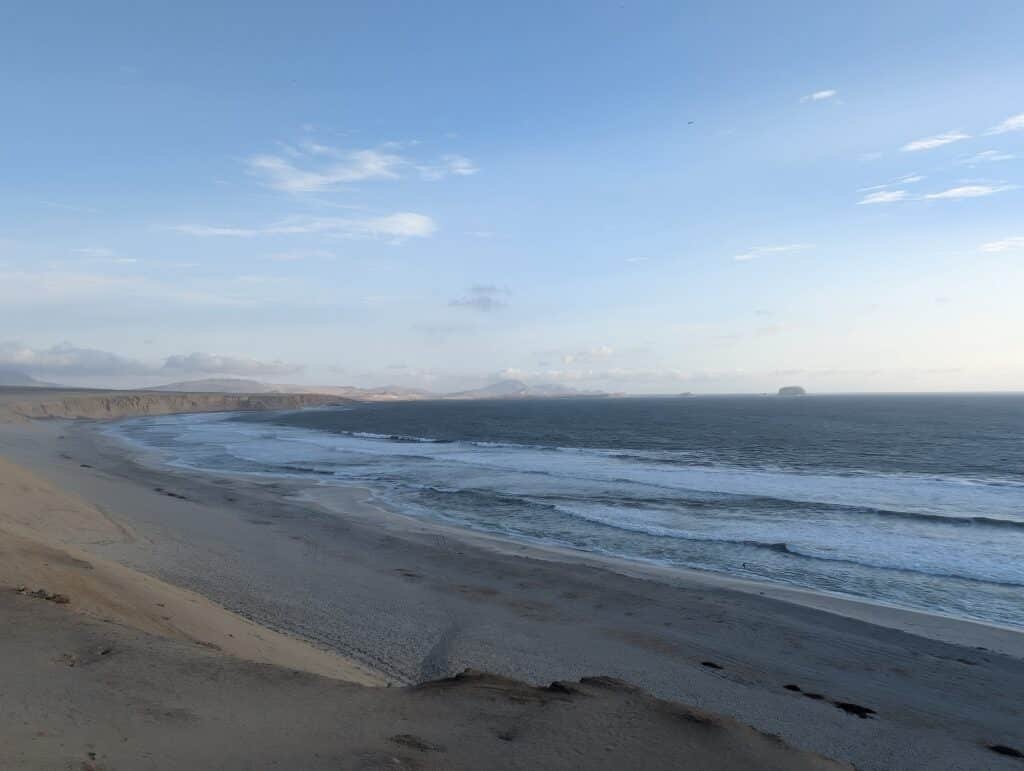
The Paracas National Reserve, the quiet half of the coast and a good first stop before you climb into the Andes.
Day 1: Arrive in Lima
Sleep in Barranco or Miraflores and walk the Malecón at sunset.
Days 2 and 3: Paracas and Huacachina
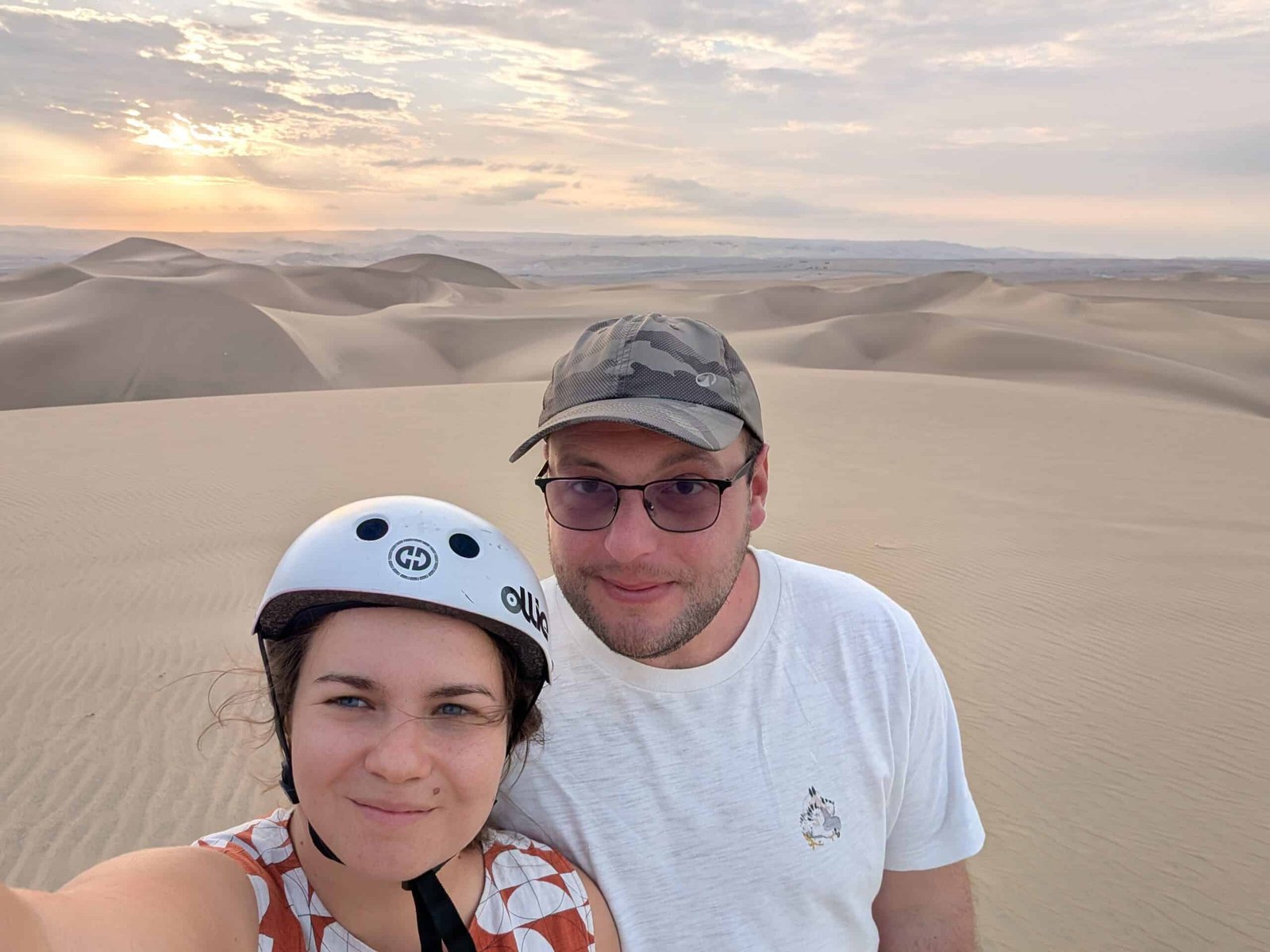
Drive or take a bus from Lima to Paracas. Spend the afternoon in the Paracas National Reserve. Next morning, take the early boat to the Ballestas Islands, then continue to Huacachina for the dunes and sunset. Return to Lima in the evening, or sleep on the coast and travel back next morning.
Day 4: Lima
The Larco Museum in the morning, the historic centre in the afternoon, ceviche at lunch, and a proper dinner in Barranco.
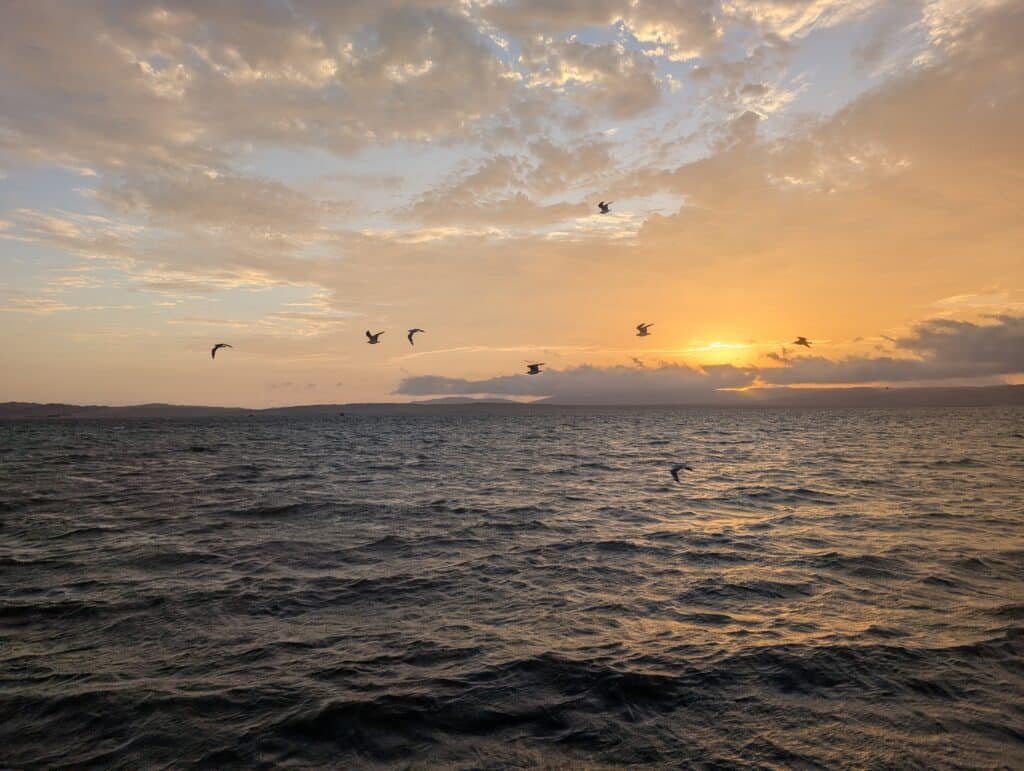
Evening over Paracas Bay.
Days 5 to 10: Cusco, the Sacred Valley and Machu Picchu
Fly to Cusco and follow days 1 to 6 of the 7 day route.
Days 11 to 13: The Road to Puno and Lake Titicaca
Follow days 7 to 9 of the 10 day route.
Day 14: Fly Out From Juliaca
Fly to Lima for your international connection.
If you’d rather have the Amazon than the coast in this 14 day Peru itinerary, drop days 2 to 4 and add three nights in Tambopata from Cusco instead.
Route 4: 3 Week Peru Itinerary (21 Days)
This is close to the route we travelled, trimmed to three weeks. It covers the Amazon, the Andes, the lake and the coast, and it builds in empty days on purpose.
Who This Route Is For
Anyone with three weeks who wants the whole picture without living in airports. The rest days make it a good fit for couples or friends whose energy levels don’t match.
Days 1 and 2: Cusco, Arriving Slowly
Fly into Cusco and do almost nothing for two days. Short flat walks, tea and early nights.
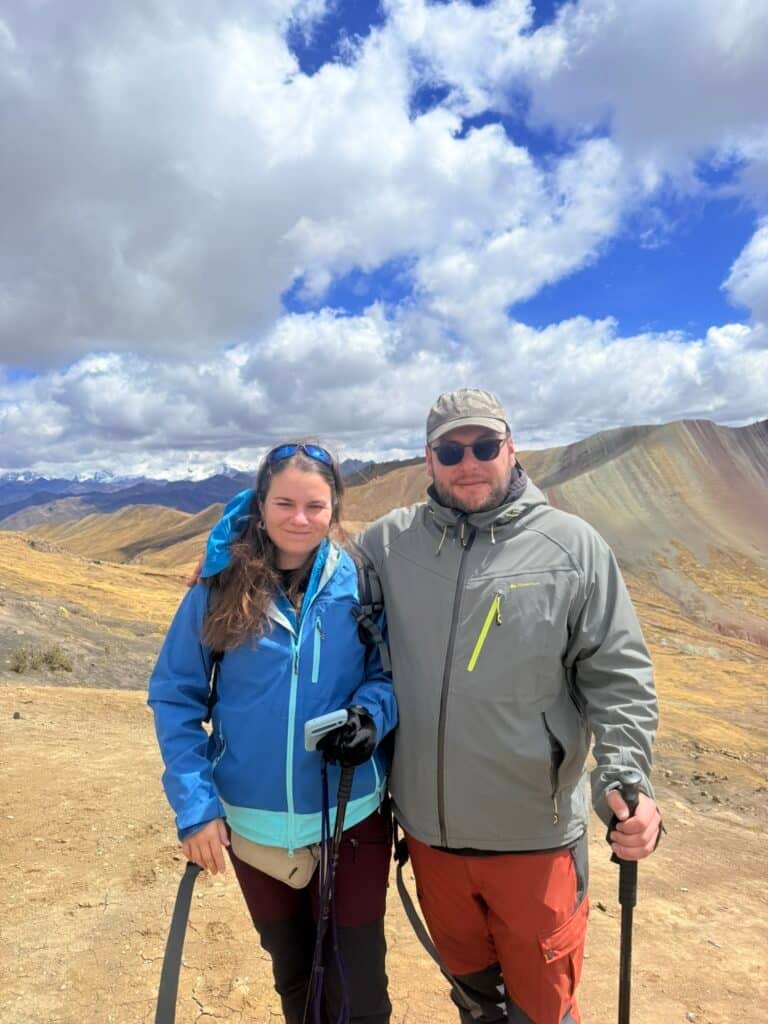
Palccoyo, our pick over the busier Rainbow Mountain, on a day that only works once you’re fully acclimatised.
Days 3 to 5: Tambopata
Fly to Puerto Maldonado, about an hour, and go by boat to a lodge in the Tambopata reserve. Forest walks, the forest at night, and an early morning on Lake Sandoval looking for giant otters. On the last day, sleep in Puerto Maldonado itself and see the town. Alexandra’s account of these days is in Part I of our Peru series.
Days 6 and 7: Back to Cusco, With a Spare Day
Fly back up. You’ve lost your acclimatisation after three nights near sea level, so day 7 stays light. It’s also your buffer if the jungle flight slips.
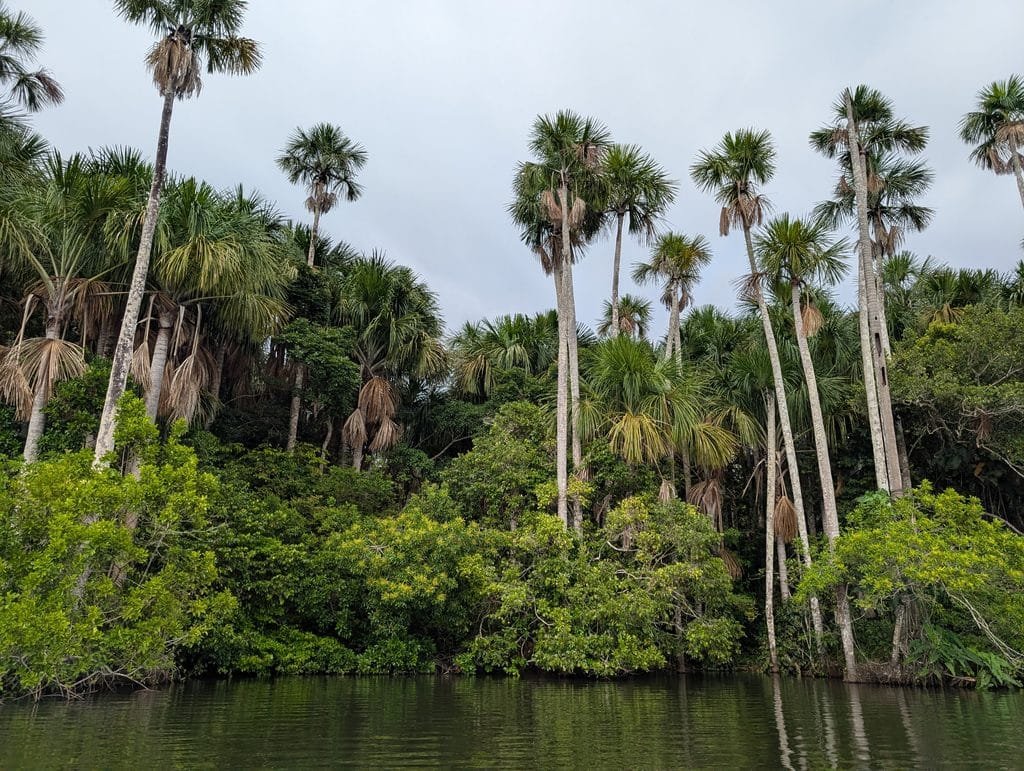
Lake Sandoval in the Tambopata National Reserve, crossed by rowing boat in the early morning.
Days 8 and 9: The Sacred Valley
Pisac market, a night in Lamay or Calca, then Urubamba and on to Ollantaytambo.
Days 10 and 11: The Short Inca Trail and Machu Picchu
Walk in through the Sun Gate on day 10, sleep in Aguas Calientes, see the citadel properly on day 11, and return to Cusco.
Days 12 and 13: Cusco and Palccoyo
One full day for Cusco itself and one for Palccoyo, the quieter rainbow mountain, which you can manage now that you’re fully adjusted.
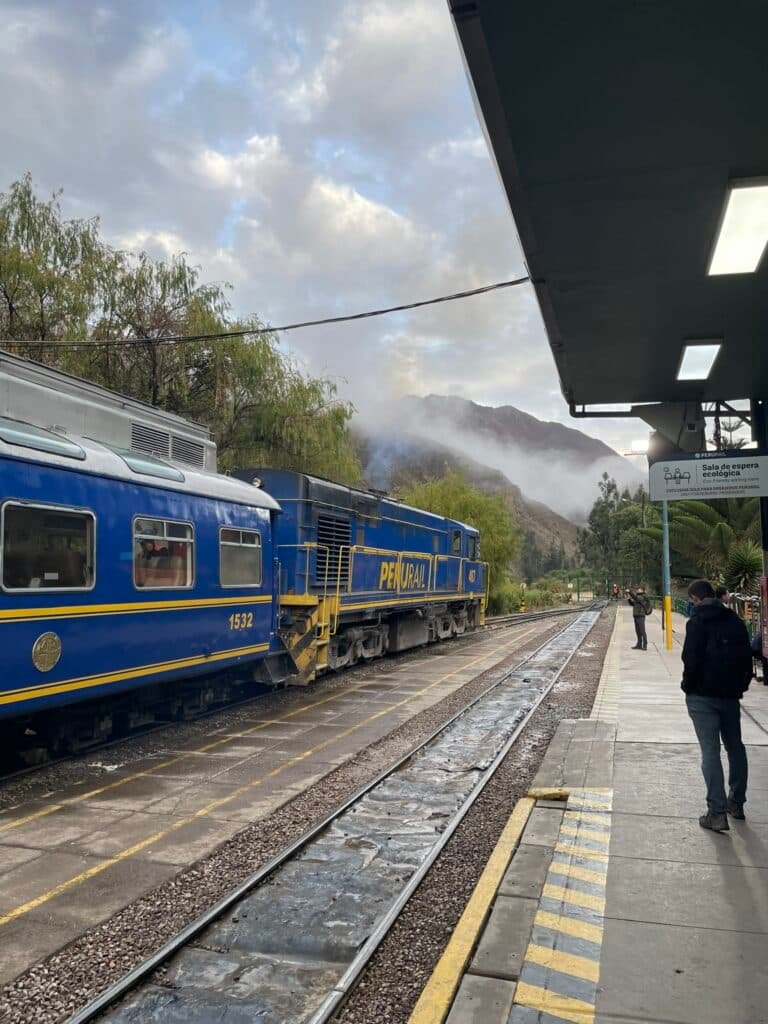
Ollantaytambo station, where the trail and the train both begin.
Day 14: The Road to Puno
The slow road south with stops at Andahuaylillas, Raqchi and Pukara.
Days 15 and 16: Lake Titicaca
The Uros, a family homestay on the lake, and Taquile.
Day 17: Fly to Lima
From Juliaca to Lima. Sea level will feel like a gift.
Days 18 and 19: Paracas and Huacachina
The reserve, the Ballestas Islands and the dunes at sunset.
Days 20 and 21: Lima, Then Home
The Larco Museum, the historic centre, a last ceviche at lunch and a long last dinner before your flight.
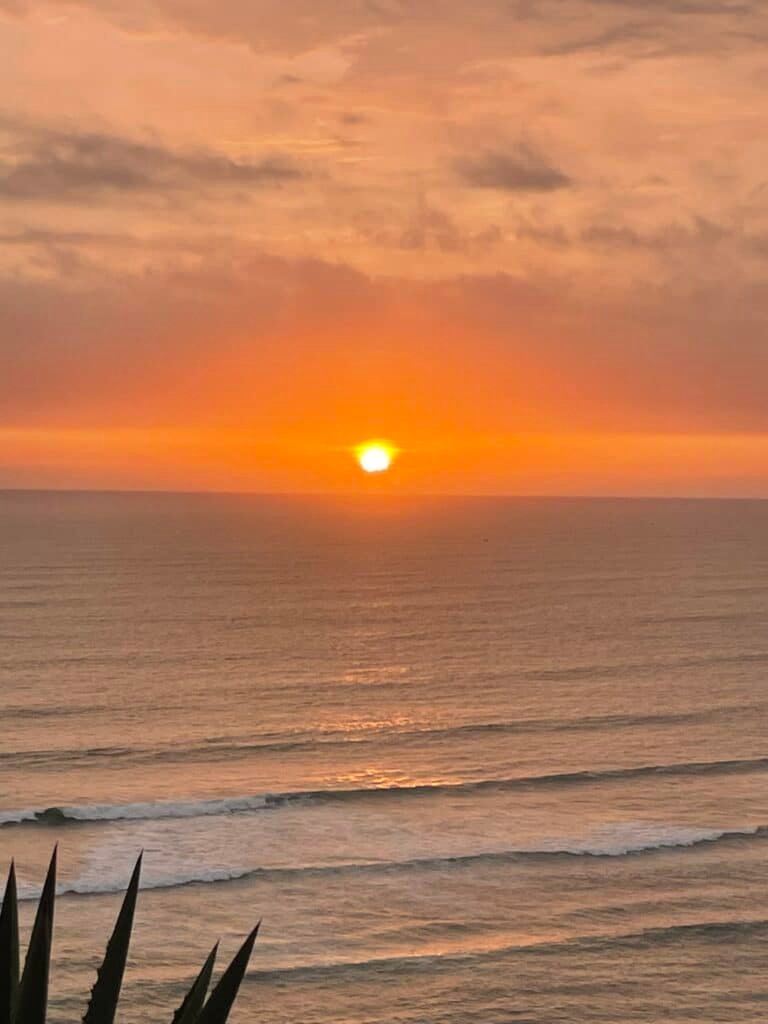
The last evening: sunset over the Pacific from the Miraflores clifftops.
Adding Arequipa or Northern Peru
None of these routes includes Arequipa or the north, because each needs its own block of days.
Arequipa and the Colca Canyon fit naturally between Puno and Lima. Add three to four days: one or two for the city, and two for Colca, which is about four hours by road from Arequipa.
Northern Peru works best as a separate week: Trujillo and Chan Chan, Chachapoyas and Kuélap, Huaraz for the Cordillera Blanca, or the beaches around Máncora. Domestic flights from Lima make each of them reachable, but trying to combine the north and the south in under three weeks means living in airports.
Which Route Fits You?
The number of days decides a lot. The rest depends on how you recharge and what wears you out.
- If you need recovery time and quiet, choose fewer regions and longer stays: the 7 or 10 day route, or the 21 day route with its rest days.
- If you get restless staying put, the 14 day route keeps you moving through three very different landscapes.
- If you’re travelling as a couple or with friends, plan parallel options on the active days. When we planned ours, we gave the most active days a calmer option.
- If uncertainty stresses you, book every fixed point before you fly and keep a spare day after every flight out of the jungle.
At The Verse Voyager we build trips around your personality across five core dimensions, so the route and the pace fit how you travel. If you’d like a Peru itinerary built for you, have a look at our custom itinerary service or book a call.
Common Mistakes to Avoid on a Peru Itinerary
- Hiking hard the morning after you land in Cusco. Give the altitude a day.
- Booking Machu Picchu last. In June to August it sells out first, and everything else should fit around it.
- Trying to see the coast, the Andes and the Amazon in ten days. You’ll spend the trip in transit.
- No buffer after the jungle. Weather delays flights out of Puerto Maldonado, and one late flight can cost you a fixed Machu Picchu date.
- Treating the Cusco to Puno road as a dead transfer. The stops on the way are some of the best things on the route.
Peru Itinerary FAQ
How Many Days in Peru Do You Need?
A week for Cusco, the Sacred Valley and Machu Picchu alone. Ten days to add Lake Titicaca, two weeks to add the coast as well, and three weeks to add the Amazon without rushing.
Is 7 Days Enough for Peru?
It’s enough for one region. Spend it on Cusco, the Sacred Valley and Machu Picchu, and don’t try to add the coast or the jungle. You’d spend the extra days travelling instead of seeing anything.
What’s the Best Order for a Peru Itinerary?
Either start on the coast and climb later, or start in Cusco and drop to the Amazon early. Avoid scheduling hard hikes right after a climb back to altitude, and keep a spare day after any flight out of the jungle.
Should I Take the Bus or Fly From Cusco to Puno?
By road, if you have the day. The stops at Andahuaylillas, Raqchi and Pukara make the journey worth taking slowly. If you’re short on time, check current flight options, but the road is the better experience.
Can You See the Amazon on a 10 Day Peru Itinerary?
Yes, if you swap it for something else. Tambopata is a one-hour flight from Cusco, so three days in the jungle can replace either Lake Titicaca or the coast.
Where to Next
For everything we’ve written about the country, start at our Peru travel guides. For the places themselves, read the best things to do in Peru, region by region. And if you’d like the trip shaped around you, take the free personality quiz first.