Tag: Peru

  • Peru Itinerary: 7, 10, 14 and 21 Days, Matched to How You Travel

    Peru Itinerary: 7, 10, 14 and 21 Days, Matched to How You Travel

    Table of Contents

    The Short Version

    The right Peru itinerary depends on how many days you have and how you like to travel. Here are four routes, from one week to three, built from the weeks Alexandra and I spent in Peru in October and November 2026.

    • 7 days: Cusco, the Sacred Valley and Machu Picchu. One region, done properly.
    • 10 days: the 7-day route plus Lake Titicaca, reached by the slow road south through Andahuaylillas, Raqchi and Pukara.
    • 14 days: Lima and the desert coast at Paracas and Huacachina, then Cusco, Machu Picchu and Titicaca.
    • 21 days: close to our own route, adding the Amazon at Tambopata, with rest days between regions.

    If you’re still choosing which parts of the country to see, start with my guide to the best things to do in Peru, region by region, then come back here to put them in order.
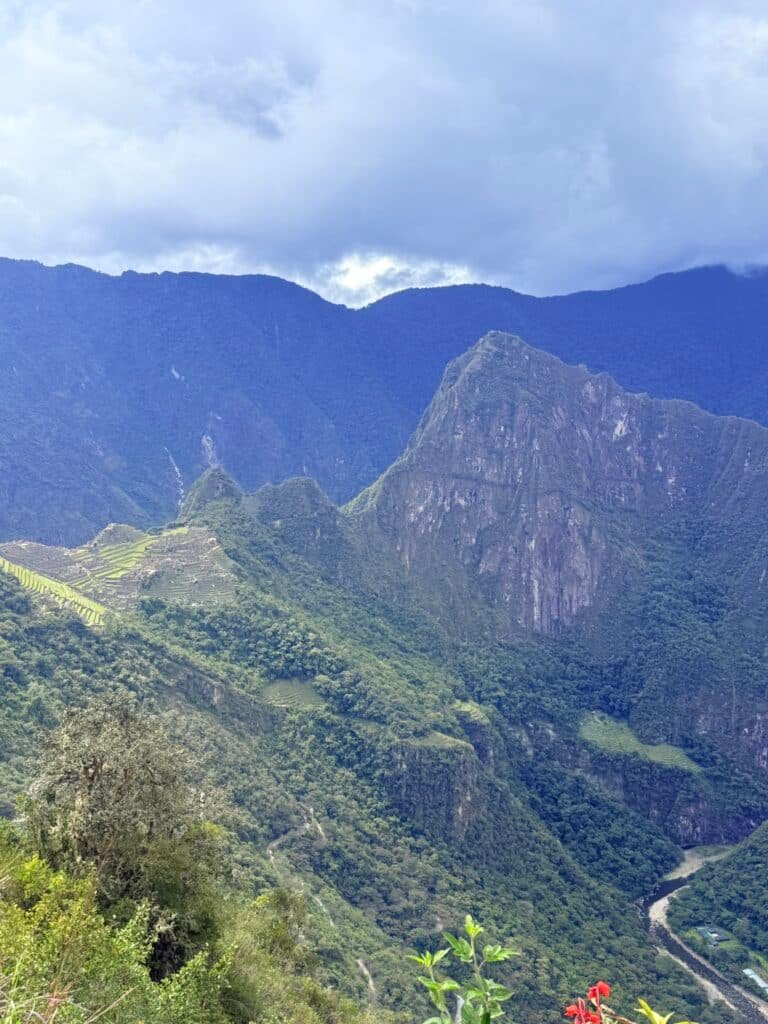
    Machu Picchu on its ridge above the Urubamba River, the anchor of every Peru itinerary

    Machu Picchu above the Urubamba gorge. Every Peru itinerary below is built around reaching this point rested, with the altitude already behind you.

    Before you plan
    What kind of traveler are you, really?

    A Peru itinerary that suits one traveller can wear out another. Take the free quiz, which takes about 3 minutes, and see which route and what pace fit the way you actually travel, before you copy a single day of it.

    Openness
    Need for structure
    Sociability
    Take the free quiz →
    20 questions · about 3 minutes · no account needed to start

    How This Peru Itinerary Works

    Every route in this Peru itinerary follows three rules. They decide whether the trip feels good or exhausting more than any single sight does.

    Respect the altitude ladder. Cusco sits around 3,400 m and Puno around 3,830 m. Lima, Paracas and the Amazon are near sea level. Every time you go back up, your body has to adjust again, so every climb gets an easy first day.

    Book the fixed points first. Machu Picchu entry works on timed circuits with daily caps, and Inca Trail permits are limited. These are the dates everything else bends around. Buy Machu Picchu tickets through the official site, tuboleto.cultura.pe, or through your trek operator.

    Leave slack after flights and long roads. Flights out of the Amazon can be delayed by weather, and mountain roads run late. One empty day after a risky leg stops a single delay from knocking over the whole plan. We planned a spare day in Cusco after the jungle for exactly this reason.

    Here’s how the four routes compare:

    RouteRegionsHighest nightPaceBest for
    7 daysCusco, Sacred Valley, Machu PicchuCusco, about 3,400 mEasy to moderateA first trip or a short holiday
    10 daysAdds Lake TiticacaPuno, about 3,830 mModerateCulture, villages and high landscapes
    14 daysAdds Lima, Paracas and HuacachinaPuno, about 3,830 mModerate to fullThree very different Perus in one trip
    21 daysAdds the Amazon at TambopataPuno, about 3,830 mFull, with rest days built inThe whole picture, without rushing

    When to Visit Peru for This Itinerary

    Dry Season (May to September)

    The most reliable weather for Machu Picchu, the treks and Lake Titicaca, with clear days and cold nights. It’s also the busiest time, so book Machu Picchu and trail permits early.

    Shoulder Season (October and November)

    When we travelled. Quieter than the July peak, with more cloud on the mountains and the first rains arriving. Early cloud over Machu Picchu often clears by mid-morning.

    Wet Season (December to April)

    Greener and emptier in the Andes, with muddier trails and some closures. It’s the best time for the beaches, especially in the north, so a coast-heavy version of the 14-day route works well then.

    Practical Basics for a Peru Trip

    Most international flights land in Lima. From there, domestic flights reach Cusco, Juliaca (for Puno) and Puerto Maldonado in around an hour or two, which is how these routes link regions.

    For the Cusco to Puno bus, a direct service takes around six to seven hours. I’d take it slowly, with stops at Andahuaylillas, Raqchi and Pukara, and make a full day of it.

    From Lima to Paracas is roughly three and a half to four hours by road on the Panamericana Sur, and Huacachina is about an hour further. That stretch of coast is easy to drive yourself. Driving from the coast up into the Andes is a different matter, and I wouldn’t do it on a first trip.

    Cards work in cities and lodges. Carry cash in soles for markets, boats, community homestays and tips.

    What to Pack for Peru

    • Warm layers. Nights in Cusco and on Lake Titicaca are cold, and homestays often have no heating.
    • A light rain jacket, whatever the season.
    • Strong insect repellent, long sleeves and long trousers for the Amazon.
    • A headtorch and a power bank. Jungle lodges often run on solar power.
    • Sun protection. The sun at altitude burns faster than you expect.
    • Comfortable walking shoes that can handle Inca stone steps.

    Route 1: 7 Day Peru Itinerary (One Week in Peru)

    A week is enough for one region, and this Cusco, Sacred Valley and Machu Picchu itinerary is the one to choose on a first trip. Sleep low in the valley first and save Cusco for the end, once you’ve adjusted.

    Who This Route Is For

    Travellers with one week, a first visit, or anyone who doesn’t want to spend half the week in transit. It suits people who enjoy history and walking, and who don’t mind an early start for Machu Picchu.
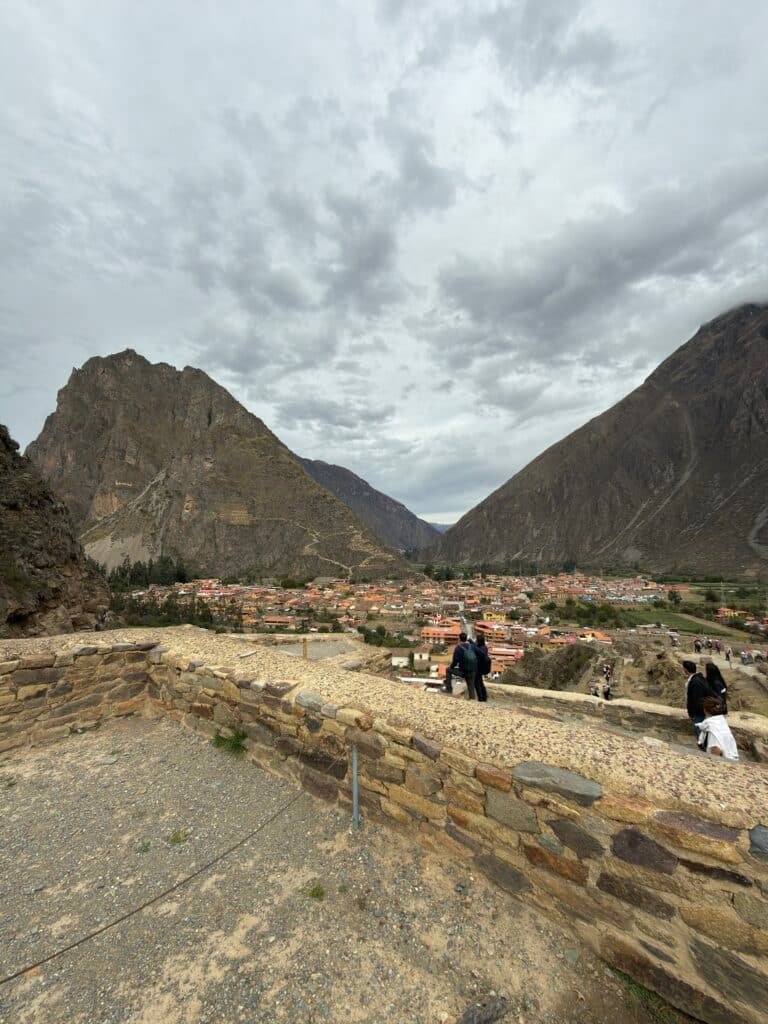
    Ollantaytambo town and the Sacred Valley seen from the Inca terraces above it

    Ollantaytambo, the best base for the train or the trail to Machu Picchu, and a town people still live in on its original Inca plan.

    Day 1: Fly Into Cusco, Sleep in the Sacred Valley

    Fly from Lima to Cusco in the morning and go straight down to the Sacred Valley, which is several hundred metres lower than the city. Rest, drink coca or muña tea, and eat light. Nothing else today.

    Day 2: Pisac Market and the Quiet North Bank

    Visit the market at Pisac (Sunday is the big day), then take a colectivo along the valley to Lamay or Calca for a long lunch away from the tour circuit. Alexandra wrote about these villages in our piece on the communities of the Sacred Valley.

    Day 3: Maras, Moray and Ollantaytambo

    Morning at the Maras salt pans and the circular terraces of Moray, then on to Ollantaytambo for the night. Walk the old town in the late afternoon, when the day visitors have gone.

    Day 4: The Short Inca Trail, or the Train

    Either take the early train to KM104 and walk the Short Inca Trail through Wiñay Wayna to the Sun Gate, or take the scenic train straight to Aguas Calientes. We walked, and I’d do it again: you reach the Sun Gate and see Machu Picchu from above before you ever stand in it. Sleep in Aguas Calientes.

    Day 5: Machu Picchu, Then Back to Cusco

    Early bus up to the citadel for your timed entry and a guided circuit, then lunch in Aguas Calientes and the train and road back to Cusco.
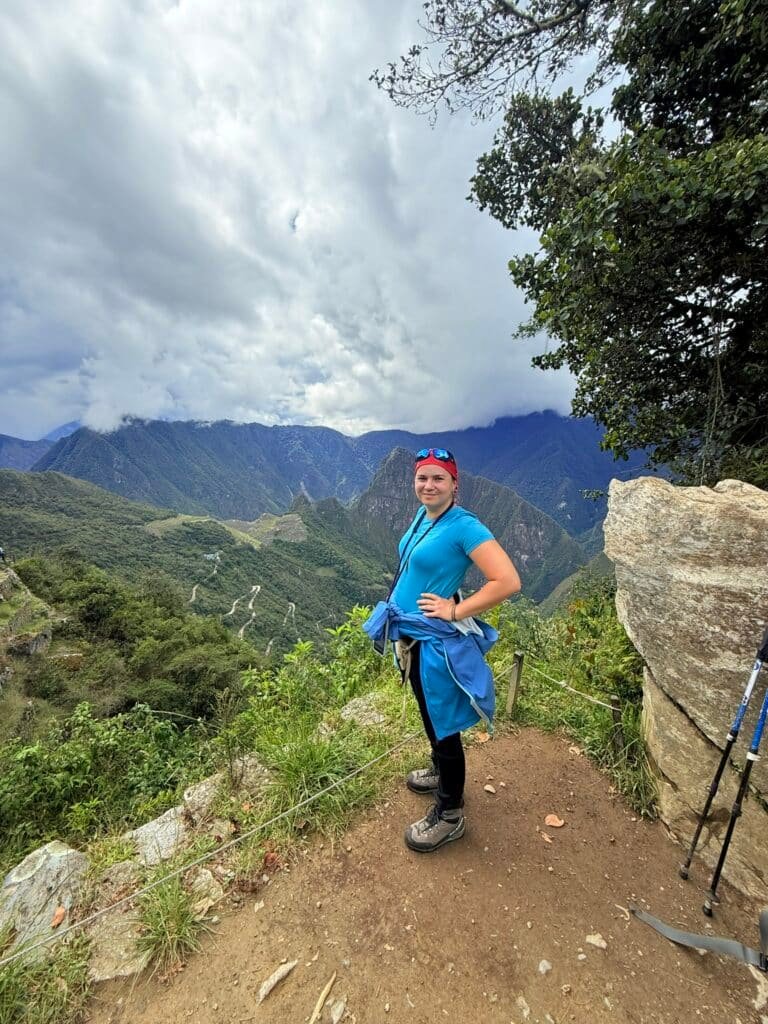
    Hiker at a cliff edge viewpoint near the Sun Gate on the Short Inca Trail

    Near the Sun Gate on the Short Inca Trail. Arriving on foot means you see Machu Picchu first from above, which is how the Inca road was designed.

    Day 6: Cusco, Properly

    Now that you’ve acclimatised, give Cusco a full day: Sacsayhuamán at opening, San Pedro market, San Blas and a good dinner. Or walk the old Inca road down from Puka Pukara to Sacsayhuamán, which we describe in our guide to Inca sites beyond Machu Picchu.

    Day 7: Fly Out

    Fly back to Lima for your international connection.

    You give up the coast, the lake and the jungle on this route. In exchange, you see one region without rushing, and on a first trip I think that’s the better deal.

    Route 2: 10 Day Peru Itinerary With Lake Titicaca

    Three extra days let you add Titicaca, and I’d spend one of them on the road there, stopping along the way from Cusco.

    Who This Route Is For

    Curious travellers who like culture and village life as much as monuments, and who can handle a couple of nights at higher altitude than Cusco.

    Days 1 to 6: Cusco, the Sacred Valley and Machu Picchu

    Follow days 1 to 6 of the 7 day route above.
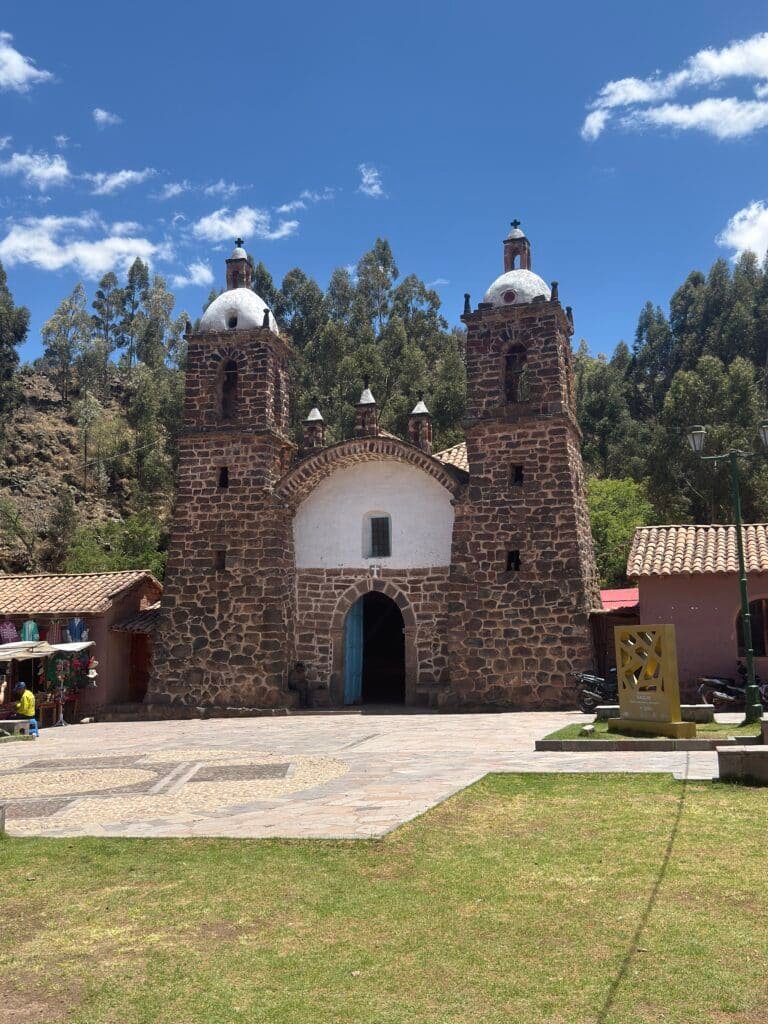
    Twin towered village church at Raqchi on the road between Cusco and Puno

    Raqchi’s village church, one of the stops on the road from Cusco to Puno.

    Day 7: The Road From Cusco to Puno

    Travel south with stops at Andahuaylillas and its painted church, the Temple of Wiracocha at Raqchi, and the lithic museum at Pukara. This is the road we took. A direct bus takes around six to seven hours; with stops, plan on most of the day.
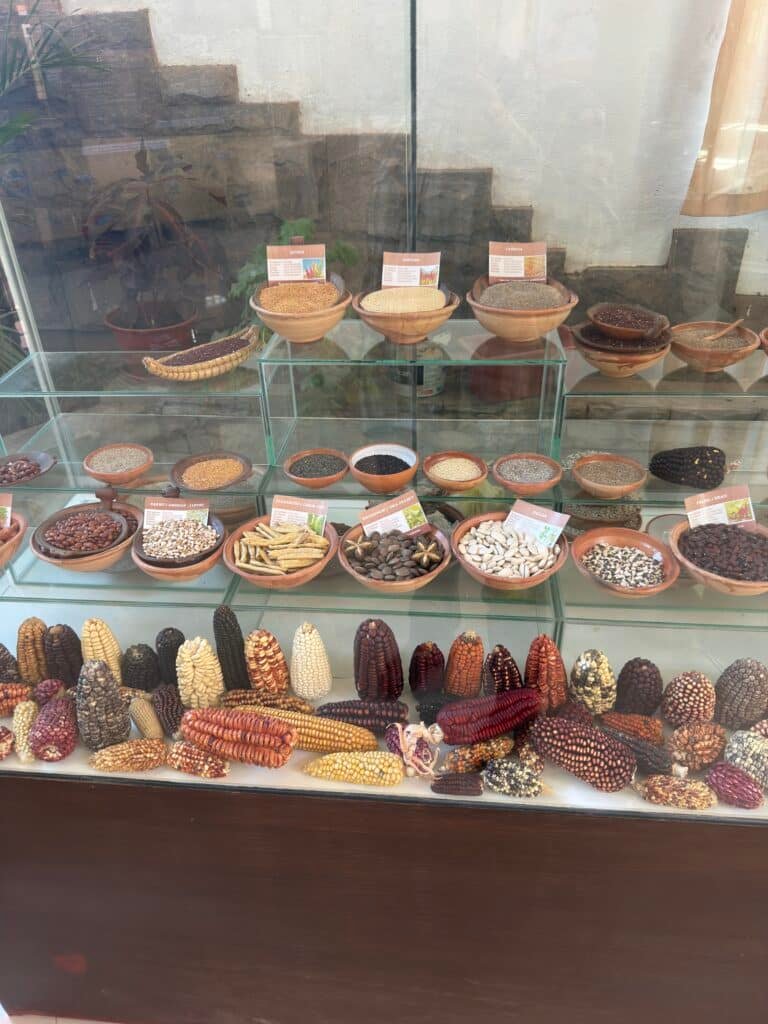
    Display of Andean corn varieties at a stop on the Cusco to Puno road

    Andean corn on the road south.

    Day 8: Lake Titicaca and a Homestay

    Take a boat out on the lake. Visit an Uros reed settlement away from the busiest islands near Puno, then stay the night with a family on the Capachica peninsula or on one of the islands. Puno and the lake sit higher than Cusco, so keep the pace slow and pack warm layers.

    Day 9: Taquile and Back to Puno

    Cross to Taquile for its textiles and village life, then return to Puno.

    Day 10: Fly Out From Juliaca

    Juliaca airport is about an hour from Puno, with flights to Lima for your connection home.
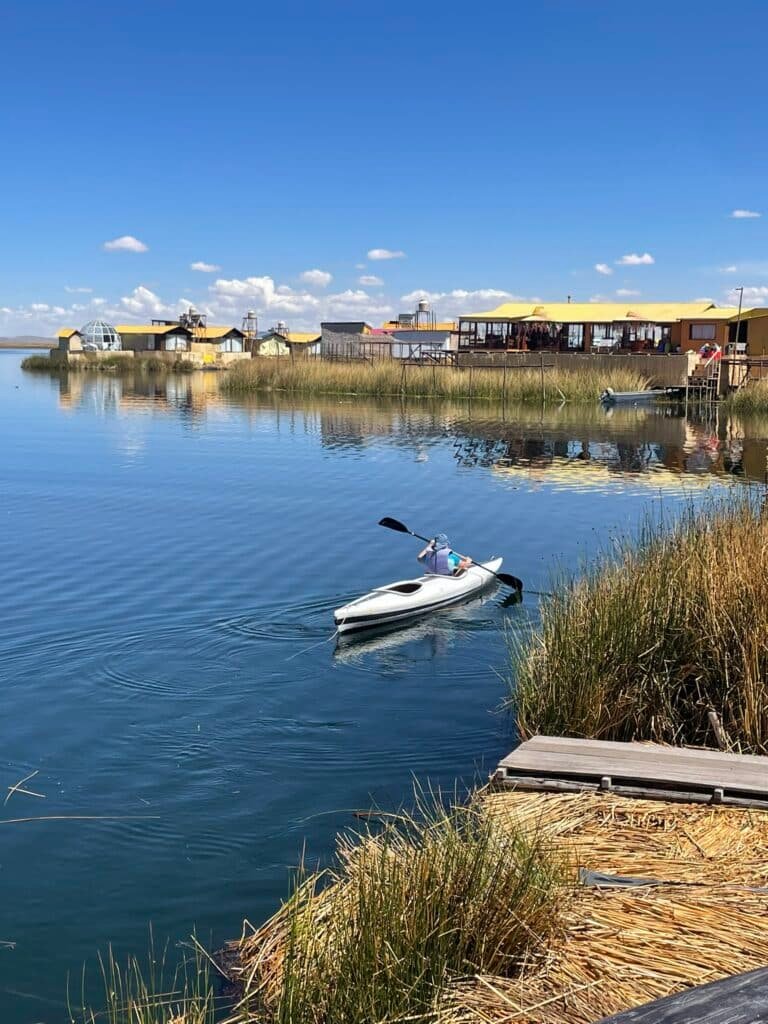
    Kayak beside the Uros floating reed islands on Lake Titicaca, Peru

    The Uros floating islands on Lake Titicaca, built from totora reed.

    If wildlife matters more to you than the lake, swap days 7 to 9 for three days in the Tambopata reserve near Puerto Maldonado, a one-hour flight from Cusco. Put the jungle first, before the Sacred Valley, while you’re fresh.

    Route 3: Peru Itinerary for 2 Weeks (14 Days)

    Two weeks in Peru is enough for the Pacific desert, the Inca heartland and the high lake. Starting on the coast helps, because you get over the jet lag at sea level before you climb.

    Who This Route Is For

    Travellers who want variety and are happy to move every few days. It suits people who like contrast: desert and ocean one week, mountains and markets the next.
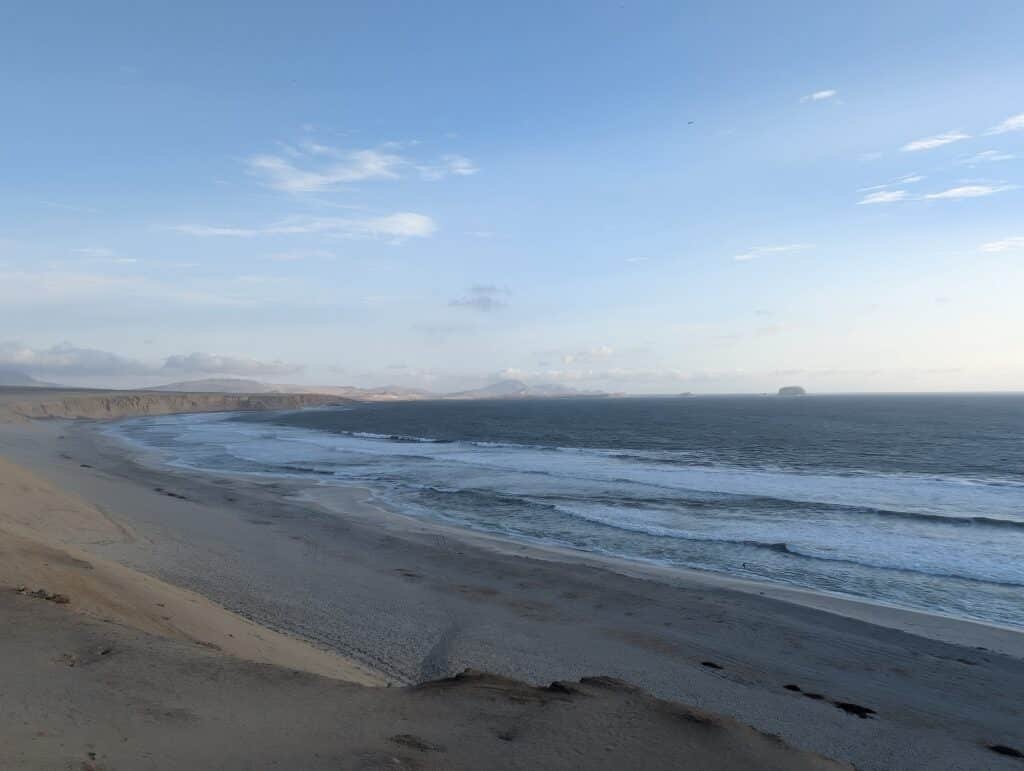
    Empty desert beach and cliffs inside the Paracas National Reserve on the Pacific coast of Peru

    The Paracas National Reserve, the quiet half of the coast and a good first stop before you climb into the Andes.

    Day 1: Arrive in Lima

    Sleep in Barranco or Miraflores and walk the Malecón at sunset.

    Days 2 and 3: Paracas and Huacachina

    Drive or take a bus from Lima to Paracas. Spend the afternoon in the Paracas National Reserve. Next morning, take the early boat to the Ballestas Islands, then continue to Huacachina for the dunes and sunset. Return to Lima in the evening, or sleep on the coast and travel back next morning.

    Day 4: Lima

    The Larco Museum in the morning, the historic centre in the afternoon, ceviche at lunch, and a proper dinner in Barranco.
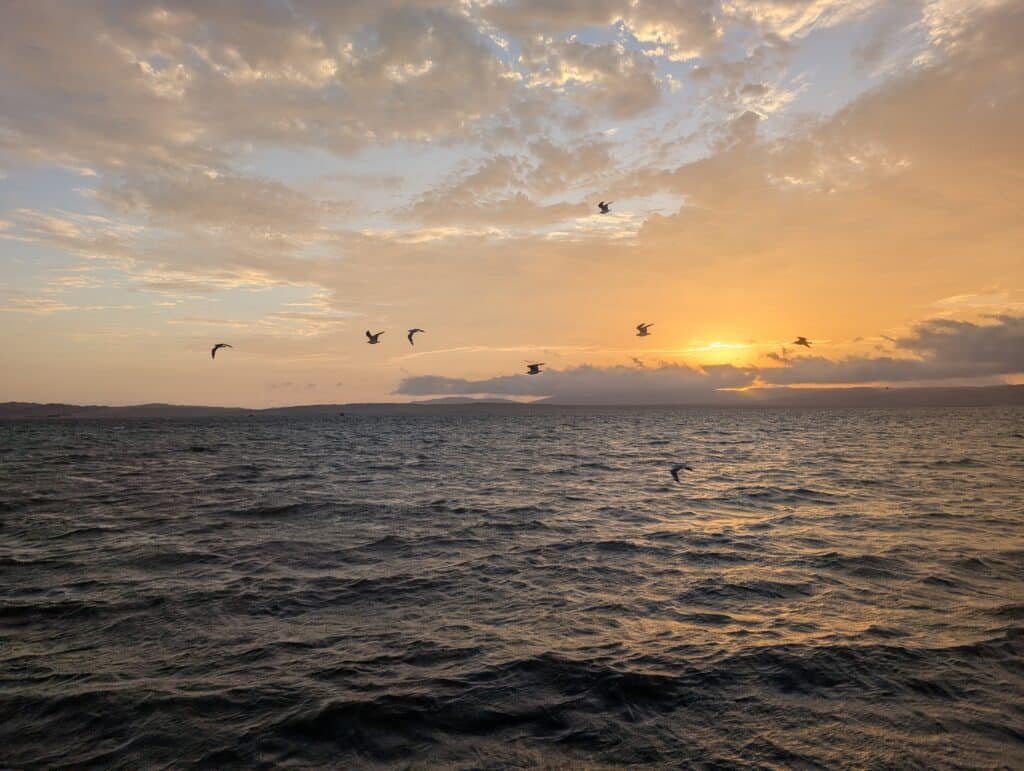
    Seabirds over Paracas Bay at sunset

    Evening over Paracas Bay.

    Days 5 to 10: Cusco, the Sacred Valley and Machu Picchu

    Fly to Cusco and follow days 1 to 6 of the 7 day route.

    Days 11 to 13: The Road to Puno and Lake Titicaca

    Follow days 7 to 9 of the 10 day route.

    Day 14: Fly Out From Juliaca

    Fly to Lima for your international connection.

    If you’d rather have the Amazon than the coast in this 14 day Peru itinerary, drop days 2 to 4 and add three nights in Tambopata from Cusco instead.

    Route 4: 3 Week Peru Itinerary (21 Days)

    This is close to the route we travelled, trimmed to three weeks. It covers the Amazon, the Andes, the lake and the coast, and it builds in empty days on purpose.

    Who This Route Is For

    Anyone with three weeks who wants the whole picture without living in airports. The rest days make it a good fit for couples or friends whose energy levels don’t match.

    Days 1 and 2: Cusco, Arriving Slowly

    Fly into Cusco and do almost nothing for two days. Short flat walks, tea and early nights.
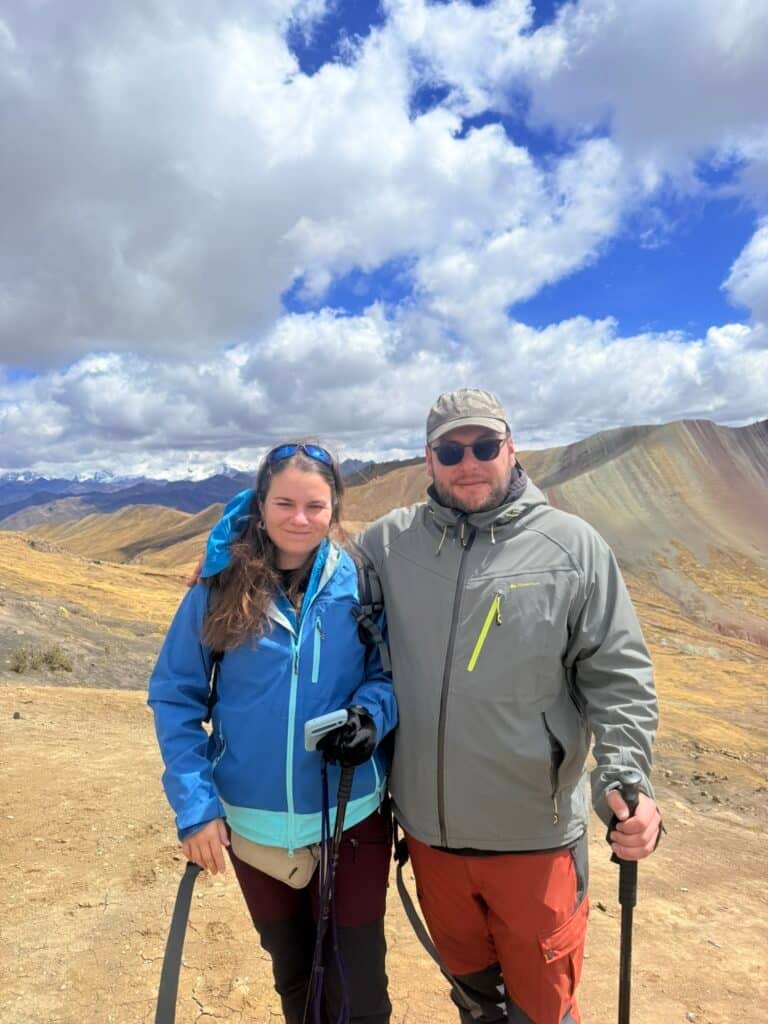
    Andrei and Alexandra at the Palccoyo rainbow mountain viewpoint near Cusco

    Palccoyo, our pick over the busier Rainbow Mountain, on a day that only works once you’re fully acclimatised.

    Days 3 to 5: Tambopata

    Fly to Puerto Maldonado, about an hour, and go by boat to a lodge in the Tambopata reserve. Forest walks, the forest at night, and an early morning on Lake Sandoval looking for giant otters. On the last day, sleep in Puerto Maldonado itself and see the town. Alexandra’s account of these days is in Part I of our Peru series.

    Days 6 and 7: Back to Cusco, With a Spare Day

    Fly back up. You’ve lost your acclimatisation after three nights near sea level, so day 7 stays light. It’s also your buffer if the jungle flight slips.
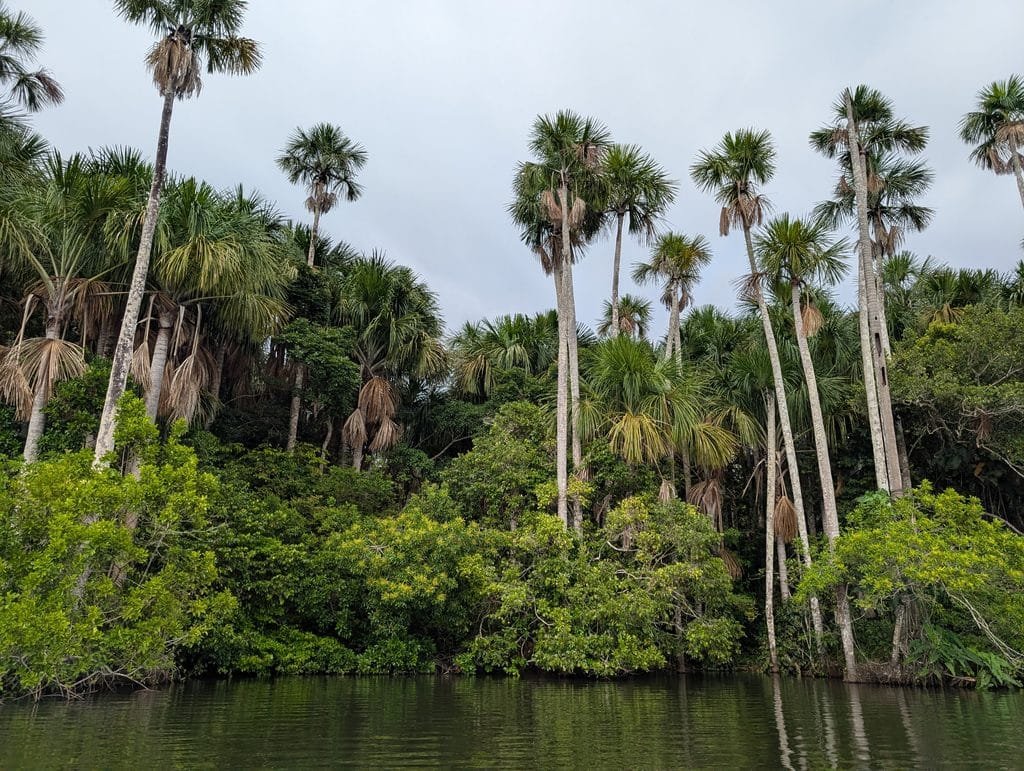
    Palm trees around Lake Sandoval in the Tambopata National Reserve, Peruvian Amazon

    Lake Sandoval in the Tambopata National Reserve, crossed by rowing boat in the early morning.

    Days 8 and 9: The Sacred Valley

    Pisac market, a night in Lamay or Calca, then Urubamba and on to Ollantaytambo.

    Days 10 and 11: The Short Inca Trail and Machu Picchu

    Walk in through the Sun Gate on day 10, sleep in Aguas Calientes, see the citadel properly on day 11, and return to Cusco.

    Days 12 and 13: Cusco and Palccoyo

    One full day for Cusco itself and one for Palccoyo, the quieter rainbow mountain, which you can manage now that you’re fully adjusted.
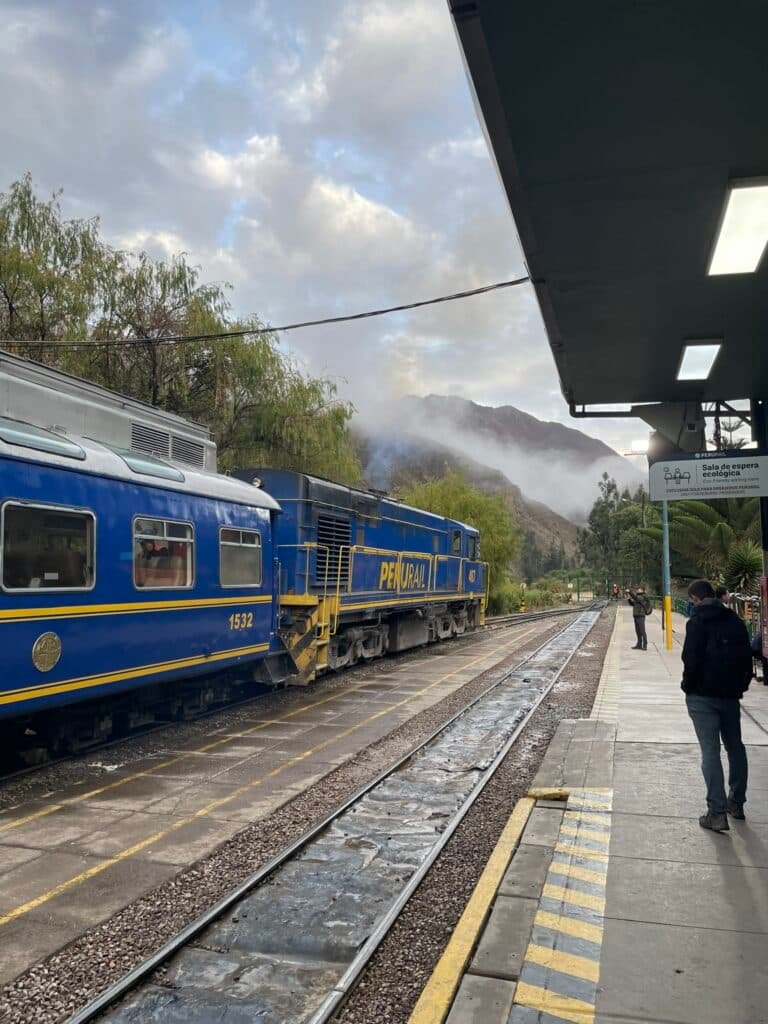
    Train at Ollantaytambo station, the rail gateway to Machu Picchu

    Ollantaytambo station, where the trail and the train both begin.

    Day 14: The Road to Puno

    The slow road south with stops at Andahuaylillas, Raqchi and Pukara.

    Days 15 and 16: Lake Titicaca

    The Uros, a family homestay on the lake, and Taquile.

    Day 17: Fly to Lima

    From Juliaca to Lima. Sea level will feel like a gift.

    Days 18 and 19: Paracas and Huacachina

    The reserve, the Ballestas Islands and the dunes at sunset.

    Days 20 and 21: Lima, Then Home

    The Larco Museum, the historic centre, a last ceviche at lunch and a long last dinner before your flight.
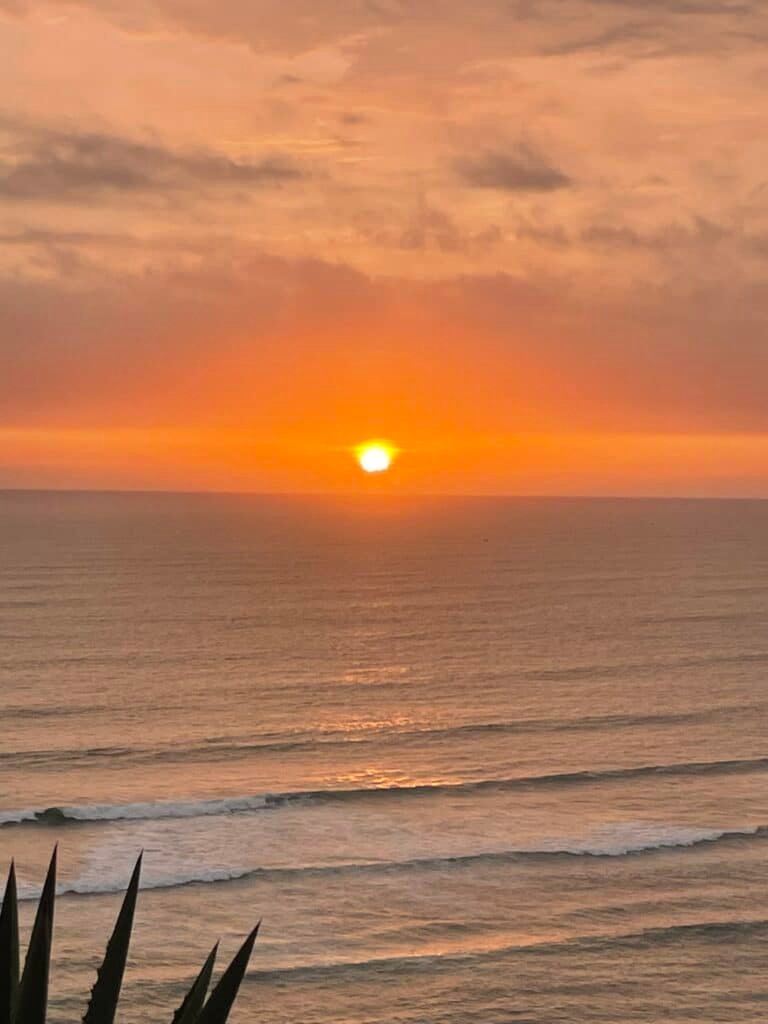
    Sun setting into the Pacific Ocean from the Miraflores clifftops in Lima

    The last evening: sunset over the Pacific from the Miraflores clifftops.

    Adding Arequipa or Northern Peru

    None of these routes includes Arequipa or the north, because each needs its own block of days.

    Arequipa and the Colca Canyon fit naturally between Puno and Lima. Add three to four days: one or two for the city, and two for Colca, which is about four hours by road from Arequipa.

    Northern Peru works best as a separate week: Trujillo and Chan Chan, Chachapoyas and Kuélap, Huaraz for the Cordillera Blanca, or the beaches around Máncora. Domestic flights from Lima make each of them reachable, but trying to combine the north and the south in under three weeks means living in airports.

    Which Route Fits You?

    The number of days decides a lot. The rest depends on how you recharge and what wears you out.

    • If you need recovery time and quiet, choose fewer regions and longer stays: the 7 or 10 day route, or the 21 day route with its rest days.
    • If you get restless staying put, the 14 day route keeps you moving through three very different landscapes.
    • If you’re travelling as a couple or with friends, plan parallel options on the active days. When we planned ours, we gave the most active days a calmer option.
    • If uncertainty stresses you, book every fixed point before you fly and keep a spare day after every flight out of the jungle.

    At The Verse Voyager we build trips around your personality across five core dimensions, so the route and the pace fit how you travel. If you’d like a Peru itinerary built for you, have a look at our custom itinerary service or book a call.

    Common Mistakes to Avoid on a Peru Itinerary

    • Hiking hard the morning after you land in Cusco. Give the altitude a day.
    • Booking Machu Picchu last. In June to August it sells out first, and everything else should fit around it.
    • Trying to see the coast, the Andes and the Amazon in ten days. You’ll spend the trip in transit.
    • No buffer after the jungle. Weather delays flights out of Puerto Maldonado, and one late flight can cost you a fixed Machu Picchu date.
    • Treating the Cusco to Puno road as a dead transfer. The stops on the way are some of the best things on the route.

    Peru Itinerary FAQ

    How Many Days in Peru Do You Need?

    A week for Cusco, the Sacred Valley and Machu Picchu alone. Ten days to add Lake Titicaca, two weeks to add the coast as well, and three weeks to add the Amazon without rushing.

    Is 7 Days Enough for Peru?

    It’s enough for one region. Spend it on Cusco, the Sacred Valley and Machu Picchu, and don’t try to add the coast or the jungle. You’d spend the extra days travelling instead of seeing anything.

    What’s the Best Order for a Peru Itinerary?

    Either start on the coast and climb later, or start in Cusco and drop to the Amazon early. Avoid scheduling hard hikes right after a climb back to altitude, and keep a spare day after any flight out of the jungle.

    Should I Take the Bus or Fly From Cusco to Puno?

    By road, if you have the day. The stops at Andahuaylillas, Raqchi and Pukara make the journey worth taking slowly. If you’re short on time, check current flight options, but the road is the better experience.

    Can You See the Amazon on a 10 Day Peru Itinerary?

    Yes, if you swap it for something else. Tambopata is a one-hour flight from Cusco, so three days in the jungle can replace either Lake Titicaca or the coast.

    Where to Next

    For everything we’ve written about the country, start at our Peru travel guides. For the places themselves, read the best things to do in Peru, region by region. And if you’d like the trip shaped around you, take the free personality quiz first.
  • Things to Do in Peru: 34 Best Places to Visit, Region by Region

    Things to Do in Peru: 34 Best Places to Visit, Region by Region

    The Short Version

    The best things to do in Peru sit in three very different worlds. There’s the cold desert coast, with Lima, Paracas and the dunes of Huacachina. There are the high Andes, with Cusco, the Sacred Valley, Machu Picchu and Lake Titicaca. And there’s the Amazon, from Tambopata in the south to Iquitos and the triple border in the north. If you’ve got two weeks, pick two of them. Squeezing in all three means more time in airports than anywhere else.

    Alexandra and I spent close to a month in Peru in October and November 2026: Cusco and the Sacred Valley, the Short Inca Trail to Machu Picchu, the Tambopata jungle, the road south to Lake Titicaca, then Lima, Paracas and Huacachina. An earlier trip took us to Santa Rosa, Peru’s corner of the Amazon triple border. Most of this guide follows that route, with Arequipa and the north added so the whole country is in one place.

    If you want the day-by-day version, I’ve laid out four routes in my Peru itinerary for 7, 10, 14 and 21 days. Alexandra’s essays from the trip are on our Peru travel guides page.

    A few quick facts to set expectations:

    • Why go: Inca stonework still standing in living towns, three climates in one country, one of the best food cities in the world, and wildlife from condors to giant otters.
    • When to go: May to September for dry days in the Andes, December to April for the beaches, June to October for easier jungle walking.
    • How long: a week for Cusco and Machu Picchu alone, two weeks to add Titicaca or the coast, three to add the Amazon.
    • How to get around: domestic flights between regions, buses and colectivos inside them, and a rental car only on the coast.
    Before you plan
    What kind of traveler are you, really?

    Peru rewards some temperaments far more than others. Take the free quiz, which takes about 3 minutes, and see which regions and what pace fit the way you actually travel, before you book a single flight.

    Openness
    Need for structure
    Sociability
    Take the free quiz →
    20 questions · about 3 minutes · no account needed to start

    The Best Things to Do in Peru at a Glance

    If I had to keep only a handful, I’d walk into Machu Picchu through the Sun Gate on the Short Inca Trail, eat breakfast from a wood oven at the Pisac market, sleep in Ollantaytambo’s living Inca streets, see the colours of Palccoyo without the Rainbow Mountain crowds, stay with a family on Lake Titicaca, row across Lake Sandoval at dawn looking for giant otters, eat ceviche at lunch in Lima, and watch the sun go down from the dunes above Huacachina. Further off the main circuit, there’s Arequipa’s white stone and the condors of the Colca Canyon, the cloud forest fortress of Kuélap, and the warm beaches around Máncora.

    Table of Contents

    Why Visit Peru?

    Plenty of travellers come to Peru for one photo of Machu Picchu, and most lists of things to do in Peru start and end at the citadel. But the country packs the desert coast, the high Andes and the Amazon inside one border, and each of them feels like a separate trip.

    A few reasons I’d send almost anyone:

    • Inca architecture that people still live in. In Ollantaytambo and Cusco, families go about their day inside walls fitted without mortar five centuries ago.
    • Quechua culture as people live it: markets where highland communities trade with each other, homestays on Lake Titicaca, weaving traditions that UNESCO lists as intangible heritage on Taquile.
    • Wildlife in very different settings, from sea lions and Humboldt penguins on the Ballestas Islands to giant otters in Tambopata and condors in the Colca Canyon.
    • Food. Lima is one of the great food cities of the world, and Peruvian cooking is a meeting of Andean, Spanish, African, Chinese and Japanese traditions.
    • Landscapes that change completely from one flight to the next: desert cliffs falling into the Pacific, striped mountains near 5,000 m, the flat green line of the jungle.
    Machu Picchu and Huayna Picchu from the Sun Gate at the end of the Short Inca Trail, one of the best things to do in Peru

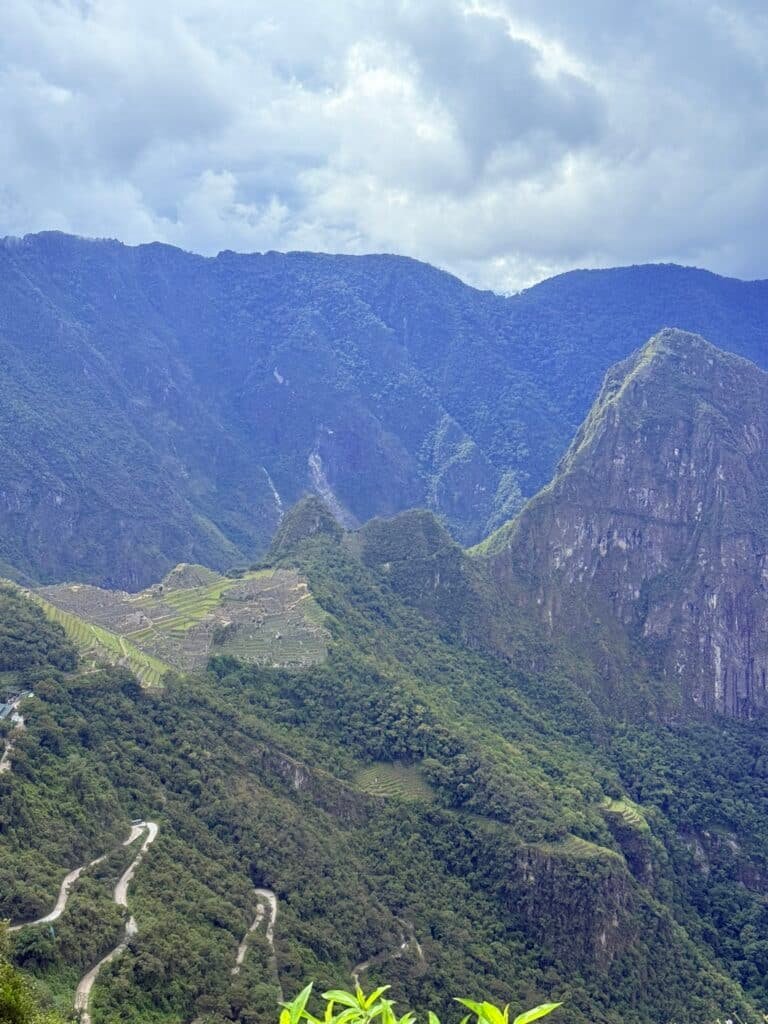
    Machu Picchu from Intipunku, the Sun Gate, at the end of the Short Inca Trail. Most visitors arrive by bus from Aguas Calientes and meet the citadel at the gate. Walking in gives you this view first, from above, the way the Inca road was built to bring you in. That view is why I’d pick the trail over the train.

    Before You Go: Peru Travel Tips Worth Knowing

    Best Time to Visit Peru

    There isn’t one best time for the whole country, because the three regions run on different weather. In the Andes (Cusco, Titicaca, Arequipa, Huaraz), the dry season from about May to September brings clear days and cold nights, and it’s also peak season. November to March is wetter and greener, and some treks get muddy or close. The Amazon is always hot and humid, and the drier months, roughly June to October, are easier for walking and wildlife. On the coast, Lima sits under a grey sky much of the year, while December to April is beach season, especially in the north.

    We travelled from mid-October to early November, at the start of the wet season and quieter than the July peak. Expect some rain and cloud in the mountains if you do the same.

    Best Time to Visit Machu Picchu

    The dry months from May to September give you the best odds of a clear view, and the biggest crowds. In 2026, daily capacity was 4,500 for most of the year and up to 5,600 on high-season dates, which ran from 19 June to 2 November. Buy tickets through the official Ministry of Culture site, tuboleto.cultura.pe, and buy early for June to August.

    Altitude

    Cusco sits around 3,400 m and Puno around 3,830 m, while Lima, Paracas and Puerto Maldonado are near sea level. Every climb costs you a day of adjustment, sometimes two. Keep the first day in Cusco empty, drink plenty of water, eat light and go easy on alcohol. The Sacred Valley is several hundred metres lower than Cusco, so it’s a gentler first night. Talk to your doctor before the trip about preventive medication.

    Getting Around Peru

    Domestic flights save whole days: Lima connects to Cusco, Arequipa, Juliaca (for Puno), Puerto Maldonado, Iquitos, Trujillo and Piura. Long-distance buses are comfortable on the main routes. In the Sacred Valley, colectivos (shared minivans) run the main road all day and you don’t need to book. A rental car works well on the coast, where the drive from Lima to Paracas on the Panamericana Sur is straightforward. Driving from the coast up into the Andes is a different matter, and I wouldn’t do it on a first trip.

    Build in a spare day after any flight out of the Amazon or any long mountain road. Weather delays happen, and one buffer day stops a late flight from undoing the rest of the plan.

    Things to Do in Cusco and the Sacred Valley

    This is the Peru most people picture, and most of the classic things to do in Peru are here. Cusco works best as a living city you walk slowly, and the Sacred Valley as farmland and villages, with the ruins fitted in between. Alexandra wrote about our days with the valley communities in Part II of our Peru series, if you want the slower, more personal version.

    1. Walk the Short Inca Trail to Machu Picchu

    The Short Inca Trail starts at a railway stop called KM104, climbs through cloud forest past the terraces of Wiñay Wayna, and ends at Intipunku, the Sun Gate, with Machu Picchu below you through a stone doorway. It’s one long, steep day, and you sleep in a hotel in Aguas Calientes rather than a tent. The next morning you go back up by bus for a guided circuit of the citadel.

    Entry works on timed circuits now: in 2026 there were three circuits split into ten routes. The rules have changed several times in the last two years, so check them when you book. In late October the bowl was full of cloud when we reached the citadel the next morning. Early cloud there often clears by mid-morning, so don’t judge the day by the first hour.

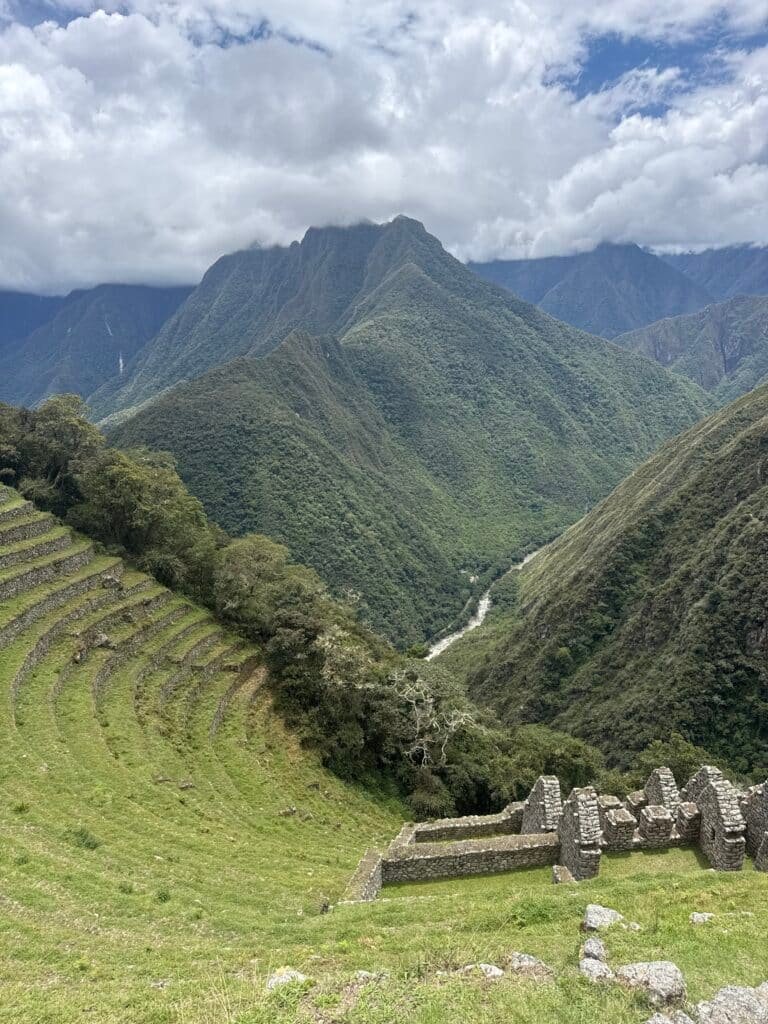
    Curved Inca terraces of Wiñay Wayna above the Urubamba River on the Short Inca Trail

    Wiñay Wayna, near the end of the Short Inca Trail. You only pass it if you walk in, because the bus from Aguas Calientes goes nowhere near it.

    2. Spend Two Slow Days in Cusco

    Cusco is high, and the first day there should be mostly tea and sleep. After that, walk it slowly. A good first loop: the Plaza de Armas, then Calle Loreto with original Inca walls on both sides, then up Cuesta San Blas to the artisan quarter. San Pedro market is the working pantry of the city. Go for breakfast at the juice row, then wander the bread, cheese and herb aisles.

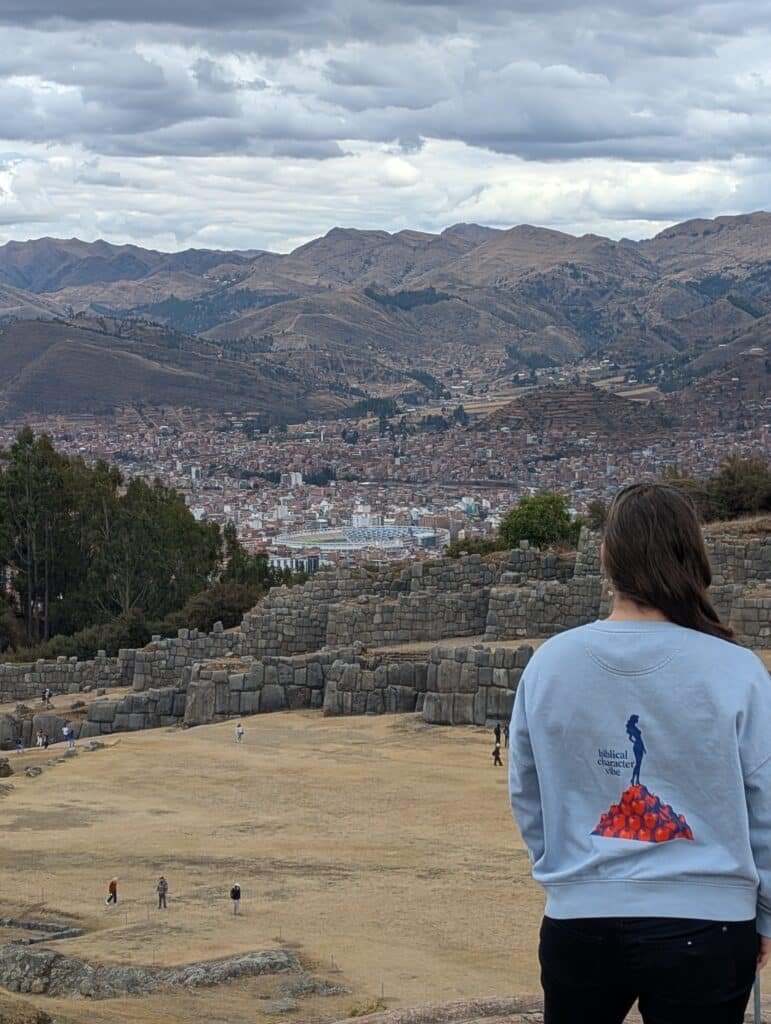
    Sacsayhuamán, the great zigzag walls above the city, is best at opening time, when the light is low and the terraces are nearly empty. We came down from it on foot along an old Inca road, starting at Puka Pukara and passing Tambomachay, Inkilltambo and the Temple of the Moon. It’s mostly downhill, and it’s one of the best half days near Cusco. Alexandra describes that walk in our guide to the lost cities of the Incas.

    Cusco and its red tiled roofs seen from the walls of Sacsayhuamán

    Cusco from the walls of Sacsayhuamán. From up here you can see why the city works best on foot: the centre is compact, and almost everything worth seeing is a short, if breathless, walk downhill.

    3. Go to Pisac Market, Then Stay on the Quiet Side of the Valley

    Pisac’s Sunday market is the one to see. Walk past the craft rows to the produce section, where highland families still come down to trade with each other.

    Then stay a night on the north bank, in Lamay or Calca, which most visitors drive straight past. These are working towns with almost no tourist infrastructure. Lamay is where people from Cusco drive out at weekends to eat roast cuy (guinea pig), which tells you who the town cooks for. Colectivos run the main valley road all day, so you don’t need a car or a tour.

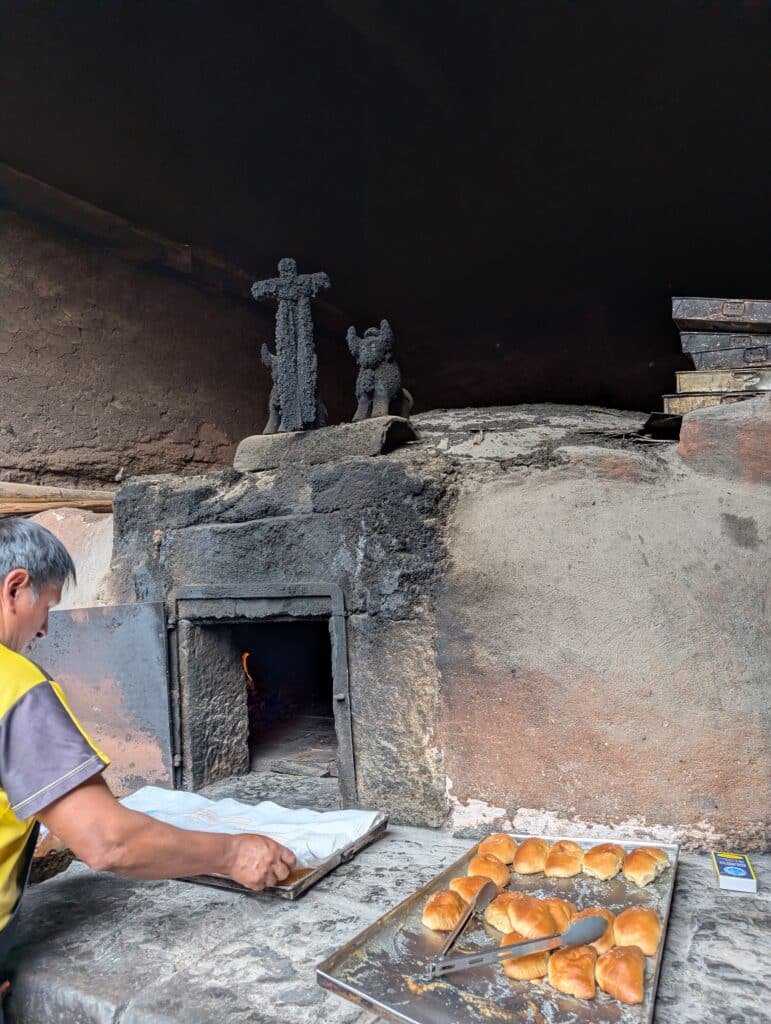
    Wood fired clay oven baking empanadas behind the Pisac market in the Sacred Valley

    The clay oven behind the Pisac market. Empanadas and bread come out of the fire all morning, and this is where I’d eat breakfast before walking through to the produce section.

    4. Sleep in Ollantaytambo, the Inca Town People Still Live In

    Ollantaytambo has a famous terraced temple above town, and the town itself is just as good. The Inca street grid is still in daily use, with water running down stone channels in the middle of the lanes. It’s also where the trains to Machu Picchu leave from, so a night here makes an early start painless. Two nights is better still: one before the trail and one after, when the day visitors have gone and the lanes go quiet.

    Ollantaytambo town and the Sacred Valley seen from the Inca terraces above it

    Ollantaytambo from the terraces above town. The grid of lanes below is the original Inca plan, and people still live in it.

    5. See the Maras Salt Mines and Moray

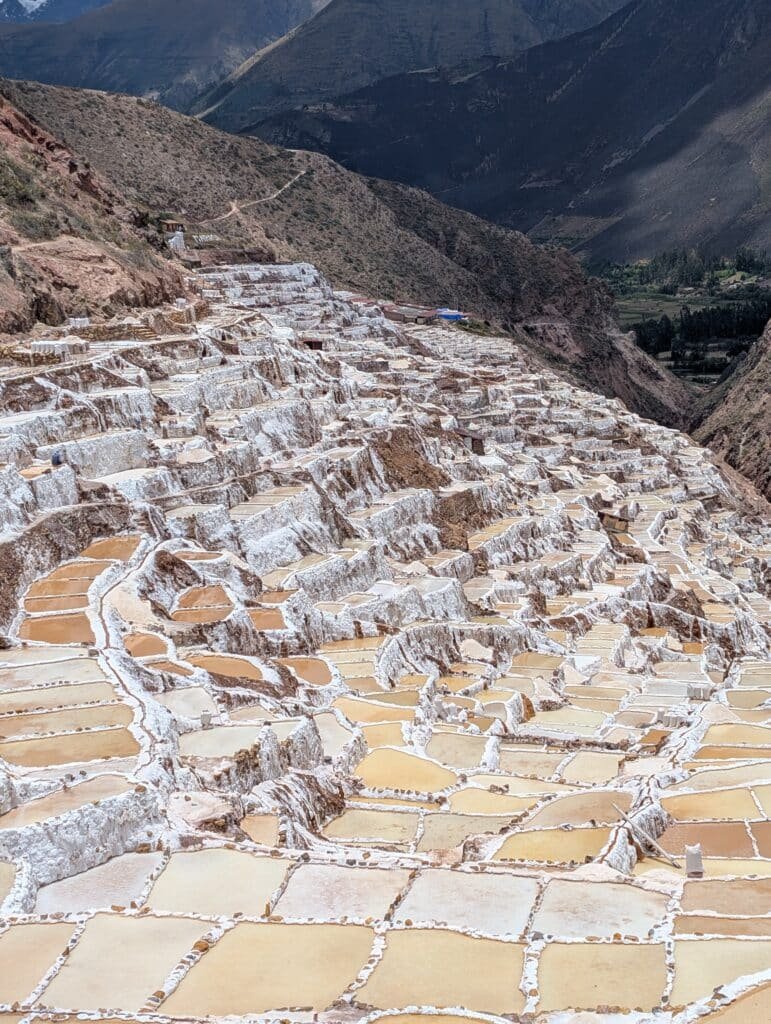
    The salt pans at Maras are thousands of small evaporation pools stepped down a hillside and still worked by local families. Nearby Moray is a set of circular Inca terraces that look like an amphitheatre sunk into the ground. Both sit on the plateau above the valley and pair well in a single morning. Taxis and tours from Urubamba or Ollantaytambo cover the two in half a day, and a bag of Maras salt is a better souvenir than most of what’s sold in Cusco.

    Terraced salt pans of the Maras salt mines on a hillside above the Sacred Valley

    The Maras salt mines: thousands of small pools stepped down one hillside, fed by a single salty spring.

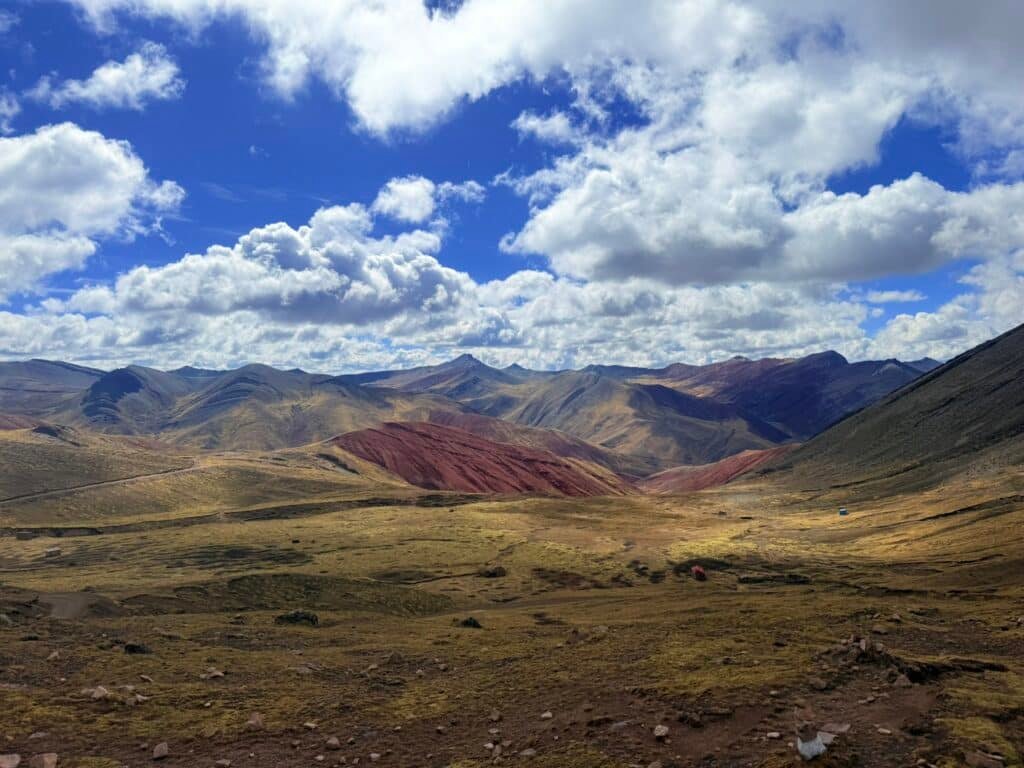
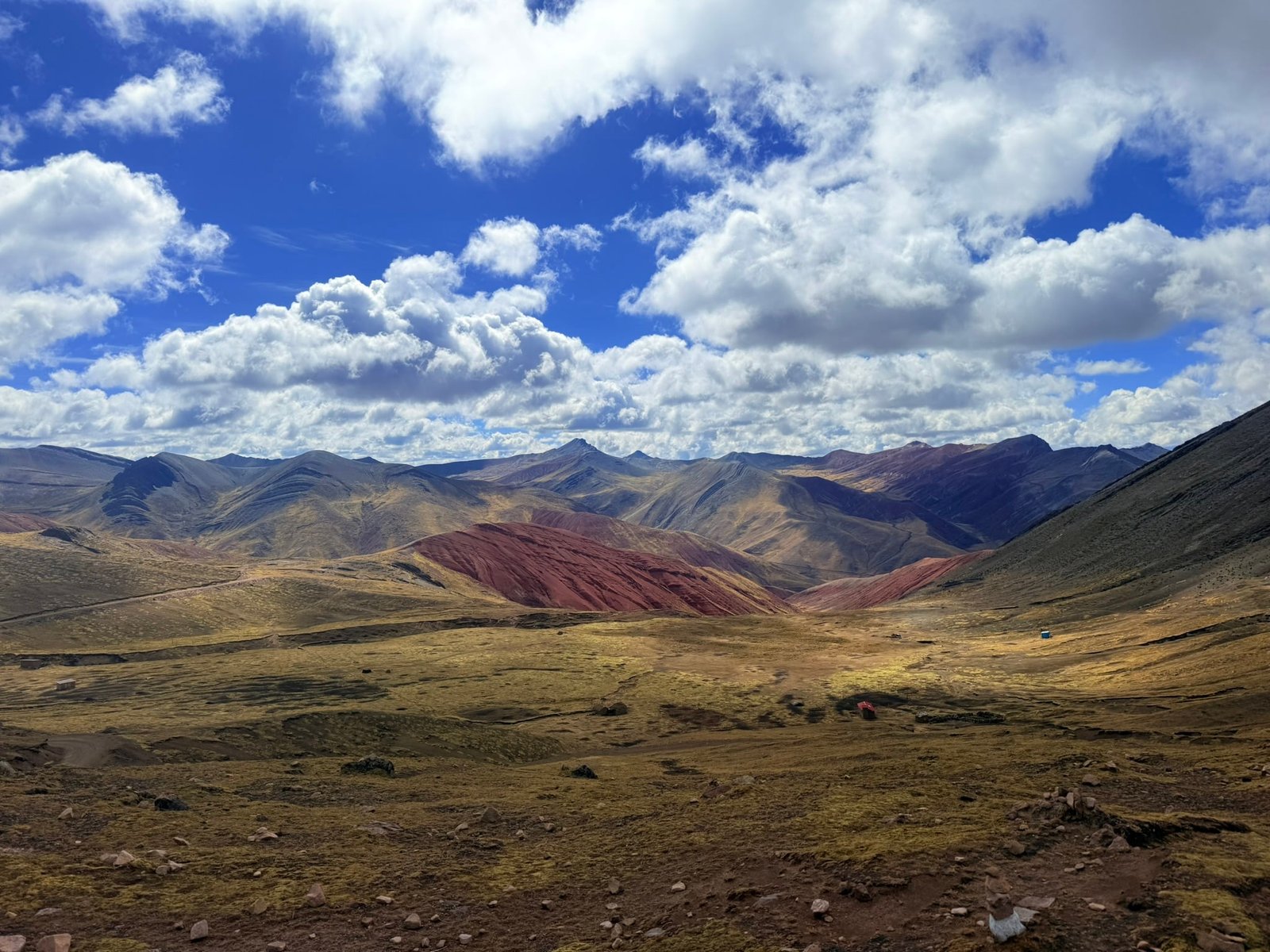
    6. Choose Palccoyo Rainbow Mountain Over the Crowds

    Vinicunca, the famous Rainbow Mountain, tops out around 5,200 m and gets very busy. Palccoyo is the quieter alternative in the same range, roughly 100 km from Cusco, with a shorter and gentler walk to viewpoints at about 4,900 m. We went to Palccoyo and I’d pick it again. It’s still very high, so do it only after a few days in Cusco.

    Striped mineral ridges of Palccoyo rainbow mountain near Cusco, Peru

    Palccoyo, the quieter of Cusco’s rainbow mountains. From the viewpoints you see several striped ridges at once, and the alpacas grazing between them don’t mind the visitors at all.

    7. Visit Andahuaylillas and Tipón on the Road South

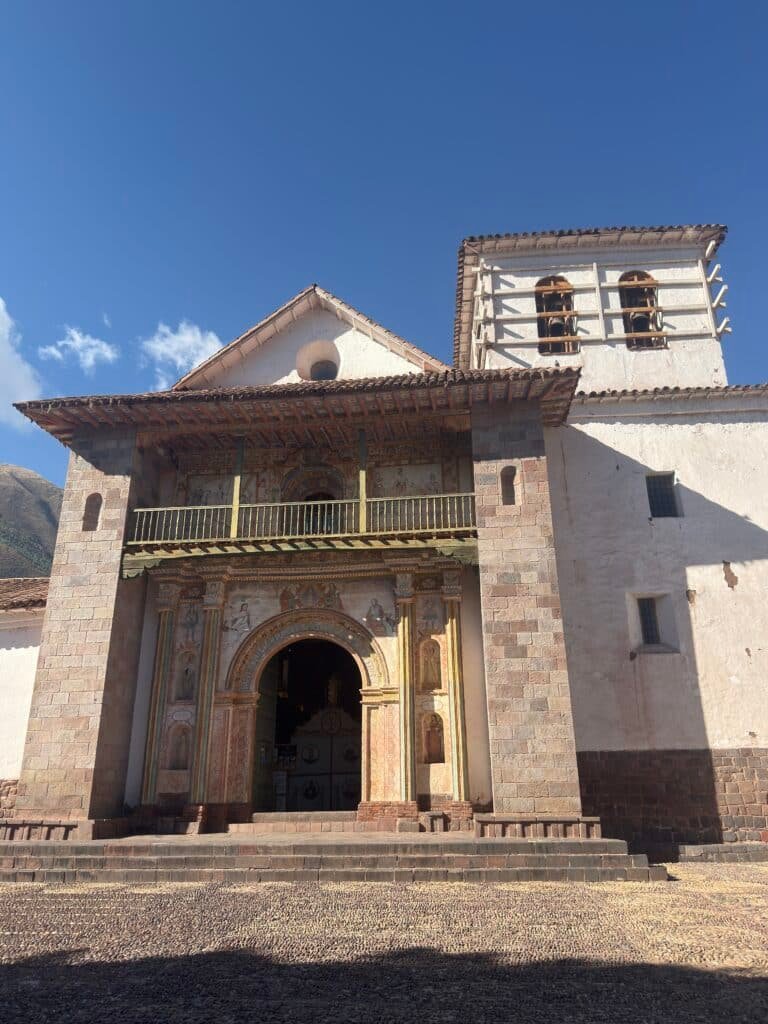
    South of Cusco, along the road towards Puno, there’s a run of places most itineraries skip. Tipón is an Inca estate famous for its water channels and fountains that still run. Andahuaylillas has a small whitewashed church whose painted interior is often called the Sistine Chapel of the Americas. Both are easy stops on a day trip from Cusco, or on the way to Puno.

    Whitewashed facade and bell tower of the San Pedro Apóstol church in Andahuaylillas, south of Cusco

    Andahuaylillas from the square. The outside gives nothing away; step inside the church and every surface is painted.

    8. Stand Under the Walls of Raqchi

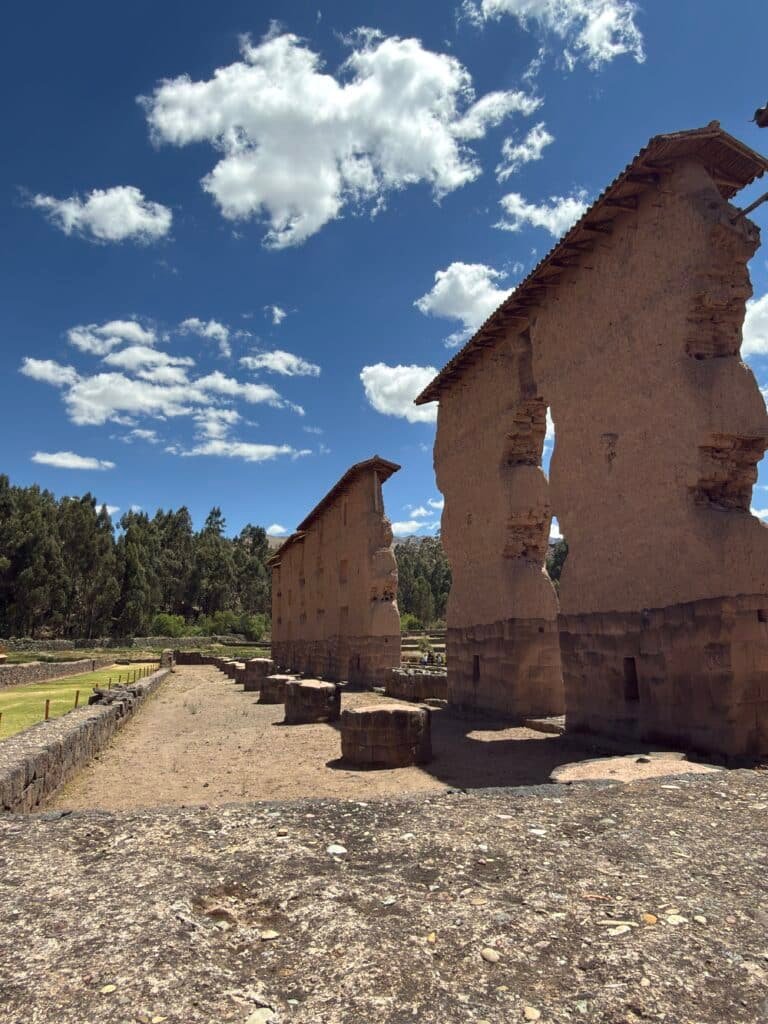
    Further south, Raqchi has the huge central wall of the Temple of Wiracocha, part stone and part adobe, rising above the fields. If you’re travelling between Cusco and Puno anyway, stop at Andahuaylillas, Raqchi and Pukara instead of taking the direct bus.

    Massive adobe and stone walls of the Temple of Wiracocha at Raqchi, on the road from Cusco to Puno

    The Temple of Wiracocha at Raqchi. The central wall is enormous, and on the day we stopped there were cattle grazing between the ruins.

    9. Look Beyond Machu Picchu: Choquequirao and Waqrapukara

    Machu Picchu earns its crowd, but it isn’t the only lost city. Choquequirao is a multi-day trek to a huge site with a fraction of the visitors. Waqrapukara, a horn-shaped citadel south of Cusco, is a long day trip. We cover these, plus the easier walks above Cusco, in our alternatives to Machu Picchu.

    Things to Do in Puno and Lake Titicaca

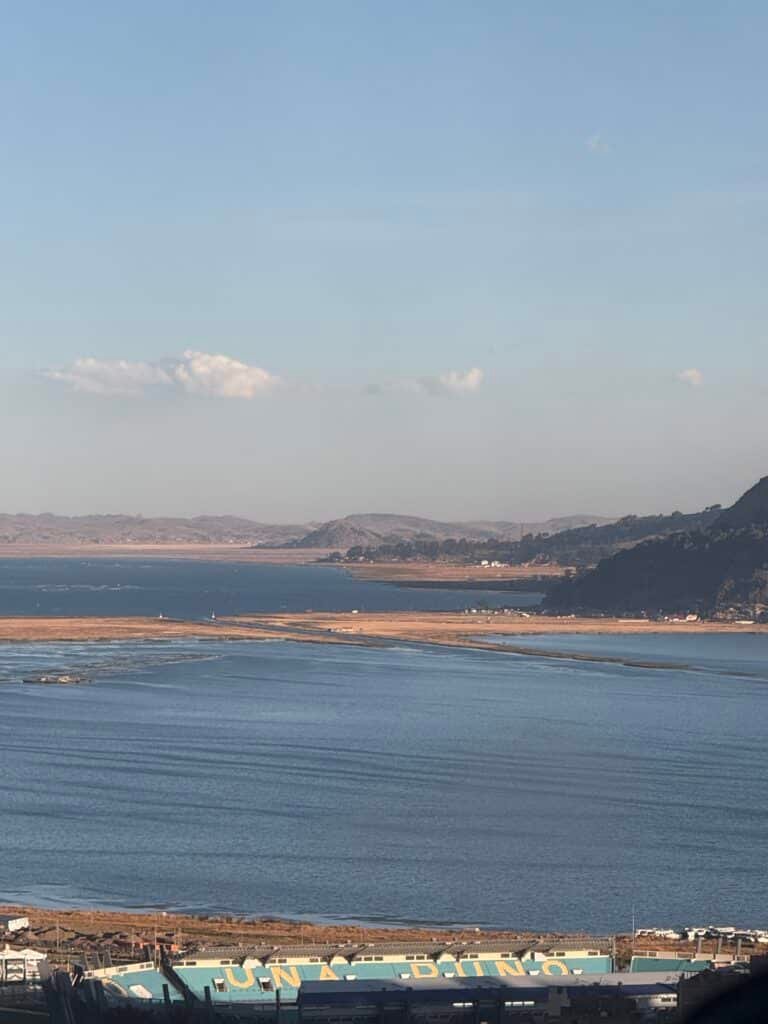
    Titicaca sits at about 3,812 m and is usually described as the highest navigable lake in the world. In Andean belief it’s where the sun was born and where the first Inca rose from the water. Puno is the Peruvian gateway, a working port town at around 3,830 m, which makes it the highest place most travellers sleep.

    Lake Titicaca shoreline near Puno at dusk

    Lake Titicaca from the shore at Puno. The lake is so big it has its own weather, and at this altitude the evening cold arrives fast.

    10. Stop at the Pukara Museum on the Way

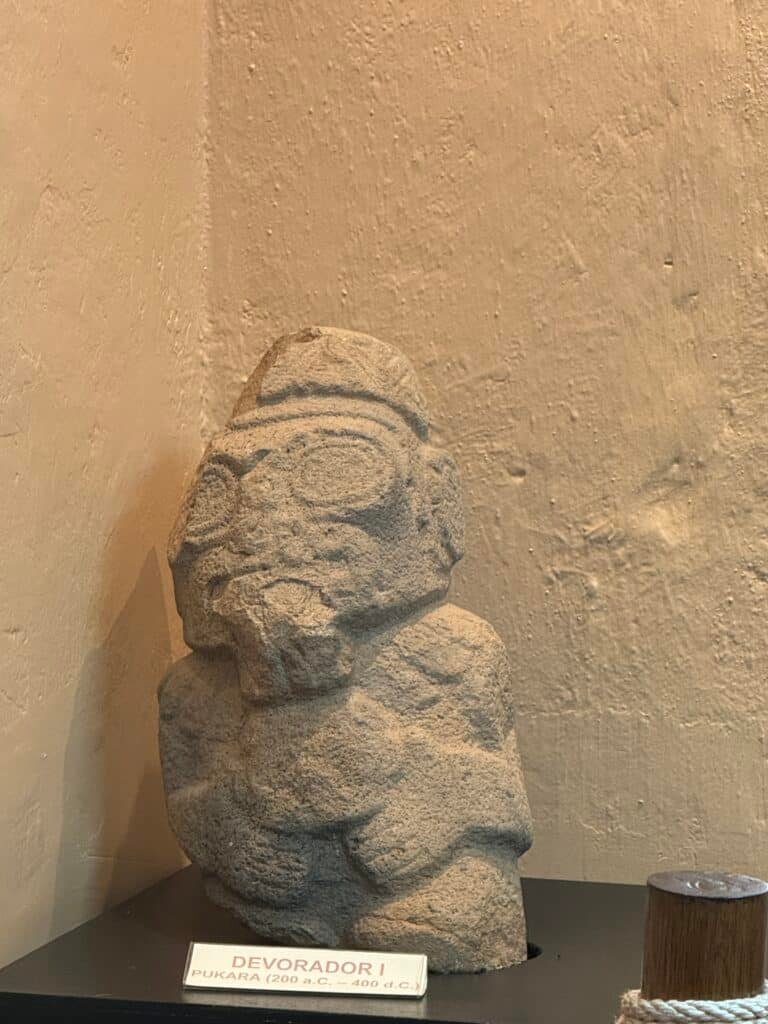
    On the road from Cusco, the small town of Pukara has a lithic museum with carved stone sculptures from the Pukara culture, which flourished around the north of the lake long before the Inca. We stopped there on the way to Puno. The museum is small and simply laid out, so an hour is plenty, and the church next door deserves a look on your way back to the road.

    Carved stone sculpture known as the Devourer in the Pukara lithic museum, Puno region

    One of the carved figures in the Pukara lithic museum. The pieces are heavy, strange and nothing like the Inca stonework you’ve been looking at for a week.

    11. Visit the Uros Floating Islands, but Not the Closest Ones

    The Uros live on floating islands built from layers of totora reed. The islands nearest Puno see heavy daily tourism and the visit can feel staged. Ask for a settlement further out, or go with a private boat, and you’ll get a calmer version. Boats leave the Puno port every morning, and most trips pair the Uros with Taquile.

    Kayak beside the Uros floating reed islands on Lake Titicaca, Peru

    The Uros build their islands, and their boats, from totora reed that has to be renewed all the time.

    12. Stay With a Family on the Capachica Peninsula

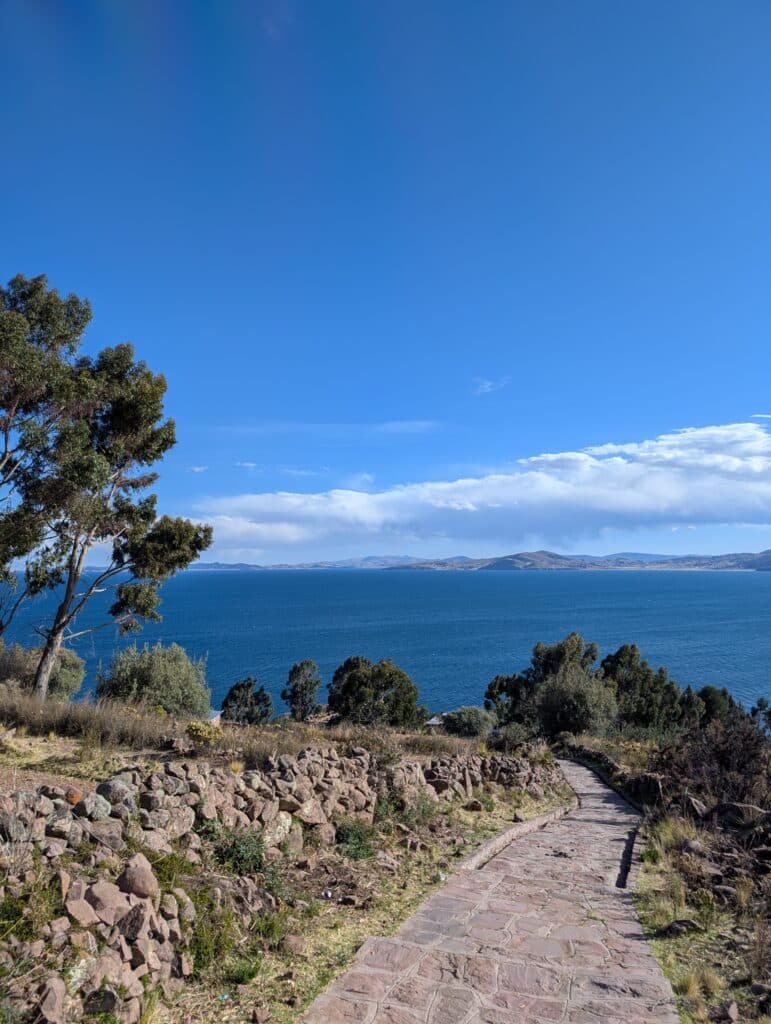
    The standard Titicaca overnight is a group homestay on Amantaní island. The option we preferred when planning our own route is Llachón, a farming community on the Capachica peninsula, reached by boat. You’re a guest in a working home, you eat what the family grows, and you can walk up the ridge behind the village for the lake at first light. Bring warm layers, because homes there usually have no heating.

    Stone path between dry stone walls above the deep blue water of Lake Titicaca

    Paths above the lake, between eucalyptus and dry stone walls, with water the colour of the sky.

    13. Spend an Afternoon on Taquile Island

    Taquile is a Quechua island known for its textiles, which UNESCO lists as intangible cultural heritage. The men knit and the women weave, and the community still governs itself by collective rules. The climb from the harbour to the village is gentle, but slow at this altitude.

    Things to Do in Arequipa and the Colca Canyon

    Arequipa and the Colca Canyon show you a different Andes: volcanoes, white stone and condors. They fit neatly between Cusco, Puno and the coast, and for many travellers they’re among the best things to do in Peru outside the Inca heartland.

    14. Walk Arequipa, the White City

    Arequipa is Peru’s second city and is called the White City because so much of it is built from sillar, a pale volcanic stone. Three volcanoes frame it: El Misti, Chachani and Pichu Pichu. The highlight is the Santa Catalina Monastery, founded in 1579 and covering more than 20,000 square metres, a walled town of painted streets and cloisters inside the city.

    15. Watch Condors in the Colca Canyon

    Colca is one of the deepest canyons in the world, about four hours by road from Arequipa. The classic stop is the Cruz del Cóndor viewpoint, where Andean condors ride the morning thermals along the canyon walls. Most guides suggest two days rather than a rushed day trip, with a night in Chivay or one of the villages along the rim.

    Things to Do in Lima, Peru

    A lot of people treat Lima as an airport with a hotel attached, which is a mistake if you care about food. Some of the best things to do in Peru happen at a lunch table here. It’s a big coastal capital with one of the best food scenes in the world, and it sits on top of cultures much older than the Spanish city.

    16. Spend a Morning at the Larco Museum

    If you only see one museum in Peru, make it this one. The Larco holds a huge pre-Columbian collection and opens its storerooms, so you get a real sense of how many cultures came before the Inca. Go at the end of your trip and it ties together everything you’ve seen.

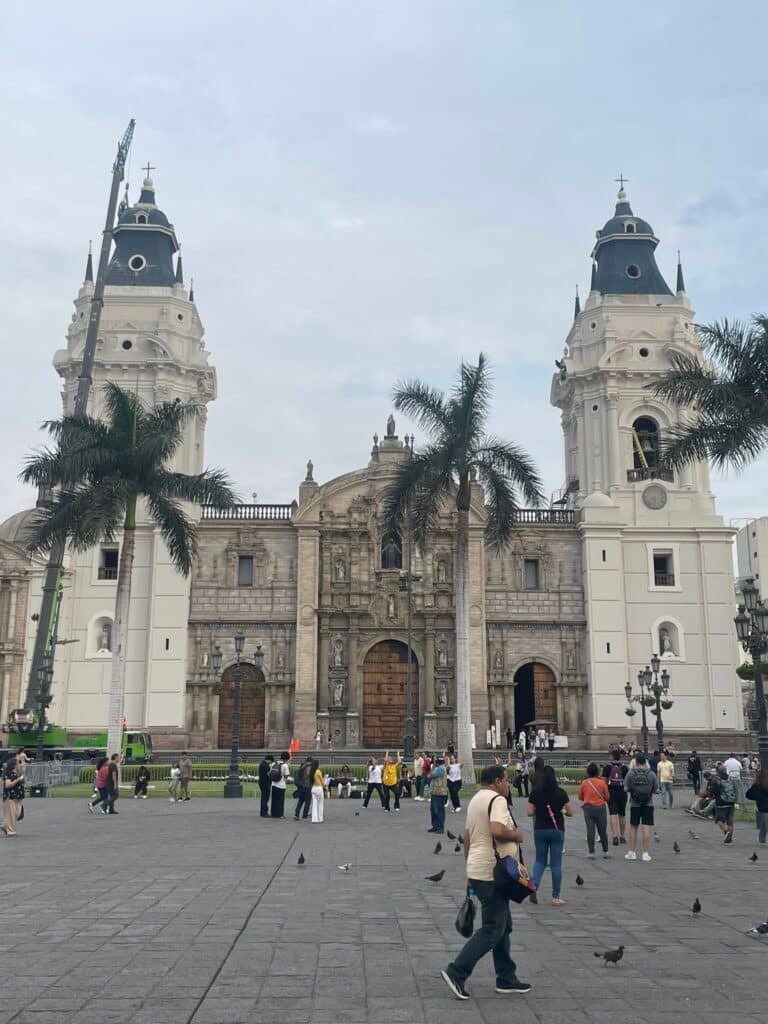
    Twin towers of Lima Cathedral on the Plaza Mayor in the historic centre of Lima, Peru

    The cathedral towers on Lima’s Plaza Mayor. Lima sits under a flat grey sky for much of the year, and the city lives happily beneath it.

    17. Walk the Historic Centre

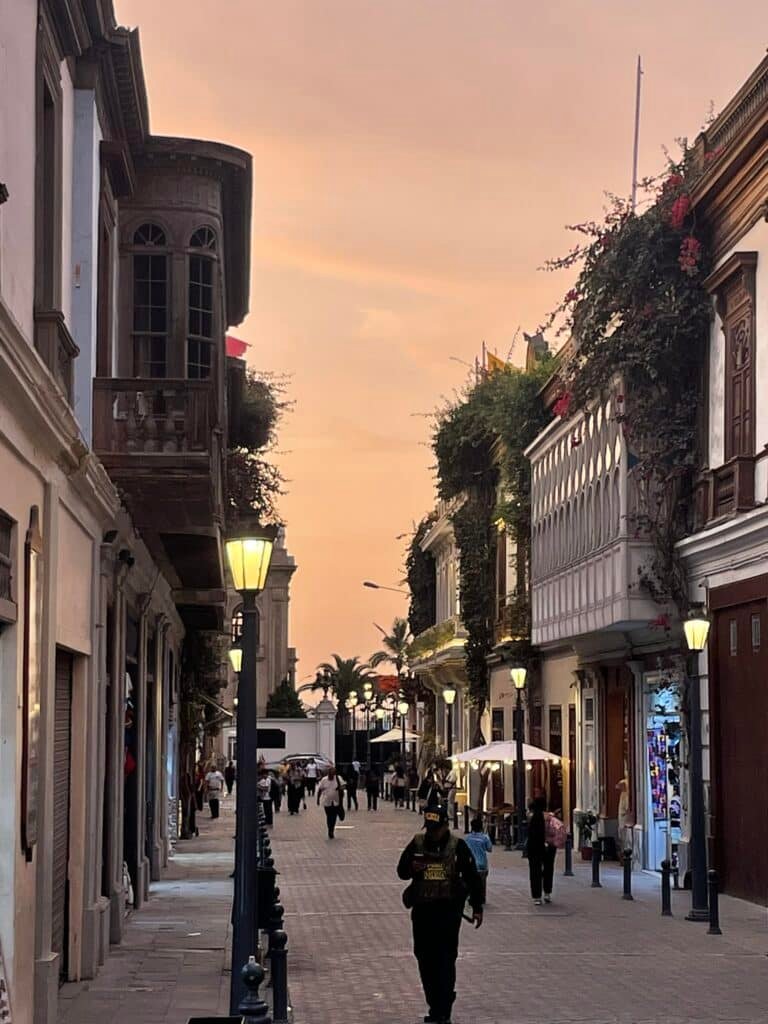
    The colonial core around the Plaza Mayor is a UNESCO World Heritage Site. Look up for the carved wooden balconies, visit the San Francisco monastery and its catacombs, and give yourself time to wander the side streets. Weekday mornings are calmer, and the changing of the guard at the Government Palace happens around midday.

    Carved wooden balconies on a street in the historic centre of Lima at sunset

    Carved wooden balconies in the historic centre, at their best in the late afternoon light.

    18. Find Huaca Pucllana and Walk the Miraflores Malecón

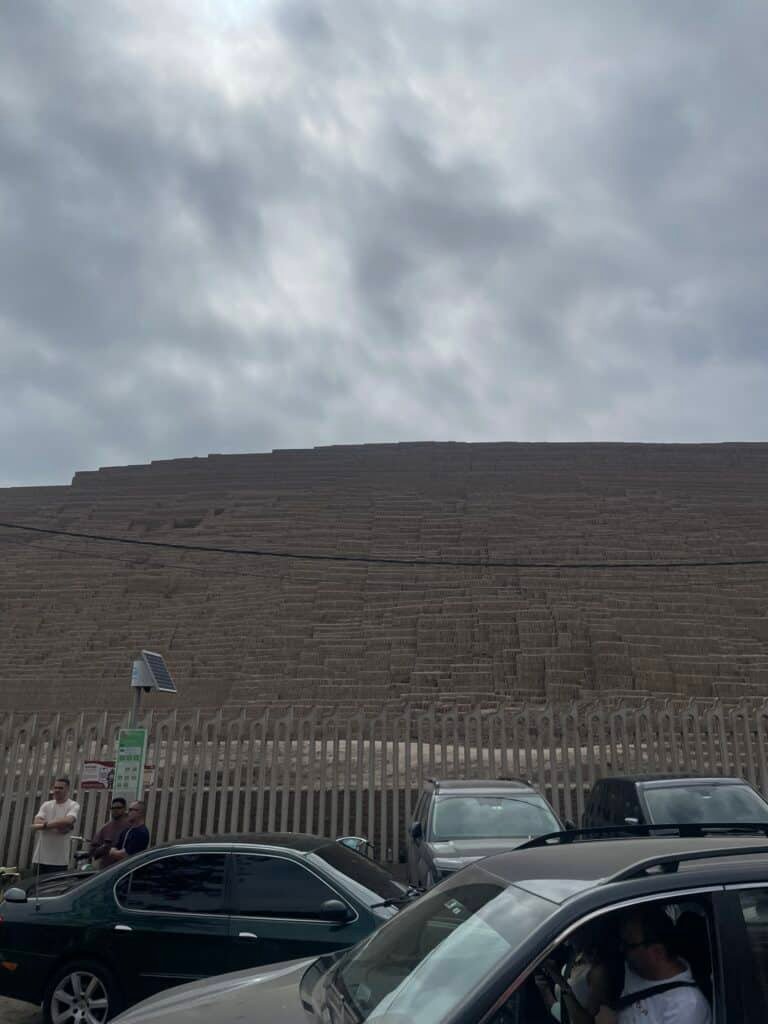
    Huaca Pucllana is a great adobe pyramid built by the Lima culture around AD 500, now wedged between apartment blocks in Miraflores. Seeing a 1,500-year-old temple framed by traffic is one of the odd pleasures of Lima. From there, walk the Malecón, the clifftop path above the Pacific.

    Huaca Pucllana adobe pyramid rising between apartment blocks in Miraflores, Lima

    Huaca Pucllana, a temple older than the Inca empire, framed by apartment blocks and traffic.

    19. Stay in Barranco

    Barranco is the bohemian seaside district: murals, old mansions, galleries, and the Bridge of Sighs over a leafy ravine that runs down to the ocean. It’s the best base for walking out to eat in the evening.

    20. Eat Like a Limeño

    Order ceviche at lunch, never at dinner. That’s when locals eat it and when the fish is freshest. Then try lomo saltado and chifa (Chinese-Peruvian cooking), Nikkei (Japanese-Peruvian), anticuchos from an evening street cart, and a pisco sour. The world-ranked restaurants book months ahead, so reserve from home if one is on your list.

    We also spent time with a host family in Villa María del Triunfo, on the hills at the southern edge of the city. It looks nothing like Miraflores, and very few visitors ever go there.

    Things to Do in Paracas, Huacachina and Nazca

    South of Lima the land turns to desert and then falls straight into the Pacific, and the list of things to do in Peru turns into boat trips, dunes and lines drawn in the desert. We came here at the end of our trip, after weeks of mountains and forest, and it felt like a different country.

    21. Give the Paracas National Reserve Real Time

    Most people come to Paracas for the boat and treat the reserve as an afterthought. I’d turn that around: the reserve has red sand at Playa Roja, eroded cliffs and long empty beaches where the only thing moving is seabirds. Many Ballestas and Huacachina packages skip the reserve entirely, so check before you book. Bring water, sunscreen and a windproof layer: there’s almost no shade, and the wind picks up in the afternoon.

    Empty desert beach and cliffs inside the Paracas National Reserve on the Pacific coast of Peru

    Inside the Paracas National Reserve: desert cliffs, a long empty beach and a cold, rough Pacific, with almost nobody else on it.

    22. Take a Ballestas Islands Tour

    A short boat ride from Paracas reaches rocky islands covered in seabirds, with sea lions hauled out on the ledges and Humboldt penguins on the rocks. On the way out you pass the Candelabra, a giant figure cut into a hillside whose maker and meaning are still unknown. Go early, because the sea gets rougher through the morning.

    Sea lion mother and pup resting on a rock at the Ballestas Islands off Paracas

    A sea lion mother and pup on the Ballestas rocks. Look closely and you’ll spot the red crabs too.

    23. Ride the Dunes at Huacachina

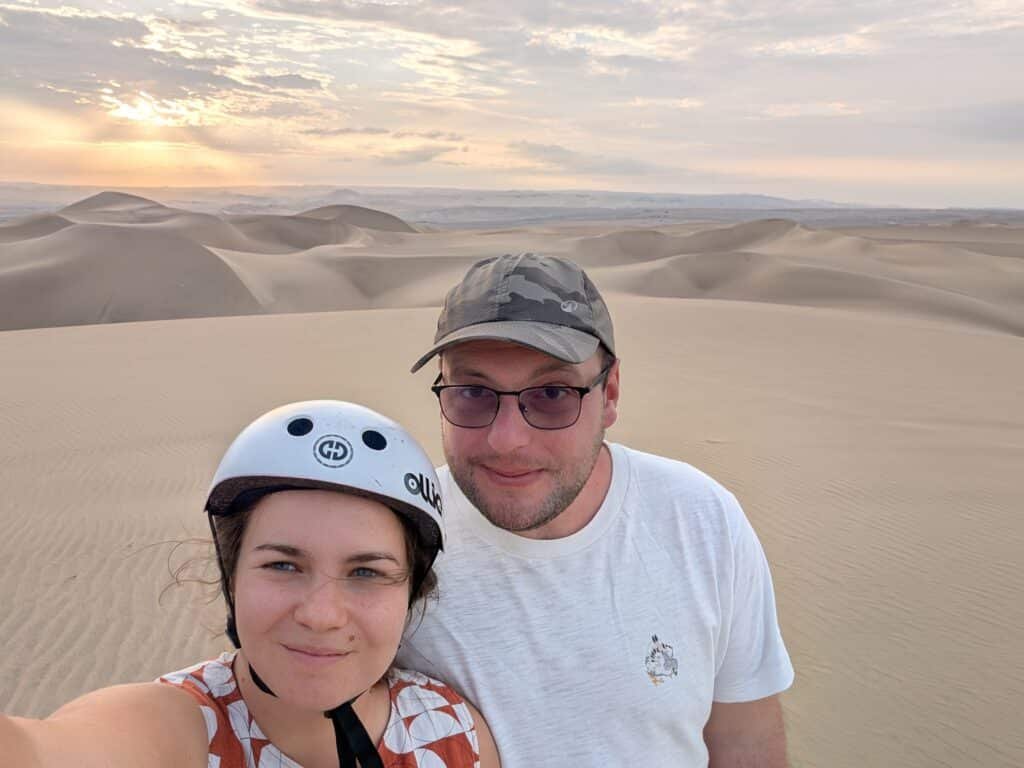
    Huacachina is a small oasis near Ica, a lagoon ringed by palm trees and huge sand dunes. The dune buggies are driven fast on purpose, and sandboarding down the slopes is the one pure adrenaline hit of a slow trip. It’s great for an afternoon and a sunset. I wouldn’t stay longer than a night.

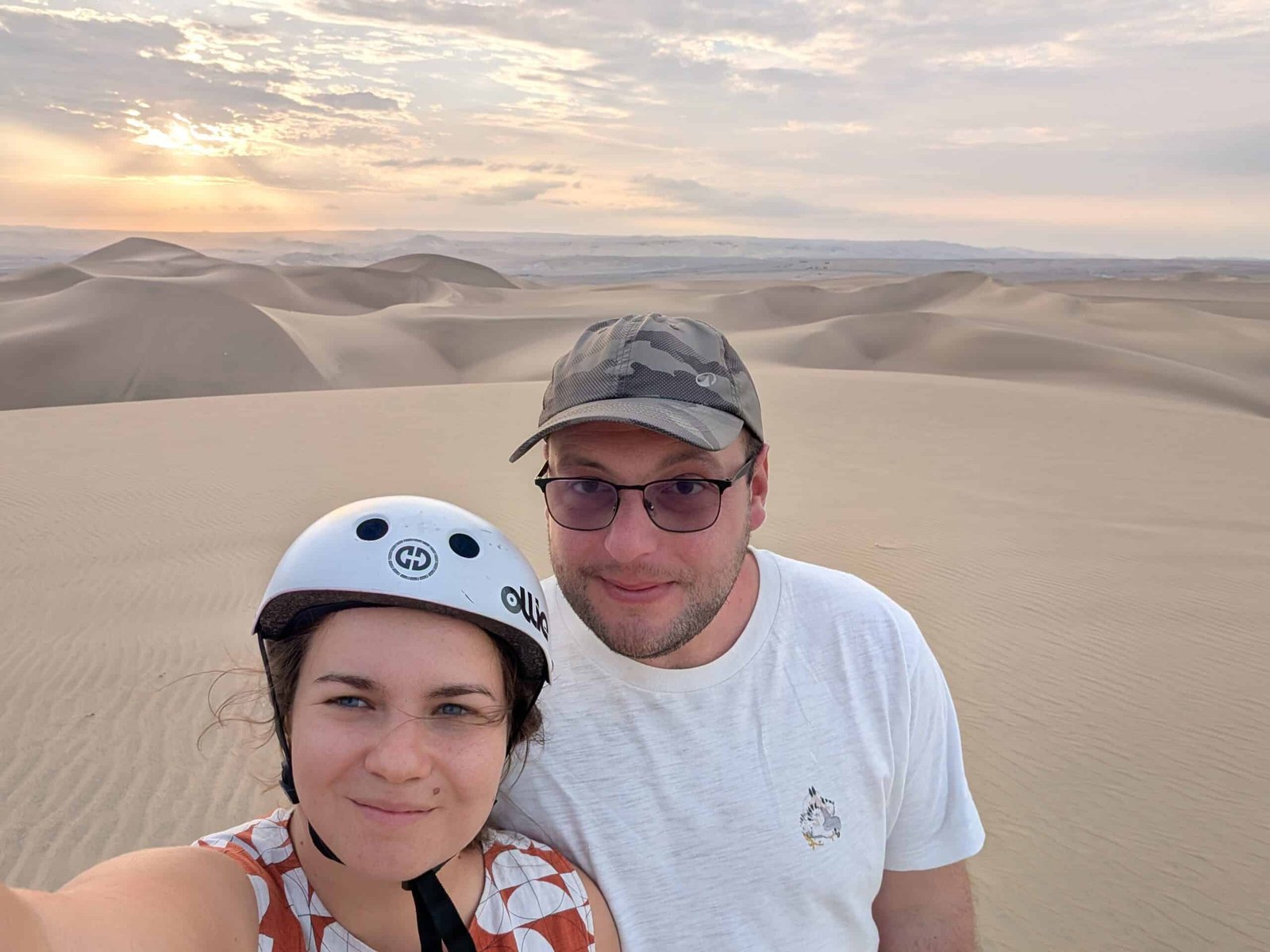
    Andrei and Alexandra on the sand dunes above Huacachina at sunset, Ica, Peru

    Sunset on the dunes above Huacachina, after the buggy ride. Whatever you thought of the buggy, the light up here at the end of the day is the best part.

    24. Fly Over the Nazca Lines

    The Nazca Lines are huge figures and lines drawn into the desert floor, and they only really make sense from the air. Flights leave from the small airport at Nazca for roughly half an hour over the lines, or from Pisco on a longer route. A roadside viewing tower shows you two or three figures if you’d rather stay on the ground. Check current operators and their safety records before you book, and go early in the day, when flights tend to be calmer.

    Things to Do in the Peruvian Amazon

    For wildlife, the Amazon holds some of the most memorable things to do in Peru, and it splits into two very different trips. In the south, Madre de Dios (Puerto Maldonado, Tambopata, Manu) is a short flight from Cusco. In the north, Loreto (Iquitos, Pacaya Samiria, the triple border) is much further off, reached by plane or by river.

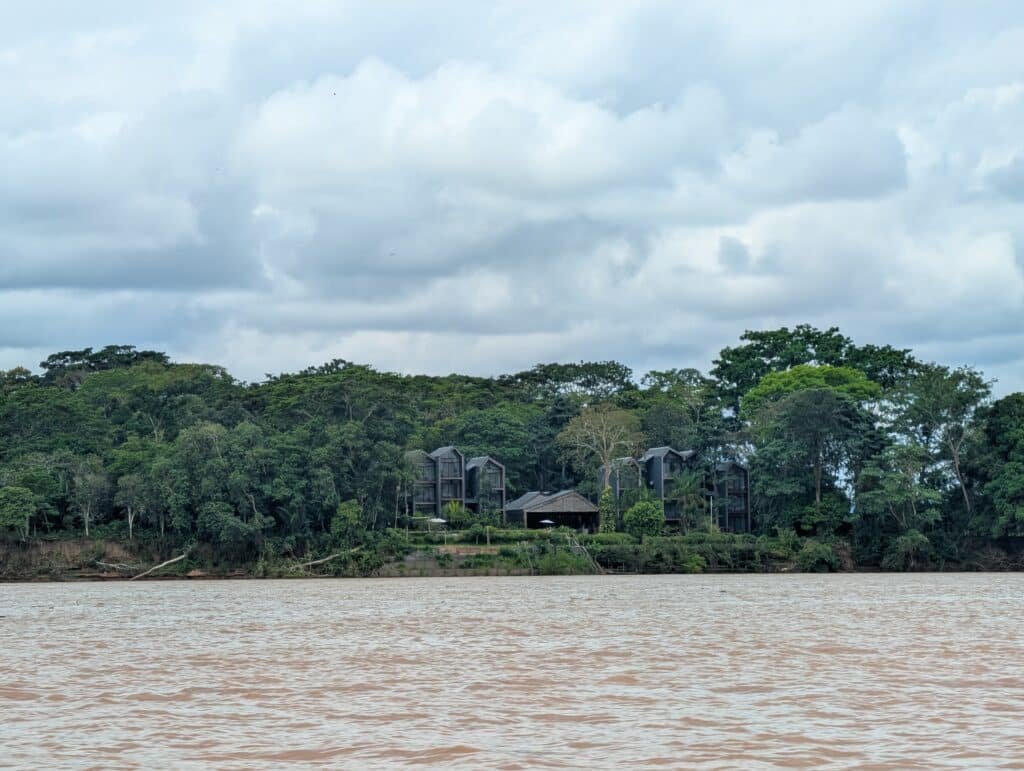
    The Madre de Dios river near Puerto Maldonado, gateway to the Tambopata National Reserve

    The Madre de Dios river near Puerto Maldonado. An hour’s flight from Cusco and you’re at 200 m, in heat and humidity, with the forest coming right down to the water.

    25. Row Across Lake Sandoval in the Tambopata National Reserve

    A one-hour flight takes you from Cusco to Puerto Maldonado and the Tambopata National Reserve. We stayed in a river lodge, walked the forest at night, and crossed Lake Sandoval by rowing boat in the early morning. Alexandra’s account of those days is Part I of our Peru series.

    Palm trees around Lake Sandoval in the Tambopata National Reserve, Peruvian Amazon

    Lake Sandoval in the Tambopata National Reserve. We crossed it by rowing boat in the early morning, looking for giant otters, with the forest completely quiet around us.

    26. Spend a Night in Puerto Maldonado

    Most visitors only see Puerto Maldonado from the airport road. Stay a night on the way out. It’s a frontier river town with a busy Plaza de Armas, and a slow afternoon there is the easiest way to see everyday life in the Amazon.

    27. Go Deep Into Manu National Park, if You Have the Days

    Manu is the wilder and longer option. It’s a UNESCO Biosphere Reserve (1977) and World Heritage Site (1987), and you can only enter with a guide and permit. Trips usually run five days or more, descending by road from the Andes through cloud forest to the lowland river. Choose Manu over Tambopata if you have the days and want the deepest forest. The dry season from June to November is the better window, and parts of the park can be closed in the wettest months.

    28. Take a River Trip From Iquitos Into Pacaya Samiria

    Iquitos is often called the largest city in the world that can’t be reached by road. You fly in or arrive by boat. From there, trips run into the Pacaya Samiria National Reserve, about 20,800 square kilometres of flooded forest and one of the largest protected areas in Peru. The usual route is by road to Nauta, then by boat. Pink river dolphins, giant water lilies and long, still channels that reflect the forest are what people come for.

    29. Cross to Santa Rosa, Peru’s Corner of the Triple Border

    Santa Rosa is a small Peruvian river town facing Leticia in Colombia and Tabatinga in Brazil. It’s a short boat ride from Leticia, and we crossed over during our Leticia Amazon expedition. There isn’t much to do in the town itself. You go to stand in Peru and look across the water at Colombia and Brazil.

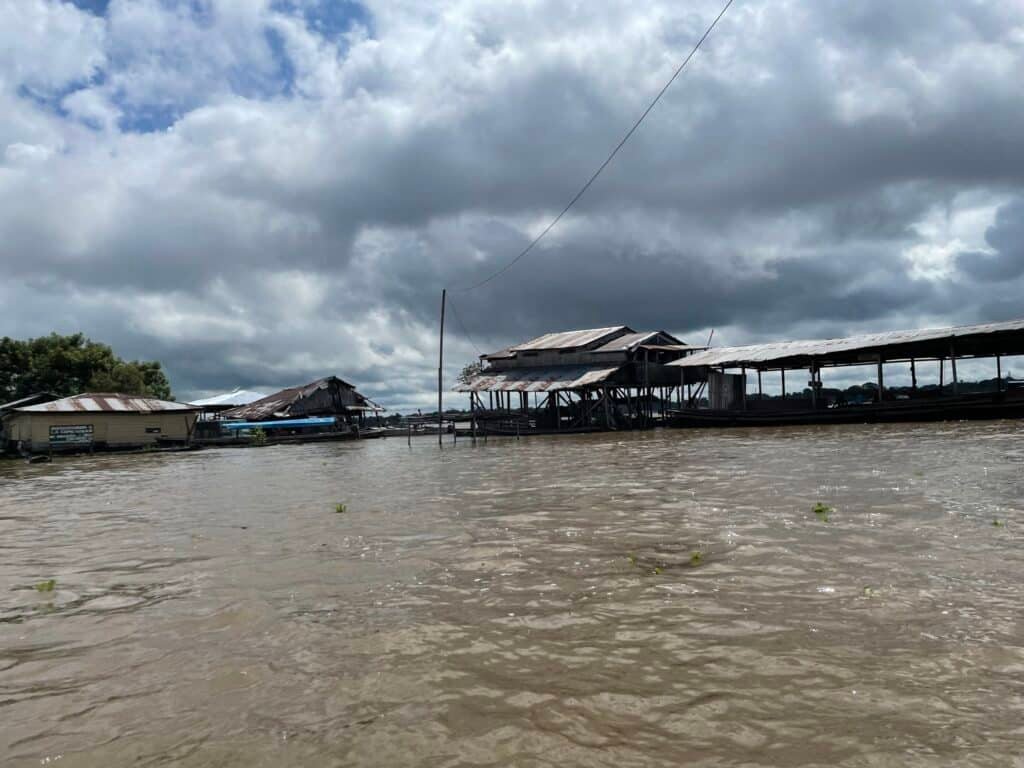
    Floating and stilt buildings on the Amazon River at Santa Rosa, Loreto, on the Peru, Colombia and Brazil border

    Santa Rosa from the river. A few streets, a viewpoint, and buildings that float or stand on stilts as the Amazon rises and falls.

    Unique Things to Do in Northern Peru

    Northern Peru gets a fraction of the visitors that Cusco does. If you’re looking for unique things to do in Peru away from the Cusco crowds, start here.

    30. Hike to Laguna 69 From Huaraz

    Huaraz sits around 3,050 m below the Cordillera Blanca, the most extensive tropical ice-covered range in the world and home to Huascarán, Peru’s highest mountain at 6,768 m. The best-known day hike is to Laguna 69, a turquoise glacial lake at about 4,600 m. It’s a hard day at altitude, so come already acclimatised.

    31. See Chan Chan and the Reed Boats of Huanchaco Near Trujillo

    Near Trujillo, Chan Chan was the capital of the Chimú, who built it from around AD 850 until the Inca conquest in the 1470s. It’s considered the largest adobe city in the world. Nearby, the Moche temples of Huaca del Sol and Huaca de la Luna are centuries older. Stay in Huanchaco, the beach town next door, where fishermen still use caballitos de totora, small reed boats of a design that goes back thousands of years.

    32. Ride the Cable Car to Kuélap and Walk to Gocta Waterfall

    In the cloud forest around Chachapoyas, the fortress of Kuélap holds more than 400 circular stone buildings on a ridge high above the Utcubamba valley. Since 2017 a cable car has turned a long mountain drive into a ride of about 20 minutes. Nearby, Gocta waterfall drops 771 m in two tiers, and the walk to it passes through cloud forest where the cock-of-the-rock displays at dawn.

    33. Swap the Andes for the Beaches Around Máncora

    Peru’s best beaches are in the far north, where the water is warmer and the sun more reliable. Máncora is the busy surf town. Vichayito, about 10 km south, and nearby Los Órganos are quieter. From roughly July to October, humpback whales come to these waters, and boat trips from Los Órganos are the usual way to see them. Beach season proper runs from about December to April.

    34. Spend a Day Around Piura: Colán and Catacaos

    Piura is the gateway to the northern coast and a good stop in its own right. North of Paita, the beach at Colán sits beside the church of San Lucas, built by Dominicans in 1536 and often described as the oldest church in Peru. Closer to the city, Catacaos is a village known for its crafts market (straw hats, silver filigree, ceramics) and its picanterías, traditional lunch houses.

    Peru’s Personality Match: The Verse Voyager Index

    We score destinations the same way we read travellers, across the five core personality dimensions, so you can see at a glance whether a country fits the way you travel. Here’s Peru.

    The Verse Voyager personality index for Peru: Openness 5, Extraversion 3, Agreeableness 4, Emotional Stability 2, Conscientiousness 3

    Peru’s travel personality across five dimensions.

    A quick read of the profile:

    • Openness, 5 out of 5. Peru is unfamiliar almost everywhere you look: the food, the altitude, Quechua culture, three climates in one trip. Curious travellers get the most out of it.
    • Agreeableness, 4 out of 5. Homestays, markets and small towns run on warmth and patience. A few words of Spanish, and a little Quechua, go a long way.
    • Extraversion, 3 out of 5. Lima and Cusco can be as social as you like. Much of the rest is quiet: the altiplano, the jungle lodges, a family kitchen on Lake Titicaca.
    • Conscientiousness, 3 out of 5. The big things need booking early (Machu Picchu, trail permits, flights), and day to day, plans bend. Come with structure and a willingness to let it move.
    • Emotional Stability, 2 out of 5. Altitude headaches, long roads, weather delays and the odd pickpocket all test your patience. Each is small on its own. Together they add up, and Peru asks for more patience than most countries.

    Those five scores together are the Verse Voyager Index for Peru. We don’t average them into one number, because a 5 in Openness and a 2 in Emotional Stability tell you different things. Read together, it points to a country that suits curious, adaptable travellers who are happy to plan the big pieces and let the small ones go, and it can be hard work for anyone who needs everything to run on time.

    Not sure where you land on these five dimensions? Take the free quiz and we’ll match you to the version of Peru that fits.

    Which Part of Peru Suits You?

    Two people can read the same list of things to do in Peru and want completely different trips. The traveller who comes alive on the dunes at Huacachina wants a very different trip from the one who’d rather sit through a quiet morning on Lake Sandoval or a cold sunrise on Titicaca.

    A rough guide:

    • Love nature and quiet? Tambopata, Lake Titicaca’s homestays, the Paracas National Reserve, the Colca Canyon.
    • After adventure and the outdoors? The Short Inca Trail, Palccoyo, Laguna 69 from Huaraz, Huacachina’s dunes.
    • Here for culture and history? Cusco, the Sacred Valley villages, the road south through Andahuaylillas and Raqchi, the Larco Museum, Chan Chan.
    • Want cities, food and nightlife? Lima first, then Cusco and Arequipa.
    • Want something unusual? Santa Rosa at the triple border, the Pukara museum, Kuélap in the cloud forest.

    At The Verse Voyager we build trips around your real personality across five core dimensions, so the places and the pace fit how you travel. When we planned our own trip, we gave the most active days a calmer option, because the two of us don’t recharge the same way. If you’d like the same for your trip, have a look at our custom itinerary service or book a call.

    Common Questions About Visiting Peru

    Is Peru Worth Visiting?

    Yes, if you give it time. A rushed week of flights and early starts can turn into a blur of altitude and buses. Two or three weeks across two regions is enough to slow down and enjoy it.

    Is Peru Safe to Travel?

    Most visits are trouble-free, and the common problem is petty theft in crowded places rather than violent crime. In Cusco, stay in the centre or San Blas and keep valuables out of sight in markets. In Lima, use registered taxis or ride apps rather than hailing cars on the street. Check your government’s current travel advice before you go, because conditions vary by region.

    How Many Days in Peru Do You Need?

    A week is enough for Cusco, the Sacred Valley and Machu Picchu if you keep to that one region. Ten days lets you add Lake Titicaca, two weeks the coast as well, and three weeks the Amazon. The Peru itinerary guide has all four routes day by day.

    What to Do in Peru for a Week?

    Stay in one region. Fly into Cusco, sleep your first night in the Sacred Valley, visit Pisac, Maras and Ollantaytambo, walk the Short Inca Trail or take the train to Machu Picchu, and finish with a full day in Cusco.

    Do You Need a Guide for Machu Picchu?

    The rules have changed several times. In 2026, entry runs on timed circuits and capacity limits, and the Ministry of Culture has been reviewing guide requirements. Check the official ticket site and your operator’s latest guidance before you go.

    What’s the Best Region of Peru for a First Trip?

    Cusco and the Sacred Valley, with Machu Picchu. Add Lima for the food and one contrast region (the coast or the Amazon) if you have the time.

    Plan Peru Around the Way You Travel

    The best things to do in Peru depend on who’s doing them. Pick regions that suit you, set a pace you can keep at altitude, and leave room for the days that don’t go to plan.

    That’s the part we help with at The Verse Voyager. Our free personality quiz maps how you travel across five core dimensions, and we use the results to design trips in Peru and beyond.

    Let’s plan your trip to Peru together.

    More about Peru: see all our Peru travel guides.