
Pink tuff, khachkars, the duduk and Komitas
Վարդագույն տուֆ, խաչքարեր, դուդուկ և Կոմիտաս
Armenia is a small, landlocked country of stone: pink and black tuff, basalt organ pipes, monasteries perched on the edge of gorges. It was the first state to adopt Christianity, by tradition in 301, and it still writes in the alphabet Mesrop Mashtots devised around 405.
It is also a country shaped by loss. Its diaspora outnumbers the population at home, and its people carry the memory of 1915 and of Karabakh in the way they talk, cook and sing.
I crossed Armenia mostly by hitchhiking, coming up from the Iranian border towards Georgia. This guide is what I would give a friend planning the same trip: an Armenia itinerary built around the things to do in Yerevan, the best day trips from Yerevan, the old monasteries of the south and north, and the food, music and history that helped me make sense of what I saw. At the end you will find a 7-day and a 10-day route, and how to combine Armenia with Georgia.
Khachkar, old armenian stone cross
A few quick facts to set expectations:
- Why go: monasteries on the edge of gorges, a capital built of pink stone, wine made here for six thousand years, and people who will stop for a hitchhiker and, a few kilometres later, tell you their family’s whole history.
- When to go: late spring (May to June) and early autumn (September to October), when the hills are green or golden and the heat of the Ararat plain has eased.
- How long: a long weekend covers Yerevan and the monasteries around it; a week adds Lake Sevan; ten days to two weeks take in Yerevan and its surroundings, Lake Sevan and the wild south around Tatev and Goris. Nagorno-Karabakh, now under Azerbaijani control, can only be reached from Azerbaijan, so it fits an Armenian trip only if the geopolitical situation ever reopens the border.
- How to get around: buses and shared minibuses (marshrutkas) link Yerevan with the main towns cheaply; a rental car gives you the freedom to reach the gorges, monasteries and villages at your own pace.
Armenia rewards some temperaments far more than others. Take the free quiz, which takes about 3 minutes, and see which regions and what pace fit the way you actually travel, before you book a single flight.
I. Things to do in Yerevan
Yerevan is older than Rome. It grew out of Erebuni, a fortress founded by the Urartian king Argishti I in 782 BC. What you see today, though, is mostly the 20th-century city drawn by the architect Alexander Tamanian, built of tuff in shades of pink, apricot and grey. That stone is why people call it the Pink City. If you like Yerevan Soviet architecture, walk slowly: Tamanian’s arcaded squares, the brutalist Cinema Rossiya and the Chess House are all within reach of the centre.
Cafesjian Sculpture Garden
I.1 Yerevan attractions
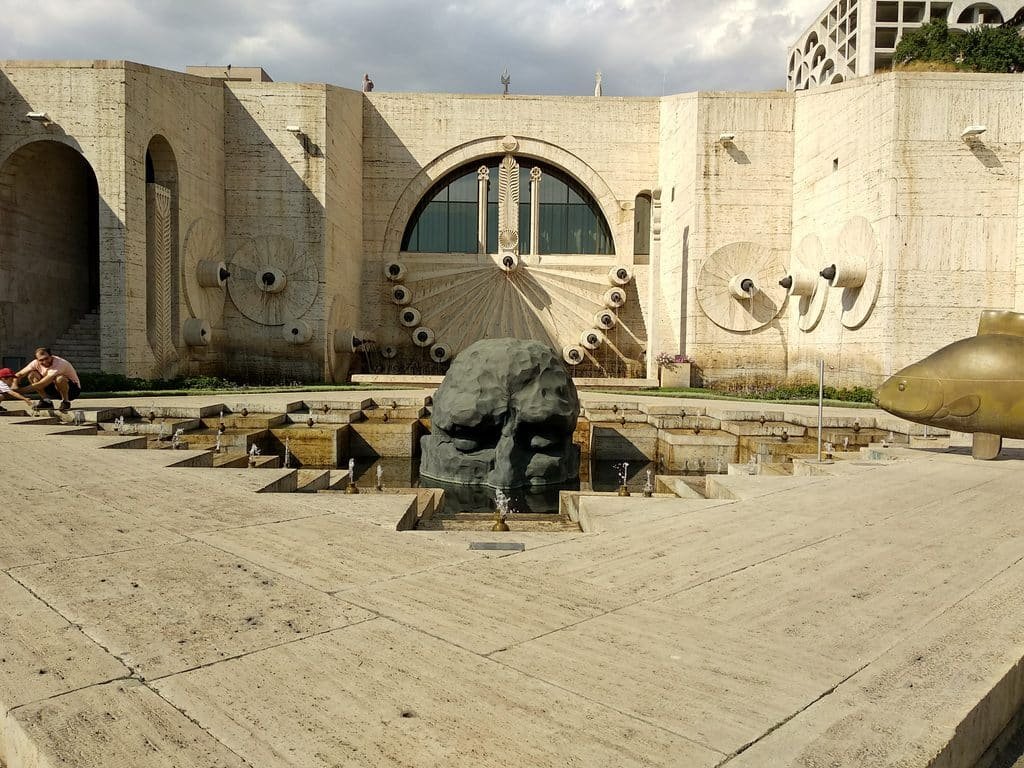
- The Yerevan Cascade. A giant stairway of white stone climbing from the centre to the Monument district, with fountains, terraces and the Cafesjian Center for the Arts inside the Cascade complex. From the top, on a clear day, you can see Ararat on the other side of the border.
- Matenadaran. The institute of ancient manuscripts, holding more than 20,000 manuscripts and fragments. Come for the illuminated Gospels. Outside, Mesrop Mashtots, the monk who invented the alphabet, sits in stone in front of the building.
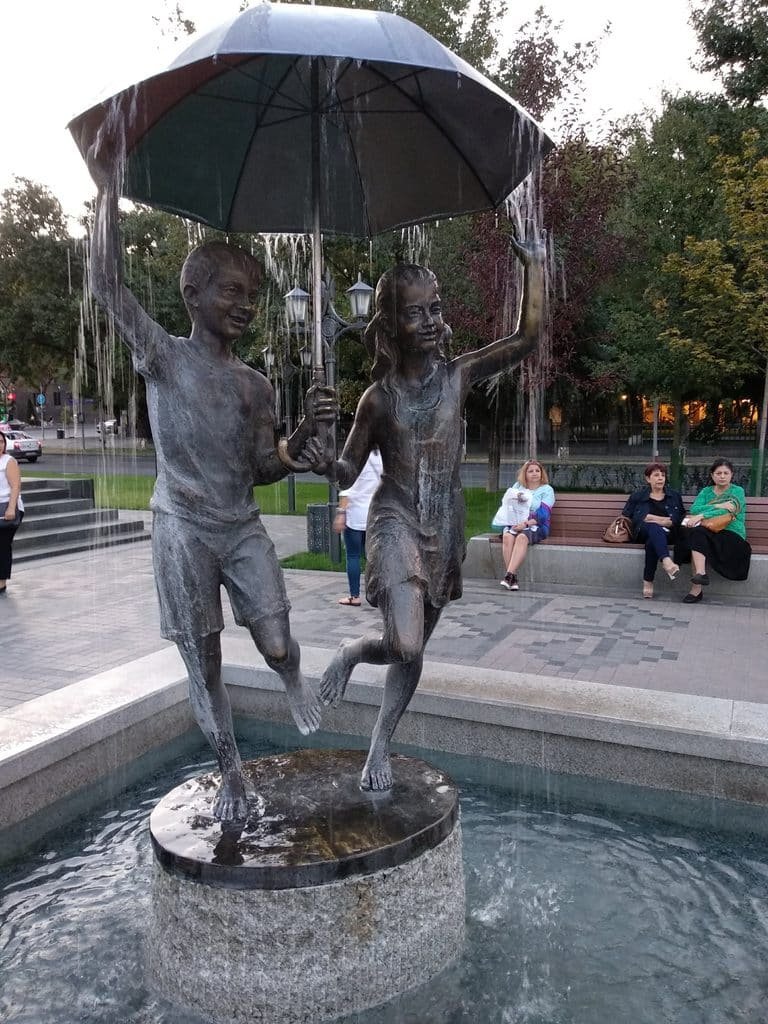
- Republic Square and Northern Avenue. Soviet neoclassicism in pink and yellow tuff, with the singing fountains on summer evenings.
- The Blue Mosque. An 18th-century Persian mosque with a tiled dome and a quiet courtyard of trees. It is the only working mosque in the country, left from the time Yerevan was under Persian rule.
Singing Fountains Yerevan
- Vernissage. The open-air weekend market beside Republic Square: carpets, khachkar copies, Soviet badges, chess sets and paintings.
- Erebuni Fortress. The Urartian citadel of 782 BC on its hill in the south, the birthplace of the city, with a museum of cuneiform inscriptions and frescoed walls.
- Mother Armenia and Tsitsernakaberd. The giant statue over Victory Park, and the genocide memorial above the Hrazdan gorge (see the history section).
I.2 Yerevan statues and monuments: a walk through the city
Most of Yerevan’s statues show ordinary people the city was fond of: a flower seller, a boy selling water, a fisherman from a comedy. A walk from the Cascade to Abovyan Street takes you past most of them.
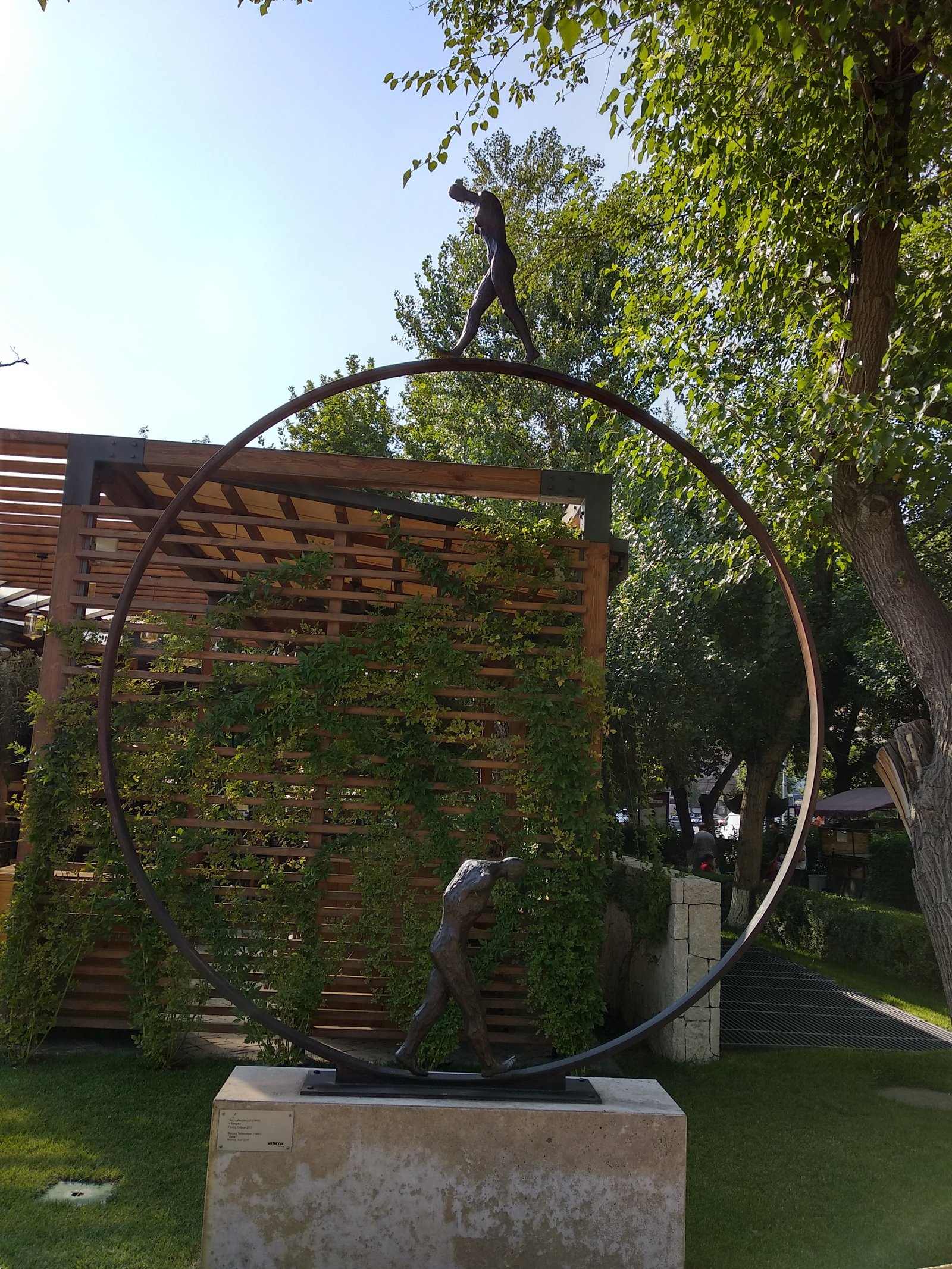
Start at the foot of the Cascade with Alexander Tamanian (1974), the architect who drew modern Yerevan, bent over his plans. In the Cascade garden you’ll find Botero in Yerevan: his round bronzes, the Cat, the Roman Warrior and the Smoking Woman, all from the Cafesjian collection. A few streets away, at the corner of Teryan and Moskovyan, sits William Saroyan (2008), the Armenian-American writer born to genocide survivors in California.
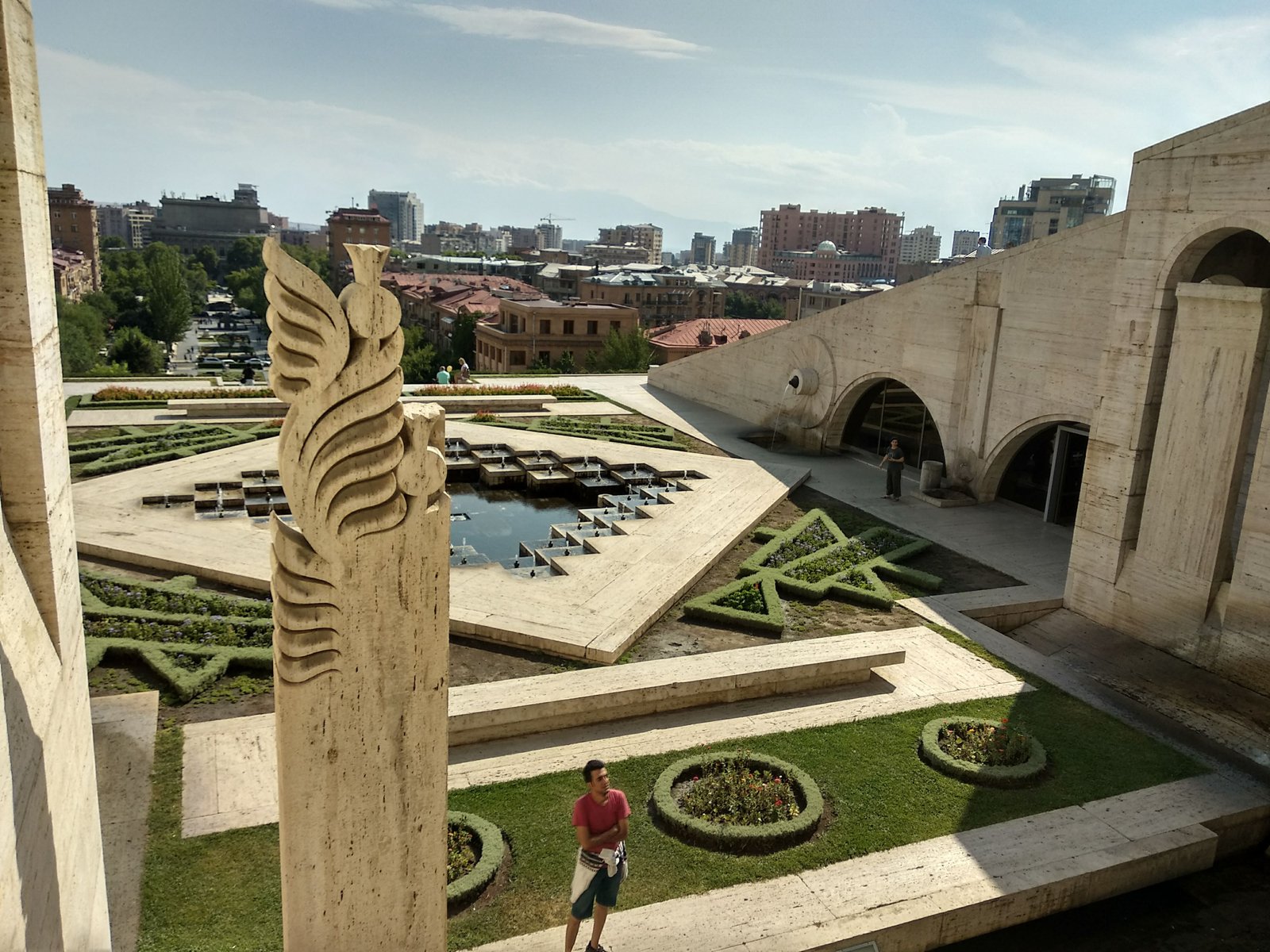
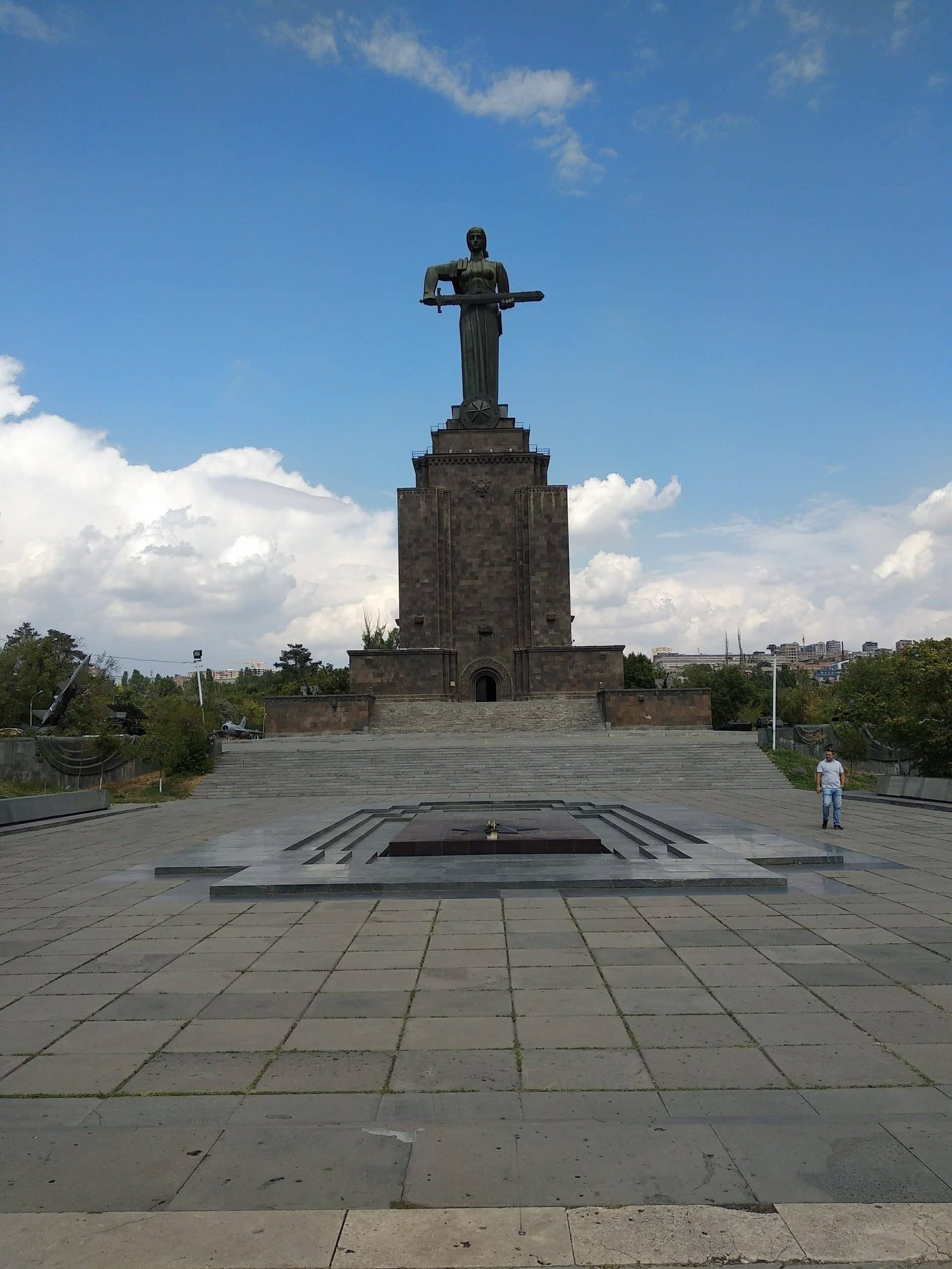
Mother Armenia
Abovyan Street holds two of the city’s favourites: Karabala the flower seller (1991), a local eccentric remembered for offering flowers to women, and the Girl from Van (1975) with her water jug, a nod to Van, the old Armenian city that now lies in eastern Turkey. On Shahumyan Square stands the Water-Selling Boy (1970), for the boys who sold water to passers-by in the old city, and in English Park you meet Pepo (1976), the poor fisherman of Gabriel Sundukyan’s 19th-century comedy.
Two monuments are worth a short ride. At the station square, Yervand Kochar’s David of Sasun (1959) rides out of the national epic with his sword raised. Above the city in Victory Park, Mother Armenia (1967) holds her sword over Yerevan, on the pedestal where Stalin once stood.
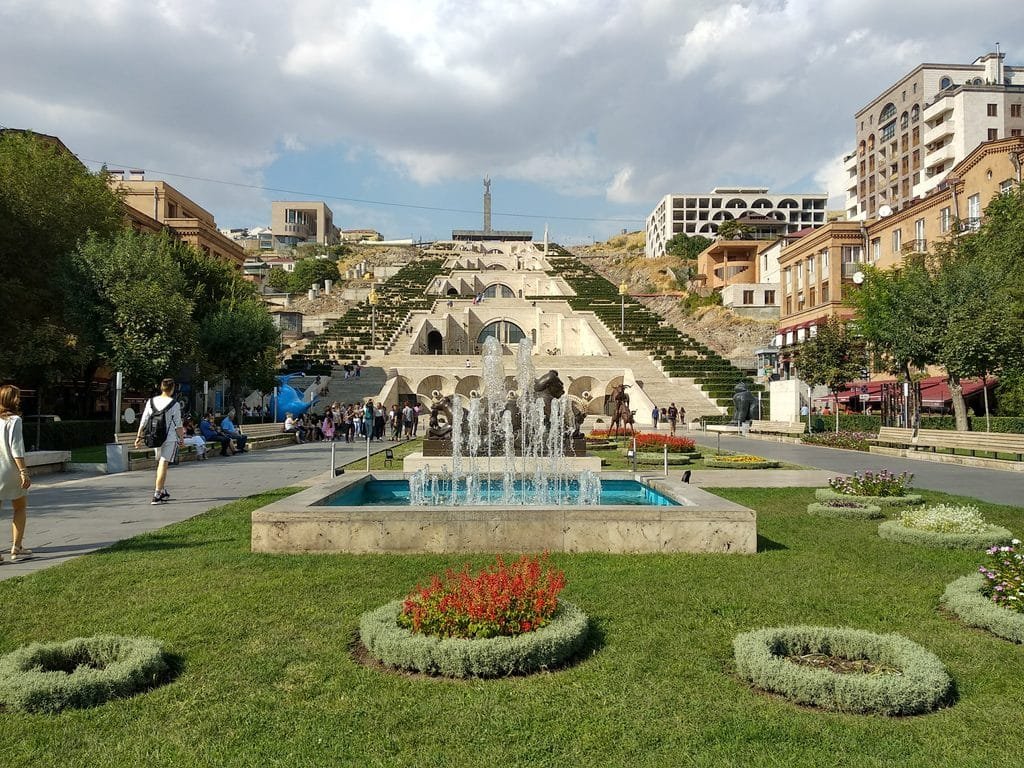
I.3 Yerevan markets and where to eat in Yerevan
The GUM market, a few minutes south of the centre, is a good place to start eating your way through the country. Stalls are piled with dried apricots and persimmons, sujukh (walnuts threaded on string and dipped in thickened grape juice), herbs, spices and brined cheeses. Ask for a sheet of fresh lavash and wrap it around cheese and greens.
Across the Hrazdan gorge, the Yerevan Brandy Company, maker of Ararat brandy, runs tours of its cellars and tastings. Its neighbour, the Noy factory, sits on the site of the old Erivan fortress.
As for where to eat in Yerevan, skip the international menus on Northern Avenue. Look for family taverns serving khorovats, tolma and herb salads, and for the small bakeries selling zhingyalov hats. Wash it down with tan or a glass of Areni.
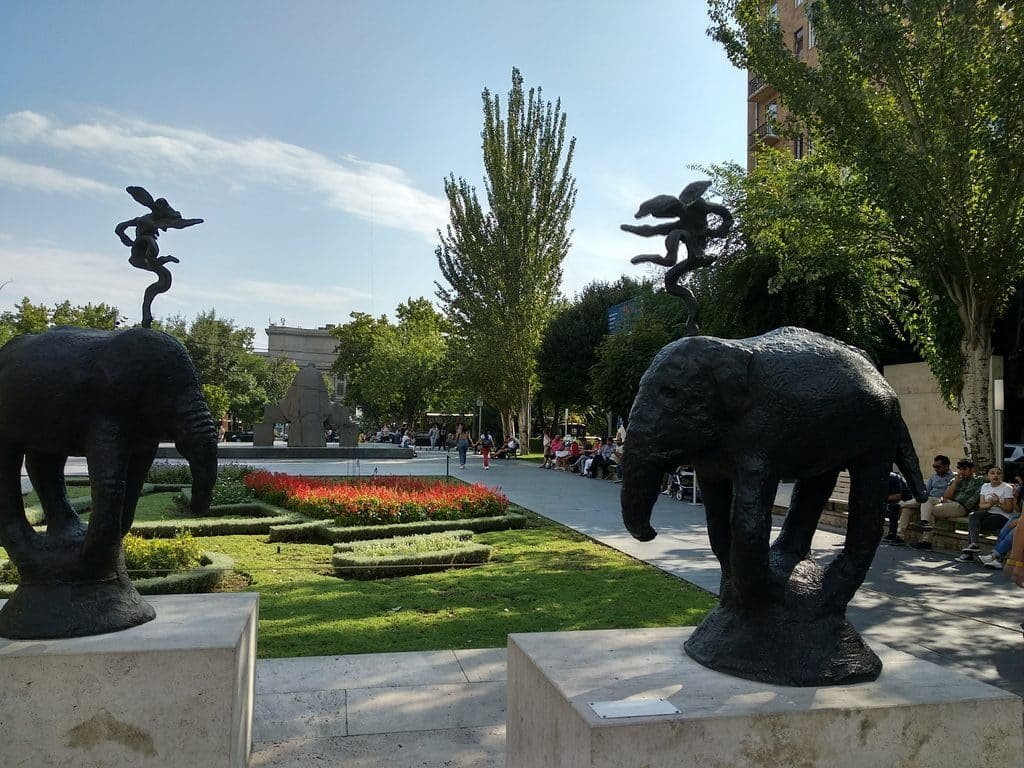
Gendrd I / Gendrd II,
by Barry Flanagan
II. Day trips from Yerevan
II.1 Garni Temple, the Symphony of Stones, Havuts Tar and Geghard

Symphony of stones
The Azat gorge, about 30 km east of Yerevan, holds four sites that can be walked or driven in a single day.
- Garni Temple. A colonnaded Greco-Roman temple from the 1st century AD, traditionally dated to King Tiridates I. It is the only standing building of its kind in the former Soviet world. An earthquake brought it down in 1679, and it was rebuilt from its own stones between 1969 and 1975.
- Symphony of Stones. Below the temple, the gorge walls are lined with hexagonal basalt columns formed as lava cooled. They hang over the Azat river like the pipes of an organ.
- Havuts Tar. Across the gorge, on the plateau opposite Garni, stand the ruins of an 11th-century monastery inside the Khosrov Forest reserve. You reach it on foot, down into the gorge and up the other side, and it is usually empty.
- Geghard. Ten kilometres further up the road, a monastery partly carved into the cliff, listed by UNESCO. Hum a single note in the rock-cut chambers and the stone carries it all around you.
In Garni village, families invite visitors to watch lavash being baked: the dough is stretched over a cushion and slapped against the wall of the tonir, a clay oven sunk in the floor, and peeled off a minute later. The craft is on UNESCO’s list of intangible heritage.
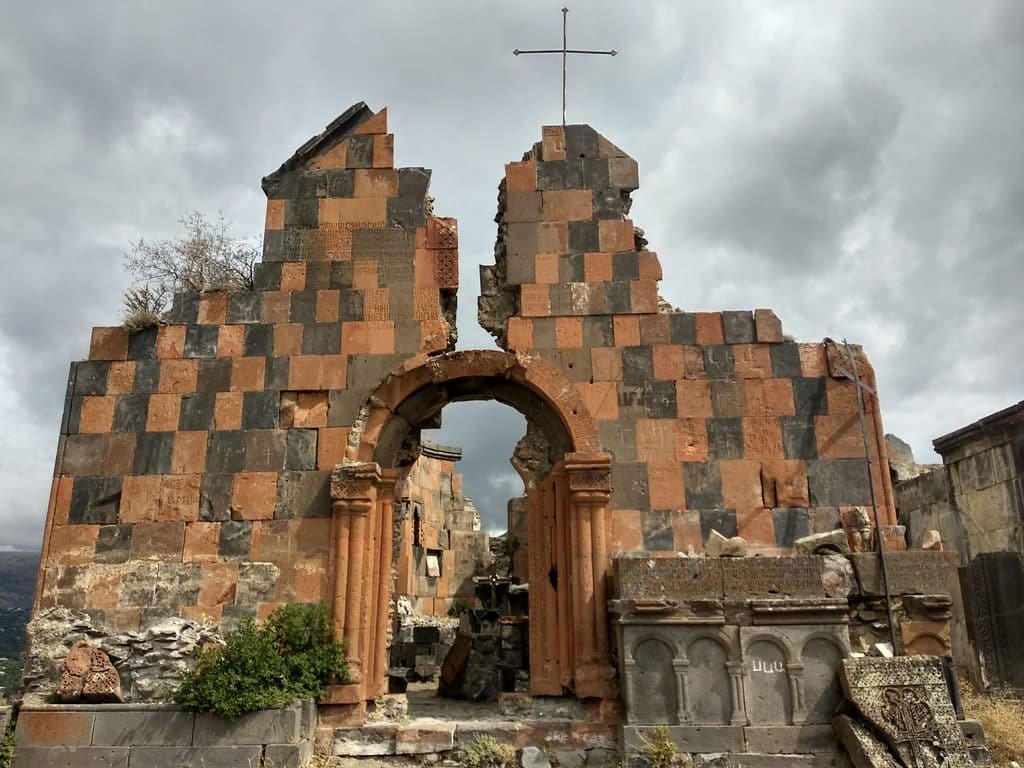
II.2 Khor Virap, Echmiadzin and Zvartnots

Khor Virap. I did not make it here, and it is the first place I would add. The monastery stands on a hill in the Ararat plain, facing Mount Ararat across the closed Turkish border. Tradition says Gregory the Illuminator was held in a pit here for about 13 years before he converted King Tiridates III; you can still climb down into it.
Echmiadzin. West of Yerevan, the cathedral of Etchmiadzin is the mother church of the Armenian Apostolic faith and the seat of its Catholicos. Its first church dates, by tradition, to the years after the conversion of 301.
Zvartnots. On the way back, the ruins of a round 7th-century cathedral, with carved capitals of vines and eagles. Together with Echmiadzin it forms a UNESCO site.
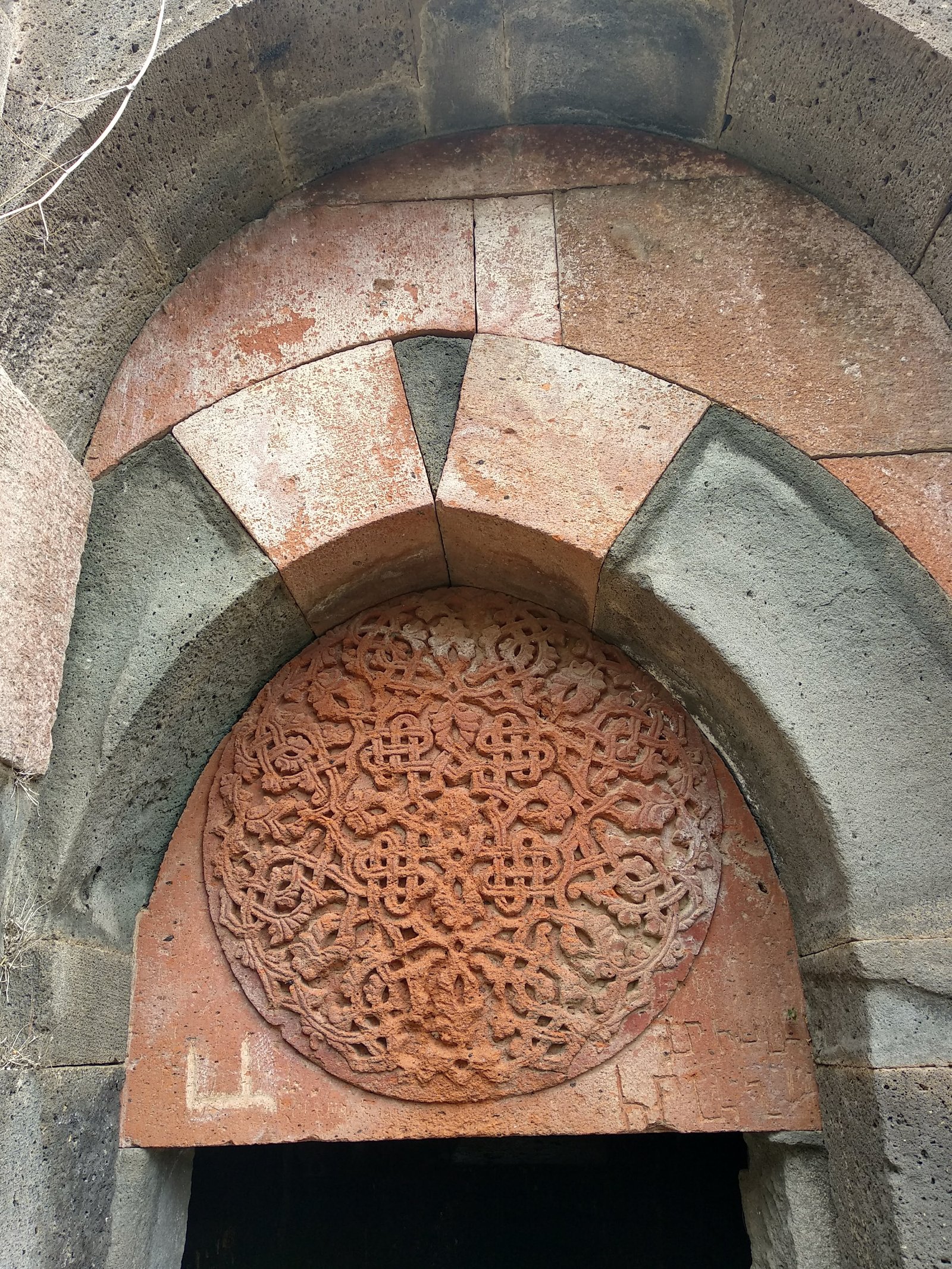
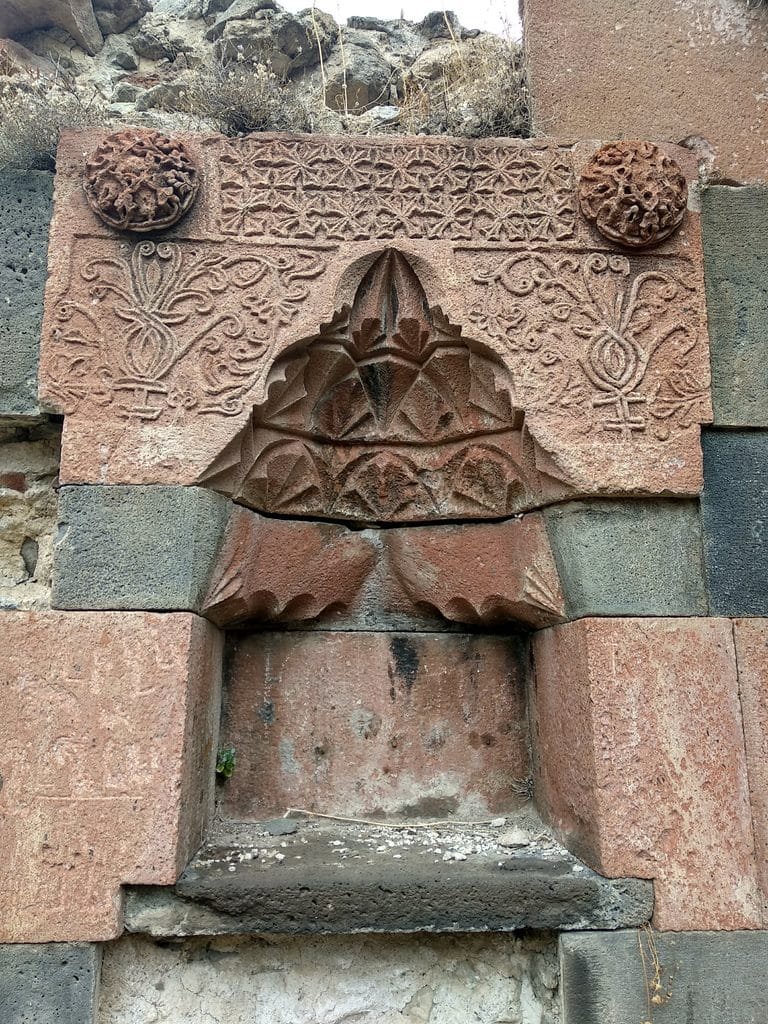
II.3 Noravank, Areni wine and the Areni-1 cave
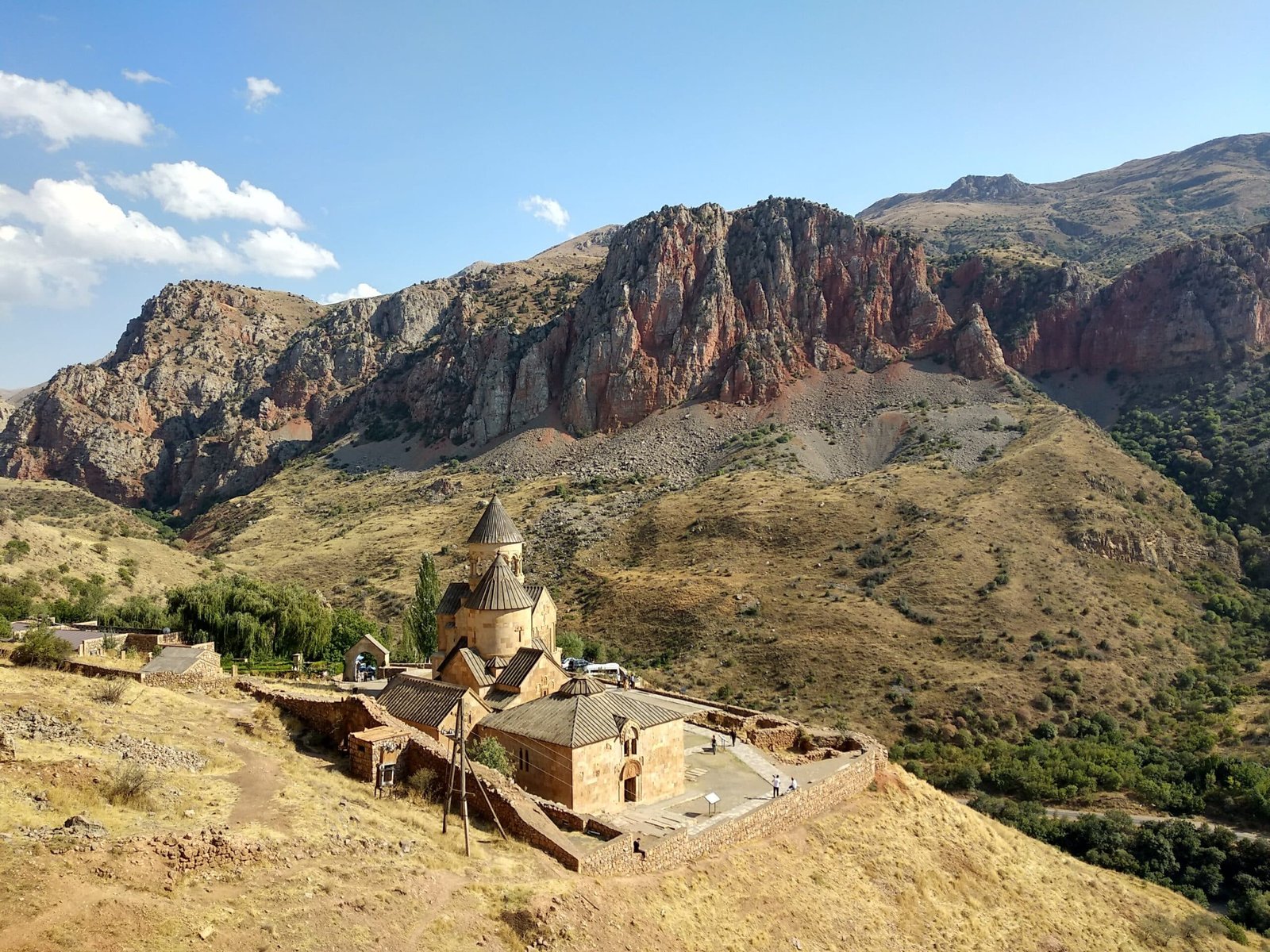
Noravank. The 13th-century monastery sits at the end of a red-cliffed gorge near Areni, two hours south of Yerevan. Its two-storey church, by the architect Momik, is climbed by narrow stone stairs cantilevered from the façade.
Areni-1 cave. At the mouth of the same gorge, archaeologists found the oldest known winery, about 6,100 years old, and a leather shoe of about 5,500 years.
Areni wine. The village still lives from the Areni grape; family wineries pour it by the glass, and an autumn wine festival fills the main street each October.
III. Monasteries in Armenia’s wild south
Syunik, the long southern province squeezed between Azerbaijan and Iran, is where the roads get steep and the villages thin out. It is the wildest stretch of any Armenia road trip, and some of the most beautiful old churches in Armenia sit right on the edge of the gorges.

Wedding at Noravank
III.1 Tatev, the cable car, the Great Hermitage and Devil’s Bridge
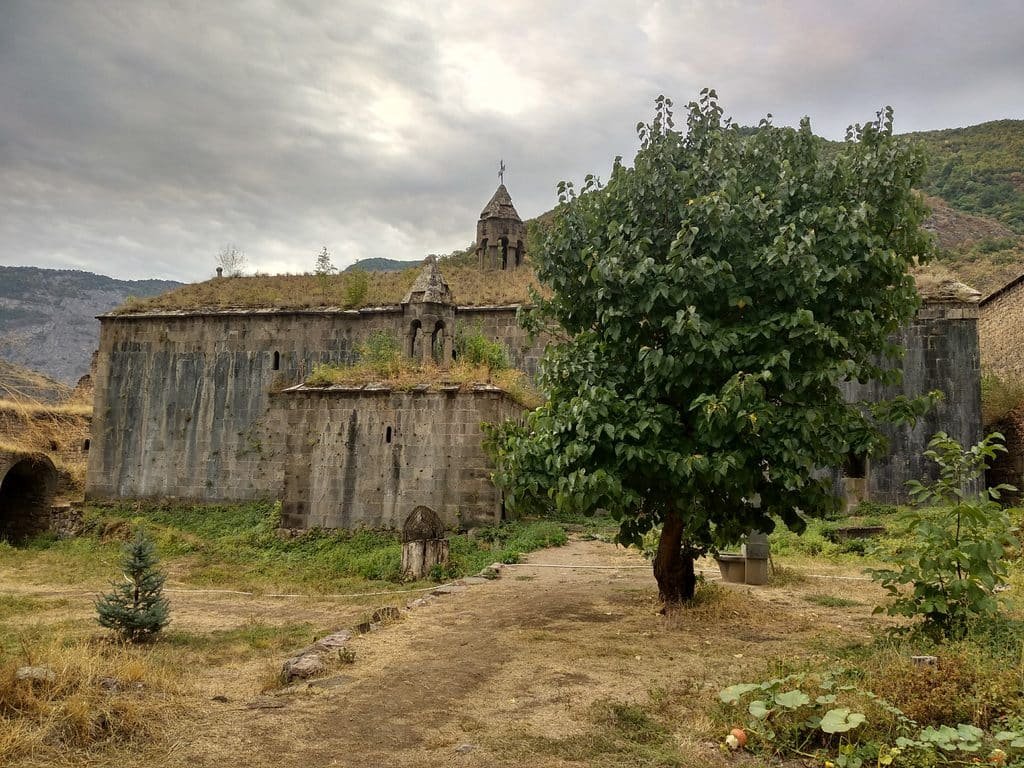
The Great Hermitage of Tatev
Tatev Monastery. A 9th-century monastery on a cliff above the Vorotan gorge, and from the 14th century one of Armenia’s great medieval universities.
Wings of Tatev. The way in is a 5.7 km cable car that crosses several valleys at once, long enough to hold a world record. Halfway across, the floor of the gorge is a very long way down.
The Great Hermitage of Tatev. In the gorge below, the ruined hermitage of Tatevi Mets Anapat is reached only on foot. Its walls and church date mostly from the 17th century.
Devil’s Bridge. On the walk down, the river disappears under a natural rock arch, with warm mineral pools where you can bathe.
III.2 Goris, Khndzoresk and Zorats Karer
Goris. A quiet town in a basin of eroded rock cones. The pointed hills around it reminded me of Cappadocia. Old Goris was carved into those cones and lived in for centuries.
Khndzoresk. A cave village on the slopes of a gorge, inhabited until the 1950s. A swinging footbridge crosses to the caves.
Zorats Karer. On the plateau north of Sisian, more than 200 standing stones, some with holes bored through them. Locals call it Carahunge; the claim that it was an ancient observatory is popular but disputed.
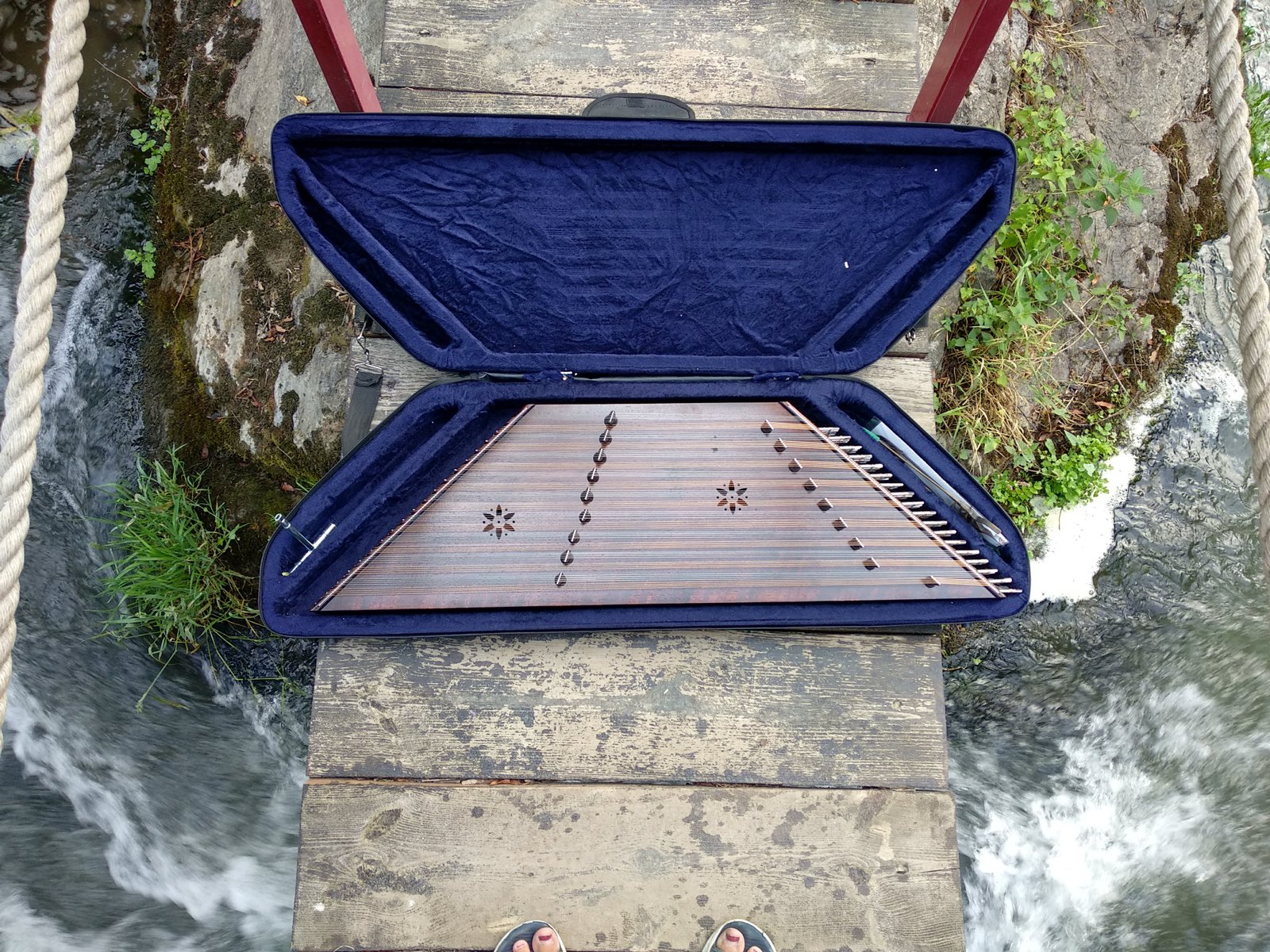
Santur on the Devil’s Bridge
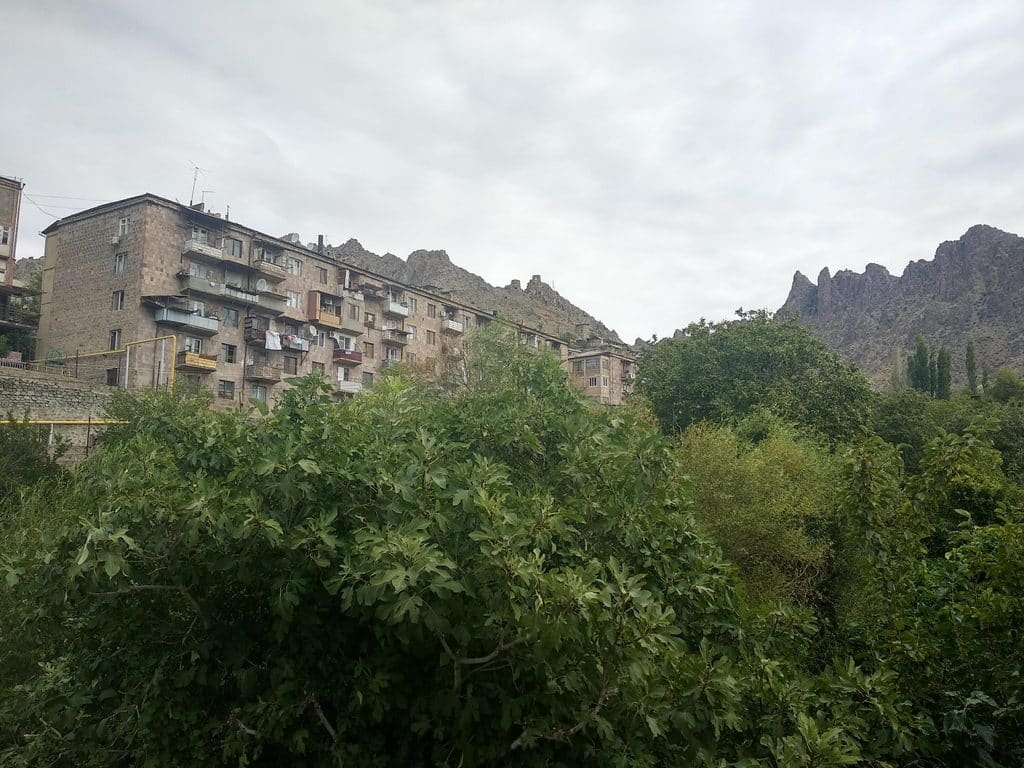
III.3 Kapan to Agarak: the road to Iran and the tuff towns
South of Goris, the road twists down through forest to Kapan, the provincial capital, a mining town. What caught my eye here were the apartment blocks, built of volcanic tuff in red, brick-orange and black, so that a single street can look like a box of stone samples.
The road ends at Agarak, a copper town on the Araks river and the border with Iran, near Karchevan, a village of orchards and fig trees. Across the river, Iran’s mountains are bare and ochre.
IV. Armenia’s nature: Lake Sevan and the green north
IV.1 Lake Sevan, Sevanavank and the Noratus khachkars
Lake Sevan. At about 1,900 m, Sevan is one of the largest high-altitude freshwater lakes in the world, an hour north-east of Yerevan. Soviet irrigation schemes drained it by some 20 metres, and the shoreline is still recovering.
Sevanavank. The monastery of 874 once stood on an island; the falling water joined it to the shore. Climb behind it for the classic view of black churches against blue water.
Noratus. On the western shore, a medieval cemetery holds hundreds of khachkars, the largest field of them anywhere. Old women sell knitted socks between the stones.
Around the lake, roadside stalls fry or smoke fish: ishkhan, the native Sevan trout, is now rare, and most of what you eat is whitefish or crayfish.
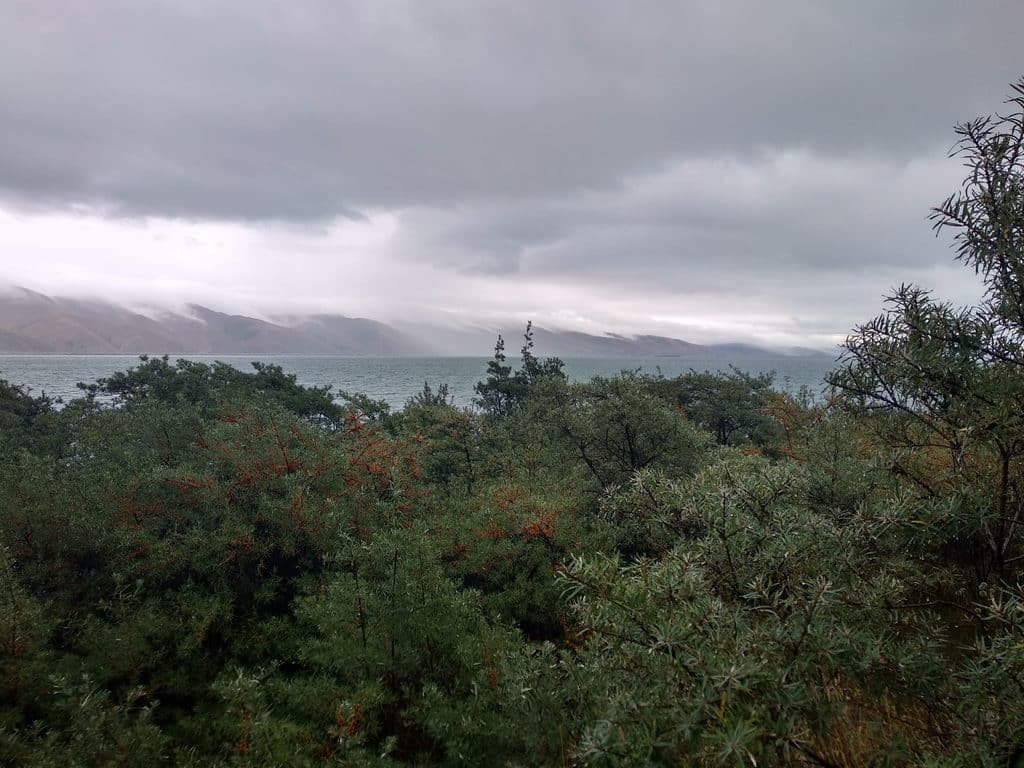
Lake Sevan
IV.2 Dilijan, Haghartsin, Goshavank and the Molokans of Fioletovo
Dilijan. A forested spa town that Armenians call their Switzerland, with an old quarter of carved wooden balconies.
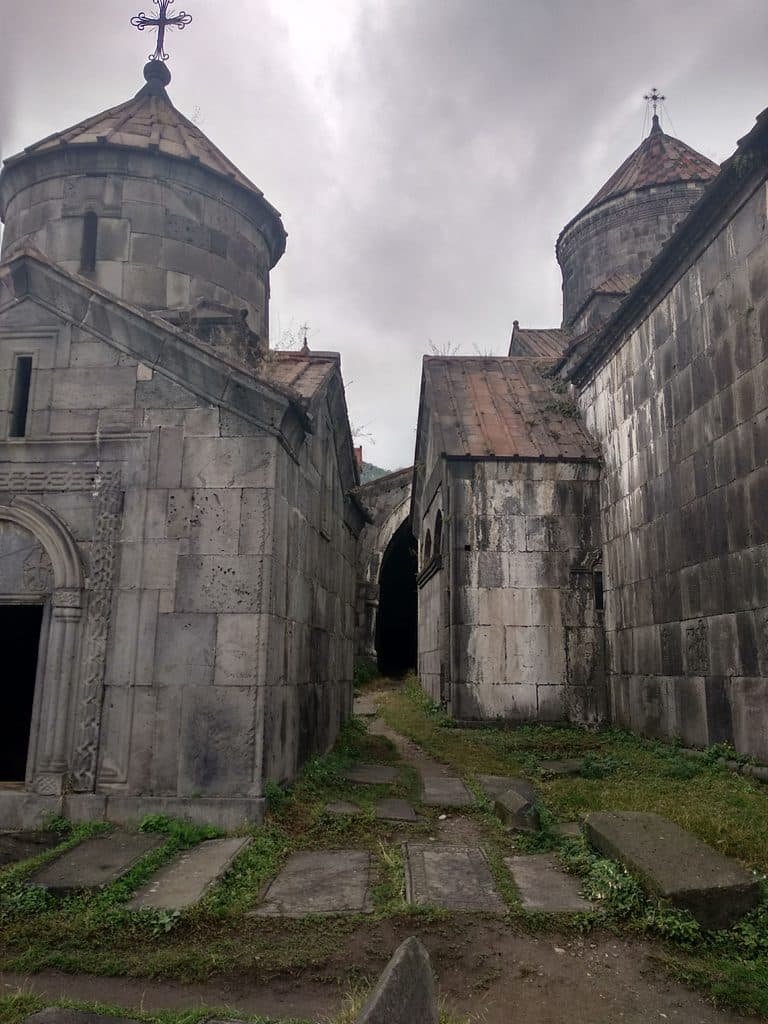
Haghartsin and Goshavank. Two monasteries in the woods nearby. Haghartsin’s churches date from the 10th to the 13th centuries. Goshavank was founded by Mkhitar Gosh, the 12th-century scholar who wrote Armenia’s first law code; its finest khachkar, carved by the master Poghos in 1291, looks like stone lace.
The Molokans of Fioletovo. Over the pass, Fioletovo is a village of Molokans, Russian Spiritual Christians exiled to the Caucasus in the 19th century. Blue window frames, wooden houses, no alcohol or tobacco, and pickled cabbage sold by the roadside.
IV.3 The Debed canyon: Haghpat, Sanahin and Akhtala
The Debed river cuts a deep canyon through the copper country of Lori, on the road to Georgia.
- Haghpat and Sanahin. Twin monasteries of the 10th to 13th centuries on the plateau above Alaverdi, listed together by UNESCO; their libraries and academies rivalled Tatev.
- Akhtala. A fortified monastery whose 13th-century church is covered in frescoes, rare in Armenia.
- Alaverdi. The copper-smelting town in the gorge below, with a Soviet cable car that once carried workers up to Sanahin.
V. The west: Aragats and Gyumri
V.1 Aragats, Amberd, the Alphabet Park and the Yazidi temple
Mount Aragats. At 4,090 m, the highest mountain in Armenia, an extinct volcano with four summits around a crater. A road climbs to Lake Kari at about 3,200 m, the start of the hike to the southern summit.
Amberd. On the mountain’s southern slope, a 7th-century fortress and an 11th-century church sit on a spur between two gorges, at about 2,300 m.
The Alphabet Park. Near Artashavan, the 39 letters of the Armenian alphabet stand as giant stone sculptures, raised in 2005 for its 1,600th anniversary.
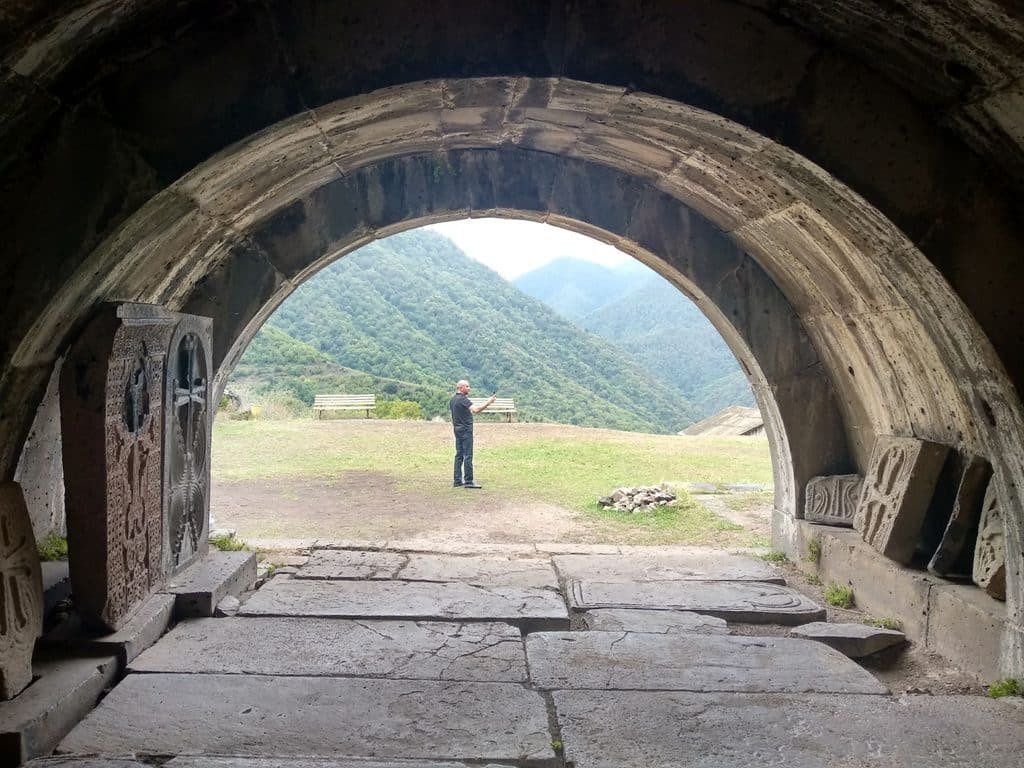
The Yazidi temple at Aknalich. In the Armavir plain, the Yazidis, Armenia’s largest ethnic minority, opened Quba Mere Diwane in 2019, described as the largest Yazidi temple in the world. Beside it stands the older, smaller shrine; visitors are welcome if they remove their shoes and dress modestly.
V.2 Gyumri
Armenia’s second city, near the Turkish border, is a place of black and ochre tuff. Its old quarter, Kumayri, keeps rows of 19th-century merchant houses with wooden balconies and iron gates.
The 1988 Spitak earthquake devastated the city, and some families lived in temporary huts for decades. You can still see the scars. Gyumri is also known across Armenia for its sense of humour, its craftsmen and its artists. Go for the ceramics workshops, the Black Fortress above the town and a pace much slower than Yerevan’s.
VI. Armenian culture: food, music and traditions
VI.1 Armenian food
Armenian cooking is mountain cooking: bread, herbs, grilled meat, cheese and fruit, always shared, with hosts who keep bringing more.
- Lavash, the thin bread from the tonir oven, on UNESCO’s intangible heritage list
- Khorovats, meat and vegetables grilled over vine wood, the centre of every gathering
- Dolma (tolma), in vine leaves in summer and in cabbage in winter
- Harissa, wheat and chicken cooked slowly into a porridge, and khash, a winter broth of cow’s feet eaten at dawn with garlic, dried lavash and vodka
- Zhingyalov hats, flatbread stuffed with a dozen wild herbs, from Karabakh and Syunik
- Ghapama, a pumpkin stuffed with rice, nuts and dried fruit, baked for the winter feasts
- Basturma and sujukh, cured beef and spiced sausage
- Gata, a sweet bread, sometimes baked with a coin inside for luck
- Tan, salted yoghurt thinned with water, the drink of summer, and brandy from the Ararat distillery
VI.2 Music and traditional instruments
The priest and composer Komitas (1869–1935) walked from village to village transcribing folk songs, and shaped what Armenians hear as their own sound. Aram Khachaturian (1903–1978) took it to the world: his Sabre Dance, from the ballet Gayane, is one of the most played pieces of the 20th century, and Spartacus gave cinema one of its great adagios. Today the pianist Tigran Hamasyan, born in Gyumri in 1987, folds Komitas, sharakan hymns and folk rhythms into jazz and metal, on albums such as Mockroot and Luys i Luso.
The duduk, a double-reed pipe of apricot wood, has a warm, slightly mournful sound that you may know from laments or from film scores such as Gladiator. Djivan Gasparyan made it famous worldwide, and it is on UNESCO’s intangible heritage list. At weddings and outdoor dances you hear its loud cousin, the zurna, a shrill shawm that always plays with the dhol, a two-sided drum beaten with sticks for the kochari circle dances.
The kamancha, a bowed fiddle held upright on the knee, belongs to the ashugh love songs and the music of Sayat-Nova. The tar, a long-necked lute, and the kanon, a plucked zither, fill folk ensembles and the old urban songs of Yerevan, while the shvi and the blul, simple wooden flutes, still carry shepherds’ tunes in the mountains.
VI.3 Traditions calendar
The Armenian year begins its feasts on 6 January, when the Armenian Church keeps Christmas and Epiphany together, with the blessing of water. On 13–14 February comes Trndez: bonfires are lit in churchyards, and newlyweds and young people jump over the flames for luck.
At Easter, eggs are dyed red with onion skins and cracked against each other in egg-tapping contests, before a meal of fish and green pilaf. In July, fourteen weeks after Easter, Vardavar turns the whole country into a water fight: anyone, anywhere, may be drenched. In mid-August, on the feast of the Assumption, grapes are blessed in church before the harvest.
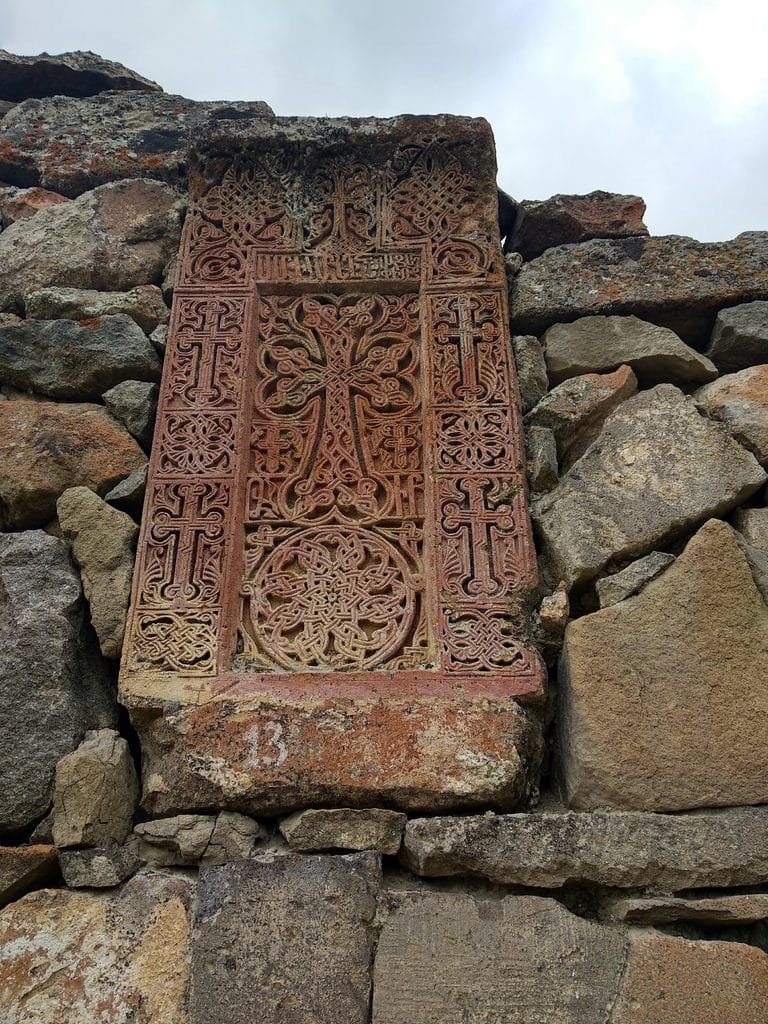
Throughout the year, khachkars are still carved and raised for births, deaths and gratitude; the craft is on UNESCO’s list of intangible heritage.
VI.4 Ethnic groups of Armenia
Armenia is one of the most homogeneous countries in the region, but its minorities keep traditions worth seeking out.
- Yazidis. The largest minority, Kurdish-speaking followers of their own ancient faith, living mostly in villages on the slopes of Aragats and in the Armavir plain.
- Molokans. Russian Spiritual Christians exiled here in the 19th century, still living in Fioletovo and Lermontovo in the north.
- Assyrians. Speakers of a Neo-Aramaic language, Christians of the Church of the East, in villages such as Verin Dvin and Arzni near Yerevan.
- Russians, Kurds and Greeks make up smaller communities, mostly in Yerevan and the north.
VII. History: the genocide, modern Armenia and Karabakh
VII.1 The Armenian genocide and Tsitsernakaberd
Between 1915 and 1923, about 1.5 million of the roughly two million Armenians of the Ottoman Empire were killed in massacres and death marches into the Syrian desert, according to Yerevan’s Armenian Genocide Museum-Institute. It began on 24 April 1915 with the arrest of several hundred Armenian intellectuals in Constantinople. At least 32 states recognise it as genocide, Israel being among the most recent in 2026 (Jerusalem Post). Turkey rejects the term, calling 1915 a wartime tragedy for both sides (Anadolu).
Tsitsernakaberd. The memorial stands on a hill above the Hrazdan gorge: twelve basalt slabs lean over an eternal flame, beside a split spire for the two halves of the nation. Every 24 April, hundreds of thousands walk up to lay flowers. The museum beside it holds the documents, photographs and survivors’ testimonies.
Modern Armenia. The survivors built a diaspora larger than the country itself. Armenia was briefly independent in 1918–1920, then Soviet for seventy years, and independent again in 1991, three years after the Spitak earthquake. The peaceful Velvet Revolution of 2018 brought Nikol Pashinyan to power. After defeat in Karabakh, Armenia initialled a peace agreement with Azerbaijan in Washington in August 2025; as of autumn 2026 it is still unsigned (Georgia Today).
VII.2 Nagorno-Karabakh, a country that no longer exists
Nagorno-Karabakh, Artsakh to Armenians, is a mountainous region inside Azerbaijan’s internationally recognised borders, with a mostly Armenian population until 2023. The Soviets made it an autonomous region of Soviet Azerbaijan in the 1920s. In 1988 its Armenians voted to join Armenia, and the war that followed, ended by a ceasefire in 1994, killed about 30,000 people and displaced hundreds of thousands on both sides.
Armenian forces held the region and the districts around it for 26 years. In 2020 Azerbaijan won back most of it in a 44-day war, including Shusha. In September 2023 a one-day offensive ended the self-declared republic, and almost all of its roughly 100,000 Armenians fled to Armenia.
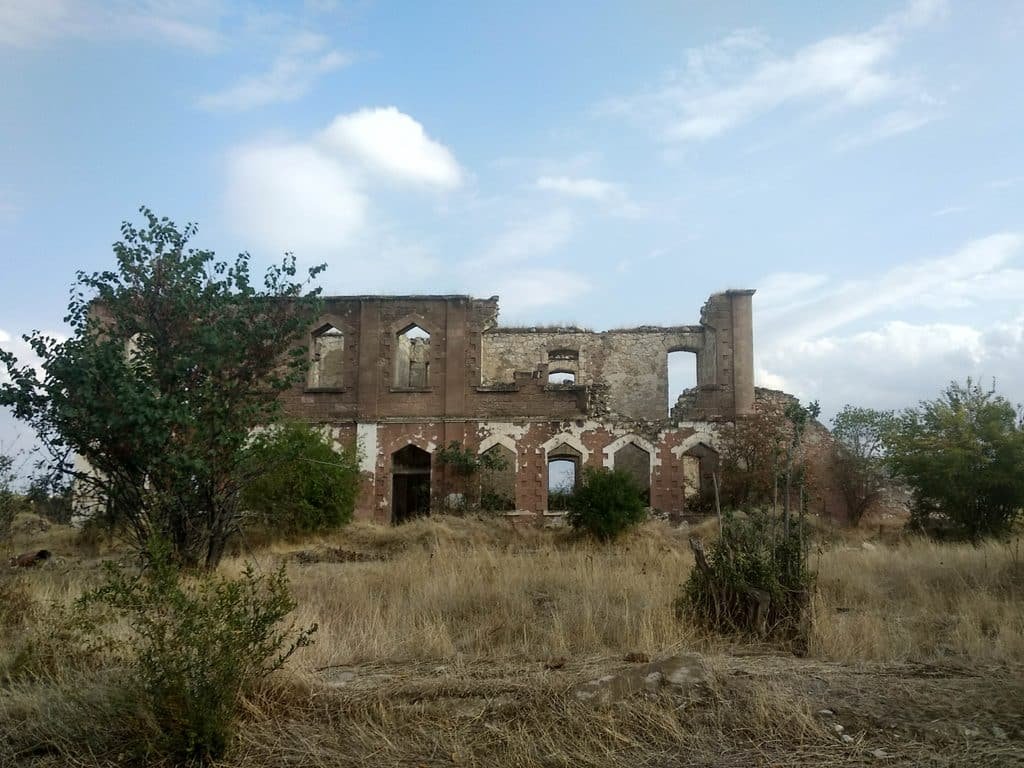
When I travelled there, it was still Armenian. In Stepanakert, now Khankendi, the stone monument We Are Our Mountains, two faces known as Tatik-Papik, “grandmother and grandfather”, stood for the nation’s elders. In Shusha (Shushi), I watched a baptism in Ghazanchetsots Cathedral. The cathedral was shelled twice in 2020 (Human Rights Watch) and has since lost its dome in an Azerbaijani “restoration”; Azerbaijan, for its part, is rebuilding the mosques it says were destroyed after 1992 (president.az). Near Askeran, I saw Agdam, the Azerbaijani town captured in 1993 and dismantled into a ghost town, now being rebuilt by Azerbaijan. The place names in my photographs have all changed.
VIII. Armenia itinerary: 7 or 10 days
Armenia itinerary, 7 days. Spend day 1 in Yerevan (the Cascade, Matenadaran and the statues walk) and day 2 in the Azat gorge (Garni, the Symphony of Stones, Havuts Tar and Geghard). On day 3, drive south through Khor Virap, Areni and Noravank and sleep in Goris. Give day 4 to Tatev, the cable car and the Great Hermitage, and day 5 to Khndzoresk and Zorats Karer before driving north to Sevan. Day 6 is for Sevanavank, Noratus and Dilijan; on day 7, see Haghartsin and Goshavank and return to Yerevan.
Armenia itinerary, 10 days. Keep the first two days, then add Echmiadzin and Zvartnots on day 3. Head south on day 4 (Khor Virap, Areni, Noravank, night in Goris), spend day 5 at Tatev and day 6 on the road to Kapan, Agarak and the Iranian border. Day 7 brings you back through Khndzoresk and Zorats Karer to Sevan, day 8 covers Sevan, Noratus, Dilijan and the Molokan village of Fioletovo, and day 9 the Debed canyon with Haghpat, Sanahin and Akhtala. End on day 10 in Gyumri, or on Aragats and at the Yazidi temple.
Shared taxis and marshrutkas link the main towns from Yerevan; for an Armenia road trip, a rented car makes the gorges and monasteries far easier.
VIII.1 Armenia and Georgia together
It is easy to combine the two: Tbilisi and Yerevan are about 280 km apart, five to six hours by car or minibus through the Debed canyon. The Bagratashen–Sadakhlo crossing is the busiest; a night train runs between the capitals in season. A common loop is a week in each country, entering one and leaving from the other.
VIII.2 Is Armenia safe?
Armenia is generally safe for travellers, with low street crime and a strong culture of hospitality. The main risks are mountain roads, fast drivers and winter weather on the high passes.
- Border areas. Some governments advise against travel close to the border with Azerbaijan, including stretches of road in Syunik and Tavush; check your own government’s travel advice before you go.
- Karabakh. The region is now under Azerbaijani control and can only be reached from Azerbaijan; the land border between Armenia and Azerbaijan is closed.
- Turkey. The Turkish border has been closed since 1993; Ararat is seen, not reached, from Armenia.
Whatever route you pick, don’t rush it. Some of my best conversations in Armenia happened in strangers’ cars, between one lift and the next.
TLDR
TL;DR: This Armenia itinerary gathers the best things to do in Yerevan, from the Cascade and Erebuni Fortress to the city’s statues and monuments and where to eat in Yerevan; the classic day trips from Yerevan to Garni, Geghard, Khor Virap and Noravank; and the old monasteries in Armenia’s wild south, with Tatev above all. It adds Armenia’s nature at Lake Sevan and Dilijan, the food, music and traditions, the story of the genocide and of Nagorno-Karabakh, and ready-made routes for an Armenia itinerary of 7 or 10 days, by bus or on an Armenia road trip by car.