
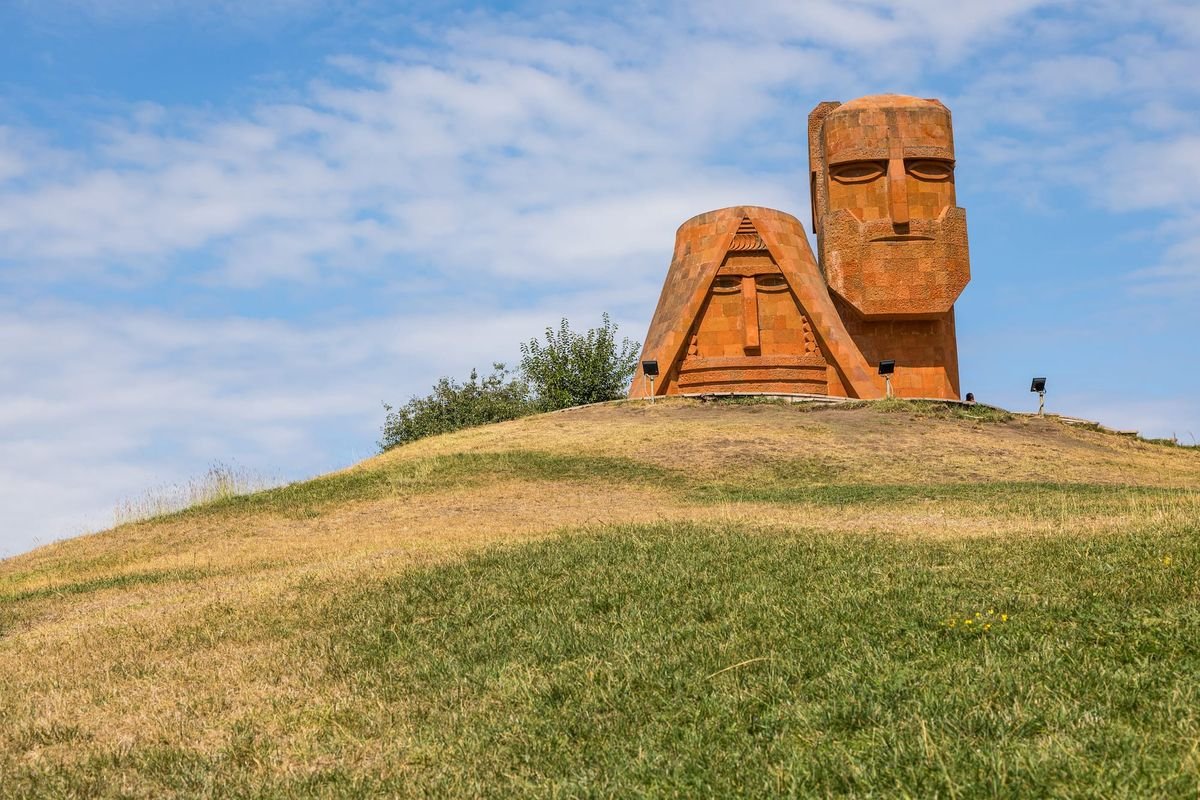
We are our mountains
Լեռնային Ղարաբաղ․ հին վերքերի և նոր պատերազմների միջև
Table of Contents
In 2019 I spent three days in Nagorno-Karabakh, a mountainous land that Armenians call Artsakh and that, at the time, was a self-declared republic no state recognised. This article has two parts. The first is the story of those days: a baptism, a table of soldiers and a ghost town. The second is an essay in which I try to understand what I saw there, and what the Nagorno-Karabakh conflict reveals about pride, collective trauma and the way old wounds open new wars.
I. A story about: A Baptism, a Table of Soldiers and a Ghost Town
Պատմություն մի մկրտության, զինվորների սեղանի և ուրվական քաղաքի մասին
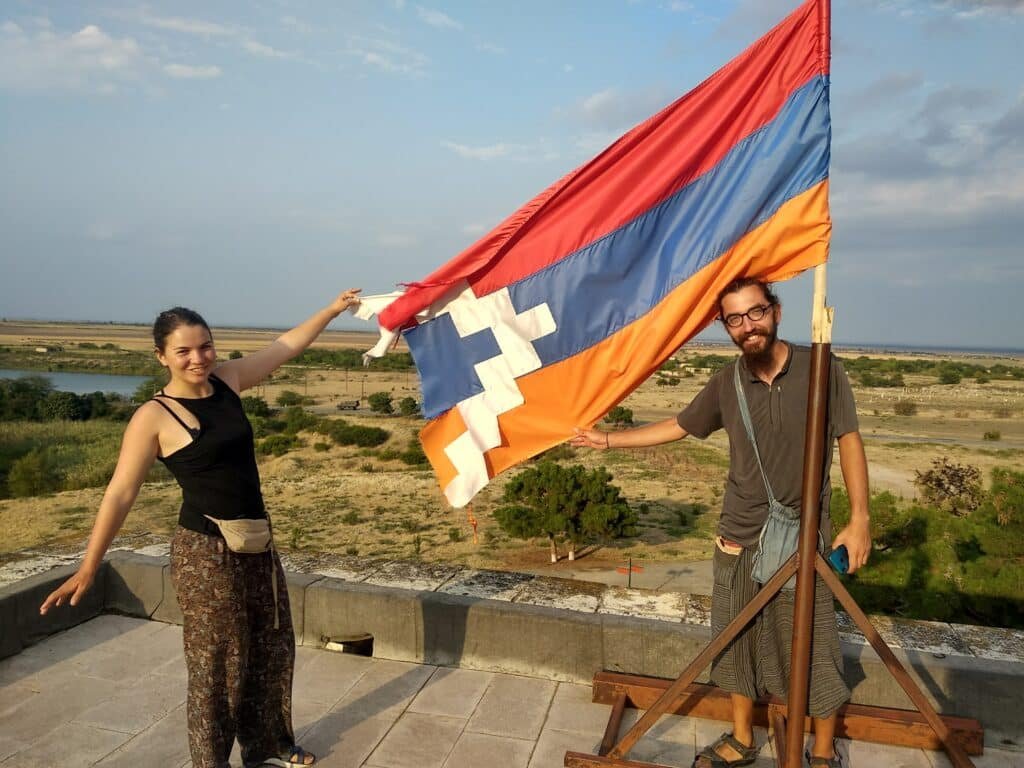
Nagorno-Karabakh, a country that no longer exist
I keep asking myself: why do I travel? I think I simply feel the need to lift characters off the pages of books and give them real contours. I already knew that such and such situations existed, such and such human types; I shouldn’t have had to wander the world to find that out, only I couldn’t separate them from the aura of myth that surrounded them. By travelling, they became real, right in front of me. And even so, real and tangible, people I could interact with directly, some of them kept a fantastical air for me. Like the Armenian soldiers defending Nagorno-Karabakh, proud of the bullets they had put into the heads of the wretched Azeris.
***
For a second I hesitated. I didn’t particularly feel like having company that day. Then I decided to turn back. After all, we had arrived at the same time, at the same moment, on the same empty road in Armenia; I could at least exchange a few impressions. In a way we had even crossed paths halfway: he was coming from Georgia and heading for Iran, and I was going exactly the other way.
– What’s the plan for today? I’m going to Nagorno-Karabakh for a few days, I told him.
He didn’t really have one, but after a brief hesitation he said:
– All right, I’ll come with you.
And so began our three-day partnership, in which we would be explorers of the region of Artsakh, as its inhabitants call it. He had become a traveller in the true sense: he had been away from home for seven years and, wandering the world, he collected all kinds of movement traditions. By then he had spent most of his time in Central Asia, India and Southeast Asia. I asked him about the philosophies he had tried and gathered here and there.
After two winding hitchhikes over hills, some wooded, others cleared to make way for pomegranate orchards, we stopped at a roadside rest area. Nothing much: we shared a sandwich on a kerb.
– What was that something in you that felt natural in Turkey and that you only became aware of later, by contrast with other places?
He took a moment to think…
– The angry outbursts, over the smallest thing, in traffic, with relatives, in the street… That was also the hardest thing for me to change. It was as if a fire was always smouldering in all of us, ready to flare up. I think that anger exists in many people in Turkey. I worked a lot on myself to free myself from it.
– I often had that impression in Turkey too.
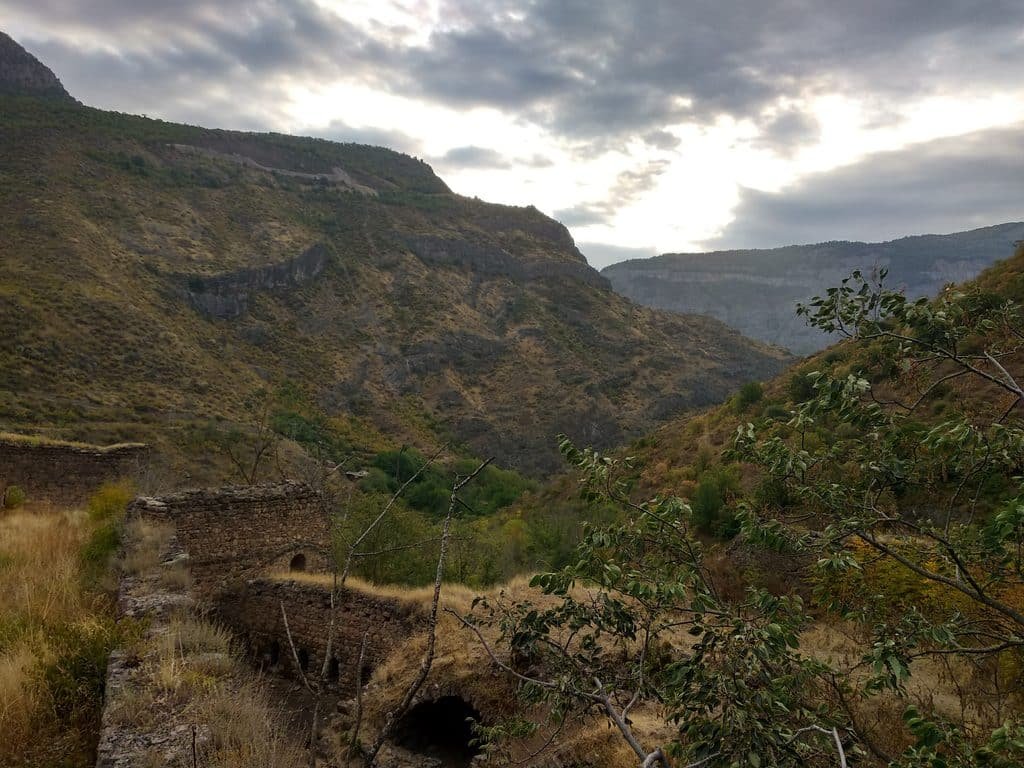
We started hitchhiking again, and before long a car stopped with a couple inside. Their attitude at first was polite and helpful. They told us about the Armenian diaspora and how many Armenians had ended up scattered to every corner of the world. A country whose diaspora, they told us, was ten times larger than the population at home.
And then the inevitable subject came up. The emotions in the car began to rise in a seething crescendo.
The Armenian genocide was a deep wound for this people.
– At least the Germans admitted what they did, they took the blame, they tried to atone, he said, his voice heavy with gloom. The Turkish people never admitted anything. As if they hadn’t decided to wipe us off the face of the earth.
He spoke to us personally, directly, as if he held every single person of Turkish citizenship personally responsible.
– There isn’t an Armenian who doesn’t have at least a grandfather or great-grandfather who died back then.
Feeling the tension in the car visibly rising, I decided to step in.
– And yet, the generations have changed. Those born in our time can’t be guilty of crimes committed by their grandparents or great-grandparents. But I suppose they can take the steps needed to help heal old wounds. I wonder whether cultivating a sense of guilt can help prevent atrocities like these.
I felt the need to press the point; my travelling companion seemed to be one of those eager to understand a situation in depth. More than being willing to listen to what they had to say, he was genuinely eager and searching for answers. Later I learned from him that, in the same spirit of meeting and understanding others, he had also been to Kurdistan, a taboo place for many Turks from Istanbul.
At the border it turned out we needed a visa to enter the Republic of Artsakh. Without a word about Burak’s Turkish passport, they gave us each a sticker, which, however, they didn’t stick in. We parted in peace and quiet from the couple who had brought us there. I had tried to show them that I felt their old pain (it was hard not to) but that it was still not the fault of Burak or of those of his generation. 1.5 million Armenians were killed between 1915 and 1923 on the territory of the Ottoman Empire. We can understand why the music played on the duduk carries such boundless sorrow.
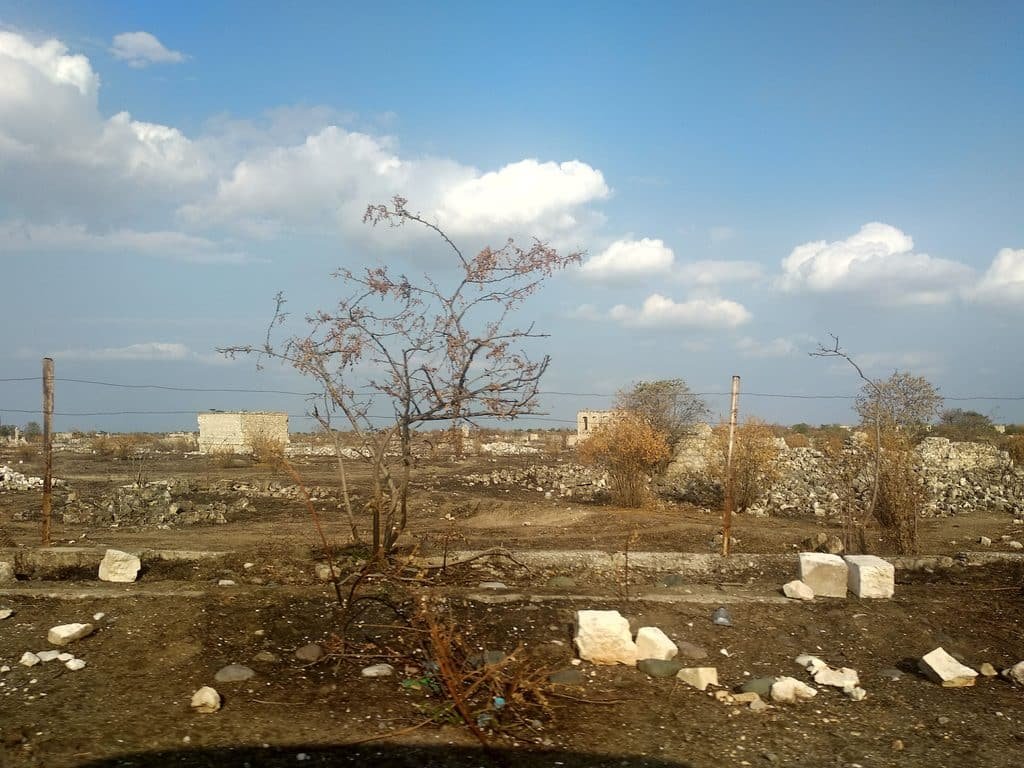
The next ride dropped us in Shusha, the former capital of the Karabakh region. The road ran along one edge of the town, and the first impression was a desolate one. We were greeted by a few buildings destroyed by war. As I looked at the Earth’s wounds, I felt them alive and burning inside me.
Peace is a fundamental good I grew up with, a value standing above any nation or context. An ideal. One of the many I allow myself. I would have liked to understand how and why people can do such things to one another. Now the question of why there are wars in the world seems to me to belong to a naive part of myself. Some left, others fought for their homes and their land. Violence seemed to me such an enslaving thing, a destructive way of falling prey to one’s own instincts, one that leaves deep marks for decades, sometimes even centuries.
We took a road behind the ruins that wound up to a viewpoint overlooking the hidden capital of Nagorno-Karabakh. On that promontory, from which you could see the whole city, there also stood an imposing Armenian church. We went closer, curious. From inside came the uplifting chants of a service.
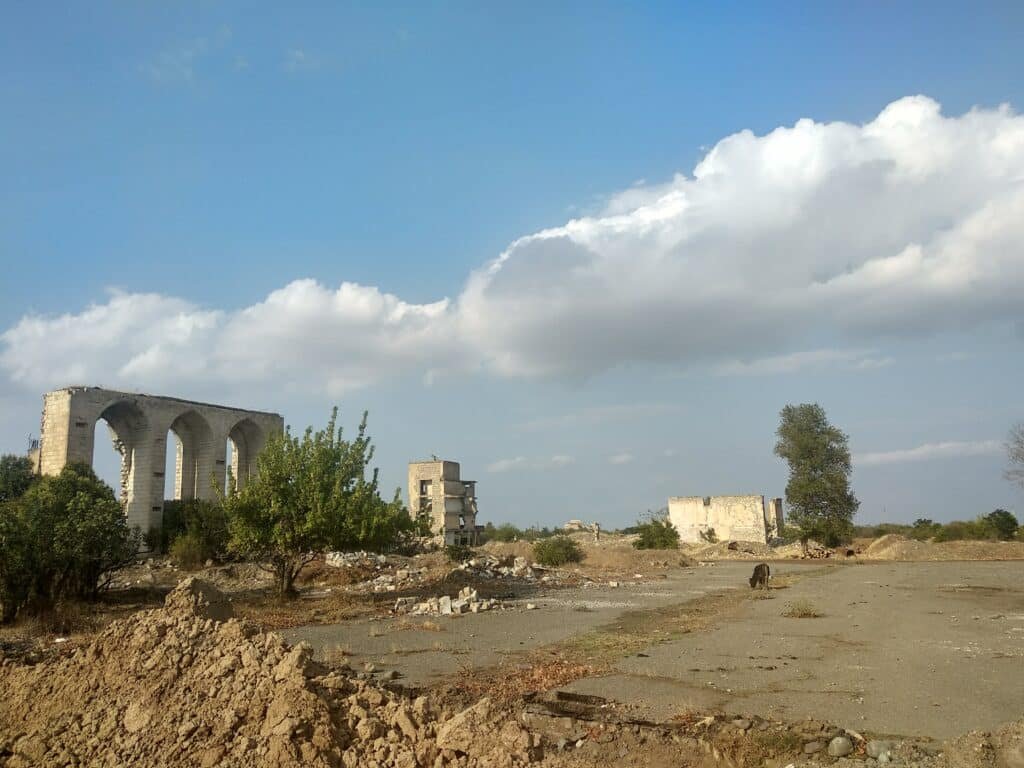
Armenia Azerbaijan conflict: Ruins of the town of Agdam
Going in, we found it was a baptism. Burak had never been to one and was curious to see how the ritual unfolded. The Armenians were Apostolic Christians, a very old branch of Christianity, related to the Coptic church, onto which interesting cultural influences from the Orient had been added. But here, unlike at Tatev, we were in a church that looked newly built.
I began to explain the stages of the ritual to Burak in a whisper. The baby’s lusty cries cut through the choir. Who would have thought that, a little more than a year later, these walls would hear the screams of adults too? A few bombs would strike the church where we had attended the baptism. Whole aspects of reality would be annihilated. But for now, a happy family was baptising their child.
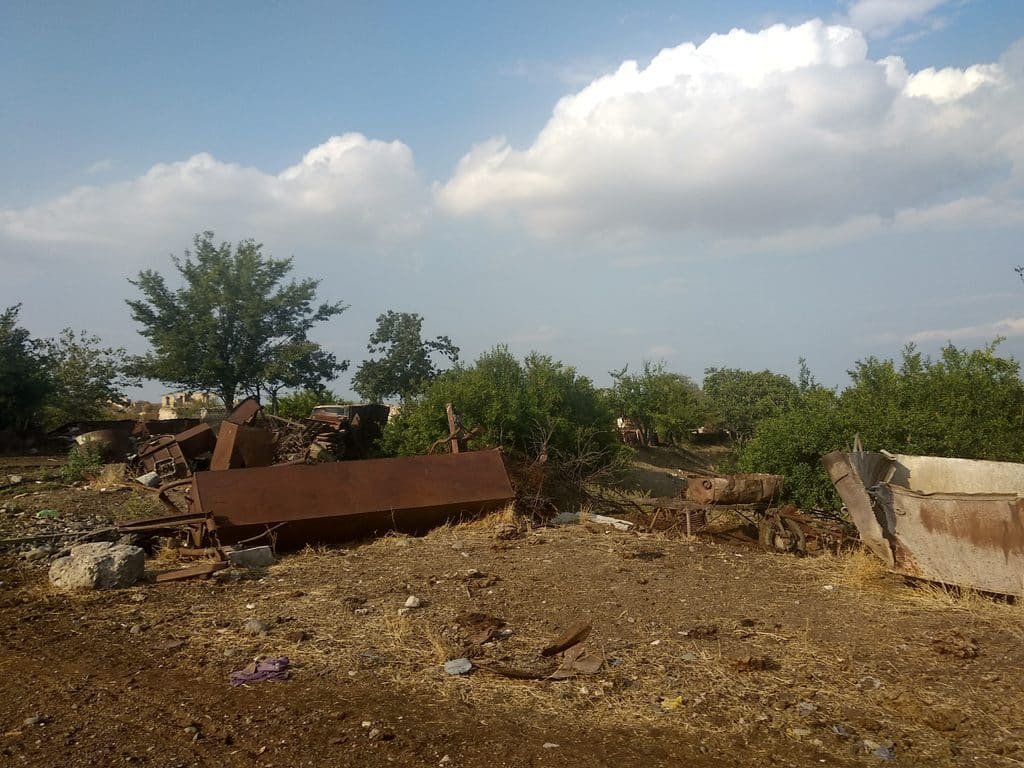
Intergroup conflict: Agdam
After the baptism we went down the hill, and the car we had hitchhiked dropped us right in the heart of Stepanakert. We had no internet, because our Armenian SIM cards didn’t work in Artsakh. We did, however, have an offline map, which showed us there was a place of worship. I was determined to find out whether the practice of knocking at a monastery’s gate to find lodging was still alive.
But first of all, we took a breather in the central square. I took out my santur and started to improvise. I knew nothing, but it had a melodious timbre anyway. I played with sequences of notes. A bit of chaos, and none of the sadness of the notes played on the duduk. A man stopped and left a few coins in the instrument’s case. I was turning into a troubadour, and I liked it. We took the few coins and bought half an ice cream, then set off up the boulevard. A squad led by a sergeant passed us, and behind them, a tank.
About halfway up the boulevard it became clear that we wouldn’t find lodging and that we were heading straight for the great cathedral of Stepanakert. The marble gleamed in the light of the sun peeking out after the rain. We went in. Inside, they were putting away the large golden candlesticks and getting ready to close. We asked anyway where we might find somewhere to stay. As it happened, we were lucky. The clergy didn’t understand English, and our Russian was far too rudimentary, but a foreign-languages student who happened to be there overheard our rather comical attempts.
Her name was Lusin, and she had studied foreign languages, which made her English impeccable. We told her about our travels, and she decided to help us. She didn’t have a car, but she knew a guy, Misha, who, as it happened, had a crush on her and also had a car. She gave him a call and he showed up in no time. She had nowhere to put us up at her own home, but she had a grandmother somewhere in a village nearby.
Misha came in a big 4×4 jeep, which was truly needed, since the roads we took weren’t paved. Lusin and Misha sat in the front and, although we didn’t speak Armenian, in their gestures you could read an old affection, the kind you find between people who grew up together.
We were in an area of hills, in that superb hollow among the ridges of the Lesser Caucasus. The clean rainwater glistened everywhere. Our muddy, potholed road ran through pomegranate orchards. Old, gnarled trees bore their blood-red fruit. We sank into a wet, clean, shining bucolic world.
After about 40 km we reached our destination. They parked in front of a little house with a turquoise roof, gently sloping, almost flat, and a pergola heavy with grapes. As you would expect, the house had a porch with colourful rugs. Lean chickens ran through the tousled grass of the yard. The lady of the house, whom we hadn’t yet had the chance to meet, caught one of them in our honour and put it into a soup. We were in a place where people ate meat only at the weekend, so it was truly an honour she was doing us. Under the pergola stood a table of weathered wood covered with a white embroidered cloth, and around it, on stools, sat six or seven men in military uniforms. Lusin had told us that her father and cousins were in the army. It was a militarised region, and almost the entire male population was in the army.
After the introductions, Lusin and Misha left, leaving us in the grandmother’s hands. We sat down at the table and before long were served the chicken soup. The meat was tough, as I had expected, but the taste was delicious. Between us and them there was no common language. That didn’t stop the atmosphere at the table from being extremely lively. Their glasses were perpetually refilled with a clear, strong liquid called arak. They offered us some too, insistently, and, willy-nilly, we accepted. I would wet my lips, and afterwards, when no one was looking, I would pour half a glass into the grass. I preferred to keep my lucidity, the only thing I truly possessed at that moment and the one thing that could keep me out of trouble.
And so, glass after glass, they told us all sorts of lively stories of which we understood almost nothing. I was very sorry Lusin had left; I would have liked to know more about these people. Until one of them started showing me pictures on his phone. He talked and he showed me. And I looked, and looked. On his phone were pictures of corpses. Pictures from 2016, he made me understand. There had been a flare-up of the conflict on the border then, and the Armenians had pushed back the Azeris. What he was showing me so proudly on his phone were the bodies of Azeris shot by him and his comrades. A shiver ran down my spine. Some would say he was proud of having done his job. But violent deaths like these had never been part of my world until then. How could he be proud of war trophies like these? I understood it was a poor region under attack. It was easier for me to understand the idea of killing out of necessity. What my mind refused to understand was the idea of being proud of having taken a life. And of boasting about it.
The rest of the evening flowed on at the same pace. The next day we took a walk through the walnut and pomegranate orchards, through that biblical, picturesque corner forgotten by the world. Around noon, Lusin and Misha came to pick us up. I decided to leave them a gift: a superb Persian carpet woven in white and blue, which I had been given by some Kurds in the town of Mahabad. I was attached to the carpet, but on the one hand it was quite heavy, and on the other I knew the grandmother would appreciate it at its true worth. I was glad I had something with which to repay their hospitality.
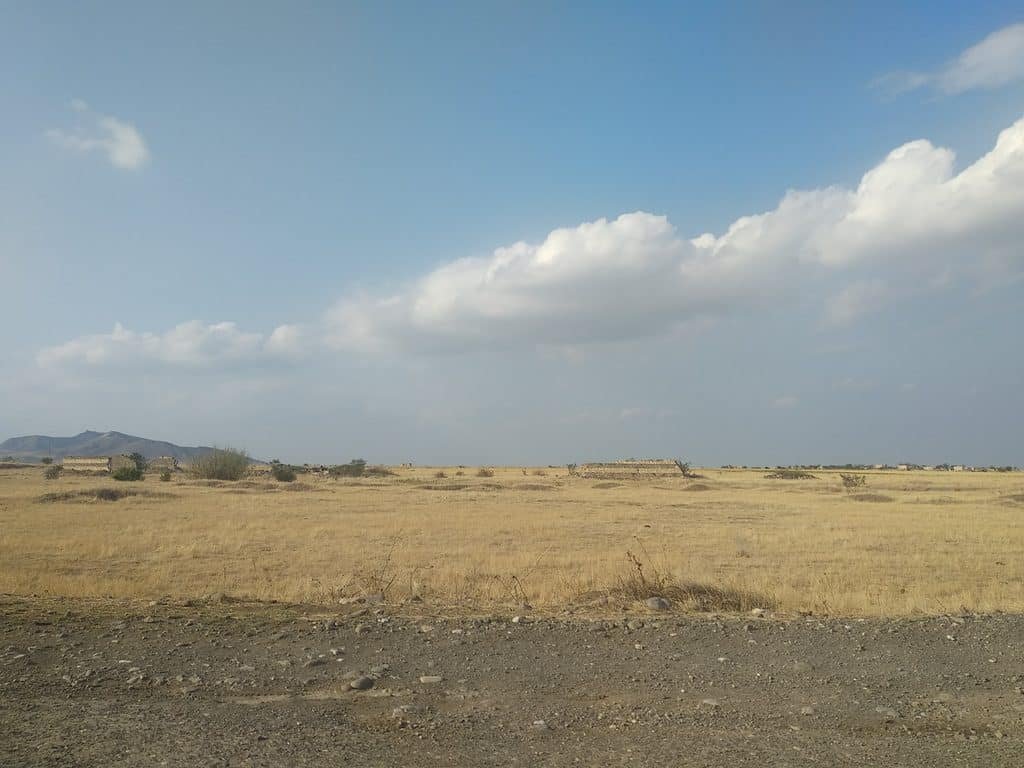
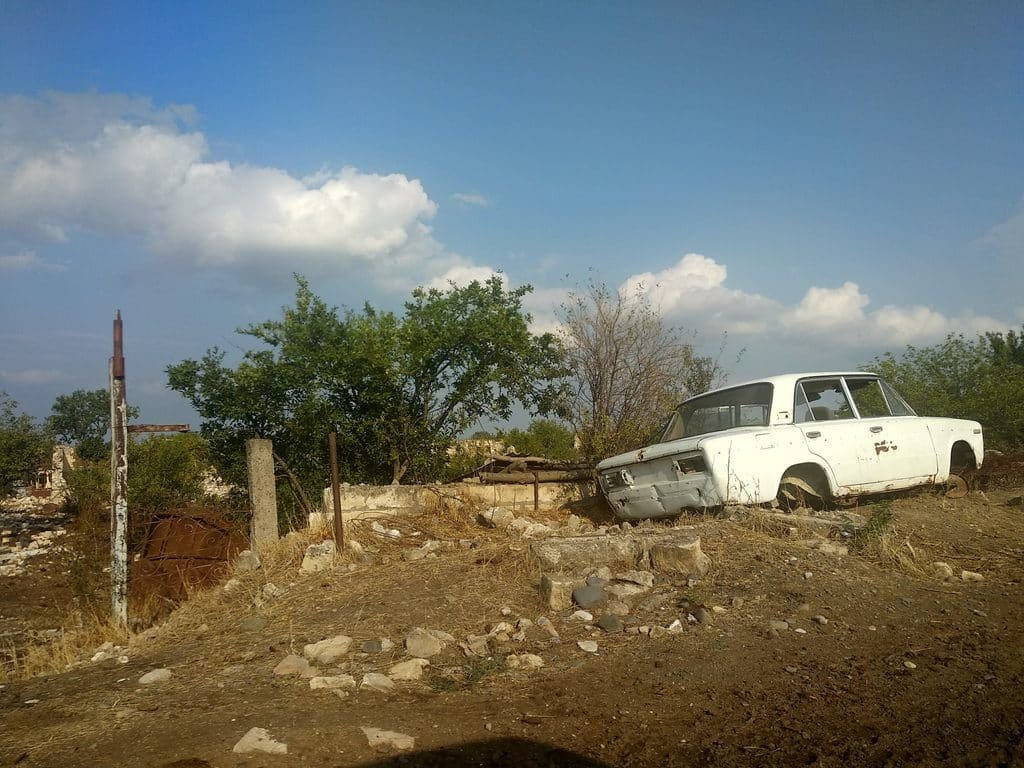
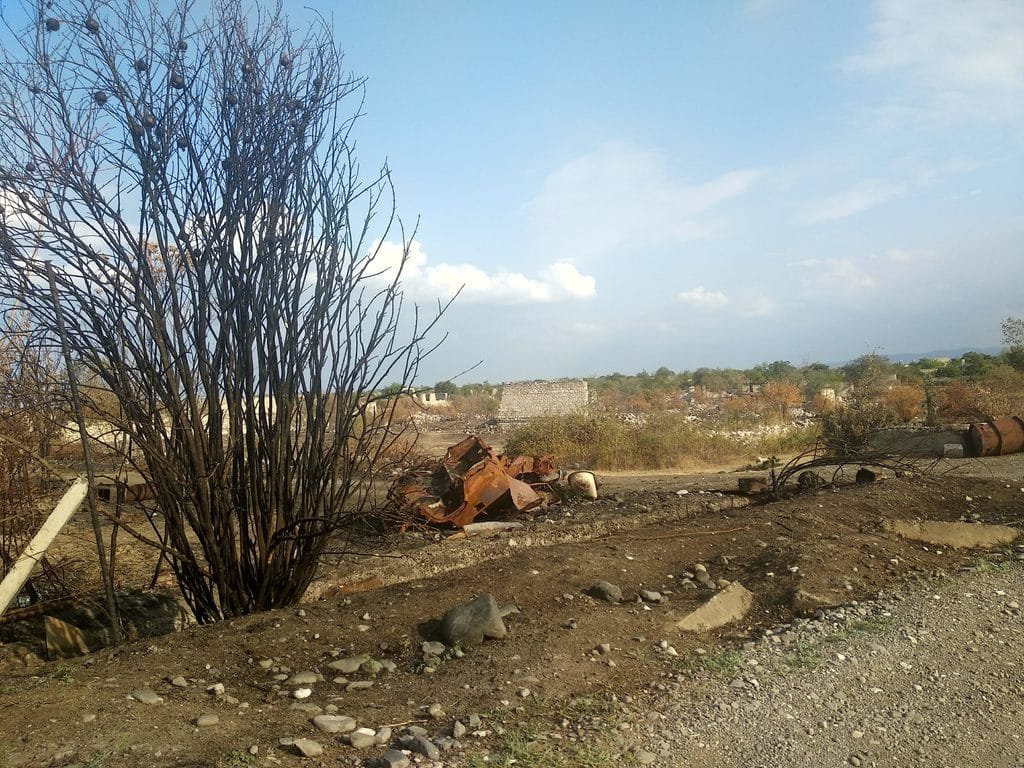
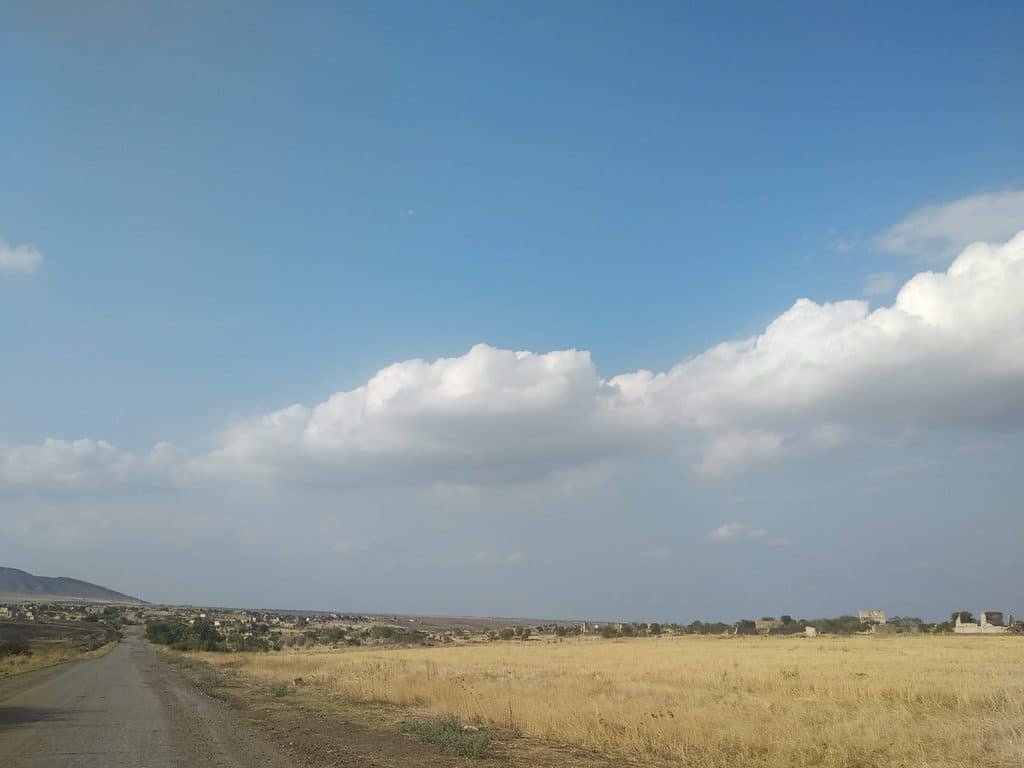
On the way back, Misha decided to show us yet another side of reality in Artsakh. About 30 km from Stepanakert lay the ruins of the town of Agdam. Some call it the Hiroshima of the Caucasus. We drove along the long, narrow road that crossed it from one end to the other. Signs yellowed and peeled by time warned passers-by not to venture off the road, because the ground had not been cleared of mines. It was an entire town, completely in ruins. On either side of the road lay the carcasses of rusted cars, some simply decayed, others twisted by explosions. We passed one wrapped around its own axle. I could almost still hear the searing screech of the blast. It had stayed embedded in the twisted iron. A pointless war in a forgotten corner of the world. How many people had died here? Another story told in blood, one that had congealed into a smouldering hatred that flares up every few years.
Why can’t humanity learn from the past, or feel the losses of others too? Both peoples had been victims and aggressors, each in turn, in an endless dance in which sometimes they don’t even dance with their own steps, but let themselves be led by proxies. What does it take for people to reach the kind of awareness that leads to lasting peace? Valuing cooperation and mutual help, acceptance and tolerance of cultural differences, giving up the claim to want what the other has. Armenians and Azeris could just as well live together on the land of Nagorno-Karabakh. In theory… Programmes to mitigate the psychological effects of intergroup conflict have been implemented successfully in Rwanda.
We stayed one more day in those superb lands of Parajanov’s cinematic poetry, on the hills of the South Caucasus. We thanked Misha and Lusin for all their help and for the understanding they had given us of their world. Each of us went back to our own road, I further north and he further south.
II: Essay: A case study of the emotional dimensions in intergroup conflict, reflected at individual level
1. Introduction
It was not death or the act of killing that I could not comprehend, but the pride that illuminated his eyes when he showed me the photographs. Dead Azerbaijanis with gunshot wounds were staring back at me from the screen of his smartphone. I hadn’t asked them anything about the conflict between Armenia and Azerbaijan, moreover we didn’t speak a common language. The only response I was capable of offering was silent puzzlement. How could someone feel pride for taking lives? This kind of violence had not been part of my life until that point, so I tried to construct an explanation based on my understanding of the world and its people at that time. Was it the lack of education or opportunities, a life confined to that restricted and forgotten place in the world, the poverty of the region, the local political context, nationalistic pride, or deep-rooted feelings of hatred passed down from generation to generation? These questions started to preoccupy me when I was traveling in the autonomous region of Nagorno-Karabakh, which, at that time, in 2019, was supported by Armenia, though not formally recognized by any state, and claimed by Azerbaijan.
Nagorno-Karabakh, the international name (Dağlıq Qarabağ in Azerbaijani), or Artsakh, the Armenian name, is a hilly region with sparsely spread villages, trees with waxy leaves and pomegranate orchards. Two events dispelled the rural charm one after the other: a conversation between two Armenians and a fellow traveler from Turkey and passing through what used to be a city before 1993—currently consisting of roofless buildings and contorted vehicles gradually being engulfed by local vegetation. The conversation was casual until they asked where we came from. He was Turkish, and they were Armenians. The discussion inevitably turned to the unrecognized Armenian Genocide. They were accusatory; he was cautious, caught on the defensive. I was witnessing an old conflict reigniting itself between people who haven’t previously met.
There were two clearly opposing sides, and yet I could understand something from both perspectives. It was not his fault that the generation of his great-grandparents decided to erase the Armenians from the face of the earth. Neither was their anger unjustified when their need for acknowledgement of their collective trauma was met with national-level denial. When the discussion ended, each side was left with a bitter aftertaste and a sense of misunderstood righteousness. Later that day, after a stop in Shusha, we reached Stepanakert, the capital of the region, where we met a foreign language student who invited us to her grandmother’s house. She was warm, curious, and very hospitable towards us, as were all her relatives whom we met there. All the men from her family were military men, which is not an uncommon situation in the region. These men, who warmly welcomed us into their family and shared what little they had with us, were the same people who boasted about their war kills.
Throughout this essay, I will explore different aspects of intergroup conflict that could potentially explain some of the attitudes encountered in Nagorno-Karabakh.
2. Pride and other positive emotions related to intergroup violence.
How could someone feel pride for taking lives? Pride is a complex emotion that typically arises when individuals or groups perceive accomplishments or successes in areas that are considered positive or valued [1], [2]. Positive emotions, including pride, can arise in the context of intergroup violence. These may stem from the perception of defending one’s territory, identity, or group. When individuals engage in acts of violence, especially in the context of conflict or war, they might attribute their actions to the preservation or protection of their community or the achievement of a larger goal.
In exploring the range of emotions associated with intergroup violence, it is important to consider that different cultures and societies may have their own unique emotional experiences. One such example is the Ilongot tribe from the Philippines, who experience an emotion called “liget”[3]. Liget is characterized by exuberant aggression and is deeply ingrained in their cultural framework. It involves intense focus, passion, and energy while participating in hazardous challenges with a competing group. The inherent danger and collective energy of the situation create a sense of togetherness and belonging among the tribe members. Liget is not merely a mental state but a complex social phenomenon with specific rules dictating when it occurs, how it is experienced, and how others should respond to individuals undergoing a liget episode.
Positive emotions related to aggression can be divided for the purpose of the discussion as self-originated or collective-originated emotions. Self-originated emotions refer to those that arise from personal achievements, while collective-originated emotions stem from group dynamics and serve group-level functions. One example of a self-originated emotion related to aggression is a sense of empowerment. When individuals successfully overcome challenges or assert their power in confrontational situations, they may experience a surge of confidence and self-assurance.
This sense of personal empowerment can contribute to positive emotions such as self-esteem and self-efficacy, bolstering an individual’s belief in their ability to navigate and influence their environment. Collective-originated emotions, on the other hand, arise from the dynamics of group interaction and serve important functions within a social context. One such emotion is collective pride, which emerges when a group perceives success or achievements in the face of adversity or competition. In the context of aggression, collective pride can be fueled by the belief that the group has successfully defended its territory, protected its members, or achieved a significant victory. This shared sense of accomplishment strengthens group cohesion, fosters collective identity, and reinforces the bonds among group members.
From an evolutionary perspective, positive emotions related to aggression can be understood in the context of adaptive behaviors that have been selected for throughout human history. Aggression, when channeled appropriately, can serve as a mechanism for survival and protection of resources. Positive emotions associated with aggression, such as pride and empowerment, may have facilitated the formation of cohesive groups, enhanced group cooperation, and increased the likelihood of successful competition with other groups for limited resources.
3. Case study: Armenia, Turkey and Azerbaijan – historical trauma and renewed conflict
How does historical trauma shape groups’ identities? What are the implications of such group identities on the reemergence of conflict? Using a model proposed by Mengyao Li & al.[4], elements of the contemporary conflict between Armenia and Azerbaijan will be analyzed with the focus on opinions and feelings of the individuals involved.
In an article titled Understanding the Impact of Historical Collective Trauma on Contemporary Intergroup Conflict, Mengyao Li & al. proposes that the roles played during intergroup conflict shape their subsequent identity in particular ways. Their framework models how individuals appraise their group’s past victimization or perpetration as a threat or challenge, influencing their responses to present conflicts. The study discusses the different experiences of victim and perpetrator groups and the threats they face, such as loss of agency (victim group) and moral identity (perpetrator group).
Table 1. Potential Demands and Resources Relevant to Victim, Perpetrator, or Both Groups (List Not Exhaustive)
| Victim group | Perpetrator group | Shared | |
|---|---|---|---|
| Demands | • Loss of agency, dignity, autonomy • Physical and symbolic harm • Danger to group’s existence | • Loss of moral identity and reputation • Social exclusion • Retributive and compensatory justice | • Physical danger • Insecurity |
| Resources | • Moral identity • Group cohesion, solidarity, and efficacy • Allies and friends • Retributive and compensatory justice | • Agency aspects of identity • Controllability of group behavior • Opportunities to repair | • Values and beliefs • Meaning making • Restorative justice |
Source: Li & al.[4]
The conversation described in the introduction reflects the dynamics of the framework proposed by Li et al., where individuals’ appraisals of their group’s past victimization or perpetration shape their responses to present conflicts. In this case, the conversation between Armenians and a Turkish traveler led to a discussion about the unrecognized Armenian Genocide, highlighting the historical trauma experienced by the Armenian group. The Armenians express accusatory sentiments regarding the historical conflict that threatened their group’s existence. On the other hand, the Turkish traveler may feel defensive, potentially perceiving the past perpetration by their group as a challenge to their moral identity. The reemergence of conflict between these individuals, despite not having met previously, showcases how historical trauma can resurface and influence intergroup dynamics.
The Armenian Genocide and the contemporary Nagorno-Karabakh conflict are connected through historical context and ethnic tensions[5]. The historical legacy of the genocide shapes perceptions and motivations, contributing to a sense of victimization, revendication and fear among Armenians and a perceived threat to territorial integrity among Azerbaijanis. While the Nagorno-Karabakh conflict is influenced by various factors, the historical grievances associated with the Armenian Genocide have played a significant role in intergroup relations between armenians, turks and azeris.
4. Conclusions
This case study of the conflict between Armenians, Turks and Azerbaijanis highlights the impact of historical trauma on group identities and the reemergence of conflict. The framework proposed by Li et al. demonstrates how individuals’ appraisals of their group’s past victimization or perpetration shape their responses to present conflicts. The conversation between Armenians and a Turkish traveler reflects the dynamics of this framework, showcasing how historical trauma can resurface and influence intergroup dynamics even among individuals who haven’t previously met. The historical context of the Armenian Genocide connects to the Nagorno-Karabakh conflict, contributing to perceptions of victimization, revendication, and territorial threat. Historical grievances associated with the genocide have played a significant role in intergroup relations between Armenians, Turks, and Azerbaijanis. Understanding the emotional dimensions of these conflicts can help shed light on the underlying motivations, experiences, and challenges faced by individuals and groups involved. Overall, the exploration of emotions related to intergroup violence in Nagorno-Karabakh emphasizes the need for empathy, understanding, and dialogue to address the deep-rooted conflicts and promote peacebuilding efforts. By recognizing and addressing the emotions and historical traumas of all parties involved, it becomes possible to work towards reconciliation, healing, and a more peaceful coexistence in the region.
Bibliography
[1]Salice, A., and Montes Sanchez, A. (2016). Pride, shame, and group identification. Front. Psychol. 7:1–13. doi: 10.3389/fpsyg.2016.00557
[2] Tracy, J. L., & Robins, R. W. (2007). The psychological structure of pride: A tale of two facets. Journal of Personality and Social Psychology, 92(3), 506-525.
[3]Rosaldo, M. Z. (1980). Knowledge and passion: Ilongot notions of self and social life. Cambridge University Press.
[4]Li, M., Leidner, B., Hirschberger, G., & Park, J. (2023). From Threat to Challenge: Understanding the Impact of Historical Collective Trauma on Contemporary Intergroup Conflict. Perspectives on Psychological Science, 18(1), 190–209. https://doi.org/10.1177/17456916221094540
[5]Sotieva, L. (2021). Collective wounds: Societal trauma and the Karabakh conflict. Independent Peace Associates. https://indiepeace.org/wp-content/uploads/2021/12/societal-trauma-karabakh_ENGLISH.pdf
TLDR
TL;DR: In 2019 I hitchhiked into the Republic of Artsakh with a Turkish traveller, three years after a flare-up of the Nagorno-Karabakh conflict and a year before the 2020 war. On the way, a conversation about Armenian genocide recognition and denial turned two strangers into opposite sides. In Shusha we watched a baptism in Ghazanchetsots Cathedral, and at a village table soldiers showed me photos of the men they had killed. Near Askeran we drove through the ruins of Agdam, a town now back in Azerbaijan. The essay that follows asks how someone can feel pride in taking a life. To make sense of the Armenia–Azerbaijan conflict, it draws on collective and historical trauma, the psychology of intergroup conflict, the Ilongot emotion of liget, and reconciliation in Rwanda.