
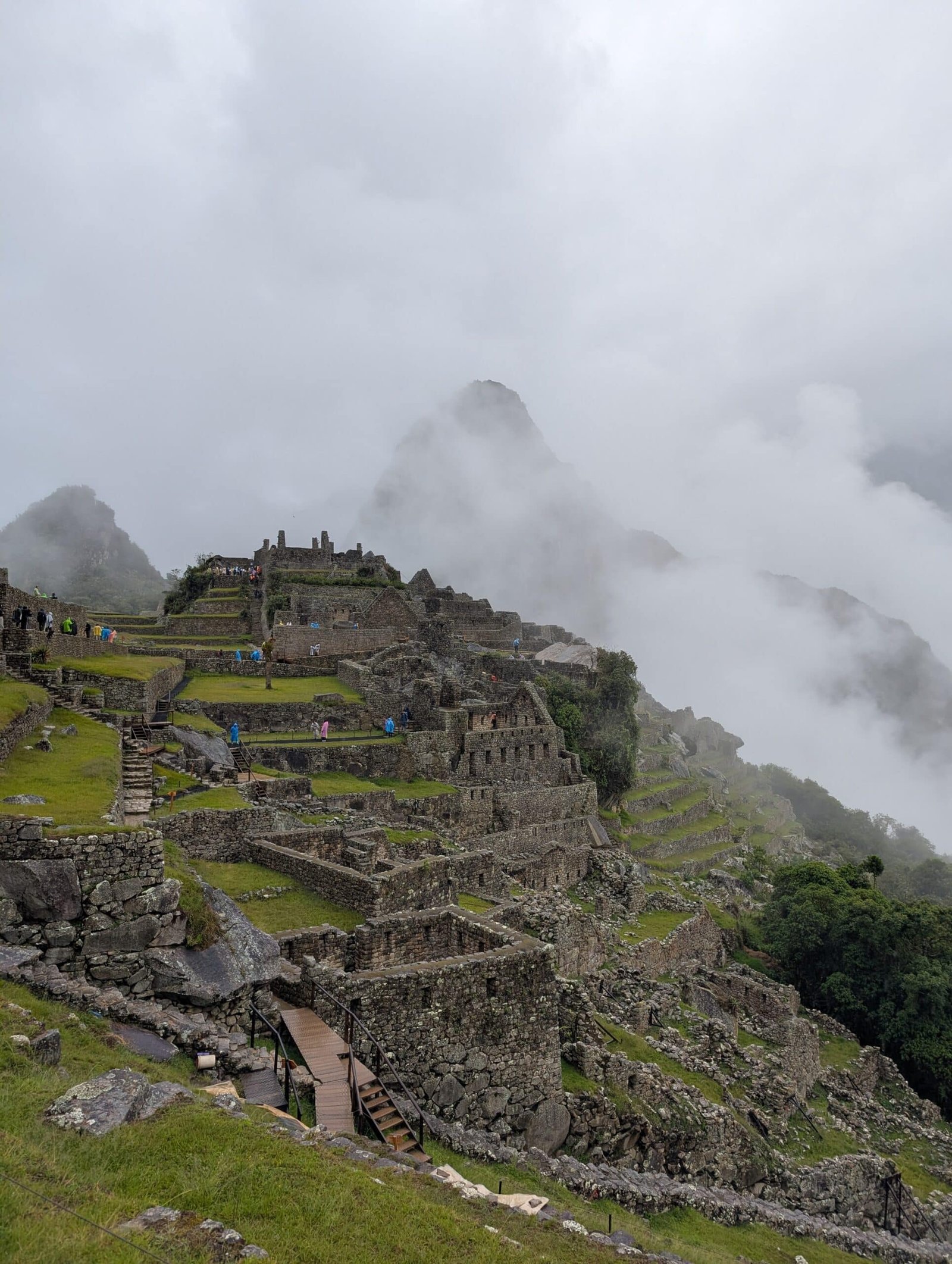
Is Machu Picchu a must? Is it irreplaceable? In this article, we describe the lesser-known lost cities of the Incas: the Short Inca Trail to Wiñay Wayna, the ruins above Cusco, and treks to Waqrapukara and Choquequirao.
1. First Steps on the Inca Trails of Peru: Down form Puka Pukara to Sacsayhuamán
Before you take on a grand route like the famous Inca Trail, or even the Salkantay trek, you can start with an easy, downhill route. To the north-west of Cusco there are several archaeological complexes that lend themselves to a relaxed walk.
We set off early in the morning in a car we called through inDrive, which dropped us right at Puka Pukara. The ruins were only a first encounter with Inca architecture. A little further down, you can visit Tambomachay, an Inca village with its streets and aqueducts. The Inca road then led downhill through eucalyptus forests with bluish leaves, along the steep banks of the Cachimayo River, past a waterfall and a few stretches of canyon. After about an hour of descent, we came upon Inkilltambo, or, translated from Quechua, the Garden of Flowers, another Inca ruin terracing the foot of a hill. From there we headed up towards the Templo de la Luna, the Temple of the Moon. The karst plateau was superb in itself, and the few steps we had taken at altitude put us at a distance from the crowds of tourists. At the Temple of the Moon there was a small pool of clear water in which, it is said, the Incas used to watch the reflection of the starry sky and make their astronomical calculations.
Our road also wound past the archaeological complex of Q’enqo, which is said to have been a place of ceremony and sacrifice. Behind properties marked out by cactus fences, herds of llamas and alpacas were grazing. We stopped to eat trout at Laguna Azul, and then continued towards the main archaeological site: Sacsayhuamán.
Lost cities of the Incas: Sacsayhuamán
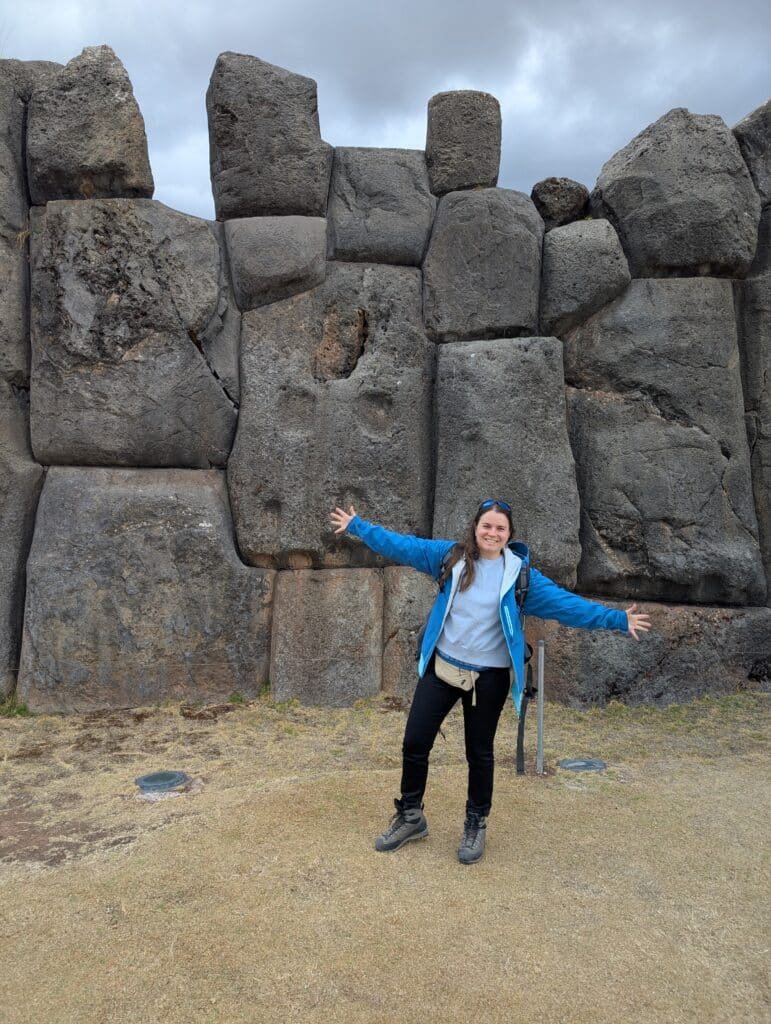
Sacsayhuamán rises on the hill above Cusco, and nothing on the walk prepares you for its scale. Its three tiers of zigzag walls are built from colossal limestone blocks, some of them weighing well over a hundred tonnes. They are cut and fitted so precisely, without mortar, that not even a blade of grass slips between them. Historians still debate whether it was a fortress, a temple or both. In 1536, Manco Inca’s forces fought the Spanish here during the siege of Cusco. Today, the esplanade in front of the walls comes alive every 24 June for Inti Raymi, the Festival of the Sun. Unlike the small shrines along the way, Sacsayhuamán requires the Cusco tourist ticket (boleto turístico).
2. Short Inca Trail
Aguas Calientes viewed from Inti Punku
The Short Inca Trail was a challenge for both of us. Neither of us was really in training at the time. We set off from Ollantaytambo before dawn.
We left most of our luggage at the station and climbed into a sort of Hogwarts Express, with glass windows even in the ceiling. Everything was very elegant in the tourist carriages. Those who took it to go to work, however, sat much more crowded together. We sat opposite two polite Americans, caught, like us, in the fervour of the beauty around us. Along that stretch, the Sacred Valley grew wild, swallowed by the jungle along with its slopes. Our train hurried silently between steep ridges, some of them covered in glaciers, and old trees overrun by parasitic plants trying to climb as high as possible on them to catch a ray of sun. Countless bromeliads opened their funnels at the joints of the thick, twisted branches. The jungle of the sierra was different from that of the selva. The trees, smaller in height, strove to climb as high as they could up the steep slopes. What unsuspected dangers awaited us in this place? At least there was no longer any risk of catching malaria.
We sank into this kinetics of the river, with its gigantic boulders, and of the tunnels of vegetation.
–I feel like I’m before an exam.
Andrei had confessed to me the evening before. I was calm. Mentally, I was used to even much longer routes. I knew I was resilient: if I had to keep going, I would simply keep going, and I could do it for a long time if circumstances let me keep my own pace. He, however, had come mostly for me. And, as he would tell our guide Ricardo, the Short Inca Trail was the middle way: if it had been up to me, I would have taken the four-day route that passed over 4,000 metres, and he would have gone to Aguas Calientes by train.
We were dropped in the middle of the green, at KM 104, where we met our guide, Ricardo. Short and agile, he seemed a true descendant of the Inca messengers, the chasquis, who used to run along the network of some 30,000 km of roads that crossed the Inca Empire.
Our first stop, a few steps from the start, was at the ruins of Chachabamba, which, loosely translated, meant the flat place with mosquitoes. The ruins lie right next to the bridge over the Urubamba River, a few minutes after the checkpoint. It is a ceremonial complex, with fountains, water channels and an altar carved into the rock, thought to have been a place of ritual purification with water before the road to Machu Picchu.
Our chasqui was very patient and advised us to find our own rhythm. He was happy, because for him the Short Inca Trail was a day of holiday. We climbed almost in silence for the first two hours, until the effort began to catch up with us, and with it, Andrei’s irritability. The evening before, I had resolved to stand by him, because I knew this part of our journey would be difficult for him.
Inca highway
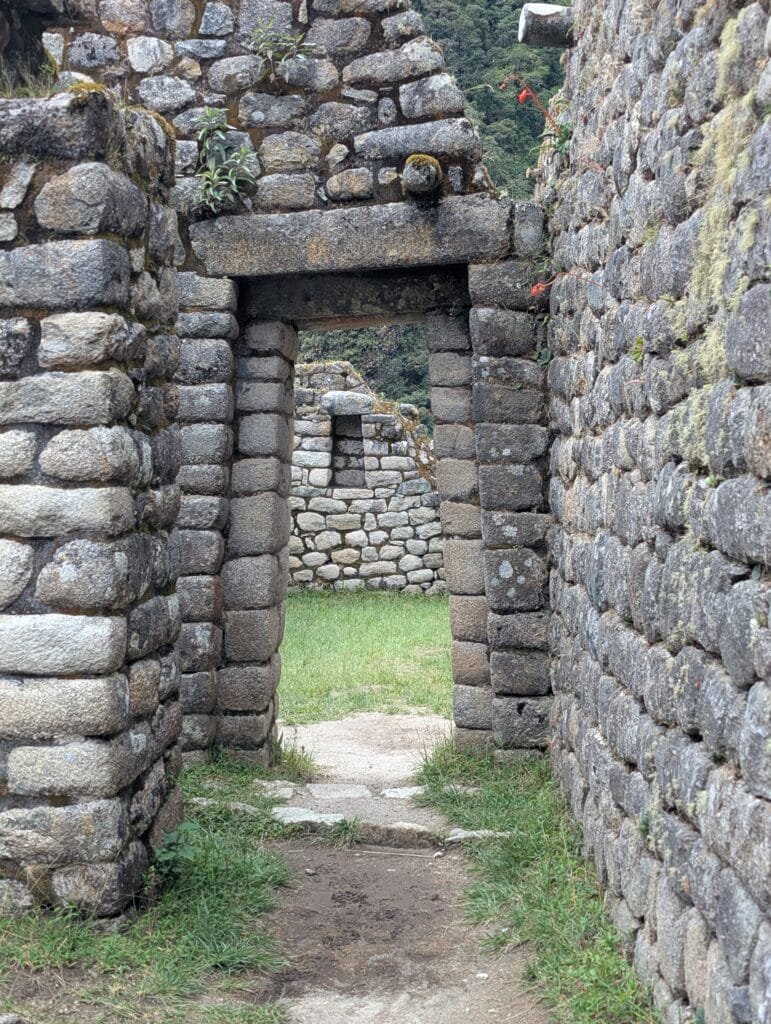
His irritability took on lyrical dimensions in his choice of words, and as soon as the ruins of Wiñay Wayna appeared around the corner and the path began to descend only to climb again, Andrei’s mood reached a local minimum.
The citadel itself was superb, built on steep slopes and almost overrun by the vegetation of the high jungle. I tried to console him, without much success. Regarding this situation there is something that both of us can improve.
After a long series of steps, we stopped breathless, and Ricardo began to tell us more about the Incas and about the superb place we were in.
Wiñay Wayna: forever young
In Quechua, Wiñay Wayna means “forever young”. The name is usually linked to an orchid that flowers here almost all year round. The site falls in two parts down the mountainside: an upper sector of temples and finely built stone houses, and a lower sector of houses. Between them, a staircase is lined with a chain of stone fountains, where water from the mountain still runs from basin to basin.
Below the buildings, dozens of curved agricultural terraces drop towards the Urubamba like the rows of a green amphitheatre. Like Chachabamba, Wiñay Wayna is thought to have been both a religious site and a resting place on the Inca road: a final stop where travellers, pilgrims and chasquis could wash, pray and gather strength before the last stretch to Machu Picchu.
For the Incas, water, stone and mountain were sacred: springs were offerings of the apus, the mountain spirits, and every fountain was also a shrine. The sky was sacred too. Inca astronomers followed the sun to fix the solstices, and with them the great festival of Inti Raymi.
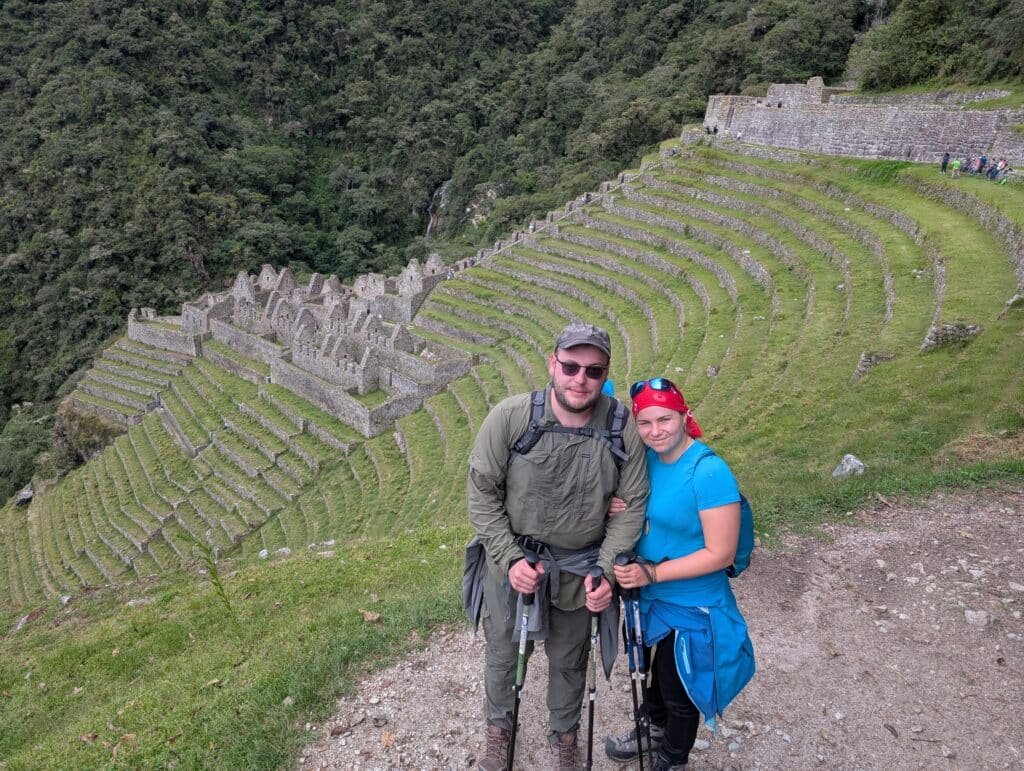
Inca cities: Wiñay Wayna
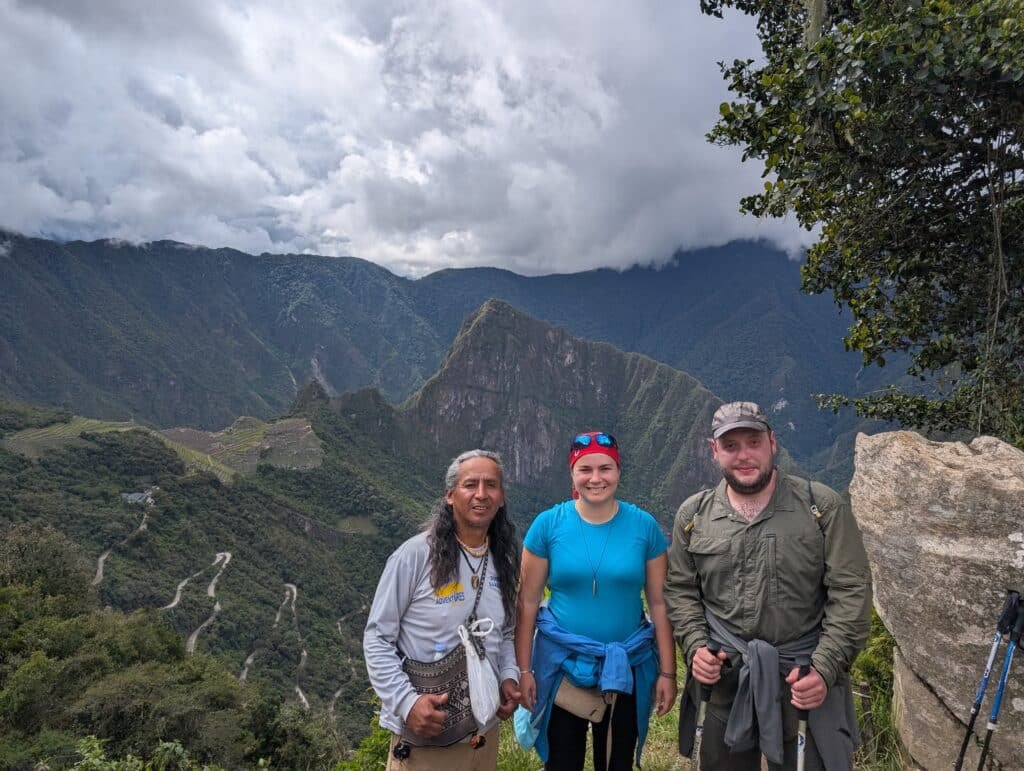
Inti Punku, the Sun Gate
They watched the Pleiades rise at dawn to predict the coming harvest. In the Milky Way, which they called Mayu, the celestial river, they read not only stars but also the dark shapes between them: a llama with her young, a toad, a serpent, a fox. They believed the Urubamba was the earthly reflection of that river of stars, so that, walking along its banks towards Machu Picchu, you were in a sense walking beneath its mirror.
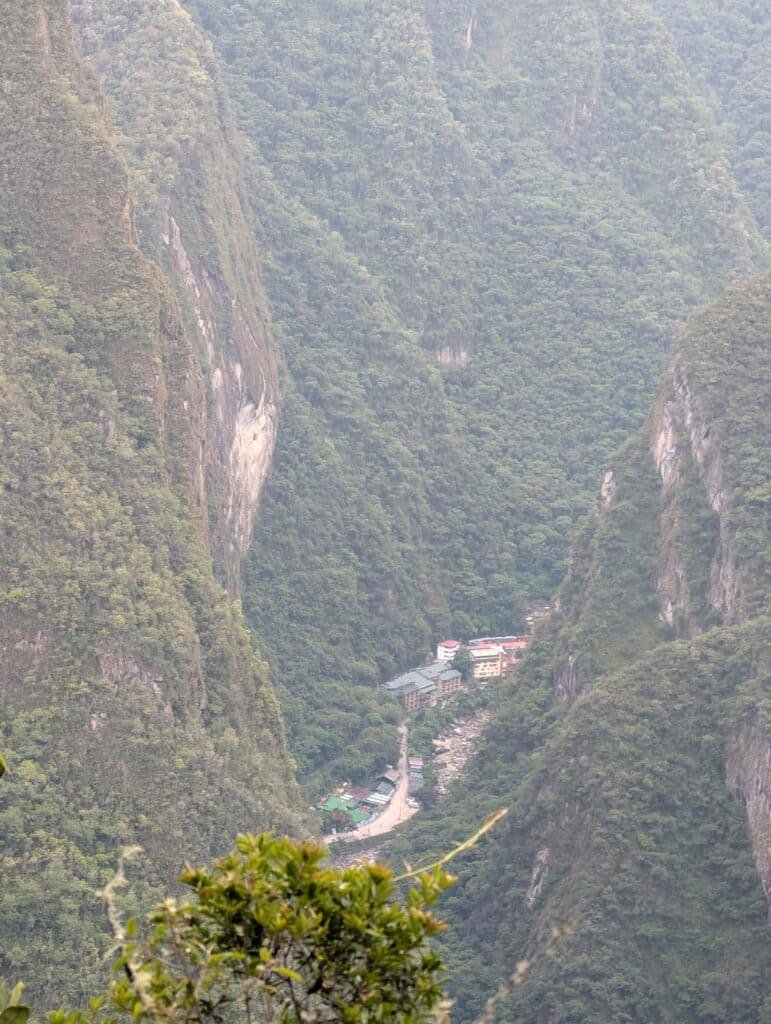
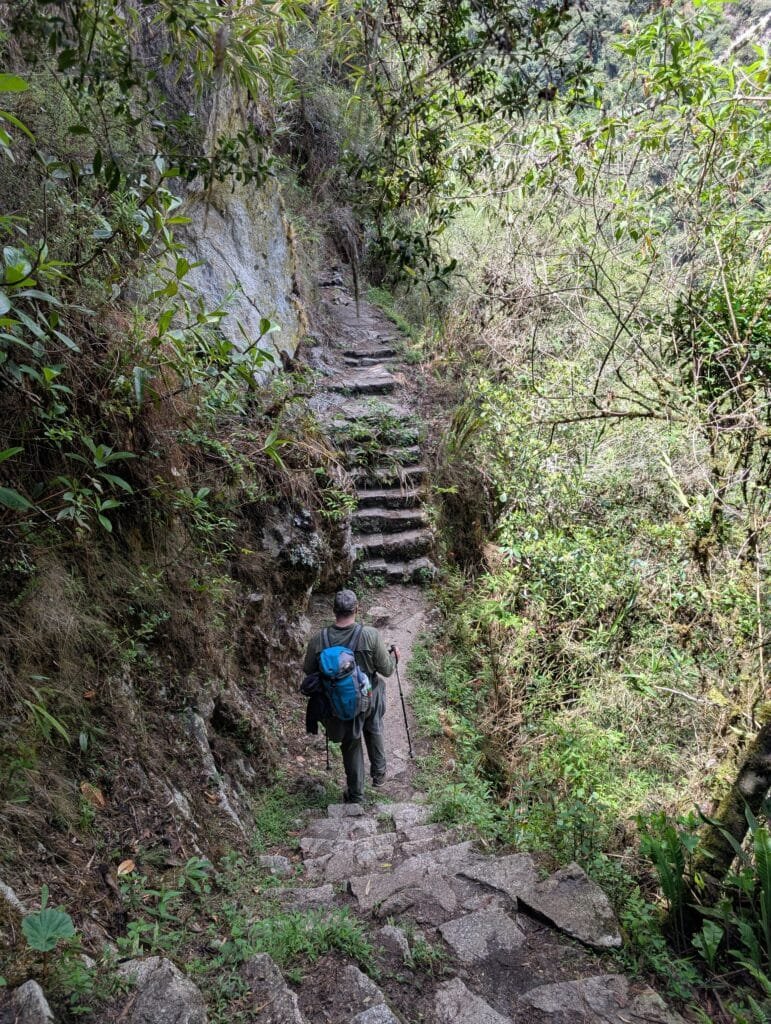
We continued our climb, step by step, breath after breath, sometimes walking, other times crawling (especially on the monkey stairs), until we reached Inti Punku. There we crossed the mountain ridge to the other side and enjoyed a spectacular view over Machu Picchu and the surrounding valleys.
3. Lost cities of the Incas: Inca Trail alternatives without a Machu Picchu ticket
The classic Inca Trail is the most famous Inca Trail hike in Peru: the Inca Trail 4 days route to Machu Picchu, or the one-day short Inca Trail from KM 104. Permits sell out months ahead, and every step ends in the same crowded citadel. But the Qhapaq Ñan, the great Inca road network that once linked the empire’s Inca cities across some 30,000 kilometres, led to many other places. If you love hiking in the Andes and want to walk off the beaten path, these lost cities of the Incas and trails through the Peru mountains are the best alternatives to Machu Picchu, and none of them needs a Machu Picchu ticket.
3.1 Waqrapukara, Peru: the horn fortress
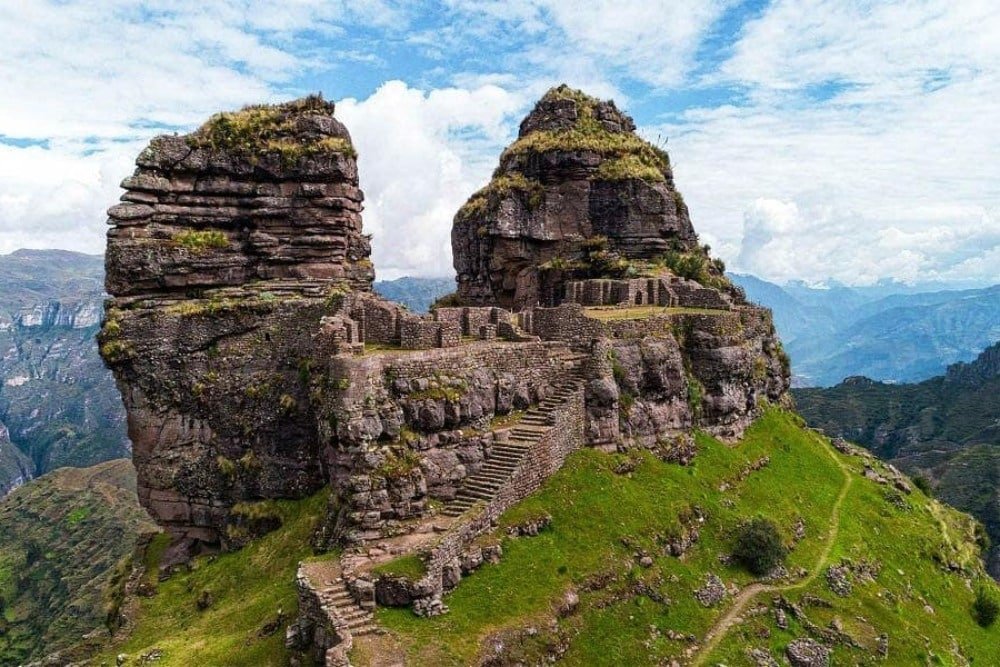
At around 4,100 metres, Waqrapukara is one of the most striking Inca sites few travellers have heard of. Its name means “horn fortress” in Quechua, after the twin rock spires that rise above its walls like the horns of a bull, perched on the edge of a deep canyon. Getting there takes a few hours’ drive from Cusco towards Acomayo, followed by a hike of about two hours across the high, open puna. It can be done in a long day, but it rewards those already acclimatised. There are no crowds and no ticket queues, only wind, silence and stone.
Who it’s for: fit hikers who are already acclimatised to Cusco’s altitude and want a dramatic, empty Inca site in a single long day.
3.2 The Choquequirao trek: Machu Picchu’s sister city
Often called Machu Picchu’s sister city, Choquequirao is the great prize for trekkers who want effort and solitude. With no road and no train, the classic Choquequirao trek starts in Cachora and takes about four days there and back: down into the Apurímac canyon to around 1,500 metres, then a long, punishing climb to the ruins at about 3,050 metres. Only part of the site has been excavated, and among its surprises are terraces decorated with white stone llamas. In the Choquequirao vs Machu Picchu debate, Choquequirao loses on fame and wins on solitude. The Choquequirao cable car has been discussed for years; until it is built, Choquequirao belongs to those who walk.
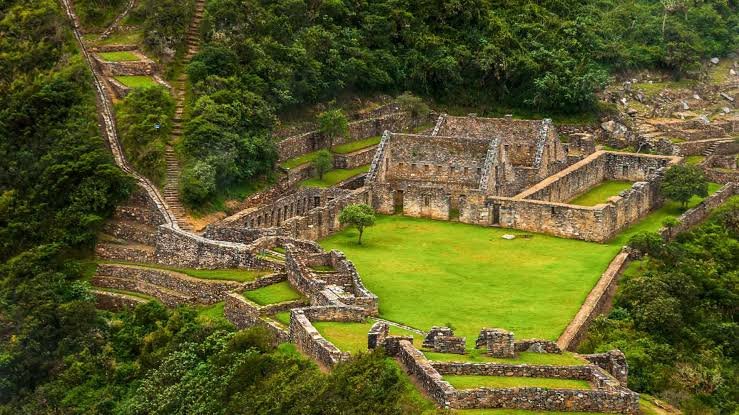
Who it’s for: experienced trekkers with strong knees and four days to spare, who will trade comfort for having one of the great lost cities of the Incas almost to themselves.
3.3 Mawk’allaqta: where the Incas began
Remote and rarely visited, Mawk’allaqta, also spelled Maukallaqta, lies in the province of Paruro, south of Cusco, near the village of Paccarectambo. It’s tied to one of the founding myths of the Incas: the nearby rock outcrop of Puma Orco is associated with the cave from which, according to legend, the Ayar siblings emerged to found the Inca dynasty. Reaching it means a long drive on rural roads and then a walk through farmland and hills. It’s less about grand architecture than about standing where the Incas placed their own beginning.
Who it’s for: curious, independent travellers interested in Inca myth and rural Andean life, who don’t mind rough roads and some Spanish to find their way.
3.4 The Salkantay trek and Llactapata
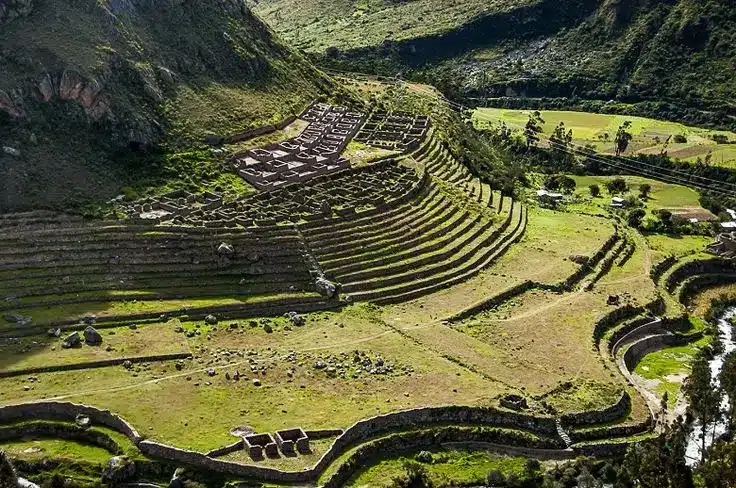
The most popular alternative to the Inca Trail needs no permit lottery and offers some of the most dramatic mountain scenery near Cusco. Over about five days, the Salkantay trek passes the turquoise Humantay Lake, crosses a pass of around 4,600 metres beneath the glaciers of Salkantay, one of the sacred apus, then descends through cloud forest and coffee country. On the last stretch, the ruins of Llactapata offer a rare view of Machu Picchu from across the valley, before the trail ends in Aguas Calientes. Salkantay vs Inca Trail? The Inca Trail has more ruins; Salkantay has the higher pass, the glaciers and no permits.
Who it’s for: fit trekkers comfortable with long days and a high pass, who want big mountain scenery and still to end their journey at Machu Picchu.
3.5 Vilcabamba, Peru: Vitcos and Espíritu Pampa
This is the trek for those drawn to the last chapter of Inca history. After the Spanish conquest, the Incas retreated into the remote Vilcabamba region and resisted for decades. Routes start around Huancacalle, near the ruins of Vitcos and the great carved white rock of Ñusta Hispana. They can continue for several days over high passes, either towards Espíritu Pampa, believed to be the last Inca capital, or as part of the long traverse linking Choquequirao and Machu Picchu. It’s demanding and little-trodden, and steeped in the story of an empire’s final refuge.
Who it’s for: seasoned, self-reliant trekkers and history lovers who want true remoteness, with a guide and time for a multi-day expedition.
3.6 Other Inca Trail alternatives worth knowing
Several other routes offer the Inca Trail’s spirit without its permits and crowds. The Lares trek crosses high passes between traditional weaving villages and hot springs, and is often combined with a train to Machu Picchu. The Ausangate trek is a tough multi-day loop around the region’s highest mountain, at about 6,380 metres, past glaciers, red and striped mountainsides and alpaca herds, and can include Rainbow Mountain. The Inca Quarry trek from Ollantaytambo follows the paths of the stonemasons to the Cachicata quarries and the Inti Punku of the Sacred Valley, a quieter gate with a view of Veronica. The Inca Jungle trek mixes mountain biking, rafting and hiking on the way to Machu Picchu. Closer to the valley, half-day hikes to Pumamarca and the storehouses above Ollantaytambo give a taste of Inca paths in a few hours.
Who it’s for: Lares suits those who want to meet the locals along the way; Ausangate suits strong, well-acclimatised hikers; Pumamarca suits anyone with half a day and a taste for quiet ruins.
Let The Verse Voyager Be the Chasqui That Guides Your Steps
Would you like to discover more extraordinary Inca and pre-Inca cities? Would you like to hike through the high jungle? Let us guide you towards an off-the-beaten-path adventure in the Andes. At The Verse Voyager, we design journeys around who you are: your pace, your curiosity and the kind of challenge that makes you feel alive. Whether you dream of a quiet ruin above the clouds, a multi-day trek to a forgotten citadel, or a few days with an Andean community, we’ll help you plan a route that suits you, so the road becomes part of the story you bring home. Explore our travel planning services and let’s start shaping your journey.
TLDR
TL;DR: In Part III, Andrei and I take our first steps on the Inca road. We start with an easy downhill walk above Cusco, from Puka Pukara and Tambomachay through eucalyptus forests to Inkilltambo, the Temple of the Moon and Q’enqo, ending at the colossal zigzag walls of Sacsayhuamán. Then we take the train from Ollantaytambo to KM 104 for the Short Inca Trail, guided by our modern-day chasqui, Ricardo. We pass the ritual fountains of Chachabamba, climb, sometimes in bad temper, to Wiñay Wayna, “forever young”, where Inca astronomy, water and stone meet, and reach Machu Picchu through Inti Punku, the Sun Gate. Finally, for those who want to walk off the beaten path, we gather the lost cities of the Incas that need no Machu Picchu ticket: Waqrapukara, the horn fortress at 4,100 m; the Choquequirao trek to Machu Picchu’s sister city; Mawk’allaqta, where the Incas placed their origins; the Salkantay trek with Llactapata; and Vilcabamba, the empire’s last refuge. Each comes with a note on who the hike suits.