The Short Version
Have you ever wondered what the best places in France are? France isn’t one destination, it’s about fifteen of them wearing the same passport. The mistake most first-timers make is trying to “see France” in one trip, then spending half of it on trains regretting the plan. This guide breaks the country into its real regions, tells you honestly who each one suits, when to go, how to reach it, and what to expect once you’re there. Short version: Paris plus one region is the sweet spot for a first trip. The Riviera and Provence are the postcard south.
The Alps, the Pyrenees, and the Basque Country are where you go when you want France to feel less like a museum and more like a place people actually live. And the quiet regions, Lorraine, Burgundy, French Catalunya, are the ones that reward travelers who don’t need a landmark to feel like the day counted.
If you want the two-minute version of which region fits you, there’s a personality quiz at the end. It maps your travel style to the region that won’t drive you quietly mad.
Table of Contents
Why “the best places in France” is the wrong question (and the better one)
I’ve lost count of how many times someone has asked me where the best place in France is, as if there’s a single answer sitting at the top of a leaderboard. There isn’t. I’ve driven the country end to end, from the flat light of the north down to the Mediterranean glare, and the honest truth is that the “best” place in France depends almost entirely on the kind of person doing the traveling.
Here’s the thing nobody selling you a trip wants to say out loud. France is enormous and wildly varied, and the regions genuinely don’t want the same visitor. The Côte d’Azur rewards someone who likes to be seen, who enjoys a crowd and a good table and a bit of glamour. Drop a quiet, solitude-loving hiker into Saint-Tropez in August and they’ll be miserable inside a day. Send the social butterfly up into the Pyrenees for a week of empty trails and they’ll be checking their phone for signal by lunchtime on day two. Same country. Opposite experiences. Neither is doing it wrong.
So this guide does two things. It gives you a clear, region-by-region read on the best and most beautiful places in France, cities, coastlines, and the villages that never make the front pages. And it tells you, for each region, who it actually suits. I run a travel studio built entirely on that second question, matching people to places using the Big Five personality model instead of the usual “here are the top ten sights” list. You’ll see that logic threaded through the whole piece, and there’s a proper personality section near the end.
Read it like a menu, not a checklist. You’re not meant to eat everything.
Not sure which France is yours? Take the two-minute travel-personality quiz and I’ll point you to the region that fits.
How to use this guide
Each region below has the same five fields, so you can skim or settle in:
- Who it’s for. The honest version. Read this first.
- Best time to go. When it’s good, and when to stay away.
- How to get there. From Paris, mostly, since that’s where most trips start.
- How to see it. Train, car, base town, or a mix.
- What to expect. The reality, not the brochure.
One structural note before we start. If this is your first trip, don’t try to cover more than two, maybe three regions. France punishes overreach. The classic rhythm that works for almost everyone is Paris plus one region reachable by fast train, over about ten days. More on turning these regions into a proper France road trip later on.
1. Paris and Île-de-France
Paris is the region that needs no introduction and gets a bad one anyway. People arrive braced for rudeness and leave slightly embarrassed at how much they loved it. Yes, it’s busy. Yes, the Louvre is a scrum. But wander the Marais on a weekday morning, sit in the Place des Vosges with a coffee, walk the Canal Saint-Martin at dusk, and you understand why the city has held its reputation for two hundred years without really trying.
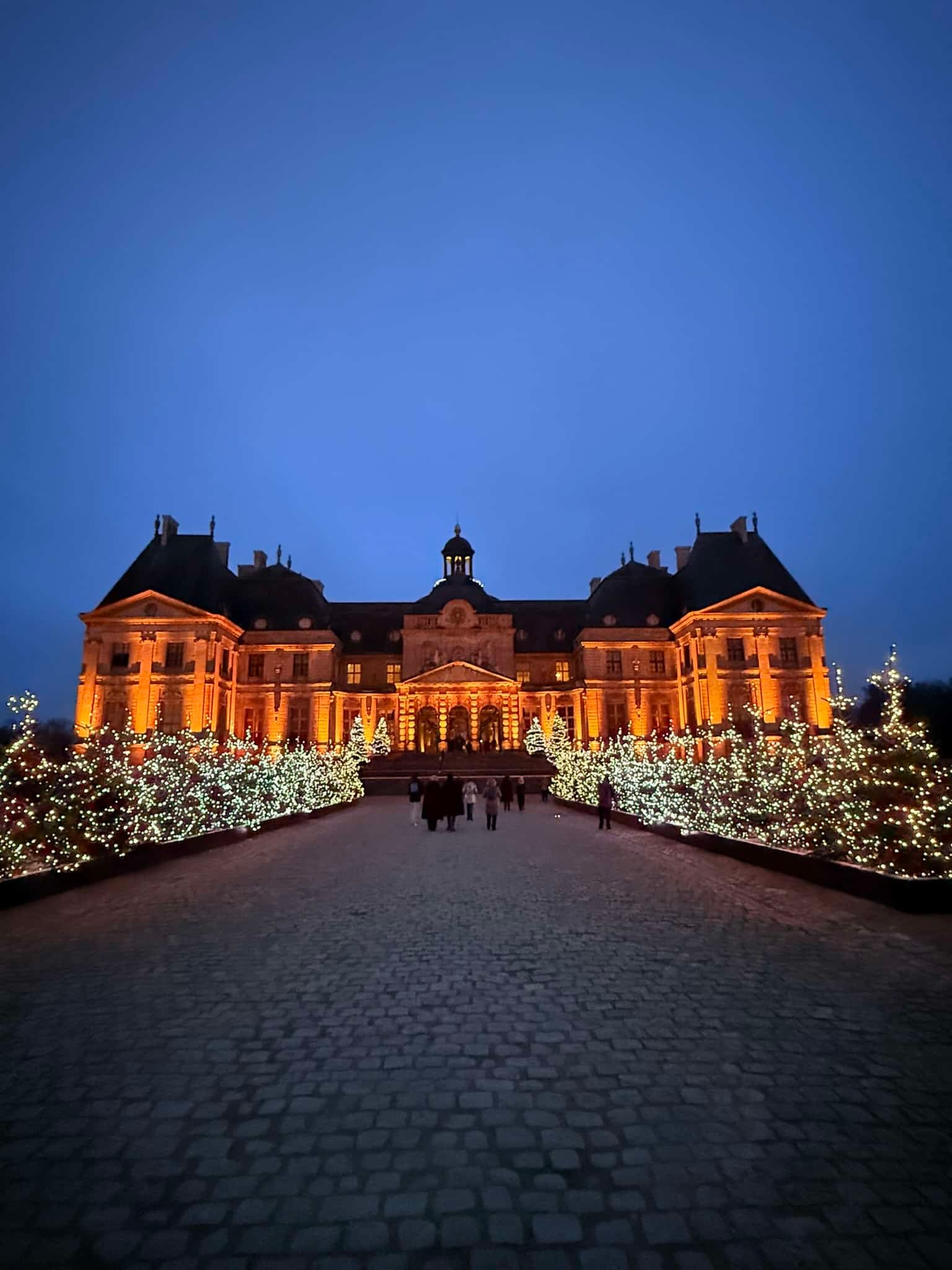
The mistake is treating Paris as a list of monuments to tick. The better move is to pick two or three neighbourhoods and live in them slowly, then use the region around the city for the grand stuff. Île-de-France is stacked with day trips: Versailles for sheer royal excess, Fontainebleau for a quieter, more human palace that most tourists skip, Vaux-le-Vicomte for the château that made the king so jealous he built Versailles to outdo it, Chantilly for horses and the best whipped cream in France, and Giverny for Monet’s garden if you time it for spring or early summer.
Who is Paris for?
Paris is a high-openness city above all. If you’re the kind of traveler who’s energised by novelty, art, architecture, and ideas coming at you faster than you can process them, this is your place, and you’ll leave with a full notebook. It also rewards extraversion: Paris runs on café terraces, evening tables, and the low hum of other people. Being surrounded by strangers feels like fuel rather than drain.
Here’s the honest counter-case. If you score low on extraversion, Paris in peak season is genuinely tiring, and the standard advice to “see everything” will grind you down by day three. The fix isn’t to skip the city, it’s to change how you do it: base yourself in a calmer arrondissement, plan one major sight per day instead of three, and build in long empty afternoons. Low-openness travelers who prefer the familiar can also find Paris disorienting rather than thrilling, and often have a better time on a second visit than a first.
Conscientiousness is the quiet variable here. High-conscientiousness travelers thrive because Paris genuinely rewards pre-booking and planning. If you’re a low-conscientiousness improviser, accept that you’ll queue, and let that be fine.
Best time to go to Paris
Late spring (May, early June) and early autumn (September, October) are the sweet spots: mild, walkable, and the light does that thing. August empties of Parisians and fills with tourists, and a lot of the good local places close. December has its own Christmas-market magic if you don’t mind the cold.
How to get to Paris?
You’ll almost certainly fly into Charles de Gaulle or Orly. From CDG, the RER B train reaches the centre in about 35 minutes and costs a fraction of a taxi. As of 2026 the city has moved fully to digital ticketing, so load a Navigo pass onto your phone and skip the paper.
How to see Paris?
On foot, plus the Métro, which is dense and easy. For the palaces, RER trains and regional lines cover Versailles, Fontainebleau, and Chantilly directly. You don’t need a car in Paris, and you actively don’t want one.
What to expect from Paris?
Grand, crowded, and better than its reputation. Budget more time than you think for the big museums (pre-book everything), and leave whole afternoons unplanned. Paris rewards wandering more than scheduling.
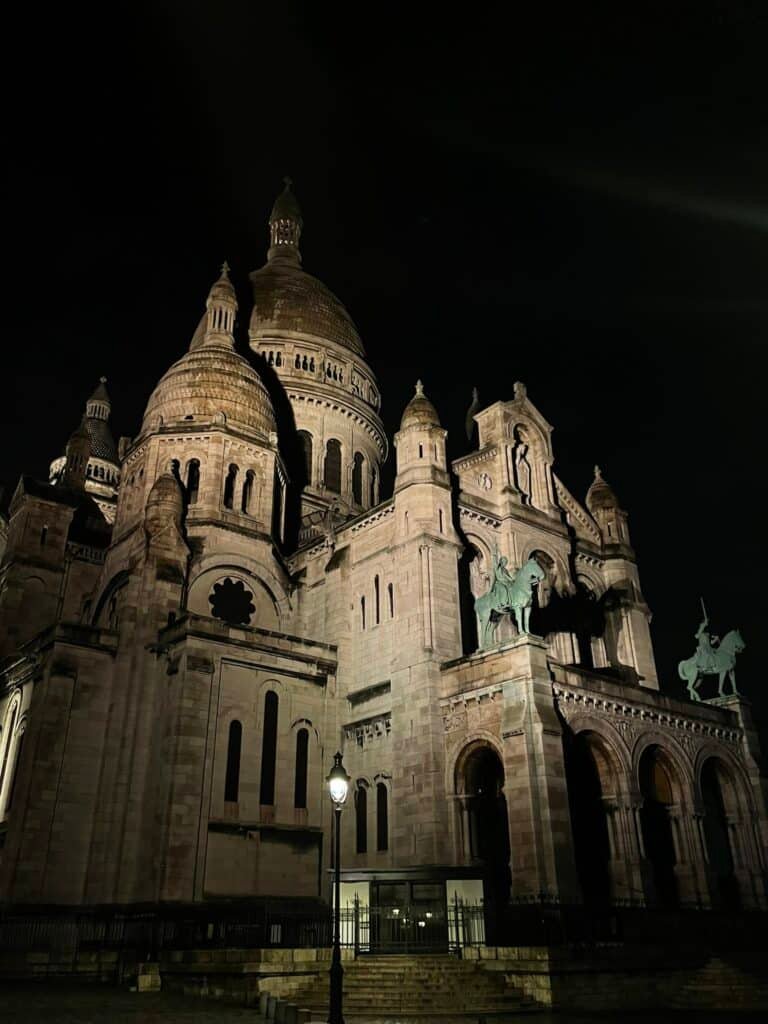
Night view of the Sacre-Coeur Basicilica in Paris
Official resource: Explore France, the national tourism board for Paris and Île-de-France listings, plus current opening times for Versailles and Fontainebleau.
2. The Loire Valley
If France had a valley designed by a set decorator, it would be the Loire. This is château country, a long ribbon of the river lined with the Renaissance castles that every image of “fairytale France” is quietly borrowing from. Chambord is the showstopper, a double-helix staircase and a roofline like a small city. Chenonceau arches straight across the river and is the one that stays with people. Villandry is all about the gardens. Amboise and Blois make good, walkable bases.
What surprises people is how gentle it all is. The Loire is flat, green, and easy, threaded with vineyards (Vouvray, Chinon, Sancerre) and small towns that move at a Sunday-lunch pace even on a Tuesday. It’s one of the most beautiful regions in France and also one of the least demanding, which is exactly the point.
Who is Loire Valley for?
The Loire is the most conscientiousness-friendly region in France. If you’re someone who enjoys a plan, likes a day with a clear shape, and gets real satisfaction from a well-sequenced route, the châteaux practically arrange themselves for you. There’s a beginning, a middle, and an end, and the pleasure of ticking through them is part of the experience rather than a guilty admission.
It also suits moderate openness: enough beauty and history to feel enriching, without demanding you leave your comfort zone. Introverts do well here, since the pace is gentle and the crowds are manageable outside the headline châteaux. Families and multi-generational groups tend to be very happy, because the region asks little physically.
Who should think twice: high sensation-seekers and travelers high in extraversion who need energy and nightlife. The Loire is sedate by design, and a week here can feel like a long, pleasant Sunday. If you’re low in conscientiousness and dislike anything resembling an itinerary, château-hopping can start to feel like homework by the third one. Go slower and see fewer, or pick a different region entirely. It is perfect for sport enthusiast who want to travel the whole region by bike.
When is the best time to visit the Loire Valley?
May, June, and September. The gardens are at their best in late spring, and the September grape harvest brings the wine towns to life. Winter is quiet and some châteaux run shorter hours.
How do you get to the Loire Valley?
Fast TGV from Paris to Tours in about an hour, or to Blois in a similar window. Very doable as a first stop out of the capital.
What is the best way to visit the Loire Valley?
This is the one region where I’d genuinely say rent a car. The châteaux are spread out and the countryside between them is half the pleasure. If you’d rather not drive, base in Amboise or Tours and use guided minivan tours or the bike routes: the Loire à Vélo cycle network is one of the best in Europe.
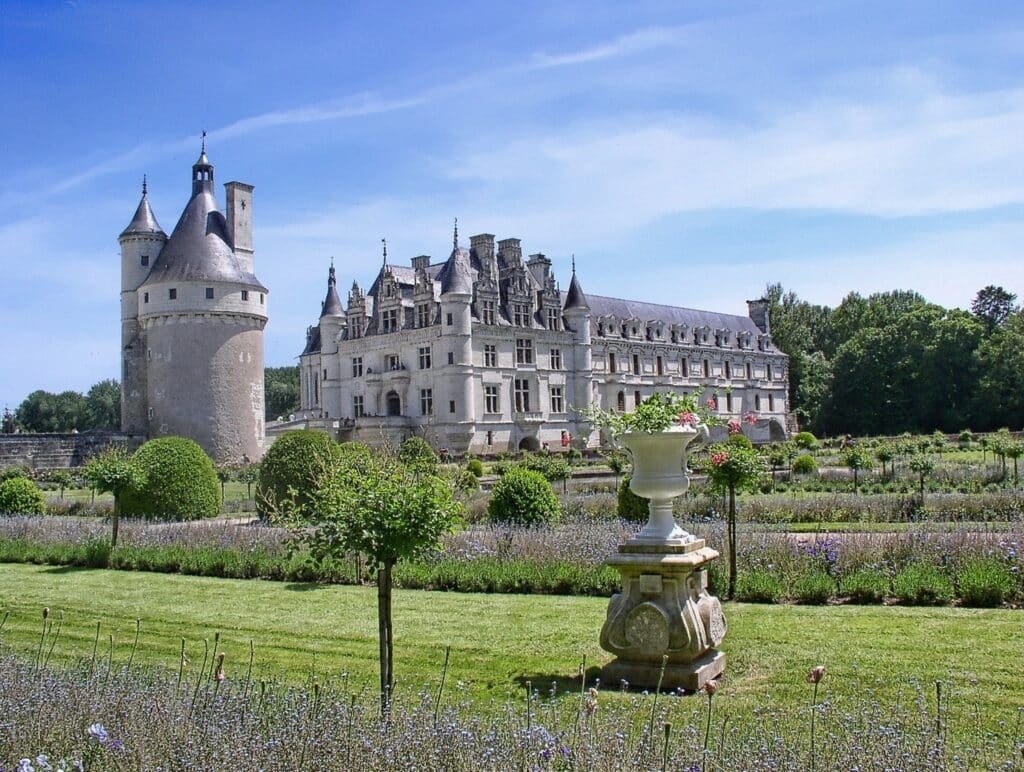
Side view of one of the many Loire Valley ‘average’ castles
What can you expect in the Loire Valley?
Postcard France at an easy tempo. A few châteaux go a long way; three in a day is one too many, and you’ll start to blur them. Pick your favourites and linger.
Official resource: Explore France, Loire Valley for château opening times and the Loire à Vélo cycle network.
3. Normandy
Normandy is where France gets serious. This is the coast of the D-Day landings, and standing on Omaha Beach or walking the rows at the American Cemetery is one of the more moving things you can do in the country. Give it a proper day, ideally with a guide, because the scale of what happened here only lands with context.
But Normandy isn’t only history. It’s Mont-Saint-Michel rising out of the tidal flats, which is as astonishing in person as it looks and worth the crowds if you go early or late. It’s the cliffs at Étretat, the harbour at Honfleur that painters have loved for a century and a half, the cathedral city of Rouen, and a food culture built on cream, cider, apples, and Calvados. It rains. That’s the deal. The green is green for a reason.
Who is Normandy for?
Normandy suits travelers high in openness to ideas rather than openness to sensation. The pull here is meaning, history, and the weight of what happened on these beaches, not thrill or glamour. If you read history for pleasure, this region will hit harder than almost anywhere else in France.
Agreeableness matters more here than in most places. The D-Day sites and the cemeteries land hardest on empathetic people, the ones who instinctively imagine their way into someone else’s experience. That’s a genuine gift here and also worth preparing for, because it can be a heavy day. Emotional stability helps you carry it without the trip tipping into something sombre.
The honest mismatch: sun-seekers and travelers who need reliable warmth to enjoy themselves. Normandy is grey and wet more often than not, and if weather strongly affects your mood, it will affect your trip. High sensation-seekers looking for adrenaline will also find it slow. This is a contemplative region, and it rewards people who are comfortable being moved rather than entertained.
When is the best time to visit Normandy?
June to September for the best chance of decent weather. Early June carries the added weight of the D-Day anniversary. Spring and autumn are atmospheric but wet.
How do you get to Normandy?
Trains from Paris Saint-Lazare reach Bayeux (the best base for the beaches) in a little over two hours, and Rouen in about ninety minutes. Mont-Saint-Michel is trickier by public transport and usually reached via Rennes or by car.
What is the best way to visit Normandy?
A car helps a lot for the D-Day beaches and Mont-Saint-Michel. For Rouen and Honfleur alone, trains and buses are fine. Guided tours of the landing sites are genuinely worth it here.
What can you expect in Normandy?
Emotional, historic, and green. Pack a layer and a rain shell even in summer. This is northern France, not the Med.
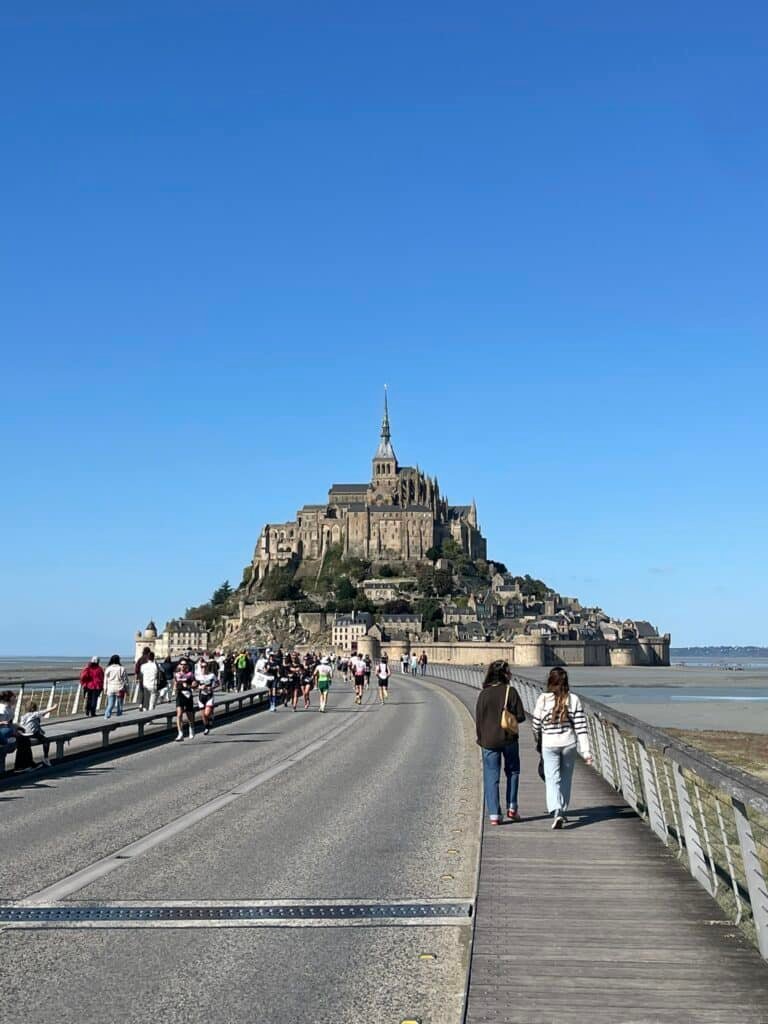
The walk towards Mt. St. Michel
Official resource: Normandy Tourism, the region’s official board, for D-Day site practicalities, tide times at Mont-Saint-Michel, and events.
4. Brittany
Brittany is France with a Celtic accent and a chip on its shoulder about being French at all, in the best way. The peninsula has its own language, its own flag, its own festivals, and a coastline of pink granite, walled ports, and wide beaches that feel closer to Cornwall than the Riviera. Saint-Malo, the corsair city inside its ramparts, is the headline. Dinan is a medieval town that survived intact. The Carnac stones are older than Stonehenge and far less mobbed.
I like Brittany because it doesn’t perform for you. It’s wild, weather-beaten, proud, and a little untamed once you leave the honeypot towns. The seafood is superb, the crêpes and buckwheat galettes are a religion, and the light out on the coast is worth the trip alone.
Who is Brittany for?
Brittany is for the independent-minded. It suits travelers who don’t need a place to be polished or explained to them, who enjoy a region with a chip on its shoulder and a language of its own. Moderate to high openness helps, particularly openness to culture, because the Breton identity is the whole point and missing it means missing the region.
Low extraversion is no obstacle here at all. Brittany is one of the easier French regions to enjoy alone or in a quiet pair, with long coast walks and small ports that don’t demand you join anything. Emotional stability earns its keep, because the weather changes constantly and a trip here goes better when a wet afternoon doesn’t feel like a ruined day.
Who won’t love it: comfort-seekers and travelers who need predictability. If you want a guaranteed forecast, a reliable beach day, and everything running to schedule, the Atlantic will disappoint you. Brittany rewards a certain roll-with-it temperament, and punishes rigid expectations more than most places in France.
When is the best time to visit Brittany?
June to September. This is the wettest corner of France, so summer gives you the best odds. July and August bring French holidaymakers but rarely the overwhelm of the south.
How do you get to Brittany?
TGV from Paris Montparnasse to Rennes in about ninety minutes, then regional trains or a car onward. Saint-Malo is roughly an hour beyond Rennes.
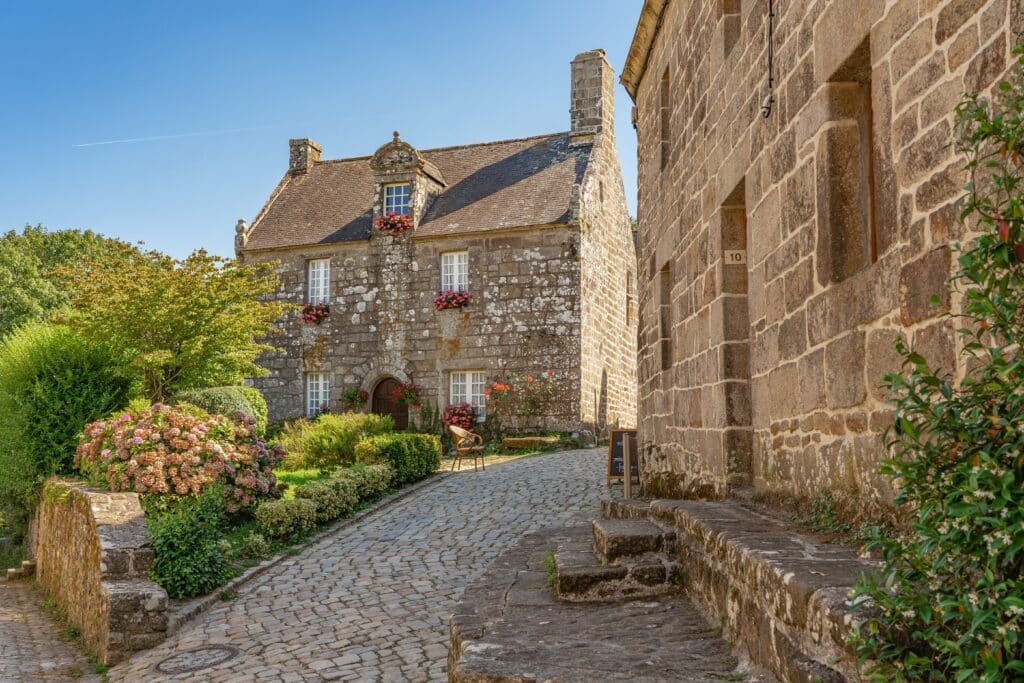
Locronan is a picturesque village in Brittany that, with its 16th and 17th century granite stone houses and cobbled streets, has been included in the exclusive club of France’s most beautiful villages.
What is the best way to visit Brittany?
A car opens up the coast and the smaller ports. Rennes, Saint-Malo, and Dinan work on trains and buses if you’d rather not drive.
What can you expect in Brittany?
Rugged, characterful, and refreshingly un-touristy once you move past Saint-Malo. Expect changeable weather and lean into it.
Official resource: Brittany Tourism, the official regional board, for coastal walks, ferry links, and festival dates.
5. Champagne (a short one, but worth it)
Champagne is the easiest add-on to a Paris trip that most people never think to make. Reims is forty-five minutes from Paris by TGV, and it pairs one of France’s greatest Gothic cathedrals with cellar tours at the big houses: Veuve Clicquot, Taittinger, Pommery. Épernay’s Avenue de Champagne runs above kilometres of chalk cellars holding, well, a fortune in bubbles.
Who is Champagne for?
Champagne is a sociable region, and it suits extraverts and celebrators. The whole experience is built around shared tables, cellar tours in small groups, and the particular good mood that comes with a region devoted to the drink people open when something good happens. If you travel to connect, you’ll enjoy it.
Agreeableness pays off in the smaller grower-producer visits, where the experience is closer to being a guest in someone’s business than a customer buying a ticket. Warmth is returned here.
The mismatch is simple. If you’re low in extraversion, don’t drink, or find organised tastings a bit performative, Champagne offers less than its neighbours. It’s a rich day or two rather than a week, and I’d treat it as a satisfying add-on to Paris rather than a destination in its own right.
When is the best time to visit Champagne?
May, June, September, and the run-up to Christmas. Harvest is September and the region hums.
How do you get to Champagne?
TGV Paris to Reims, about 45 minutes. Genuinely a day trip if you want.
What is the best way to visit Champagne?
Trains cover Reims and Épernay. A car or a booked tour helps for the smaller grower-producers in the villages, which is where the real discoveries hide.
What can you expect in Champagne?
More depth than you’d guess. Book cellar visits ahead, especially at the famous houses.
Official resource: Explore France, Champagne for house visits and cellar booking, which you should arrange well ahead.
6. Alsace
Alsace is where France and Germany have been arguing for centuries, and the result is one of the most distinctive corners of the country. Half-timbered houses in improbable colours, storks on the rooftops, a wine road running through village after village, and a food culture that answers “wine or beer?” with “yes.”
Colmar is the star, almost too pretty to be real, with its canal quarter and its window boxes. Strasbourg is the grown-up city: a soaring cathedral, a genuinely lovely old town, and the seat of the European Parliament. I’d give Strasbourg a full day and no more, then get back out among the villages.
Because that’s the secret of Alsace: the small places. Riquewihr, Eguisheim, Kaysersberg, and quieter ones like Katzenthal are among the most beautiful villages in France, and the Route des Vins strings them together like beads.
Add the hilltop fortress of Haut-Koenigsbourg, the town of Sélestat with its humanist library, the almost-untouched village of Hunspach up north, and easy day trips across the border to Freiburg or Baden-Baden in Germany, and you’ve got a region that punches far above its size. (It does. I’m allowed to say it even if the brochures overuse the phrase.)
Who is Alsace for?
Alsace is the region I’d send a high-conscientiousness traveler to without hesitation. Everything is orderly, walkable, well-signposted, and beautifully maintained, and the Route des Vins gives the trip a clear thread to follow. If you find comfort in structure and quietly enjoy things being done properly, this region will feel like it was made for you.
High agreeableness fits too, because Alsace rewards engaging with tradition rather than observing it: the wine growers, the festivals, the Christmas markets all open up when you meet them halfway. Moderate openness is enough. You don’t need to be a thrill-seeker to love it.
The counter-case matters here. Travelers very high in openness and sensation-seeking sometimes find Alsace too curated, almost like a set. If your instinct is to look for the rough edges of a place, the villages can start to feel same-ish by day four. The antidote is to go in autumn rather than December, get off the main wine road into the smaller villages like Katzenthal, and cross into Germany for a day so the region has something to be contrasted against.
When is the best time to visit Alsace?
September and October for the wine harvest and warm light. December for the Christmas markets, which are among the best in Europe (and busy for it). Avoid the deep winter lull in January and February when many villages go quiet.
How do you get to Alsace?
TGV from Paris to Strasbourg in about 1 hour 45 minutes, or to Colmar in a little over two hours. Fast and easy.
What is the best way to visit Alsace?
A car is ideal for the wine road and the villages, which aren’t all rail-connected. Strasbourg and Colmar themselves are perfectly walkable, and you can base in Colmar and car-hop the villages.
What can you expect in Alsace?
Storybook looks and serious wine, in a compact, easy-to-love package. One of my favourite regions in the country for a first road trip.
Official resource: Explore France, Alsace for the Route des Vins and Christmas market dates.
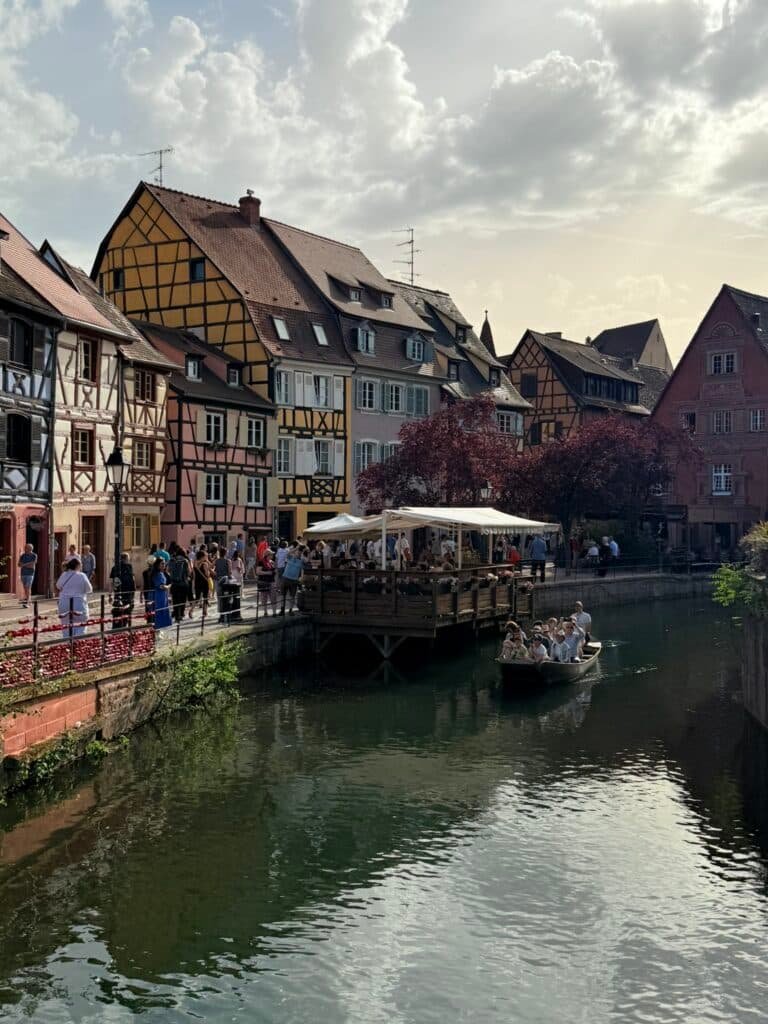
Houses of Colmar – one of the most beautiful towns in France
7. Lorraine
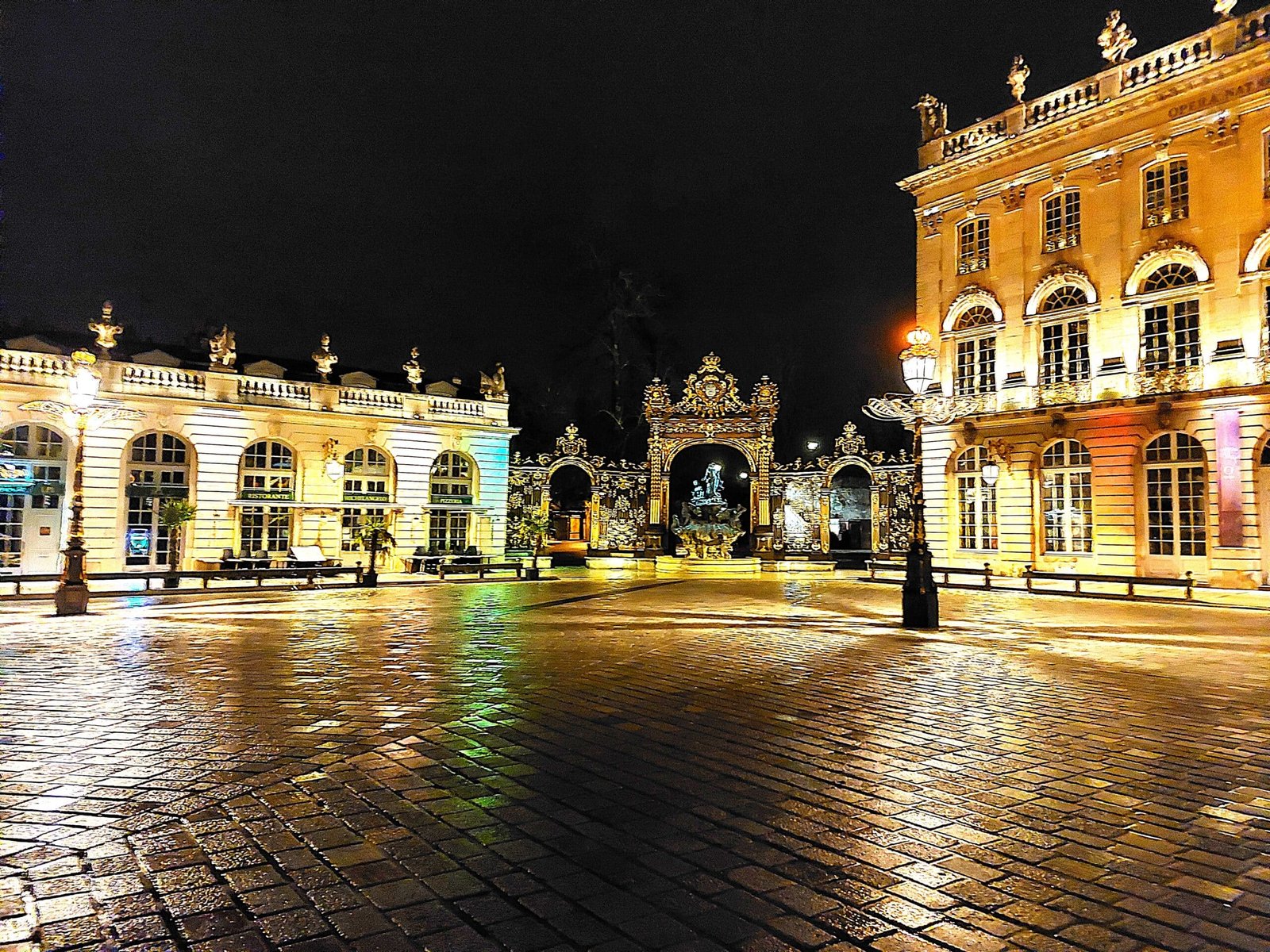
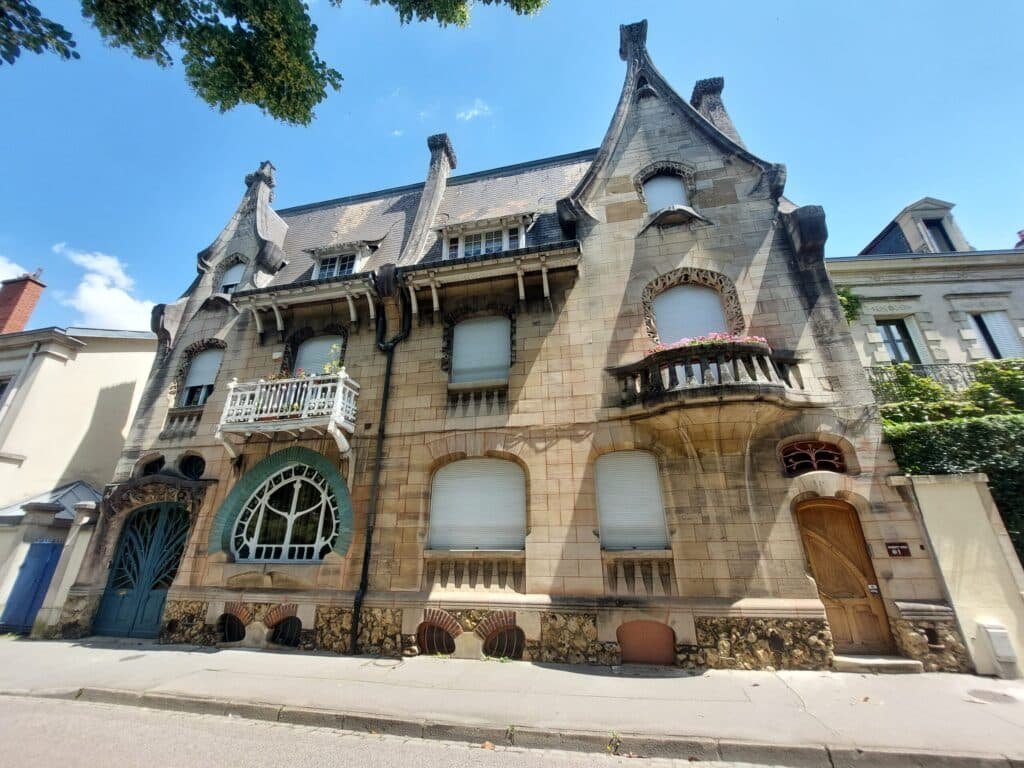
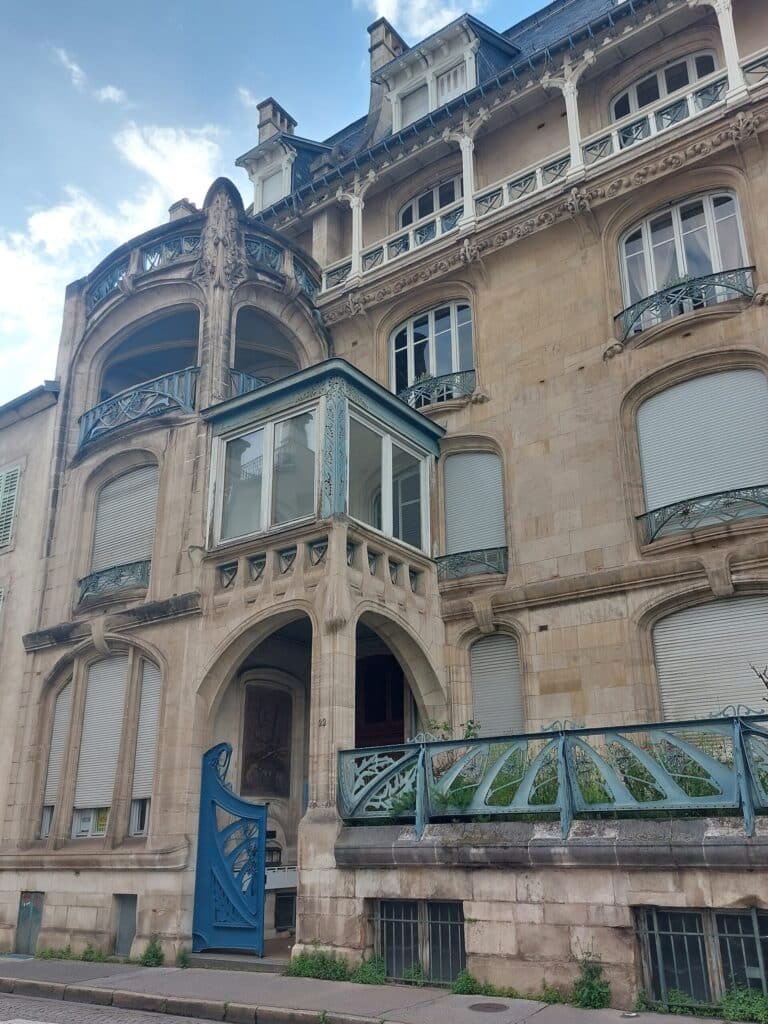
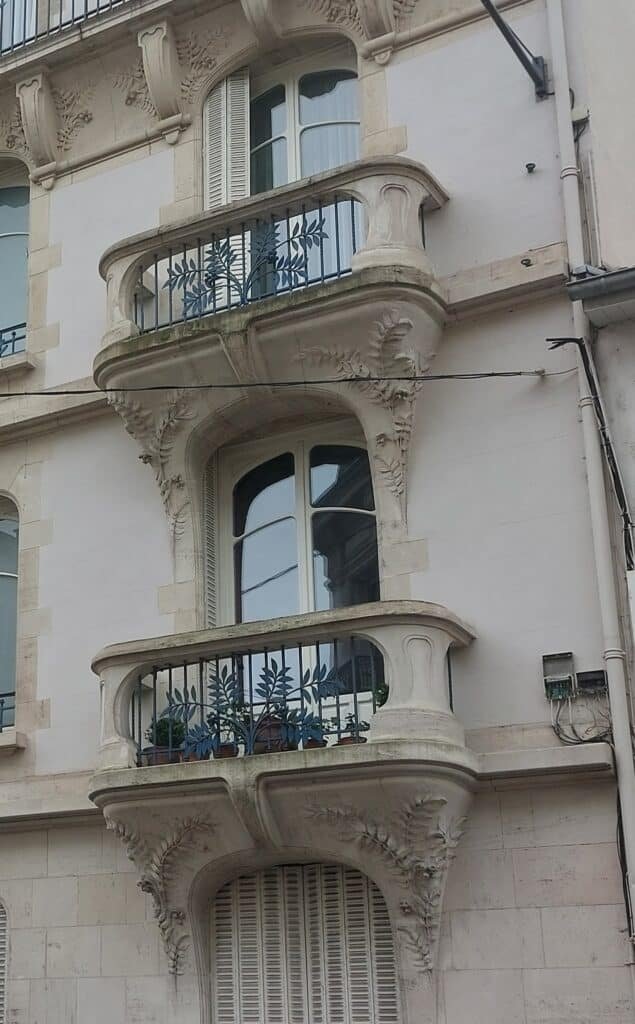
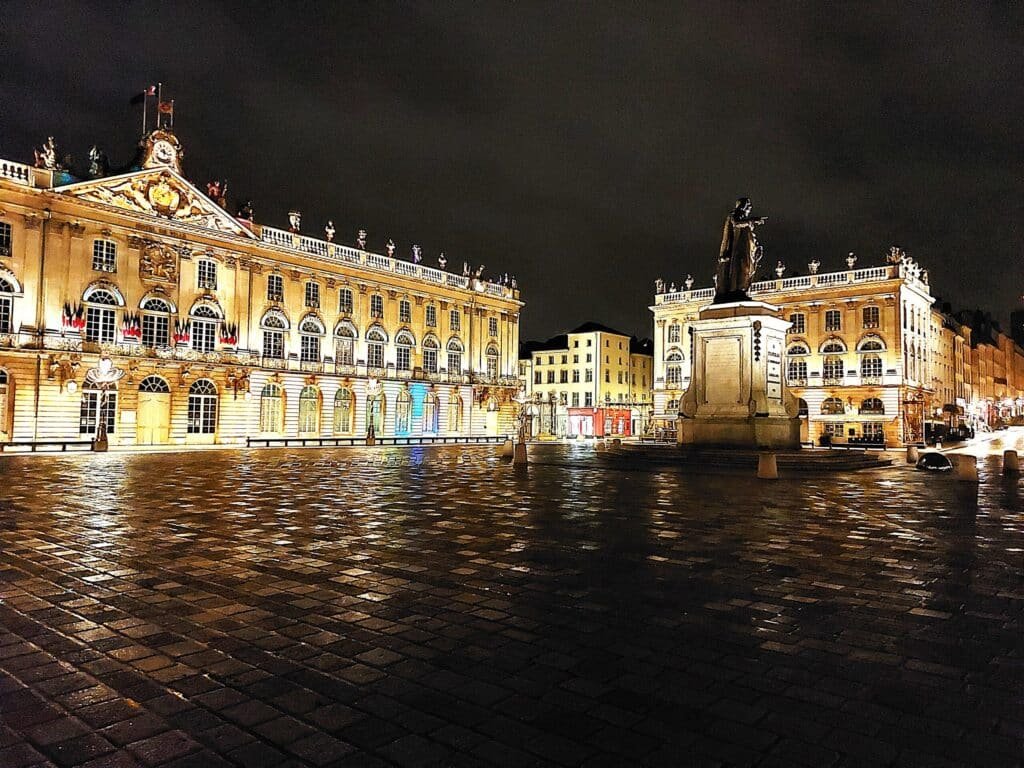
Lorraine is Alsace’s quieter neighbour, and I mean quieter as a compliment. Most international travelers drive straight past it, which is exactly why it’s worth a look if you like a place that isn’t performing for a camera. Nancy has one of the most elegant squares in Europe, the Place Stanislas, all gilded gates and Art Nouveau confidence. Metz has a cathedral with some of the largest expanses of stained glass in France and a striking modern art museum. And the Parc naturel régional de Lorraine gives you lakes, forests, and slow rural France with almost no crowds.
Who is Lorraine for?
Lorraine is the introvert’s region, and I mean that as a strong recommendation rather than a consolation. Low extraversion isn’t a limitation here, it’s an advantage: you get elegant cities and genuine countryside without the crowds that make those things exhausting elsewhere. If you recharge in quiet and find busy destinations draining no matter how beautiful, this is one of the best places in France for you.
It also suits high openness of a specific kind, the sort that enjoys self-directed discovery over guided highlights. There’s no queue telling you this is the important thing. You decide what the day was about.
The honest mismatch: travelers who need a landmark to feel the day counted, and anyone high in extraversion who wants buzz and a scene. Lorraine won’t fill your feed and it won’t impress anyone at dinner back home. That’s exactly why the people who love it, love it. If external validation is part of why you travel, this region will feel like a missed opportunity, and you should go to Alsace next door instead.
When is the best time to visit Lorraine?
Late spring through early autumn. The parkland is best in warmer months.
How do you get to Lorraine?
TGV from Paris to Nancy or Metz in about 1 hour 30 minutes. Very close, very overlooked.
What can you expect in Lorraine?
Elegant cities, empty countryside, and the quiet satisfaction of a region that hasn’t been over-loved. Pair it with Alsace and you’ve got a beautifully balanced east-of-France week.
Official resource: Explore France for Nancy, Metz, and the Parc naturel régional de Lorraine.
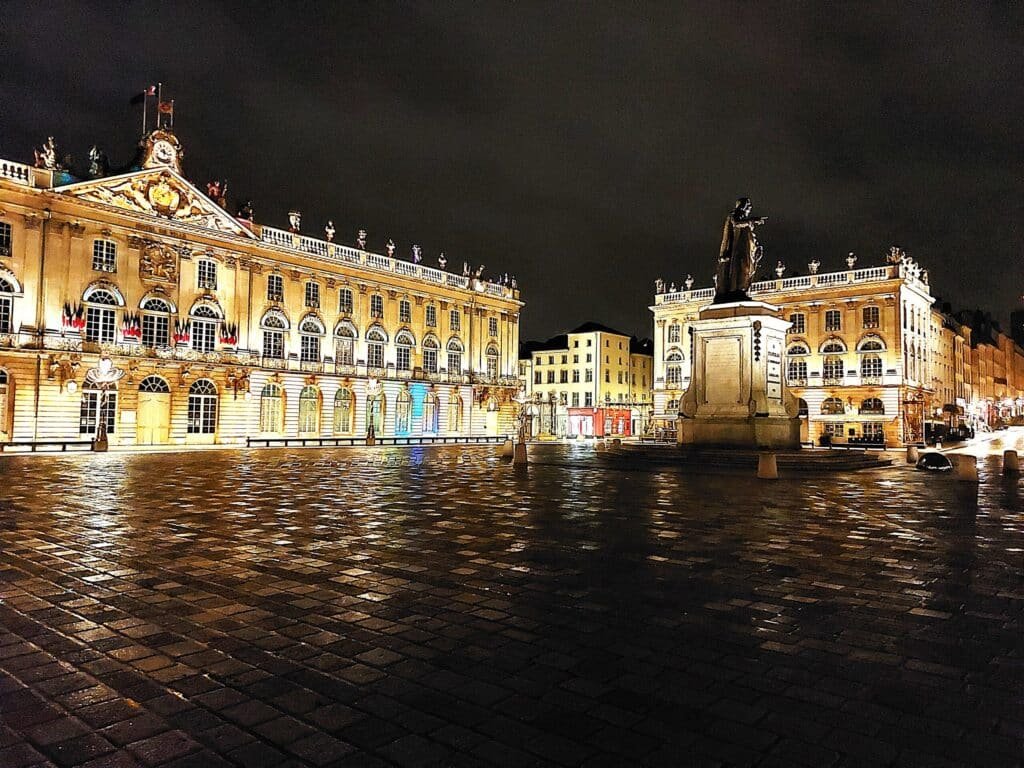
Place Stanislas by Night, Lorraine, France
What is the best way to visit Lorraine?
Trains cover Nancy and Metz well. A car unlocks the regional park and the villages.
What can you expect in Lorraine?
Elegant cities, empty countryside, and the quiet satisfaction of a region that hasn’t been over-loved. Pair it with Alsace and you’ve got a beautifully balanced east-of-France week.
Official resource: Explore France for Nancy, Metz, and the Parc naturel régional de Lorraine.
Read next on The Verse Voyager: Alexandra spent an Erasmus semester here, and her piece on local living in Lorraine goes deeper into Nancy than any guidebook will: the Art Nouveau of the École de Nancy, why the Cross of Lorraine carries the weight it does, and how losing Metz to Germany in 1871 accidentally made Nancy one of the great Art Nouveau capitals of Europe. If you want to understand why I keep pushing people toward this region, start there.
8. Burgundy
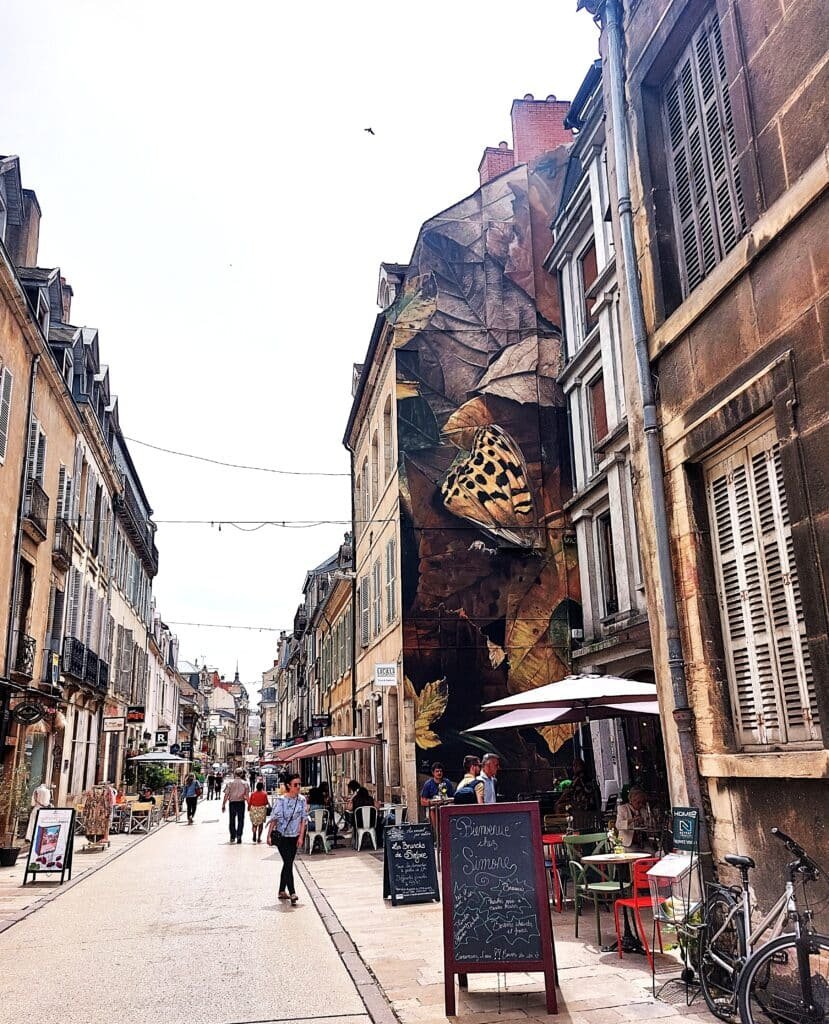
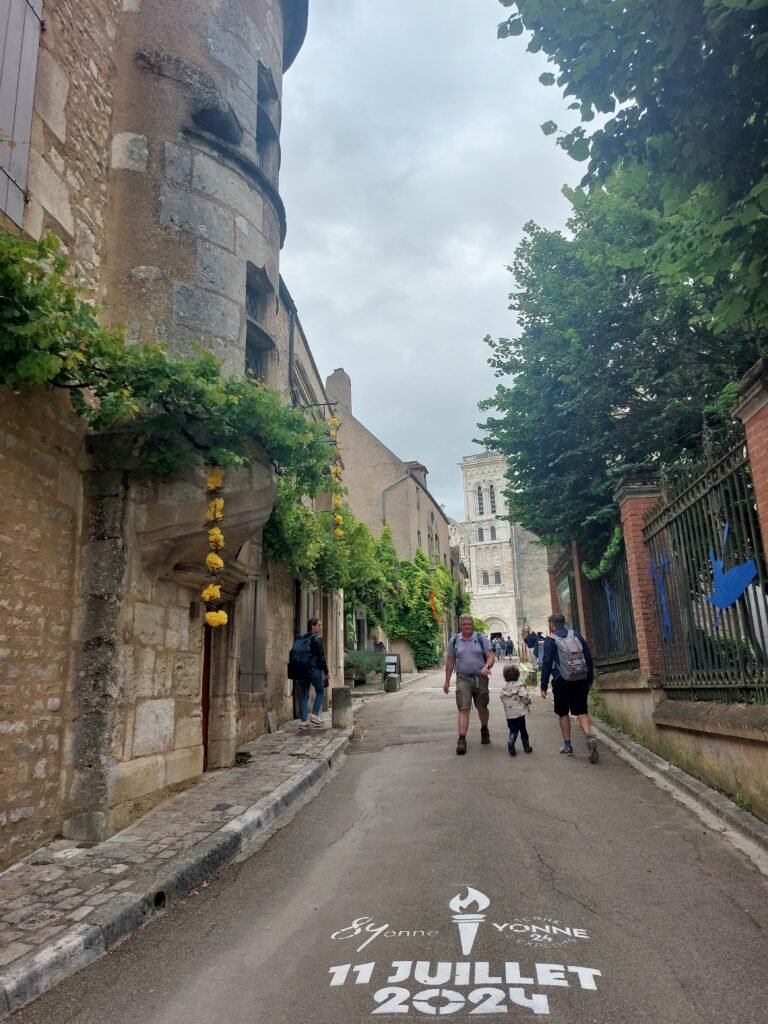
Burgundy is wine and slowness, and if that sentence already appeals to you, you’ll love it. This is Pinot Noir and Chardonnay’s ancestral home, a landscape of stone villages, mustard fields, canals, and abbeys. Beaune is the honey-coloured wine capital with its famous Hospices and their patterned tile roof. Dijon is the handsome regional city. Vézelay sits on its hill with a basilica that’s been drawing pilgrims for nearly a thousand years. And the whole thing moves at the pace of a long lunch.
Who is Burgundy for?
Burgundy suits people low in sensation-seeking and high in the capacity to enjoy one thing slowly. If your ideal day involves a three-hour lunch, a short walk, and a conversation that goes nowhere in particular, this region is built for your nervous system. High agreeableness helps, because the wine culture here opens up through relationships rather than transactions, and the growers can tell the difference.
Conscientiousness shows up as an appreciation for craft. Burgundy is a region obsessed with detail, with plots of land measured in metres and distinctions that take years to learn, and travelers who find that fascinating rather than fussy get the most out of it.
Who’ll struggle: restless, high-energy travelers and anyone who measures a good trip in things accomplished. Burgundy resists being conquered. A week here produces very few photographs and a great many good meals, and if that trade sounds like a loss rather than a win, go somewhere with mountains.
When is the best time to visit Burgundy?
May, June, September, and October. Harvest season (September) is the region at full tilt.
How do you get to Burgundy?
TGV from Paris to Dijon in about 1 hour 40 minutes.
What is the best way to visit Burgundy?
A car or a bike for the vineyards and villages. Dijon and Beaune are walkable and rail-linked; the great wine villages in between are not. Or if you like sports, you can explore Burgundy by bike.
What can you expect in Burgundy?
Serious wine, gentle scenery, and a tempo that forces you to slow down whether you meant to or not.
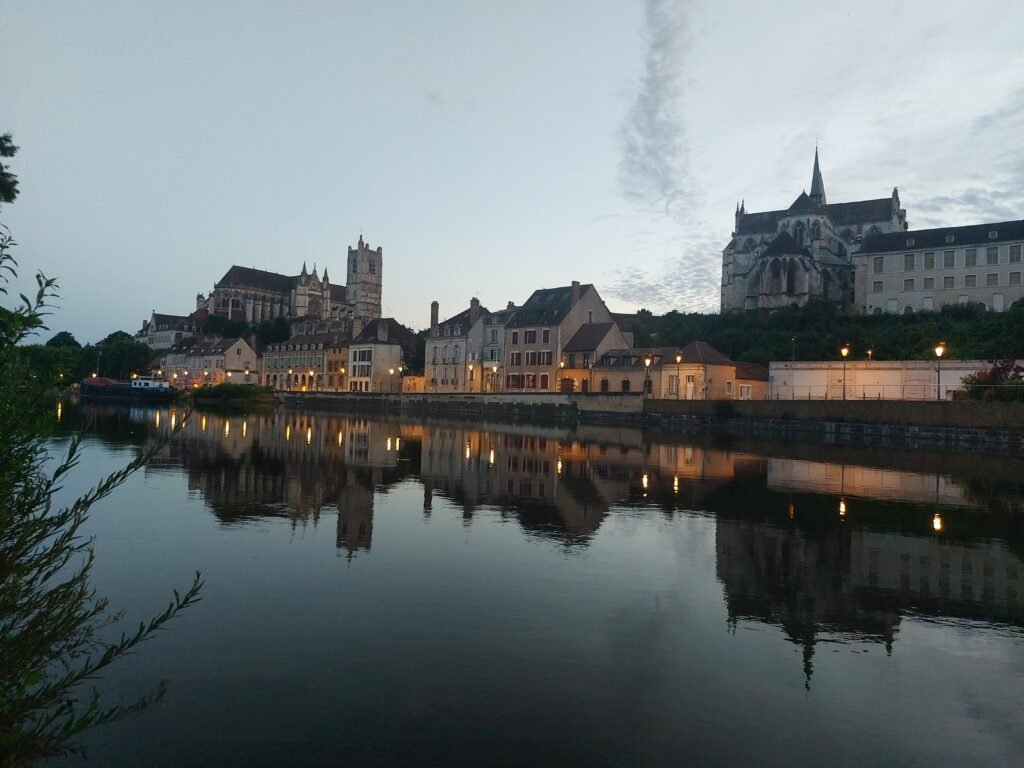
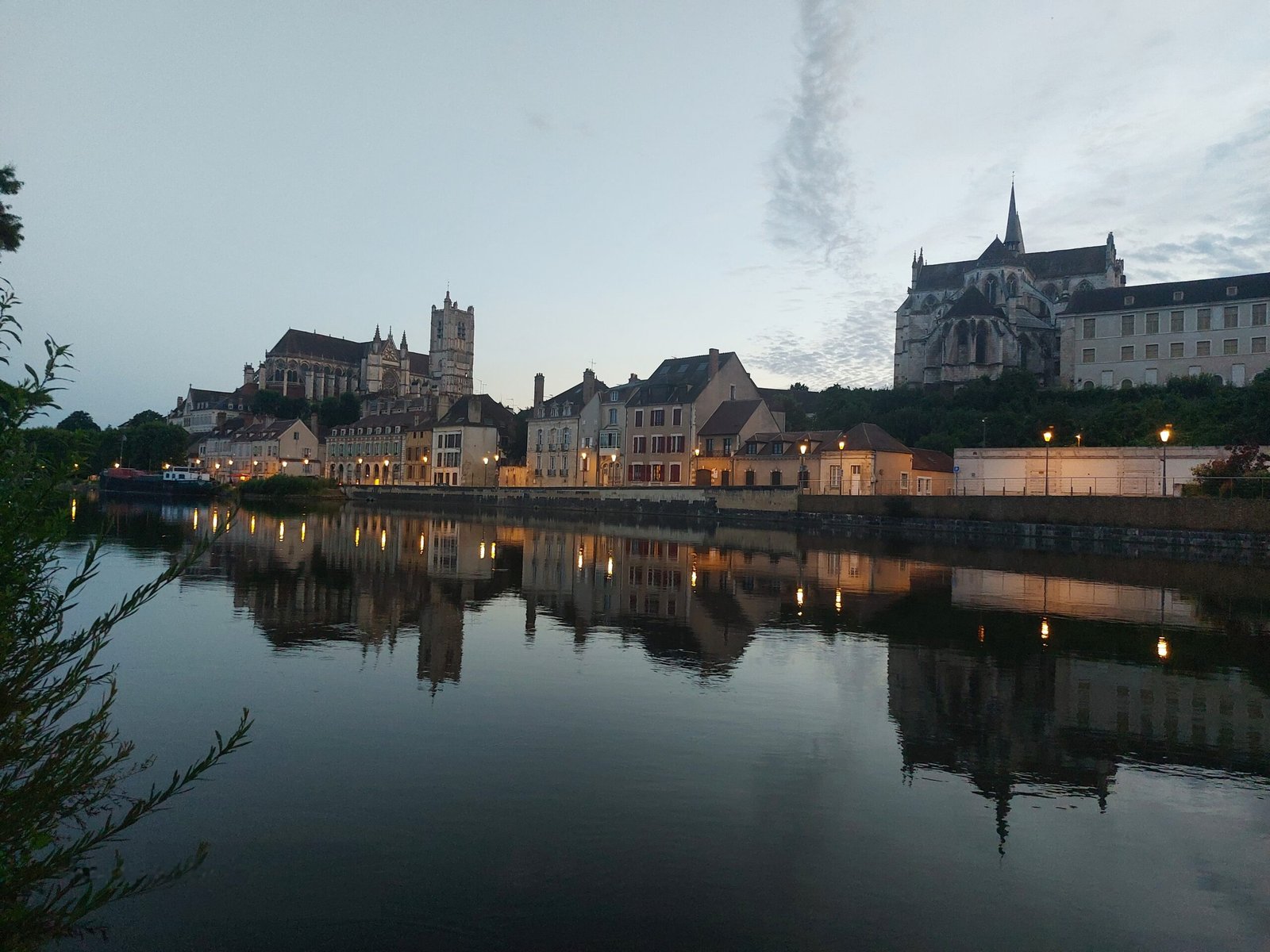
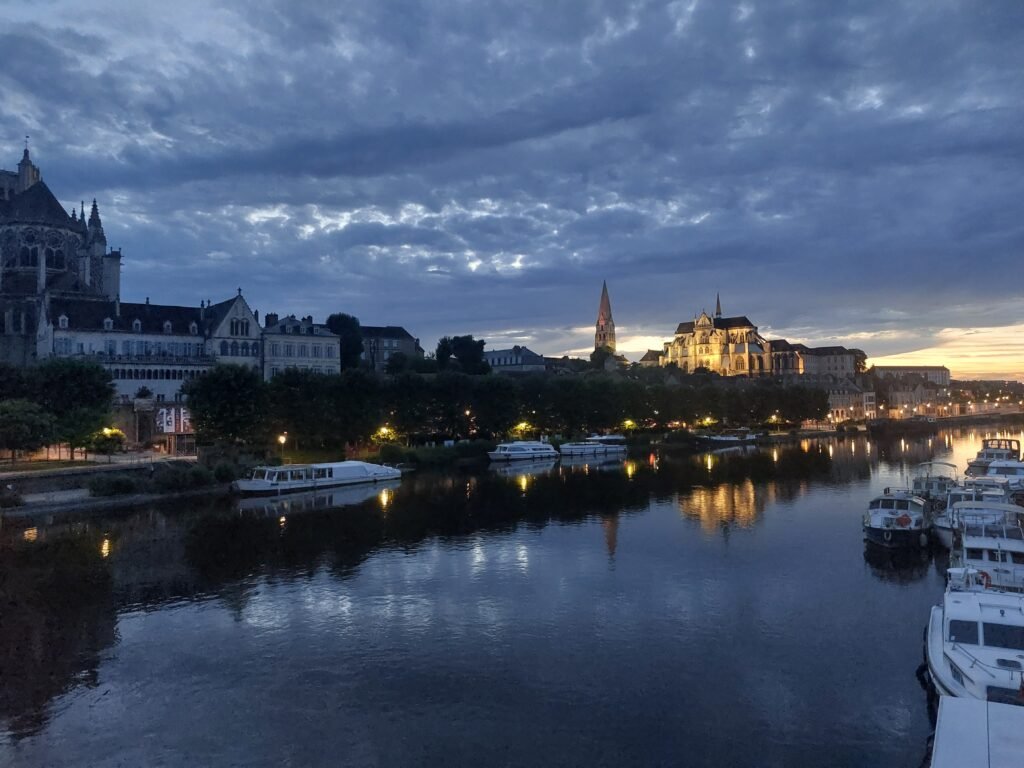
One of the most beautiful town in France – Auxerre
Official resource: Burgundy Tourism, the official regional board, for vineyard routes, canal boating, and their free cycling and wine maps.
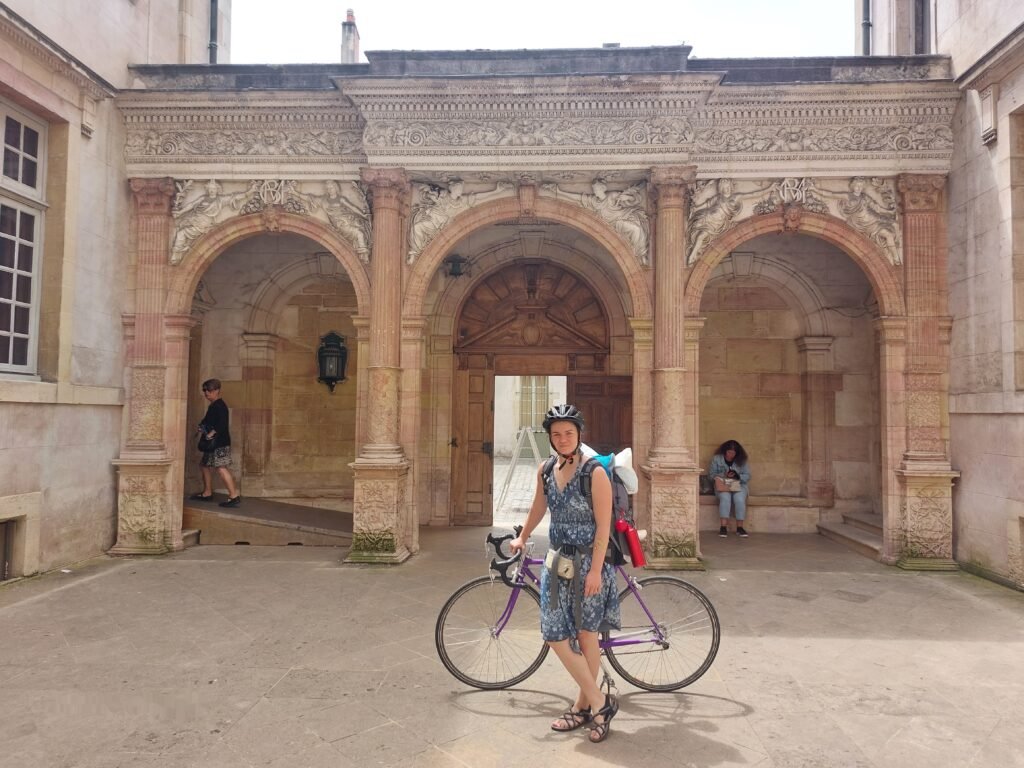
Read next on The Verse Voyager: Alexandra rode this region end to end, and her account of cycling Burgundy from Dijon to Vézelay is the best argument I know for doing it slowly. The Owl’s Trail through Dijon, the prehistoric cave paintings at Arcy-sur-Cure, a night in a hammock on the Yonne, and the hill town of Vézelay in the middle of its Father’s Day pilgrimage. It’s also a useful reality check on what three unhurried days here actually feel like.
9. Lyon and the French Alps
This is really two regions in a trench coat, and both are excellent. Lyon is France’s food capital and, quietly, one of its best cities: two rivers, a Renaissance old town threaded with covered passageways called traboules, a hill with Roman ruins and a basilica, and bouchons serving the kind of rich, unfussy cooking that Paris has mostly priced out. I’d take a weekend in Lyon over a lot of more famous places.
Then the land rises. East and south of Lyon you’re into the Alps, and this is where France goes vertical and spectacular. Annecy sits on a lake so clear it looks retouched, with a canal-laced old town that’s rightly one of the most photographed in the country. Grenoble is the gateway to serious mountains. Chamonix sits under Mont Blanc, the roof of Western Europe, where you can ride the Aiguille du Midi cable car to nearly 3,800 metres and stand among the peaks.
The Parc naturel régional du Massif des Bauges, between Annecy and Chambéry, is the authentic, under-the-radar version: quiet villages, cheese, and hiking without the Chamonix crowds. Geneva and the rest of Switzerland are an easy day trip from Annecy or Chamonix.
Who are Lyon and the French Alps for?
This pairing covers an unusually wide personality range, which is why it works so well for mismatched travel companions.
Lyon suits extraverts and high-openness food lovers. It’s a social, tactile, appetite-driven city, and the bouchon culture is about sitting close to strangers and eating things you can’t pronounce. If you travel through your senses, Lyon delivers more per day than almost anywhere in France.
The mountains flip the profile. Up here, emotional stability becomes the trait that matters most: weather turns, plans change, cable cars close, and a high-strung traveler will spend the week fighting circumstances. Conscientiousness matters too, in the practical sense of respecting conditions and planning properly. Low extraversion is entirely fine, since the Alps are one of the great regions for people who recharge in silence and open space.
The clear mismatch is anyone who wants flat, warm, and effortless. The Alps ask something of you physically, and travelers low in emotional stability often find altitude and unpredictability more stressful than exhilarating. If that’s you, stay in Lyon and Annecy and admire the peaks from the lakeshore, which is a perfectly good trip.
When is the best time to visit Lyon and the Alps?
Summer (June to September) for hiking, lakes, and the high cable cars. Winter (December to March) for skiing. Avoid the shoulder gaps (late spring, late autumn) when lifts close and the high mountains are between seasons.
How do you get to Lyon and the Alps?
TGV from Paris to Lyon in about 2 hours, to Annecy in around 3 hours 40 minutes, and onward to Chamonix by train or bus. Geneva airport is the closest gateway for the mountains.
What is the best way to visit Lyon and the Alps?
Trains reach Lyon, Annecy, Grenoble, and Chamonix. A car helps enormously for the Bauges, the smaller valleys, and trailheads. In winter, resort transfers are well organised.
What can you expect in Lyon and the Alps?
France at its most physical and its most delicious, sometimes on the same trip. Altitude, weather that changes fast, and scenery that earns every superlative.
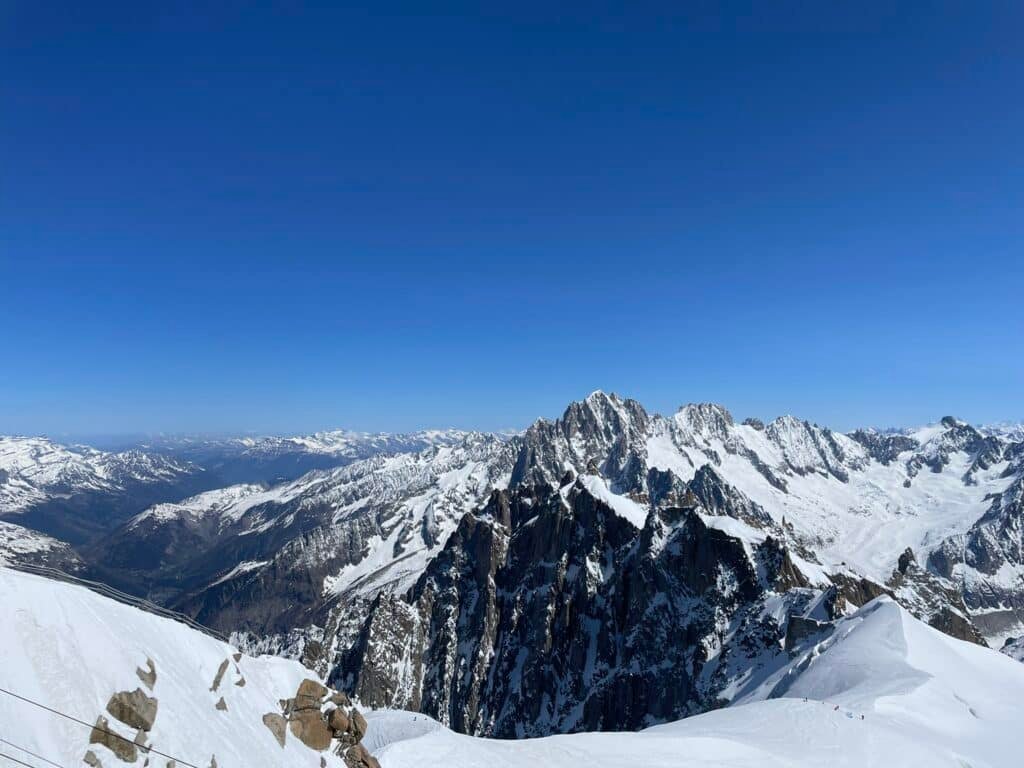
View of the highest mountain of Europe – Mont Blanc
Official resource: Explore France, Alps and Mont Blanc for lift opening seasons, which vary a lot and are worth checking before you book.
10. Provence
Provence is the France of the imagination for a lot of people, and for once the imagination is roughly right. Lavender fields in July on the Valensole plateau. Hilltop villages in the Luberon like Gordes and Roussillon, the latter built from ochre so vivid it stains your shoes. Aix-en-Provence, elegant and fountain-filled, with Cézanne’s light everywhere you look. Avignon and its Popes’ Palace. Markets that smell of melon and rosemary. And the Calanques near Cassis, white-limestone inlets dropping into water the colour of a swimming pool, some of the most beautiful coastline in France and reachable only on foot or by boat.
A word on Marseille, since people ask. It’s worth a day for the Vieux-Port, the Le Panier quarter, and the view from Notre-Dame de la Garde, and it’s the natural launch point for the Calanques. But be straight with yourself: it’s a big, raw port city, grittier than the Provençal postcard, and some quarters near the station feel rough after dark. Keep your city wits about you, enjoy the energy and the seafood, and don’t base your whole trip there. See it, then move on.
Who is Provence for?
Provence is openness in landscape form, and it’s the region I match most often to travelers who score high on that dimension. Art, light, markets, food, and hilltop villages that reveal themselves slowly. If you’re the kind of person who’d rather wander a market for two hours than see three monuments, this is your France.
Agreeableness fits the rhythm too, because so much of Provence happens through small exchanges: the stallholder, the winemaker, the person who tells you which village to skip. Low extraversion is no obstacle at all. Provence is one of the best regions in France for people who want beauty without a crowd, provided you time it right.
Two honest mismatches. High-extraversion travelers who want nightlife and energy will find the villages close early and quiet down, and they’re better served by the Riviera an hour away. And travelers lower in openness sometimes find that the hilltop villages blur together, since the pleasure here is textural rather than headline-driven. If you need a clear main event each day, Provence can feel like it’s withholding one.
The other variable is timing. A high-openness, low-extraversion traveler will love Provence in June and quietly hate it in August. Same region, different trip.
When is the best time to visit Provence?
Late June to mid-July for lavender in bloom (it peaks early to mid-July on the Valensole plateau, weather depending). May, June, and September for warmth without the August furnace and crush. Avoid August if you can: it’s hot, packed, and the whole of France is on holiday.
How do you get to Provence?
TGV from Paris to Avignon in about 2 hours 40 minutes, or to Aix-en-Provence TGV in around 3 hours. Both make excellent bases.
What is the best way to visit Provence?
A car is close to essential for the villages, the lavender, and the Luberon back roads, which are the whole point. Avignon and Aix are walkable and rail-linked, Calanque National Park; everything magical is in between.
What can you expect in Provence?
Heat, light, and beauty that lives up to itself. Book accommodation early for anywhere near the lavender in July.
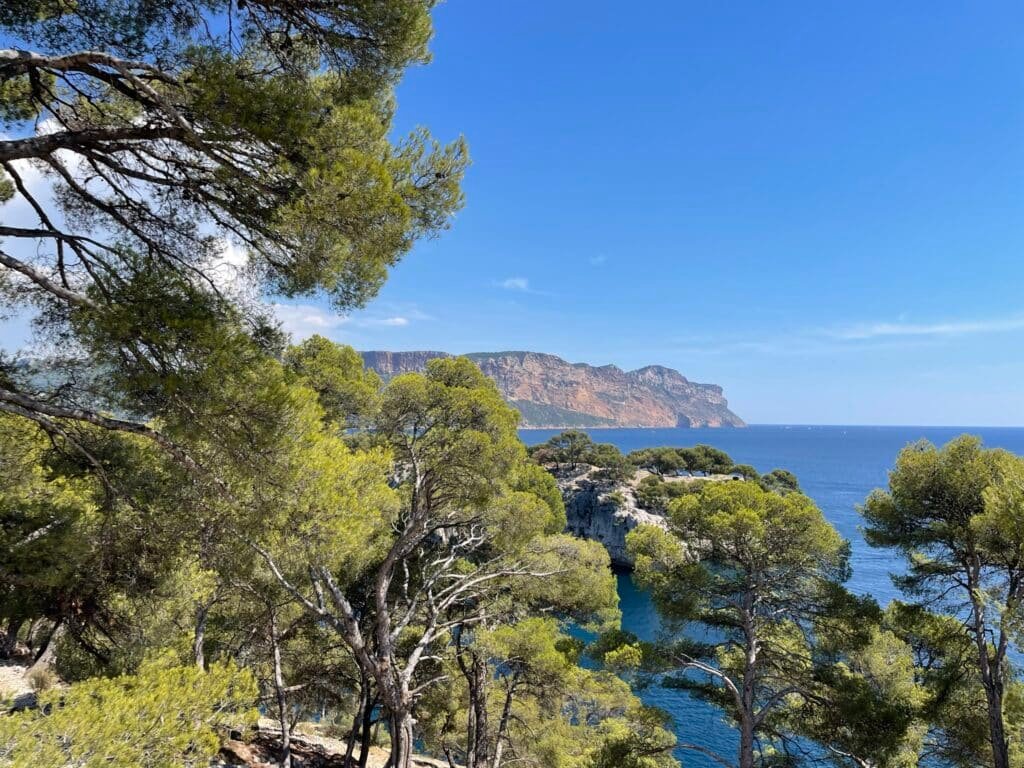
View while walking to a hidden beach in Calanque, France
Official resource: Provence-Alpes-Côte d’Azur Tourism, the official regional board, for lavender bloom updates and Calanques access rules, which change with fire risk in summer.
11. The Côte d’Azur (French Riviera)
The Riviera is the second most visited destination in France after Paris, and it knows it. This is the glamorous coast: Nice with its pebble beaches and its wonderful old town, Cannes and its film-festival strut, Saint-Tropez and its yachts, the perched village of Èze, Menton with its lemons on the Italian border, and Monaco glittering next door. The sea is a colour that gave the coast its name, the light drew half the great painters of the last century, and in summer the whole place hums with money and motion.
I’ll be honest about the trade. In July and August the Riviera is beautiful and exhausting in equal measure: coastal roads clogged, beach clubs full, prices at their peak. It’s also genuinely lovely, and if crowds and glamour are your idea of a good time rather than a chore, you’ll be in heaven. What most people miss is the hinterland: just behind the coast, the Parc naturel régional des Préalpes d’Azur gives you gorges, hill villages, and near-silence twenty minutes from the beach mania.
When is the best time to visit the Côte d’Azur?
May, June, and September for warmth without the peak crush. Avoid July and August unless the crowds are part of the appeal. Winter is mild and quiet, with a different, calmer charm.
How do you get to the Côte d’Azur?
TGV from Paris to Nice in about 5 hours 30 minutes, or fly into Nice Côte d’Azur airport, which sits right on the water. Nice is the natural hub for the whole coast.
What is the best way to visit the Côte d’Azur?
The coastal train between Nice, Monaco, Menton, and the Cannes side is frequent, cheap, and scenic, and it means you can skip the parking nightmare. A car helps only for the hinterland.
What can you expect in the Côte d’Azur?
Glamour, colour, crowds, and a sea worth every cliché. Base in Nice, use the train, and duck inland when the coast gets too much.
Official resource: Provence-Alpes-Côte d’Azur Tourism, the official regional board, for coastal transport, events, and the Préalpes d’Azur hinterland.
Who is the Côte d’Azur for?
The Riviera is the most extraversion-rewarding region in France, and it makes no apology for it. Everything here is built around being out, being seen, and being among people: the promenades, the beach clubs, the long social dinners, the sense that something is happening somewhere. If you draw energy from crowds and enjoy a bit of spectacle, you’ll be in your element.
Openness gets fed too, though in a different register than Provence. The art here is extraordinary, and the Matisse, Chagall, and Maeght collections reward anyone who came for more than the sea.
Now the counter-case, and it’s the sharpest in this guide. If you’re low in extraversion, the Riviera in summer is close to a worst-case match: expensive, crowded, loud, and structured around exactly the kind of social display that drains you. I’ve seen this mismatch ruin trips. If that’s your profile and you still want this coast, there are three fixes. Go in May or October, base yourself in Nice’s old town rather than the resort strips, and spend half your days inland in the Préalpes d’Azur, which is silent and empty twenty minutes from the noise.
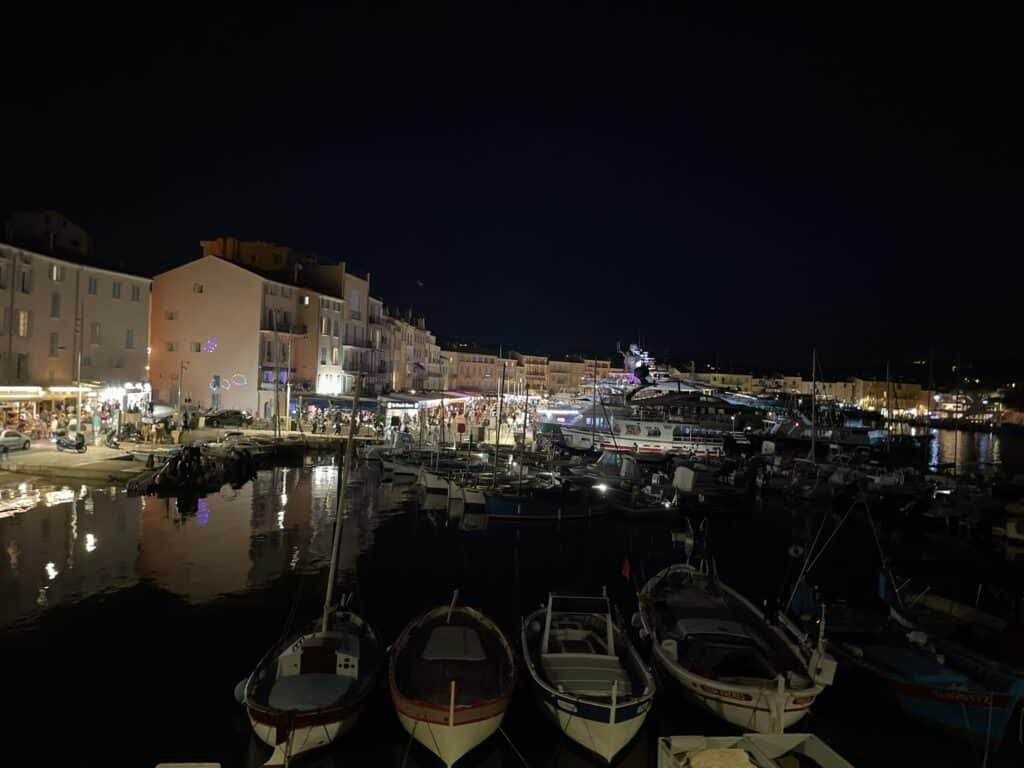
Port of Saint Tropez
Torn between Provence and the Riviera? They suit very different people. The quiz sorts it in two minutes. Find your France!
12. French Catalunya (Roussillon)
Down in the far south, pressed against the Spanish border, France turns Catalan. This is Roussillon, and it feels different: Perpignan with its Catalan colours and its palace of the Kings of Majorca, the fishing-village-turned-artists’-haunt of Collioure that Matisse and Derain made famous, the Côte Vermeille where the Pyrenees tumble into the Mediterranean, and Mount Canigou standing over it all like a local deity. Signs are bilingual, the food leans Catalan, and there’s a warmth here, in both senses, that the rest of France doesn’t quite have.
Who is French Catalunya for?
This region suits travelers high in openness to culture, the ones who find it genuinely interesting when a place doesn’t quite belong to the country it’s in. Roussillon is French administratively and Catalan in almost every other way, and noticing that difference is most of the pleasure.
It also rewards independence and a certain low need for polish. There’s less tourist infrastructure than an hour east on the Riviera, fewer things pre-packaged for you, and more room to work it out yourself. Travelers who enjoy that will find it one of the best-value corners of Mediterranean France.
Who’ll be frustrated: anyone who wants everything smooth, signposted, and in English. If high conscientiousness in you translates to wanting reliable systems and clear information, this region will feel underserved compared with the big destinations. And if you need a famous name attached to your holiday, Roussillon doesn’t have one. That’s precisely why it’s still quiet.
When is the best time to visit French Catalunya?
May, June, and September. Summer is hot and busier along the coast but still nothing like the Riviera.
How do you get to French Catalunya?
TGV from Paris to Perpignan in around 5 hours, or connect via Montpellier. It’s a long haul from the capital, so it pairs best with a wider southern trip.
What is the best way to visit French Catalunya?
A car for the Côte Vermeille and the villages. Trains link Perpignan and Collioure along the coast.
What can you expect in French Catalunya?
Mediterranean colour, Catalan character, and a fraction of the crowds you’d fight for the same sea an hour east.
Official resource: Explore France, Occitanie for Collioure, the Côte Vermeille, and Canigou walking routes.
13. The French Pyrenees
If you want the France that empties out, go to the Pyrenees. This is the great wild wall along the Spanish border, and it’s raw, high, and gloriously under-visited compared with the Alps. The Cirque de Gavarnie is a natural amphitheatre of rock and waterfalls that stops you where you stand. Lourdes draws millions of pilgrims a year and is a strange, powerful place whatever your beliefs. Spa towns like Cauterets and Ax-les-Thermes sit in deep valleys. And the trails, from gentle valley walks to serious high-mountain routes, are some of the best and quietest in the country.
Who are the French Pyrenees for?
This is the clearest personality match in the guide, and it’s the mirror image of the Riviera. The Pyrenees are for people low in extraversion, high in openness to experience, and high in emotional stability. Empty landscapes, long silences, weather that decides your day for you, and very few other travelers.
The emotional stability piece is not optional here. Remoteness means fewer safety nets, plans change with conditions, and the nearest anything is often a long drive down a valley. Travelers who find uncertainty energising will have one of the best weeks of their lives. Travelers who find it stressful will spend the week anxious in a beautiful place, which is a waste of both.
Conscientiousness helps in the practical sense: checking conditions, carrying the right gear, not starting a high route at two in the afternoon.
The mismatch is stark. High-extraversion travelers, comfort-seekers, and anyone who needs a scene, a nightlife, or a reliable hot shower after every walk will not enjoy this region and shouldn’t be talked into it. The Pyrenees don’t meet you halfway. That’s the entire appeal to the people who love them.
When is the best time to visit the French Pyrenees?
June to September for hiking, when the high passes are clear. Winter brings skiing to a handful of resorts, but the region is quieter and more limited than the Alps.
How do you get to the French Pyrenees?
It’s a genuine journey. TGV to Toulouse (about 4 hours 20 minutes from Paris) or Lourdes/Tarbes, then a car onward. Fly into Toulouse, Pau, or Lourdes to save time.
What is the best way to visit the French Pyrenees?
A car, without much question. The valleys and trailheads aren’t built for public transport, and the freedom to chase good weather between valleys is worth a lot here.
What can you expect in the French Pyrenees?
Big, wild, and quiet. Come for the mountains and the emptiness, not for towns or nightlife. Pack for changeable high-altitude weather even in summer.
Official resource: Explore France, Pyrenees for national park information and mountain conditions. Always check local refuge and weather updates before a high route.
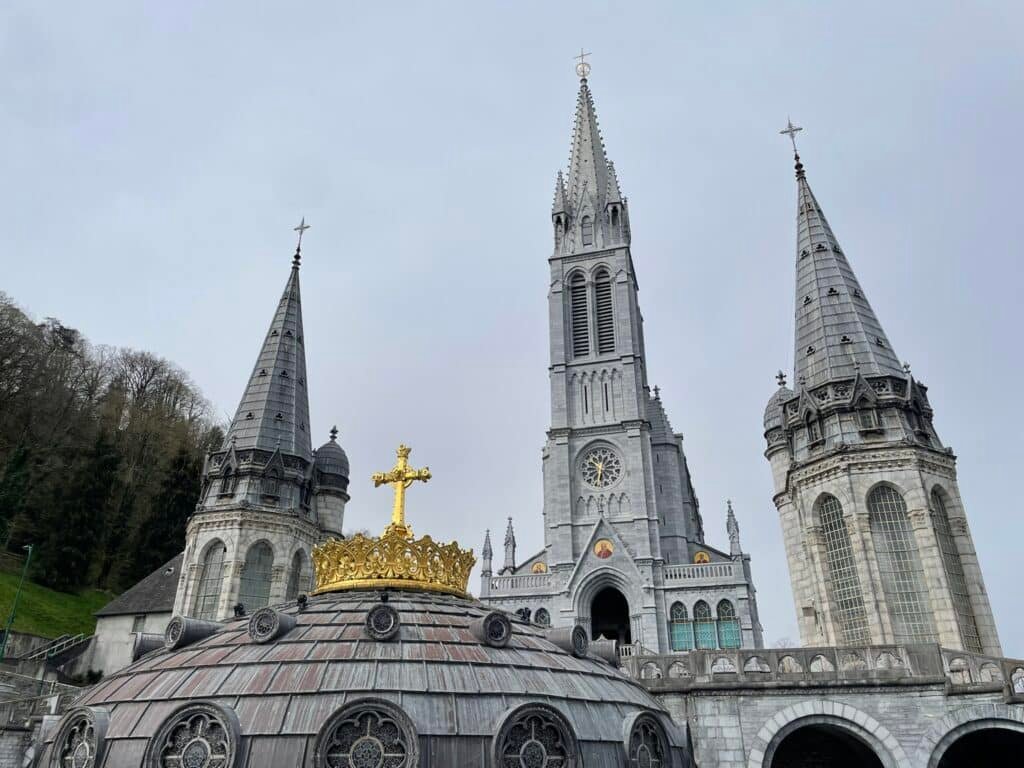
Cathedral de Lourdes, one of the most beautiful villages in France
14. The French Basque Country
Tucked into the southwest corner where France meets Spain on the Atlantic, the Basque Country is one of the most characterful regions in the country. Biarritz is the elegant surf town, all Belle Époque hotels and Atlantic rollers. Bayonne is the inland capital, a river city of tall shuttered houses, superb chocolate, and ham that people plan trips around. Saint-Jean-de-Luz is the pretty seaside base. And Espelette gives its name to the red pepper that flavours half the region’s cooking. It’s green, it rains more than the Med, and it has an identity all its own, its own language, its own sports, its own fierce local pride.
Who is the French Basque Country for?
The Basque Country is the most agreeableness-rewarding region in France. Warmth is the operating system here, and travelers who lead with openness to people rather than to sights get an enormous amount back: the food culture is social, the festivals are participatory, and the local pride is something you’re invited into rather than shown.
High extraversion thrives, particularly around the pintxos and cider-house culture and the easy hop over to San Sebastián. Openness to food is close to a requirement. This is one of the great eating regions of Europe, and a fussy palate will waste it.
It’s also unusually good for mixed groups, because the coast, the mountains, and the towns sit close enough together that a surfer, a hiker, and someone who just wants a long lunch can all have a good day and meet for dinner.
The mismatch: solitude-seekers and anyone who wants guaranteed sun. The Basque Country is green because it rains, and the social texture that makes it special can feel like a lot if you came to be left alone. For that, cross into the higher Pyrenees.
When is the best time to visit the Basque Country?
June to September for the beaches and the best weather. The surf is good year-round for those who chase it, but the region is greenest and wettest outside high summer.
How do you get to the Basque Country?
TGV from Paris to Biarritz/Bayonne in around 4 hours. Fly into Biarritz to save the journey.
What is the best way to visit the Basque Country?
Trains link the coastal towns (Bayonne, Biarritz, Saint-Jean-de-Luz) nicely. A car opens up the inland villages and the easy hop across to San Sebastián in Spain, which you absolutely should make.
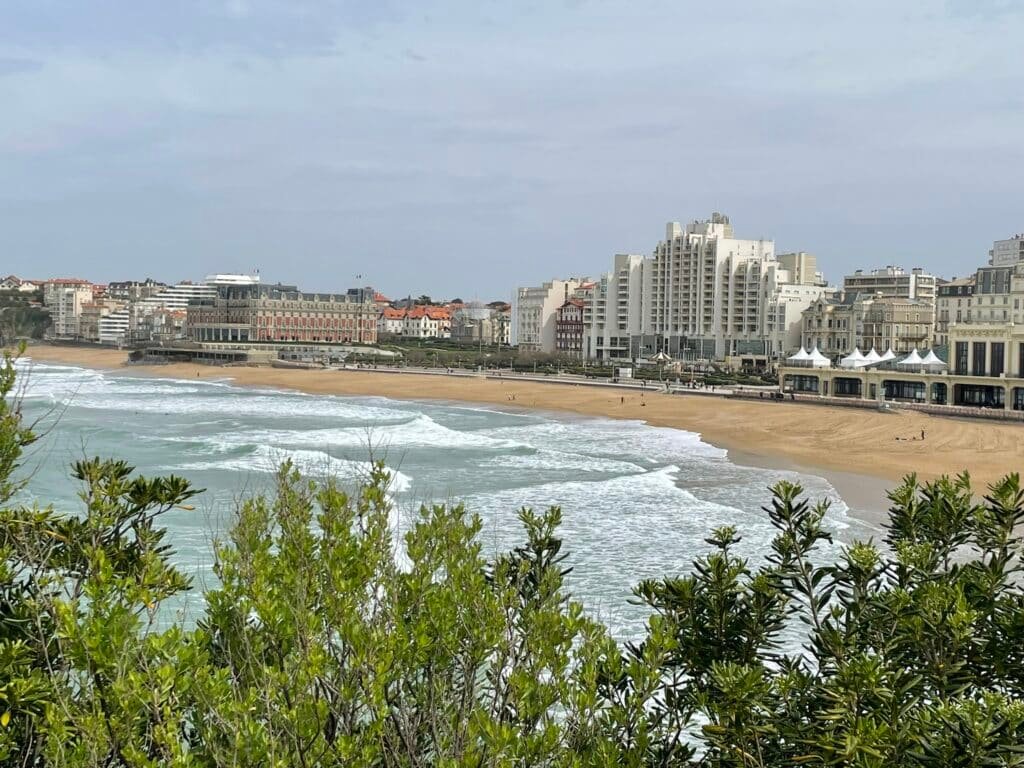
The shore of Biarritz, the jewel town of the French Atlantic Coast
What can you expect in the Basque Country?
Atlantic surf, exceptional food, and a culture that feels proudly separate. Bring a rain layer even in summer; this isn’t the dry south.
Official resource: Basque Country and Béarn Pyrenees Tourism, the official departmental board, for surf beaches, festivals, and inland villages.
15. Bordeaux and the Atlantic Coast
Bordeaux has quietly become one of the best city breaks in France. A decade of restoration turned it from grand-but-grimy into a golden-stone showpiece along the river, walkable and elegant, with a food and wine scene that needs no introduction. It’s the gateway to the world’s most famous wine country: the châteaux of the Médoc, and Saint-Émilion, a UNESCO-listed wine village built over cellars and honestly one of the loveliest small towns in the country.
But the region has a second act on the coast. An hour west, Arcachon is a genteel seaside town and the launch point for two things worth the detour: the Dune du Pilat, the tallest sand dune in Europe, which you climb for a view over pine forest on one side and the Atlantic on the other, and the oysters of the bay, eaten as fresh as it’s possible to eat them. This is also caviar country: French sturgeon caviar from the Aquitaine has become a serious rival to the old Russian and Iranian names, and you can taste it near the source.
Who are Bordeaux and the Atlantic Coast for?
This region suits high-conscientiousness travelers with refined tastes, the ones who enjoy craft, provenance, and things done to a standard. Wine here is a discipline, and the pleasure of a Médoc château visit or a Saint-Émilion cellar is largely the pleasure of watching people take something seriously. If detail delights you, this is your region.
Moderate openness and moderate extraversion both fit comfortably, which is why Bordeaux is one of the safest recommendations in France for couples or groups who don’t share a profile. The city is sociable without being demanding, and the Dune du Pilat and the Atlantic beaches add enough physicality to satisfy a restless traveler in the group.
The mismatch is narrower here than most places. High sensation-seekers will find the wine country slow, and travelers on a tight budget will find the famous châteaux and the caviar tastings priced accordingly. If you’re neither of those, Bordeaux is the strongest all-rounder in this guide, and the one I’d pick if a traveler’s profile came back balanced across all five dimensions.
When is the best time to visit Bordeaux?
May, June, and September for the wine country and warm-but-bearable coast. The September harvest is a highlight. Summer is lovely on the coast but busy.
How do you get to Bordeaux?
TGV from Paris to Bordeaux in about 2 hours 5 minutes, one of the fastest long-distance links in the country. Arcachon is under an hour onward by train.
What is the best way to visit Bordeaux?
Bordeaux is walkable and tram-served. A car or a booked tour helps for the Médoc châteaux and Saint-Émilion, though trains reach Saint-Émilion too. Trains cover Arcachon directly.
What can you expect in Bordeaux?
World-class wine, a beautiful and easy city, and a coast with a giant sand dune as its centrepiece. One of the smoothest regions in France to travel.
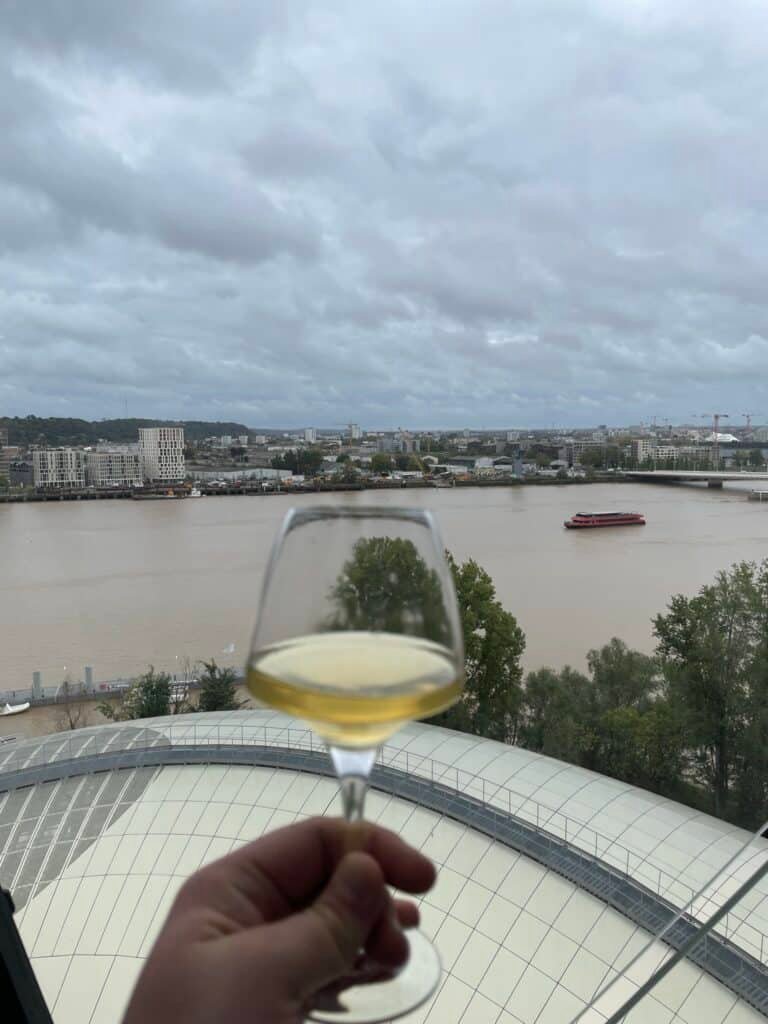
A glass of wine served with a view in Bordeaux, France
Official resource: Bordeaux Tourism, the city’s official board, for château visits, wine tours, and Arcachon day trips.
Bonus: Also worth your time
- The Dordogne (Périgord). Honey-coloured medieval villages, prehistoric cave art at Lascaux, castles on cliffs, walnuts, duck, and truffles. Slow, beautiful, and beloved of anyone who’s been. A car region.
- Corsica. France’s Mediterranean island, and closer in spirit to a country of its own: mountains that drop into turquoise water, one of Europe’s great long-distance hikes (the GR20), and a fierce local identity. Best in late spring and early autumn.
- Auvergne. Volcanoes (extinct ones, don’t worry), spa towns, cheese, and some of the emptiest, greenest walking country in France. The antidote to the crowded south.
Turning these regions into a France road trip
Here’s where the road-trip question comes in, because trains are brilliant between French cities and useless for reaching a lavender field or a hilltop village. My honest rule: use the fast TGV to cover the long distances between regions, then rent a car once you’re in a region to reach the parts that make it special.
A few France road trip routes that work beautifully:
- The eastern wine loop: Alsace to Lorraine to Burgundy, all villages, vineyards, and easy driving. One of the best first road trips in the country.
- The southern classic: Provence to the Côte d’Azur, hilltop villages to glamorous coast, ideally out of season.
- The southwest run: Bordeaux to the Basque Country to the Pyrenees, city to surf to summit.
- The château circuit: the Loire Valley on its own, castles and wine at a gentle pace.
If a full driving trip is what you’re after, I’ve written a dedicated guide to planning a France road trip that goes deep on routes, timing, and the logistics of driving here (tolls, city parking, the lot).
What about seeing France by bike?
Here’s the option most people never seriously consider, and I think that’s a mistake. France is one of the best cycling countries on earth, and not because of the Tour. It’s the D-roads: thousands of kilometres of quiet, well-surfaced departmental routes that connect village to village with barely a car on them, plus a national network of signposted long-distance routes and canal towpaths that are flat, traffic-free, and genuinely beginner-friendly.
A bike changes what a region is. At driving speed the Loire is a sequence of châteaux; at cycling speed it’s the distance between them, which turns out to be the better part. The same is true in Burgundy, where the canal routes are almost entirely flat and the vineyard climbs are short rather than punishing, and in Alsace, where the wine villages sit close enough together to make a perfect unhurried day.
It also suits a specific personality profile, which is why I take it seriously as an option rather than a novelty. Cycling rewards people high in openness who want the texture of a place rather than its highlights, and people comfortable with a degree of uncertainty about where the day ends. It punishes rigid planners and anyone who needs the schedule to hold. If you score low on emotional stability, a self-supported tour will stress you more than it delights you, and a lighter version with booked accommodation and luggage transfer is the better call.
The regions I’d start with: Burgundy for the canal towpaths and the vineyard back roads, the Loire Valley for the Loire à Vélo network, which is one of the best signposted routes in Europe, and Alsace for short distances between villages. Save the Alps and the Pyrenees for people who actively want the climbing.
Most and least touristic regions in France
People often want to know where the crowds are, either to find them or to flee them. Here’s the honest picture, grounded in the latest tourism data where it’s solid and kept directional where it isn’t.
France drew over 100 million international visitors in 2024, the most of any country on earth. That traffic is wildly concentrated. Paris and the Île-de-France region pull far more than anywhere else: the region welcomed roughly 48.7 million visitors in 2024 and accounts for around a fifth of all domestic overnight stays in the country. The French Riviera is the clear number two, drawing well over 10 million tourists a year and half the world’s superyacht fleet in summer. Behind those two, the Alps (the world’s most visited ski destination) and Provence round out the heavily-trafficked south and east.
At the other end sit the regions most international travelers never think to visit: Lorraine, the interior of the Pyrenees, French Catalunya (Roussillon), and the volcanic Auvergne see a fraction of the foreign visitors, which is precisely their appeal. (Exact per-region visitor counts for the quietest areas are patchy in the public data, so treat the “least visited” ranking as directional rather than precise. If you want hard figures, INSEE’s regional tourism tables are the source.)
See the infographic:
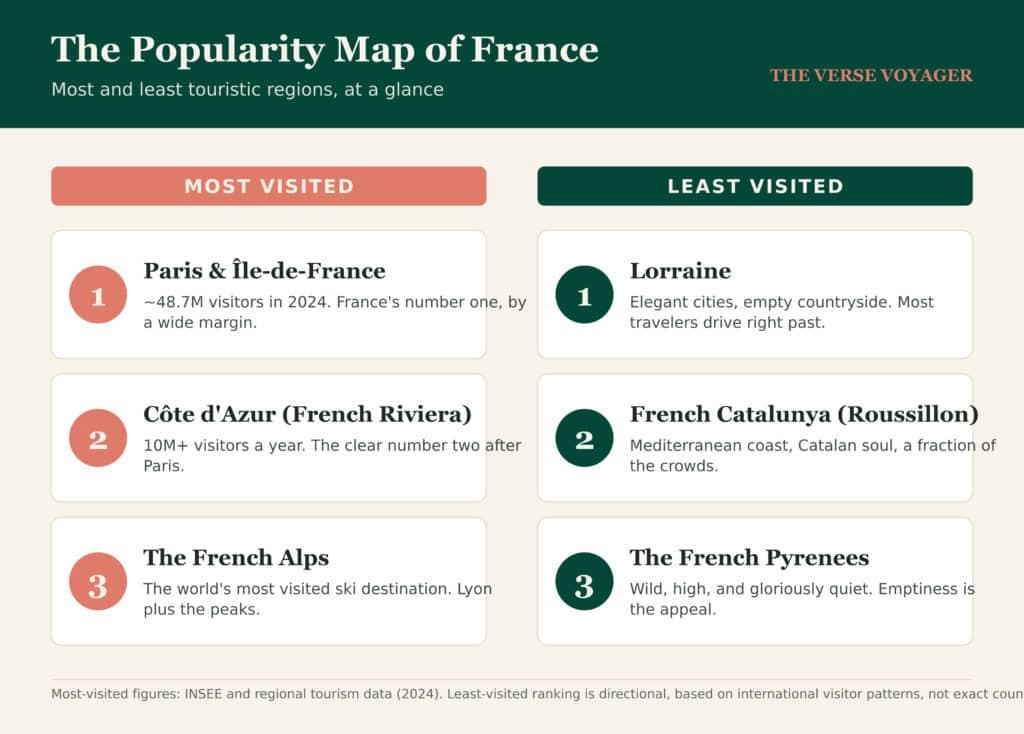
Most and least visited regions of France
Which region fits your personality? (The Big Five map)
This is the part I care about most, because it’s the whole reason The Verse Voyager exists. Most guides sort France by what there is to see. I sort it by who you are, using the Big Five personality model (openness, conscientiousness, extraversion, agreeableness, emotional stability). It’s the most validated framework psychology has for how people actually differ, and it maps onto travel preference far better than “adventurous vs relaxed” ever could.
The short logic:
- High openness (novelty, art, ideas, the unusual): Paris, Provence, the offbeat corners like French Catalunya. You want to be surprised.
- High conscientiousness (structure, planning, a clear thread): the Loire Valley, Alsace, Burgundy. Regions that organise themselves into a satisfying route.
- High extraversion (energy, people, being out and seen): the Côte d’Azur, Paris nightlife, the Basque surf towns. You recharge around others.
- Low extraversion / high need for calm (solitude, space, quiet): the Pyrenees, Lorraine, the Alps’ back valleys. You recharge in the empty places.
- High agreeableness (warmth, connection, local culture): the Basque Country, rural Burgundy, anywhere the welcome is part of the experience.
- High emotional stability (comfort with uncertainty and effort): the high Pyrenees, Alpine hiking, spontaneous driving trips. Discomfort doesn’t ruin your day.
See the infographic:
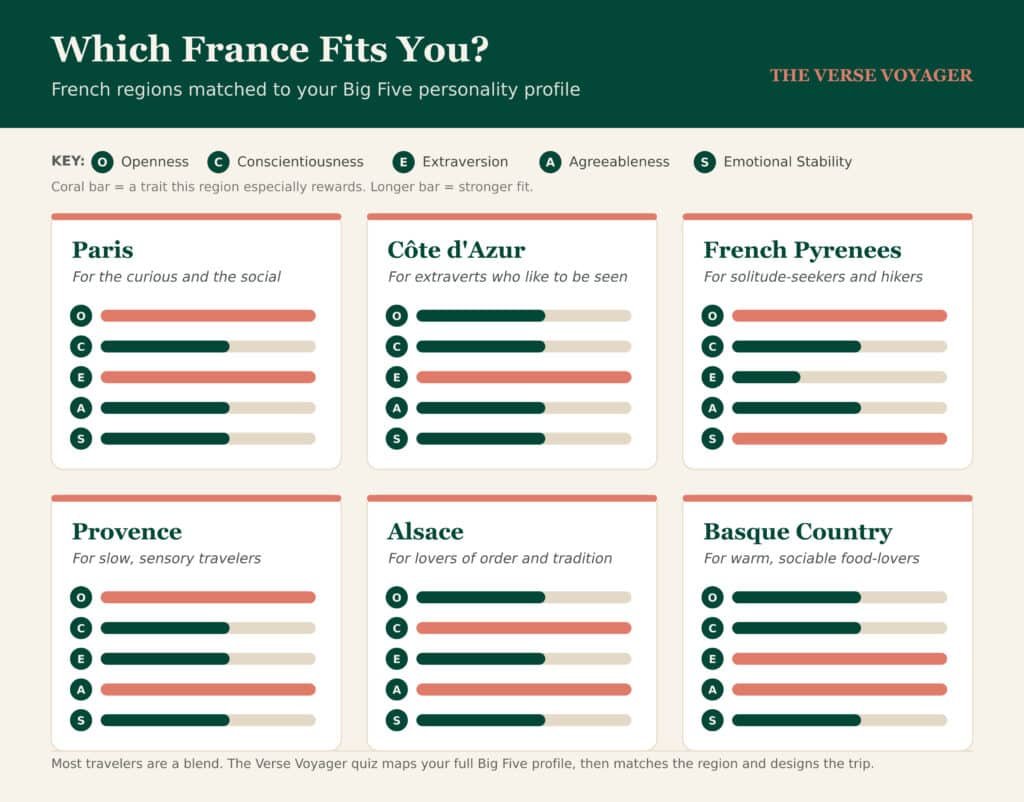
French regions by personality
Practical planning notes
How many days do you need in France?
For a first trip, ten days is the sweet spot: enough for Paris plus one region without the trip becoming a series of train stations. Seven days means one region done well, or Paris with a couple of day trips. Two weeks lets you add a third region or go deep into one. Resist the urge to add “just one more place.” France rewards depth over breadth almost every time.
Best time to visit France overall.
Late spring (May to June) and early autumn (September to October) are the best windows for most of the country: warm enough, not crowded, and prices below peak. July and August are hot, expensive, and busy, and much of France goes on holiday in August, which closes a lot of the good local places. Winter suits cities, Christmas markets, and the ski regions.
Getting around.
The TGV high-speed network is superb for long distances between cities and is almost always the right call city-to-city. Rent a car once you’re in a region that needs it (Provence, Alsace, the Loire, the Pyrenees, Burgundy). Book TGV tickets well ahead for the best fares, and remember the summer traffic on the drive south is legendarily bad on peak weekends. If the season is suitable you can opt also for mixed bike-train trips.
A note on budget for a trip to France
Costs swing hugely by region and season, so I won’t quote you a daily figure I can’t stand behind. The Riviera and Paris in summer are the expensive extremes; the quiet interior regions and the off-season are where your money stretches. Shoulder season is the single biggest lever you have on cost.
If you need help planning your trip to France to not hesitate to use The Verse Voyager travel planning services. Let’s get to know each other by booking a free discovery call.
FAQ
What is the best region in France to visit for the first time?
Paris plus one region reachable by fast train. The Loire Valley, Provence, Normandy, or Alsace all pair beautifully with Paris and give you a real contrast without a punishing journey.
What are the most beautiful villages in France?
Some of the strongest contenders sit in Alsace (Eguisheim, Riquewihr), Provence (Gordes, Roussillon), the Dordogne, and the Basque Country. France even has an official association of its “most beautiful villages” with around 175 members, which is a useful shortlist if you want to plan around them.
What are the most beautiful cities in France besides Paris?
Bordeaux, Lyon, Strasbourg, and Nice are the usual answers, and rightly so. Each is walkable, distinctive, and worth several days rather than a rushed afternoon.
How many days do you need to see France?
Ten days is ideal for a first trip covering Paris and one region. You can’t “see France” in one visit, and trying to is the most common way to ruin an otherwise good trip.
Is it better to travel France by train or car?
Both, in that order. Take the TGV between regions, then rent a car within a region to reach the villages, vineyards, and coastlines that trains don’t serve. You can also consider traveling for some portions by bike in certain seasons.
When is the best time to visit France?
May, June, September, and October for most of the country. Avoid August if you can, and go in winter only for cities, Christmas markets, or skiing.
Which region of France is best for avoiding crowds?
Lorraine, the French Pyrenees, French Catalunya, and the Auvergne see far fewer international visitors than the famous south. Quiet, not lesser.
The honest conclusion
There is no single best place in France, and anyone who gives you one is selling something. There’s the best place for you, on this trip, in this season, given the person you actually are rather than the traveler you think you should be. Paris and one well-chosen region will beat a frantic five-region dash every time. The famous south is famous for good reason and exhausting in August for the same reason. And the quiet regions, the ones I keep nudging you toward, are where a lot of people have their best day in France without a single landmark in sight.
If you take one thing from all these words, let it be this: choose the France that matches you, then go slowly enough to enjoy it.