
Tag: georgia

  • From Stalin’s Birthplace to Khachapuri: Unveiling 6 Georgian Hidden Gems

    From Stalin’s Birthplace to Khachapuri: Unveiling 6 Georgian Hidden Gems

    Joseph Stalin’s birthplace, Georgia, the captivating country nestled at the crossroads of Europe and Asia, offers a perfect blend of history, culture, and breathtaking landscapes. From ancient cities to alpine retreats, Georgia is a treasure trove for travelers seeking an authentic experience. This small but diverse nation is home to a rich history, where the influence of the Georgian Orthodox Church, the legacy of Joseph Stalin, and the artistry of the Georgian alphabet all intertwine to create a unique identity.

    History lovers can explore Stalin’s birthplace in Gori, gaining insight into the early life of one of the most controversial figures in modern history. Meanwhile, food enthusiasts will delight in the irresistible flavors of Khachapuri, Georgia’s famous cheese-filled bread, which represents the country’s warm and hospitable culture. The country’s stunning landscapes range from the majestic mountains of Kazbegi to the picturesque seaside of Batumi, ensuring there’s something for every kind of traveler. Whether you’re an adventurer, a history buff, or a culinary explorer, Georgia promises an unforgettable journey. Here are six must-visit places in this extraordinary nation:

    6. Stalin’s Birthplace – Gori

    One of the most intriguing sites in Georgia is the birthplace of Joseph Stalin, located in the city of Gori. The town’s main attraction is the Stalin Museum, where visitors can explore the life and legacy of one of history’s most controversial leaders. The museum houses Stalin’s personal belongings, photographs, and even the train carriage he used for travel. Outside the museum, you can see the house where Stalin was born, a humble wooden structure that provides insight into his early life.

    Gori stands as a significant location in Joseph Stalin’s country, as it played a crucial role in shaping the young revolutionary. Walking through the museum, visitors can examine exhibits detailing Stalin’s rise to power, his policies, and his influence on world history. The town itself still carries remnants of the Soviet era, making it a fascinating destination for those interested in the political past of the region. Beyond Stalin’s legacy, Gori is also home to stunning Georgian Orthodox churches, where travelers can witness the deep religious traditions that have influenced the country’s cultural identity for centuries.

    For those keen on exploring more of Georgia’s unique heritage, Gori offers a chance to experience the Georgian alphabet firsthand, as many inscriptions and plaques showcase this ancient and beautiful script. Whether you’re delving into the complexities of Stalin’s life, admiring the architectural beauty of its churches, or appreciating the artistic elegance of the Georgian alphabet, Gori provides a compelling mix of history and culture. For history buffs and curious travelers alike, this city offers a fascinating glimpse into the past of this enigmatic figure from the Soviet era.

    stalin's-birthplace-gori

    5. Kutaisi – The Ancient Capital

    Kutaisi, one of the oldest continuously inhabited cities in the world, is a historical and cultural gem that beautifully reflects Georgia’s rich heritage. Once the capital of the ancient Kingdom of Colchis, this city played a crucial role in shaping the nation’s identity. It is home to the UNESCO-listed Gelati Monastery, a masterpiece of medieval Georgian architecture, where visitors can admire breathtaking frescoes and learn about the deep influence of the Georgian Orthodox Church on the country’s spiritual and artistic traditions. Another must-see landmark is the Bagrati Cathedral, a symbol of Georgian unification and resilience.

    For those interested in history, Kutaisi’s past is intertwined with the Soviet era, and remnants of this influence are still visible today, serving as a reminder of Georgia’s complex political journey, including its time as part of Joseph Stalin’s country. An old story written with the Georgian alphabet.

    Nature lovers can venture outside the city to explore the Prometheus Cave, a mesmerizing underground wonder adorned with stalactites and stalagmites, or take a trip to the Martvili Canyon for breathtaking boat rides through emerald-green waters. Whether you are drawn to its ancient religious sites, the beauty of the Georgian alphabet, or its role in Georgia’s historical narrative, Kutaisi is the perfect destination for those who love a mix of history, culture, and adventure.

    stalin's-birthplace-kutaisi-georgia

    4. Tbilisi – The Heart of Georgia

    Tbilisi, the vibrant capital of Georgia, effortlessly combines the old with the new. The city’s charming Old Town is a labyrinth of narrow streets, colorful houses, and historic landmarks. A visit to the iconic Sameba Cathedral and Metekhi Church will introduce you to the rich traditions of the Georgian Orthodox Church. Walking across the futuristic Peace Bridge and riding the cable car to Narikala Fortress offers breathtaking views of the city.

    Tbilisi is also a haven for food lovers, with an abundance of restaurants serving traditional Georgian dishes like Khachapuri, a cheesy bread that is a must-try for visitors. The city’s culinary scene is particularly famous for the Khachapuri, a pie filled with molten cheese, butter, and topped with a runny egg, or with meat, or even with beans. No visit to Tbilisi is complete without indulging in this mouthwatering specialty.

    Beyond its historical and gastronomic appeal, Tbilisi boasts a lively nightlife, trendy cafes, and an arts scene that blends contemporary creativity with centuries-old traditions. Whether you’re exploring its ancient churches, tasting its delicious cuisine, or simply wandering its picturesque streets, Tbilisi is a destination you won’t forget.

    tibilisi-georgian-alphabet

    3. Batumi – The Pearl of the Black Sea

    Batumi, Georgia’s premier seaside resort, is a unique blend of modern architecture, relaxing beaches, and lush botanical gardens. The city’s waterfront promenade, known as Batumi Boulevard, is perfect for a leisurely stroll with stunning views of the Black Sea. Batumi’s skyline is dotted with innovative structures, including the Alphabet Tower, a tribute to the beautiful and unique Georgian alphabet. Visitors can also explore the historic Gonio Fortress or relax at the Batumi Botanical Garden, home to diverse flora from around the world. With its mix of history, entertainment, and natural beauty, Batumi is an excellent stop on any Georgian adventure.

    batumi-georgia

    2. Kazbegi – The Majestic Mountains

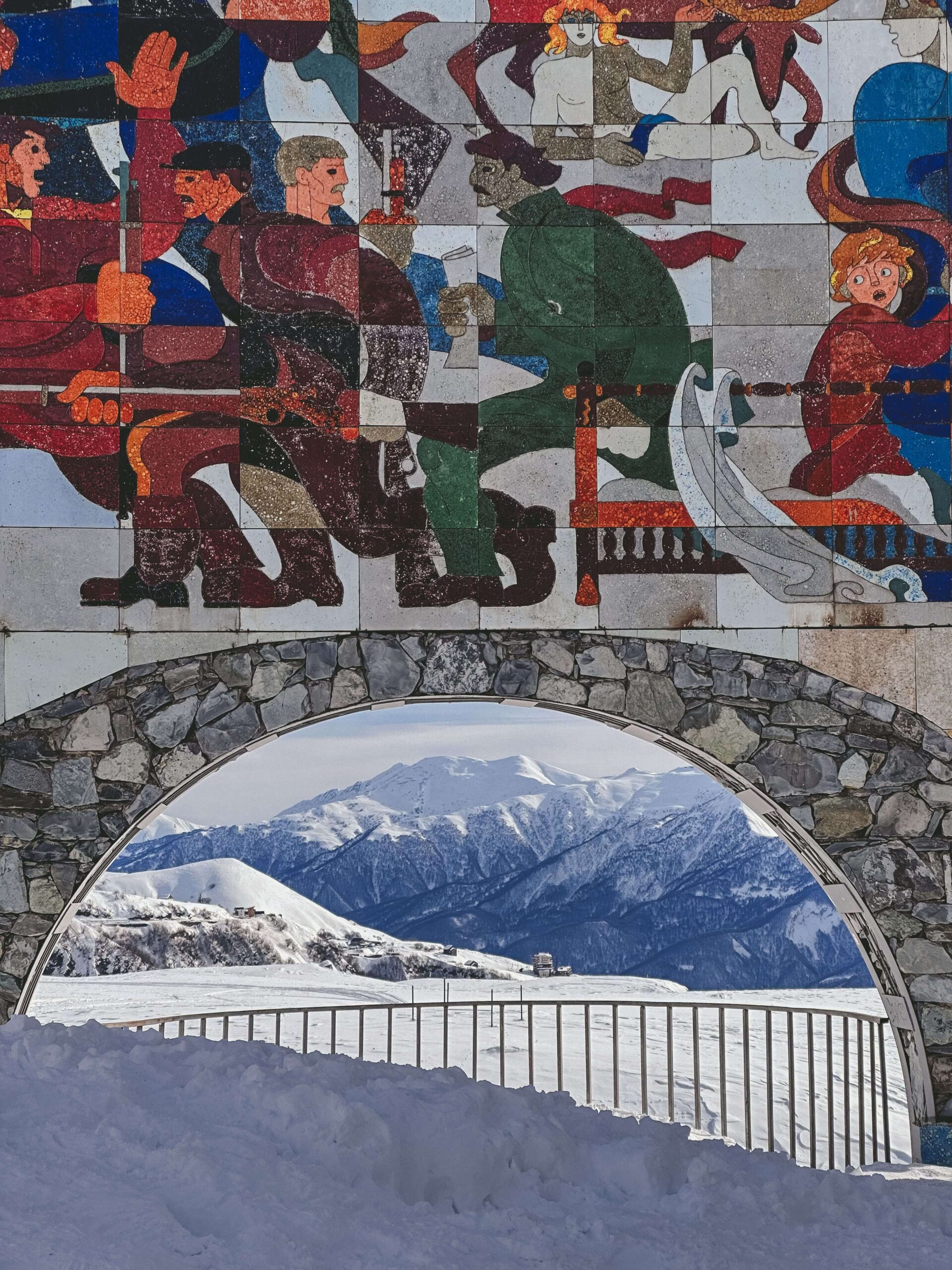
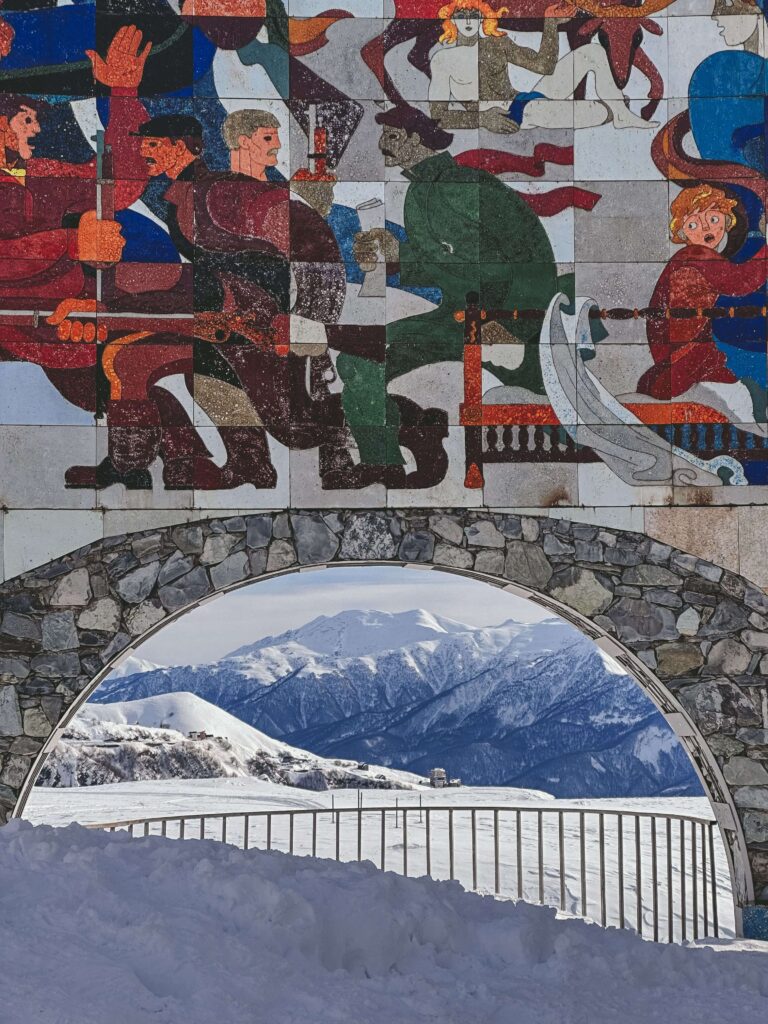
    For those seeking breathtaking landscapes, Kazbegi is a must-visit destination in Joseph Stalin’s country, Georgia. Located in the Greater Caucasus Mountains, this region is famous for its rugged beauty and the iconic Gergeti Trinity Church, a stunning example of Georgian Orthodox Church architecture, perched on a hilltop with Mount Kazbek as a breathtaking backdrop. The journey to Kazbegi via the Georgian Military Highway is an adventure in itself, offering picturesque views of towering mountains, rushing rivers, and ancient watchtowers that tell the story of Georgia’s rich history.

    While exploring Kazbegi, visitors can immerse themselves in Georgia’s unique culture, including the Georgian alphabet, one of the world’s oldest and most distinct writing systems. The region also carries historical significance, as Georgia is Stalin’s birthplace, with the Soviet leader being born in the town of Gori, not far from Kazbegi. Whether you’re hiking through scenic trails, exploring the dramatic Dariali Gorge, or simply breathing in the crisp mountain air, Kazbegi is a paradise for nature lovers, history enthusiasts, and photographers alike.

    You can always book an one day trip to Kazbegi from Tibilisi.
    kazbegi-georgia

    1. Svaneti – The Land of Legends

    Svaneti, a remote and mystical region, is arguably the most breathtaking part of Georgia, where ancient traditions meet awe-inspiring natural beauty. Nestled in the heart of the Caucasus Mountains, Svaneti is famous for its towering medieval stone watchtowers, rugged peaks, and rich cultural heritage. This isolated land has preserved Georgia’s oldest customs, language, and way of life, making it a living museum of the country’s past.

    The town of Mestia serves as the gateway to this mountainous wonderland, where visitors can immerse themselves in Svan culture, known for its unique traditions, polyphonic singing, and warm hospitality. Adventure seekers will find no shortage of thrilling experiences, from hiking to the pristine Koruldi Lakes, which offer breathtaking panoramic views, to trekking through the dramatic landscapes of Ushguli, one of the highest continuously inhabited settlements in Europe and a UNESCO World Heritage site. Skiing enthusiasts can also enjoy the slopes of Tetnuldi and Hatsvali, making Svaneti a year-round destination for nature lovers and thrill-seekers alike.

    The journey to Mestia is an adventure in itself, with winding mountain roads and spectacular scenery along the way. If you’re up for the challenge of navigating Georgia’s wild mountain passes, be sure to check out my extreme driving adventure article to Mestia—it’s a ride you won’t forget! Whether you’re drawn to Svaneti for its history, landscapes, or adrenaline-pumping activities, this region remains the crown jewel of Georgia, offering an unforgettable experience at every turn.

    svaneti-georgia

    0. Georgian cuisine

    Georgian cuisine is a delightful fusion of flavors, deeply rooted in the country’s rich history and diverse cultural influences. Situated at the crossroads of Europe and Asia, Georgia’s culinary traditions reflect a unique blend of Slavic heartiness and Oriental spices, creating dishes that are both comforting and vibrant. Known for its generous use of fresh herbs, aromatic spices, and hearty ingredients, Georgian food is a true culinary adventure.

    One of the most iconic dishes is Khachapuri, a delicious, cheese-filled bread that comes in various regional styles, including the famous Adjarian Khachapuri pie, shaped like a boat and topped with a runny egg. Another staple is Khinkali, juicy dumplings filled with spiced meat or cheese, best enjoyed by biting into them to savor the flavorful broth inside. Georgia’s soups are equally noteworthy, with Kharcho, a rich and spicy beef soup thickened with walnuts and flavored with tkemali (sour plum sauce), standing out as a favorite. Chikhirtma, a traditional Georgian chicken soup with eggs and vinegar, is known for its restorative qualities and is often enjoyed as a remedy for colds.

    Georgia’s culinary traditions are closely tied to its social culture, where feasts, known as Supras, are accompanied by heartfelt toasts and the finest local wines. Whether you’re indulging in grilled meats, rich stews, or fresh vegetable dishes, Georgian cuisine offers an unforgettable taste of the country’s warmth and hospitality.

    cuisine

    Conclusion

    From the historic streets of Tbilisi to the dramatic peaks of Svaneti, Georgia is a country that captivates the heart and soul of every traveler. Whether you’re drawn to the legacy of Joseph Stalin, the ancient churches of Kutaisi, or the irresistible taste of Khachapuri, Georgia offers a diverse and enriching experience. No matter where your journey takes you, the warmth of Georgian hospitality and the country’s breathtaking landscapes will leave an unforgettable impression. So pack your bags and embark on a journey to discover Georgia’s hidden gems!

    If you enjoyed this article and want to read more about my travels, don’t forget to comment below and read my other articles! Stay tuned for more adventures by following my Instagram page and feel free to contact me if you need help in crafting your own adventures.
  • LOST IN the Highest Mountains in Europe: Surviving 130 km TO MESTIA

    LOST IN the Highest Mountains in Europe: Surviving 130 km TO MESTIA

    A Cheap Workation in Northern Greece: Exploring Off the Beaten Path Destinations

    It’s quite strange how, in a world obsessed with “the biggest,” “the most beautiful,” “the most expensive,” and basically “the most everything,” there’s still a place of immense significance that remains almost untouched by most people. I’m talking, of course, about the highest mountains in Europe—the mighty Caucasus.

    In the winter of 2024, during my trip to Georgia, I decided to timidly dip my toes into exploring these colossal peaks. I started with a short visit to Kazbegi, where I got a glimpse of their sheer grandeur. But what truly captured my imagination was Svaneti—a land far more remote, far less known. One of the hidden gems in Europe, fiercely guarded by the Caucasus Mountains, where time itself seems to slow down, protecting a small but extraordinary ethnic group—the Svans. With their own language, traditions, and way of life, they have remained remarkably untouched by the outside world.

    My curiosity burned like a winter fire, but getting there—especially in January—was no smooth ride. The journey was an adventure in itself, filled with unexpected twists, turns, and a fair share of challenges. In this article, I’ll share my brief but unforgettable experience in Mestia, the heart of Svaneti, and the wild road that led me there. Buckle up—it’s going to be a bumpy ride!

    LOST IN the Highest Mountains in Europe: A good story starts with a good pie and a rifle

    I had been driving on Georgia’s far-from-perfect roads for quite some time, leaving behind me the last villages and the last soviet remains, being fully aware that the real challenge was about to begin—a grueling 130-kilometer stretch through the highest mountains in Europe to reach Mestia, the heart of Svaneti. I was in a bit of a hurry, knowing the road would be tough, daylight was short, and driving at night was absolutely out of the question.

    Still, my stomach had its own plans. I needed a break—some rest, a quick bite—so I stopped at what the map claimed was the last roadside stop (and indeed, it was the last one). A tiny wooden hut, standing precariously on the edge of a curve, nestled deep in the mountains. There, they sold Georgia’s legendary khachapuri, a pastry overflowing with rich, local cheese—the kind that melts your worries away.

    Behind the counter stood a young woman, probably in her early twenties, dressed simply but with an expression that quickly shifted from neutral to deeply confused as she realized I spoke neither Svan nor Georgian. For a brief moment, we just stared at each other—me, hungry; her, puzzled. Then, like a lightbulb flickering on, she figured it out: if I had stopped there, of course, I wanted exactly what everyone else did—a hot drink and a warm, cheesy pie. With the help of some dramatic hand gestures and an intense game of charades, I finally got my hands on the much-desired khachapuri. And it was divine.

    the-highest-mountains-in-europe-soviet

    As I sat inside the tiny cabin, savoring every bite, something outside caught my eye—something equal parts hilarious and mildly alarming. A group of men, clearly locals, were gathered right in the middle of the icy road, playing with a shotgun. Their flushed faces and swaying movements gave away their intoxication, but what truly sealed the deal was their choice of entertainment: making snowballs, tossing them into the air, and trying to shoot them mid-flight. There they were—wobbling, tipsy, waving around a loaded shotgun—on a frozen mountain road, right in a curve. What could possibly go wrong?

    From my experience, people engage in dangerous activities for one of two reasons:

    1. They are completely unaware of the risk (which seemed unlikely, as no one from the roadside stop was running out to stop them).
    2. They live with constant danger, to the point where things that seem insane to the rest of us feel perfectly normal to them.

    That last thought sat uneasily with me as I got back in my car, ready to continue my journey.

    I knew driving through the highest mountains in Europe in January would be tough—but I hadn’t expected it to turn into an extreme driving experience.

    the-highest-mountains-in-europe-locals

    LOST IN the Highest Mountains in Europe: A portal to a mystical land

    I have to admit, the road to Mestia, Georgia can be summed up in just two words: exhausting and nerve-wracking. Over 100 kilometers of endless switchbacks, winding through dark valleys and towering mountains, on a road that looked like it had survived a bombing raid. And in a way, it had—only the bombardment here was entirely natural, caused by landslides and avalanches. These are the obstacles that putting out of sight one of the hidden gems in Europe.

    In many places, the remnants of what once was asphalt were more of a hindrance than a help—more craters than road, really. Luckily, my high-clearance 4×4 allowed me to crawl along at a daring 20, sometimes even 30 km/h. For about three, maybe three and a half hours, I drove through the same haunting scenery—a sheer rock face on the left, a dizzying abyss on the right, endless switchbacks, and a game of “choose the smallest crater” to keep things interesting. So far, not such an extreme winter driving experience.

    But what made the drive truly unsettling was the mountain itself, which—with infuriating consistency—sent down hundreds, sometimes thousands, of small rocks tumbling onto the road. Sometimes they were harmless little pebbles, but other times, they grew into ominously large stones, dropping just 5–10 meters in front of me, forcing me to exhale in relief every single time they didn’t land on my car.

    Every now and then, the road would tease me with a stretch of “good asphalt” (a term that, after this journey, had become extremely relative). Just as I’d allow myself to speed up a little, I’d be slammed back into reality—forced to brake hard as yet another crater field appeared, as if the aftermath of a meteor shower had just materialized in front of me.

    And then, the real surprise. On one of these rare “clean” sections, I pressed the gas a bit more confidently. Coming out of a curve, I suddenly discovered my lane was gone. No signs, no warnings—just a void where the road should have been. A massive chunk had simply collapsed into nothingness, forcing me to yank the steering wheel hard to the left. Luck was on my side—no one was coming from the opposite direction.

    This delightful near-death experience happened just past the halfway point. And weirdly enough, it was exactly the adrenaline injection I needed to power through the rest of the journey.

    the-highest-mountains-in-europe-mestia-road

    Then, suddenly, it felt like I had emerged from an endless tunnel of cliffs, abyss, and despair into a world that finally opened up. A small clearing appeared, and with it—the first house I had seen in what felt like an eternity. The first sign of human life after 100 kilometers of untamed wilderness.

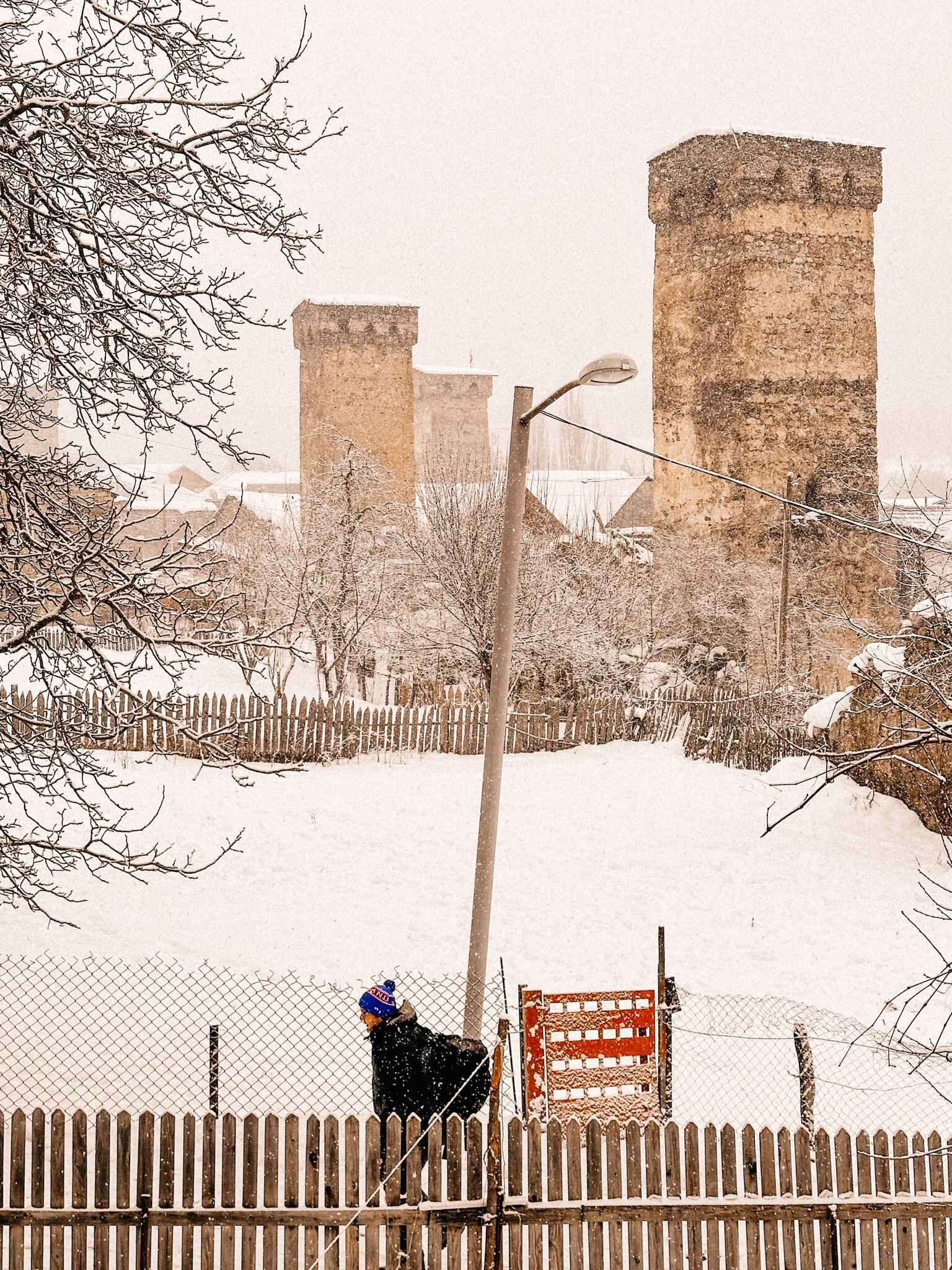
    And then, as if on cue, the snow began to fall. Not a blizzard, not a violent storm—just a soft, gentle snowfall. Large, lazy flakes drifted down, almost like a holy water blessing, washing away my tension, my stress, my anxiety. It felt like a divine sign whispering, You made it. You’re safe now. At that moment, in the distance, I saw them—dozens of ancient stone towers rising against the snowy landscape, announcing my arrival in Mestia Georgia. The majestic Svan Towers.

    That moment—the peaceful snowfall wrapping around the legendary Svan towers—is forever burned into my memory. I felt as light as the falling snowflakes, as happy as a child on Christmas Eve, and as proud as a mountaineer reaching the summit. I had conquered this monstrous road. I had passed through a twisted, merciless portal of stress, chaos, and anxiety. I had suffered enough, and in return, I had been transported into a breathtaking winter painting, straight out of Monet’s imagination.

    I had endured. And now, I could finally enjoy my reward. Or at least, that’s what I thought…

    They say heaven hides in the skies,
    But it’s more hidden where our feet lie.
    One heaven shines in joy and grace,
    Another’s cloaked in dark disgrace.
    One heaven lives within me, too,
    And another’s found in the heart of you.

    Yet from one heaven to another, a tunnel we must tread,
    A tunnel through the moon, the sun, and Saturn’s thread.
    A tunnel built from Mars to skies so vast,
    A purifying road to cleanse the past.

    Wherever, whenever, heaven may be,
    It greets you at the door, and sets you free.
    It washes your feet, your hands, your mind,
    Your thoughts, your dreams, leaving none behind
    .

    LOST IN the Highest Mountains in Europe: The Svan Towers of Mestia Georgia

    Arriving in Mestia during the winter felt like stepping into a dream. The snow fell gently, blanketing the town in a soft, ethereal glow, creating a landscape that seemed pulled from a fairytale.

    I stayed in a cozy guesthouse run by a warm and welcoming family, and the memory of the elderly grandmother remains etched in my mind. I can still see her, with practiced hands, adding logs to the old Soviet wood stove, battling the bitter cold as the fire crackled to life. As I set out to explore the town, the atmosphere was nothing short of magical. The snow, the iconic Svan towers rising proudly against the white landscape, and the only sound breaking the stillness was the distant bells of cows echoing through the crisp air.

    Talking a bit about this place, Mestia is the heart of Svaneti, a remote and ancient region nestled in the towering Caucasus Mountains, known for its rugged beauty and unique culture. The Svan people, a subgroup of Georgians, have lived here for centuries, preserving their distinct language, customs, and traditions.

    The Svaneti region is also home to the Svan towers, striking defensive structures that date back to the 9th century. These towers were once used by families to protect themselves from invaders and the harsh mountain elements. Made of stone and towering above the landscape, they have stood as silent witnesses to centuries of history, from medieval wars to more recent challenges of isolation. Entering one of these ancient towers, I could feel the weight of the past in every creaking floorboard and weathered stone.

    the-highest-mountains-in-europe-cows


    The Svan people lived in near total isolation for centuries, nestled in the remote valleys of the Caucasus Mountains. Surrounded by towering peaks, their lives remained untouched by the outside world until the last century. This natural barrier kept them safe and allowed their unique language, customs, and traditions to thrive without external interference.

    However, while they may have lived in solitude, their lives weren’t exactly the peaceful, idyllic existence you might imagine. The famous Svan towers, which still stand proudly today, were not just for show—they were designed as fortifications to protect families during the numerous vendettas that often flared up between them. So, even though the Svan people lived in their own little world, it wasn’t exactly a “happy, peaceful paradise.”

    Rather than sipping tea and singing around the fire, they were more likely to be defending their honor or family name, with a few heated arguments thrown in. It turns out that even when you live without outside interference, you still find ways to keep things interesting—just ask any of the Svan families with a tower!

    the-highest-mountains-in-europe-svan-towers

    Going forward in our current days, being a town in the highest mountains in Europe has its own perks. Mestia is highly appreciated by the locals as a prime destination for skiing, especially during the winter months. The region’s mountainous terrain offers excellent slopes, attracting both beginners and experienced skiers alike.

    However, when summer arrives, the focus shifts to hiking, as the region becomes a paradise for outdoor enthusiasts. With its breathtaking views, lush greenery, and well-marked trails, Mestia is an ideal location for trekking and exploring the stunning natural beauty of the Caucasus mountains. The locals take pride in the diversity of activities their town offers throughout the year. In any case, if you are interested to read more about this place from a touristic perspective you can check this travel guide or this CNN article.

    The sense of history and timelessness was overwhelming as I walked through the snow-covered streets. However, as I explored, the weather began to shift. What had started as a gentle snowfall soon escalated into a full-blown snowstorm. The wind howled, and the snow swirled around us, transforming the town into a white-out. The road to Mestia, already a challenge with its narrow and winding paths, became nearly invisible beneath the relentless storm.

    Would the road even be passable when I left? The thought lingered, unanswered, as the blizzard raged on, and I realized that the mountains were not just a backdrop to this place—they were its fierce protector, and I was at their mercy.

    the-highest-mountains-in-europe-svan-towers

    LOST IN the Highest Mountains in Europe: Extreme driving experience

    The morning had come, and the snowstorm had been raging nonstop for over 24 hours. I drove to the city center, where I patiently waited in a parking lot for the weather to improve so I could continue my journey. I enjoyed a Georgian pie, this time filled with meat, followed by one more coffee, and then another.

    I moved to a different parking spot to check the car. I had something that was supposed to act as snow chains—12 plastic beads, which, placed around each tire, were supposed to increase traction. While I was checking the car, a mysterious local approached with curiosity. A tall, skinny man with a rugged face and a missing eye tried to warn me in Russian that it wasn’t safe to travel in such weather. I knew that, of course, but I had to reach Zugdidi (a town at the foot of the highest mountains in Europe) that evening. Realizing we couldn’t communicate effectively because of the language barrier, he finally left me alone.

    With my “chains” on the tires, I waited for a moment when the snowfall seemed to calm down, and off I went leaving slowly the Svan towers behind. The road—absolute horror.

    The journey alternated between light snow and fierce blizzards with zero visibility. The road was completely covered in snow, and I knew that parts of it had collapsed. I drove as close as I could to the rocky cliffs, where boulders and chunks of snow and ice were falling. At first, the plastic beads gave me a bit of traction, but within 30 minutes, I had lost them all. Why? Well, the soft snow had covered all the craters in the road, making them undetectable. I hit them all, and slowly, the plastic chains broke. With the loss of the chains, I also lost traction.

    the-highest-mountains-in-europe-winter-driving

    The road was just as bad as on the way there, but now I was the only car on it. Visibility was almost zero, the craters were invisible, and with every turn, I was losing control of the car in a horrible drift. For over 100 kilometers, it felt like I was on a sled, barely in control, with no visibility, and rocks falling from the slopes of the highest mountains in Europe. I tried to control the skids as best as I could, but honestly, I think fate and luck were the only things keeping me going. It was terrifying. By the time I reached each curve, I was laughing neurotically. It was bad. Really bad.

    Just when I thought I had made it through this nightmarish road, after 3-4 hours of torture, what I had feared from the start happened—there was a giant boulder blocking the road. In front of it, the authorities were waiting for me, probably expecting me. When I saw the boulder, I slammed my head against the wheel, thinking, “What if I have to turn back to Mestia now?” Yet, by some miracle, I squeezed past it and continued forward. After passing that obstacle, I saw the authorities had closed the road. Police crews were turning all the cars around that were heading toward Mestia.

    Then, the road improved slightly, becoming a little gentler, and I could see traces of asphalt again. The extreme driving experience, in January, through the Caucasus mountains was over. All that was on my mind was the magnificent pie from the famous stop I had visited on my way there.

    I have also taken some shorts videos of this road, captures that you can explore on my Instagram page.

    the-highest-mountains-in-europe-rock-on-the-road

    Conclusion: An Epic Georgian Finale

    At the famous stop by the side of the road, there was a lively party going on. A man, along with his family, was enjoying Georgian music, dancing, and drinking. As soon as I entered, I was greeted with a glass of whiskey (which I politely declined, as I still had to drive) and invited to join the dance. The atmosphere was warm and full of joy, like a break from the harsh road outside.

    But the highlight of the moment was the man at the center of the celebration. He was quite tipsy, swaying to the rhythm with an uncoordinated but enthusiastic energy. His face was flushed with the warmth of the drink, and his smile was as wide as the mountains around us. As he danced, his movements were wild, occasionally veering into an exaggerated twirl or a misstep, which only made his family laugh louder.

    He was the kind of person who would suddenly grab anyone nearby, tugging them into the circle, trying to get them to join in, even though they had just walked in from a snowstorm and probably weren’t prepared for an impromptu Georgian dance. But his carefree spirit was contagious, and for a moment, all the exhaustion and tension of the road disappeared. This, I realized, was how this “mystical tunnel” of a journey ended—filled with good vibes, food, and laughter.

    If you enjoyed this winter adventure and want to read more about my travels, don’t forget to comment below and read my other articles! If this icy journey through the highest mountains in Europe was a bit too chilly for your taste, check out my Amazon jungle article for some much-needed warmth and tropical vibes. And if you’re into ex-Soviet adventures, don’t miss my article on the Aral Sea for a deep dive into a fascinating and surreal landscape. Stay tuned for more adventures by following my Instagram page and feel free to contact me if you need help in crafting your own adventures.