The Most Densely Populated Island in the World, right? If you had asked me where the most densely populated island in the world was, I would’ve guessed India, maybe China—somewhere known for impossible crowds and megacities stretching beyond the horizon. But no. It’s here, tucked quietly into the Caribbean Sea, off the coast of Colombia.
It felt almost absurd. The idea of that kind of human density—more than a thousand people squeezed into 1 hectare—in the middle of a tropical postcard. I knew instantly: I had to see it. It wasn’t curiosity. It was compulsion. How could something so extreme be sitting so quietly just off the tourist path? And so the plan was set. A little salt, a lot of sun, and a visit to the mysterious island: Santa Cruz del Islote.
I wasn’t exactly looking for comfort—I just didn’t expect it to be this hard to find. The journey from Cartagena de Indias to the Archipelago of San Bernardo is long, hot, and wet in all the wrong ways. But somewhere beyond the horizon, among a constellation of tiny Caribbean islands – Archipelago San Bernardo,, was a place I couldn’t stop thinking about: Santa Cruz del Islote, the most densely populated island in the world.
Three hours by speedboat might not sound like much—until you’re actually in it. The sea between Cartagena and the Archipelago San Bernardo isn’t particularly gentle. There’s no shade. No snacks. Just salt, sun, and the occasional existential thought. But I held on, chasing a place my curiosity only whispered about: Santa Cruz del Islote, the most densely populated island in the world.
What I found was… a lot. Houses layered like bricks in a Jenga tower. Kids everywhere. Roosters. Concrete. Life packed tighter than I thought possible. The heat and the smell made me think more of India—alive, overwhelming, and unapologetic. It was both fascinating and claustrophobic, beautiful and uncomfortable. But that’s only part of the story. Because beyond the noise, beyond the crush of bodies and buildings, something unexpected happened in my interior universe.
Towards San Bernardo: Waves, Wind, and a Salsa-Dancing Captain
We left at the crack of dawn. I had already been in Cartagena de Indias for a few days—my second time in the city—so I knew my way around. Reaching the port was just a formality. I’d booked this trip to the Archipelago of San Bernardo through a local company I trust, and the price was surprisingly low considering the distance we had to cover by boat—around 30 to 40 U.S. dollars, paid in Colombian pesos.
At the small tourist port, a group of about 15 to 20 of us gathered—mostly Colombian travelers—and we climbed into a small, fast boat that looked more ready for a lake than the open sea. Our captain, somehow wide awake and dancing before sunrise, greeted us with loud salsa music and the kind of cheerfulness that either lifts your spirits or makes you deeply suspicious. He was clearly in his element—smiling, bobbing to the rhythm, shouting jokes over the motor, as if we weren’t about to be flung across open sea for hours.
What followed was nearly three hours of not-so-smooth sailing toward the Archipelago of San Bernardo. The wind was strong, the sea was loud, and the boat seemed to bounce more than it floated. Slowly, the imposing skyline of Cartagena’s Bocagrande district—those tall, shiny towers—shrunk behind us, swallowed by the horizon and replaced by nothing but blue. Blue sky, blue water, and the unknown.
The San Bernardo Archipelago: A Hidden Tropical Paradise
After a few hours of being tossed around like luggage in a speedboat, we made our first stop: Isla Palma. One of the larger islands in the Archipelago of San Bernardo, it’s home to a kind of rustic resort—nothing flashy, but with a beautiful beach and just enough structure to feel semi-civilized.
Most of the passengers got off here, ready to spend a few days in this quiet corner of the Caribbean. I stayed just long enough to crack open a cold beer, feel solid ground under my feet again, and sink into a shady lounge chair.
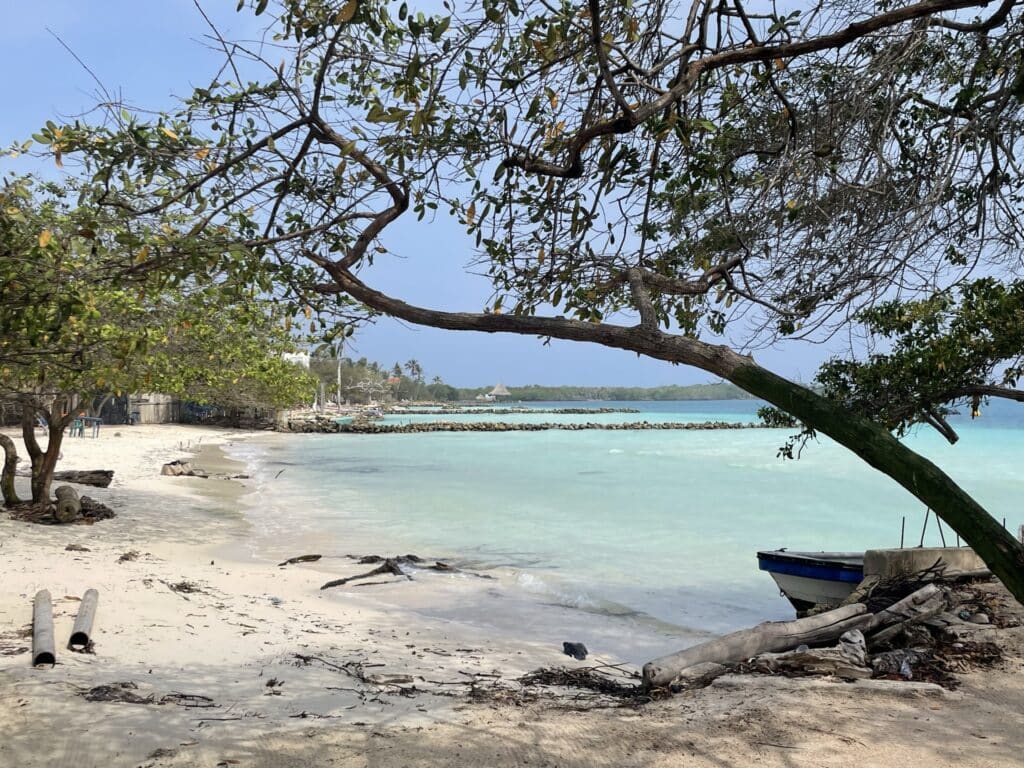
The beach was lovely—white sand, clear water, and a laid-back calm that felt almost untouched. The setup was simple, modest, and refreshingly free of excess. No extravagance, no all-inclusive buffet chaos. Just the basics, done right. A tropical escape that hadn’t yet been swallowed by mass tourism.
Soft Latin music played in the background, the hotel staff laughed and moved slowly, with the kind of ease that only comes from living in constant heat. Two lonely, sunburned trees stood guard over a supply boat, trying their best to shade it from the 40-degree Celsius inferno—so it wouldn’t turn from a delivery vessel into a boiling pot of tropical stew.
My brief moment of rest was coming to an end—slowly but surely—and the journey had to continue. The plan for the day was ambitious: visit Santa Cruz del Islote, the most densely populated island in the world, then have lunch and a swim in the turquoise waters of a private island.
Now, when you hear “private island,” your mind probably goes straight to billionaires and royals, champagne on the beach, and helicopters waiting nearby. I’ll admit, that idea made me a little uneasy at first—it didn’t exactly sound like my scene. But after my stop on Isla Palma, I started to get a better sense of the kind of “luxury” this trip had to offer. And funnily enough, it turned out to be exactly my scene.
The speedboat that had delivered us to this point—while not exactly new or graceful—had one big thing going for it: a tarp roof that offered at least some protection from the merciless sun. And when I say merciless, I mean it. The day I went, even locals were sweating like it was a punishment. Around 42°C at noon, with over 80% humidity. Think sauna, but outdoors, and with no escape.
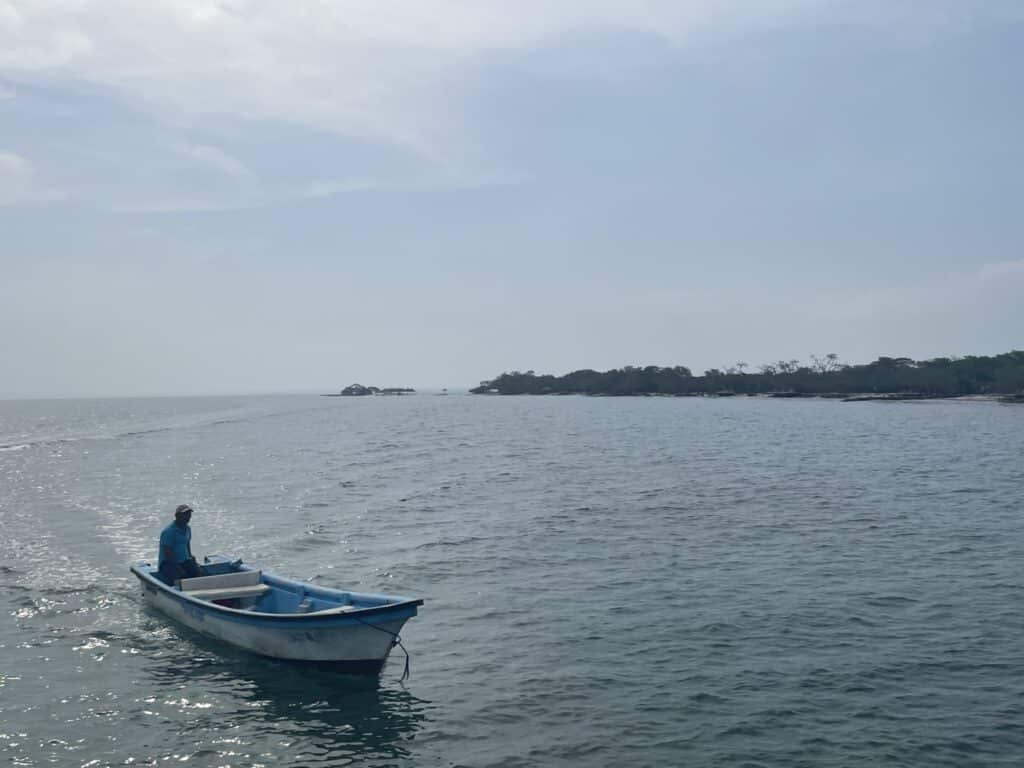
I quickly realized the speedboat wasn’t coming back. And so we greeted our next mode of transport with a mix of enthusiasm and mild panic: a tiny fishing boat, the kind that looks like it’s more used to hauling nets than carrying tourists. There were six of us, crammed in tight. The captain—an actual fisherman who had just wrapped up his morning catch—pulled up to the pier and began clearing out buckets, fish, and equipment to make space for us.
Once his cargo was safely dropped off at the resort, he motioned us aboard. We were headed—slowly, humbly, and a little too closely—to one of the most surreal destinations in the Caribbean: Santa Cruz del Islote, the most densely populated island in the world.
The Most Densely Populated Island in the World: Santa Cruz del Islote
We’d been drifting for about 15 minutes in that tiny fishing boat, winding our way between the tiny Colombian islands scattered across the sea. It was midday, and the sun was—no exaggeration—unbearable. The last weather check had shown over 41°C, and it felt every degree of it. There was no land in sight anymore—just endless blue—and ironically, though I was in the middle of the ocean, a strange, claustrophobic panic started to creep in.
All I could think about was: What happens if this little boat gives up on us right here? It didn’t exactly scream “open-sea-worthy.” We were bobbing in open water, in over 40-degree heat, no cell signal, no shade, no drinking water. I was already mentally preparing for survival mode. And then, as if summoned by the Laws of Murphy, the engine gave out. I didn’t panic. I didn’t even flinch. I’d already lived this moment in my head. My palms had toughened into imaginary oars. I was ready to row if needed.
Luckily, the fisherman was a professional. He tinkered with the motor for less than ten minutes—cool, calm, and entirely unbothered—then gave us the nod. We were back in motion. About twenty minutes later, something odd began to appear on the horizon: a strange shape, like a smudge on the sea. A tiny scrap of land, seemingly tossed carelessly into the middle of the Caribbean. It looked like an anomaly, a glitch in the landscape—a sliver of concrete and tin, rising out of nowhere, ringed by what looked like a shield of floating debris.
We were almost there: Santa Cruz del Islote, the most densely populated island in the world. It was surreal. Like someone had taken a favela from Rio de Janeiro, shrunk it down, and dropped it smack in the middle of the ocean.
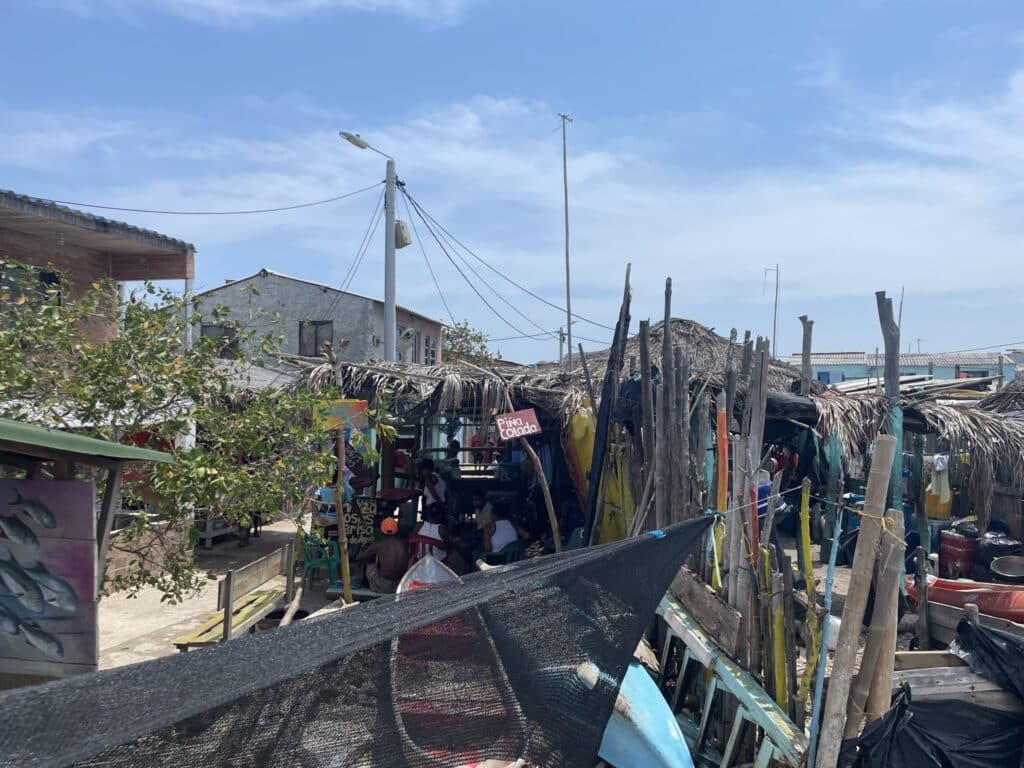
We approached the small wooden dock, gently bobbing with the waves, and stepped off the boat beside a tiny, welcoming bar. Built from uneven planks and topped with a roof of dried palm leaves, it had a handmade charm—simple, but full of character. Locals gathered under its shade, sharing music and conversation in a calm, friendly atmosphere that immediately set the tone of the island: community-first, warm, and unhurried.
But what I noticed first wasn’t the bar—it was the strong smell that hung in the air. With so many people living in such a small space, and the midday sun pressing down at over 40°C, the scent of life—waste, sea, heat—was hard to ignore. It was intense, and it stayed with you. I’m not sure if this is always the case, but at that moment, it felt like a challenge to the senses.
Our group was welcomed right away by a smiling man who radiated friendliness. He introduced himself as Señor Gusto, the island’s guide. Shorter in height, solidly built, and with a few visible physical disabilities, he carried himself with quiet confidence and pride. He seemed genuinely happy to share his home with visitors.
He first brought us to the island’s aquarium—a small, handmade pool where a few species of local marine life are kept: stingrays, small sharks, and colorful fish. Visitors can even swim with them for a small fee. I chose not to join in—not out of fear, but because I wasn’t sure about the cleanliness of the water. Maybe I was being cautious, but the heat and scent had made me more sensitive to these things.
From there, we began our walking tour of the island, which measures around 200 meters in length and 100 in width. And yet, those few square meters are home to a thriving, tightly knit community.
The narrow pathways were alive with energy. Children played soccer in every open space. Women chatted or did laundry near their homes. In one corner, a group of men shared a bottle of rum and laughed over music playing from a speaker. Despite the crowded conditions and the challenging climate, life here moved with rhythm and resilience.
Santa Cruz del Islote isn’t a place filled with typical tourist attractions. It’s home. You’ll find colorful murals, a small church, a school, a shop, and a large water tank—crucial, because freshwater must be delivered by boat from nearby Isla Tintipán. There’s not a lot of space, but there’s a whole world of daily life unfolding here, rich with dignity, creativity, and community spirit.
Tales from the tiny Caribbean islands
Mr. Gusto had more than a few stories to tell. As we wandered the narrow paths of Santa Cruz del Islote, the most densely populated island in the world, he began painting a broader picture of the Archipelago of San Bernardo—a constellation of tiny Caribbean islands, some inhabited, others left to the birds and the sea. Located among the Colombian islands near Cartagena, this archipelago has long depended on one thing for survival: fishing.
That’s when he told us how he lost his hands—not in a shark accident, as my imagination first jumped to, but in a fishing mishap. When he was just ten years old, he went out to sea with his father. They were fishing with dynamite, and it exploded in his hands. Yes, dynamite. At ten years old. As surreal as that sounds, it’s not the only adrenaline-fueled activity on the island. He also mentioned the controversial, and technically illegal, cockfighting matches held here. With few alternatives for entertainment, this tradition has persisted, though it’s not without its critics.
But what truly stayed with me was the story of the island itself. Santa Cruz del Islote didn’t exist in its current form until the 1860s. Originally, it was just a sliver of land—a safe haven where fishermen from nearby tiny Caribbean islands could take shelter during storms, protected by a coral reef. Over time, they began to expand the island, adding everything they could find: coconut husks, logs, seashells, debris, and yes, even garbage. It’s a partially artificial island, born of necessity and persistence.
Back then, it didn’t even have a name. But legend has it that a wooden cross washed ashore one day, and from that moment, it became known as Santa Cruz del Islote. Over the decades, some residents moved to nearby islands like Tintipán and Múcura, while others stayed, slowly building a tight-knit, overgrown village on the sea. Today, the island has a school (which even children from other Colombian islands near Cartagena attend), a local council formed in 2013, and since 2020, access to the internet.
I wouldn’t call it the most beautiful place I’ve ever visited. But it’s certainly one of the most extraordinary, a place with a soul, a history, and a rhythm all its own.
I, too, once fished with dynamite…
Every time I longed for something, I wanted more, wanted it easier, faster. Instead of being a better fisherman. I dreamed of blowing the sea wide open.
One day, the thought came to me— “Why not fish with dynamite?”
Lucky me, it blew up in my hands— before it could shatter the reef, that silent wall holding back the deadly waves, the only thing standing between me and disaster.
Luxury through simplicity in Archipelago of San Bernardo
We left Santa Cruz del Islote the same way we came—rocking gently in the small fisherman’s boat, its wooden frame creaking as it cut through the water. As the island faded behind us, I turned for one last look. From a distance, it looked like a floating village stitched together from stories and cement, clinging to the sea like it refused to be forgotten.
Just as we drifted away, I noticed the fisherman pull something from a net with practiced ease: a large, bright-red lobster, still writhing. I asked how much. “50 000 pesos” he said, with a shrug. Around 12 dollars for the freshest seafood imaginable—less a transaction, more a passing of good fortune between strangers.
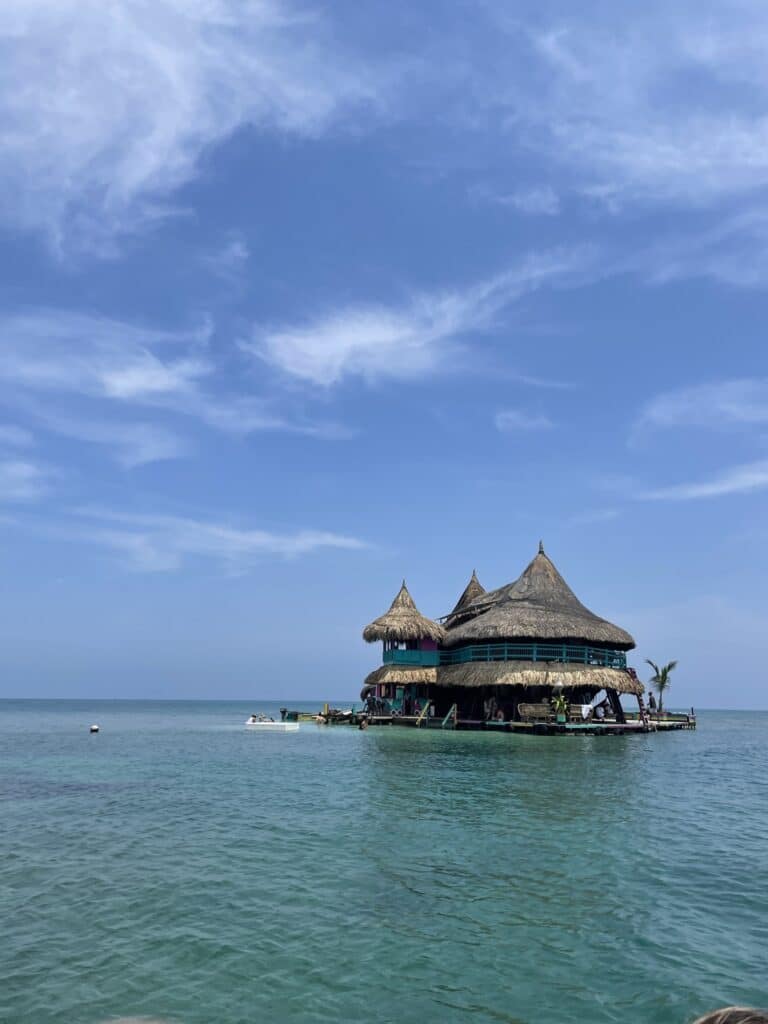
We weren’t headed back to the mainland just yet. Our next stop was what the locals called a “private island”—a phrase that sounds like luxury, but here simply means quieter, emptier, untouched. On the way, we passed a scatter of floating houses and makeshift bars resting gently on the water. They looked like dreams suspended between sky and sea—shacks on stilts painted in faded blues and yellows, pulsing with slow music and slow life. I couldn’t stop staring. It was all so simple, so barebones—and so beautiful.
When we docked, the island revealed itself for what it was: a quiet stretch of sand, hammocks swinging lazily between palms, and a small outdoor kitchen tucked under a thatched roof. It wasn’t much, but it didn’t need to be. The sea did the rest.
The fishermen got to work right away. In that humble kitchen, they grilled the lobster over open flames, serving it with rice and crispy patacones—slices of fried plantain, golden and salty. I ate with my hands, sitting barefoot at a plastic table in the shade, the ocean breeze cutting through the midday heat.
That meal wasn’t fancy, but it was unforgettable. The lobster was smoky and sweet, the rice fluffy, the patacones crunchy and perfect. Everything tasted like the day itself—wild, warm, and generous in ways I didn’t expect.
The Long Ride Home (and a Bit of Salt in the Wounds)
The return to Cartagena was… something else. If the way out had been rough, the way back was a battle. This time, we were riding against the waves—three solid hours of white-knuckle grip, trying not to be tossed into the Caribbean. The sea, once playful and warm, had turned into a relentless force, slapping the boat with every surge like it had something personal against us.
By the time we reached the coast, my arms felt like they’d wrestled Poseidon himself. Two days later, I still had muscular fever. It hurt to lift my backpack, to hold a cup of coffee—hell, it hurt to breathe too deeply. My body had taken the brunt of the ocean’s mood, and it wasn’t shy about reminding me.
As if the ride wasn’t enough of an experience, there was also the Venezuelan guy on board. You know the type—shirt unbuttoned, sunglasses even in the shade, and a deep need to be heard. “Déjame que te lo explico, papi,” he kept saying, trying to lecture the rest of us on how to relax so we wouldn’t feel the pain. Then he promptly lost his balance on a wave and nearly flew overboard. The irony didn’t go unnoticed, though we all pretended to care deeply for a moment or two. Still, the chaos and discomfort of the journey didn’t erase what came before.
The Archipelago of San Bernardo, the tiny Caribbean islands near Cartagena, the strange wonder of Santa Cruz del Islote—the most densely populated island in the world—they left a mark. Not just on my skin, sunburned and salted, but deeper.
Conclusion
If you’ve made it this far through my story, thank you. And if this place sparked something in you—curiosity, a craving, a question—know that I’m happy to help. You can check out more of mytravel articles, reach out if you’re planning a similar trip yourself, or justfollow along on Instagram for more stories, scenes, and surprises from places like this.
Sometimes the best parts of the world are the hardest to reach. But trust me—they’re always worth the ride.
Have you ever wondered what weird foods eaten around the world I have tried? Food is an adventure, a window into different cultures and traditions. But sometimes, what’s considered a delicacy in one country might seem like a bizarre eat to the uninitiated. If you have an adventurous palate, or just love reading about the strangest things people put on their plates, this list is for you! From fermented shark to squirming Amazonian larvae, here are five of the weirdest foods eaten around the world, that I have tried personally.
5. Weird Foods Eaten Around the World: “Sorici” – Romania
Romania is known for its hearty, meaty dishes, but “sorici” is a snack that even locals find a bit odd. This dish consists of raw pigskin, usually with bristles still attached, which is then seared over an open flame. But the real story behind “sorici” is the traditional ceremony that comes with it. Growing up in Romania, I witnessed firsthand how this dish is deeply rooted in our culture. Before Christmas, families in rural areas come together for the annual pig slaughter, a ritual that has been passed down for generations. The entire village gathers, and after the pig is chased, caught, and killed, the skin is quickly charred and sliced for eating. The taste? Chewy, gelatinous, and intensely porky, with a smoky aftertaste. It may sound gruesome, but for Romanians, it’s a tradition filled with laughter, warmth, and celebration. You can check this YouTube video to check the whole process.
4. Weird Foods Eaten Around the World:Blood Sausage – Argentina
Blood sausage, or morcilla, is a staple in Argentinian traditional food, especially when it comes to the famous asado (Argentine barbecue). But my first encounter with it wasn’t in Argentina—it was in a small Argentinian family-owned restaurant in the city of Barcelona, where I lived for five years. As in many other international cities, where many cultures meet, in Barcelona you can find many bizarre foods eaten around the World, but bizarre is always defined by the one who eats. I remember stepping into the cozy little eatery, the scent of grilled meat filling the air. The waiter recommended morcilla, and I, feeling adventurous, agreed. When the dish arrived on a wooden platter, the sausage was black, glossy, and slightly intimidating. I hesitated. Eating blood wasn’t exactly on my culinary bucket list, but I decided to give it a shot. One bite in, and I was surprised. The texture was soft, almost creamy, and the flavor was intensely rich. It had an earthy, slightly metallic taste, balanced by spices and a hint of sweetness from caramelized onions. It was strange, but also oddly delicious. However, after a few bites, the richness became overwhelming, and I had to pause. It’s not something I’d crave regularly, but I can see why Argentinians love it—it’s a deeply flavorful, hearty dish that pairs perfectly with grilled meats and red wine. Back in Argentina, blood sausage is an essential part of any asado, where it’s grilled to perfection and served alongside cuts of beef, ribs, and chimichurri sauce. Some versions include rice, nuts, or even dried fruits, adding complexity to the flavor. While it remains a bizarre eat for many, in Argentina, it’s a beloved dish that represents tradition, family, and the love of a good barbecue.
3. Weird Foods Eaten Around the World:Horseshoe Crab – Thailand
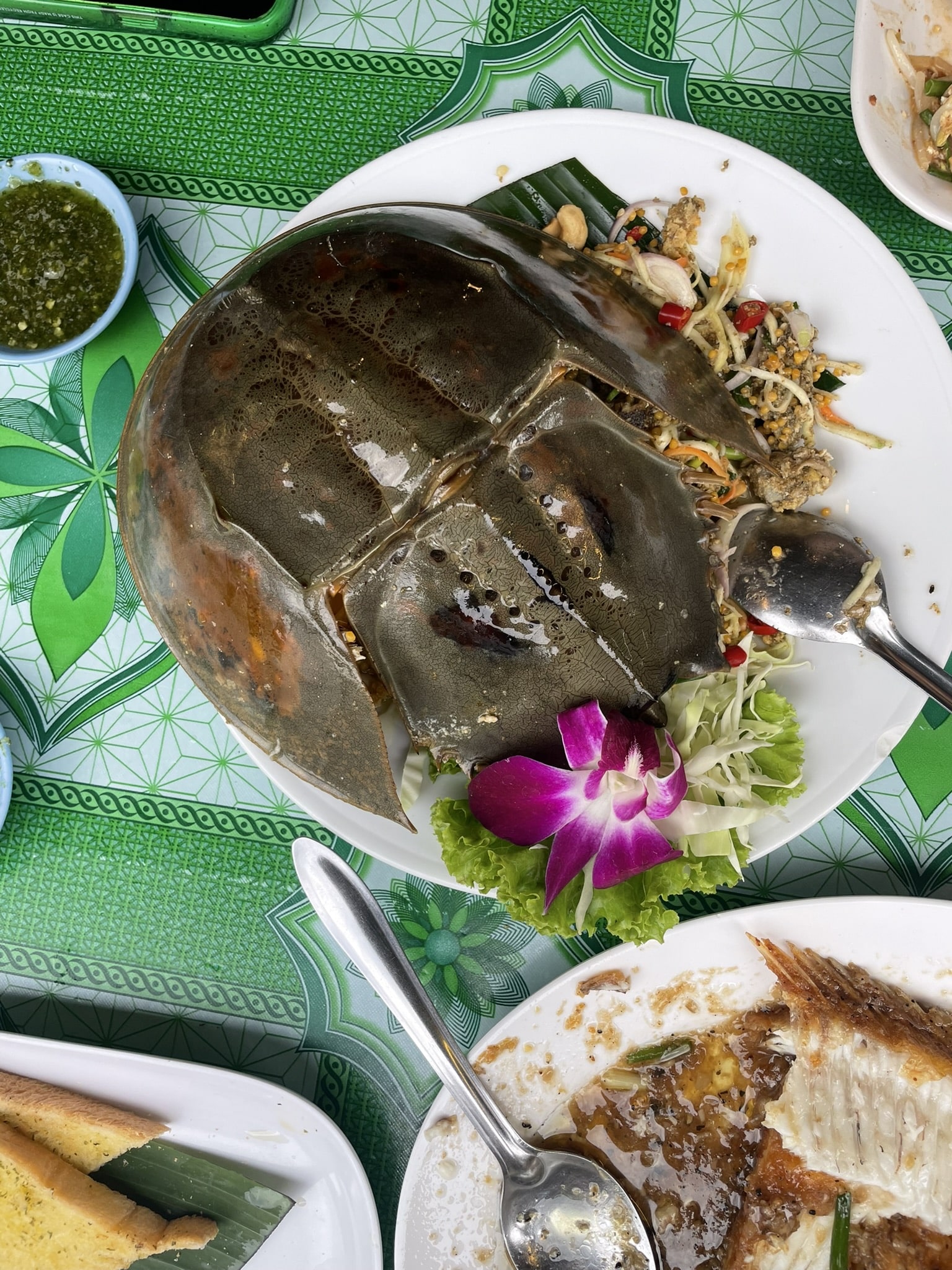
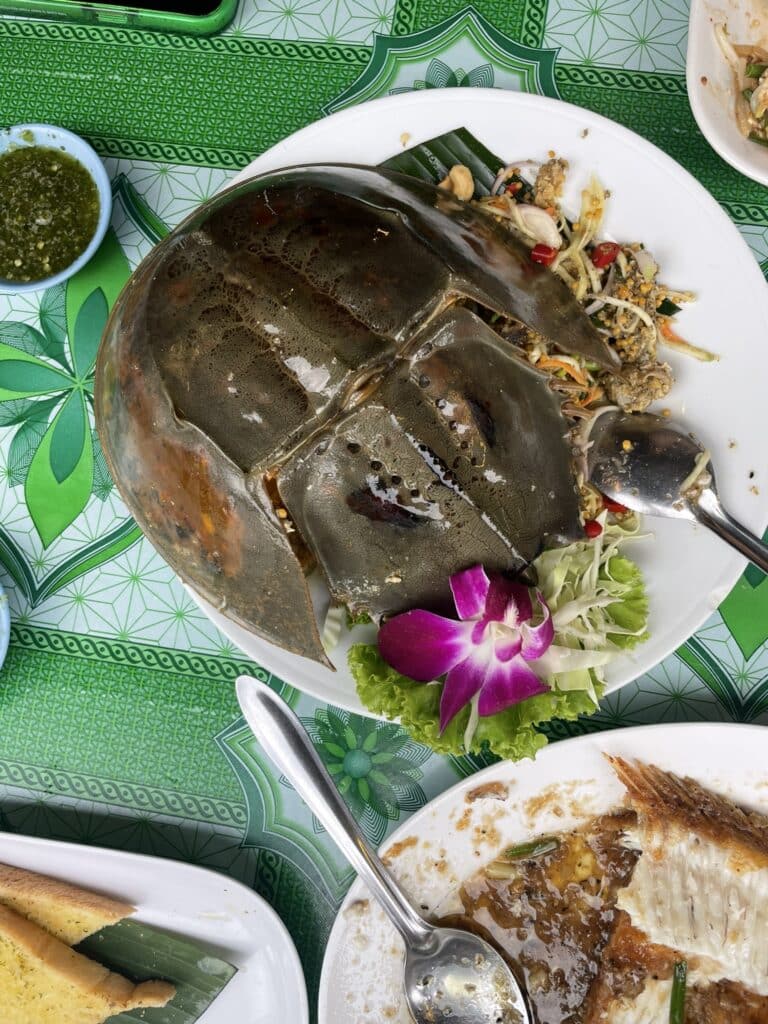
Thailand is a paradise of flavors, but among the colorful curries and fragrant street food, I stumbled upon something truly unexpected—a horseshoe crab dish. During an incredible vacation in Thailand, I visited a local seafood restaurant by the beach. The ocean breeze, the sound of waves crashing, and the scent of grilled seafood made the experience feel surreal. The waiter recommended a salad made with horseshoe crab eggs. I was intrigued and ordered it. When the dish arrived, I was both excited and terrified. The roe looked like tiny orange pearls, mixed into a spicy, tangy papaya salad. I took a hesitant bite. The texture was unlike anything I had ever eaten—firm, slightly gritty, and bursting with a salty, oceanic taste. It wasn’t bad, but I couldn’t shake the thought of the ancient, alien-like creature it came from. The dish had an intense, briny flavor that lingered on my tongue. Some bites were delicious, others too overwhelming. I enjoyed the experience, but I wouldn’t say it was a must-have. Still, it was a memorable part of my weird Thai food adventure, and I’ll never forget the odd sensation of eating something that looked straight out of a prehistoric era.
2. Weird Foods Eaten Around the World:Mojojoy – Amazon Rainforest
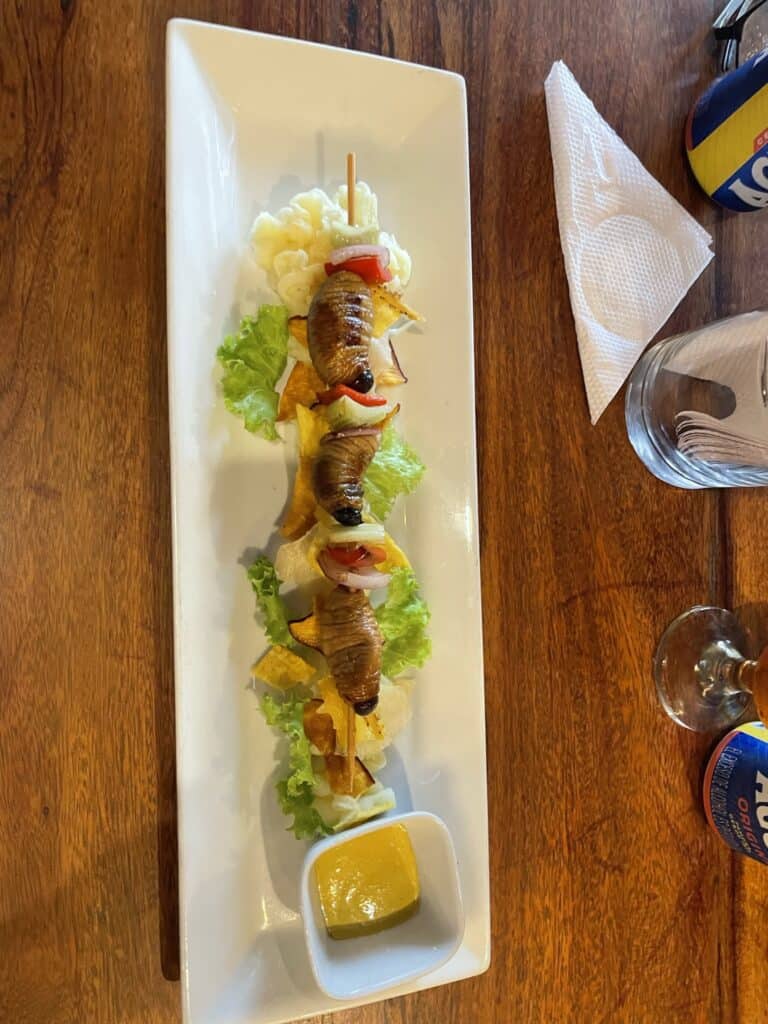
If you have a fear of creepy crawlies, this one might make you squirm. Mojojoy are fat, wriggling larvae that are considered a delicacy in various Amazonian regions. During my trip to the Amazon jungle in Colombia, I was offered one. The locals smiled as they handed me a live one. Some people eat them raw, letting the squishy, protein-packed grub wriggle in their mouth before biting down. I, however, opted for the grilled version, hoping that a bit of charring would make it more palatable. It didn’t. The moment I bit into it, a warm, gooey liquid burst into my mouth, coating my tongue with a nutty yet overwhelmingly earthy flavor. I gagged. The texture was horrifying—somewhere between creamy and gelatinous. I tried to wash it down with beer, but the aftertaste lingered. The locals laughed, telling me it was an excellent source of protein, but I could barely keep it down. For some, Mojojoy is a nutritious and even delicious treat. The grubs are rich in protein, fats, and essential nutrients, making them a vital food source in the jungle. Some even say the live ones taste slightly sweet and juicy, but I wasn’t brave enough to confirm that firsthand. Despite my disgust, I could appreciate how important this bizarre eat is to the people of the Amazon. If you are interested to read the story about my trip to the Amazonian Jungle you ca read it here.
1. Weird Foods Eaten Around the World:Hákarl – Iceland
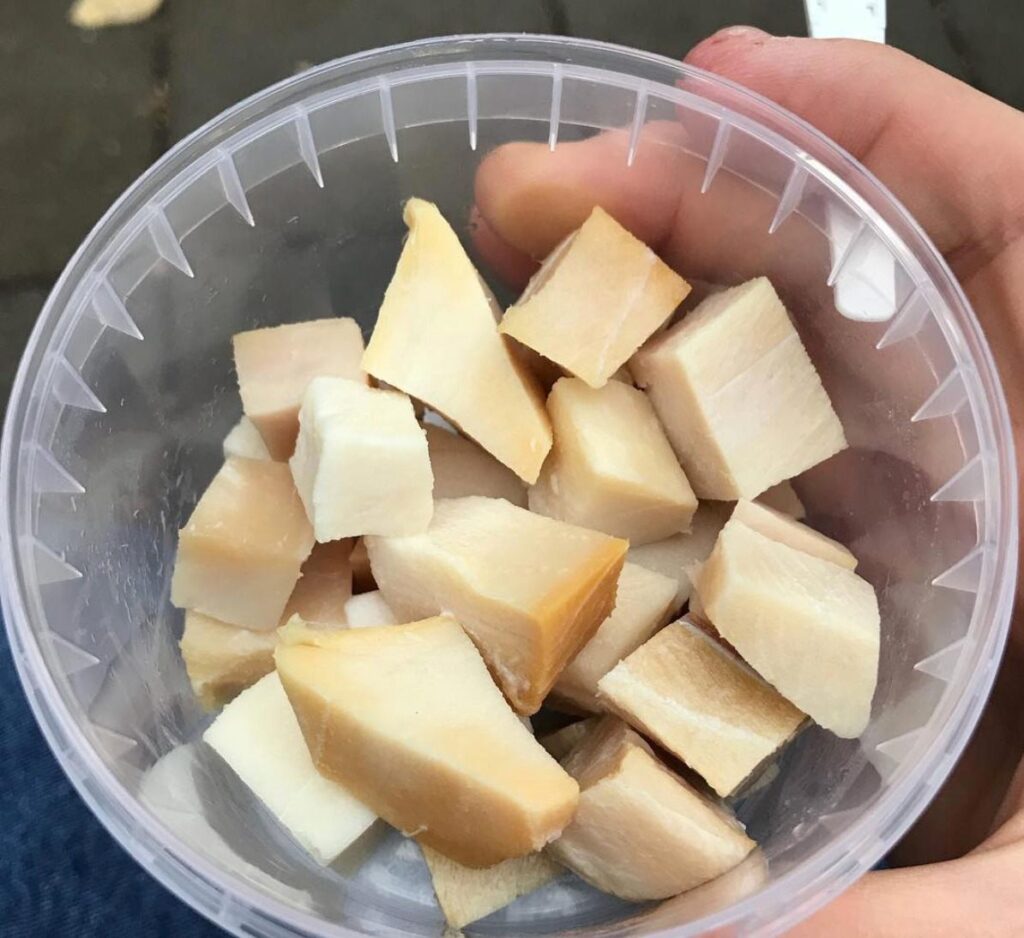
And now, the king of weird foods: hákarl! This infamous Icelandic traditional food is fermented shark, and it’s not for the faint of heart. I had heard horror stories about it before visiting Iceland, so I avoided trying it until the very last day of my trip. When I finally built up the courage, I immediately regretted it. The moment the lid of the container was lifted, an overwhelming stench of ammonia (think cleaning products mixed with rotten fish) hit me like a brick wall. I hesitated, but I had come this far—I had to do it. I took a small bite, and instantly, my mouth was filled with a putrid, pungent taste that reminded me of urine. I gagged, trying to chew as fast as possible. Even after swallowing, the taste clung to my mouth, and no amount of water or schnapps could get rid of it. For three days, I could still taste hákarl in my breath. It was, without question, the most revolting thing I have ever eaten. If you ever visit Iceland and are feeling brave, go ahead and try it—but don’t say I didn’t warn you! As you can see in this photo from Atlas Obscura, the best part about this bizarre dish is that it is served in really small cubes.
Would You Dare?
The world is full of surprising, sometimes stomach-churning culinary traditions. While some of these weird foods eaten around the world might seem bizarre at first, they often have deep cultural significance and unique flavors. Whether you’re tempted to try a horseshoe crab dish in Thailand, a bite of Argentinian traditional food like blood sausage, or go all-in on Iceland’s fermented shark, one thing is certain: food is never boring when you step outside your comfort zone! So, would you take a bite, or are you sticking to your usual burger and fries?
Don’t forget to leave a comment below with your thoughts or questions! Also, be sure to check out more of our travel stories by visiting the rest of our blog and more photos of weird dishes that I tried by following my Instagram page.
As a child, I never found joy in playing with soldiers, figurines, or toy cars. My heart was always drawn to encyclopedias and geographical atlases. Whenever I stumbled upon a grand and charming book at the bookstore, I implored my grandmother to purchase it for me. Among my most cherished books, when I was merely five or six, was a zoology atlas that depicted the majority of animal species discovered at the time, many of which hailed from the heart of the Amazon jungle. I longed to journey there and behold them all. How wondrous and fertile such a land must be to cradle so many magnificent creatures. Now, as I reflect on the adventure of a lifetime, my dream has taken shape in the form of the Leticia Amazon Expedition
Leticia – The Gateway to the Amazon
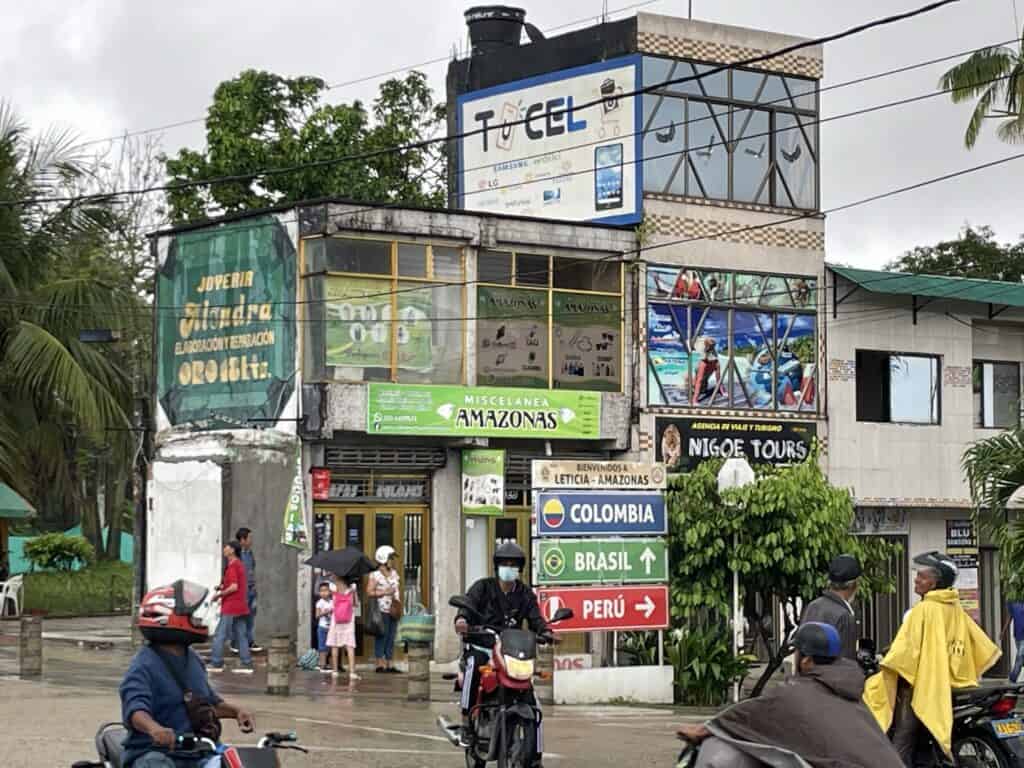
After a smooth and almost meditative flight over the endless green waves of the jungle, my friend and I. finally descended into Leticia—the tiny Colombian town that clings to the banks of the world’s mightiest river, the Amazon. Our journey was a direct three-hour flight from Bogotá with Latam Airlines, and as soon as we stepped off the plane, we were met with a wall of humidity so thick it felt like walking into a steaming cup of herbal tea. The air embraced us like an overenthusiastic relative, and the drizzle, which seemed to have no intention of ever stopping, made sure we felt truly welcomed.
At the airport, a kind and cheerful lady awaited us—the owner of the guesthouse where we had booked our stay. She greeted us with a warm smile and an even warmer car: an American relic from the 1980s that had clearly seen many stories. From its aged speakers, the most popular local station, Radio Policía Nacional, filled the air. A rather unique choice of entertainment, it alternated between somber police reports, curious local news, and the occasional burst of Latin music, as if the radio itself couldn’t decide whether to dance or deliver bad news.
Our ride to the guesthouse took no more than 10 minutes, enough time to pass several military outposts, army checkpoints, and police stations—just in case we had any doubts about the town’s security measures. What were all these people doing there? Protecting us? I doubt it. Despite this, Leticia appeared peaceful, almost sleepy, as if the jungle’s endless hum had lulled it into a permanent state of tranquility.
Our accommodation was simple but clean, a small house with everything we needed. However, what stood out the most—both here and everywhere else—were the enormous water tanks perched on rooftops, silently collecting rain. Strangely enough, in a place where humidity suffocates at 95% and rain is as constant as the Amazon itself, clean water was a rare treasure. The river, vast and all-powerful, was not to be trusted for drinking unless you fancied an unplanned adventure of a very different kind.
Though the true heart of our journey lay in the days ahead—the grand jungle expedition—we seized the first day in Leticia with open arms. We explored the small town, sticking mostly to the places recommended by our host (no reckless wanderings just yet), admired the lively fish market, took in the sights of the central park, and watched the people around us. We observed their rhythm, their interactions, and their daily rituals. Leticia had its own quiet charm, a slow but steady heartbeat, pulsing in time with the great river that embraced it.
We didn’t shy away from indulging in the local delicacies—starting with the famous yucca pizza, moving on to the protein-packed tree bark worm, known by the locals as mojojoy, and finishing with a remarkable dessert: coca leaf ice cream with an extra topping of crunchy ants. A true Amazonian feast.
We ended the day at sunset in Leticia’s central square, where we witnessed an incredible spectacle—tens of thousands of birds returning from the jungle after a long day, seeking refuge in the trees of the city. The deafening noise and near-demonic frenzy of their arrival made me wonder where I would be sleeping in the coming nights. Why were these birds so desperate, so restless, fighting with all their might for a single sliver of branch in this tiny town of Leticia?
The Amazon Expedition Begins
After a night where I spent more time awake than asleep—thanks to a mix of excitement and the relentless sound of torrential rain—the kind lady at our guesthouse prepared a simple breakfast for us: eggs with fried patacón. With a hot cup of coffee in hand, we waited for Golbert, our guide.
Around 8:30 in the morning, a man in his early thirties with distinct indigenous features pulled up in front of our guesthouse, ready to take us to their headquarters for a quick briefing. The ride was quiet—until Golbert himself broke the silence with an unexpected question: “Are you ready to swim?” My companion and I exchanged confused glances. Swimming? That hadn’t been part of the plan. Our itinerary had been carefully set in advance, and nowhere on it was there any mention of swimming. Seeing our puzzled expressions, Golbert quickly explained: the torrential rains had flooded large sections of the forest trails, and if we wanted to stick to our original route, we’d have to wade through chest-deep water—or possibly even deeper. Before the trip, my companion and I had made a pact: we were ready for any kind of adventure, but we absolutely would not swim in the waters of the Amazon, for one simple reason—parasites. So naturally, we asked Golbert the all-important question: Is it dangerous? He hesitated for a moment before replying, rather unconvincingly, that yes, it was pretty dangerous. We had about ten minutes to think things over as we drove to the agency’s headquarters, trying to weigh our thirst for adventure against the risk of becoming an unwilling host to Amazonian parasites. Once we arrived, we sat down with Golbert to see if there was any way to avoid the whole “swimming” part of the journey. Thankfully, a compromise was found. One of the planned highlights of our expedition was spending a night with a local tribe. However, the flooding had completely cut off access to their village. The alternative? We would visit a different tribe, but since our arrival would be unannounced—because, unsurprisingly, the tribal chief didn’t have a phone or an email address—we wouldn’t be able to stay overnight. Instead, we’d sleep in a jungle refuge. With the plan settled, we packed our bags, grabbed our mosquito repellent, flashlights, rain ponchos, and rubber boots, then hopped back into the Jeep, heading towards the very edge of the forest—where the road ended, and the true adventure began.
We started on relatively decent trails, flanked on both sides by modernizing indigenous communities—almost like the “suburbs” of Leticia. These were tribes in transition, where smartphones weren’t unheard of, parents sent their children to school, and Spanish had become the dominant language. As we ventured deeper, the well-trodden path began to fade, swallowed by the jungle, until eventually, we were forging ahead with no trail at all. Before long, the ground beneath us turned into something else entirely—pools of murky water rising past our knees. The smell? Vile. A pungent, sickly scent, like a dentist’s office filled with untreated cavities and infections. I silently thanked past-me for refusing to swim in these waters. For three to four hours, we trudged through the jungle, our world reduced to towering trees, relentless mosquitoes, an array of bizarre insects, the occasional lost monkey, and tiny, brilliantly colored frogs. They looked adorable—like something straight out of a cartoon—but were among the most poisonous creatures on Earth. Their venom was lethal, and no, there was no antidote. Thankfully, unless you had a sudden urge to hunt them down (which I strongly advise against), they would much rather avoid you altogether. The heat was intense, the humidity suffocating, and we were permanently drenched—as if we had just stepped out of a shower. Oddly enough, this worked in our favor. The constant warm drizzle, which would have been annoying in any other situation, had become just another part of the experience. We didn’t even notice it anymore.
The Amazon Expedition: The Ticuna Tribes
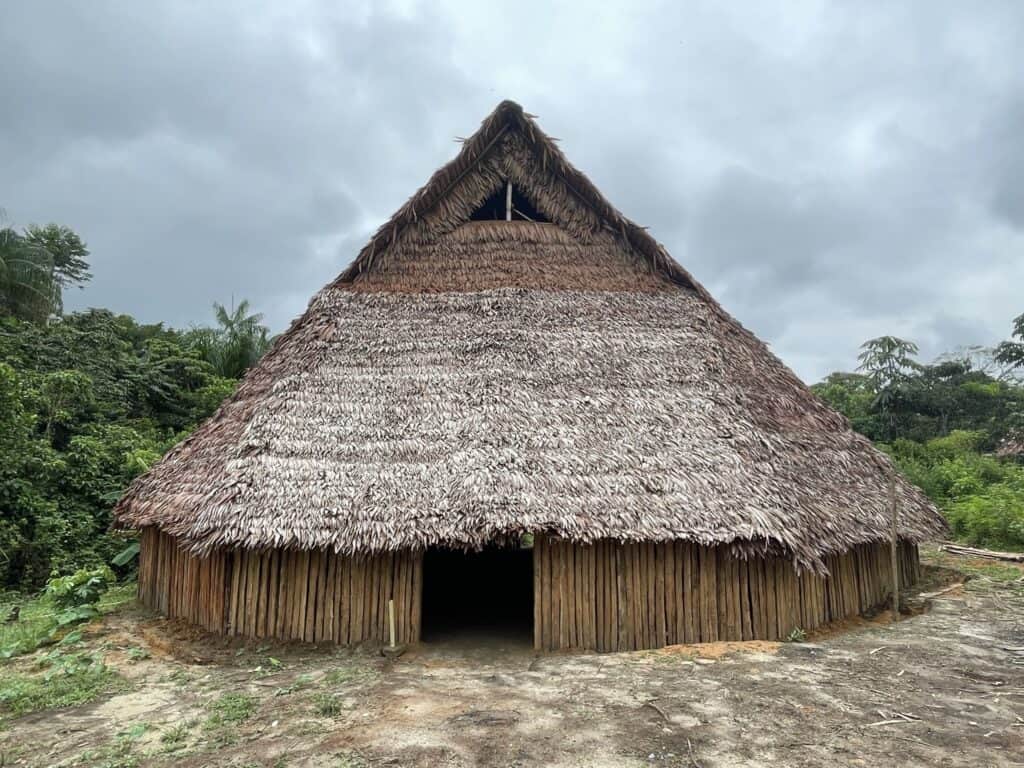
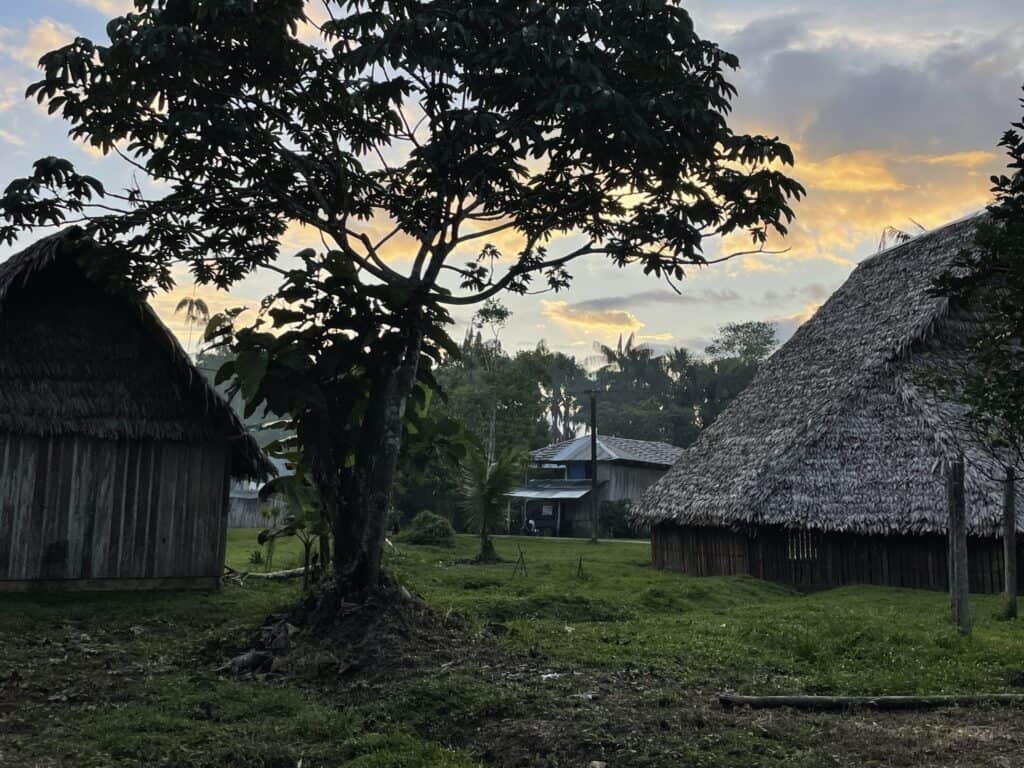
After hours of trekking through the flooded jungle, a clearing began to emerge in the distance. I suddenly realized where we were—this was it. We were about to have our first encounter with an Amazonian tribe. Stepping cautiously among the wooden and thatched huts, we observed the daily life unfolding around us—some people dressed in simple clothing, others wearing considerably less. But what immediately caught our eye was a massive structure towering over the rest of the village—the maloca. Golbert explained that for the Ticuna people (one of the many tribal families in the Amazon), the maloca was once the heart of the community. In the past, the entire tribe lived, ate, and slept under its roof. Over time, families had moved into their own huts, and the maloca had become a communal space for gatherings, ceremonies, and celebrations. Just as we were absorbing this information, the main figure of the village appeared—the tribal chief. A man seemingly in his early sixties, dressed in simple sweatpants and an open button-down shirt, he radiated warmth and an undeniable presence. His energy was calm and welcoming. In surprisingly clear Spanish, he invited us into his maloca to share more about his people, their traditions, and their way of life. Settling onto a small wooden stool, the chief offered us our first taste of tribal hospitality—a ball of tobacco clay and a fine powder made from coca leaves, which they traditionally place under their tongues. As we hesitated for a brief moment, he began to speak, revealing the core of their existence—hunting, and the cultivation of tobacco and coca.
The old man began to speak, his voice carrying the weight of centuries. He described their peaceful way of life, their rituals, their dances—each one a celebration of their deep connection with nature. To him, the jungle was more than just a home; it was a mother, a provider, a guardian that nurtured them, and in return, it had to be protected. The forest and the Amazon gave them everything they needed to survive: shelter, water, food, even medicine and entertainment. As he spoke, I couldn’t help but notice a growing discomfort in my stomach—my all-too-familiar battle with acid reflux. I mentioned it to him in passing, and without hesitation, he walked over to a nearby tree, made a small incision with his knife, and handed me a few drops of its sap. I drank it, and within moments, the burning sensation in my chest vanished as if by magic. But of course, it wasn’t magic—just nature, the same nature that modern medicine bottles up, dilutes, and sells back to us. Speaking of natural remedies, he eventually arrived at what he called the ultimate medicine—ayahuasca. Not just a treatment for the body, but for the soul. But, he warned, ayahuasca isn’t for everyone. You cannot simply decide to take it; you must be chosen by the shaman. Only those deemed special, those with the potential to open their third eye, are granted access to its secrets. And who, exactly, is this shaman who holds such power? How does one become the gatekeeper of the spirit world? Simple—spend an entire year alone in the jungle, consuming every known poison from every known creature. If you survive—and if you return with your sanity intact—only then can you call yourself a shaman. The conversation shifted to the tribe’s history, a tale intertwined with Colombia’s darker past. He confessed that his people once lived hundreds of kilometers deeper into the jungle, far from the main branch of the Amazon. But in the 1970s, they were forced to relocate closer to Leticia, seeking refuge from the guerrilla factions that controlled the jungle—and, in many ways, still do. These groups would raid villages, taking young boys and forcing them into wars that were never theirs to fight. Moving closer to Leticia meant greater security, with the Colombian military nearby. But not all tribes were as fortunate. The Amazon is home to thousands of distinct tribes, each with its own fate. Some have become recruitment grounds for guerrilla armies like the FARC. Others remain untouched by modern civilization, living as they have for centuries. And then, there are the warrior tribes—the ones few outsiders have ever encountered. According to the old man, some of these tribes still practice ancient rituals, including one that outsiders whisper about with both fear and fascination—cannibalism.
After discussing broader topics like history, the jungle, and their cultural traditions, the chief’s tone shifted. He began to share his deepest concerns—the kind that weighed heavily on his heart. He was acutely aware that time was slipping away, and with it, his people. More and more families were leaving the village, drawn to the modern comforts of Leticia. Parents sent their children to school in the city, and before long, they moved there altogether. Each year, the tribe grew smaller, its presence fading like footprints washed away by the Amazon’s endless rain. The old man knew that one day, perhaps sooner than he’d like to admit, his tribe would cease to exist. Their language, which had never been put into writing, would vanish with them. Their traditions, their stories—gone, as if they had never been. Yet, he did not fight this inevitable tide. Instead, whenever visitors arrived, he made it his mission to share as much as he could. He spoke not out of desperation, but out of hope—hope that someone, somewhere, would remember them. That long after they were gone, their existence would still echo in words, in stories, in history. That the world would know they were here once too.
The Amazon Expedition: Golbert’s fears
As the sun dipped below the horizon, painting the sky in rich oranges and purples, we said our goodbyes to the Ticuna tribe and set off toward our resting place for the night. But little did we know, the day wasn’t quite finished with us yet. A night-time jungle exploration awaited, led by one of the tribe members. On our way to the cabin, Golbert, our guide from Leticia, let out a relieved sigh. “Good call on changing the plan, guys,” he said with a chuckle. “Can you imagine if we’d been swimming now?”
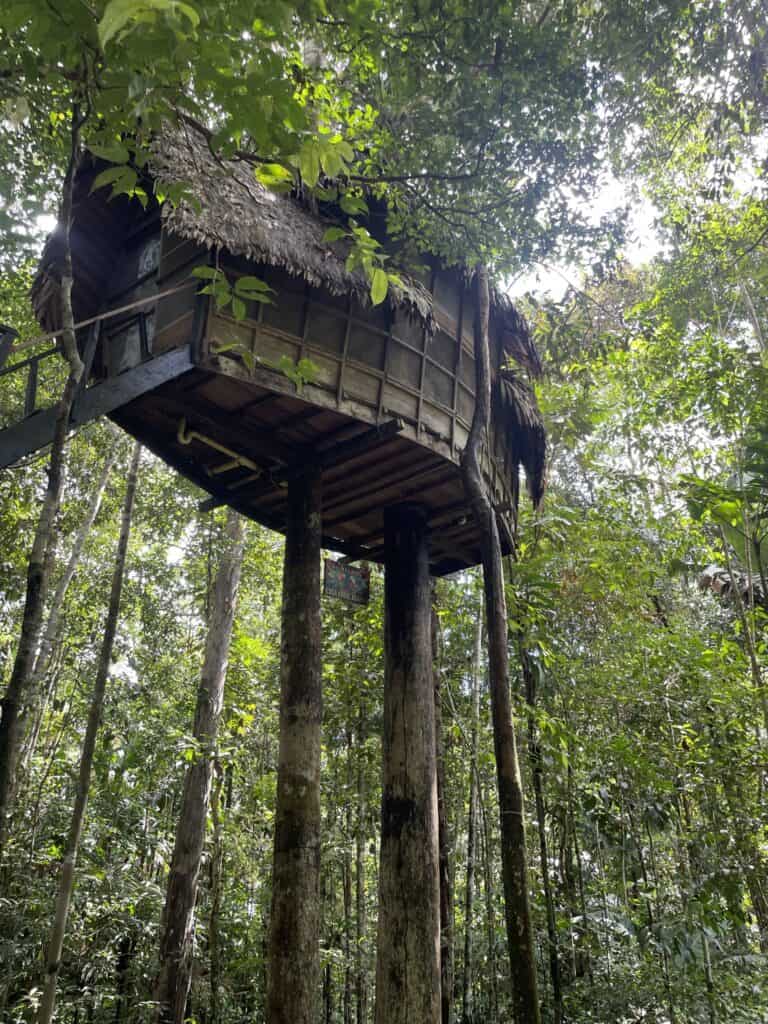
Curious, we pressed him—would he have been afraid to swim, worried about parasites lurking in the Amazon’s waters? Golbert paused, a mischievous glint in his eye, before revealing it wasn’t the parasites that had him worried. Oh no. His true fear? The electric eel. He explained that when the Amazon floods, it brings in all sorts of creatures—and the electric eel, in particular, had a special place in his nightmares. “Imagine one of those things bumping into you while you’re swimming,” he said, “you’d get an electric shock that could fry you all in the water.” He’d seen it happen before. Well, that certainly put our fears of parasites in perspective. We arrived at the “cabin” (a floor and roof surrounded by nets to keep out the more enthusiastic insects) and Golbert suggested we wait until it was pitch dark before heading out again. Why? Because, according to him, dusk is when the venomous snakes like to get their groove on. And, of course, we’d had a similar night-time adventure in Costa Rica, where the snakes were out in full force, but at least we were a stone’s throw away from an anti-venom stash. After a quick rest, we set off into the jungle—plunging into total darkness, with flashlights that barely lit up the ground in front of us. The jungle felt alive like it was waiting for something… but what? We marched on, following the young man from the tribe at the front, with Golbert behind us, and our nerves slowly creeping up. Our first fear? Jaguars, of course, Golbert seemed to sense our concern. “Oh, the jaguars aren’t a big deal,” he said like it was just another walk in the park. “They’re around, but they’re not dangerous. Not like you think.” He went on to explain that, in this region, the jaguars were not only hunted by the local tribes but were also part of an ancient rite of passage. When a boy turns 14, he goes out with his father to hunt a jaguar—just the two of them. You know, standard father-son bonding. “The jaguars know humans are their only predator,” Golbert continued. “You may never see one, but they always know you’re there. They’ll keep their distance.”As we continued deeper into the jungle, we encountered frogs with colors that could only be described as “alien chic,” and insects that looked like they’d taken design cues from a science fiction film. But the real stars of the show were the spiders—so many spiders. Enormous tarantulas, the size of dinner plates, scuttled across our path, looking like they’d just stepped out of a horror movie. Golbert, however, wasn’t fazed. But when it came to the banana and wolf spiders, he got a little more serious. “Those guys are trouble,” he warned. “Their bite? Neurotoxic venom. If you’re unlucky enough to get bitten, well… good luck with that.”The spiders, much smaller and sneakier, were everywhere. In the dim glow of our lanterns, they popped up like unwelcome party guests—probably hundreds of them, though who could tell in the darkness? Every time we took a step, we had to remind ourselves, “It’s fine, it’s just a tiny little spider… that could possibly kill you.” But, hey, who’s counting?
After that rather fascinating little stroll, guided by our dim lanterns, we made our way back to our cabin in the forest. We had a small rainwater reservoir that was just enough to wash off a bit of the grime. As for electricity… well, I’m sure you can guess that was never a consideration. Before heading to our makeshift cabin, Golbert handed us a gas lamp. The lamp proved to be quite useful, primarily for spotting a bullet ant that had sneaked into our cabin. Legend has it that its sting is excruciatingly painful, and honestly, I preferred to take that as fact rather than testing it for myself. Once we successfully eliminated the dangerous little invader, we climbed into our stacked beds, utterly exhausted, and turned off the small gas lamp we’d been given. This is where things got a bit more interesting. Have you ever experienced “nothingness,”or “emptiness”? Normally, when you turn off the lights, your eyes need a few minutes to adjust, and soon you start to see something. Here, though? Absolutely nothing. For a while, I understood what it means to be practically blind—to see absolutely nothing. And, of course, nothing could be seen. The nearest light source was probably miles away. Not only was it pitch-black, but everything around us was so incredibly noisy: the jungle was alive with rustling, cracking, the shrieks of nocturnal monkeys, and other sounds we couldn’t comprehend or recognize. After a short while, I began to see something, but not exactly what I hoped: many pairs of eyes, of various shapes and sizes, far too close to our “cabin.” Wait—let’s not even call it a cabin; we were practically sleeping outside. Although I knew, in theory, that we were perfectly safe, and nothing would go wrong, for a few minutes, a primal instinct was awakened in me—a surge of fear and insecurity. I quickly calmed myself down, though, and managed to appreciate the beauty of this night spent immersed in nature. I felt peaceful, secure, and almost on the verge of falling asleep from sheer exhaustion when, not even two minutes later, I was jolted awake by more sounds—this time, much less natural. Gunshots. I heard the unmistakable sound of gunfire nearby. Every few minutes, a shot rang out. Now, knowing that it was a heavily militarized area, I peacefully lay down, convinced that the gunshots were just some nocturnal military exercises.
The next morning, as we discussed the gunshots we’d heard, we learned about Golbert’s second greatest fear, of course, right after the electric eel—sicarios. He explained that the gunfire had come from the numerous cocaine labs hidden deep in the jungle. This region produces the largest share of the world’s total cocaine supply. Do you think the drug lords built their labs far from the airport? No. These labs are guarded by armed guards, and at night, the guards see exactly what we saw—nothing but eyes. And if a pair of eyes gets too close, they fire warning shots to scare them off. Golbert then launched into a dramatic monologue about how dangerous Leticia was. He warned us that when we returned to the city, we should stay only within the central area, between the military bases, because the law does not have a foothold there. People are killed every day, and their bodies, still warm, vanish into the dense jungle within hours, with no one even questioning their disappearance. Leticia is full of sicarios—hitmen sent from Medellín, Cali, or Bogotá to oversee the cocaine business right from the point of production. With a voice filled with desperation and fear, Golbert told us that there are many bad, wicked people on the streets of Leticia, and that he often feels afraid to leave his house. It’s not a place where human life holds much value. He wrapped up his story with a chilling tale that had happened just a few days before our arrival, just two streets away from where we were staying in Leticia. A man involved in the business had lost a few cocaine packages in the jungle, but he soon bought new clothes and a new phone. A few days after making these purchases, two men on scooters, armed with automatic rifles, massacred his entire family while they were sitting in the yard—him, his wife, her parents, and the two small children they had.
Lost light
When we’re sunk in our blind dark, And can’t see we’ve lost our spark, We see pairs of eyes that silently fly, Judging us with their quiet sigh.
I’ll shoot them all beneath the wing, in the side, Waiting to see the smell of carrion at dawn’s tide.
The Amazon Expedition: The flood
After the morning had started perfectly, with a bloody story, a torrential rain began to rage, transforming the world below into a chaotic battlefield. And of course, this wasn’t exactly ideal for us, because we had a few hours of trekking ahead—through the forest, toward the next tribe, a Witoto tribe. In this wild downpour, the forest path became a battle of its own. The water rose, creeping up our legs, until it reached our knees, then our thighs… and we were still walking. Honestly, the journey to the Witoto tribe felt like a survival test. Golbert, in a state of absolute panic, started running, yelling at us to hurry. I swear, he looked like he might sprout wings and fly away. He was seriously worried. Besides the fact that massive trees were falling one after another around us because of the rain’s power, from the trees that didn’t fall, wolf spiders and banana spiders were being shaken directly onto us, and we were running with the water up to almost our waists, occasionally getting stuck in quicksand. Various parts of the trail that Golbert knew were blocked either by massive trees or by strong torrents of water flowing out of the Amazon, so there were many improvisations, emotions, and dangerous crossings over makeshift bridges made from tree trunks. This is what I call away from the beaten path! After two hours of adrenaline, running like we were being chased by the Amazon itself, we finally reached the Witoto tribe.
Now, I’ll be honest—I was so shaken, so full of adrenaline, I barely remember anything about the tribe. What do I recall? They hunted. They made yucca flour. That’s about it. Oh, and I saw how they made the flour, which, for some reason, felt like a secret ritual to me at that moment. Before we left, I looked back at the path we had come from, and the water had risen disturbingly—what had once been a road was now a canal, a canal full of electric eels. I understand now why Golbert urged us to hurry so much.
We left the Witoto tribe in a tiny boat, gliding through winding canals. The rain had slowed down a bit, but we still had to scoop out water from the boat every now and then with a cup. As we drifted through the waterways, we passed countless canals, spotting dozens of interesting bird species and lotus flowers. The landscapes were utterly enchanting, so much so that they reminded me of the Danube Delta back home in Romania. It was a delightful journey. Our destination, however, was where we’d spend the night. I’m not quite sure how to describe it—maybe a mini-farm run by a local family? They had a house, and a few little “rooms” with no walls, of course, that they rented out. The place was accessible only by boat, sitting on a small hill between the winding channels and the mighty Amazon River. It was quite a charming spot where we could unwind with a few Brazilian beers. We even went fishing for piranhas, caught a couple, and fed them to the family’s pet—a massive arapaima. The family also had cows, peacefully grazing on the only patch of land that had escaped the flood, with a few of them actually swimming in the Amazon. Seeing these cows swimming, I asked the owners if they weren’t worried about caimans. Laughing, they said the caimans were “calm,” but they had had issues with boa constrictors eating their cows. That left me speechless. How does a snake eat a cow? How big does the snake have to be? I was going to find out soon.
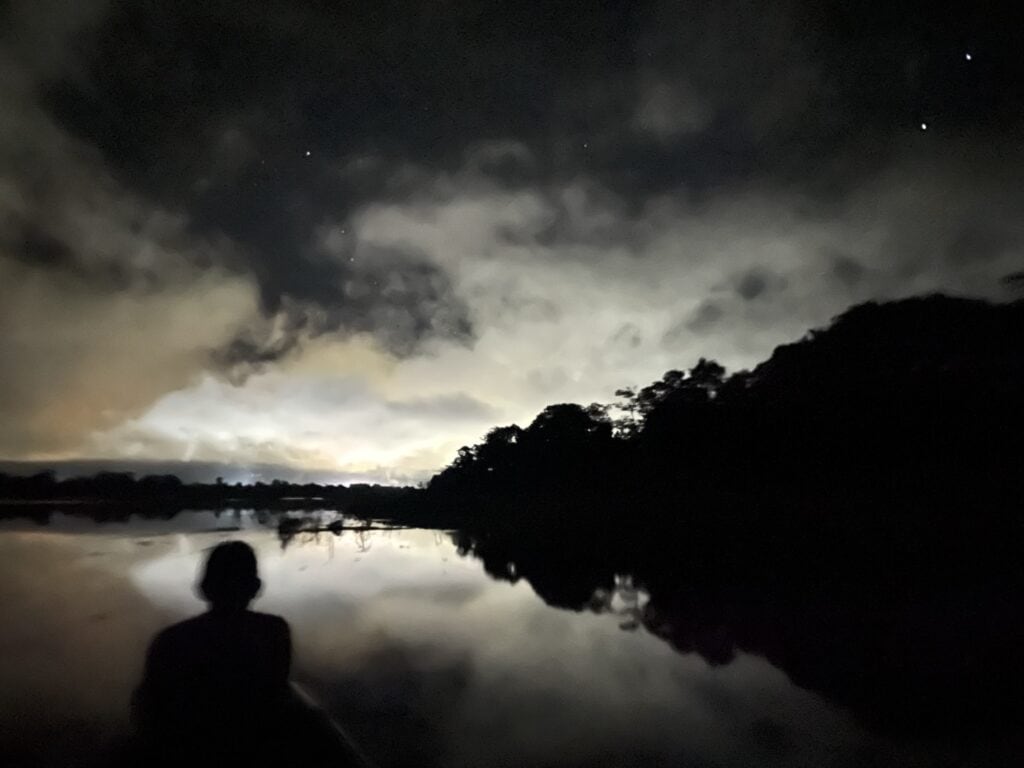
As soon as the sun dipped below the horizon, we set off with Golbert and a man from the shack family, plunging into the jungle, winding through canals, all in pursuit of boa snakes. The rain had finally relented, and the clouds scattered like an overzealous painter clearing the canvas. But before we could enter the canals, we had to cross a lake. The minutes spent gliding across the serene waters felt indescribable. It was a dreamlike night on the Amazon! The chaotic noises of the forest from the previous evening gave way to the soft, timid songs of birds, and the stench of decay was replaced by the fresh perfume of flowers. The best part? The darkness was still deep and soothing, but it was transformed by a sky so dazzling, it could make even the stars jealous. A sky richer than Van Gogh ever imagined, a sky that echoed those of the Sahara desert. For a few blissful minutes, I slipped into a state of deep relaxation—calm, meditation, and awareness. Gratefulness and joy bloomed in my heart because, at that moment, I was there. But, as all good things do, my delirium was brief. No sooner had I settled into the peace of the night than the farm man spotted a boa. Golbert, in his infinite wisdom and bravery, steered the boat through the reeds, trying to capture the snake to prove his courage. He failed. So, we spun around, for another hour, in the darkened canals of the jungle, dodging falling things from the trees—things we couldn’t name, which fell into our boat… and onto us. A proper Amazonian adventure!
Silent nights
In the dark, no light to find, Whispers close, a restless mind. Eyes that watch, the jungle speaks, A peaceful fear, the night it leaks.
Gunshots pierce the silent air, Yet in the stillness, I don’t care. No light, no sound, just space to roam, In emptiness, I’m safe, I’m home.
Luxury Cruise on the Amazon: Brazil!
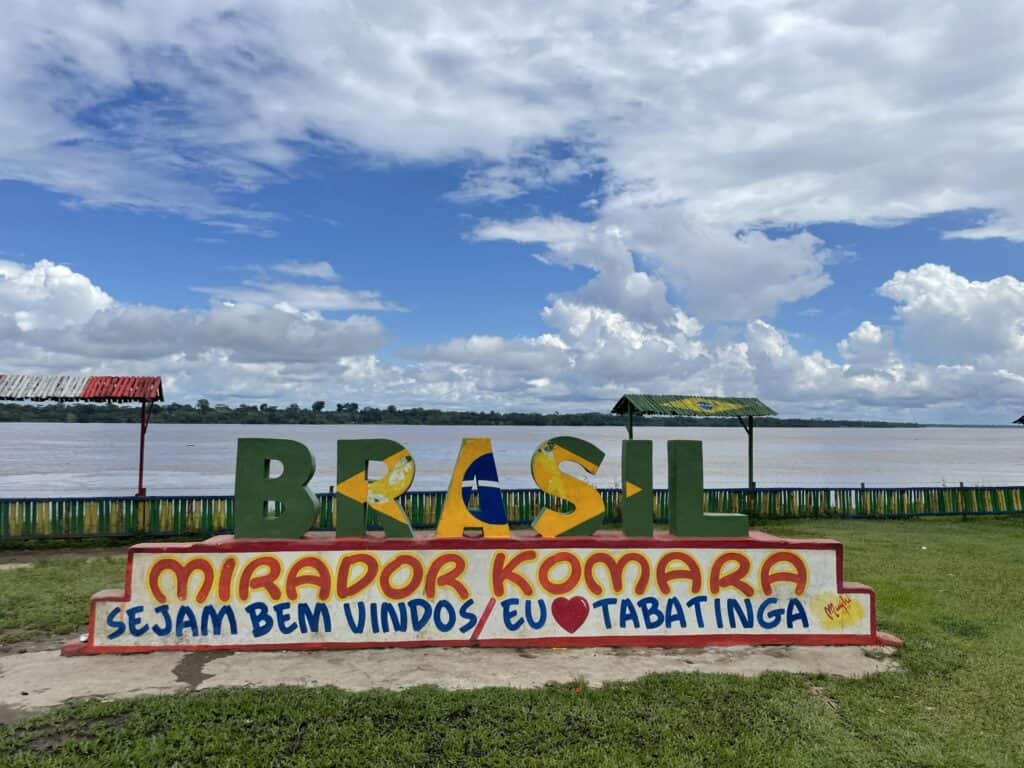
Spoiler alert – it wasn’t a luxury cruise down the Amazon, but it sure felt like one. After a lavish breakfast at the farm, complete with coffee, omelets, and patacones, a boat that could comfortably fit 7-8 people (and, unbelievably, had a motor) was waiting for us at a nearby dock. The entire day was nothing short of magnificent—relaxing, sunny, and entirely devoid of adrenaline. We spent the day listening to music on that boat, and I’m happy to report it wasn’t “Radio Policia Nacional” this time. We stopped at various key ports in three different countries: Peru, Brazil, and, of course, Colombia. The first stop was Santa Rosa Island in Peru, where we sipped some fantastic coffee and watched locals go about their business—fishermen prepping their nets, kids dressed in the neatly embroidered uniforms of Peru, heading off to school. The highlight of the day came in Tabatinga, where we stopped at a bar, knocked back a few Caipirinhas, sang, and danced to the sounds of Brazil. By the end of the day, our adventure had come full circle, and we found ourselves back “home” in Leticia.
An Angel with an Assault Rifle
On our final day, we wandered around Leticia for most of the day, revisiting our favorite spots—the fish market, and the central park. We tried another local restaurant—this time, no yucca, no worms, no ants. Instead, we had a proper steak, which, especially while listening to Radio Policia Nacional, seemed to melt in our mouths like it was made of clouds. We’d pretty much-seen everything there was to see in Leticia, or at least everything within the “safe zone.” On our way back to the house, we picked up a bottle of local rum, which we proceeded to drink well into the late hours of the night. Slightly tipsy and curious about what Leticia’s nightlife was like, we decided to ignore Golbert’s advice and venture beyond the safe zone which was marked with a military checkpost, heading toward a nightclub we’d heard about earlier that day from the locals. We stepped into the club, and surprise—there was not a single local in sight. The place was packed with attractive women and white Colombians, dressed in expensive yet questionable taste and dripping in gold jewelry. As soon as we entered, everyone turned to stare at us—suspiciously, obsessively, without a hint of shame. It was clear from the get-go that we didn’t quite belong there. Just as we were trying to figure out our next move, luck intervened. A soldier in full uniform, holding an M4A4 assault rifle, walked in right behind us, his eyes fixed directly on us. We quickly finished our beers and bolted, the soldier following closely behind, only to stop at the army checkpoint, which, apparently, he had just left. We couldn’t say for sure what he was doing there, but we guessed he had seen us step out of the safe zone and decided to escort us for our own protection. A real angel, that one. Sometimes, when you’re being foolish, you just need a little bit of luck. With that close call and the universe’s strange forgiveness, our journey came to an end.
Conclusion
As our Leticia Amazon Expedition comes to an end, we reflect on an adventure that was as wild as the jungle itself. From the buzzing streets of Leticia to the remote tribes deep in the heart of the Amazon, every moment was packed with excitement, wonder, and just a hint of danger. The jungle was both a challenge and a marvel, offering experiences that few will ever get the chance to witness. The tribes we met, each with their own unique stories and traditions, opened our eyes to a way of life that feels both ancient and timeless. We left the Amazon with memories that will stay with us forever – the sights, the sounds, and the overwhelming beauty of this incredible ecosystem. But this journey is just the beginning. If you’re itching for your own adventure, don’t let fear hold you back. The Amazon is waiting, and there’s so much more to discover.
If you enjoyed reading about our Amazonian adventure, don’t forget to leave a comment below with your thoughts or questions! Also, be sure to check out more of our travel stories by visiting the rest of our blog and more photos from this adventure by following my Instagram page. And if you’re planning your own trip to the Amazon please feel free to contact me and start your own journey as soon as you can! 🌿✨

![The Most Densely Populated Island in the World: 1 Hectare of Unforgettable, Literally Breathtaking Crowds [2026]](https://theversevoyager.com/wp-content/uploads/2025/05/santa_cruz_bar.jpeg "The Most Densely Populated Island in the World: 1 Hectare of Unforgettable, Literally Breathtaking Crowds [2026] 1")